Reconciling Wet Processing Weight Loss against Finished Commercial Invoice Mass in Woven Sourcing
Reconciling woven fabric invoices requires deducting size solids and applying standard moisture regain to oven-dry mass before validating linear yield.

Mass
Greige woven fabrics leave the loom shed loaded with non-fibrous processing aids that never make it into the finished garment. During preparation, warp yarns are sized to endure abrasive friction from the reed and harness assemblies. Polyvinyl alcohol formulations, modified starches, carboxymethyl cellulose, and synthetic polyacrylates form a temporary protective film over staple fibers, accounting for 5 to 12 percent of greige weight depending on yarn count, fiber blend, and insertion speed.
Raw cotton also carries non-cellulosic impurities ~ plant waxes, pectins, proteins, and inorganic ash ~ that add another 4 to 8 percent of unpurified mass. Synthetic filament goods avoid natural waxes but pick up spin finishes, coning oils, and knitting lubricants that make up 1 to 3 percent of loom-state roll weight.
Greige Substrates and Non Fibrous Composition
Pricing fabric solely on loom-state weight creates immediate accounting discrepancies once the material enters wet processing. Primary desizing, alkaline scouring, and hydrogen peroxide bleaching systematically strip these non-fibrous additives from the weave. Continuous enzymatic desizing with alpha-amylase chemistry hydrolyzes insoluble starch into water-soluble dextrins without damaging cellulosic chains, while persulfate oxidation or thermo-chemical routes break down synthetic polyvinyl alcohol binders.
The resulting extraction strips noticeable mass from the roll before dyeing begins.
Hot saponification in alkaline baths converts hydrophobic cotton fats into soluble soaps, while chelating agents bind the divalent calcium and magnesium ions seated in the primary cell wall. Together, desizing and scouring routinely remove 7 to 14 percent of initial greige cotton weight. Polyester wovens run through caustic weight-reduction baths undergo deliberate surface hydrolysis with concentrated sodium hydroxide at high temperatures; hydroxide ions cleave ester linkages on the polyethylene terephthalate chain, releasing soluble terephthalate salts and ethylene glycol.
This controlled erosion strips 5 to 20 percent of solid fiber mass to produce a silk-like drape and flexural softness.
Physical Mechanisms of Weight Loss in Chemical Baths
Weight loss in wet processing is a matter of physical fiber and chemical extraction rather than simple surface cleansing. The exact loss turns on bath temperature, dwell time, liquor ratio, and chemical concentration. On continuous desizing and bleaching ranges, high-efficiency wash boxes pull dissolved size straight out of the yarn core with squeeze rolls.
In jet dyeing vessels, mechanical action and liquor turbulence speed up the clearance of hydrolyzed oligomers from synthetic yarns.
Sourcing managers evaluating greige weight quotes account for non-fibrous sizing levels before finalizing finished yardage cost estimates.
Bath
Aqueous processing in jet machines or continuous ranges strips natural waxes, pectins, and protein residues from cellulosic goods. That extraction lowers dry fiber weight and rearranges the geometric density of the weave. When raw cotton undergoes continuous high-pH scouring, saponified waxes wash away in the liquor, leaving purified microcrystalline cellulose behind.
This loss alters both the linear density of individual warp ends and the total yield per kilogram of raw material.
Alkaline Scouring and Enzyme Bio Polishing Yields
Cellulosic fibers carry natural impurities that protect the crop during cultivation, and chemical scouring strips them away so dye liquor can penetrate hydroxyl groups evenly. Bio-polishing with acid or neutral cellulase enzymes reduces substrate mass further by selectively cleaving loose micro-fibril ends protruding from spun yarns, hydrolyzing amorphous cellulose into soluble glucose monomers. This enzymatic treatment removes 2 to 5 percent of total fabric mass to produce a clean, pill-resistant face.
Continuous caustic reduction of 100 percent polyester micro-denier woven fabric at 95 degrees Celsius yields a 14.2 percent substrate mass drop while altering yarn flexural rigidity.
Chemical Finish Add on Dynamics
Finishing padder troughs apply functional chemistry to adjust hand feel and surface performance. Water repellents, organosilicone softeners, fluorocarbon resins, and durable press cross-linkers deposit solid chemistry onto raw fiber surfaces at dry add-on rates between 1 and 6 percent of fabric mass. Fluorochemical repellents leave solid polymer films that add weight without shifting yarn dimensions, while softeners fill interior voids in the yarn bundle, partially offsetting mass lost in desizing and bio-polishing.
| Fiber Composition | Desizing Mass Drop (%) | Scouring Loss (%) | Specialty Mass Reduction (%) | Chemical Finish Add On (%) | Net Wet Processing Mass Delta (%) |
|---|---|---|---|---|---|
| 100% Combed Cotton Ring Spun | 6.0 – 9.0 | 4.0 – 6.0 | 2.5 – 4.5 (Bio-polishing) | 1.5 – 3.5 | -11.0 to -16.0 |
| 100% Carded Cotton Open End | 7.0 – 11.0 | 5.0 – 7.5 | 0.0 | 1.0 – 2.5 | -11.0 to -16.0 |
| 100% Polyester Filament Twill | 1.0 – 2.5 | 0.5 – 1.0 | 8.0 – 18.0 (Caustic reduction) | 0.5 – 2.0 | -9.0 to -19.5 |
| Polyester / Cotton 65/35 Blend | 4.0 – 7.0 | 2.0 – 3.5 | 0.0 | 1.5 – 4.0 | -4.5 to -10.5 |
| Viscose Rayon Woven Plain | 2.0 – 4.5 | 0.5 – 1.5 | 1.5 – 3.0 (Enzyme dulling) | 2.0 – 5.0 | -2.0 to -4.0 |
Dyehouse managers routinely explain mass deficits by attributing linear meter shrinkage to unrecorded greige size variation across woven lots.

Loom
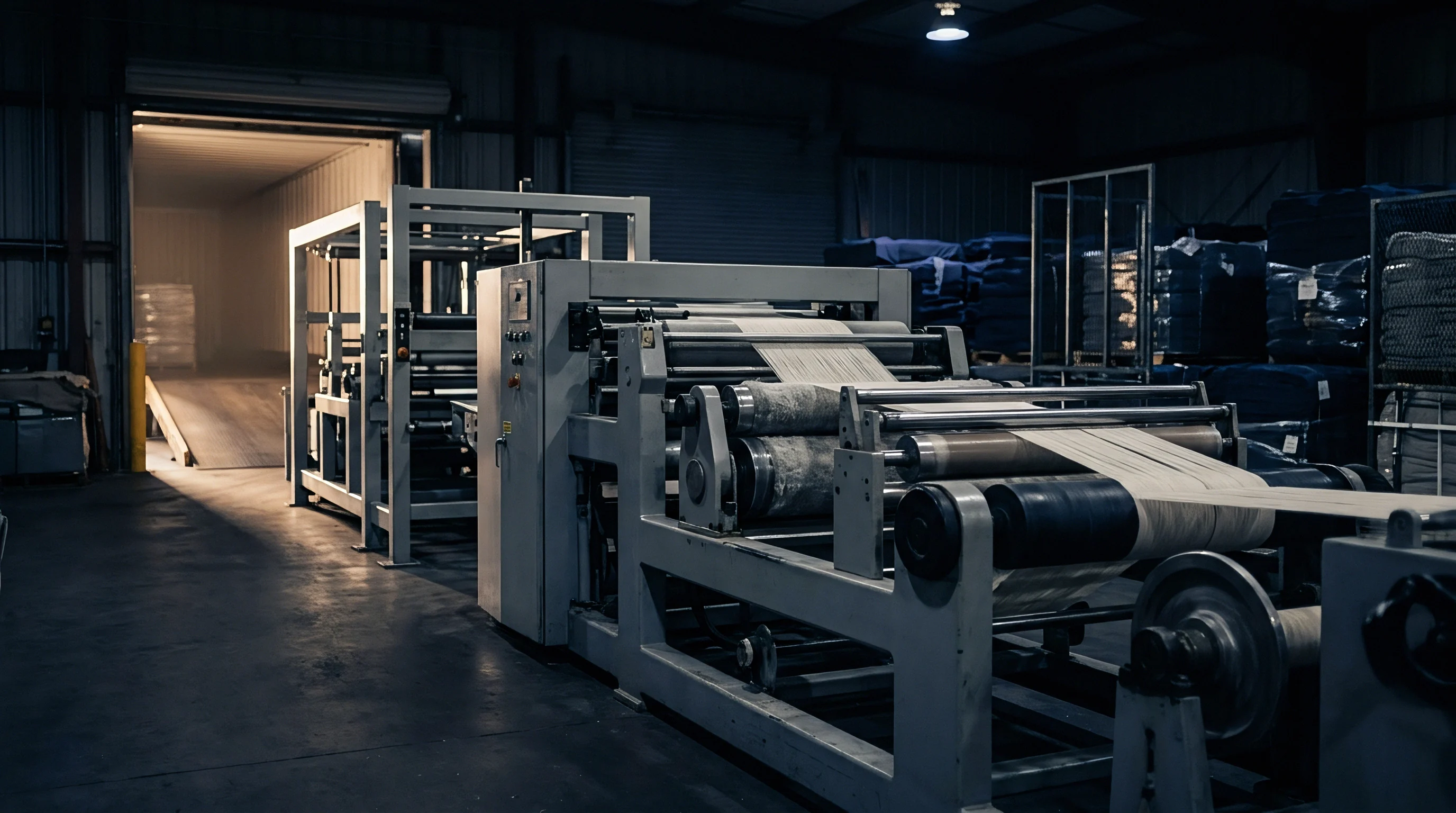
Fabric dimensions taken right off the loom reflect warp ends held under heavy mechanical tension. Rolls leaving the shed have maximum linear length and minimum pick density because of the let-off motion’s draft. Once wet finishing strips the size and releases that built-in stress, the structure contracts along both the warp and weft directions.
Structural Crimp Contraction and Fabric Area Mass
Relaxation in wet processing forces straight warp and weft yarns into undulating crimp paths. Warp crimp builds as internal tension releases in hot liquor, causing noticeable linear yardage loss per roll. Weft crimp increases at the same time, narrowing the cuttable width unless stenter pins hold the selvages under tension.
That lengthwise contraction packs the fiber mass into a shorter span, driving up grams per square meter (ISO 3801) even as total roll weight falls.
- Measure greige roll length and pick density on the inspection frame prior to desizing.
- Track warp crimp percentage variations following continuous aqueous wash cycles.
- Calculate wet contraction during stenter frame entry under controlled overfeed parameters.
- Record finished linear density per ISO 3801 after full thermal drying and conditioning.
Width Stentering and Thread Count Conversion
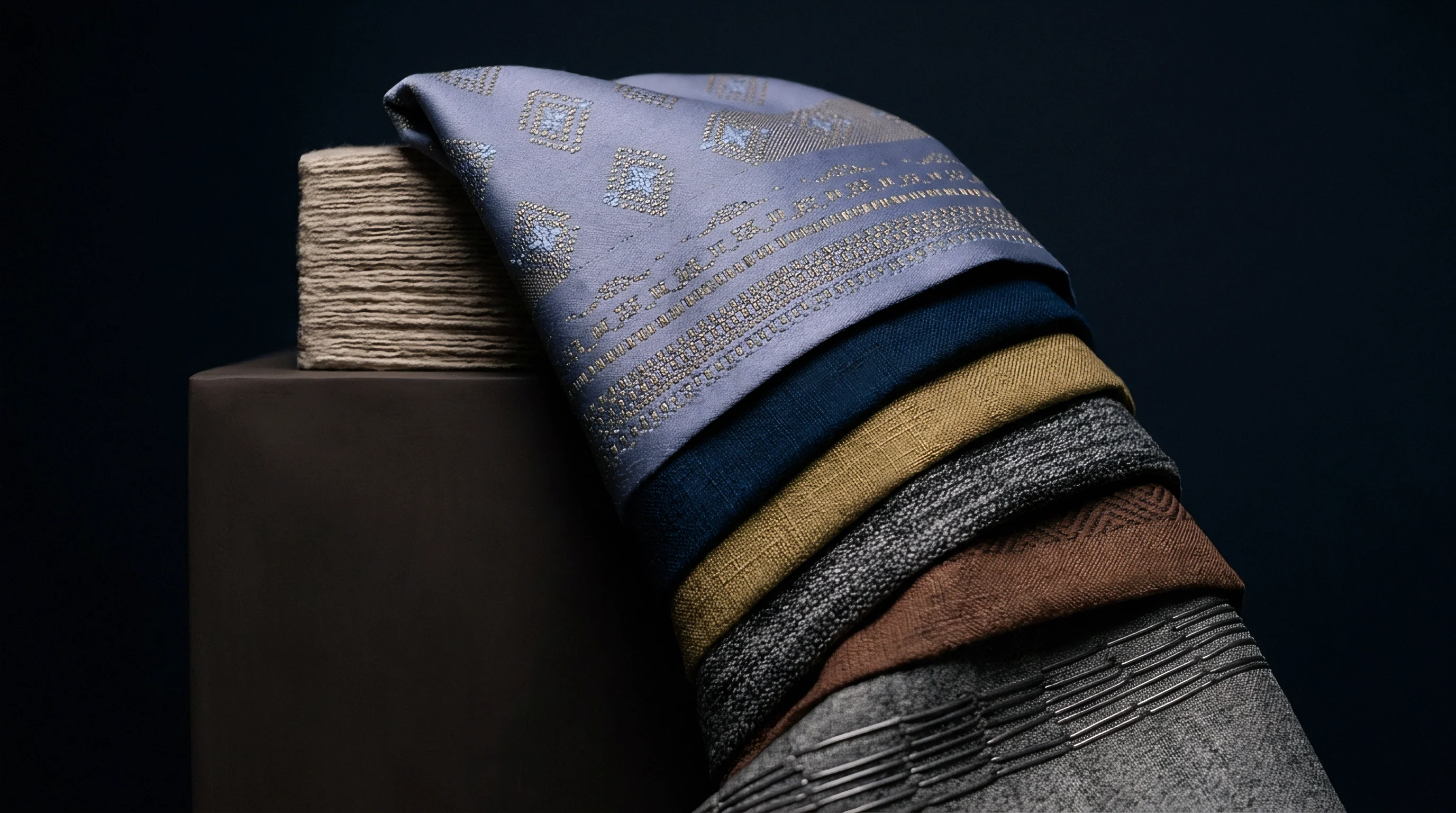
Wider chain settings inside the stenter pull weft yarns straight to establish the finished width. Overfeed mechanisms pin fabric onto the chain faster than it travels through the box, giving warp yarns room to relax and set dimensional stability (ISO 5077). High overfeed increases finished picks per centimeter and boosts square-meter weight.
Running low overfeed draws the warp out into extra linear meters, but leaves behind a lighter, unstable fabric prone to laundry shrinkage.
Determining whether stenter chain tension permanently damages yarn crimp recovery remains an ongoing operational dispute between greige mills and finishing plants.

Ledger
Woven fabric contracts often fall apart when purchase orders specify greige mass but final invoices bill finished rolls. Converting loom-state goods into finished fabric shifts both total batch weight and linear yield. When sourcing agreements fail to clarify whether invoicing rests on greige kilograms, finished kilograms, or finished linear meters, buyers routinely overpay.
Where Does Wet Processing Mass Loss Trigger Billing Adjustments?
Commercial discrepancies arise whenever converters charge unit prices on greige weights without crediting the extracted size solids. Because dried fibers absorb moisture from the air, yield reconciliations rely on conditioned mass tested under ISO 139 atmosphere (20 degrees Celsius and 65 percent relative humidity), using the official commercial moisture regain allowances established for each fiber type.
Take a 10,000-kilogram lot of 100 percent combed cotton 3/1 twill greige fabric woven at 210 grams per square meter at 160 centimeters cuttable width. Assume a warp size pickup of 8.5 percent polyvinyl alcohol and a natural wax and pectin content of 5.0 percent. During continuous desizing, alkaline scouring, and reactive dyeing, the fabric sheds 1,350 kilograms of non-fibrous size and natural impurities, leaving 8,650 kilograms of dry cotton fiber.
Chemical finish application adds 150 kilograms of fluorocarbon resin add-on, bringing dry mass to 8,800 kilograms. Applying the standard commercial moisture regain allowance of 8.5 percent under ISO 139 yields a billable conditioned mass of 9,548 kilograms. If the commercial invoice bills the original 10,000 kilograms greige mass without adjusting for wet processing mass drop, the buyer pays for 452 kilograms of non-existent fiber and extracted PVA size solids.
Standard purchasing contracts incorporating ISO 139 commercial regain calculations prevent double-billing on extracted size solids during commission wet processing.
Commercial Regain Standards and Oven Dry Mass Calculations
Textile fibers constantly exchange moisture vapor with ambient air until reaching hygroscopic equilibrium. Oven-dry testing under ISO 1833 isolates bone-dry fiber weight by baking samples at 105 degrees Celsius to a constant mass. Official invoice mass equals that oven-dry weight multiplied by one plus the commercial regain percentage divided by one hundred.
Skipping oven-dry testing leaves billing dependent on raw shipping weights that fluctuate with warehouse and transit weather.
| Fiber Type | Standard Regain Percentage (ISO 139 %) | Oven Dry Conversion Factor | Typical Desizing Mass Allowance (%) | Net Commercial Mass Multiplier |
|---|---|---|---|---|
| Cotton (Combed / Carded) | 8.50 | 1.0850 | 8.0 – 12.0 | 0.9548 |
| Viscose / Rayon | 13.00 | 1.1300 | 3.0 – 5.0 | 1.0735 |
| Polyester (PET) | 0.40 | 1.0040 | 1.0 – 3.0 | 0.9739 |
| Polyester / Cotton 65/35 | 3.24 | 1.0324 | 5.0 – 8.0 | 0.9653 |
| Wool (Scoured Woven) | 13.60 | 1.1360 | 2.0 – 4.0 | 1.0906 |
Neglecting standard moisture regain calculations during commercial invoice reconciliation results in systematic overpayment for lost fiber mass across volume sourcing contracts.

Dispute
Disputes over missing roll weight typically erupt at the garment cutting plant during incoming inspection. Receiving teams log roll weight, cuttable width, and linear length as goods arrive. When physical roll mass falls short of invoiced volume, buyers file short-shipment claims against converters or commission finishers, making it necessary to separate real delivery shortfalls from expected wet processing loss.
Auditing Short Delivery Claims in Greige Conversion
Audits call for immediate sampling upon arrival so technicians can distinguish true mass variance from width adjustments. Testing laboratories pull full-width swatches from the head, middle, and tail of delivered rolls to determine mass per unit area (ISO 3801) and construction counts (ISO 7211). Comparing these figures against master specifications shows whether low roll weights stem from over-processing or off-spec yarn density.
- Greige size assay verification isolates non-fibrous binder mass from raw cotton fiber prior to wet processing.
- Oven dry mass testing determines absolute dry substrate weight per ISO 1833 standards.
- Commercial regain adjustment applies official percentage allowances to oven dry figures before invoice comparison.
- Linear yield measurement cross-checks roll length against weight per square meter to verify density claims.
Fabric batch acceptance depends on verifying conditioned mass per unit area rather than trusting gross bill of lading shipping weights.
Reconciliation Protocols for Weight Tolerances
ASTM D5430 acceptance guidelines pair physical defect point systems with mass checks, standard industry terms permitting a plus or minus 3 to 5 percent weight variance against contract targets. When mass drop overshoots these limits, technical audits test for residual size with iodine titration for starches or spectrophotometric assays for PVA. High residual size points to incomplete washing, whereas excessive weight loss indicates fiber degradation or run-away caustic reduction.
- Greige sizing certification details exact starch or polyvinyl alcohol percentage applied during slashing.
- Dyehouse processing log records bath temperatures, chemical extraction steps, and final finish add-on weights.
- Conditioned mass test report provides ISO 3801 laboratory measurements taken under standard atmospheric conditions.
- Commercial regain invoice schedule displays itemized conversions from oven dry weight to billable shipping mass.
Standard sourcing agreements incorporating ITMF Contract Rules Section 12 bind suppliers to credit all mass deficits exceeding two percent of dry fiber delivery specs.

Clause
Cross-border fabric agreements separate greige construction terms from finished billing criteria. Purchase orders define fiber composition, greige weave, targeted finished width, finished square-meter weight, and allowable mass loss tolerances. Laying out these parameters prevents finishing mills from billing normal wet processing losses to the buyer’s ledger.

Sourcing Contract Provisions for Mass Loss Allowances
Master supply agreements safeguard capital by establishing mass reduction tolerances based on qualified lab dips. Sourcing contracts quote separate unit prices for greige base goods, commission dyeing, and chemical finishing. When commission dyers bill against incoming greige weight, contracts establish maximum allowable loss caps ~ generally 8 percent for synthetics and 14 percent for cellulosics ~ and obligate the plant to credit back any fiber loss beyond those targets.
Unreconciled wet processing mass loss represents an unaccounted financial leakage on commission fabric finishing contracts.
Commercial Conversion Terms in Commission Wet Processing
Commission finishing agreements require a clean split of financial liability between fabric owners and dyehouses. Final invoices must state net conditioned fiber weight plus agreed chemical add-ons. Standard reconciliation clauses direct dyehouses to supply certified oven-dry mass readings and size extraction reports for every production run, giving buyers the documentation required to adjust invoices before settling balances.
Establishing clear mass conversion baselines prior to bulk production protects woven fabric orders from unresolvable financial discrepancies upon delivery.