Predictive Wet Finishing Mass Balance Modeling for Custom Duty Compliance Optimization
Predictive mass balance modeling tracks wet finishing mass gains and losses to declare compliant tariff chief weight classifications before customs entry.

Bath
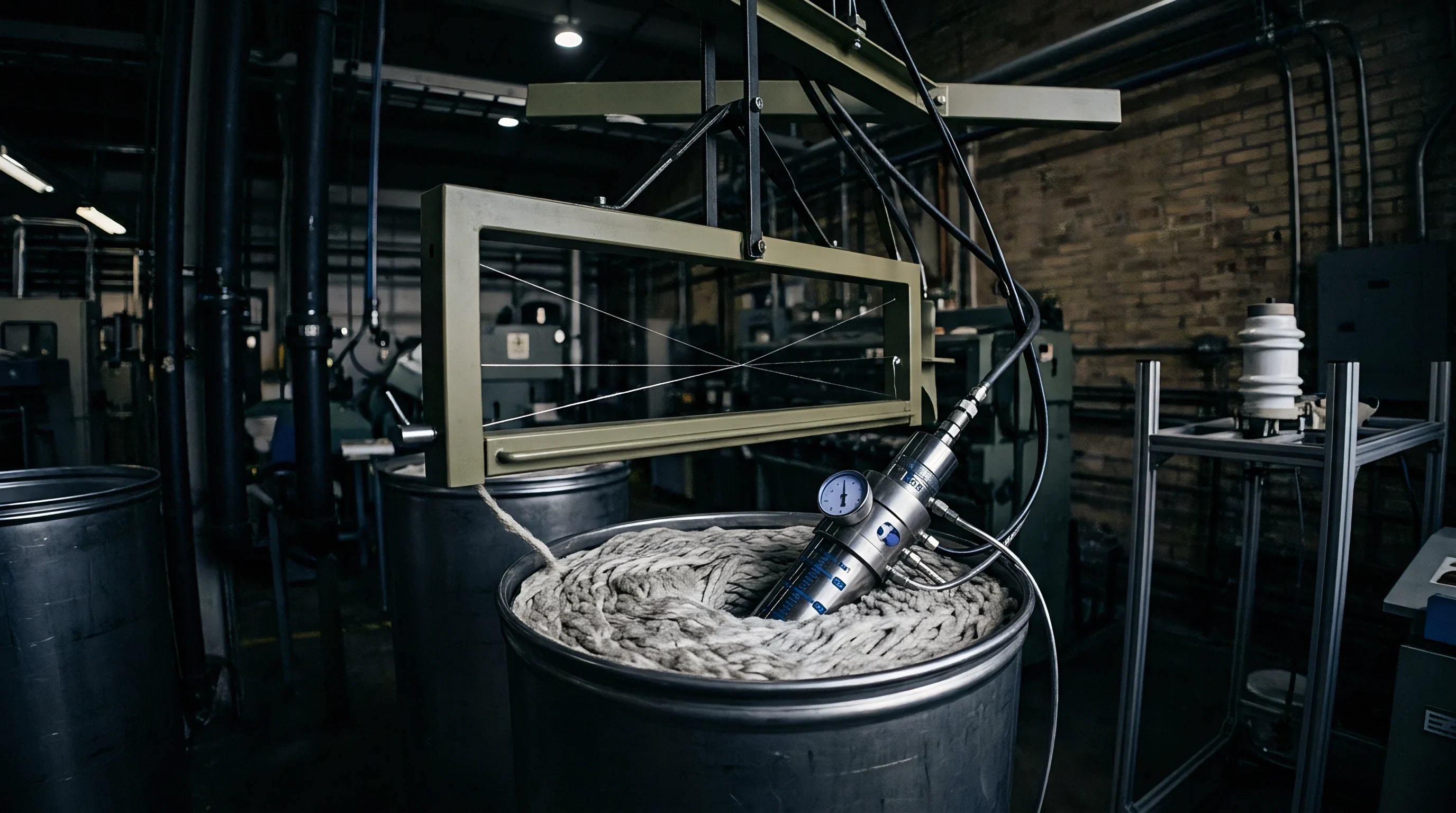
Loom-state gray goods enter the finishing plant carrying natural fats, warp sizes, spinning oils, and atmospheric moisture. These non-fibrous constituents obscure the true mass relationship between component fibers. Wet finishing begins with aqueous immersion, where the liquor ratio and wet pickup percentage dictate chemical pickup and physical swelling.
Standard wet pickup ranges between 60 percent and 85 percent of dry fabric weight during continuous padding. This wet mass transfer introduces water and active chemical agents into the fiber core and inter-yarn void spaces.
Dyeing and finishing baths operate under dynamic exhaustion rates. Reactive dyes on cellulosic fibers achieve bath exhaustion between 70 percent and 88 percent depending on salt concentration and temperature profile. Disperse dyes on polyester reach exhaustion levels exceeding 92 percent under high-temperature pressurized conditions.
The remaining unexhausted chemical solute stays in the effluent stream during rinsing, meaning wet pickup figures cannot serve as direct proxies for dry chemical add-on mass.
Commercial moisture regain standard ISO 6741 assigns fixed theoretical regain allowances that diverge from actual oven-dry mass following continuous stenter drying.
Commercial calculations rely on oven-dry mass supplemented by standard moisture regain allowances. ISO 6741 establishes standard regain values: 8.5 percent for combed cotton, 1.5 percent for filament polyester, 0.4 percent for acrylic, and 13.0 percent for viscose. Pure water evaporates during drying.
When gray fabric moves through aqueous preparation, scoured impurities leave the material while water-soluble baths introduce non-permanent finishes. A failure to segregate volatile bath constituents from permanent chemical bonding yields inaccurate starting weights for subsequent mass balance equations.
Liquor Absorption and Initial Fiber Swelling
Aqueous immersion alters the cross-sectional geometry of natural and regenerated fibers. Cotton fibers swell by 40 percent to 50 percent in cross-sectional area when saturated with water, whereas synthetic fibers like polyester exhibit negligible aqueous swelling below 0.5 percent. This selective swelling expands the amorphous regions within cotton, increasing accessibility for reactive dyestuffs and chemical auxiliaries.
The absorption capacity follows capillary transport between continuous filaments and within fiber lumens.
Pad-bath concentration equations determine the wet chemical mass deposited prior to heat setting. A pad bath containing 40 grams per liter of functional resin delivers 2.4 grams of wet active chemical per 100 grams of fabric at a 60 percent wet pickup target. Wet pickup dictates bath concentration requirements.
The physical retention depends on nip roller pressure, fabric speed, surface tension, and yarn twist density. High twist yarns restrict liquor penetration, forcing chemical accumulation onto outer yarn surfaces where washing removes it more readily.
Exhaustion Dynamics in Aqueous Finishing Systems
Exhaustion defines the equilibrium transfer of chemical solutes from bath volume to solid substrate. Batch exhaustion processes rely on affinity constants, liquor-to-fabric ratios, and thermal cycles. A 10 to 1 liquor ratio bath operating at 130 degrees Celsius transfers disperse dye molecules into synthetic polymer matrices until thermodynamic equilibrium occurs.
Continuous application systems bypass liquor exhaustion equilibrium through physical forced deposition during padding. Squeeze rolls remove excess liquid, leaving a calculated volume of wet liquor held by capillary force. Evaporation inside stenter chambers strips the solvent, driving non-volatile bath solutes into chemical reactions or surface deposits.
Mill technical teams frequently attribute final mass deviations to seasonal humidity swings in the stenter hall rather than uncalibrated liquor feed meters.

Loss
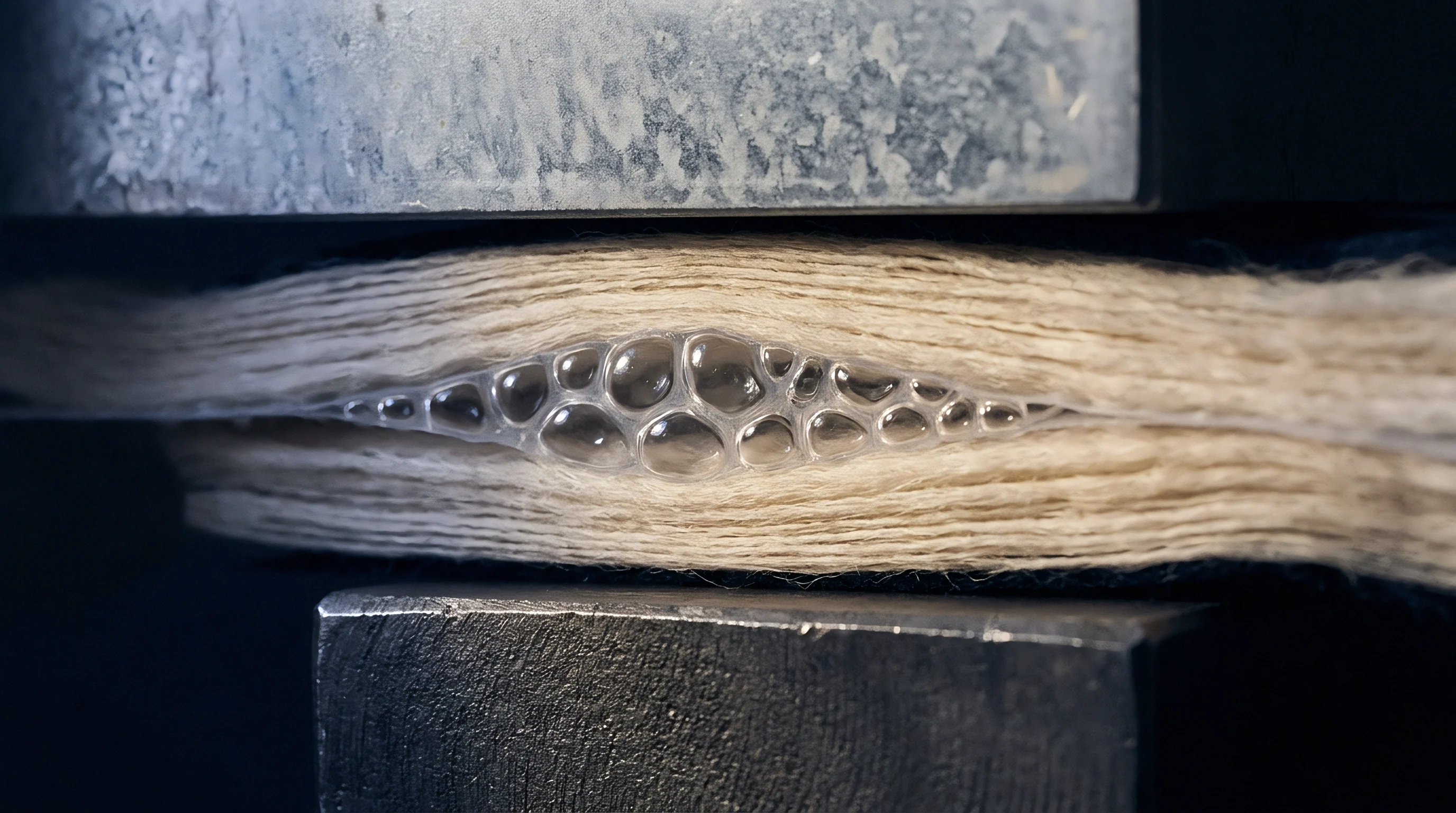
Wet finishing reduces raw fiber mass through chemical dissolution and physical scouring. Cotton fibers undergo significant mass drops during alkaline scouring and bleaching. Raw cotton contains 80 percent to 90 percent pure cellulose, with the remaining fraction composed of waxy substances, pectins, proteinaceous matter, organic acids, and inorganic ash.
Caustic soda scouring at 95 degrees Celsius saponifies natural waxes and hydrolyzes pectins, dissolving them into the liquor. This extraction removes 4 percent to 8 percent of total raw cotton mass.
Alkali hydrolysis of polyester represents an intentional weight-loss treatment designed to improve drape, softness, and moisture transport. Sodium hydroxide solutions hydrolyze ester bonds on the polyethylene terephthalate surface, yielding water-soluble disodium terephthalate and ethylene glycol. Controlled alkali reduction dissolves between 3 percent and 15 percent of the synthetic fiber mass without degrading internal filament tenacity.
Scouring removes natural cotton waxes.

Alkali Hydrolysis and Cotton Scouring Mass Drops
Differential mass reduction changes the relative percentage of blended fiber components. When processing a 60 percent cotton and 40 percent polyester gray blended fabric, alkaline scouring degrades cotton mass while leaving polyester untouched. Subsequent caustic weight reduction selectively degrades polyester while leaving scoured cotton stable under controlled bath times.
The net composition of the finished fabric shifts based on which fiber suffers higher proportional loss.
Enzyme bio-polishing using cellulase proteins targets protruding surface micro-fibrils on cellulosic yarns. Hydrolysis of 1,4-beta-D-glucan bonds weakens surface fibers, which detach under mechanical agitation. Bio-polishing reduces fabric weight by 2 percent to 5 percent depending on enzyme concentration, bath pH, and processing time.
Combined scouring, bleaching, and bio-polishing can reduce initial cotton weight by up to 12 percent prior to chemical finishing.
How Does Fiber Mass Dissolution Shift Blend Ratios?
Quantitative composition tests evaluate finished fabric mass rather than starting gray weight. A 100-gram gray swatch composed of 52 grams raw cotton and 48 grams polyester enters wet finishing. Alkaline preparation removes 6 percent of the cotton mass (3.12 grams), reducing cotton content to 48.88 grams.
Polyester undergoes a 4 percent alkali weight reduction (1.92 grams), leaving 46.08 grams. The processed dry fabric weighs 94.96 grams.
Recalculating relative mass percentages shows finished cotton content at 51.47 percent and polyester content at 48.53 percent. The blend ratio altered by 0.53 percent absolute despite uniform chemical exposure. If processing conditions accelerate polyester hydrolysis to 8 percent loss while cotton scouring loss remains 4 percent, finished cotton content climbs to 52.50 percent.
Shifted mass fractions directly impact duty classifications that turn on precise 50 percent chief weight thresholds.
| Process Operation | Target Fiber | Chemical Agent | Typical Mass Loss Range | Primary Mechanism |
|---|---|---|---|---|
| Alkaline Scouring | Cotton / Flax | NaOH (20-40 g/L) | 4.0% – 8.0% | Saponification of fats, extraction of pectins |
| Peroxide Bleaching | Cotton / Viscose | H2O2 (3-5 g/L) | 0.5% – 1.5% | Oxidative removal of natural color bodies |
| Alkali Reduction | Polyester (PET) | NaOH (30-80 g/L) | 3.0% – 12.0% | Nucleophilic cleavage of ester bonds |
| Enzyme Bio-Polishing | Cellulosic Fibers | Acid / Neutral Cellulase | 2.0% – 5.0% | Enzymatic hydrolysis of surface micro-fibrils |
| Wool Carbonizing | Wool | H2SO4 (4-6%) | 3.0% – 7.0% | Acid hydrolysis of vegetable matter impurities |
Mass loss variability stems from bath temperature fluctuations, variable dwell times, and raw lot impurity differences. Uncontrolled weight drops destabilize yield and alter fiber density per square meter. Miscalculating differential fiber mass loss during caustic reduction causes bulk shipments to cross the fifty percent chief weight threshold under Chapter 54, exposing the importer to misdeclaration penalties and retroactive duty adjustments.

Pickup
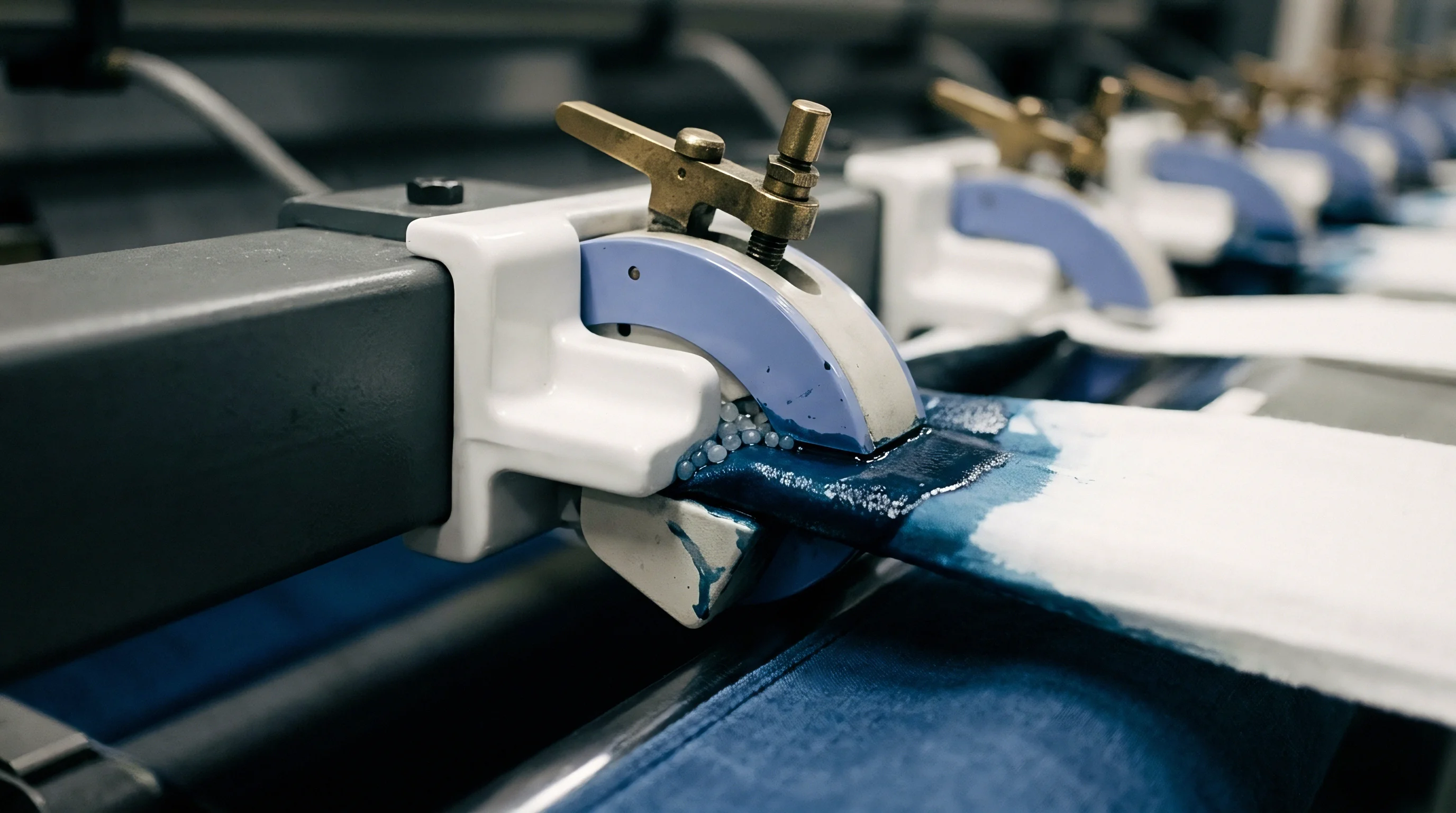
Chemical finishing deposits non-fibrous mass onto yarn surfaces and inside amorphous regions. Resins, crosslinking agents, water repellents, flame retardants, and softeners increase dry fabric weight. Dimensional stability finishes like dimethyloldihydroxyethyleneurea (DMDHEU) crosslink cellulose chains, adding permanent mass.
Fluorocarbon and C6/PFC-free water repellents deposit hydrophobic polymers that increase mass by 1 percent to 3 percent relative to dry fabric weight.
Customs authorities differentiate pure fiber mass from non-fibrous add-on chemicals. Under international tariff conventions, chief weight determination relies on dry fiber mass exclusive of non-textile binding agents, coatings, or topical finishes. ISO 1833 solvent extraction protocols strip non-fibrous matter before quantitative chemical separation of fiber blends.
Solvents like light petroleum, acetone, or warm dilute acids remove coatings without degrading underlying polymer structures.
Non-Fibrous Chemical Additions and Dry Add-On Yields
Dry chemical add-on calculates the dry weight gain following stenter curing. Wet pickup measures liquid bath delivery, but crosslinking reactions release volatile reaction byproducts. DMDHEU resin crosslinking liberates water and formaldehyde during thermal curing at 160 degrees Celsius.
A 5 percent wet application of resin precursor yields approximately 3.2 percent permanent dry add-on mass after condensation reactions finalize.
- Unextracted Resin Interference prevents proper solvent penetration during ISO 1833 quantitative fiber separation, generating inaccurate dry residues.
- Thermal Degradation Overshoot causes high-temperature stenter curing to scorch delicate fibers, stripping volatile organic matter and artificially inflating calculated chemical add-on percentages.
- Solvent Selection Mismatch dissolves synthetic fiber components alongside topical finishes when non-standard extraction chemistry bypasses ISO 1833 guidelines.
- Incomplete Washing Recovery leaves unreacted salt residues inside heavy canvas weaves, falsely elevating dry add-on metrics during gravimetric testing.
Flame retardant finishes based on organophosphorus compounds or heavy metal salts demand high loading rates. Durable flame retardant treatment on cotton drill fabric adds 12 percent to 20 percent dry mass to satisfy flammability safety regulations. Heavy non-fibrous loading skews plain weight measurements.
An unextracted gravimetric test on flame-retardant fabric reports incorrect fiber ratios if chemical mass concentrates unevenly on one blend component.
Solvent Extraction Protocols for Non-Textile Mass
Quantitative analysis mandates stripping non-fibrous matter prior to fiber identification. ISO 1833-1 defines pre-treatment methods using petroleum ether extraction followed by water washing. This process removes waxes, oils, water-soluble softeners, and surface resins.
Failure to perform solvent extraction introduces systematic errors into chief weight declarations.
Coated fabrics present complex mass balance challenges. Polyurethane or polyvinyl chloride layers applied to woven polyester backgrounds transfer substantial non-textile weight. When coating weight exceeds 35 percent of total fabric mass, tariff classification shifts from standard textile chapters (50 to 55) to coated fabric headings under Chapter 59.
Solvent extraction removes non-fibrous binders.
ISO 1833-1 mandates gravimetric measurement of extracted non-fibrous matter before attempting chemical separation of fiber components.
Dry mass determines chief weight. Under Section XI Note 2(A) of the Harmonized System, non-textile binding chemicals and functional finishes exceeding three percent of total dry mass must be extracted per ISO 1833-1 prior to quantitative fiber analysis to establish true chief weight classification.
Balance
Predictive wet finishing mass balance modeling integrates raw fiber inputs, mass loss coefficients, chemical add-on fractions, and moisture regain corrections into a unified mathematical system. The model forecasts the absolute dry weight and relative mass percentages of finished fabric before bulk wet processing commences. Predictive modeling prevents tariff classification surprises caused by post-finishing blend shifts.
The mathematical formulation tracks mass components through four operational stages: raw lot entry, preparation mass loss, finishing mass addition, and moisture equilibrium adjustment. Absolute fiber dry mass governs customs chief weight classification across global trade corridors.
Mathematical Formulation of the Wet Mass Model
Let Mg represent total dry gray fabric mass. Component fiber mass fractions in the gray state are wA,g and wB,g for fiber types A and B, where wA,g + wB,g = 1.0. Process mass loss coefficients are expressed as LA and LB, representing the fractional loss of each fiber during scouring, bleaching, and weight-loss processing.
Permanent dry chemical add-on fraction relative to processed fiber mass is Ac.
The finished dry fiber mass for component A (MA,f) and component B (MB,f) follows equations 1 and 2:
MA,f = Mg × wA,g × (1 – LA)
MB,f = Mg × wB,g × (1 – LB)
Total dry fiber mass (Mfiber,f) equals MA,f + MB,f. The total dry finished fabric mass (Mdry,f), including permanent chemical add-on, follows equation 3:
Mdry,f = Mfiber,f × (1 + Ac)
The finished dry fiber percentage for fiber A (PA,f), exclusive of non-fibrous chemical add-on, is calculated via equation 4:
PA,f = fracMA,fMfiber,f × 100 = fracwA,g (1 – LA)wA,g (1 – LA) + wB,g (1 – LB) × 100
| Gray Blend Ratio (C/PET) | Cotton Loss (LC) | PET Loss (LPET) | Chemical Add-On (Ac) | Finished Fiber Blend (C/PET) | Tariff Chief Weight Category |
|---|---|---|---|---|---|
| 50.5 / 49.5 | 6.0% | 1.0% | 2.5% | 49.2 / 50.8 | Polyester Predominant (Ch. 55) |
| 51.0 / 49.0 | 6.0% | 2.0% | 3.0% | 50.0 / 50.0 | Equal Weight Threshold Boundary |
| 52.0 / 48.0 | 5.0% | 8.0% (Hydrolysis) | 1.5% | 52.8 / 47.2 | Cotton Predominant (Ch. 52) |
| 50.0 / 50.0 | 4.0% | 10.0% (Hydrolysis) | 2.0% | 51.6 / 48.4 | Cotton Predominant (Ch. 52) |

Worked Derivation for a Cotton Polyester Blend
A mill processes a 10,000 kilogram gray fabric order specified at 51.5 percent combed cotton and 48.5 percent filament polyester. Starting dry fiber masses are 5,150 kilograms cotton and 4,850 kilograms polyester. Wet processing includes caustic scouring (5.5 percent cotton mass loss), peroxide bleaching (0.5 percent cotton mass loss), and lightweight alkali reduction (2.0 percent polyester mass loss).
A durable water repellent finish contributes 2.5 percent permanent dry add-on mass.
Cotton loss coefficient LC = 0.055 + 0.005 = 0.060. Polyester loss coefficient LPET = 0.020. Calculating finished dry fiber masses yields:
MC,f = 5150 × (1 – 0.060) = 4841.0 kg
MPET,f = 4850 × (1 – 0.020) = 4753.0 kg
Mfiber,f = 4841.0 + 4753.0 = 9594.0 kg
Evaluating finished dry fiber percentages exclusive of chemical add-on reveals:
PC,f = frac4841.09594.0 × 100 = 50.46%
PPET,f = frac4753.09594.0 × 100 = 49.54%
Adding 2.5 percent chemical finish increases total dry finished fabric mass to 9,833.85 kilograms. The finished cotton content remains above 50 percent by weight (50.46 percent), maintaining cotton classification under HS Chapter 52. If scouring loss increases to 7.0 percent without adjusting polyester reduction, finished cotton mass drops to 4,789.5 kilograms, lowering cotton content to 49.93 percent.
This 0.53 percent shift flips chief weight to polyester, moving classification from Chapter 52 to Chapter 55.
High-efficiency stenter drying without online moisture monitoring consistently skews commercial mass calculations by driving fiber regain below equilibrium levels.
Heading
Customs compliance relies on accurate chief weight classification at the time of entry. The Harmonized Commodity Description and Coding System assigns textile goods based on the fiber component that predominates by weight under General Rule of Interpretation 3(b) and Chapter Section XI Note 2. A shift across the 50 percent threshold alters duty rates, trade agreement eligibility, and import quota restrictions.
WCO General Rule of Interpretation 3(b) mandates that woven goods containing mixed fibers fall under the heading corresponding to the material giving the product its essential character by mass.
Duty rate spreads between chapters create financial exposure. Plain woven cotton fabrics under HS 5208 carry different customs tariff rates than synthetic staple fabrics under HS 5513 or continuous synthetic filament goods under HS 5407. Tariff engineering seeks to optimize landed cost by specifying gray blend ratios that achieve targeted finished chief weights after accounting for wet finishing mass shifts.

Chief Weight Threshold Jumps across Tariff Chapters
Crossing chief weight boundaries changes preferential trade agreement eligibility. Under rules of origin governing regional trade blocks, preferential origin often requires specific yarn spinning or fabric weaving transformations within member states. If an unpredicted wet finishing shift flips a fabric from synthetic predominant to cotton predominant, regional value content calculations and transformation requirements change retroactively.
Inconsistent wet finishing control causes lot-to-lot tariff jump failures. A mill producing gray fabric at 50.5 percent polyester and 49.5 percent cotton risks duty misdeclaration if variable preparation scouring removes more cotton mass than anticipated, shifting the landed goods into a cotton tariff line carrying higher import duties. Mass balance modeling identifies boundary conditions to keep finished fabric securely within target classification zones.
Preferential Origin Verification under Weight Shifts
- Establish baseline gray yarn blend ratios and dry fiber mass fractions through ISO 1833 testing on un-sized gray swatches.
- Measure mill preparation weight loss coefficients by running trial bath swatches through continuous scouring and bleaching ranges.
- Quantify chemical add-on percentages using gravimetric solvent extraction on finished, cured trial swatches.
- Input empirical loss and add-on coefficients into the predictive mass balance equation to verify finished chief weight margins.
- Issue technical specification sheets specifying allowable gray blend ranges and wet finishing parameters to ensure landed compliance.
Import authorities perform random spot audits using ISO 1833 chemical separation on cleared shipments. Discrepancies between declared bill of lading descriptions and customs laboratory re-test results trigger audit holds, duty reassessments, and administrative fines. Whether customs authorities across major destination ports will adopt standardized continuous mass balance audit logging in place of destructive laboratory testing remains an open operational question for global supply chains.

Dossier
Defending tariff declarations during customs post-clearance audits requires a complete technical dossier. A compliant audit trail bridges raw material purchasing, wet finishing batch execution, laboratory re-testing, and customs declaration line items. Retaining production records proves that declared blend ratios reflect physical chemistry rather than deliberate misrepresentation.
| Document Category | Primary Data Points | Compliance Function | Retention Standard |
|---|---|---|---|
| Yarn Specification Sheets | Blend ratio, fiber origin, linear density, moisture regain | Establishes baseline raw fiber entry composition | 5 Years (Customs Audit) |
| Wet Finishing Batch Logs | Liquor ratio, chemical dosing, dwell times, stenter speed | Proves processing loss and add-on coefficients | 3 Years (Mill Operations) |
| ISO 1833 Test Certificates | Solvent extraction yield, dry fiber residues, tolerance bands | Provides accredited laboratory verification | 5 Years (Customs Entry) |
| Mass Balance Calculations | Gray weight, mass loss %, dry add-on %, finished yield | Reconciles predicted versus measured composition | 5 Years (Compliance File) |

Audit Trail Architecture for Wet Process Data
A robust compliance dossier links mill floor execution data to final customs commercial invoices. Automated dosing systems record exact chemical volume additions, producing digital logs that document resin and weight-loss processing conditions. Linking batch logs to specific fabric roll IDs creates immutable production trails.
When customs authorities query a declaration, the importer presents the mass balance calculation dossier alongside accredited ISO 1833 lab reports. Demonstrating that blend variations stem from predictable wet processing mass shifts defends the importer against allegations of fraud under trade compliance regulations. Lab results govern entry clearance.

Laboratory Retest Protocols and Discrepancy Reconciliation
Inter-laboratory variance creates friction during customs verification. Commercial testing laboratories exhibit measurement tolerances up to plus or minus 1.0 percent absolute on quantitative fiber separations under ISO 1833-1. A finished blend measuring 50.4 percent cotton in a destination laboratory may yield 49.6 percent in a port customs laboratory, crossing the critical chief weight threshold.
Reconciliation protocols require establishing multi-sample baseline averages. When customs laboratories report border-line non-compliance, importers can request secondary testing on retained sealed swatches using gravimetric solvent extraction prior to fiber dissolution. Documented predictive mass balance models provide the technical justification required to request secondary dispute re-tests, protecting cross-border supply chains against single-sample testing anomalies.