Finishing Ratio
A chemical retention measurement denotes the mass of liquid solution held by a textile substrate after immersion and subsequent mechanical extraction. Wet pickup represents the variance in total weight between the dry fabric and the saturated material before the curing stage. Textile processing plants calculate this value to ensure consistent application of resins, softeners or flame retardants across entire production runs.
Accurate monitoring prevents uneven dye penetration and premature resin depletion during continuous padding operations. Overloading a fabric with excess fluid triggers migration issues while insufficient saturation leads to functional treatment failure. Operators gauge this ratio to calibrate the pressure of mangle rollers or the rotational speed of saturating bowls.
Heavy substrates absorb more solution than lighter gauzes due to surface area differences and fibre porosity.
Padding Mechanism
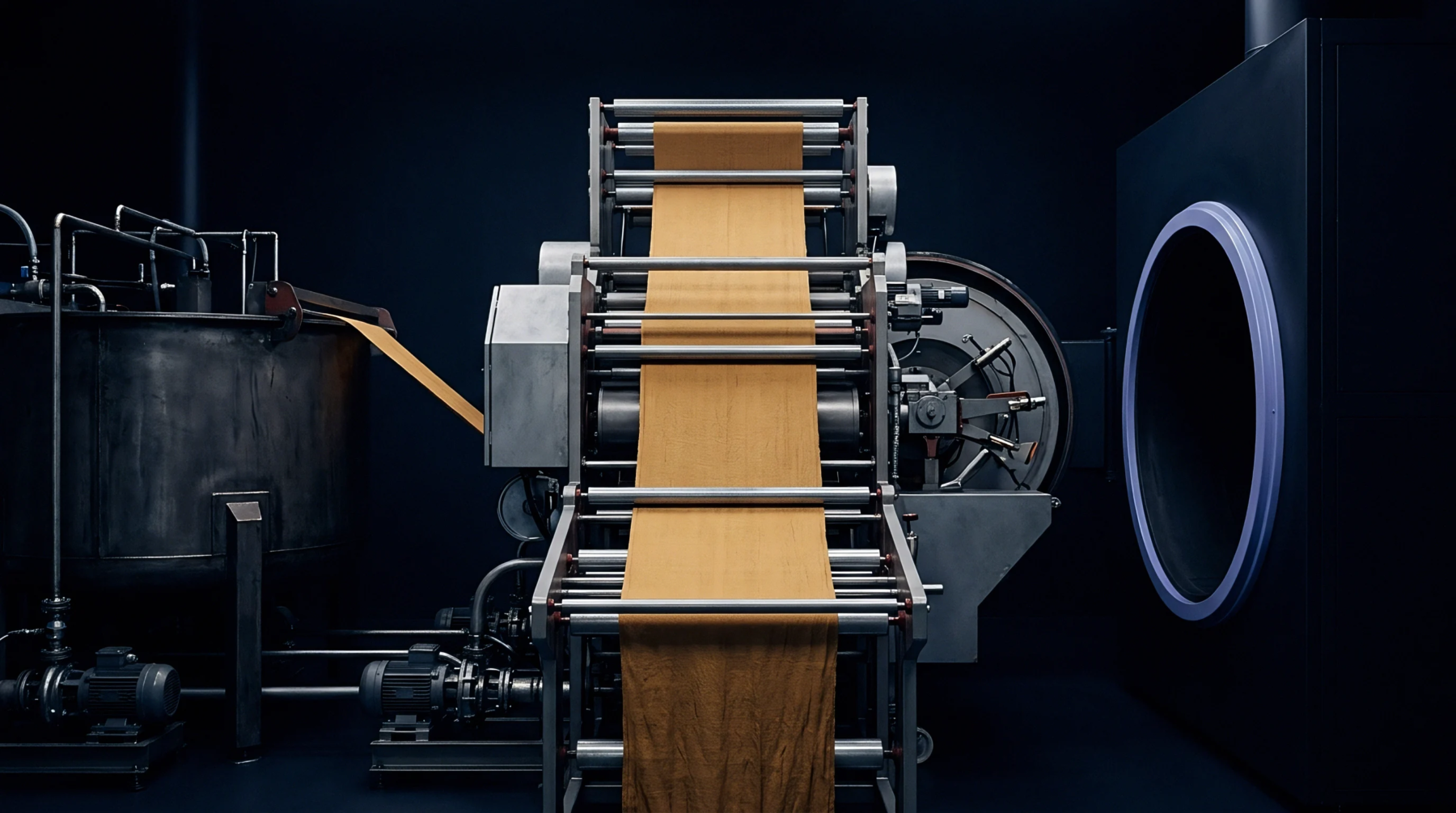
The mechanical force applied by twin rollers drives the penetration of aqueous baths into the interstitial spaces of the yarn structure. Roller pressure dictates the amount of fluid remaining within the textile matrix after the squeeze zone. A closed nip configuration exerts higher force to remove surplus liquid whereas a wider gap allows higher retention volumes.
Fabric tension through the nip influences the final result because stretched fibres exhibit different pore dimensions than relaxed ones. Mills record these values during the commissioning phase to build standard operating procedures for each specific material construction. High pile fabrics require precise roller alignment to prevent surface crushing while maintaining the target solution load.
Speed increases reduce the dwell time in the bath which lowers the total absorbed volume unless the operator compensates by increasing pump head pressure.
Application Accuracy
Quantitative analysis of chemical uptake provides the primary control point for batch uniformity across long yardage orders. Consistent wet pickup ensures the concentration of active ingredients remains stable from the beginning of the roll to the final meter. Labs perform gravimetric testing on samples taken immediately after the mangle exit to verify that real production aligns with laboratory formulations.
Variations occur when bath viscosity changes or when machine components experience wear over extended production cycles. Technicians adjust liquor levels and flow rates to correct drift detected during routine monitoring. Frequent calibration protects the margin of the finishing plant by reducing wastage of expensive auxiliary chemicals.
Stable uptake prevents batch to batch color variation in reactive dyeing processes where auxiliary retention is critical for shade depth.
Material Constraint
Fibre composition and yarn twist exert internal limits on how much liquid the structure retains under a fixed pressure load. Synthetic filaments repel aqueous solutions more than natural cellulose fibres, which necessitates different pickup targets to reach the same final chemical concentration. High twist yarns resist penetration into the core of the fibre bundle, forcing the solution to remain trapped on the surface.
These physical characteristics define the operational window within which the plant must function. Adjusting roller hardness represents one method to accommodate different fabric densities without altering the primary chemical recipe. Mechanical limitations prevent absolute removal of moisture even at high pressures.
The process performance depends on the balance between external mechanical force and internal material resistance.