Moisture Removal
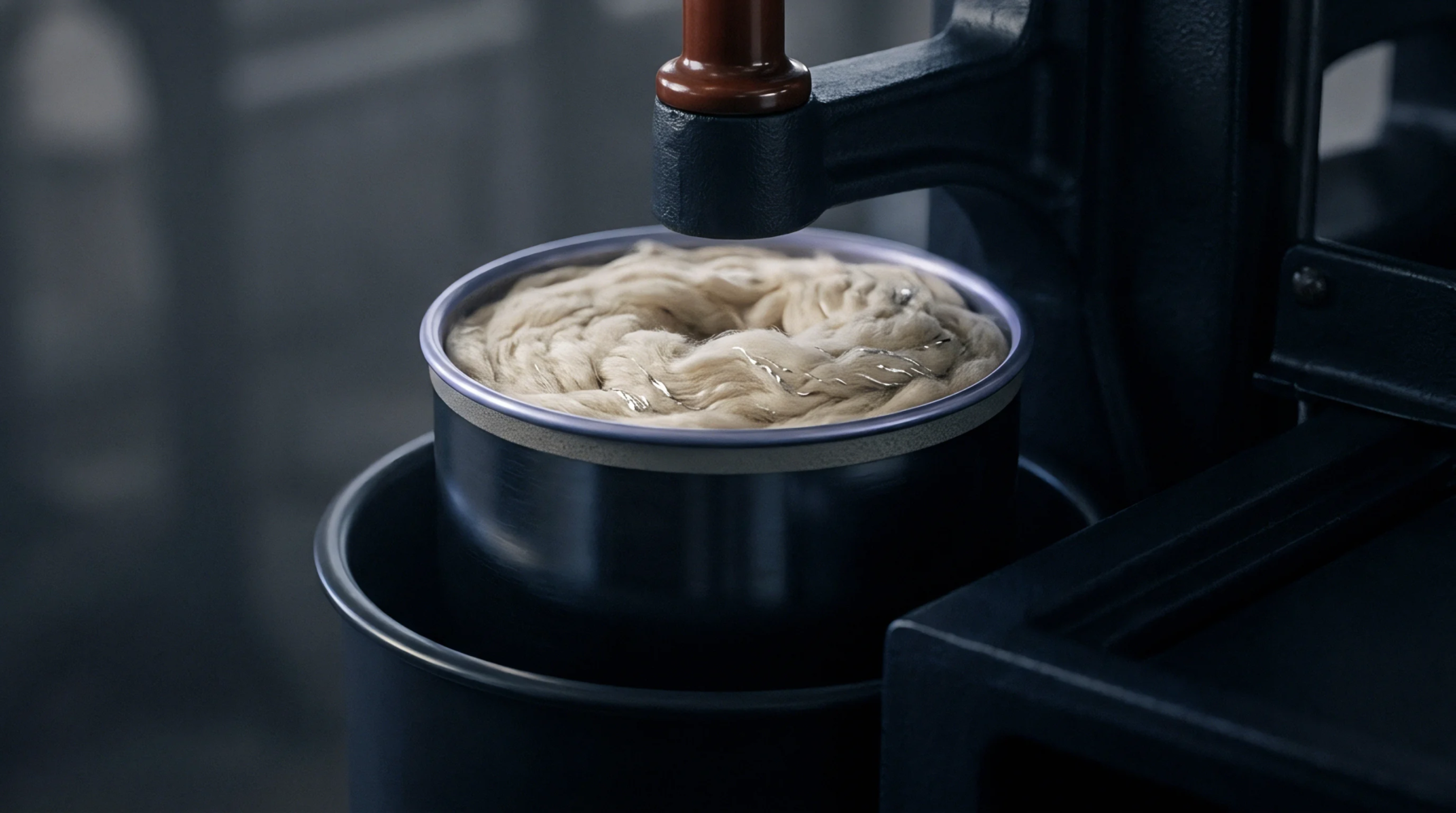
Thermal processing defines the removal of all entrained water from natural or synthetic textile fibres by heat application until a constant weight remains. Dry mass determination serves to isolate the baseline mass of anhydrous material prior to chemical treatments or finishing operations. Laboratory technicians heat samples in a controlled oven environment until equilibrium occurs between moisture vapor pressure within the chamber and the material itself.
Any loss in mass recorded after successive drying intervals indicates the total water content present in the raw shipment. This procedure provides the baseline against which commercial weight adjustments occur at the point of sale.
Standardized Protocol
Analytical balances measure the sample weight before and after the application of thermal energy. Operators place a specified quantity of fibre or yarn into an aluminium dish and set the oven to a temperature high enough to evaporate water but low enough to avoid degradation of polymer chains. The process repeats until the mass change between two consecutive weighings falls below a set threshold.
Technicians document the final weight to determine the absolute anhydrous content for cost accounting and quality auditing. Accurate results depend upon the rapid transfer of the hot sample to a desiccator to prevent reabsorption of ambient humidity during the final measurement cycle. Consistency in oven calibration and balance precision prevents discrepancies in bulk production lots.
Production Verification
Manufacturing facilities monitor the moisture content to ensure correct chemical concentrations in dye baths and finishing agents. High water retention in incoming stock reduces the effective load of dyestuffs or softeners applied to the textile surface. Factories calculate the theoretical mass without humidity to verify the actual fibre quantity received from spinning mills.
Discrepancies between the calculated dry weight and the invoice weight trigger a request for reconciliation between the supplier and the buyer. This gap creates financial uncertainty if not managed through rigorous testing of bale samples taken from the production floor.
Calibration Boundary
Limitations emerge when volatile nonaqueous components exist in the textile material. Solvent residues or processing oils may evaporate alongside moisture during the thermal cycle, which introduces a negative bias into the final mass calculation. Technicians distinguish between volatile mass loss and true water evaporation by observing the smell or color of the condensate where necessary.
Environmental regulations prohibit the discharge of certain chemical gases released during high heat processes, requiring closed loop systems for modern laboratories. Testing protocols remain valid only when the material composition stays stable throughout the heating range. The precision of the resulting dry mass value dictates the accuracy of all subsequent calculations regarding additive consumption and product yield.
Reliable data allows for predictable chemical uptake rates across diverse batches.