Direct Linear Density Determination in Staple Yarn Systems
Direct linear density determination in staple yarns requires standard atmospheric conditioning, reel tension calibration, and commercial regain adjustments to verify contractual Tex accuracy.
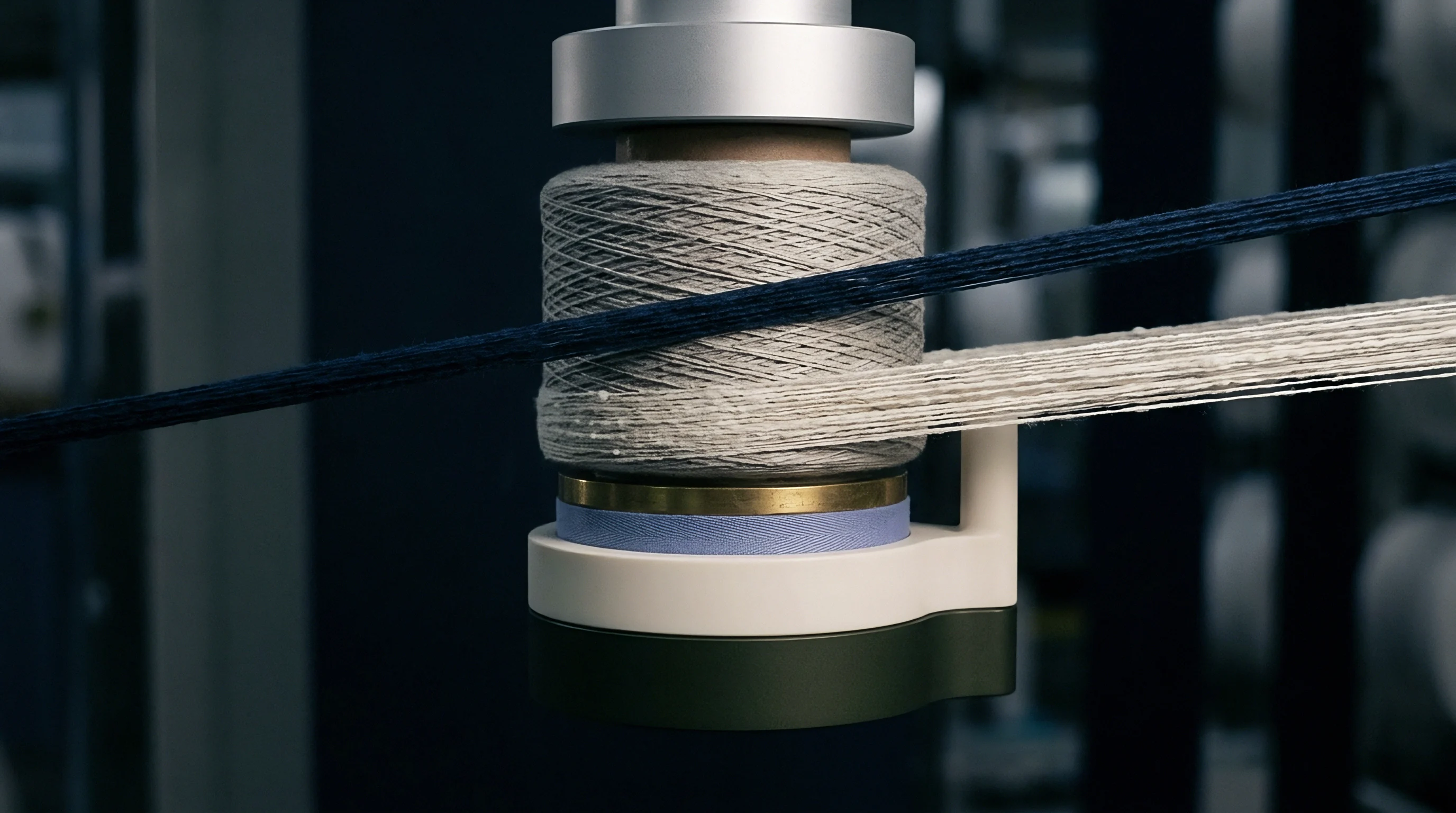

Mass
Metric direct count systems express yarn thickness as weight per fixed length, reversing the inverse logic of traditional indirect counts. Direct linear density measures mass per unit length. In staple yarn manufacturing, direct linear density gives a unified baseline across short staple cotton, carded wool, combed worsted sliver, synthetic tow, and continuous filament blends.
The primary SI unit is the Tex ~ the mass in grams of one kilometer (1,000 metres) of yarn. Lower Tex values signify finer yarns, while higher values indicate heavier strands. Related units include the Decitex (dtex), measuring grams per 10,000 metres, and the non-SI Denier (den), set at grams per 9,000 metres.
Decitex is standard for synthetic staple fibers and fine micro-fibers, while Denier remains common in silk and synthetic filament manufacturing.
Indirect systems measure length per unit mass. English Cotton Count (Ne), Metric Count (Nm), and Worsted Count (Ne/Nea) measure fineness by counting how many fixed-length hanks weigh one pound or one kilogram. One Ne equals one 840-yard hank per pound, while one Nm represents one 1,000-metre hank per kilogram.
Converting indirect counts to direct linear density requires dividing a fixed constant by the indirect value: dividing 590.54 by Ne yields Tex, while dividing 1,000 by Nm gives the exact Tex equivalent. Direct notation simplifies working with multi-ply yarns and blended slivers because total linear density is calculated by simply summing the component values, avoiding harmonic mean conversions.

Direct Linear Measurement Fundamentals
Using Tex establishes a universal metric baseline where one unit equals one gram per kilometer of spun fiber. Because spun staple yarns contain structural variations from fiber length distribution, drafting waves, and cross-sectional shifting, determining linear density requires a specimen long enough to average out short-term mass fluctuations while remaining manageable for routine laboratory work. The formula for direct linear density is:
Tex Formula ~ Tex = (m 1000) / L
In this equation, m is the mass of the specimen in grams and L is its conditioned length in metres. When evaluating short segments pulled from fabric swatches, technicians use micro-analytical balances sensitive down to 0.0001 grams (0.1 milligrams). Standard package skein tests under ISO 2060 and ASTM D1907 specify a 100-metre specimen; shorter samples increase variance, requiring additional test replicates to maintain statistical confidence.
Spinning methods directly shape mass uniformity along staple yarns. Ring-spun yarns feature compact outer wraps and stable packing for consistent linear mass. Rotor open-end yarns carry distinct surface wrapper fibers around a looser core, generating higher bulk for a given linear density.
Air-jet and vortex systems bind parallel core fibers within tight outer wraps, creating a stiffer hand and unique mass characteristics. When sourcing alternative yarns, comparing direct count values across spinning methods helps match raw material specifications to downstream weaving and knitting requirements.

Atmospheric Equilibrium and Standard Regain Values
Spun staple fibers absorb moisture from surrounding air until internal vapor pressure reaches equilibrium with ambient humidity. Hydrophilic fibers like cotton, viscose, wool, and linen gain or lose mass as humidity fluctuates, distorting unadjusted linear density measurements and skewing raw material invoicing and fabric weight projections. ISO 139 and ASTM D1776 set standard testing conditions at 20 +/- 2 degrees Celsius (68 +/- 4 degrees Fahrenheit) and 65 +/- 4 percent relative humidity.
Regional trade rules allow tropical laboratories to operate at 27 +/- 2 degrees Celsius and 65 +/- 5 percent relative humidity.
Conditioning requires exposing unwound skeins to circulating air in a standard atmosphere until mass stabilizes. Equilibrium is reached when consecutive weighings at two-hour intervals differ by less than 0.1 percent. While hydrophobic synthetics like polyester and polypropylene equalize within four hours, dense cotton skeins and wool packages often require up to 24 hours.
Pre-conditioning at 10 to 25 percent relative humidity and temperatures below 50 degrees Celsius forces the hysteresis curve to approach equilibrium from the absorption side, eliminating residual effects from prior storage environments.
| Fibre Type | Commercial Regain % (ISO 2060) | Direct Formula (Tex from Mass) | Indirect Conversion Constant |
|---|---|---|---|
| Carded Cotton Staple | 8.50 | Tex = (g 1000) / m | 590.54 / Ne |
| Combed Cotton Staple | 8.50 | Tex = (g 1000) / m | 590.54 / Ne |
| Viscose Rayon Staple | 13.00 | Tex = (g 1000) / m | 1000.00 / Nm |
| Modal / Lyocell Staple | 11.00 | Tex = (g 1000) / m | 1000.00 / Nm |
| Polyester Staple | 0.40 | Tex = (g 1000) / m | 590.54 / Ne |
| Nylon 6,6 Staple | 4.50 | Tex = (g 1000) / m | 590.54 / Ne |
| Wool (Combed Worsted) | 18.25 | Tex = (g 1000) / m | 885.81 / Nea |
Converting measured linear density from room conditions to official commercial values relies on standardized regain factors set by bodies like BISFA and ISO. When spun yarns are traded by weight, invoices adjust gross package mass to commercial mass using these fixed allowances. Uncorrected laboratory weights can introduce significant financial discrepancies during commercial yarn transfers between spinning mills and weaving plants.
Accurate linear density relies on precise specimen length measurement alongside exact mass determination. Small errors in skein perimeter or winding tension skew calculated Tex values, carrying forward into fabric construction metrics. Understanding direct mass determination enables product developers to evaluate raw material specifications, audit test reports, and resolve commercial disputes over yarn count compliance.
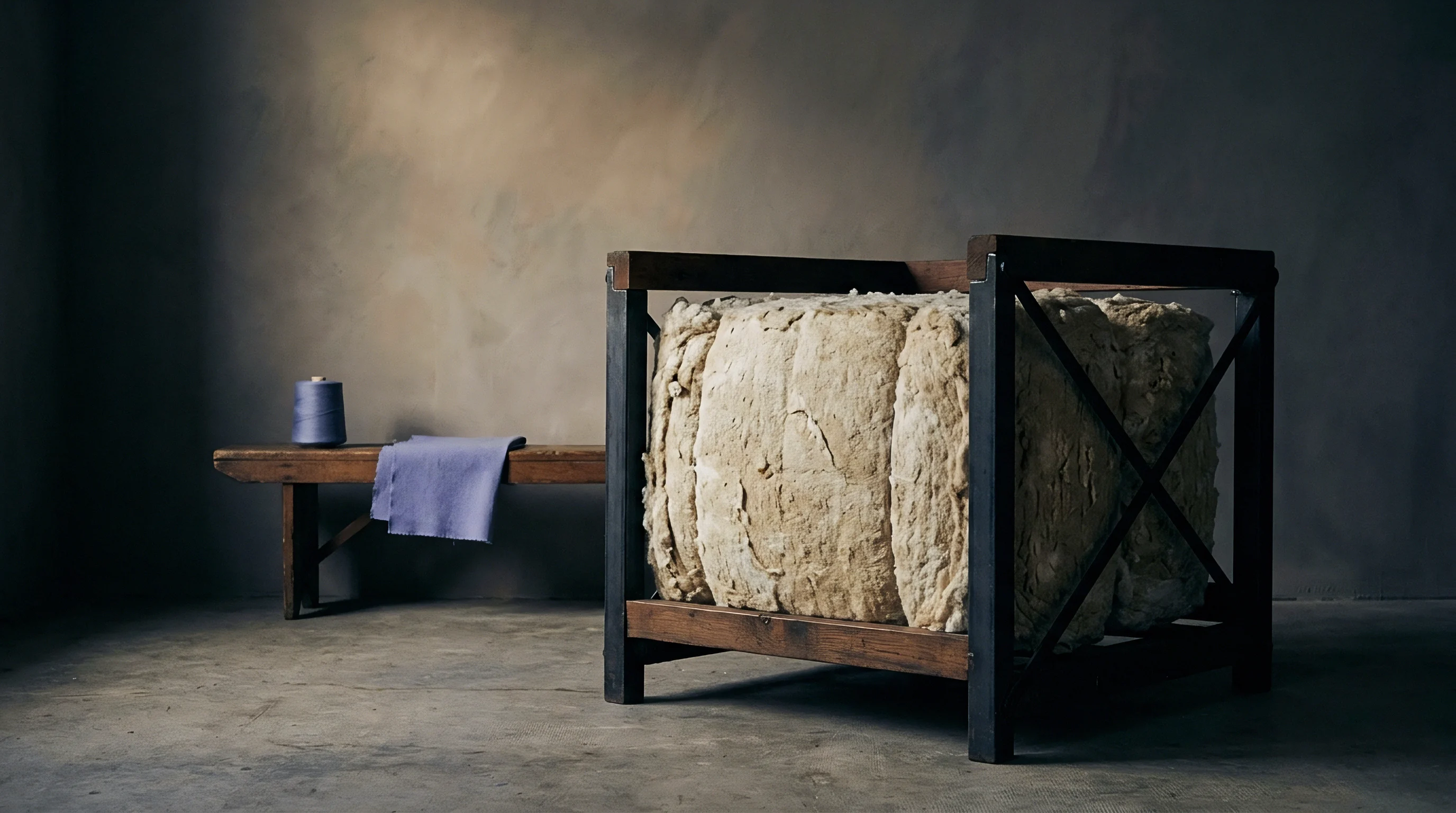
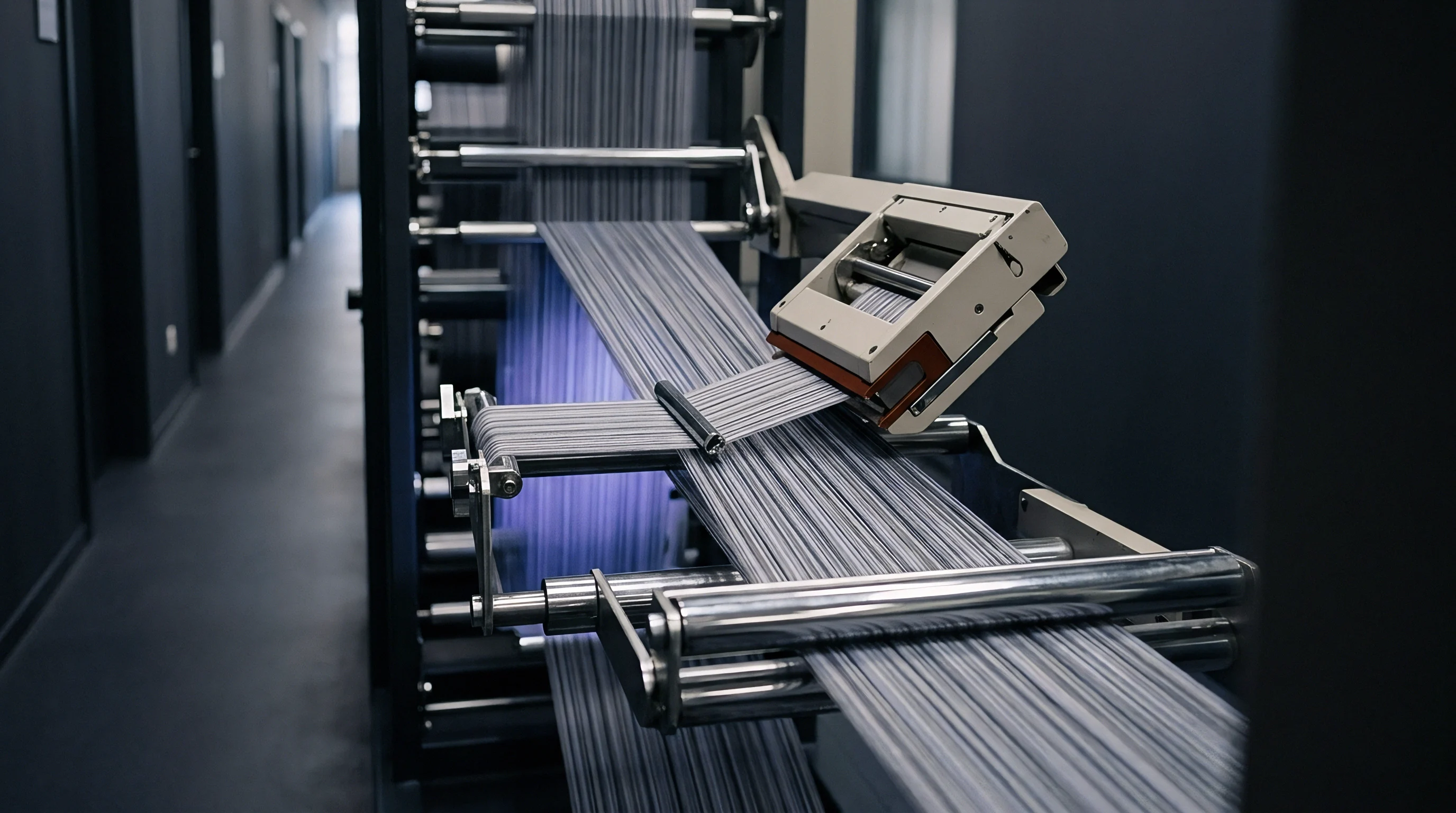
Reel
Skein-based sampling instruments translate rotary reel turns into defined specimen lengths using calibrated wheel circumferences. Motorized wrap reels serve as the standard apparatus for evaluating staple yarn linear density under ISO 2060 and ASTM D1907. These units feature a rigid metal wheel powered by an electric motor, equipped with revolution counters and dynamic braking.
Reel perimeters measure exactly 1.000 metre in metric designs or 1.5 yards (1.3716 metres) in imperial systems. Collapsible spokes allow operators to remove finished skeins without snagging or stretching delicate fibers.
Length accuracy depends on maintaining precise reel perimeters and controlling winding tension. Wrap reels incorporate adjustable tensioning guides, traversing mechanisms to distribute yarn across the reel face, and pre-set revolution counters. Traversing prevents yarn layers from piling up, which would expand the effective perimeter and cause length overruns.
Dynamic electronic brakes halt rotation immediately upon hitting the targeted turn count, preventing inertial over-rotation.
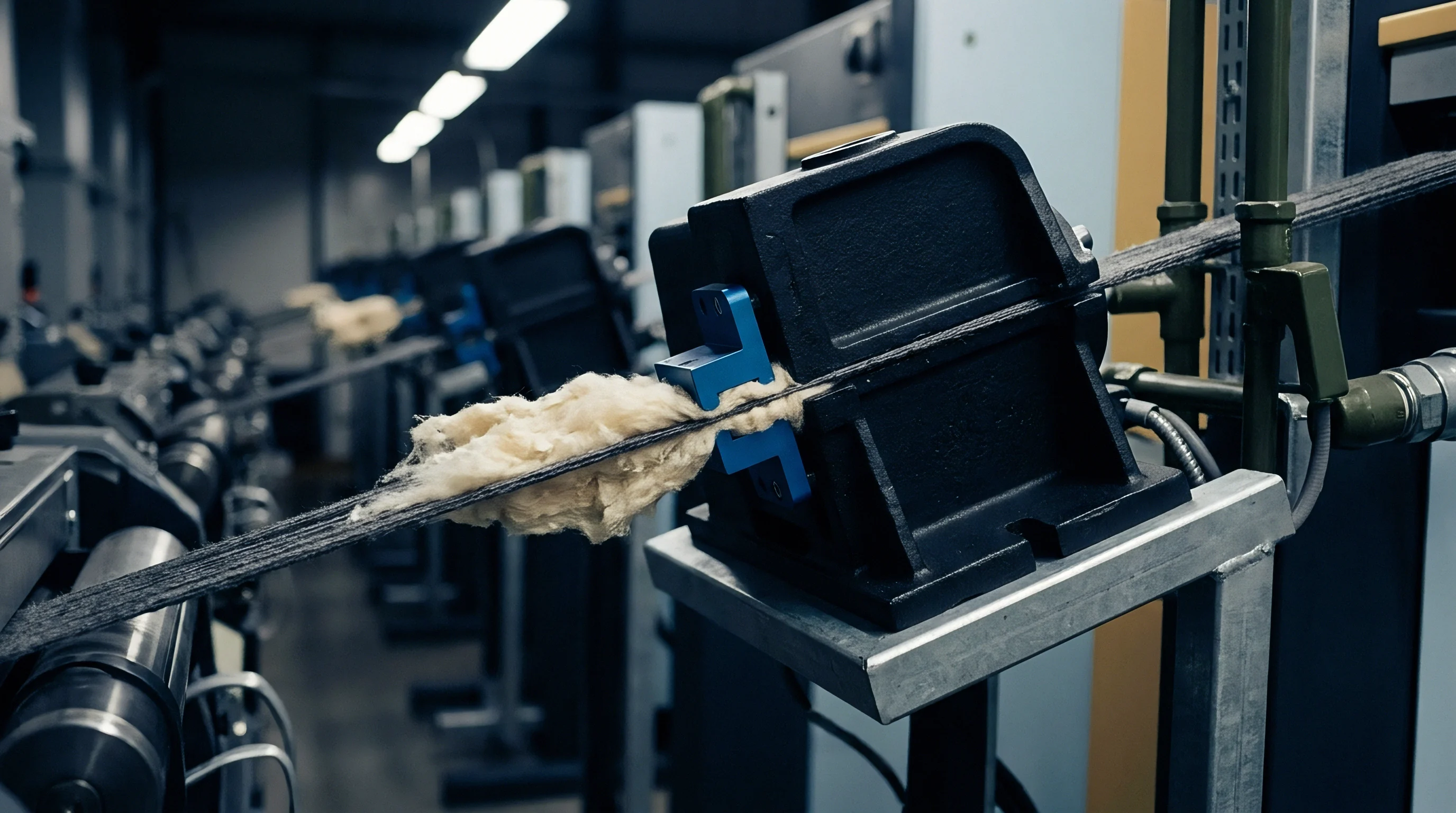
Skein Preparation and Length Precision Mechanics
Winding yarn under controlled tension maintains true specimen length without inducing draft. Excessive tension stretches elastic yarns, yielding an artificially low calculated Tex, whereas insufficient tension creates slack wraps that shorten the sample and inflate mass calculations. Standard test procedures prescribe pre-tension levels proportional to linear density, typically 0.5 +/- 0.1 centinewtons per tex (cN/tex) for spun staple yarns.
Target skein length depends on the active test standard. ISO 2060 Method A specifies 100-metre skeins (100 revolutions on a 1.000-metre reel), whereas imperial testing under ASTM D1907 calls for 120-yard skeins (80 revolutions on a 1.5-yard reel), corresponding to one leat. For fine yarns, operators wind multiple ends simultaneously or increase turn counts to achieve sufficient mass for balance sensitivity.
Conversely, coarse roving or heavy plied yarns require shorter lengths (10 to 50 metres) to stay within balance capacity without sacrificing accuracy.
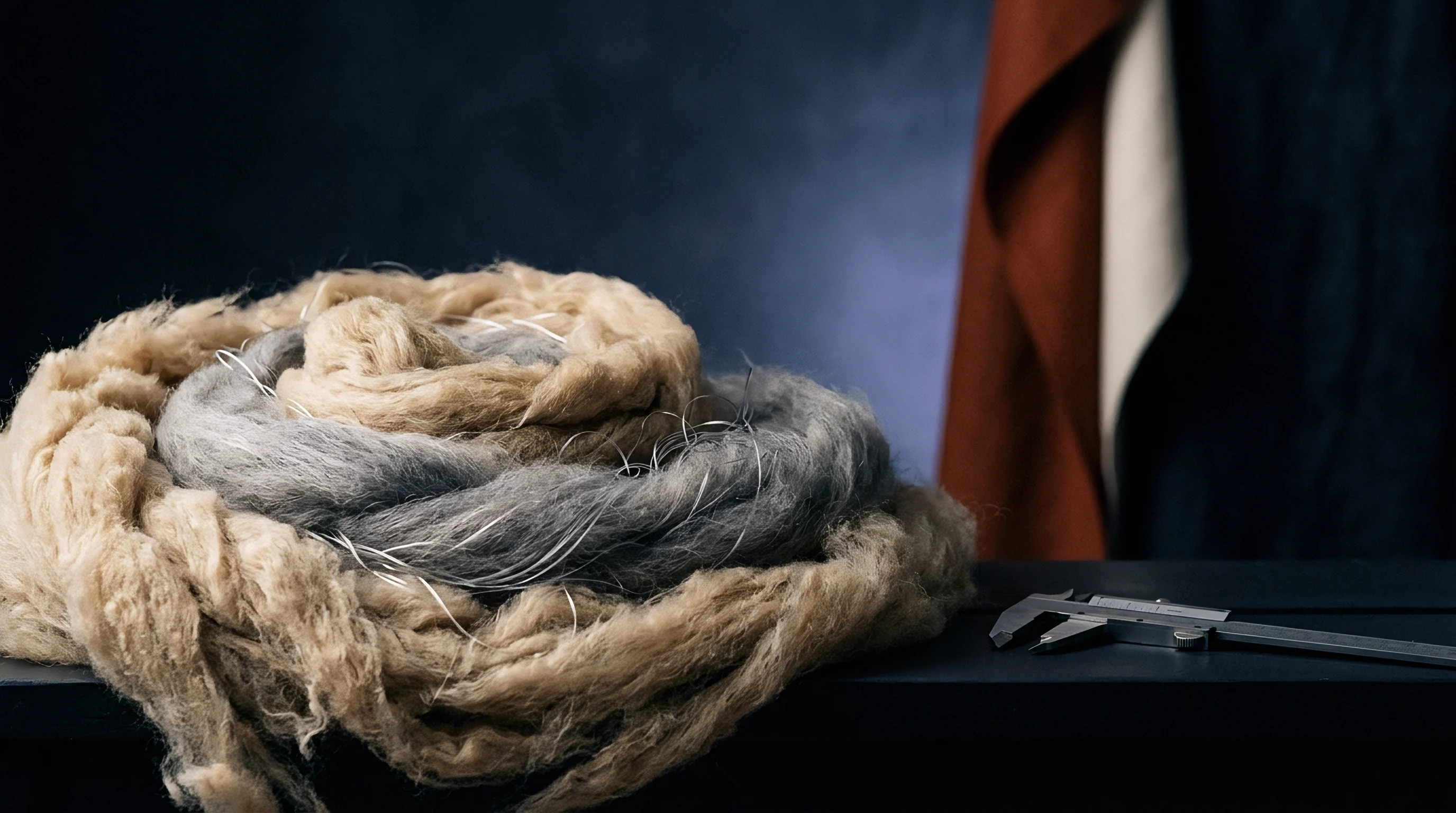
Braking Systems and Perimeter Calibration
Friction plates on the unwinding creel damp out tension spikes during initial wheel acceleration. Calibrating mechanical perimeters involves wrapping flexible steel measuring tapes around the spokes at the exact yarn contact line under standardized tension, reading values to 0.1 millimeter. Because thermal expansion and physical wear alter spoke dimensions over time, laboratories recalibrate every six months or following reel disassembly.
Monitoring wrapping tension with inline digital tension meters placed between the creel and traverse guide prevents length distortion. Tension is adjusted via spring-loaded disc units or magnetic hysteresis brakes. Reeling speed should remain constant throughout the cycle, generally between 100 and 300 revolutions per minute (rpm), as excessive speeds induce aerodynamic drag and centrifugal tension spikes that stretch outer layers unevenly.
A 100-metre skein of 20 Tex staple yarn weighed at 20 degrees Celsius and 65 percent relative humidity yields an exact mass of 2.000 grams.

Analytical Balance Requirements and Mass Evaluation
Weighing small skeins requires balance sensitivity matched to total sample mass. For skein weights exceeding 1.0 gram, instruments with 0.001 gram (1 milligram) resolution satisfy standard error limits. For fine yarns or short segments weighing under 1.0 gram, balances with 0.0001 gram (0.1 milligram) resolution are required to maintain test precision within 0.2 percent.
Draft shields protect balances from air currents during sensitive measurements. Standard practice requires positioning balances on anti-vibration tables away from ventilation ducts, doors, and direct sunlight. Operators verify calibration prior to each shift using internal reference masses or external Class F micro-weights before combining measured mass with length data to calculate direct linear density.
- Mount package securely on unwinding creel ensuring center-line alignment with overhead yarn guides.
- Thread strand through adjustable spring-loaded tensioner, inline tension meter, and traverse guide mechanism.
- Adjust mechanical tension disc until inline tension meter registers exactly 0.5 centinewtons per tex.
- Secure yarn free end into reel spoke clamp and reset revolution counter to zero.
- Engage reel motor and accelerate smoothly to steady target speed between 150 and 200 rpm.
- Stop reel automatically at 100 revolutions and clip yarn strand cleanly at traverse guide.
- Collapse reel spokes gently and transfer wound skein to conditioning rack without stretching strands.
- Weigh conditioned skein on analytical balance accurate to 0.0001 grams inside draft shield.
High reeling speeds and excessive winding tension can cause apparent yarn count variations that mimic draft gear wear on spinning frames. Operating wrap reels at 300 percent above standard tension limits stretches elastic cotton yarn during length measurement, yielding lower Tex values and disguising undersized yarn shipments.
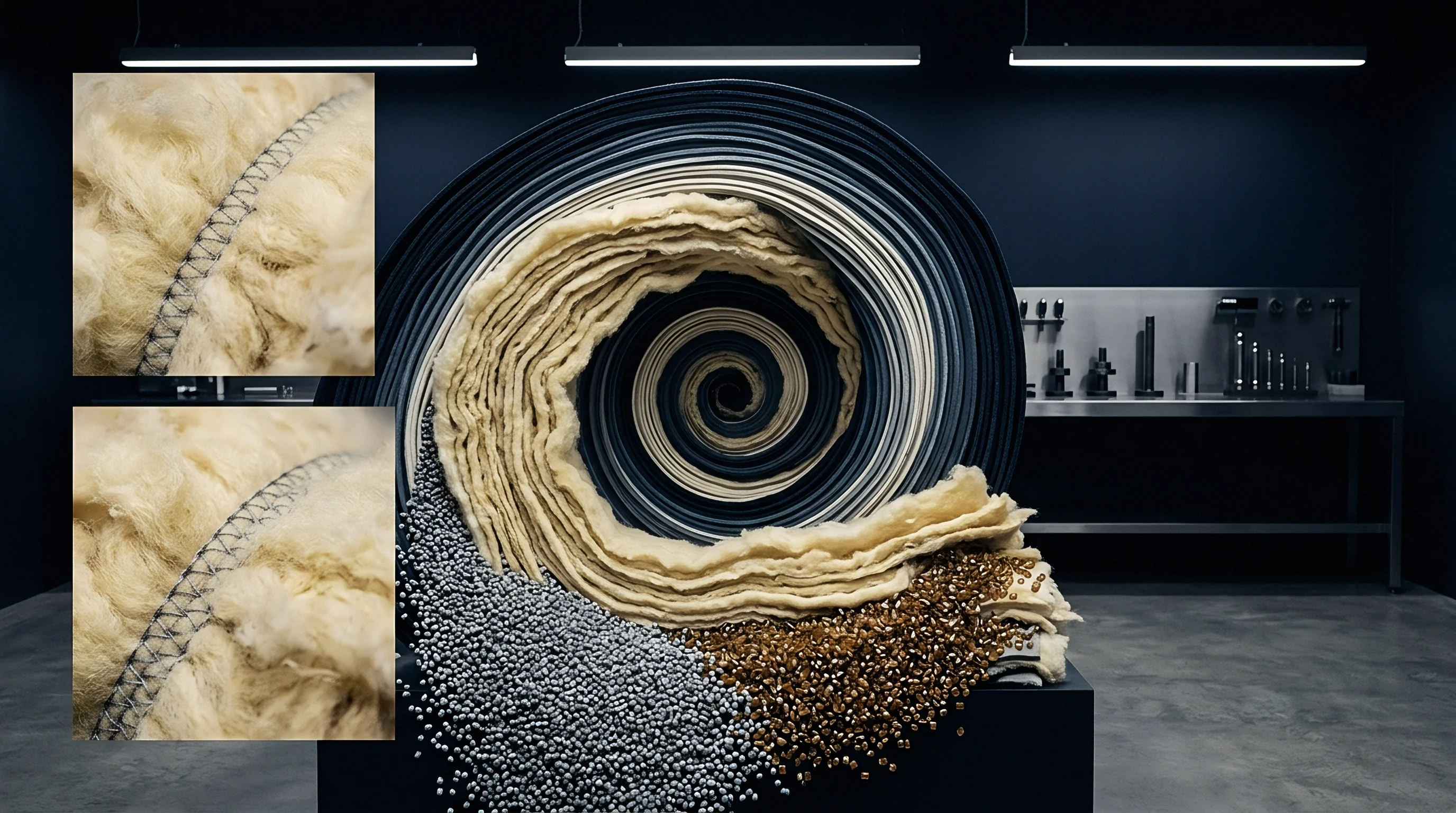

Crimp
The bending geometry of weaving and knitting forces yarns into wavy configurations that alter direct cut-length measurements. Determining the linear density of yarns extracted from fabrics requires accounting for structural crimp and twist contraction. ISO 7211-5 and ASTM D1059 outline unraveling protocols and length-correction calculations used to recover original yarn counts.
Crimp represents the percentage increase in yarn length when a strand is removed from fabric and straightened relative to its distance in the cloth.
In woven fabrics, warp and weft threads interlace over and under one another, creating structural crimp influenced by thread density, weave structure, and finishing tension. In knitted fabrics, stitch loops form complex three-dimensional curves. Measuring linear density without removing crimp yields artificially high Tex values because a straight fabric specimen contains more yarn length than its spatial boundary indicates.
Recovering true linear density requires unraveling yarns under controlled pre-tension to straighten crimp undulations without exceeding the fiber’s elastic limit.

Extraction Procedures for Unraveling Woven and Knitted Fabrics
Extracting individual threads from grey or finished fabric requires careful dissection using fine-point forceps. Technicians cut square swatches measuring at least 500 millimeters by 500 millimeters parallel to warp and weft directions. Fringing the edges isolates clean strands, and technicians extract at least 20 warp and 20 weft yarns from varied positions across the swatch to capture localized fabric variation.
For knitted goods, unraveling continuously along course lines yields long, intact strands suitable for testing.
Extracted yarns relax once released from fabric constraints. Handling pulled staple strands requires care to avoid unwinding twist or stripping surface fibers. Technicians lay extracted strands across smooth glass plates or magnetic clamping fixtures.
Under ASTM D1059 short-length protocols, specimens are cut to exact lengths using hardened steel templates and scalpels before immediate weighing on micro-analytical balances.

Twist Take up and Crimp Contraction Adjustments
The helical path formed during ring spinning shortens a strand relative to its drafted fiber length. Twist take-up describes this length contraction resulting from twist insertion. When testing extracted yarns to determine original spun count, analytical procedures separate structural fabric crimp from spinning twist contraction; applying standard straightening tension removes fabric crimp while preserving internal twist geometry.
| Fabric Construction | Spinning System | Yarn Type | Typical Crimp % | Length Correction Multiplier |
|---|---|---|---|---|
| Plain Weave Canvas (Heavy) | Carded Ring Spun | Warp 60 Tex | 12.50 to 16.00 | 0.862 to 0.888 |
| Plain Weave Canvas (Heavy) | Carded Ring Spun | Weft 60 Tex | 4.00 to 7.00 | 0.934 to 0.961 |
| Poplin Shirtings (Light) | Combed Compact Ring | Warp 15 Tex | 8.00 to 11.00 | 0.900 to 0.925 |
| Poplin Shirtings (Light) | Combed Compact Ring | Weft 15 Tex | 3.50 to 5.50 | 0.947 to 0.966 |
| Single Jersey Knit | Combed Ring Spun | Course 20 Tex | 22.00 to 35.00 | 0.740 to 0.819 |
| Heavy Denim 3/1 Twill | Open-End Rotor | Warp 74 Tex | 9.50 to 13.00 | 0.884 to 0.913 |
| Heavy Denim 3/1 Twill | Open-End Rotor | Weft 84 Tex | 2.50 to 4.50 | 0.956 to 0.975 |
Applying decrimp tension relies on standardized load formulas calculated from yarn linear density. ISO 7211-3 specifies a straightening force of 0.5 +/- 0.1 cN/tex, which removes crimp undulations without extending polymer chains. Specialized crimp testers employ dead-weight clamps or electronic load cells to identify the transition point where crimp flattens prior to elastic elongation.
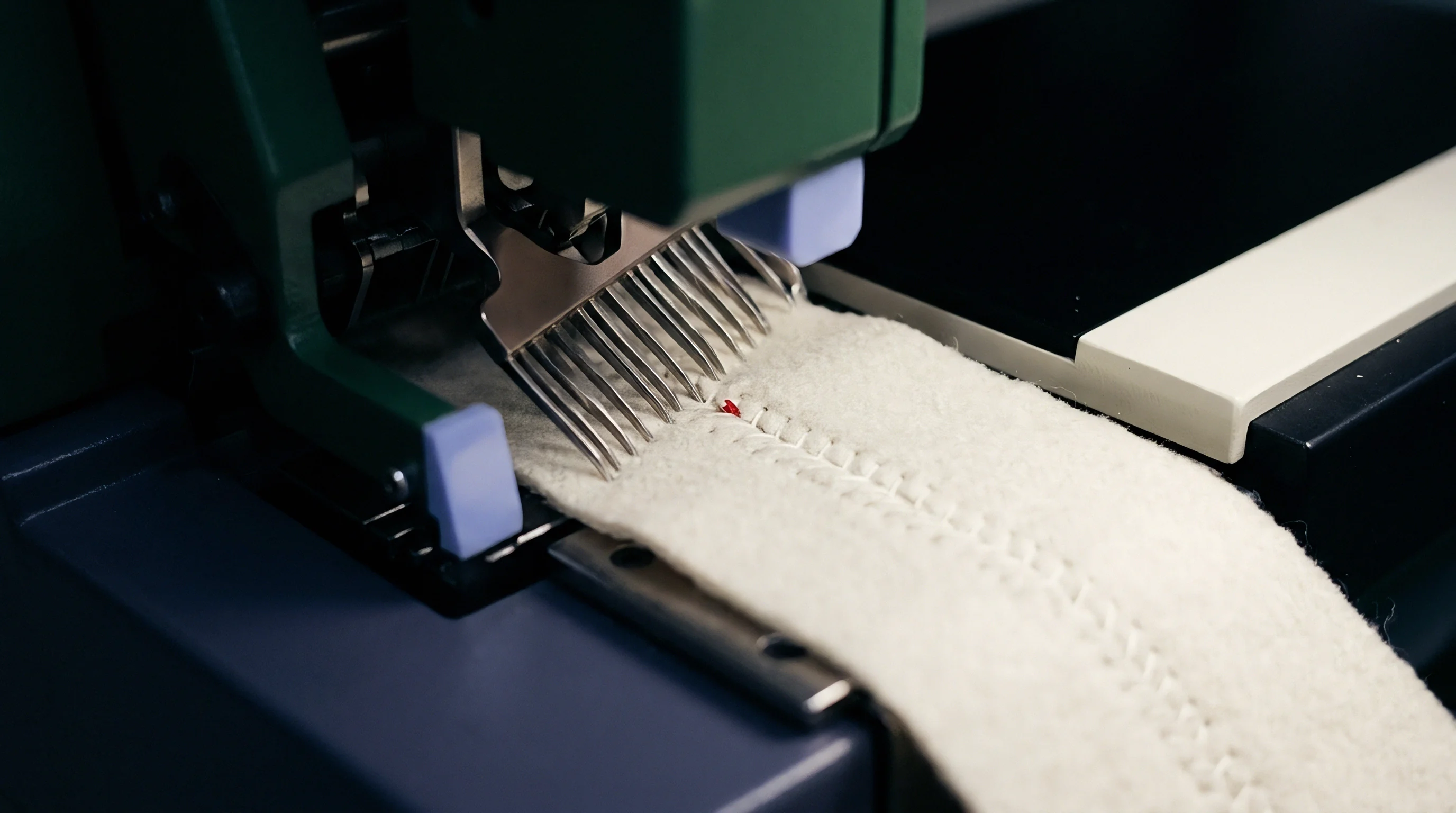
Short Length Measurement Methods under ASTM D1059
Evaluating small samples recovered from fabric swatches requires precision cutting templates and micro-balances. When garment cuttings or field samples lack sufficient yarn for standard 100-metre wrap reel testing, ASTM D1059 provides short-length protocols using cumulative sample lengths between 1 and 10 metres. Technicians prepare multiple short segments ~ such as 50 strands cut to exactly 100 millimeters ~ using precision dies under light glass-plate compression.
Because twist levels influence final length contraction, calculating direct linear density from short specimens requires scaling total mass by length factors and applying statistical adjustments. Micro-weighing magnifies end-cutting variations and localized mass fluctuations, so short-length test protocols require minimum replicate sets ~ typically 5 groups of 20 strands each ~ to ensure statistical validity in commercial arbitration.
ISO 2060 Method A mandates pre-tensioning yarn at 0.5 centinewtons per tex during skein reeling to eliminate slack without distorting fiber crimp.
- Excessive Straightening Tension stretches elastic staple strands past their yield point during crimp removal, generating artificially low linear density figures.
- Insufficient Decrimp Force leaves residual crimp waves in dissected threads, inflating calculated Tex values beyond true package counts.
- Fiber Filament Loss during aggressive fabric unraveling removes strand mass, artificially lowering measured yarn linear density numbers.
- Sizing Removal Failure leaves starch or polymer coatings on extracted warp yarns, inflating apparent direct count figures up to 15 percent.
- Inaccurate Template Cutting introduces length errors across short specimens that compound rapidly into major Tex calculation deviations.
Standard purchase agreements referencing ISO 7211-5 require chemical desizing and finish extraction prior to length measurement, ensuring non-fibrous additive mass is excluded when determining yarn counts from woven fabrics.
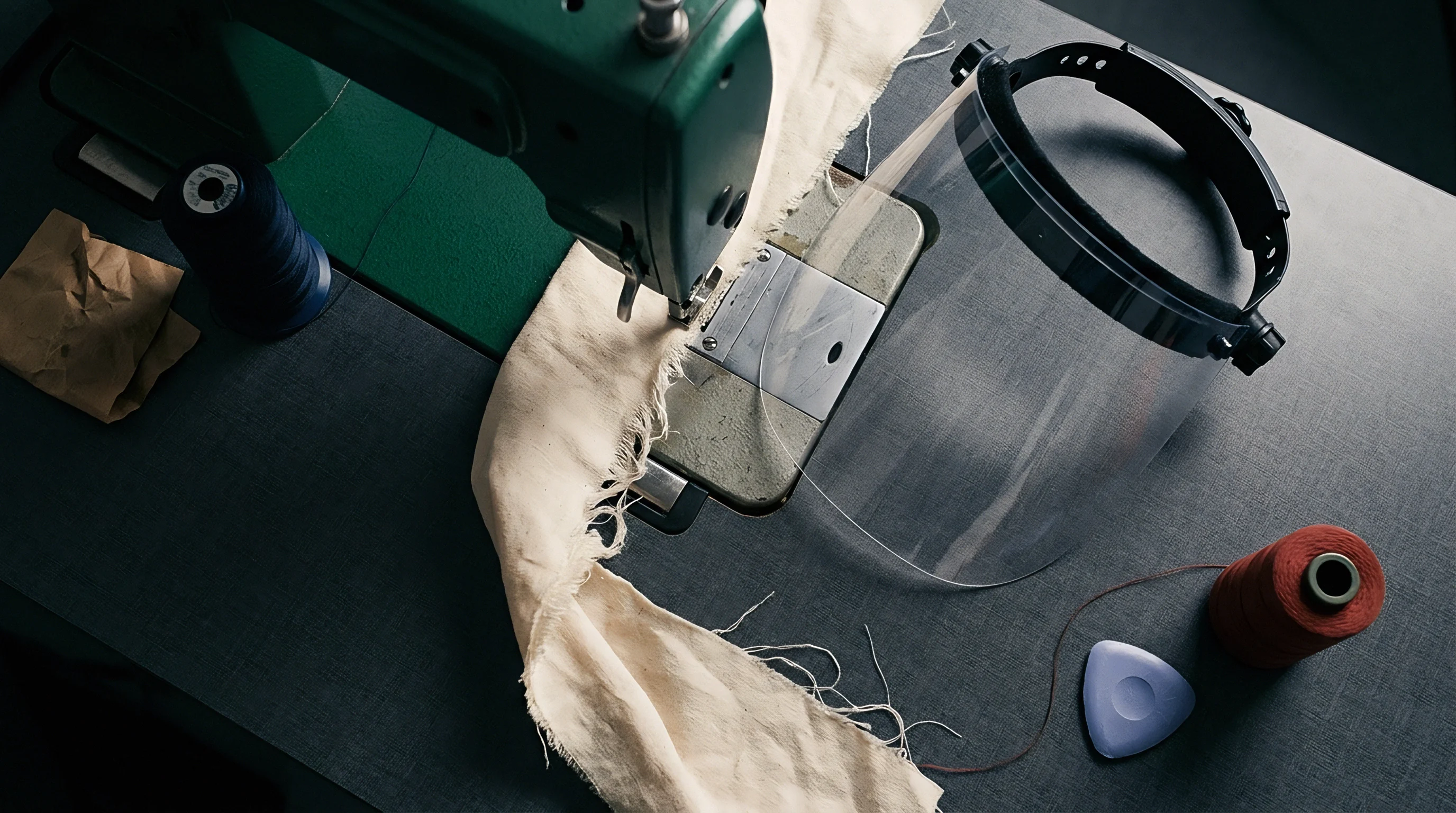

Regain
Drying spun yarn samples in heated, ventilated chambers evaporates unbound moisture to reveal true oven-dry fiber mass. Moisture regain significantly influences commercial linear density testing because hydrophilic fibers absorb ambient moisture, altering raw package weight across varying storage, transit, and weather conditions. Oven-dry testing under ISO 2060 Method 2 and ASTM D1907 Option 2 establishes a stable baseline mass, onto which standardized commercial moisture regain percentages are applied to determine billable linear density.
Oven-drying protocols eliminate environmental humidity variables, ensuring trade occurs based on dry polymer mass plus agreed commercial allowances rather than uncorrected package weights.

Oven Dry Mass Determination Protocols
Thermal conditioning chambers maintained at 105 degrees Celsius drive trapped moisture from cellulosic and synthetic polymer structures. Forced-draft drying ovens utilize digital controllers to hold 105 +/- 3 degrees Celsius (221 +/- 5 degrees Fahrenheit) uniformly through the chamber. Test skeins are placed in ventilated weighing containers or wire baskets suspended from an electronic balance positioned above or beside the oven chamber.
Drying continues until specimen mass stabilizes ~ defined as less than 0.05 percent mass change between consecutive weighings spaced 15 minutes apart in forced-draft ovens, or 30 minutes in natural convection units. Drying cycles typically require 1 to 3 hours depending on skein density and fiber composition. Weighing specimens while enclosed within the heated chamber avoids rapid moisture absorption from ambient air.
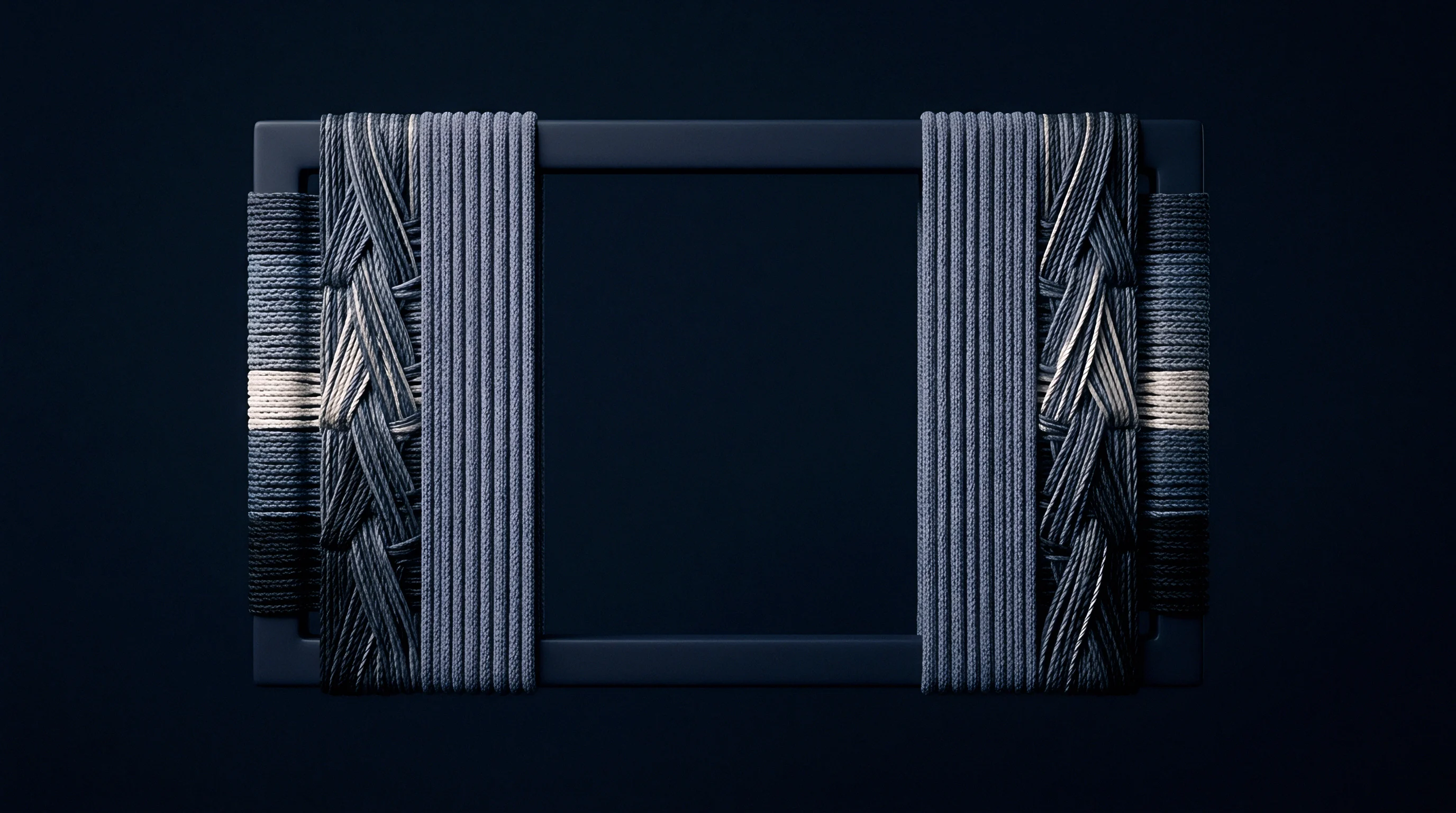
Commercial Weight Arithmetic for Blended Staple Yarns
Calculating contractual billing weights for blended yarns involves applying official allowance percentages to oven-dry mass. Commercial linear density (Tex_c) is calculated from oven-dry linear density (Tex_d), standard commercial regain (R_c), and finish allowances (C) using the formula:
Commercial Tex Formula ~ Tex_c = Tex_d (1 + (R_c / 100)) (1 + (C / 100))
When staple yarns contain intimate blends of two or more fiber types (such as polyester and cotton, or wool and acrylic), effective commercial regain equals the sum of individual fiber regains weighted by their dry mass ratios.
| Fibre Blend Composition | Dry Mass Ratio | Individual Regains % | Calculated Blend Regain % | Standard Finish Allowance % |
|---|---|---|---|---|
| 65% Polyester / 35% Cotton | 0.65 / 0.35 | Poly: 0.40 / Cotton: 8.50 | 3.235 | 0.40 |
| 50% Polyester / 50% Viscose | 0.50 / 0.50 | Poly: 0.40 / Visc: 13.00 | 6.700 | 0.50 |
| 80% Wool / 20% Nylon 6,6 | 0.80 / 0.20 | Wool: 18.25 / Nylon: 4.50 | 15.500 | 1.00 |
| 50% Cotton / 50% Modal | 0.50 / 0.50 | Cotton: 8.50 / Modal: 11.00 | 9.750 | 0.50 |
| 95% Cotton / 5% Elastane (Core) | 0.95 / 0.05 | Cotton: 8.50 / Elas: 1.30 | 8.140 | 0.80 |
Determining blend regain values requires precise dry mass ratios obtained through chemical analysis under ISO 1833. A 65/35 polyester/cotton yarn, for example, carries an official commercial regain of 3.235 percent. Relying on unadjusted laboratory mass taken under high ambient humidity yields a calculated yarn count noticeably heavier than contractual limits, leading to erroneous quality rejections.
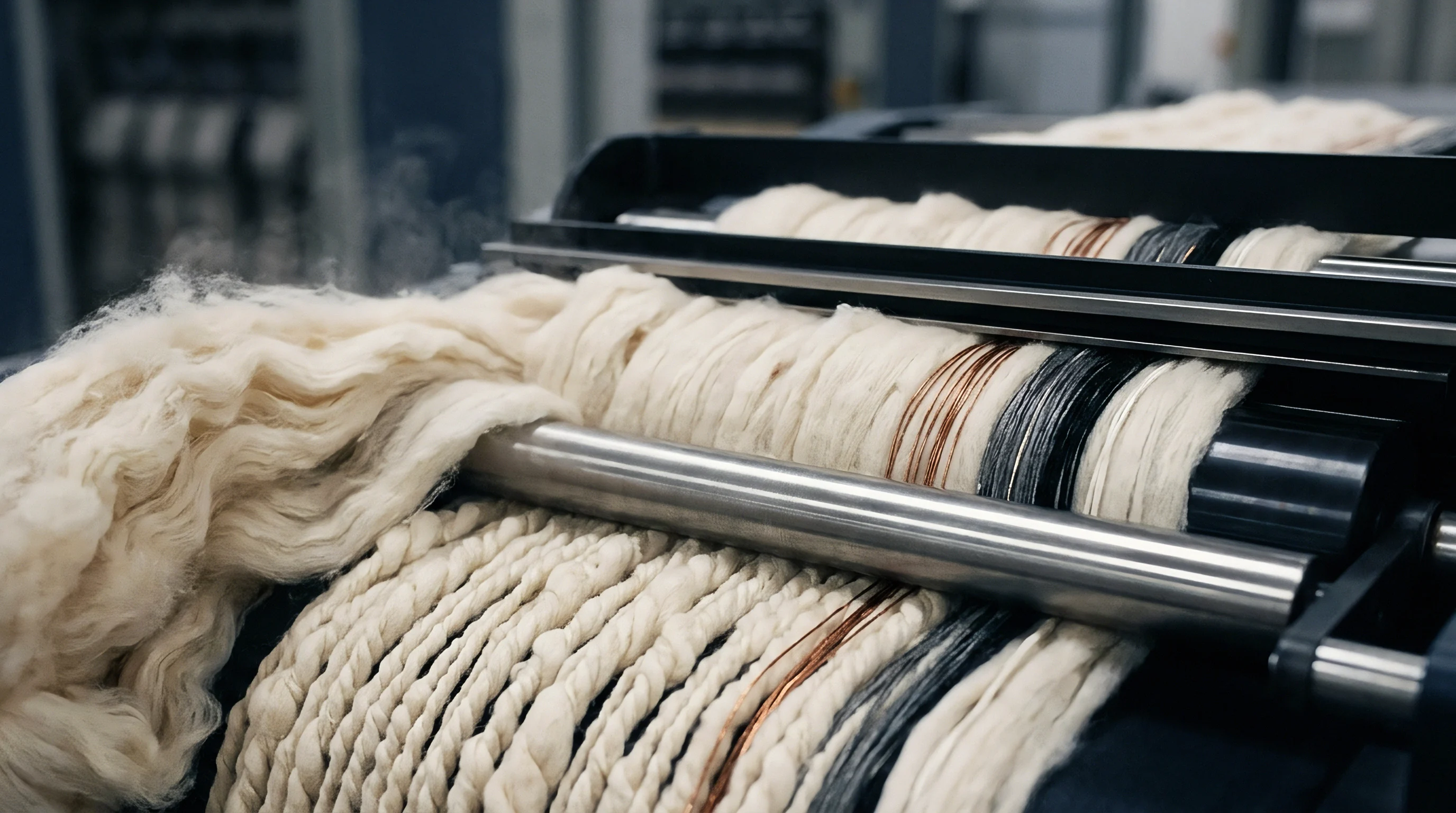
Calculations across Variable Ambient Moisture Conditions
When oven-drying equipment is unavailable, laboratories use correction tables and mathematical adjustments to normalize unconditioned yarn weights to standard moisture values. Correcting linear density from ambient humidity to standard reference moisture requires determining actual moisture content (M_a) using electronic moisture meters or microwave desiccators:
Adjusted Tex Formula ~ Tex_standard = Tex_actual ((100 + R_c) / (100 + M_a))
Where Tex_actual is linear density measured under ambient conditions, R_c is official commercial regain percentage, and M_a is actual sample moisture content at weighing.
Calculated yarn linear density derived from unraveled fabric always exceeds raw package count due to mechanical crimp and twist take-up.
- Establish Fiber Composition by performing chemical solvent extraction or microscopic cross-section analysis to verify component dry mass percentages.
- Select Target Regain Framework based on applicable ISO 2060, BISFA, or ASTM standard clauses matching destination market customs.
- Extract Non-Fibrous Finishes using solvent wash in a Soxhlet apparatus if spinning oils or sizing agents exceed 0.5 percent total mass.
- Perform Forced-Draft Oven Drying at 105 degrees Celsius until mass readings stabilize within 0.05 percent over 15-minute intervals.
- Calculate Weighted Blend Regain using component mass fractions multiplied by official individual fiber regain constants.
- Apply Commercial Mass Formula to compute official billable linear density (Tex) for invoice reconciliation and legal clearance.
Adjusting carded cotton counts from dry mass to commercial regain yields a 3.2 percent weight correction. Investing in dry mass testing equipment typically recovers costs within three shipping cycles by preventing overpayment on water weight billed as raw fiber mass.
Audit
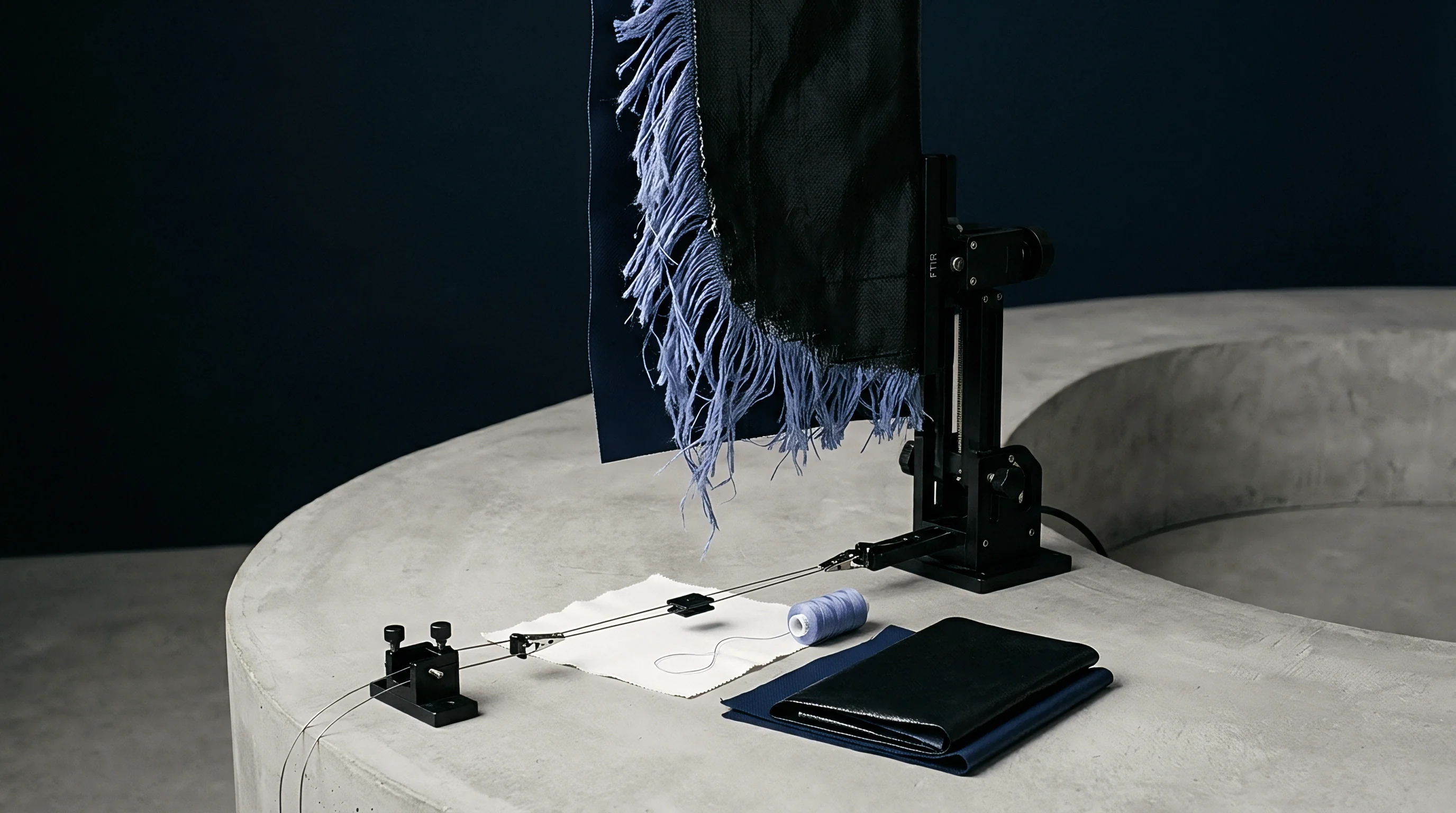
Statistical quality control across commercial yarn consignments relies on structured lot sampling to verify supplier specifications before releasing payment. Verification requires assessing both within-package variation and package-to-package variance across bulk deliveries. A single package meeting nominal specifications does not confirm lot compliance if the overall coefficient of variation (CV%) exceeds engineering tolerances.
ISO 2859-1 and ASTM D2258 define sampling routines designed to select representative packages across production lots.
Quality control laboratories evaluate raw staple yarn packages on arrival using standard reels maintained in conditioned testing environments. Statistical evaluation requires calculating sample mean, standard deviation, and CV% across a specified package replicate count. For carded cotton staple yarns, industry benchmarks set maximum allowable count CV% at 2.5 percent across a spinning lot.
For high-speed air-jet and combed ring yarns, allowable CV% narrows to between 1.2 and 1.5 percent. Higher CV% values indicate erratic drafting control, mixed roving lots, or worn traveler rings ~ leading to streaking, barre bands, and weight variations in woven and knitted fabrics.
Statistical Confidence Intervals and Coefficient of Variation
Calculating standard deviation across multi-spindle test sets quantifies weight fluctuations across bulk shipments. Determining required sample sizes relies on target confidence intervals and population variance, using the standard formula:
Sample Size Formula ~ n = (t CV / E)^2
Where t is Student’s t-value for the desired confidence level (1.96 for 95 percent confidence), CV is the estimated coefficient of variation for yarn linear density, and E is the maximum allowable percentage error bound. When auditing a 10-metric-ton shipment of 30 Tex combed ring cotton yarn with an expected count CV of 2.0 percent and a target error bound of 0.5 percent, testing protocols mandate evaluating at least 62 individual packages drawn randomly across different pallet layers and production doffs.
Lot acceptance protocols must balance testing precision against laboratory throughput. When evaluating short-length samples extracted from fabric, localized mass variation requires increasing replicate test counts up to 100 individual strands to achieve equivalent confidence limits.
Commercial Tolerances and Contractual Settlement Thresholds
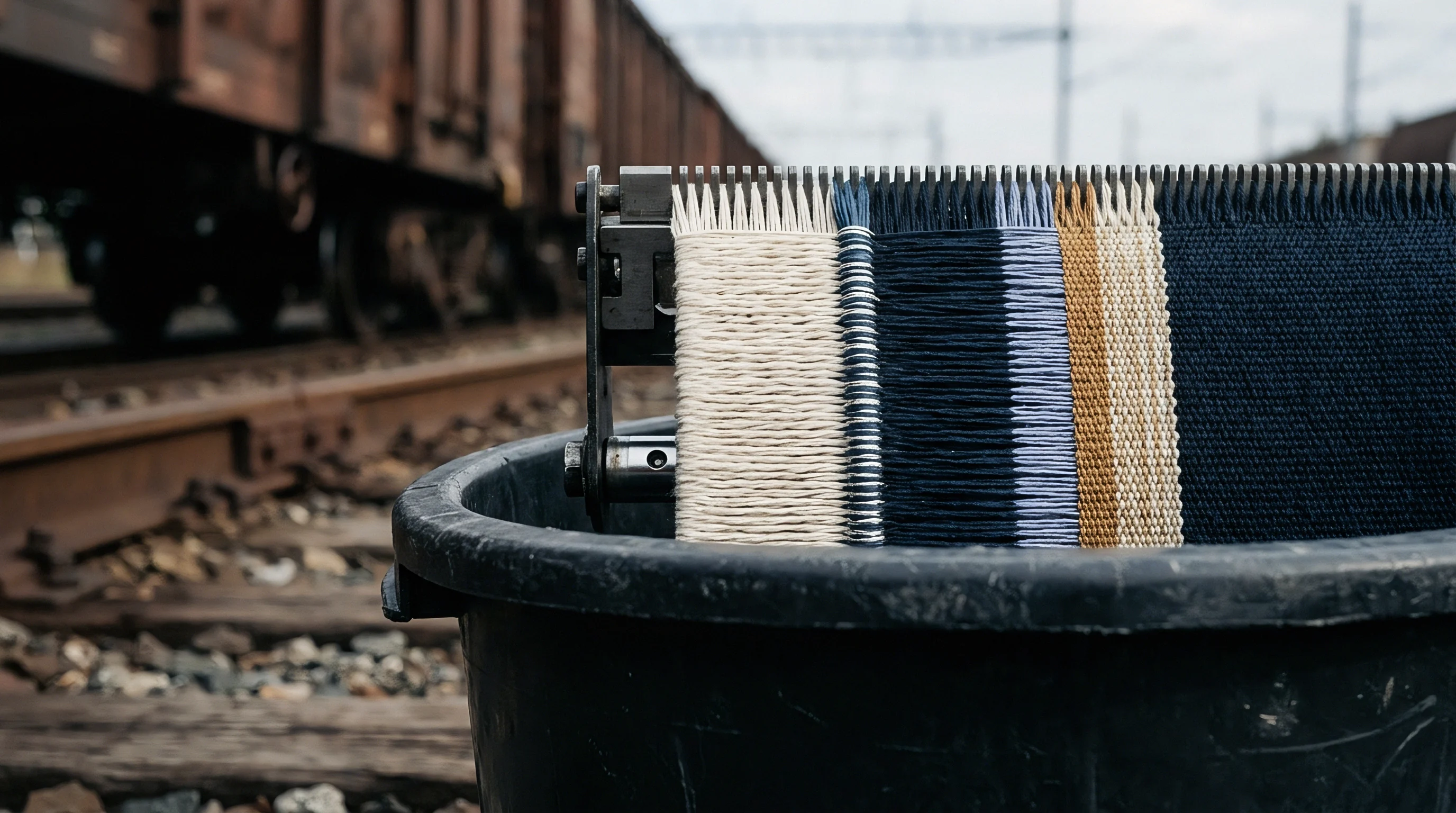
Yarn supply contracts establish numerical bands within which count variations incur no financial penalty. Standard trade frameworks, including rules from the International Cotton Association (ICA) and IWTO, set commercial tolerances for yarn linear density at +/- 2.5 percent of nominal contracted count. Deviations within this range pass at full invoice value.
When verified lot linear density falls outside the +/- 2.5 percent neutral band, penalty formulas adjust invoice billing. If delivered yarn runs coarser than target (higher Tex), the buyer receives more mass per metre than engineered, raising finished fabric weight (GSM) above specification. If delivered yarn runs finer than target (lower Tex), tensile strength drops, cover decreases, and loom operations experience higher warp end breaks.
| Linear Density Deviation (Tex) | Commercial Classification | Financial Penalty / Action | Downstream Process Impact |
|---|---|---|---|
| Within +/- 1.0% | Premium Grade Compliant | 100% Full Payment | Optimal loom cover and GSM balance |
| +1.1% to +2.5% | Standard Commercial Band | 100% Full Payment | Minor GSM increase within fabric tolerance |
| -1.1% to -2.5% | Standard Commercial Band | 100% Full Payment | Slight strength reduction within limits |
| +2.6% to +5.0% | Coarse Off-Spec Delivery | Pro-rata invoice discount on excess mass | Elevated grey fabric weight, higher dye pickup |
| -2.6% to -5.0% | Fine Off-Spec Delivery | Mandatory price discount or replacement | Reduced fabric tensile, poor cover factor |
| Greater than +/- 5.0% | Non-Conforming Material | Full lot rejection at seller expense | Severe barre, machine stop page spikes |
Settlement clauses calculate price adjustments based on linear density deviation multiplied by total lot mass. For coarse deliveries exceeding +2.5 percent Tex, the invoice price per kilogram is reduced proportionally to offset excess mass so the buyer pays only for contracted thread length. For fine deliveries exceeding -2.5 percent Tex, spinning mills must credit the buyer for reduced tensile performance and cover loss or supply replacement yarn at no charge.

Downstream Structural Impacts on Fabric Mass and Cover Factor
Unintended linear density shifts cascade directly into grey goods fabric weight and air permeability. Minor shifts in yarn linear density distort cover factor calculations, altering the balance between warp ends and weft picks. Fabric cover factor (K) in metric Tex units is defined as:
Cover Factor Formula ~ K = (n sqrt(Tex)) / 10
Where n is thread density in ends (or picks) per centimeter and Tex is direct yarn linear density. Weaving trials monitor thread count and yarn density to lock down fabric specifications. If delivered warp yarn drops from a nominal 20 Tex down to 18 Tex (-10 percent direct count shift), warp cover factor decreases by 5.1 percent.
This drop can cause open reed marks, lower fabric bursting strength, increase air permeability, and alter dye liquor pick-up during continuous pad dyeing.
When yarn density shifts heavier (+10 percent Tex shift), fabric mass per square metre increases proportionally under ISO 3801 testing, forcing wet processing plants to consume additional dyestuffs and chemicals to achieve target shade depth. In dense woven constructions, overweight yarn causes reed crowding, severe warp abrasion, and loom stoppages that degrade weaving efficiency. Establishing systematic verification protocols at yarn intake protects downstream fabric specifications, ensures billing accuracy, and maintains structural integrity across processing steps.
Systematic yarn count drift off nominal target shifts grey fabric unit mass and invalidates loom cover factor calculations.
A standard master purchase agreement clause for technical staple yarn specifies that if bulk linear density deviates from nominal contract density by more than 2.5 percent across three consecutive shipments, the buyer holds the right to cancel remaining purchase order balances, return non-conforming inventory at the seller’s expense, and recover re-tooling costs incurred on affected weaving machinery.