Production Variance
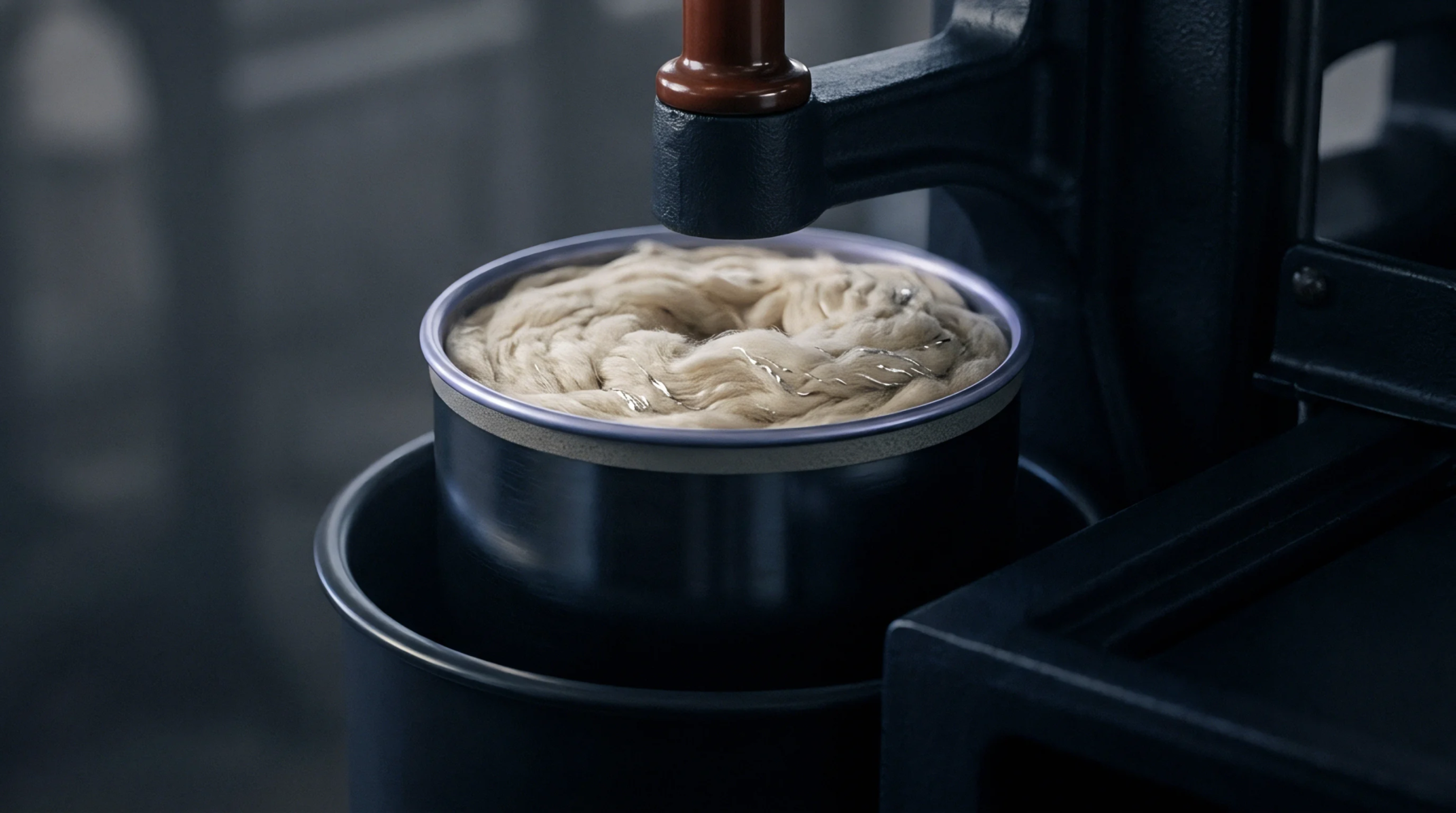
Spinning draft deviation defines the quantitative disparity between the calculated roller speed ratios and the actual attenuation of fibre mass during the carding or draw frame operation within mechanical yarn processing. Technicians track spinning draft deviation to calibrate machine output against incoming sliver weight specifications. Accurate control of this variable ensures that the mass per unit length remains constant across the entire bobbin.
Deviations that exceed local tolerance limits generate structural faults in the yarn as the linear density drifts away from target counts.
Adjustment Logic
Draft calculations rely on the surface speed of input and output rollers working in tandem to pull the strand. Variations arise when belt slippage, mechanical wear on fluted rollers, or incorrect pressure settings alter the effective nip point. Mechanics observe these changes by comparing the theoretical draft ratio against actual output measurements gathered from regular testing intervals.
Small discrepancies often accumulate over the course of a shift, causing the yarn to become either too thin or excessively bulky. Corrective measures involve resetting the gear train or replacing worn aprons to restore mechanical grip. If the rollers fail to maintain a constant contact force, the fibre bundle slides rather than extends, which ruins the uniformity of the final product.
Reliable production relies on these adjustments to maintain consistent tension throughout the attenuation cycle.
Operational Impact
High rates of drift force factories to scrap batches because the material fails to meet international standards for yarn evenness. Customers reject shipments containing inconsistent count profiles because subsequent knitting or weaving processes experience frequent breakage at the high-speed feed stations. Reducing this instability requires continuous monitoring of roller health and frequent calibration of the draft gearing.
Some mills employ automatic monitoring sensors that flag sudden shifts in mass flow to minimize the volume of substandard output. Persistent drift suggests that the drive motor or the transmission assembly requires overhaul.
Measurement Standard
Quality assurance teams conduct rigorous sampling at the delivery stage of the draw frame to record specific mass variations. They weigh segments of sliver and compare those results against the predicted weight based on the mechanical draft setting. Laboratories perform this verification using calibrated analytical balances under controlled humidity conditions to prevent moisture absorption from skewing the data.
Each measurement provides a snapshot of the machine efficiency at that precise moment of the production cycle. Proper protocols mandate that the sampling rate corresponds to the total throughput volume to capture potential transient errors. Excessive deviation indicates a failure in the mechanical link between the drive system and the fibre handling zones, rendering the process incapable of meeting precise count requirements.
Strict oversight of the roller interaction prevents the gradual drift of linear density that compromises product integrity.