Short Fiber Content Thresholds in Combed Cotton Rotor Spinning
Exceeding twelve percent short fiber content by number in combed cotton sliver accelerates rotor accumulation, increases wrapper fibers, and drops yarn tenacity.


Comb
Mechanical fiber selection during cotton preparation establishes the foundational staple distribution before any yarn formation begins. Raw cotton contains a continuous spectrum of fiber lengths, ranging from long, mature staple strands to tiny fragments created during ginning and lint cleaning. In open end rotor spinning, the presence of short fibers, defined internationally as fibers shorter than 12.7 millimeters (0.5 inches), directly dictates processing stability and yarn quality.
Fiber length governs yarn tenacity. While carding action aligns fibers and removes coarse trash, it cannot selectively purge short fragments from the fiber population. Incorporating a comber into the preparation line removes these short elements, transforming the fiber length distribution curve.
Combing operates through a cyclic mechanical separation process. A nip jaw holds a fiber lap while a rotating circular comb fitted with fine wire clothing sweeps through the protruding fiber beard. This circular combing action extracts loose, unattached short fibers, neps, and residual trash, discharging them as comber noil waste.
The top comb then drops into the fiber fringe as detaching rollers pull the combed fibers forward, creating a continuous sliver composed predominantly of longer, aligned fibers. Adjusting the distance between the nipper jaw and the detaching roller alters the noil extraction percentage, directly controlling the remaining short fiber content in the combed sliver.

Noil Extraction Kinetics and Short Fiber Removal
Circular wire clothing strips unattached material from the fiber beard held by the top nipper assembly. Extraction intensity depends on feed distance per nip, circular comb wire density, top comb depth, and detaching point setting. Increasing noil extraction from 8 percent to 16 percent systematically shifts the staple length distribution.
The process preferentially purges short fibers, reducing the overall percentage of fibers below 12.7 millimeters while increasing the upper half mean length of the resulting sliver.
Fiber length distributions in combed sliver exhibit significantly tighter dispersion than carded slivers. The removal of short fragments alters the physical geometry of the sliver, creating a uniform fiber assembly that responds predictably to drafting forces. Short fibers fly out.
In carded sliver, short fibers cluster randomly, creating localized variations in linear density. Combing removes these unstable clusters, producing a continuous strand where individual fibers overlap consistently across the sliver cross-section.
Differentiating Mass and Numerical Length Distributions
High-volume instruments calculate fiber length based on optical attenuation through an aligned beard. This measurement reports short fiber content by weight, designated as SFCw. Weight-based metrics inherently favor longer, heavier fibers, effectively obscuring the massive numerical presence of short fiber fragments.
A sliver exhibiting an SFCw of 6.0 percent may actually contain a short fiber content by number, designated as SFCn, exceeding 18.0 percent. Numerical distributions count individual fiber entities regardless of their individual mass.
Individual fiber testing instruments, such as the Advanced Fiber Information System, measure individual fibers passing through an optical sensor chamber. These systems report both mass and numerical distributions simultaneously. In rotor spinning, individual fiber counts dictate mechanical behavior inside the spinning unit.
Single short fibers, despite their low mass contribution, act as independent entities during opening and transport. Evaluating raw stock solely on weight-based metrics leads to underestimating the operational impact of short fibers in open end processing.
- Short Fiber Content by Weight represents the mass fraction of fibers shorter than 12.7 millimeters relative to total sample mass, typically ranging from 4.0 percent in fine combed slivers to 10.0 percent in carded stock.
- Short Fiber Content by Number measures the absolute percentage count of individual fibers under 12.7 millimeters within an optically analyzed sample, often exceeding double the corresponding weight percentage.
- Upper Half Mean Length establishes the average length by number of the longer half of the fibers, expressed in inches or millimeters, defining the primary staple class.
- Nep Count per Gram quantifies small entanglements of fibers, including seed coat fragments, which combing reduces alongside short fiber extraction.
The mill counter-claims that raw cotton bale variance makes short fiber extraction unstable across changing crop origins.
Distortion
Open end spinning relies on complete individualization of raw stock through high-speed mechanical carding teeth. Incoming combed sliver enters the drafting zone, where an opening roller covered with saw-tooth wire rotates at speeds between 6,000 and 10,000 revolutions per minute. Individual fibers are stripped from the sliver feed fringe and accelerated into an air transport duct.
High short fiber content alters this mechanical individualization process, causing irregular fiber transport and structural defects in the final yarn.
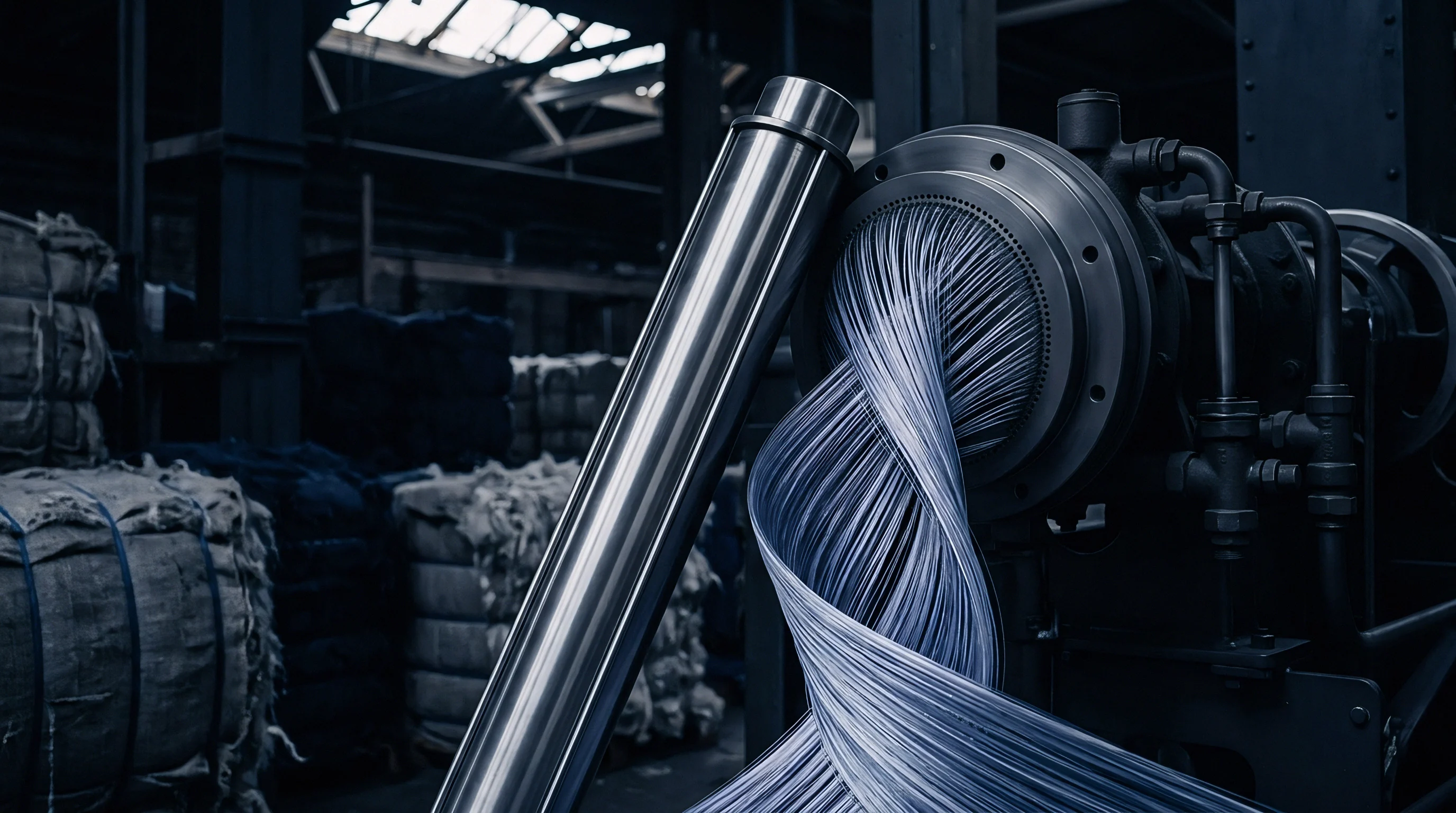
Short fibers possess low bending rigidity and insufficient length to engage simultaneously with the opening roller teeth and the surrounding airflow. During extraction from the feed fringe, short fibers release prematurely, tumbling randomly within the transport duct instead of flying aligned in a parallel stream. This chaotic movement leads to fiber buckling, drafting waves, and early coagulation within the airstream before reaching the rotor wall.

Opening Roller Dynamics and Transport Channel Jamming
Wire teeth mounted on the pinned cylinder contact the sliver feed fringe at surface speeds exceeding twenty-five meters per second. Long fibers experience controlled mechanical combing and orientation along the direction of rotation. Short fibers lack the length required for sustained tooth engagement, causing them to float uncontrollably between adjacent teeth.
Dust clogs the navel. This floating action creates turbulent air eddies within the opening roller housing, leading to localized fiber accumulation.
Accumulated short fiber clusters periodically detach from the opening roller housing, entering the transport channel as dense, unoriented bundles. These bundles alter air velocity profiles inside the tapered duct. Higher draft increases fiber slip.
When short fiber volume exceeds mechanical thresholds, transport channel air speed drops, leading to partial choking and irregular fiber deposition along the rotor groove perimeter.

Groove Accumulation and Wrapper Fiber Kinetics
Centrifugal forces transport single fibers outward toward the inner perimeter of the spinning cup. Rotors spinning at 100,000 to 150,000 revolutions per minute create centrifugal accelerations exceeding 100,000 g, forcing fibers into the V-shaped rotor groove. Short fibers landing in the groove lack sufficient length to bridge multiple adjacent fibers, reducing inter-fiber cohesion within the sliding ribbon before twist insertion.
During yarn formation, the rotating yarn tail collects fibers from the rotor groove while false twist travels backward from the navel. Short fibers positioned along the edge of the fiber ribbon fail to integrate fully into the core twist structure. Instead, the centrifugal air current wraps these free short fibers externally around the yarn core, creating wrapper fibers or belt fibers.
Wrapper fibers cause thick places. Excessive wrapper fibers distort the smooth cylindrical surface of rotor yarn, increasing mass irregularity and reducing tensile strength.
| Short Fiber Content Number (%) | Short Fiber Content Weight (%) | Rotor Speed (rpm) | End Break Rate (per 1,000 hrs) | Wrapper Fiber Count (%) | Yarn Tenacity (cN/tex) |
|---|---|---|---|---|---|
| 8.5 | 4.2 | 135,000 | 8.2 | 6.1 | 16.8 |
| 11.0 | 5.5 | 135,000 | 12.5 | 9.4 | 15.4 |
| 13.8 | 7.1 | 135,000 | 24.1 | 14.8 | 13.9 |
| 16.5 | 8.8 | 120,000 | 48.6 | 21.3 | 12.1 |
Ignoring short fiber thresholds accelerates opening roller clothing wear, elevates yarn defect counts, and degrades fabric surface appearance.


Tolerance
Setting explicit short fiber thresholds aligns raw fiber metrics with real-time spinning efficiency. Traditional carded open end spinning tolerates higher short fiber percentages due to coarse yarn count production and lower rotor speeds. Fine combed rotor spinning, targeting Ne 30s to Ne 40s counts at rotor speeds above 120,000 revolutions per minute, demands stringent control over short fiber limits to maintain structural yarn integrity.
Upper limits for short fiber content must account for both weight and numerical metrics. In fine combed rotor applications, an SFCw maximum threshold of 5.5 percent combined with an SFCn maximum of 12.0 percent represents the operational boundary for low-defect yarn production. Exceeding these values causes an exponential rise in Uster thin places, thick places, and neps (IPI values), directly degrading downstream knitting performance.
Why Extract Short Fibers before Feeding Open End Rotors?
Rotor yarn architecture relies on cohesive fiber bridging across the groove circumference. Short fibers yield low strength. When short fibers dominate the fiber ribbon, the number of continuous load-bearing fibers per cross-section drops dramatically.
Because open end yarn already possesses approximately 15 to 20 percent lower tenacity than ring-spun yarn of equivalent count, high short fiber levels push tensile strength below commercial acceptance standards.
To demonstrate the operational effect of short fiber extraction, consider a combed sliver processing trial evaluated under controlled rotor spinning parameters. Take a 1,000-kilogram lot of raw cotton divided into three combing intensity tiers: Light Combing (9.0% noil extraction), Standard Combing (13.5% noil extraction), and Intensive Combing (17.5% noil extraction). Assume a constant rotor speed of 130,000 revolutions per minute spinning an Ne 32s yarn.
Under Light Combing, the sliver retains an SFCn of 14.2 percent and an SFCw of 7.0 percent. The resulting yarn produces a tenacity of 13.8 cN/tex, an unevenness (CVm) of 15.2 percent, and an end break rate of 31 breaks per 1,000 rotor hours. Under Standard Combing, the SFCn drops to 10.8 percent and SFCw to 5.1 percent.
Yarn tenacity increases to 15.6 cN/tex, CVm improves to 13.4 percent, and end breaks fall to 11 per 1,000 rotor hours. Under Intensive Combing, SFCn reaches 8.1 percent and SFCw 3.9 percent, yielding a tenacity of 16.4 cN/tex and 7 end breaks per 1,000 rotor hours, though raw material waste increases significantly.
At a rotor speed of 110,000 revolutions per minute, combed cotton sliver containing 11.2 percent short fiber content by number produces 14 end breaks per 1,000 rotor hours.
AFIS Benchmark Criteria for Rotor Combed Sliver
Advanced Fiber Information System measurements evaluate single-fiber distributions through individual optical sensors. Threshold criteria for combed sliver intended for high-speed open end rotor frames specify precise boundaries across key fiber parameters. Nep counts jump rapidly.
Maintaining these parameter boundaries prevents microdust building up inside the rotor groove while preserving yarn elongation characteristics.
- Maximum Short Fiber Content by Weight sets the upper boundary for mass under 12.7 millimeters at 5.5 percent for Ne 30s to Ne 40s combed rotor yarns.
- Maximum Short Fiber Content by Number establishes the numerical entity limit at 12.0 percent to prevent wrapper fiber proliferation during twist insertion.
- Minimum Mean Length by Number dictates that the average numerical length across all fibers must remain above 21.0 millimeters to ensure cross-sectional cohesion.
- Maximum Fiber Nep Count caps total fiber entanglements at 80 neps per gram to prevent transport channel friction and rotor accumulation.
Whether online optical sensors in the transport channel can replace offline individual fiber testing remains an open engineering question.

Economics
Financial performance in open end yarn production turns on raw material waste extraction balanced against high rotor speeds. Extracting comber noil incurs a direct fiber mass loss, raising the raw material cost per kilogram of delivered combed sliver. Mill management evaluates whether the operational gains of higher rotor speeds, reduced end breaks, and elevated yarn pricing offset the financial loss from extracted noil waste.
Comber noil commands a lower market resale value than raw cotton bales, selling typically at a 30 to 45 percent discount as secondary raw stock for coarse rotor yarns, nonwovens, or medical cotton. Optimizing short fiber removal requires balancing this price differential against the productivity gain achieved by operating open end spinning machines at higher speed bands without experiencing excessive machine downtime.
Noil Recovery Value and Landed Yarn Costs
Waste generated at the comber drops into subterranean collection hoppers as secondary raw material. Calculating net sliver cost involves factoring raw cotton purchase price, combing mass loss percentage, and noil resale credit. Noil pricing alters margin.
When raw cotton prices rise, the financial penalty of extracting high noil percentages increases substantially, forcing spinners to target the absolute minimum short fiber extraction required for spinning stability.
A comprehensive financial comparison highlights the unit cost dynamics associated with variable comber settings. Assume raw cotton purchased at 2.10 USD per kilogram and comber noil sold at 1.25 USD per kilogram. Processing 1.00 kilogram of raw cotton through carding yields 0.92 kilograms of carded sliver at a net raw fiber cost of 2.28 USD per kilogram.
Passing that stock through a comber at 10.0 percent noil extraction produces 0.828 kilograms of combed sliver. The gross fiber cost totals 2.10 USD minus a noil credit of 0.125 USD (0.10 kg at 1.25 USD/kg), resulting in a net fiber cost of 1.975 USD for 0.828 kg of sliver, or 2.385 USD per kilogram of combed sliver. Increasing extraction to 16.0 percent noil yields 0.7728 kilograms of combed sliver.
The noil credit rises to 0.20 USD (0.16 kg at 1.25 USD/kg), leaving a net fiber cost of 1.90 USD for 0.7728 kg, which equals 2.458 USD per kilogram of combed sliver. The higher extraction adds 0.073 USD per kilogram to sliver input cost.

Rotor Speed Capital Recovery versus Combing Loss
High rotor velocity spreads fixed plant overhead across greater total kilogram output per hour. Comber waste recovery offsets cost. Operating rotors at 140,000 revolutions per minute instead of 110,000 revolutions per minute increases hourly yarn output by 27.2 percent.
This output gain reduces machine depreciation, labor, and factory floor space expenses per kilogram of yarn produced.
Lower short fiber levels reduce spinning end breaks, directly increasing total machine efficiency. A rotor frame running at 98 percent efficiency produces significantly more yarn per shift than a frame running at 91 percent efficiency due to frequent end-break re-piecing stops. If the financial gain from higher spinning speed and frame efficiency exceeds the 0.073 USD per kilogram added sliver cost, intensive combing delivers a net profit advantage.
| Comber Noil Extraction (%) | Combed Sliver Cost ($/kg) | Rotor Speed Capacity (rpm) | Spinning Power Efficiency (kWh/kg) | Finished Yarn Tenacity (cN/tex) | Net Landed Cost ($/kg) |
|---|---|---|---|---|---|
| 8.0 | 2.34 | 115,000 | 1.42 | 14.2 | 3.12 |
| 12.0 | 2.41 | 130,000 | 1.28 | 15.5 | 3.08 |
| 15.0 | 2.45 | 140,000 | 1.21 | 16.2 | 3.06 |
| 18.0 | 2.51 | 145,000 | 1.18 | 16.6 | 3.14 |
Under standard mill purchase agreements, exceeding a 13.0 percent numerical short fiber limit allows total shipment rejection or a two percent price penalty per additional percentage point.
Higher noil extraction rates yield cleaner spinning running conditions but push yarn production costs toward ring spinning levels.

Protocol
Receiving sliver lots without systematic lab verification creates unquantified operational risks on the spinning floor. Fiber testing verification requires structured sampling protocols that capture lot variance across multiple drawing frames and combing positions. Single tests miss lot variance.
Relying on supplier-furnished quality certificates without internal re-testing exposes the mill to unexpected short fiber spikes.
Laboratory testing protocols must establish precise sample size, conditioning parameters, and instrument calibration routines. Testing raw sliver immediately after drawing without adequate moisture conditioning yields artificially elevated short fiber readings due to static electrical charges on dry cotton fibers. Standardizing conditioning protocols eliminates measurement artifacts.

Acceptance Sampling for Raw Cotton and Sliver Lots
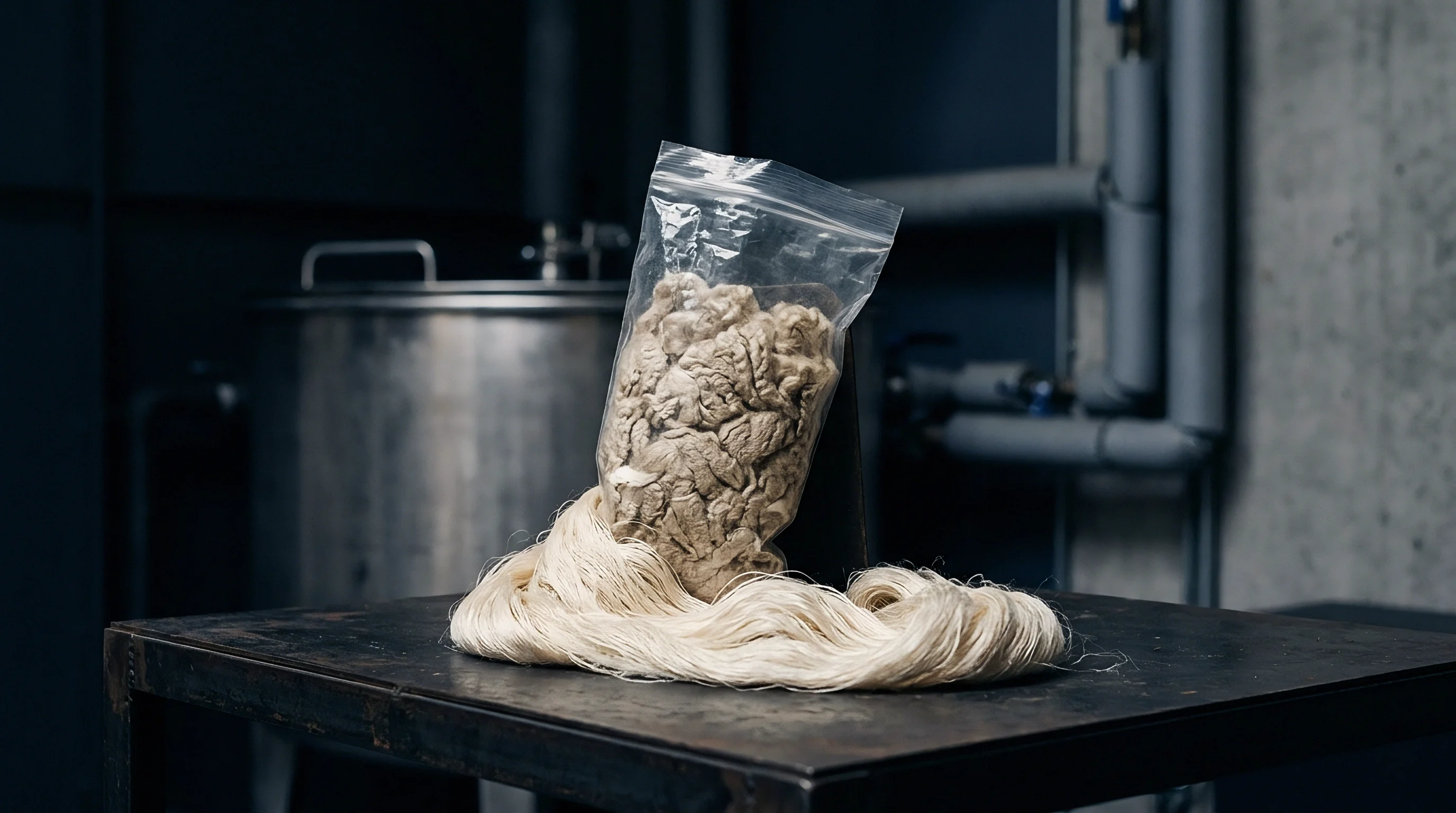
Statistical sampling plans mandate drawing core samples from ten percent of incoming sliver cans across every draw frame line. Sampling teams must take sliver specimens from both the outer perimeter and core of the sliver can to ensure representation across the entire drawing length. Samples are bagged in airtight containers to preserve ambient moisture conditions prior to laboratory transfer.
Testing workflows follow a rigid sequence to eliminate environmental cross-contamination and instrument drift during evaluation. Each lot must pass through testing sequence steps prior to releasing sliver cans to the rotor spinning floor:
- Transfer collected sliver samples to climate-controlled testing laboratory operating at 20 degrees Celsius (+/- 2 degrees) and 65 percent relative humidity (+/- 4 percent).
- Condition sliver samples in perforated tray racks for a minimum of 24 hours to achieve moisture equilibrium prior to testing.
- Calibrate Advanced Fiber Information System optical sensors using standardized cotton calibration samples verified against international reference standards.
- Run five individual sample replicates per sliver can, processing 3,000 fiber entities per test run through the pneumatic fiber individualizer.
- Calculate mean values for SFCw, SFCn, Upper Half Mean Length, and nep count across all sample replicates for lot compliance evaluation.
Sliver conditioned outside standard relative humidity parameters reads artificially short on optical length analyzers.
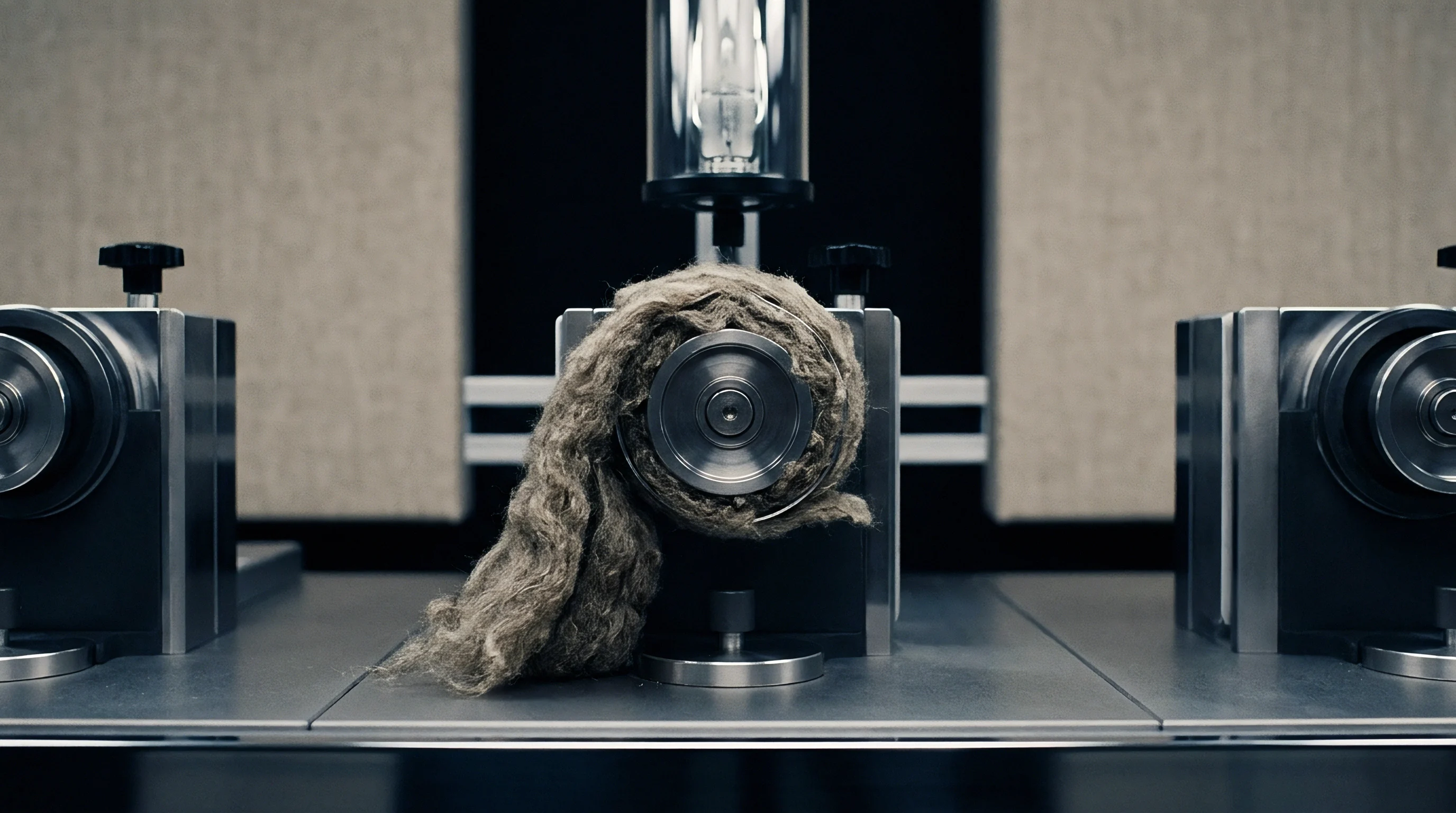
Instrument Calibration and Moisture Conditioning Impact
Standard testing atmosphere at sixty-five percent relative humidity and twenty degrees Celsius dictates absolute fiber mass and length results. Moisture shifts length readings. Dry cotton fibers become brittle, experiencing mechanical fracture inside the pneumatic individualizer of the testing instrument.
Mechanical fracture during testing generates false short fibers, artificially inflating SFCn readings by up to 2.5 percentage points.
Optical sensor calibration must be verified at the start of every shift. Dust buildup on optical lens assemblies alters light attenuation measurements, leading to inaccurate fiber diameter and length determinations. Regular cleaning and calibration routines maintain measurement integrity, ensuring that reported short fiber thresholds reflect actual fiber length distributions.
Incorporating ASTM D5840 testing standards directly into raw sliver supply contracts reallocates testing costs to the supplier when delivered lots exceed short fiber tolerances.

Disparity
Downstream fabric production exposes every physical flaw hidden inside rotor yarn. Excess short fibers degrade yarn structural uniformity, leading to localized weak points, high hairiness, and variable torque. Yarn defects ruin fabric appearance.
When high-SFC yarn enters high-speed circular knitting or air-jet weaving operations, physical defect rates multiply, generating costly fabric rejections.
Yarn spun from sliver exceeding short fiber limits displays elevated mass variation (CVm) and high numbers of thin places. During knitting, thin places lack sufficient structural fiber mass to withstand needle tension, causing yarn breakage and machine stoppage. In woven fabrics, wrapper fibers generated by excess short stock prevent uniform dye penetration, producing visible horizontal streaks and cloudy surface appearances in finished dyed fabric.
Downstream Fabric Defect Rates and Mislabelling Risk
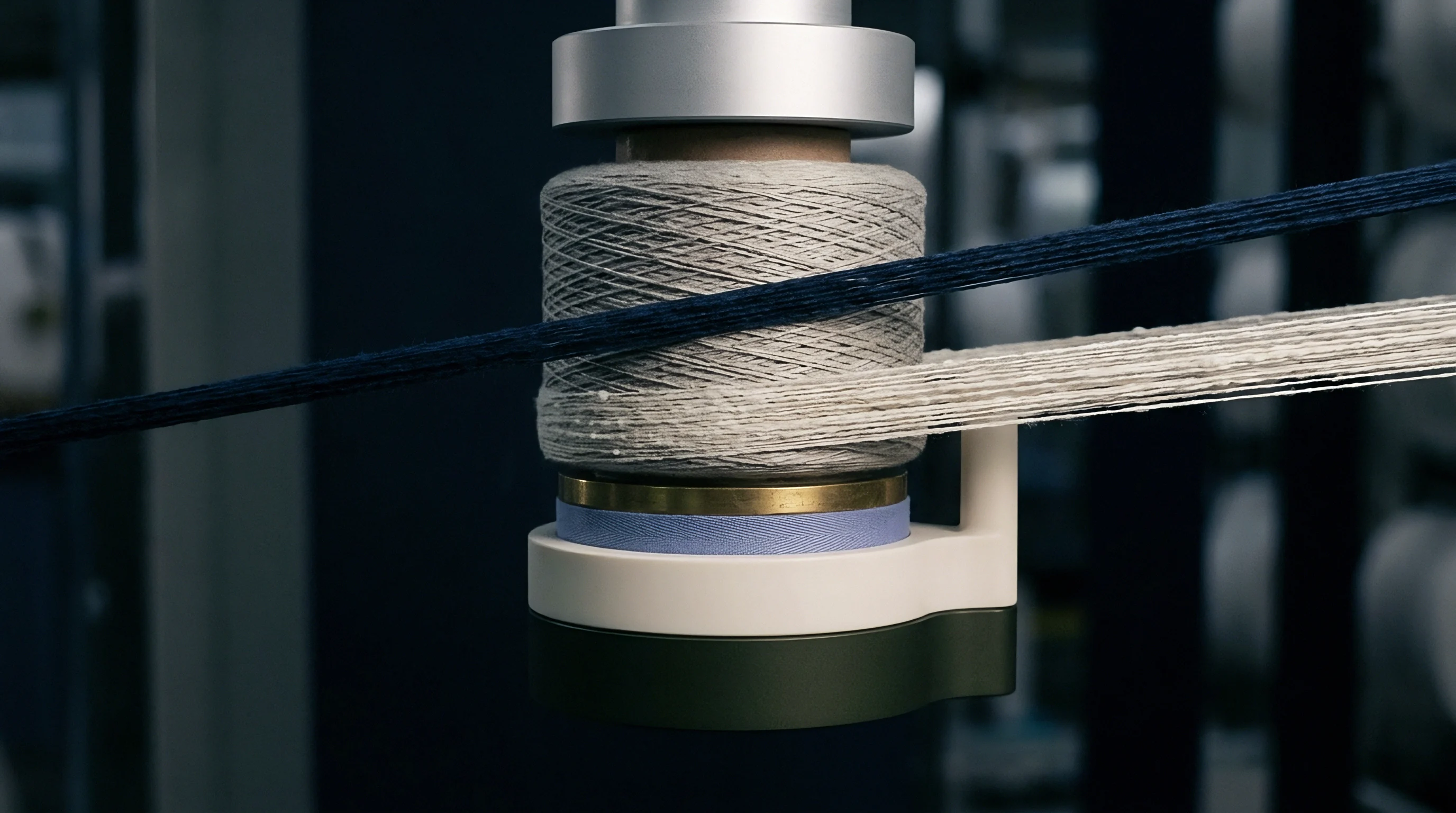
Knitting elements demand uniform yarn tension and smooth surface characteristics to avoid needle breakage. High short fiber content increases yarn surface hairiness, causing lint fly to accumulate on knitting machine yarn guides and tension discs. Accumulated lint sloughs off into the knitting feeder, creating thick lint slubs embedded in the knitted fabric structure.
Knitted fabric produced from high-SFC combed rotor yarn exhibits accelerated pilling rates during end-use wear and laundering. Short fiber ends detach easily from the low-twist outer structure of rotor yarn, entangling on the fabric surface to form dense pills. Fabric testing using martingale pilling testers reveals that increasing yarn SFCn from 10 percent to 15 percent drops fabric pilling resistance by a full numerical grade level.
Excessive wrapper fibers in rotor yarn reduce dye uptake uniformity in high-gauge circular knit fabrics.
Customs Tariff Classification and Blend Integrity
International trade documentation demands accurate declaration of chief fiber weight and manufacturing origin. Tariff codes demand exact mass. Combed cotton yarns imported under specific preferential trade agreements must meet precise physical composition definitions to qualify for reduced duty rates.
Misrepresenting yarn manufacturing parameters or fiber length specifications risks customs audits and re-classification penalties.
Customs authorities audit imported cotton yarns by evaluating fiber length distributions, combed characteristics, and manufacturing method signatures. Combed yarns command different duty structures and trade origin classifications than carded yarns under Harmonized System tariff codes. Establishing verified short fiber test documentation protects importers against customs disputes regarding whether imported rotor yarn meets formal combed classification criteria.
Customs classification audit teams verify fiber length distributions to confirm that processed slivers meet declared tariff specifications before duty assessment.