Dynamic Fluid Boundary Layer Friction and Spin Finish Micro Deposit Mechanics in Vortex Spinning Chambers
Spin finish deposits inside vortex chambers shift fluid boundary layer friction, increasing yarn hairiness and degrading tenacity during high-speed runs.
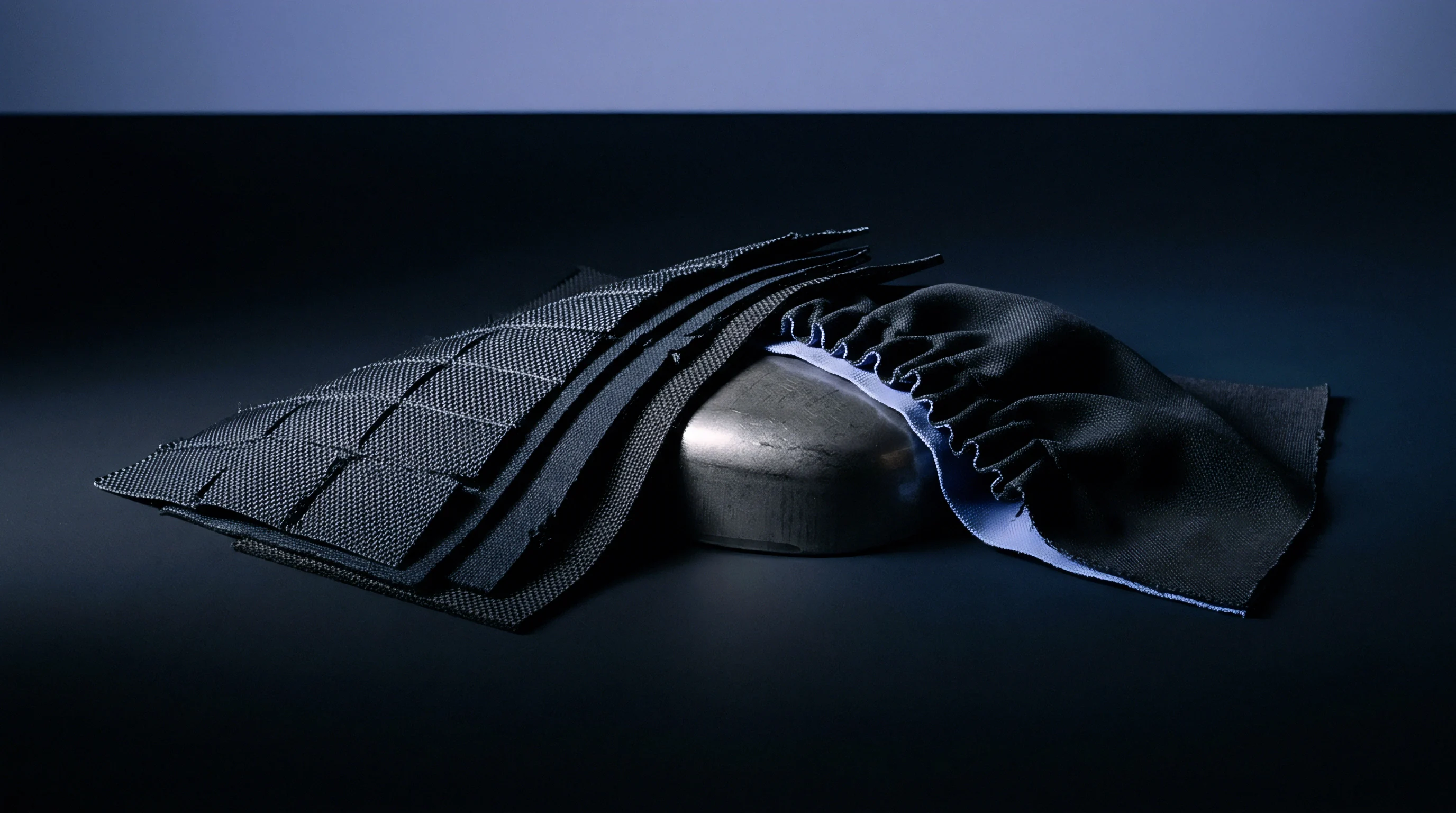

Dynamics
Compressed air entering the injection ports of a vortex swirl nozzle at pressures between 0.45 and 0.60 MPa generates localized airflow velocities exceeding 420 metres per second. High velocity rotational fluid currents establish an intricate wall boundary layer along the interior taper of the spinning chamber. Within this boundary layer, velocity gradients generate shear stress values above 120 Pascals against the metal surfaces.
Staple fibres drawn through the main orifice encounter this rotating air column, which forces their trailing ends outwards against the chamber wall while the leading ends enter the stationary guide pin to form the core yarn structure.
Static air pressure drops sharply across the nozzle interior.
Boundary layer characteristics dictate the aerodynamic drag imparted onto trailing fibre tails. Laminar flow adjacent to the chamber surface promotes uniform wrapping, whereas localized boundary layer separation creates turbulence that disrupts fibre orientation. Heat generated by aerodynamic friction and rapid air expansion elevates surface temperatures inside the chamber to levels between 65 and 85 degrees Celsius during continuous operation.
Thermal elevation interacts directly with chemical spin finishes present on synthetic and regenerated cellulose staple fibers, lowering finish viscosity and initiating liquid phase migration toward the wall interface.
| Chamber Zone | Air Velocity (m/s) | Static Pressure (kPa) | Boundary Thickness (mm) | Wall Shear Stress (Pa) |
|---|---|---|---|---|
| 435 | 490 | 0.08 | 142 | |
| 380 | 310 | 0.14 | 115 | |
| 290 | 180 | 0.22 | 88 | |
| 210 | 105 | 0.35 | 54 |
High shear stress strips lubricants from the fiber surface.
Fluid friction within the boundary layer relies upon the surface roughness of the chamber wall and the thermodynamic properties of the swirling air stream. Spin finishes carried on fibre surfaces contain low molecular weight ester lubricants, ethoxylated synthetic alcohols, and antistatic surfactants designed to stabilize fibre processing. Under high shear stress, volatile fractions of these finish formulations aerosolize within the compressed air vortex.
The droplets condense against the cooler boundary zone at the chamber wall, creating an ultra-thin liquid film that alters the local aerodynamic friction coefficient.
At an injection pressure of 0.50 MPa, air velocity within the nozzle ring reaches 435 metres per second while local wall shear stress exceeds 140 Pascals.
Wall friction values rise rapidly as condensation accumulates.
As liquid finish accumulates on the chamber walls, the velocity profile inside the fluid boundary layer shifts from steady shear flow to chaotic slip-stick movement. Fibres dragging through this altered fluid film experience variable frictional drag rather than predictable aerodynamic guidance. The resulting fluctuations in fibre wrapping tension directly alter the mass distribution, hairiness, and structural integrity of the spun yarn.
The mechanism by which operational airflow stabilizes or destabilizes this boundary layer film under varying ambient relative humidity levels remains open to further empirical observation.
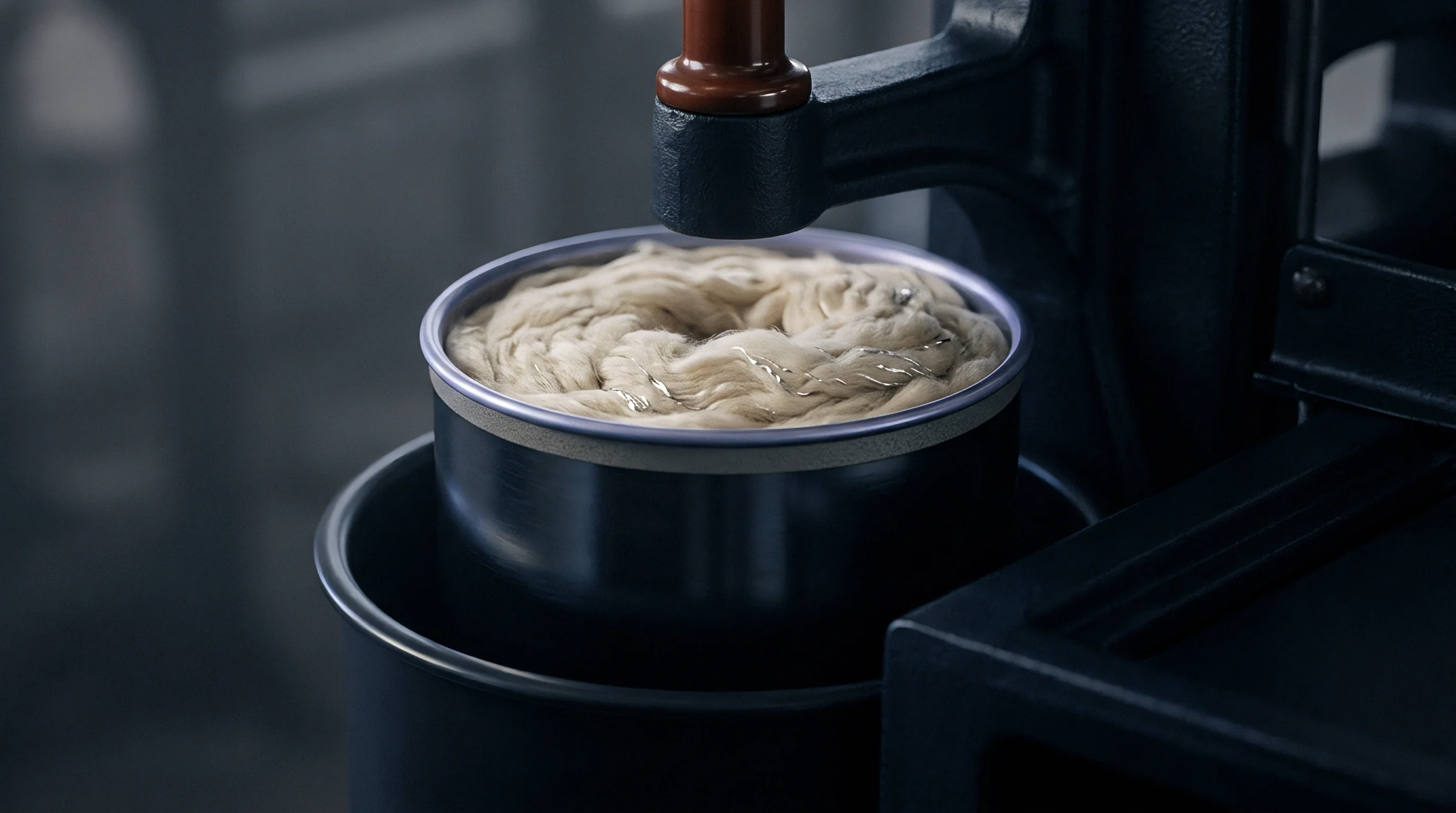

Deposition
Microscopic buildup inside vortex nozzle assemblies occurs through a continuous two-stage accumulation process. Volatilized spin finish components carried by the supersonic air stream impact the chamber interior, leaving sub-micron chemical residues in low-velocity boundary pockets. Over operational runs exceeding 72 hours, thermal exposure drives polymerization and oxidative degradation of these organic compounds, converting fluid coatings into sticky, resinous varnish films on the nozzle guide pin and swirl walls.
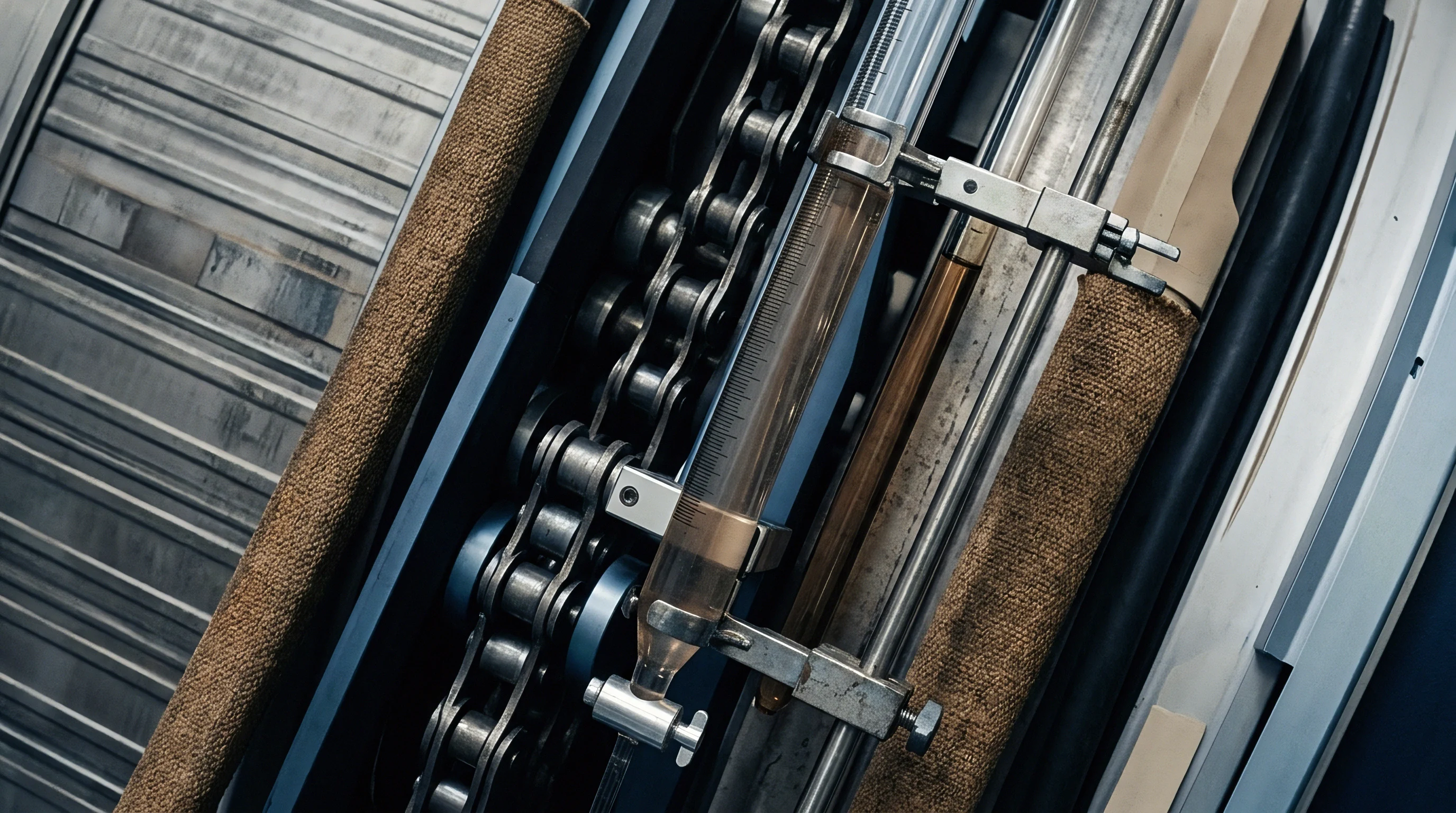
Micro Structure Degradation Mechanics
Residue buildup alters the critical geometry of the spinning chamber, creating physical obstructions that disrupt air vortex symmetry. Micro deposits alter chamber wall clearance by 5 to 15 micrometres, which induces localized flow distortion and pressure asymmetry around the guide pin tip.
- Guide Pin Varnish Crusts form when ethoxylated fatty acid esters decompose under sustained frictional heating, generating high-friction dark rings that abrade passing core fibres.
- Injector Jet Fouling reduces effective orifice diameter through chemical condensation, causing differential air delivery velocities and localized pressure drops across the nozzle ring.
- Exhaust Passage Clogging restricts spent air evacuation, creating backpressure that thickens the chamber boundary layer and destabilizes wrapper fibre swirl angles.
- Chamber Wall Micro Grooving occurs as hard oxidized silica or titanium dioxide particles from delustred fibers embed into soft finish deposits, scratching chamber surfaces.
Accumulated finish deposits disrupt internal airflow dynamics.
Physical surface changes directly degrade yarn quality parameters, manifesting as periodic structural faults long before mechanical yarn breaks occur. The presence of degraded finish alters the kinetic friction coefficient between the fibre and the chamber metal from a design baseline of 0.18 to values exceeding 0.38.
Resinous finish buildup on chamber surfaces elevates kinetic friction coefficients above baseline levels and induces periodic yarn structural defects.
Maintaining clean chamber walls preserves consistent twist insertion.
Uneven mechanical drag on wrapping fibres produces irregular fasciated structures, increasing yarn hairiness values while decreasing overall single-end tensile strength. Mills running continuous vortex operations without targeted chemical cleaning protocols experience progressive increases in yarn count variation, leading to widespread package rejections at winding and warping.
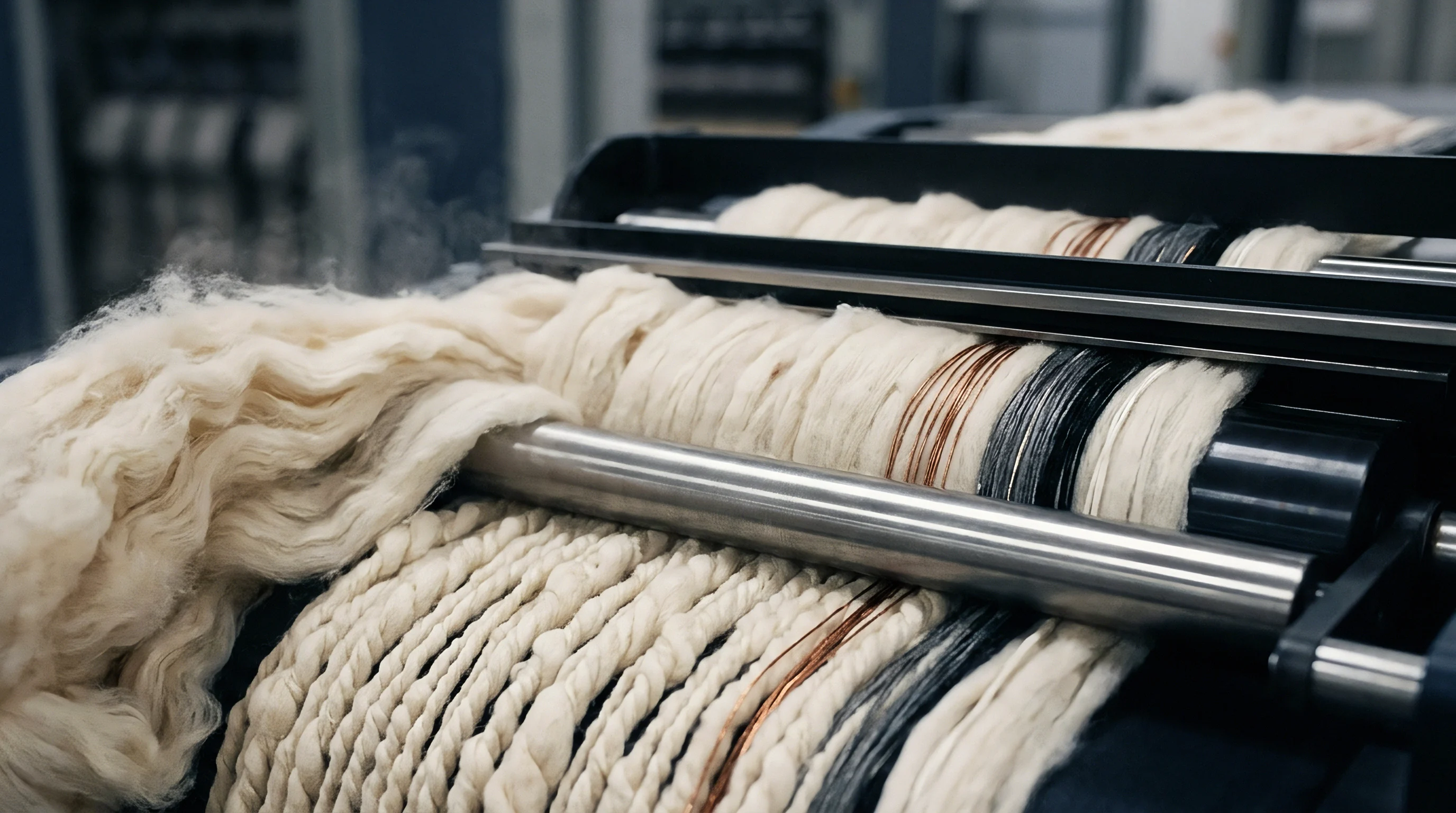

Drag
Interfacial friction between fast-moving staple fibres and stationary chamber components governs the physical wrapping mechanism in vortex spinning. Aerodynamic forces must overcome fibre bending stiffness and wall contact friction to wrap the trailing fibre ends tightly around the non-rotating core bundle. When spin finish deposits accumulate, mechanical sliding friction replaces fluid boundary friction, dramatically shifting the force vectors acting on each individual fibre end.

Does Finish Migration Alter Core Fibre Alignment?
Fluid dynamics modeling and microscopic yarn cross-section analysis demonstrate that spin finish migration alters both core alignment and wrapper fibre geometry. High friction from finish deposits retards trailing fibre ends, preventing them from achieving the required spiral pitch around the untwisted core fibres. Core fibres pass through the chamber without receiving full fasciated coverage, leaving parallel, unbonded fibre bundles that reduce yarn tenacity.
Consider a practical processing scenario involving a 40-tonne commercial lot of 1.2 dtex 38 mm bright viscose staple fibre spun into a Ne 30 yarn at a delivery speed of 450 metres per minute. The raw fibre carries an initial spin finish content of 0.35 percent by weight, composed primarily of ethoxylated lauryl alcohol lubricants and cationic antistatic agents. Operating at an air injection pressure of 0.55 MPa and a relative humidity of 55 percent, the spinning unit processes 12.5 kilograms of fibre per position every 24 hours.
Chamber geometry governs the onset of airflow turbulence.
Under these conditions, approximately 0.08 percent of the total finish weight strips off the fibre surface due to high shear forces inside the vortex nozzle. This translates to a chemical deposit rate of 1.0 gram of finish residue per spinning position every 24 hours. Over a 5-day continuous production cycle without solvent purging, 5.0 grams of active chemical coating accumulate on the internal walls and guide pin of each chamber.
| Run Time (Hours) | Deposit Mass (g) | Friction Coeff (μ) | Tenacity (cN/tex) | Uster CV (%) | Hairiness (H) |
|---|---|---|---|---|---|
| 0 | 0.00 | 0.18 | 14.8 | 12.1 | 4.2 |
| 24 | 1.00 | 0.22 | 14.5 | 12.3 | 4.5 |
| 48 | 2.00 | 0.27 | 13.9 | 12.8 | 5.1 |
| 72 | 3.00 | 0.33 | 13.1 | 13.6 | 6.0 |
| 120 | 5.00 | 0.41 | 11.8 | 14.9 | 7.4 |
Single-end tenacity drops under increased frictional drag.
Accumulated chemical mass increases friction, raising the tension on wrapping fibres from a normal 1.8 cN per tex to 3.4 cN per tex. Exceeding critical tension limits causes wrapper fibres to snap before completing their helices, raising yarn hairiness H values from 4.2 to 7.4. Tensile tenacity drops by over 20 percent, falling from 14.8 cN/tex to 11.8 cN/tex, while mass variation Uster CV percentage degrades from 12.1 to 14.9, placing the output outside commercial first-quality boundaries.
Yarn strength loss directly tracks cumulative finish weight deposited on internal nozzle surfaces during long production runs.
Prioritizing core integrity demands precise control over spinning chamber friction profiles.
- Air Pressure Balance maintains stable vortex velocity profiles when nozzle friction begins to rise due to early residue accumulation.
- Thermal Dissipation Rate prevents chemical finish breakdown by extracting heat from nozzle housings using high-volume external exhaust air streams.
- Fibre Friction Matching pairs specific staple lubricants with chamber alloy coatings to maintain kinetic friction coefficients below 0.22.
- Solvent Injection Cycles flush soft organic finish residues from nozzle internal surfaces without requiring machine shutdowns or manual disassemblies.
Frequent yarn breaks interrupt continuous spinning operations.
Increased hairiness and falling tenacity during high-speed synthetic yarn runs are frequently attributed to improper fibre staple length distributions or incorrect draft settings rather than chamber fouling. However, this view overlooks the documented accumulation of decomposed finish esters on nozzle guide pins and the resulting shift in fluid boundary layer friction.


Substrate
Fibre polymers exhibit vastly different affinities for spin finish formulations, directly influencing how finish strips, migrates, and deposits under vortex airflow. Regenerated cellulose fibres like viscose require emulsified ester oils to manage high inherent moisture regain and prevent static generation, whereas 100 percent polyester staple demands high-performance ethoxylated phosphate esters designed to withstand higher frictional contact temperatures.

Chemical Finish Systems and Thermal Thresholds
The chemical composition of the finish determines its thermal degradation point and fluid viscosity profile under shear. Low-viscosity mineral oils volatilize quickly in high-velocity air, depositing airborne mist onto exhaust surfaces, while high-viscosity silicone additives resist evaporation but form stubborn, sticky films on chamber walls.
| Fibre Type | Primary Finish System | Target OPU (%) | Degradation Temp (°C) | Deposit Risk Level |
|---|---|---|---|---|
| Viscose (1.3 dtex) | Ethoxylated Fatty Alcohol | 0.30 – 0.40 | 175 | Moderate |
| Polyester (1.2 dtex) | Ethoxylated Phosphate Ester | 0.12 – 0.18 | 220 | High |
| Combed Cotton (1.1 dtex) | Natural Natural Wax Layer | 0.05 – 0.10 | 140 | Severe |
| Modal (1.3 dtex) | Ester Oil Emulsion | 0.25 – 0.35 | 185 | Low |
Extractable oils leave persistent chemical residues behind.
Target Oil Pick-Up (OPU) levels must be strictly bounded based on the fiber substrate. Polyester staple processed in vortex spinning requires an OPU range between 0.12 and 0.18 percent by weight. Raising polyester OPU above 0.22 percent increases deposit formation rates by 300 percent without conferring any measurable benefit to fibre drafting performance.
Polyester spin finish levels exceeding 0.22 percent oil pick-up accelerate nozzle fouling without improving fiber draftability.
Tight target tolerances limit subsequent rejection claims.
Raw cotton fibers present a unique deposit challenge due to natural cotton wax and residual fine trash particles. Under intense aerodynamic shear and high temperatures, natural cotton wax softens, combining with particulate trash to produce a dense, sticky paste inside the swirl cavity. Controlling raw cotton wax content through precise scour levels or mild solvent washing stabilizes chamber wall boundary layers during 100 percent cotton vortex operations.
Incoming raw lot qualification requires strict Soxhlet solvent extraction procedures to confirm finish levels before releasing fibre bales to the blowroom floor.
- Draw ten random sample tufts weighing approximately 15 grams each from different locations across five selected bales within the incoming raw lot.
- Condition the combined fibre samples at 20 degrees Celsius and 65 percent relative humidity for 24 hours to standardize moisture content per ISO 6741.
- Weigh out exactly 10.00 grams of conditioned fibre on an analytical balance with a precision of 0.0001 grams.
- Place the fibre sample into a cellulose extraction thimble inside a Soxhlet extraction apparatus charged with 150 millilitres of n-hexane solvent.
- Reflux the solvent for 20 complete extraction cycles over a minimum extraction time of 3 hours to fully dissolve all surface finish lubricants.
- Evaporate the solvent in a pre-weighed boiling flask using a rotary evaporator set to 40 degrees Celsius under reduced pressure.
- Dry the residue flask in a vacuum oven at 60 degrees Celsius for 60 minutes, cool in a desiccator, and weigh to determine total non-volatile oil content.
- Calculate the percentage Oil Pick-Up by dividing the net residue weight by the initial conditioned sample mass and multiplying by 100.
As a rule of thumb, synthetic staple lots exhibiting oil pick-up values more than ten percent above spec limits will cause premature chamber fouling regardless of ambient temperature or pressure adjustments.
Specification
Translating fluid dynamic and finish mechanics into commercial purchasing specifications demands precise technical clauses that link chemical tolerances to financial penalties and landed cost liabilities. Yarn suppliers and fiber manufacturers must accept bound limits on spin finish stability, extractable oil percentages, and surface friction consistency before raw material commitments are signed.

Contract Verification and Testing Framework
Procurement documents must establish standardized laboratory test methods, clear acceptance thresholds, and explicit financial consequences for non-conforming shipments. Standardized test methods eliminate ambiguity when resolving yarn quality disputes between spinning mills, fabric weavers, and commercial buyers.
| Property Parameter | Test Method | Target Range | Tolerance Band | Financial Consequence |
|---|---|---|---|---|
| Finish Residue (OPU) | ISO 14389 / Soxhlet | 0.15% – 0.25% | ± 0.03% | 1.5% Price Rebate per 0.05% excess |
| Yarn Hairiness (H) | ISO 16549 / Uster | 4.0 – 4.8 | + 0.5 Max | Full Rejection of Lot above 5.5 H |
| Tenacity (Single End) | ISO 2062 / Statimat | 14.0 – 16.0 cN/tex | – 0.8 cN/tex | 2.0% Discount per cN/tex deficit |
| Mass Variation (CV%) | ISO 16549 / Capacitive | 11.5% – 12.5% | + 0.8% Max | Sorting Fee charged to vendor |
Core fibres require predictable tension during assembly.
Customs tariff declarations depend heavily on exact fibre composition and blend accuracy verified by laboratory chemical quantitative analysis under ISO 1833. A yarn declared as a 65 percent polyester and 35 percent viscose blend falls under Harmonized System tariff code 5509.51, attracting distinct duty rates compared to cotton-predominant yarns under code 5205.
Precise extractable finish limits in raw material specifications protect downstream fabric quality and enforce legal customs tariff compliance.
Fibre composition drift alters the duty rate and landed cost calculation per finished metre of woven or knitted fabric. If finish-induced spinning instability causes excessive fibre fly and selective loss of viscose staple during drafting, the final yarn blend ratio drifts towards higher polyester content. A drift exceeding two percent alters the tariff declaration classification, exposing the importer to customs misdeclaration penalties, retroactive duty assessments, and goods delays at entry ports.
Under standard international yarn sales contracts, a delivery failing to meet agreed Soxhlet extractable finish ranges allows the buyer to withhold payment and demand replacement of the entire affected lot at the seller expense.