Standardized Soxhlet Extraction Protocols for Nonfibrous Content Determination
Soxhlet extraction isolates nonfibrous matter to establish true dry fiber mass, protecting blend accuracy and correct customs tariff classification.
Mechanics
Processing oils, sizing formulations, knitting lubricants, and functional finishes accumulate on fibers throughout spinning and weaving. Test standards like ISO 1833-1 and AATCC 20A require stripping these nonfibrous additions before chemical fiber separation or commercial mass determination. Skipping solvent extraction leaves lubricants on the fiber, which skews gravimetric ratios, misidentifies the blend, and risks disputes during customs entry.

Thermosiphon Cycle Dynamics in Soxhlet Extraction
Vapor from the boiling solvent rises through the distillation sidearm into a reflux condenser, and the resulting liquid drips into the thimble holding the dried sample. As liquid pools in the extraction chamber, it seeps through the fiber bed, dissolving soluble waxes, lipids, and spin finishes. When the liquid reaches the top of the siphon tube, hydrostatic pressure empties the chamber, dumping solvent and dissolved extractables back down into the distillation flask.
Extraction speed depends on the reflux rate. Running six to eight siphon cycles an hour keeps a workable concentration gradient across the fiber bed; running slower drags out the run, while boiling too hard can flood the chamber or push solvent vapor past the condenser seal. Because the solute stays behind in the flask while the solvent redistills, the sample meets freshly condensed liquid on every cycle.
Complete gravimetric clearance of spinning lubricants requires twenty continuous thermosiphon siphon cycles at seventy degrees Celsius.
Target Analyte Separation Boundaries
Yarn production adds paraffin waxes, silicones, synthetic sizing, and antistatic agents, while raw natural fibers carry their own nonfibrous components ~ cotton waxes, pectins, wool grease. Separating applied finishes from native fiber constituents relies on matching solvent polarity, bath temperature, and extraction time to the specific target.
The goal is stripping surface finishes without dissolving structural polymer additives or pulling out natural waxes that belong to the fiber itself. Leaving synthetic filaments too long in aggressive polar solvents can leach plasticizers or pull low-molecular-weight oligomers out of polyester, inflating the extractable reading. Standard Soxhlet methods guard against that by fixing cycle counts and solvent pairings.
Cutting extraction cycles short leaves residual spin oils on the fibers, introducing systematic errors that cascade into subsequent blend calculations.
Solvent
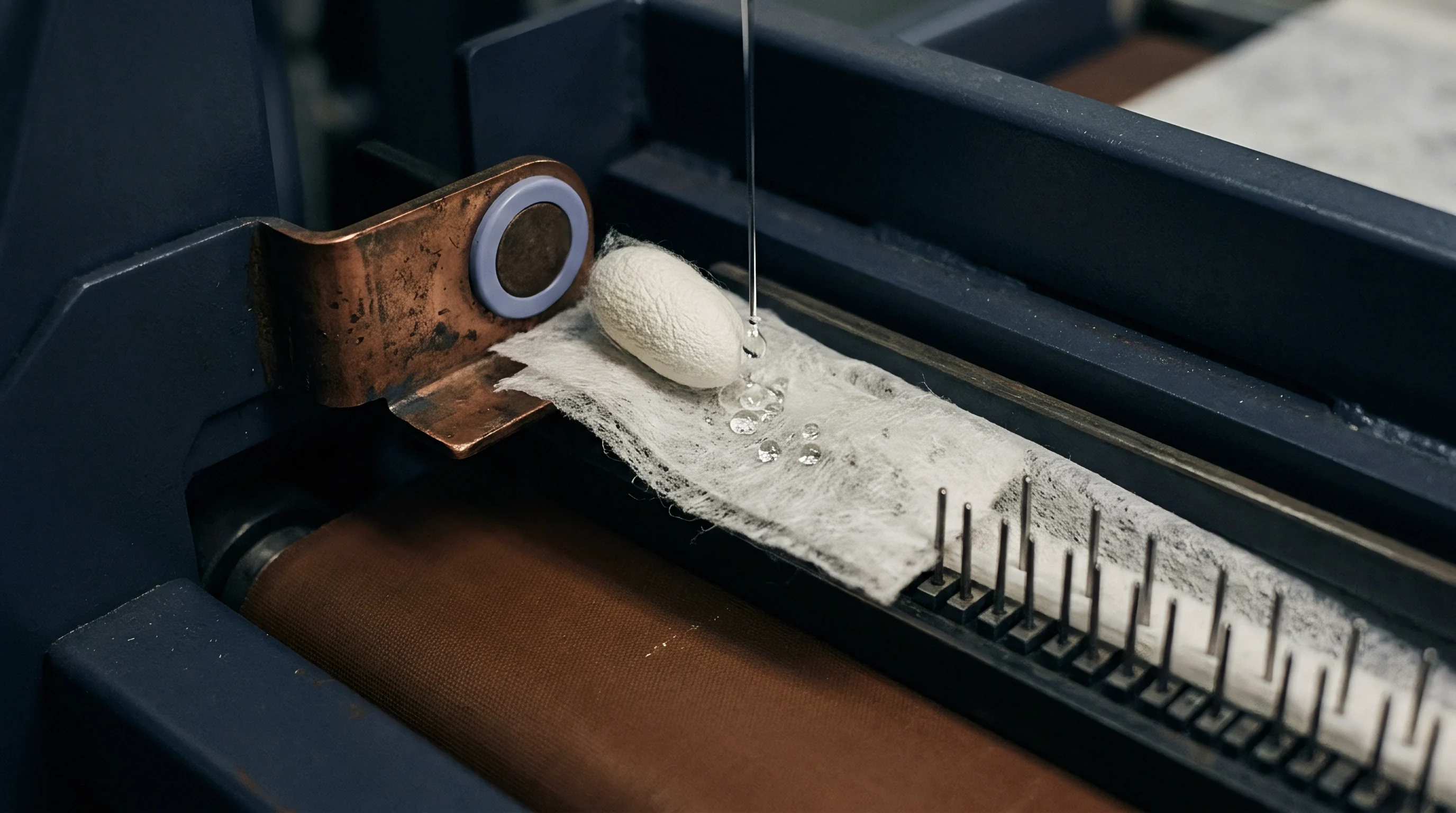
Reagent choice governs how cleanly nonfibrous additions separate from the substrate. Early test methods relied on benzene and carbon tetrachloride, which safety regulations have largely replaced with lighter hydrocarbon fractions and standard organic solvents. Test protocols also mandate reagent purity grades, since any non-volatile residue in the solvent will stay behind in the flask and distort final dried weights.

Polar and Nonpolar Extraction Media
Test standards match solvents to specific chemistries so the extractable fraction dissolves without degrading the fiber. Nonpolar solvents dissolve mineral oils, neutral fats, and paraffin wax applied during staple spinning and winding. Polar solvents handle polyglycols, water-soluble sizes, and ionic surfactant residues left behind after dyeing and finishing.
Petroleum ether with a boiling range between 40 degrees Celsius and 60 degrees Celsius is the standard nonpolar solvent across general fiber testing. Dichloromethane dissolves silicone lubricants and synthetic processing aids more aggressively, though it requires dedicated fume handling. Cyclohexane provides a milder alternative for removing hydrophobic wax from technical cotton yarns without attacking elastomeric components in blended goods.
Reagent grade solvents must leave less than 0.001 percent non-volatile residue upon evaporation to prevent background contamination of the boiling flask balance.
Hydrocarbon Fractional Solvating Capacities
Low-boiling petroleum fractions remove neutral fats and mineral lubricants without dissolving native cotton waxes. Alcohols such as methanol or ethanol strip polar sizing agents like polyvinyl alcohol and carboxymethyl cellulose, though on unbleached bast fibers they will also extract natural sugars and organic acids. Sequential protocols therefore run the nonpolar hydrocarbon reflux first, followed by an alcohol wash to measure each finish fraction separately.
| Solvent Name | Boiling Range (°C) | Target Nonfibrous Class | Substrate Compatibility |
|---|---|---|---|
| Petroleum Ether | 40 – 60 | Mineral oils, paraffin wax, neutral fats | All natural and synthetic fibers |
| Dichloromethane | 39 – 41 | Silicone lubricants, synthetic spin finishes | Polyester, polyamide, acrylic, wool |
| Cyclohexane | 80 – 81 | Coning oils, hydrophobic warp sizes | Cotton, viscose, elastane blends |
| Ethanol (96%) | 78 – 79 | Polyvinyl alcohol, water-soluble surfactants | Cellulosic and synthetic fibers |
Distillation heating baths operated above 100 degrees Celsius risk degrading polypropylene and low-density polyethylene components. Keeping bath temperatures within specified limits stabilizes evaporation rates without scorching extractable residue or shrinking heat-sensitive filament samples.
Standardized petroleum ether strips natural cotton waxes alongside synthetic lubricants, counting native material as added finish and depressing apparent fiber yield.
Thimble
Cellulose or sintered glass extraction thimbles keep the sample contained throughout reflux, preventing loose fiber fragments from washing through the siphon tube into the flask. Any fiber loss through the thimble wall registers as extractable mass, artificially inflating the finish percentage.

Sample Preparation and Conditioning Cycles
Fabric samples cut from bulk rolls need conditioning first to level out differences in ambient moisture. Yarns are unraveled and cut short to expose more surface to the solvent, while tight woven constructions must be teased apart into individual threads so liquid reaches into the core of high-twist yarns.
Running a blank extraction cycle on new cellulose thimbles washes out binder resins and production contaminants before sample loading. Drying the thimbles at 105 degrees Celsius then establishes a stable tare for double-weighing.
- Cut representative fabric or yarn specimens into lengths between five and ten millimeters to expose internal fiber surfaces.
- Place five grams of prepared sample material into a pre-washed, oven-dried extraction thimble.
- Dry the loaded thimble in a ventilated oven at 105 degrees Celsius for a minimum of two hours.
- Transfer the dried thimble to a sealed glass desiccator containing active silica gel for thirty minutes.
- Weigh the conditioned sample and thimble assembly on an analytical balance to the nearest 0.1 milligram.
- Insert the thimble into the Soxhlet extraction chamber and assemble the condenser unit to begin refluxing.
ISO 1833-1 mandates continuous oven drying at one hundred five degrees Celsius until consecutive weighings differ by less than one milligram.
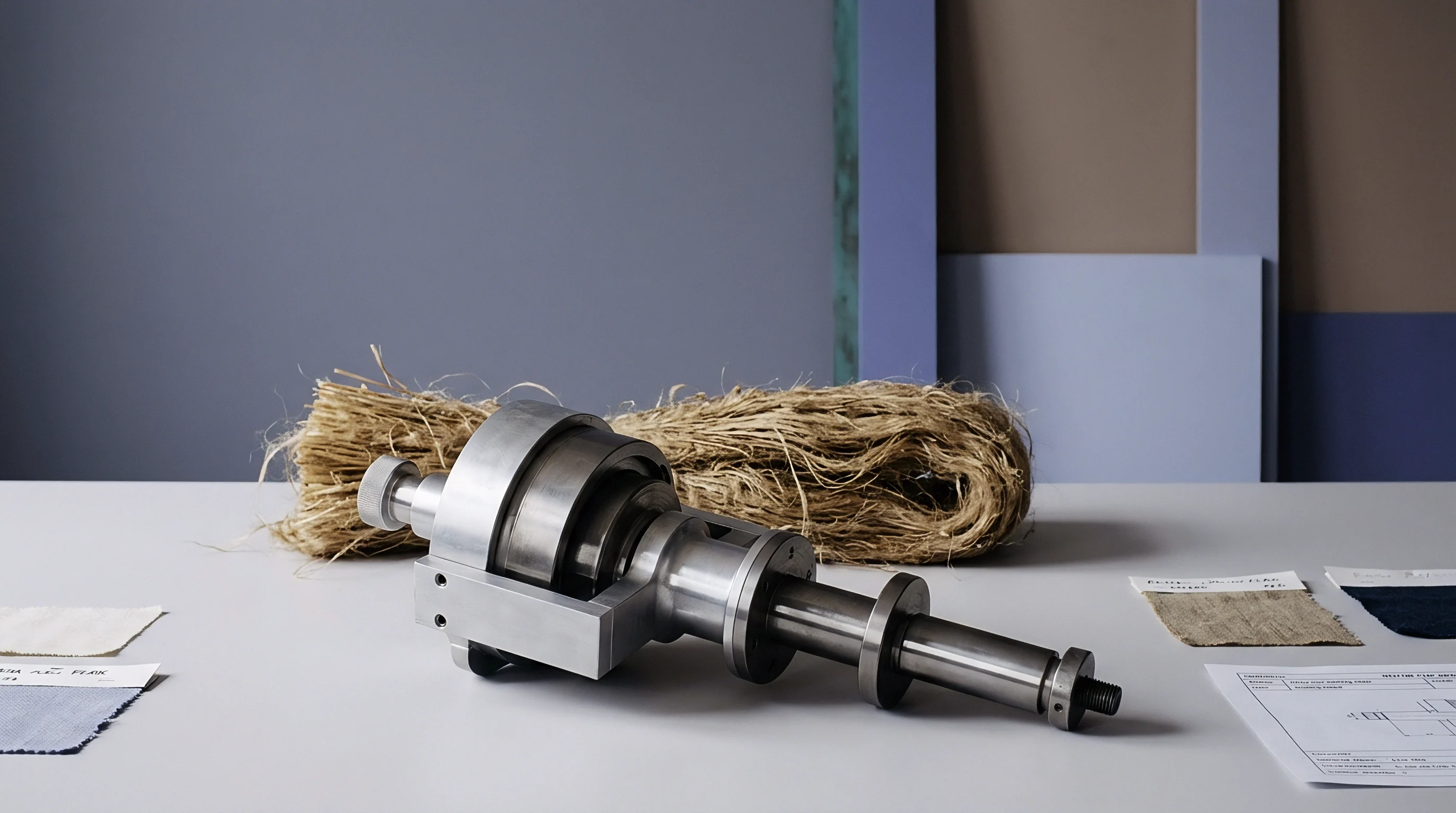
What Mass Corrections Apply to Solvent Residues?
Gravimetric determinations must account for moisture lost during oven processing. Heating specimens to 105 degrees Celsius removes all bound water, leaving oven-dry fiber; trade calculations then add official commercial regain percentages back onto that extracted dry weight to establish billable mass.
Pulling hot extraction thimbles directly from the oven onto an open bench lets the dry fiber absorb ambient humidity almost immediately. Transferring them to a desiccator preserves the oven-dry state long enough to record stable weights on the balance.
Pre-washing and oven-drying the thimble alongside the sample eliminates balance drift caused by moisture uptake in the container itself.


Variance
Unextracted processing aids skew dry specimen weights. Nonfibrous matter runs anywhere from 0.5 percent to over 5.0 percent of raw fabric mass depending on the process stage. In cotton-polyester blends, residual size inflates the starting sample mass in chemical dissolution testing, skewing the resulting fiber proportions away from true values.
Gravimetric Calculations for Nonfibrous Percentage
Standard equations convert dry weights before and after extraction into finish percentages. The nonfibrous fraction (S) expresses as a percentage of the starting dry sample mass:
S = left( fracm0 – m1m0 right) × 100
Here m0 is the initial oven-dry mass before extraction, and m1 is the oven-dry mass after solvent extraction and rinsing. When extractables are measured directly by evaporating the solvent from the distillation flask, the residue mass (mr) provides a cross-check:
S = left( fracmrm0 right) × 100
In cotton-polyester blend separations using seventy-five percent sulfuric acid, residual lubricants can shield fibers from the reagent or break down during immersion, distorting the calculated component proportions.
Residual spinning oils left in specimen matrices inflate the apparent weight of chemically soluble fibre fractions.

Worked Mass Correction in Cotton Polyester Blends
Take a forty-tonne yarn order contracted at sixty percent cotton and forty percent polyester by raw weight. Testing begins with a 10.000-gram dry specimen. After continuous dichloromethane reflux and oven drying, sample mass drops to 9.680 grams ~ a nonfibrous content of 3.20 percent.
Evaporating the solvent from the flask leaves 0.318 grams of non-volatile residue, corroborating the mass-loss calculation.
The clean 9.680-gram specimen then undergoes chemical separation in seventy-five percent sulfuric acid to dissolve the cotton. Once washed and dried, the insoluble polyester residue weighs 3.920 grams. Calculating the polyester share against the unextracted 10.000-gram starting mass yields an apparent 39.20 percent polyester.
Calculated against the clean dry mass of 9.680 grams, the actual polyester share is 40.50 percent ~ a shift that moves the blend across a contractual threshold.
| Yarn Sample Type | Unextracted Dry Mass (g) | Extractable Content (%) | Apparent Fiber Ratio (Unextracted) | Verified Fiber Ratio (Extracted) |
|---|---|---|---|---|
| Ring-Spun Cotton/Poly (60/40) | 10.000 | 3.20% | 57.6% Cotton / 39.2% Poly | 59.5% Cotton / 40.5% Poly |
| Combed Wool/Acrylic (50/50) | 10.000 | 4.50% | 47.8% Wool / 47.7% Acrylic | 50.1% Wool / 49.9% Acrylic |
| Viscose/Elastane (95/5) | 10.000 | 2.10% | 92.9% Viscose / 5.0% Elastane | 94.9% Viscose / 5.1% Elastane |
Official trade weights add standard moisture regain allowances ~ 8.5 percent for cotton, 0.4 percent for polyester ~ only to clean, dry fiber mass, keeping processing additives out of invoice calculations.
- Incomplete Drying Cycles trap moisture in post-extraction weighing steps, artificially lowering the reported finish percentage.
- Solvent Contamination deposits non-volatile residue back onto the sample thimble, understating finish removal.
- Fiber Fragment Migration through loose thimble pores mimics extractable content by shedding actual fiber into the boiling flask.
- Thermal Degradation during high-temperature drying damages sensitive synthetic fibers, shifting baseline dry weights.
ISO 1833-1 Clause 8 requires applying a nonfibrous correction factor to reported dry mass whenever extracted matter exceeds one-half percent of the total sample weight.


Ledger
Yarn contracts settle on net dry fiber weight adjusted for commercial moisture regain. Invoicing on gross weight forces buyers to pay fiber rates for paraffin waxes and spin oils; when nonfibrous content runs higher than contract allowances, settlement terms permit adjusting invoices down to clean fiber yields.
Tariff Classification Shifts via Yield Adjustments
Tariff classification often hinges on fiber ratios verified after solvent scouring. Under the Harmonized System, a woven fabric testing at 84.8 percent cotton and 15.2 percent polyester by unwashed dry mass falls into a mixed-synthetic line with higher duty. Removing 1.8 percent nonfibrous paraffin size brings the clean cotton ratio past the 85.0 percent chief-weight threshold, shifting the entry into a lower-tariff natural fiber code.
A missed chief-weight threshold triggers customs audits, penalties for misclassification, and retroactive duty assessments across past import entries.
Customs authorities evaluate chief weight strictly on dry fibre mass after extraction of nonfibrous finishing agents.
Financial Settlement Adjustments on Commercial Invoices
Contracts typically cap allowable nonfibrous content at 1.0 percent for carded yarns and 1.5 percent for sized gray fabrics. Any excess measured by Soxhlet extraction translates into direct deductions from the final invoice.
| Parameter | Contract Specification | Laboratory Verified Finding | Commercial Impact |
|---|---|---|---|
| Billed Gross Weight | 20,000 kg | 20,000 kg | Baseline invoice value |
| Nonfibrous Content | 1.00% Maximum | 3.40% Verified | 2.40% Excess weight |
| Clean Dry Fiber Weight | 17,820 kg | 17,388 kg | 432 kg shortfall |
| Invoiced Price per Kilo | $4.50 / kg | $4.50 / kg | Contract unit rate |
| Landed Cost Adjustment | $90,000 baseline | $88,056 adjusted | $1,944 direct credit note |
Calculating invoice totals from clean dry mass protects margins against excess process oils and aligns commercial weights with regulatory filings.
- Certified Test Reports from ISO 17025 accredited laboratories detailing Soxhlet run conditions, solvent choice, and gravimetric residue readings.
- Chain of Custody Logs tracking sealed samples from specific mill production lots through container offloading.
- Commercial Regain Dossiers setting out the baseline dry-mass adjustments used to calculate net duty-paid weights.
- Solvent Residue Certificates verifying that testing reagents left zero non-volatile residue on evaporation.
Relying on unextracted fiber weights skews tariff classification and distorts delivered costs against contract specifications.
Whether customs authorities will standardize extraction methods for emerging bio-based lubricants remains an open compliance question.