Quantitative Impact of Short Fiber Content on Combed Cotton Rotor Yarn Tenacity Limits
Combing cotton sliver below 5.5% short fiber content raises rotor yarn tenacity ceilings to 18.5 cN/tex by reducing friction slip inside the rotor groove.

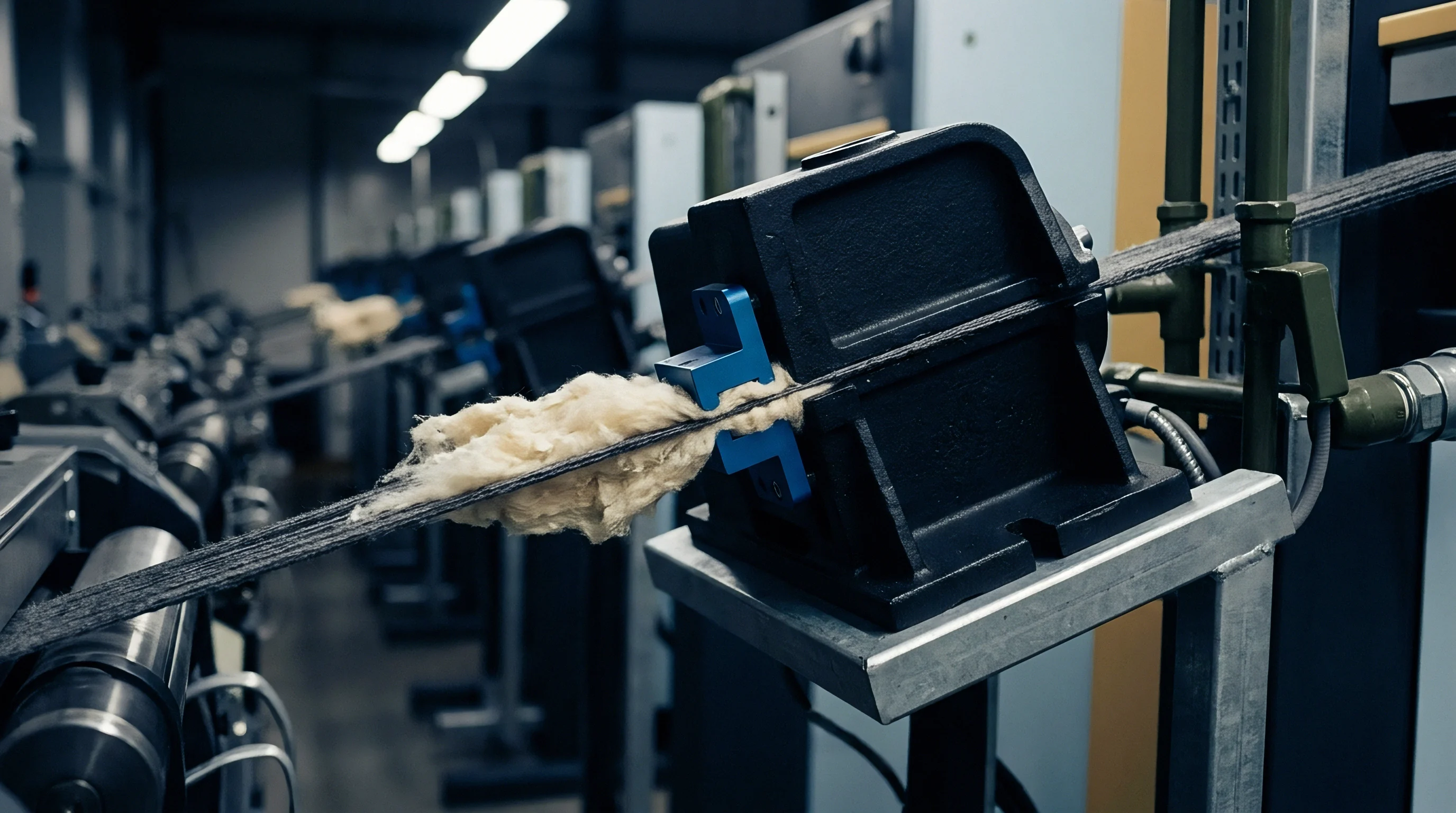
Comb
Fiber length distribution in raw cotton sliver sets the baseline for open-end yarn strength before rotor deposition ever begins. Advanced Fiber Information System (AFIS) testing tracks short fibers through two parameters: short fiber content by weight, SFC(w), and short fiber content by number, SFC(n). Both measure the percentage of fibers shorter than 12.7 millimeters.
In raw cotton lots, SFC(w) usually ranges from 8 percent in high-grade staple down to 4 percent in double-combed stock. As raw sliver passes through circular combing machinery, top combs and cylinder nip rolls strip short elements, trash, and neps into comber noil waste. This extraction shifts the fiber length array upward, raising Upper Quartile Length (UQL) and Mean Length (ML) while trimming the short tail of the distribution curve.
Ultimately, sliver length distribution directly governs rotor groove stability.
Length distribution dictates structural yarn cohesion. High-speed rotor spinning machines process combed sliver by individualizing fibers with a pin-covered opening roller running at 7,000 to 10,000 revolutions per minute. Short fibers react differently than long ones to aerodynamic drag inside the transfer tube between the opening roller and rotor.
Strands shorter than 12.7 millimeters experience less friction during pneumatic transport, losing longitudinal alignment and tumbling into chaotic shapes before landing in the rotor groove. Reducing SFC through mechanical preparation controls this tumbling, delivering clean, parallel fibers to the collector groove. Comber noil removal requires a careful balance: extracting too few short strands leaves high SFC values in the sliver, while over-combing strips valuable long fibers, raising raw material costs without adding strength.

Fiber Length Fractionation Mechanics
Mechanical fractionation inside circular combers relies on nip timing, detaching distance, and top comb penetration depth. As detaching rollers pull the fibrous web forward, cylinder needles comb through unoriented fiber heads, pulling short strands into the waste chute. Adjusting the detaching distance from 8.5 millimeters to 10.0 millimeters shifts the fractionation cut-off point, raising noil yield while removing longer fiber fractions.
Laboratory evaluation via AFIS arrays shows that increasing noil extraction from 8 percent to 16 percent drops sliver SFC(w) from 10.5 percent to 4.2 percent. Mean length rises alongside from 23.5 millimeters to 26.8 millimeters. That added length expands inter-fiber contact area inside the rotor groove, letting twist propagate cleanly during yarn formation.
Rotor yarns spun from carded sliver carry lower tenacity than ring yarns due to their distinct core-and-sheath structure. Combing alters this balance by removing the fine short-fiber debris that disrupts core alignment. In carded spinning, short fibers migrate toward the outer surface of the ribbon inside the rotor groove, forming loose surface wraps that contribute nothing to axial load bearing.
Combing eliminates these migratory elements, allowing the fiber ribbon to seat inside the groove with far better alignment. Consequently, the consolidated yarn core retains more individual fiber strength under tensile loads during winding and weaving.
Extracting 14 percent noil on a double-comb line reduces weight-based short fiber content from 11.2 percent to 6.4 percent under standard atmospheric conditioning of 20 degrees Celsius and 65 percent relative humidity.

Parameterization of Length Shortage in Sliver
Quantifying length parameters requires precise calibration between AFIS weight and numerical outputs. Weight-based metrics like SFC(w) can be skewed by coarse, long fibers in the sample mass, at times masking large quantities of fine short strands. Numerical parameters, SFC(n), give a direct count of individual short fibers that trigger friction failure in the rotor groove.
A sliver with an SFC(w) of 6.0 percent may still carry an SFC(n) over 18.0 percent. Rotor spinning performance correlates much more strongly with SFC(n) than SFC(w), because breaks start at individual fiber end disengagements rather than general mass voids.
| Noil Extraction (%) | SFC(w) (%) | SFC(n) (%) | UQL (mm) | Mean Length (mm) |
|---|---|---|---|---|
| Uncombed (Carded) | 11.8 | 24.2 | 27.5 | 22.1 |
| 8.0 | 8.4 | 18.1 | 28.4 | 23.9 |
| 12.0 | 6.1 | 14.0 | 29.2 | 25.3 |
| 16.0 | 4.3 | 10.2 | 30.1 | 26.7 |
| 20.0 | 3.1 | 7.6 | 30.8 | 27.5 |
Controlling short strands demands strict measurement protocols at the draw frame stage. Draw frame blending and drafting redistribute remaining short fibers so they do not cluster. High short-fiber concentrations in sliver trigger draft waves during final rotor drafting, causing periodic mass variations that show up as thin places in finished yarn.
Keeping SFC(w) under 5.5 percent through comber optimization eliminates these draft wave periodicities, stabilizing linear mass density across thousands of meters of yarn.
Incoming raw cotton contamination can override machine fractionation settings, leaving remnant short strands traceable back to the ginning origin.
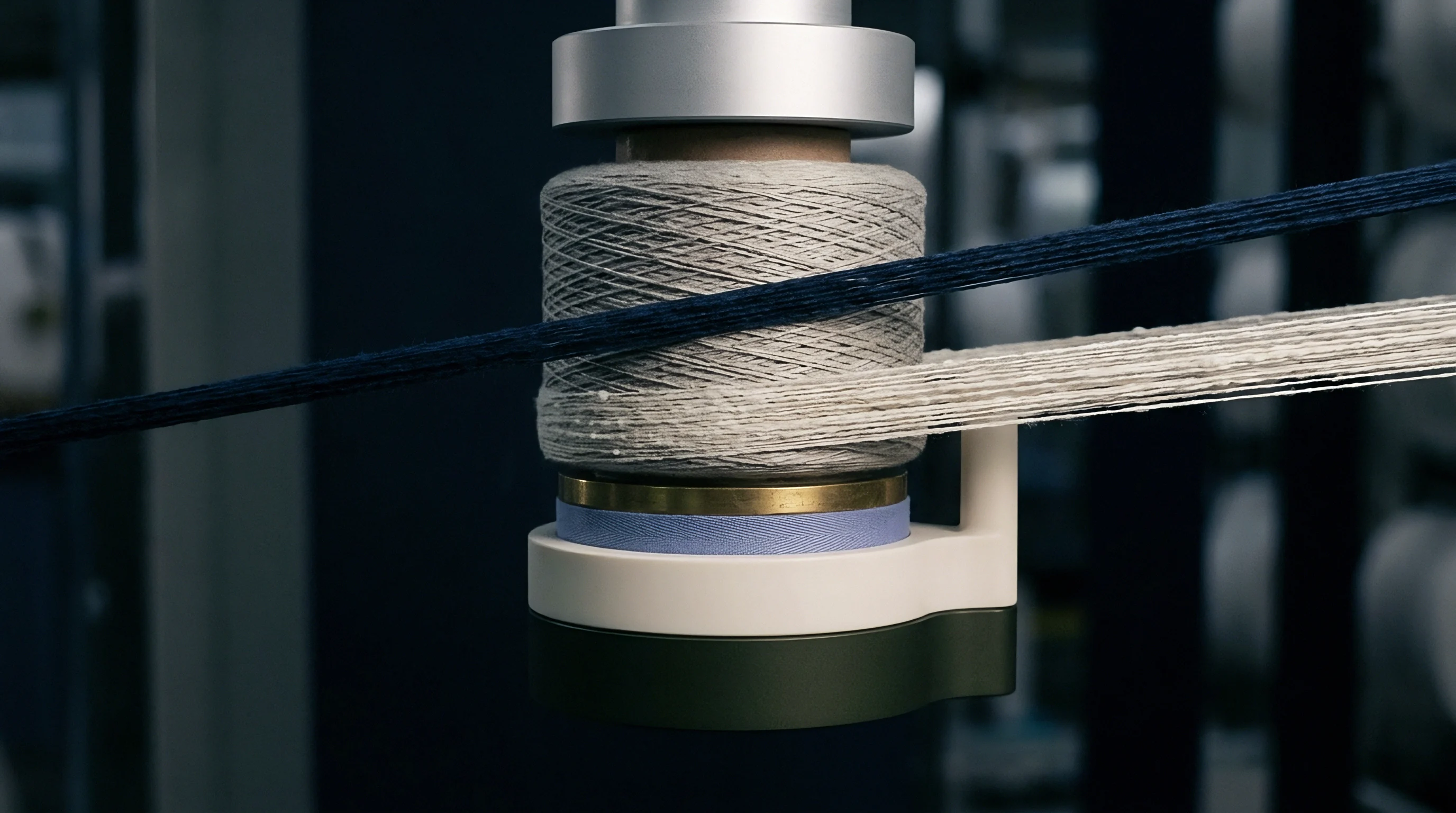

Draft
Opening roller zone mechanics control how fibers are individualized and accelerated into the rotor housing. Carded or combed sliver enters the feed roller unit at controlled speeds, meeting a rapidly spinning opening roller clothed in specialized metallic teeth. Tooth angles, wire density, and rotational speed work together to strip individual fibers from the sliver tip.
Short fibers experience different acceleration profiles than long fibers when struck by wire points. Strands shorter than 12.7 millimeters absorb excessive kinetic energy relative to their mass, disengaging prematurely from wire faces. Opening roller fiber transport parameters vary across staple blends.
Fibers exit the opening roller wire driven by centrifugal force and air currents from rotor vacuum pull. Air channels accelerate strands through a tapered transport tube toward the rotating rotor wall. Inside this tube, spatial velocity gradients align long fibers along flow lines.
Short fibers lack the axial length to bridge turbulence eddies in the tube, tumbling end-over-end and landing on the rotor wall in bent, coiled, or transverse orientations. Transverse deposition degrades yarn structure by preventing full length utilization during twist insertion.

Individualization Dynamics in the Opening Zone
Opening roller speeds must balance fiber separation against strand rupture. Running wire speeds above 9,000 revolutions per minute increases pin impact forces, damaging sensitive long cotton strands. This degradation creates secondary short fibers directly inside the opening zone, undermining previous combing gains.
AFIS analysis of fibers collected immediately at the transport tube exit shows SFC(w) increases of 1.2 to 2.8 percent when opening roller speeds exceed optimal thresholds. Lowering wire speed reduces fiber breakage, but risks delivering hooks and clumps to the rotor collector groove.
Air velocity inside transport channels must accelerate continuously to preserve fiber alignment. Vacuum differentials between the opening housing and rotor interior create transport air speeds over 40 meters per second. If air velocity drops relative to rotor circumferential speed, short fibers decelerate prematurely, causing buckling as fiber tails overtake fiber heads.
Buckled fibers landing in the groove form structural kinks that reduce tensile stress transfer along the yarn axis.

Centrifugal Ring Accumulation and Bridging
Centrifugal force inside the rotor groove presses deposited fibers into a dense circumferential ring. Rotors operating between 100,000 and 150,000 revolutions per minute generate accelerations exceeding 100,000 g-force, forcing fibers tight into the V-shaped or U-shaped groove base. Long fibers span significant arcs along the rotor circumference, overlapping adjacent strands into continuous interlocking networks.
Short fibers occupy tiny fractional arcs, contributing minimal overlap.
Short fiber bridging occurs when short strands span across the open V-groove wall without seating cleanly at the apex. These floating fibers fail to integrate into the dense ring core. As the spinning navel pulls the twisting yarn tail around the groove to consolidate raw fibers, floating short strands wrapped around the exterior turn into wild wrapping fibers.
These wrap around the core at steep angles, consuming twist torque without adding longitudinal tensile strength.
Failure modes in the drafting and consolidation zone stem directly from short strand dynamics:
- Fiber Bridging occurs when strands under 12.7 millimeters fail to reach the rotor groove apex, forming elevated cross-links that create wild external wrappings.
- Groove Clog manifests when short fiber dust and micro-dust build up inside the rotor apex, lifting the fiber ring and reducing physical packing density.
- Peeling Discontinuity arises when low-interlock short fiber segments detach prematurely from the rotor wall during yarn peel-off, causing localized thick places.
- Trash Accumulation develops when high short fiber content traps fine leaf debris against the rotor wall, forcing localized tenacity drops along the yarn axis.
Keeping the proportion of sub-half-inch strands low consistently stabilizes the ring back-doubling zone against premature slip.

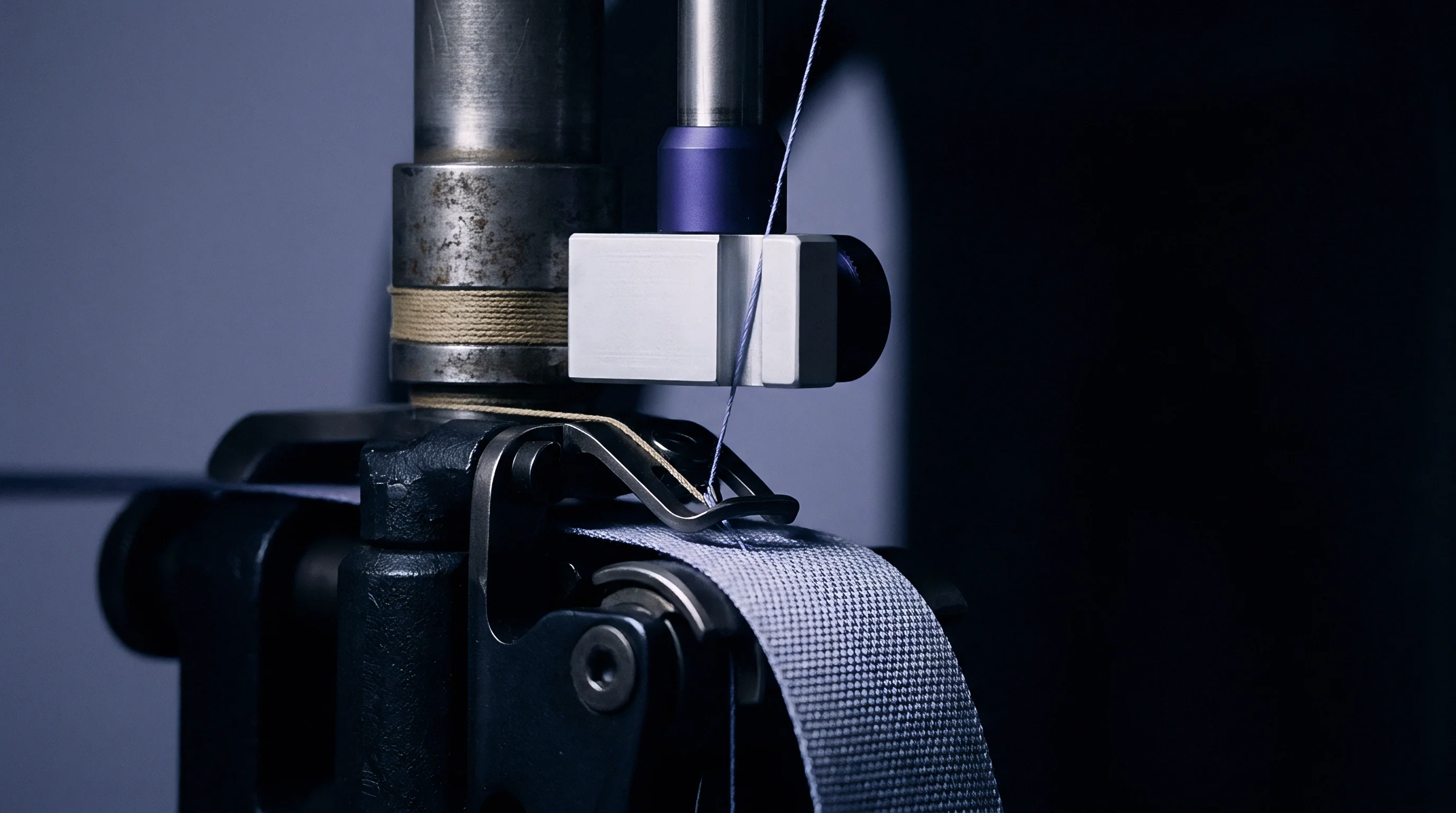
Twist
Torque propagation from the spinning navel through the open yarn end determines how raw fibers lock together into a cohesive yarn. In rotor spinning, twist flows backward from the withdrawal tube through the navel to the yarn tail moving along the rotor groove. This open-end geometry creates a distinct structural difference compared to ring-spun yarn.
Ring yarn receives twist continuously along a closed path, creating uniform helical packing from core to sheath. Rotor yarn receives twist at an open end, resulting in a dense core with high internal twist surrounded by a looser outer sheath of surface wrapping fibers. Length distribution governs friction contact area.
Short fibers disrupt twist distribution between the yarn core and outer sheath. Strands shorter than 12.7 millimeters cannot maintain contact with both the twisting core and the groove wall at the same time. As twist inserts into the fiber bundle at the peeling point, short fibers slip before reaching critical friction limits.
This slippage prevents tension from building in short strands, leaving them slack relative to adjacent long fibers. When external tensile loads act on the finished yarn, long fibers absorb the force immediately, while slack short fibers offer no resistance until structural deformation takes place.

Where Does Short Fiber Friction Fail in Rotor Grooves?
Frictional stress transfer between parallel cotton fibers depends on contact surface area, normal force from twist compression, and intrinsic surface friction. Critical coupling length is the minimum fiber length required to prevent slip under axial tensile stress. Mathematical modeling indicates that for standard American Upland cotton spun at standard twist multipliers, this coupling length ranges from 10 to 14 millimeters depending on micronaire and surface wax content.
Fibers shorter than this threshold pull out of the yarn matrix without breaking under tension.
Across Ne 30 combed rotor yarns, tenacity drops by 14 percent when short fiber content by weight exceeds nine percent. High short fiber fractions increase fiber pull-out events during tensile loading. Instead of individual fibers snapping at their ultimate strength limit, the yarn structure disintegrates through inter-fiber boundary slipping.
Combing reduces SFC below 5 percent, ensuring that over 90 percent of fibers present exceed the critical coupling length. Higher coupling ratios shift yarn rupture dynamics from friction slip failure to fiber breakage, raising the overall tenacity ceiling.
Specifications stipulating open end yarn tenacity enforce ISO 2062 testing parameters, binding claim validity to climate controls during tensile evaluation.

Friction Transfer Limits in Open End Structures
Twist multiplier selection governs yarn hand and mechanical strength limits. Twist factor is defined using metric twist factor alpha-tex or English twist multiplier alpha-e. Higher twist multipliers increase normal forces between fibers, raising friction resistance and partially offsetting short fiber slip.
However, elevating twist slows production and harshens fabric hand. Combed rotor yarns can run lower twist multipliers than carded rotor yarns while maintaining target tenacity metrics, because the lower short fiber fraction requires less compressive force to prevent slipping.
| SFC(w) Tiers (%) | Twist Multiplier (alpha-e) | Tenacity (cN/tex) | Elongation (%) | Twist Efficiency (%) |
|---|---|---|---|---|
| 4.0 (Combed) | 3.6 | 17.8 | 6.8 | 72.5 |
| 4.0 (Combed) | 4.0 | 18.5 | 7.1 | 75.3 |
| 7.5 (Semi-Combed) | 3.6 | 15.2 | 6.1 | 61.9 |
| 7.5 (Semi-Combed) | 4.0 | 16.4 | 6.4 | 66.8 |
| 11.0 (Carded) | 3.6 | 12.8 | 5.2 | 52.1 |
| 11.0 (Carded) | 4.0 | 14.1 | 5.6 | 57.4 |
Twist efficiency represents the percentage of theoretical fiber strength realized in the final yarn. High SFC environments lower twist efficiency because unaligned short fibers interrupt cohesive helix formation. Surface fibers that wrap around the core at nearly 90-degree angles exert radial compressive forces but offer no axial strength.
Reducing SFC via comber waste extraction minimizes wild wrapping fibers, increasing the core fiber volume fraction and maximizing twist efficiency across low and medium yarn counts.
It remains uncertain how far chemical surface lubricity modifiers can compensate for missing physical staple contact length in low-twist open-end structures at industrial production speeds.


Tenacity
Ultimate tensile strength limits in combed rotor yarns are governed by fiber strength utilization ratios. Individual combed cotton fibers display single-fiber tenacity values between 26 and 38 cN/tex when measured by high-volume instruments or single-fiber tensile testers. Once converted into rotor yarn, realized tenacity drops to between 11 and 19 cN/tex ~ a strength penalty inherent to rotor spinning architecture.
Short fiber content is the primary variable driving this loss, as physical contact length sets the threshold for inter-fiber friction generation.
Short fibers contribute minimal force to yarn break resistance while diluting the continuity of long load-bearing fibers. High-speed single-strand testing under ISO 2062 reveals distinct force-elongation behavior between high-SFC carded rotor yarns and low-SFC combed rotor yarns. Carded yarns show lower breaking force and reduced elongation at break, snapping prematurely due to inter-fiber slippage cascades.
Combed rotor yarns display linear force accumulation up to rupture, reflecting load sharing across uniform long fiber bundles.
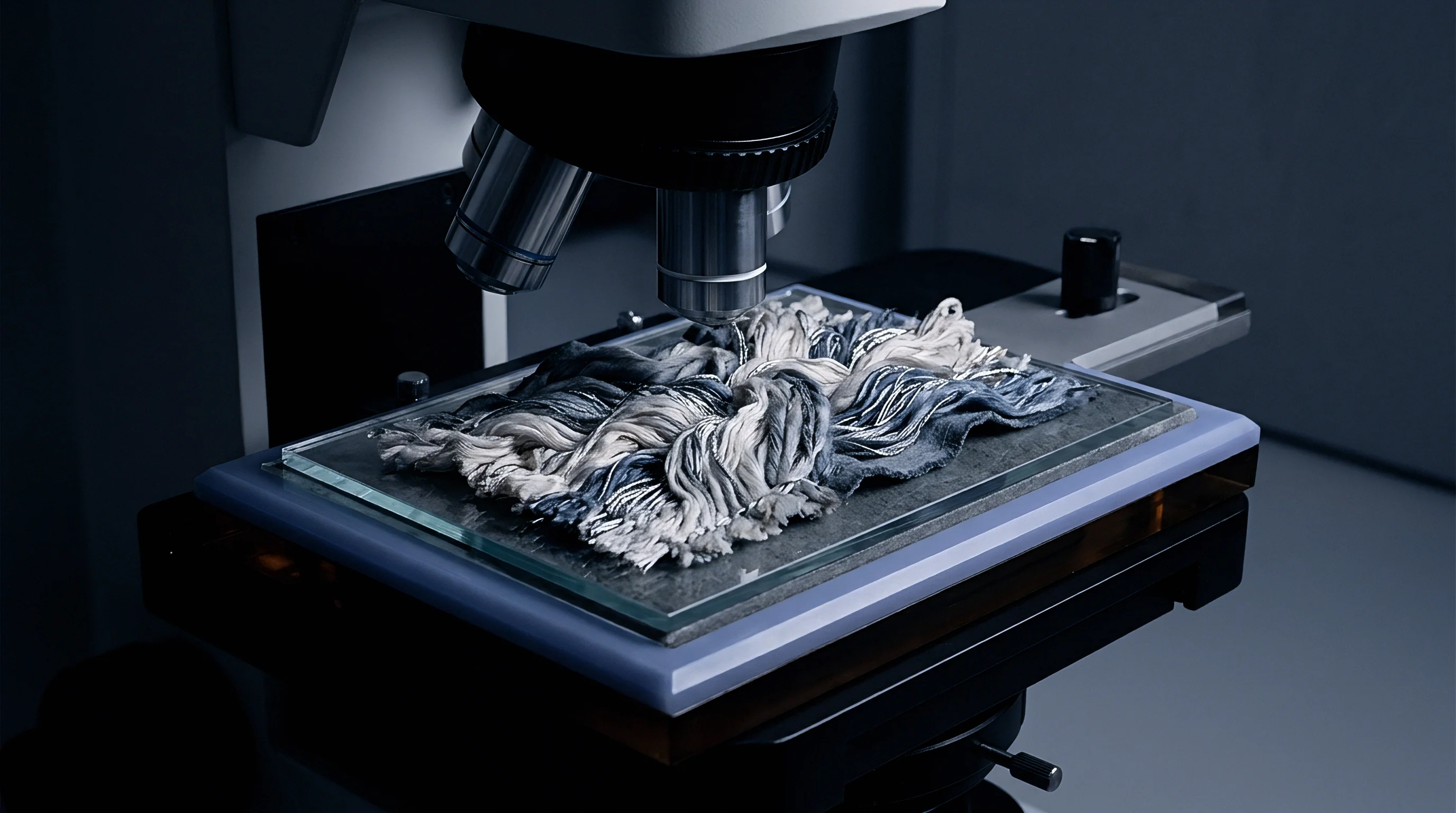
Quantitative Tensile Decay Models
Mathematical modeling of open-end yarn strength links breaking tenacity directly to short fiber fractions. An empirical decay model across Ne 20 to Ne 40 combed rotor counts demonstrates that for every 1.0 percent increase in sliver SFC(w) above 4.0 percent, yarn tenacity drops by approximately 0.45 cN/tex. This slope steepens in finer yarn counts, where fewer total fibers populate the cross-section and amplify defects caused by individual short strands.
Cross-sectional fiber density dictates sensitivity to short fiber degradation. An Ne 20 yarn carries roughly 220 fibers per cross-section, whereas an Ne 40 yarn carries about 110 fibers. In an Ne 40 cross-section, three short fibers at a single point eliminate nearly 3 percent of load-bearing capacity; in an Ne 20 yarn, three short fibers remove under 1.5 percent.
Controlling SFC through comber settings is therefore critical when spinning fine rotor yarns to prevent premature breaks.

Empirical Breaking Force Equations
Yarn tenacity calculations require adjusting raw single-strand breaking force values for linear yarn density. Tenacity, expressed in centinewtons per tex (cN/tex), neutralizes count variations to enable objective structural comparison. The fundamental formula for tenacity realization efficiency (TRE) incorporates mean fiber length (ML), single fiber strength (SFS), short fiber content (SFC), and twist factor (TF):
TRE = (SFS K) (ML / (ML + SFC)) (1 – (C / TF))
Where K represents machine efficiency coefficients and C represents geometry factor constants. This relationship demonstrates how increasing SFC depresses the entire TRE curve, capping realized yarn tenacity regardless of raw cotton strength.
| Yarn Count (Ne) | SFC(w) (%) | Target Tenacity (cN/tex) | Min Single-Strand Force (cN) | Elongation at Break (%) | B-Point Tenacity (cN/tex) |
|---|---|---|---|---|---|
| 20/1 | 4.0 | 18.8 | 555 | 7.4 | 14.2 |
| 20/1 | 8.0 | 17.0 | 502 | 6.5 | 11.8 |
| 20/1 | 12.0 | 15.1 | 446 | 5.6 | 9.4 |
| 30/1 | 4.0 | 18.2 | 358 | 6.9 | 13.6 |
| 30/1 | 8.0 | 16.4 | 323 | 6.0 | 11.0 |
| 30/1 | 12.0 | 14.3 | 281 | 5.0 | 8.3 |
| 40/1 | 4.0 | 17.1 | 252 | 6.2 | 12.1 |
| 40/1 | 8.0 | 15.0 | 221 | 5.2 | 9.2 |
| 40/1 | 12.0 | 12.6 | 186 | 4.1 | 6.5 |
Establishing minimum yarn strength thresholds requires executing standardized spinning test sequences during fiber qualification:
- Determine raw sliver mean length and short fiber percentage via AFIS PRO test protocols using a five-rep average per bale lot.
- Calculate the theoretical yarn friction coefficient based on micronaire and effective fiber contact length within the rotor groove.
- Adjust rotor speed and transfer tube differential pressure to offset centrifugal fiber displacement during yarn formation.
- Execute single-strand tensile testing on 100 packages per lot in accordance with ISO 2062 at constant rate of extension.
Tensile testing must isolate minimum tenacity points, often designated as B-points or extreme weak places along the yarn package. Standard average tenacity values can mask local weak spots. A package demonstrating an acceptable mean tenacity of 17.5 cN/tex may contain localized zones dropping below 10.0 cN/tex where short fibers cluster in the rotor groove.
High-speed knitting machines break at these weak points, meaning B-point tenacity ~ governed by SFC variance ~ dictates actual processing survival.
Short fiber presence directly reduces effective friction contact area across the yarn core.
Ignoring short-strand limits during high-speed spinning leads to excessive end breaks, lost efficiency, and damaged fabric lots on high-tension knitting machines.

Variance
Mass variation and structural irregularity in combed rotor yarn scale exponentially with rising short fiber ratios. Unevenness metrics, measured as Uster CVm percentage, quantify mass fluctuations across millimeter-scale yarn increments. Short fibers increase CVm because their movement during drafting cannot be controlled by mechanical aprons or air streams.
Random clustering of short strands generates frequent thin and thick places, shifting breaking force distribution curves during high-speed tensile testing.
Thin places act as stress concentrators during fabric manufacturing. When yarn undergoes dynamic tension in high-speed circular knitting or warp weaving, stress distributes inversely to local cross-sectional area. A thin place with 30 percent reduced mass experiences a 42 percent surge in localized axial stress.
If high SFC has already degraded baseline tenacity at that point, immediate strand rupture occurs. Eliminating short strands through combing stabilizes cross-sectional mass, protecting yarn against these localized stress surges.

Mass Fluctuation and Weak Spot Kinetics
Mass variation dynamics extend to yarn nep content and trash counts. Modern capacitive yarn testing classifies imperfections into three categories: thin places (-50%), thick places (+50%), and neps (+200%). High short fiber content correlates directly with elevated thin and thick place frequencies.
Short fibers form loose accumulations inside the rotor groove that periodic yarn peeling sweeps into the yarn body as soft thick places. Immediately following a soft thick place, the depleted groove section delivers a corresponding thin place, generating coupled mass defects that degrade tenacity stability.
Uster Classimat matrix profiles map rare yarn defects that cause machine stops. Category A1, B1, and C1 defects represent short, thick imperfections under 1.0 centimeter in length, stemming from short fiber aggregates rolling into tight balls inside the rotor transport tube. Removing short strands via double-combing reduces Classimat A1 and B1 defect frequencies by up to 75 percent, converting industrial-grade yarn into high-yield weaving packages capable of running on air-jet looms at speeds exceeding 1,000 picks per minute.
Increasing length uniformity in sliver feeds preserves yarn strength more effectively than elevating rotor rotational speed.

Elongation Limits under Dynamic Stress
Breaking elongation measures the dynamic shock absorption capacity of combed rotor yarn before tensile rupture occurs. Low short fiber content improves breaking elongation consistency by ensuring uniform friction engagement across all strands during extension. As tensile force stretches the yarn, uniform fibers slip gradually while maintaining contact, allowing the yarn matrix to elongate predictably between 6.5 and 7.5 percent.
High short fiber content causes irregular slip-stick behavior, leading to sudden inter-fiber separation and premature rupture at elongation values under 5.0 percent.
| SFC(w) Tiers (%) | Uster CVm (%) | Thin Places (-50%/km) | Thick Places (+50%/km) | Neps (+200%/km) | Tenacity CV (%) |
|---|---|---|---|---|---|
| 4.0 (Double Combed) | 10.8 | 2.0 | 12.0 | 18.0 | 7.2 |
| 6.0 (Single Combed) | 11.6 | 6.0 | 24.0 | 35.0 | 8.5 |
| 8.5 (Semi-Combed) | 12.9 | 18.0 | 58.0 | 82.0 | 10.4 |
| 11.0 (Carded) | 14.4 | 45.0 | 120.0 | 175.0 | 13.1 |
Quality assurance verification requires systematically auditing incoming raw materials and intermediate sliver processing stages:
- Raw Material Audit validates bale-to-bale staple length consistency and initial short fiber metrics prior to laydown integration.
- Combing Waste Verification monitors comber noil percentages continuously to maintain target short fiber extraction efficiency.
- Rotor Groove Inspection checks spinning elements for micro-dust accumulation and mechanical wear that induce fiber bridging.
- Dynamic Tensile Screening measures high-speed package rupture frequencies to verify minimum B-point strength limits.
Mass variation in the sliver generates localized structural weakness throughout the finished yarn.
Standard purchase contracts incorporating IWTO and ISO 2062 tolerance limits shift financial liability for knitting machine downtime onto mills delivering yarn that exceeds six percent short strand thresholds.


Margin
Financial viability in combed rotor yarn manufacturing turns on balancing raw material waste extraction against yarn market price premiums. Raw cotton accounts for 60 to 70 percent of total yarn manufacturing cost. Combing extracts between 8 and 20 percent of raw fiber mass as low-value comber noil waste.
Spinning mills resell comber noil to coarse-yarn producers or non-woven manufacturers at a fraction of raw cotton purchase cost, creating a deficit that must be recovered through higher selling prices for combed yarn. Landed yarn costs reflect these comber noil resale credits factored against raw cotton bale premiums.
Comber noil price spreads fluctuate with regional demand for open-end carded yarns and absorbent cotton products. If raw cotton costs $2.20 per kilogram and comber noil yields $1.10 per kilogram on the secondary market, extracting 15 percent noil adds approximately $0.28 per kilogram directly to the net raw material cost of the remaining combed sliver. Energy consumption, comb maintenance, and labor costs for comber lap preparation lines further raise expenditure.
The resulting combed rotor yarn must command a clear premium over carded equivalents to justify the investment.

Waste Extraction Financial Balancing
Evaluating the profit boundary requires calculating net cost per unit of realized tenacity. Spun yarn strength directly dictates commercial application suitability. Standard carded rotor yarn delivering 13.0 cN/tex tenacity sells into basic towel or coarse denim markets where price sensitivity is high.
Combed rotor yarn delivering 18.5 cN/tex sells into high-speed knitting and fine apparel markets where premium pricing absorbs elevated manufacturing costs. Maximizing profit requires optimizing noil extraction to hit the target tenacity threshold specified by the weaver without stripping unnecessary long staple mass.
Over-combing generates diminishing returns on tensile strength. Raising noil extraction from 8 percent to 12 percent yields a 1.8 cN/tex tenacity increase in Ne 30 yarn. Raising noil extraction from 16 percent to 20 percent yields only a 0.5 cN/tex increase because the short fiber tail has already been extracted.
Operating beyond 16 percent extraction increases raw material cost exponentially while delivering marginal strength gains. Establishing clear waste-to-tenacity trade-off curves prevents this profit erosion.
Raw cotton accounts for over sixty percent of total rotor yarn manufacturing costs, making noil extraction rates the primary operational lever for mill profitability.

Landed Cost per Finished Metre
Customs duty classifications and landed cost calculations depend on accurate fiber content and manufacturing declarations. HS Code 5205 classifies single cotton yarn, specifying count thresholds and combing status. Combed cotton yarns enter under distinct tariff lines that may carry different duty rates depending on bilateral trade agreements and rules of origin.
Declaring yarn as combed requires documentary evidence of mechanical combing, including AFIS fiber length verification certificates and comber noil extraction logs.
Higher rotor speeds continuously amplify strand tension during package formation.
Commercial qualification dossiers must contain specific technical proof to clear customs audits and validate performance guarantees:
- Bale Classing Dossier provides raw cotton staple length, micronaire, and baseline short fiber content profiles for incoming lots.
- AFIS Array Certificate documents short fiber reduction from raw bale state to finished draw frame sliver.
- Comber Noil Logbook tracks daily waste extraction weight percentages across all combing preparation lines.
- Tensile Verification Yield Sheet details single-strand break force, elongation, and cN/tex tenacity metrics per package lot.
Calculating the exact point where comber noil costs offset strength penalties enables spinners to target specific tenacity tiers without wasting usable staple mass.