Resolving Moisture Regain Discrepancies and Quality Penalty Claims in International Cotton Commerce
Moisture regain claims rely on oven dry mass calculations under ISO 6741, adjusting invoice weight to standard 8.5 percent regain and protecting fiber tenacity.


Oven
Water weight changes landed fiber cost. Raw cotton possesses a natural affinity for atmospheric water, absorbing or desorbing vapor until reaching equilibrium with the surrounding air. In cross-border commodity trading, transactions rely on gross scale mass, yet buyers pay for usable cellulose fiber.
When moisture levels fluctuate between the gin baling line and the destination discharge port, invoice amounts no longer match physical dry fiber delivered. Resolving these commercial discrepancies requires establishing the precise relationship between physical dry mass and standard moisture regain allowances.
Commercial Regain Definitions and Standard Moisture Benchmarks
Raw cotton trading relies on an agreed baseline ratio between absorbed liquid weight and absolute dry cellulose. Standard commercial moisture regain for raw cotton stands globally at 8.5 percent under International Cotton Association rules and USDA trading guidelines. This figure represents the mass of water expressed as a percentage of the dry cellulose mass, calculated after heating the specimen to drive off all unbound moisture.
At standard relative humidity of sixty-five percent and temperature of twenty degrees Celsius, raw upland cotton achieves an equilibrium moisture regain of eight point five percent.
Moisture content differs mathematically from moisture regain. Moisture content expresses water weight as a fraction of total wet mass, whereas moisture regain compares water weight strictly to dry fiber weight. A bale weighing 220 kilograms with 8.5 percent moisture regain carries approximately 7.83 percent moisture content.
Failing to distinguish between content and regain in contract clauses alters the calculated net dry mass, resulting in systematic billing errors across large shipment lots.
| Standard Body | Designated Standard | Commercial Regain Value | Drying Temperature | Allowed Mass Variation |
|---|---|---|---|---|
| International Organization for Standardization | ISO 6741-1 | 8.50% | 105°C to 110°C | ±0.05% |
| ASTM International | ASTM D2495 | 8.50% | 105°C to 110°C | ±0.10% |
| United States Department of Agriculture | USDA Commercial Regain | 8.50% | 105°C to 110°C | ±0.05% |
| China National Standard | GB/T 6102.1 | 8.50% | 105°C to 110°C | ±0.08% |
Thermogravimetric Analysis and Ambient Hysteresis Mechanics
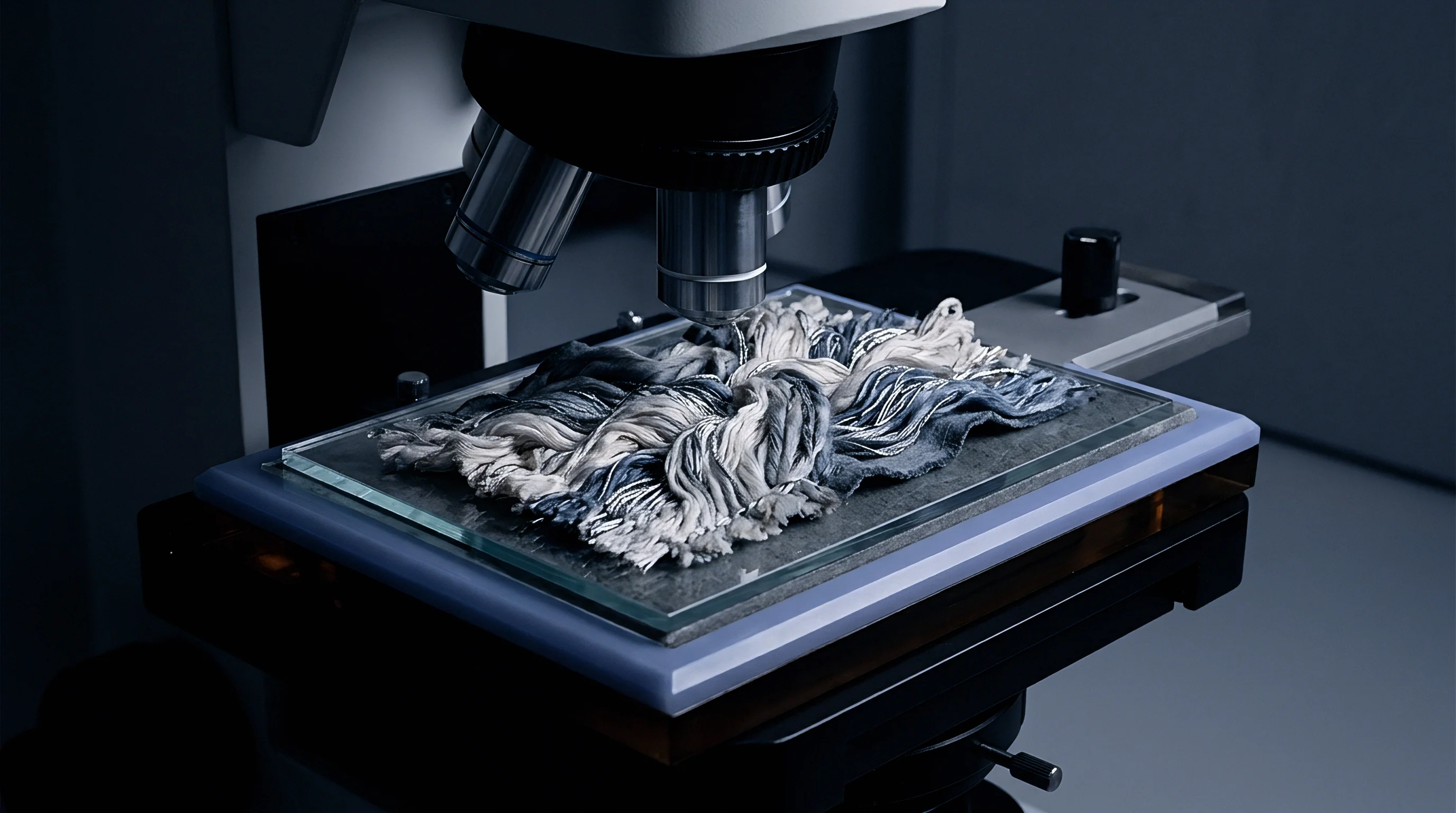
Forced air drying at elevated temperatures drives out unbound water molecules from the amorphous regions of the fiber. Testing laboratories execute ISO 6741-1 by placing weighed specimens into ventilated ovens maintained between 105 and 110 degrees Celsius. Air circulates continuously through the drying chamber until consecutive weighings spaced fifteen minutes apart exhibit no further weight loss.
Oven drying yields absolute dry mass.
Dry cotton absorbs ambient moisture rapidly. Sorption behavior displays hysteresis, meaning raw fiber retains a higher moisture level when desorbing water from a wet state than when absorbing vapor from a dry state. Cotton harvested and ginned during high ambient humidity enters the bale at an elevated desorption limb.
That same cotton, shipped through arid regions, sheds surface moisture while core layers remain damp. Ocean container transport amplifies this gradient, causing internal moisture migration that invalidates simple surface probing.
Shippers frequently argue that weight lost during ocean transit represents natural moisture evaporation rather than short shipment, asserting that the fiber reabsorbs atmospheric humidity upon arrival at the destination warehouse.

Probe
Rapid moisture screening in the bale room relies on indirect electrical measurements. Surface probe readings distort true mass. While oven drying provides the absolute benchmark for commercial settlement, buyers and receivers cannot unbale and oven-test entire container shipments.
Portable moisture probes measure electrical properties across compressed cotton layers to estimate moisture regain instantly during offloading.
Dielectric Resistance Probe Calibration and Penetration Depth
Handheld instruments determine water content by measuring electrical conductivity across dual stainless steel pins driven into the bale flank. Water conducts electricity far better than dry cellulose. Resistance meters convert measured micro-amperage into an estimated regain percentage based on factory calibration curves.
Accuracy depends on probe pin length and bale density.
Probe depth changes measured conductivity values. Standard high-density bales compressed to 450 kilograms per cubic meter exhibit steep moisture gradients. Ambient air dries the outer five centimeters of the bale package within days of stripping the protective wrap, while the dense interior retains moisture trapped during high-speed ginning.
Short ten-millimeter probe pins sample only the desiccated exterior shell, returning artificially low moisture figures. Valid field measurements require insulated forty-millimeter probe shafts that bypass surface layers to read true core moisture.
Core Sampling Workflows for High Density Bales
Extracting physical fiber specimens from tightly bound packages demands mechanical cutting gear capable of reaching deep interior layers. Pneumatic core drills equipped with hollow stainless steel bits extract internal fiber plugs without generating friction heat that evaporates volatile moisture. Drawing referee specimens follows a standardized physical sequence.
- Extract core samples from twenty percent of randomly selected bales using a non-heating rotating core drill with an internal diameter of twenty millimeters.
- Insert the sampling tube to a depth of at least forty centimeters along the transverse axis of the compressed bale to bypass surface atmospheric desiccation.
- Transfer each drawn core immediately into a vapor-tight aluminium container sealed with a rubber gasket to prevent moisture transfer.
- Record the gross mass of the container and enclosed wet sample within thirty minutes of sampling on a calibrated balance sensitive to one milligram.
- Dry the container contents in a forced-draft oven at one hundred five degrees Celsius until consecutive weighings spaced fifteen minutes apart show less than zero point zero one percent mass change.
Wet core samples lose moisture fast. Exposing drawn fiber cores to unconditioned ambient air for five minutes reduces measured regain by up to zero point four percent. Sealing specimens instantly in moisture-impermeable containers protects evidence integrity before laboratory gravimetric analysis.
International Cotton Association Rule 210 dictates that moisture testing for weight adjustment claims takes place within fourteen days of landfall at the port of discharge, invalidating claims where sampling logs show ambient exposure beyond the prescribed window.

Balance
Commercial settlement across international shipping borders adjusts gross delivered weight to an agreed standard moisture state. Water weight changes landed fiber cost. When a merchant ships one hundred metric tonnes of raw cotton at nine point five percent moisture regain, the shipment carries one metric tonne of excess water compared to the contract standard of eight point five percent.
Calculating commercial billing corrections removes excess water mass from the final invoice.

Commercial Mass Recalculation Formulas and Weight Allowances
Financial adjustments convert scale weighings into invoiced fiber mass using standardized moisture percentages. Net dry mass equals gross scale weight minus tare materials, multiplied by the dry matter fraction. The billable commercial mass equals the net dry mass multiplied by one plus the standard regain fraction.
Mathematical calculations apply the standard commercial formula:
Commercial Invoiced Mass = Net Delivered Weight × (100 + Standard Regain %) ÷ (100 + Actual Measured Regain %)
Assuming a delivery scale weight of 100,000 kilograms with an average tested moisture regain of 9.8 percent, the calculated commercial invoiced mass becomes:
Commercial Invoiced Mass = 100,000 kg × 108.5 ÷ 109.8 = 98,816 kg
The buyer receives an invoice deduction of 1,184 kilograms. At a cotton price of two dollars per kilogram, this single moisture correction credits 2,368 dollars back to the spinning mill.
| Measured Regain | Delivered Mass (kg) | Calculated Dry Mass (kg) | Billable Commercial Mass (kg) | Financial Settlement Action |
|---|---|---|---|---|
| 7.00% | 100,000 | 93,458 | 101,402 | No seller premium added under standard rules |
| 8.00% | 100,000 | 92,593 | 100,463 | Weight accepted within zero point five percent tolerance |
| 8.50% | 100,000 | 92,166 | 100,000 | Exact contract baseline balance |
| 9.50% | 100,000 | 91,324 | 99,087 | Invoice deduction of 913 kilograms |
| 10.50% | 100,000 | 90,498 | 98,190 | Invoice deduction of 1,810 kilograms plus damp risk claim |
What Moisture Threshold Triggers a Commercial Weight Claim?
Contractual specifications set allowable boundaries around the standard eight point five percent moisture regain level. Most international trade agreements establish a neutral tolerance band of plus or minus zero point five percent regain. Moisture levels between 8.0 percent and 9.0 percent trigger no monetary adjustments.
International Cotton Association rules mandate that when tested moisture regain falls below eight percent, no price premium accrues to the seller, whereas regain exceeding eight point five percent triggers an immediate invoice deduction for excess water weight.
When moisture regain drops below 8.0 percent, the seller delivers extra dry fiber mass per bale. Commercial cotton contracts deliberately avoid granting price premiums to sellers for over-dried cotton. Excessively dry cotton suffers mechanical fiber breakage during ginning and lint cleaning, reducing average fiber length and generating high short fiber content.
Over-drying protects the seller against weight deduction claims while damaging physical spinning quality.
Excess water triggers rapid fiber heating. Moisture levels exceeding ten percent promote bacterial and fungal growth inside compressed bales. Storage heat discolors cellulose, producing yellow stain damage that lowers color grade classifications.
Commercial contracts allow buyers to reject bales completely when core moisture exceeds twelve percent due to severe risk of internal fiber rot.
Failing to adjust invoice billing weights for excess regain leaves the spinning mill paying raw cotton prices for water mass while incurring downstream processing losses from sticky fiber and bacterial degradation.

Grade
Moisture content governs physical fiber mechanics long before raw cotton reaches the spinning frame. Cotton fibers gain tensile strength naturally. Beyond weight billing adjustments, unrecorded moisture variations distort laboratory classification data on High Volume Instrument lines, generating false quality claims for fiber strength and micronaire.

HVI Testing Sensitivity to Standard Conditioning Atmospheres
High volume instrument lines evaluate length, uniformity, strength, and trash parameters under strictly controlled laboratory environments. ISO 139 and ASTM D1776 mandate conditioning test samples at twenty degrees Celsius, plus or minus two degrees, and sixty-five percent relative humidity, plus or minus four percent. Fiber samples achieve moisture equilibrium in this standard atmosphere over twenty-four to forty-eight hours prior to automated testing.
Laboratory conditioning balances ambient fiber moisture. Skipping or shortening atmospheric conditioning alters measured fiber properties significantly. Unconditioned fiber tested straight from a dry shipping container displays lower breaking strength and higher brittleness.
Testing unconditioned cotton leads spinning mills to lodge unjustified quality penalty claims against suppliers for deficient tenacity.
| Moisture Regain State | Tenacity Shift (g/tex) | Micronaire Reading Impact | Upper Half Mean Length (mm) | Commercial Claim Exposure |
|---|---|---|---|---|
| 5.5% (Severely Dry) | -2.5 to -3.8 | -0.15 (False fine) | -0.8 (Comb damage) | High false penalty claim risk |
| 7.0% (Moderately Dry) | -1.0 to -1.8 | -0.08 (Slight drop) | -0.3 (Slight damage) | Moderate false penalty claim risk |
| 8.5% (Standard Baseline) | 0.0 (Nominal) | 0.00 (Baseline) | 0.0 (Baseline) | Zero claim exposure |
| 10.0% (Elevated Damp) | +1.2 to +2.0 | +0.12 (False coarse) | +0.2 (Swollen fiber) | Undetected quality deficiency risk |

Fiber Tenacity and Micronaire Shifts under Moisture Extremes
Cellulose hydrogen bonds strengthen when water molecules enter the secondary cell wall matrix. As absorbed moisture increases from five percent to nine percent regain, cotton fiber tensile strength increases linearly by approximately 0.5 to 0.8 grams per tex for every one percent increase in moisture regain. Dry cotton fiber snaps easily under HVI breaker clamps.
Cotton fibers gain tensile strength naturally as absorbed water content increases, making unconditioned laboratory testing a primary driver of false quality penalty claims.
Micronaire readings shift when moisture levels change cell cross-sections. Micronaire measures air permeability through a fixed mass of fiber compressed into a cylindrical chamber. Absorbed water swells individual cellulose walls, narrowing air channels within the compressed plug.
High moisture regain artificially restricts airflow, returning elevated Micronaire readings that misrepresent intrinsic fiber fineness.
- Premature strength testing without forty-eight hours of atmospheric equilibration causes artificial tenacity drops that trigger undeserved supplier penalty deductions.
- Overcompressed bale coring creates dense sample plugs that impede humidity penetration during laboratory conditioning cycles.
- Uncalibrated resistance probes generate false high moisture readings when measuring bales treated with chemical anti-static sprays or surface additives.
- Thermal core degradation from high-speed hollow drill bits evaporates sample moisture before sealed container weighing takes place.
Testing fiber physical properties before achieving complete psychrometric balance consistently yields depressed strength ratings that fail to reflect intrinsic spinning performance.
Accord
Cross border cotton transactions settle quality disputes through structured arbitration procedures. Legal claim resolution requires objective physical evidence drawn under certified chain-of-custody protocols. When moisture regain discrepancies surface at destination mills, resolving penalty claims relies on contract clauses that specify sampling mechanics, testing standards, and official referee laboratory venues.

Joint Sampling Protocols and Third Party Laboratory Arbitration
When raw delivery weights or high volume instrument test results diverge beyond allowable contract thresholds, independent controllers draw referee samples. Joint sampling protocols require both buyer and seller representatives, or a licensed independent controller, to witness container opening and specimen extraction. Single-party sampling logs lack legal standing in formal arbitration hearings.
Commercial resolution of moisture disputes depends entirely on maintaining an unbroken chain of custody for sealed referee core samples.
Representative referee samples split into three identical portions. The testing party evaluates sample one. The opposing party receives sample two for verification.
The independent controller seals sample three in a heavy-gauge laminated aluminum foil pouch, storing the specimen under temperature-controlled conditions as the official referee sample. International Cotton Association rules direct referee samples to accredited testing institutions such as ICA Bremen or the Bremer Baumwollbörse when technical disputes require binding arbitration.
- Seal verification by an authorized independent controller precedes container opening to maintain legal chain of custody for weight claims.
- Joint sample drawing demands equal representation from buyer and seller representatives to create legally binding referee samples.
- Hermetic sample retention mandates sealing duplicate core samples in laminated foil packages stored at constant temperature until invoice settlement.
- Arbitration venue selection under recognized rules establishes enforceable jurisdictional mechanics before contract execution begins.

Structuring Risk Mitigation Clauses in Cross Border Purchase Agreements
Drafting bulletproof commercial purchase contracts protects both buyer and seller from unexpected moisture swings. Precision purchase specifications link billing adjustments explicitly to ISO 6741 oven drying test results rather than handheld probe estimates. Contracts define the maximum allowable regain limit, the neutral tolerance band, and exact financial penalty formulas for excess water content.
Unconditioned testing yields invalid strength results. Contracts must mandate that quality penalty claims for fiber strength or Micronaire rely exclusively on HVI testing conducted after forty-eight hours of ISO 139 atmospheric conditioning. Specifying clear timelines for claim submission, joint sampling windows, and designated arbitration authorities provides an objective framework for resolving moisture regain discrepancies and financial penalty claims across global cotton supply chains.
Clear contract terms specifying exact oven drying methods, designated referee testing laboratories, and strict timeline windows prevent costly trade disputes while establishing fair commercial adjustments for both merchant and spinning mill.