Determining Nonylphenol Ethoxylate Content in Chemical Formulations
Determining nonylphenol ethoxylate content in chemical formulations requires LC-MS/MS or acid cleavage GC-MS to resolve oligomers below ZDHC limits.
Vial
Industrial textile auxiliaries utilize ethoxylated surfactants to lower interfacial tension during wet processing. Compounders select nonylphenol ethoxylates for their surfactant performance across wetting, scouring, and emulsification steps. Determining the concentration of these substances within concentrated chemical matrices requires extraction protocols capable of separating target analytes from high-density organic interferences.
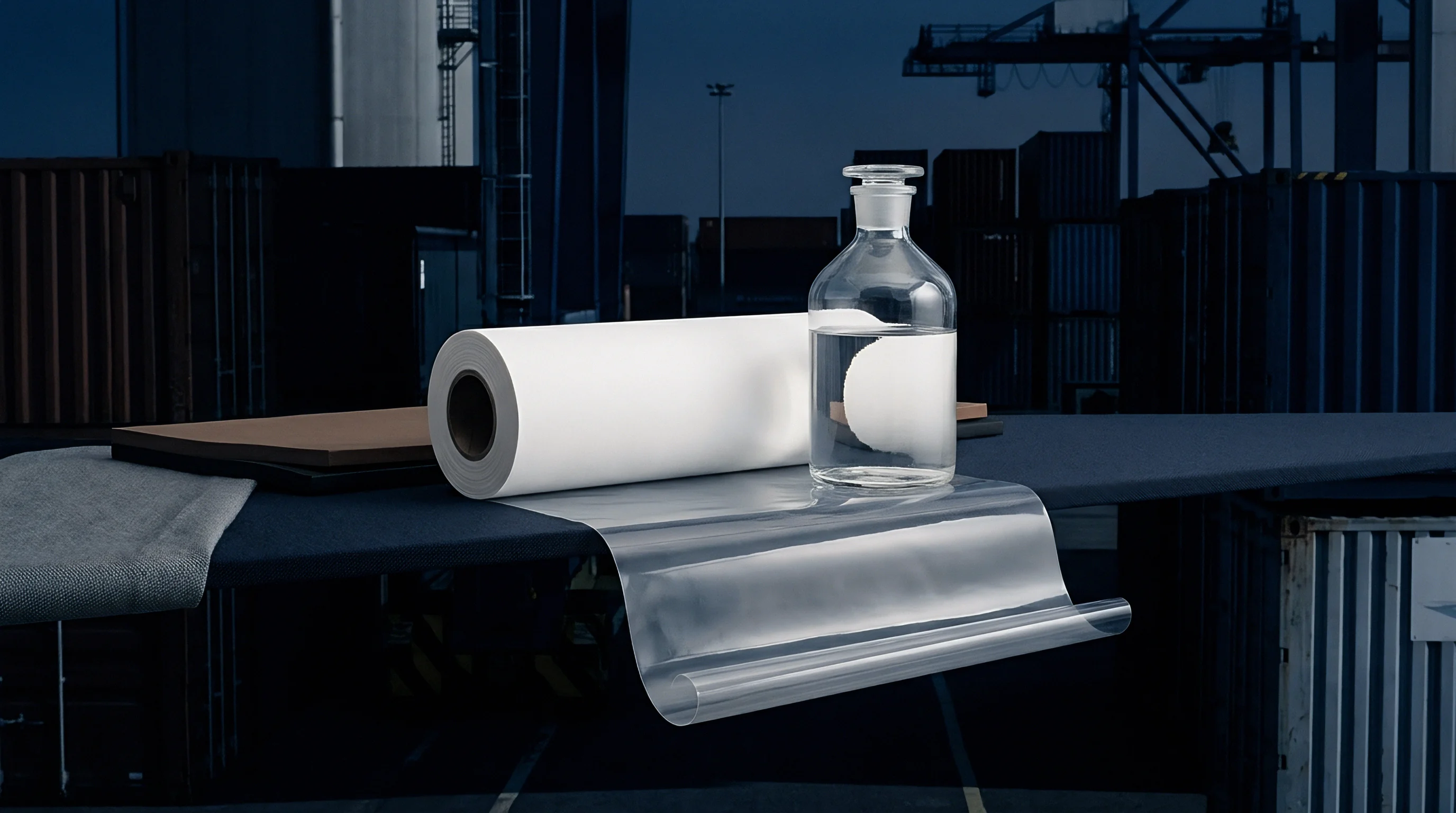
Sample preparation in glass containers prevents sample adsorption, establishing an essential baseline for laboratory accuracy.
Surfactant Formulations and Nonionic Emulsifiers
Dyeing auxiliaries, scouring agents, and spinning lubricants combine nonionic surfactant classes with anionic dispersants. Technical nonylphenol ethoxylate mixtures consist of a hydrophobic nonylphenol head group attached to a hydrophilic polyoxyethylene chain. Chain lengths vary from one to forty ethoxy units.
Surfactant matrices interfere with mass ionization. Solvent choice determines oligomer recovery rates. Liquid formulations with heavy oil phases require phase separation prior to chromatographic injection to prevent column fouling and signal distortion.
Methanol extracts branched nonylphenol ethoxylates efficiently. High-performance liquid chromatography analysis requires complete solubilization of both short-chain and long-chain oligomers. Organic compounders blending textile chemicals often add co-solvents to stabilize emulsifiers, complicating analytical isolation steps.
Accelerating solvent extraction through heat and high pressure breaks physical emulsion structures, releasing bound nonylphenol ethoxylates into the liquid phase.
Nonylphenol ethoxylates present in industrial scouring agents migrate into liquid effluent during hot aqueous processing.
Solvent Extraction Parameters for Alkylphenol Ethoxylates
Solid phase extraction and liquid-liquid partition methods isolate hydrophobic oligomers from dense aqueous matrices. Methanol and acetonitrile mixtures break down surfactant micelles, releasing individual ethoxylate chains into solution. The extraction process must maintain neutral pH conditions to prevent acid-catalyzed hydrolysis of sensitive formulation components during sample dissolution.
| Auxiliary Matrix Type | Target Ethoxylate Chain | Primary Extraction Solvent | Temperature Setting | Extraction Recovery Yield |
|---|---|---|---|---|
| Aqueous Scouring Agent | NPEO1 to NPEO20 | Methanol with 10% Water | 40 Degrees Celsius | 94.2 Percent |
| Spinning Oil Emulsion | NPEO3 to NPEO15 | Acetonitrile and Methanol Mix | 50 Degrees Celsius | 91.8 Percent |
| Dye Levelling Compound | NPEO5 to NPEO40 | Tetrahydrofuran and Methanol | 35 Degrees Celsius | 88.5 Percent |
| Thickener Paste | NPEO1 to NPEO10 | Dichloromethane and Methanol | 30 Degrees Celsius | 95.1 Percent |
Formulators frequently report that residual ethoxylated surfactants represent trace impurities from upstream alcohol synthesis rather than intentionally added scouring agents.

Cleavage
Chemical degradation protocols break polyoxyethylene chains to yield single alkylphenol targets for quantitative gas chromatography. Reaction routines cleave ether linkages in nonylphenol ethoxylates, converting multi-oligomer distributions into parent nonylphenol molecules. This structural transformation simplifies complex oligomer mixtures into unified quantitative signals during chemical verification.

Acid Hydrolysis Mechanics Using Hydriodic Acid
High temperature reaction vessel conditions degrade ether linkages within polyethoxylate structures. Concentrated hydriodic acid breaks carbon-oxygen bonds, producing nonylphenol and 1,2-diiodoethane. Acid hydrolysis cleaves polyoxyethylene chains cleanly.
Hydriodic acid reacts at high temperatures. The chemical reaction releases free branched nonylphenols, which analytical instruments measure against single-compound calibration curves.
Reagential ether cleavage requires strict temperature regulation inside sealed glass vessels. Excessive heat causes aromatic ring substitution reactions, creating halogenated byproducts that skew mass spectrometry calculations. Maintaining reaction temperatures at exactly 130 degrees Celsius ensures uniform bond cleavage across both short-chain and long-chain ethoxylate isomers.
Refluxing ethoxylated formulations in hydriodic acid at 130 degrees Celsius converts polyethoxylate chains into 1,2-diiodoethane within ninety minutes.
Sample Preparation Routines for Oligomeric Quantification
Gravimetric measurement of raw chemical preparations demands complete homogeneity prior to solvent addition. Analytical chemists follow fixed preparation sequences to isolate total alkylphenol content from multi-component auxiliary liquids.
- Weigh 0.5 grams of homogenized chemical formulation into a 50-milliliter reaction tube with PTFE cap.
- Add 5.0 milliliters of concentrated hydriodic acid and 2.0 milliliters of n-heptane to the reaction mixture.
- Seal the tube firmly and heat inside a thermostatic reaction block at 130 degrees Celsius for 90 minutes.
- Cool the solution to room temperature in an ice bath to arrest chemical cleavage kinetics.
- Neutralize the acid phase by adding 10 milliliters of sodium hydroxide solution under continuous agitation.
- Extract the organic n-heptane layer containing liberated nonylphenol using a precision micro-pipette.
- Filter the extract through a 0.22-micrometer PTFE syringe filter directly into an autosampler vial.
High temperatures during acid hydrolysis degrade unbranched aromatic rings before ether bonds cleave completely.


Assay
Instrumental analysis relies on liquid chromatography combined with tandem mass spectrometry to identify nonylphenol ethoxylate chains without chemical pre-treatment. Advanced triple-quadrupole mass spectrometers resolve individual ethoxymer peaks based on mass-to-charge ratios, delivering accurate quantification down to sub-milligram per kilogram thresholds. Direct analysis preserves original oligomeric distributions, enabling precise mapping of raw raw materials.

What Analytical Steps Resolve Complex Auxiliaries?
High-performance liquid chromatography separates ethoxylate oligomers based on polyoxyethylene chain length using reversed-phase stationary phases. C18 and C8 column chemistry resolves individual ethoxymer peaks sequentially as mobile phase gradients shift from aqueous ammonium acetate to acetonitrile. Direct injection damages analytical column stationary phases.
Matrix suppression reduces precursor ion yields. Electrospray ionization generates ammonium adduct ions.
Quantification of branched nonylphenol ethoxylates requires monitoring multiple reaction monitoring transitions. Technical nonylphenol consists of over one hundred structural isomers with varying alkyl chain branching configurations. Mobile phase additives such as ammonium acetate or ammonium formate promote adduction, converting neutral ethoxylate molecules into ammonium adducts ( +) inside the electrospray source.
Testing under ISO 18254-1 requires ammonium acetate addition to stabilize adduct formation during electrospray ionization.

Mass Spectrometry Configurations and Ionization Dynamics
Electrospray ionization in positive mode generates stable adduct ions when ammonium salts enter the mobile phase stream. Quadrupole collision cells fragment precursor ammonium adducts into characteristically displaced product ions. The constant neutral loss of 44 mass units corresponds to the cleavage of individual ethoxy units (CH2CH2O), confirming ethoxylate structure identity during data acquisition.
| Target Ethoxymer (n) | Precursor Ion + (m/z) | Quantification Product Ion (m/z) | Declustering Potential (V) | Collision Energy (eV) |
|---|---|---|---|---|
| NPEO2 | 326.3 | 183.1 | 45 | 22 |
| NPEO5 | 458.4 | 227.2 | 55 | 28 |
| NPEO8 | 590.5 | 271.3 | 65 | 34 |
| NPEO10 | 678.6 | 315.3 | 70 | 38 |
| NPEO12 | 766.7 | 359.4 | 75 | 42 |
| NPEO15 | 898.8 | 425.5 | 85 | 48 |
| Method parameters aligned with ISO 18254-1 test conditions using positive electrospray ionization LC-MS/MS. | ||||
Surfactant matrices alter source ionization efficiency, causing significant signal suppression or enhancement. Calibration using isotope-labeled internal standards, such as carbon-13 labeled nonylphenol ethoxylate, corrects for ionization drift and matrix interference during batch quantitative runs.
Chemical testing protocols must distinguish between octylphenol ethoxylates and nonylphenol ethoxylates. Mass spectral resolution must separate isomeric alkylphenols cleanly to prevent false positives when testing complex wet-processing chemical blends.
Whether ultra-high performance liquid chromatography coupled with time-of-flight mass spectrometry can fully differentiate technical isomer distributions without certified reference standards remains unresolved across commercial assurance laboratories.

Threshold
Global chemical standards establish maximum allowable concentration limits for alkylphenol ethoxylates across raw formulations and finished textile goods. Regulations set chemical intake caps to protect aquatic ecosystems from toxic biodegradation products. Testing laboratories audit raw chemical drums against strict chemical restricted substance lists prior to dyehouse entry.

Regulatory Limits under European Chemical Frameworks
European Union market access rules enforce strict restrictions on chemical preparations used in industrial washing and dyeing. Entry 46 of REACH Annex XVII prohibits placing nonylphenol ethoxylates on the market in concentration equal to or greater than 0.1 percent by weight for textile processing. REACH restrictions bind all importers equally.
Detection limits reach one milligram per kilogram. Technical nonylphenol contains complex branched isomers.
Entry 46a expands market restrictions to washable textile articles containing nonylphenol ethoxylates in concentrations equal to or exceeding 100 milligrams per kilogram. European customs authorities inspect incoming shipments, holding non-compliant goods at border clearance points when laboratory testing reveals excess alkylphenol ethoxylate residues.
Chemical formulations exceeding fifty milligrams per kilogram of alkylphenol ethoxylates fail Level 1 ZDHC MRSL conformance criteria.
Manufacturing Restricted Substance List Compliance
Zero Discharge of Hazardous Chemicals guidelines restrict input formulation purity to prevent environmental accumulation during textile finishing. The ZDHC Manufacturing Restricted Substance List (MRSL) version 3.1 establishes action limits for chemical compounders supplying wet-processing facilities.
- Total APEO Formulation Limit defines maximum combined concentration of alkylphenol ethoxylates at 250 milligrams per kilogram in commercial chemical products.
- Individual NPEO Limit sets threshold for nonylphenol ethoxylates at 50 milligrams per kilogram in concentrated raw materials.
- Free Alkylphenol Limit restricts residual unethoxylated nonylphenol to 10 milligrams per kilogram in active surfactant blends.
- Level 1 Conformance requires analytical test reports from accredited ISO 17025 laboratories dated within twelve calendar months.
- Level 3 Conformance demands full chemical site audits and raw material traceability verification across upstream chemical compounders.
Entry 46a of REACH Annex XVII mandates that textile products containing nonylphenol ethoxylates above 0.01 percent by weight cannot clear European Union customs after January 2021.
Variance
Testing laboratories show significant numerical spread when measuring total nonylphenol ethoxylates in multi-component commercial mixtures. Discrepancies emerge from differences in extraction efficiency, isomer distribution standard choice, and instrumental calibration curves. Identifying sources of analytical variation protects buyers from unexpected batch rejections.

Inter-Laboratory Discrepancies and Standard Calibration
Calibration standards derived from single-isomer targets produce inaccurate quantification when evaluating commercial technical nonylphenol mixtures. Isomer distributions cause calibration curve shifts. Cross-contamination occurs inside shared chemical vessels.
Technical nonylphenol blends contain dozens of branched isomers with differing mass spectrometric response factors. Analytical chemists must use certified technical nonylphenol ethoxylate mixture standards to construct quantitative calibration curves.
Discrepancies in reporting oligomeric ranges create significant analytical variance between testing facilities. One laboratory may quantify ethoxylate chains from NPEO1 to NPEO20, while another measures only NPEO1 to NPEO8. This difference in scope leads to conflicting pass or fail verdicts for identical chemical shipments.
Matrix Ion Suppression and Surfactant Co-Elution
Co-eluting hydrophobic compounds alter electrospray ionization efficiency inside tandem mass spectrometry sources. Anionic surfactants such as linear alkylbenzene sulfonates co-extract with ethoxylated nonylphenols, competing for charge in the ionization chamber. Laboratory errors occur when analytical teams fail to identify matrix suppression during quantitative calculations.
- Incomplete Extraction Solvent Penetration occurs when highly viscous thickeners prevent solvent contact with interior surfactant molecules.
- Thermal Degradation in Injector Ports breaks long-chain ethoxylates into short-chain fragments during high-temperature gas chromatography injections.
- Isomer Peak Overlap creates false quantitative spikes when fatty alcohol ethoxylates co-elute alongside nonylphenol ethoxylate peaks.
- Calibration Standard Evaporation shifts working solution concentrations, causing systematic quantitative overestimation over prolonged testing cycles.
| Analytical Technique | Standard Designation | Target Compound Scope | Limit of Quantification | Matrix Interference Vulnerability |
|---|---|---|---|---|
| LC-MS/MS (ESI+) | ISO 18254-1 | NPEO1 to NPEO20 Oligomers | 1.0 mg/kg | High (Ion Suppression) |
| GC-MS (Ether Cleavage) | ISO 18218-1 | Total Nonylphenol Equivalent | 5.0 mg/kg | Low (Chemical Breakdown) |
| HPLC-FLD | EN ISO 18254-2 | NPEO2 to NPEO18 Oligomers | 10.0 mg/kg | Moderate (Fluorescence Quenching) |
| LC-TOF/MS | In-House Method | Full Isomer Profiling | 0.5 mg/kg | Moderate (High Mass Accuracy) |
Laboratory reports expire after twelve months.
Misinterpreting matrix suppression as substance absence leads importers to accept non-compliant surfactant shipments, exposing downstream apparel brands to mandatory market recalls and border detentions.


Lien
Commercial purchase contracts transfer financial risk to chemical compounders through explicit restricted substance warranties. Buyers writing purchase orders include strict chemical limits to ensure that all delivered wet-processing auxiliaries comply with global regulatory standards. Establishing clear legal liability mechanisms forces chemical suppliers to verify raw material purity before shipment dispatch.

Supply Chain Traceability and Chemical Declarations
Upstream compounders furnish safety data sheets and analytical certificates to substantiate chemical compliance before factory delivery. Importers review third-party laboratory reports to confirm that testing scope matches specific chemical trade names and batch lot numbers. Third-party verification protects downstream supply chains.
Certificate validation prevents non-compliant auxiliaries from entering production dye baths.
Audit mechanisms require chemical vendors to submit updated laboratory test reports annually. A certificate covering one product variant cannot serve as evidence for reformulated chemical derivatives. Compliance officers cross-check raw material lot numbers against batch delivery invoices to maintain unbroken traceability files.

Purchase Order Specifications and Rejection Mechanics
Textile converters write binding technical terms directly into chemical procurement contracts to establish batch rejection rights. Legal clauses specify mandatory re-testing routines upon arrival at factory warehouses, assigning sample costs to suppliers when testing detects nonylphenol ethoxylates above agreed action thresholds.
Contract terms define clear financial damages when non-compliant chemical formulations cause downstream fabric rejection. Supplier indemnity obligations cover finished goods destruction costs, laboratory testing fees, and customs detention expenses resulting from prohibited alkylphenol ethoxylate contamination.
Chemical suppliers providing third-party laboratory reports ensure that sample preparation details, extraction solvent ratios, and specific oligomer ranges match the exact lot numbers delivered to the dyehouse floor.