Determining Moisture Regain Standards in Raw Textile Imports
Determine commercial moisture regain standards through representative bale core sampling and forced-draft oven drying to convert net shipping mass into billable commercial weight.
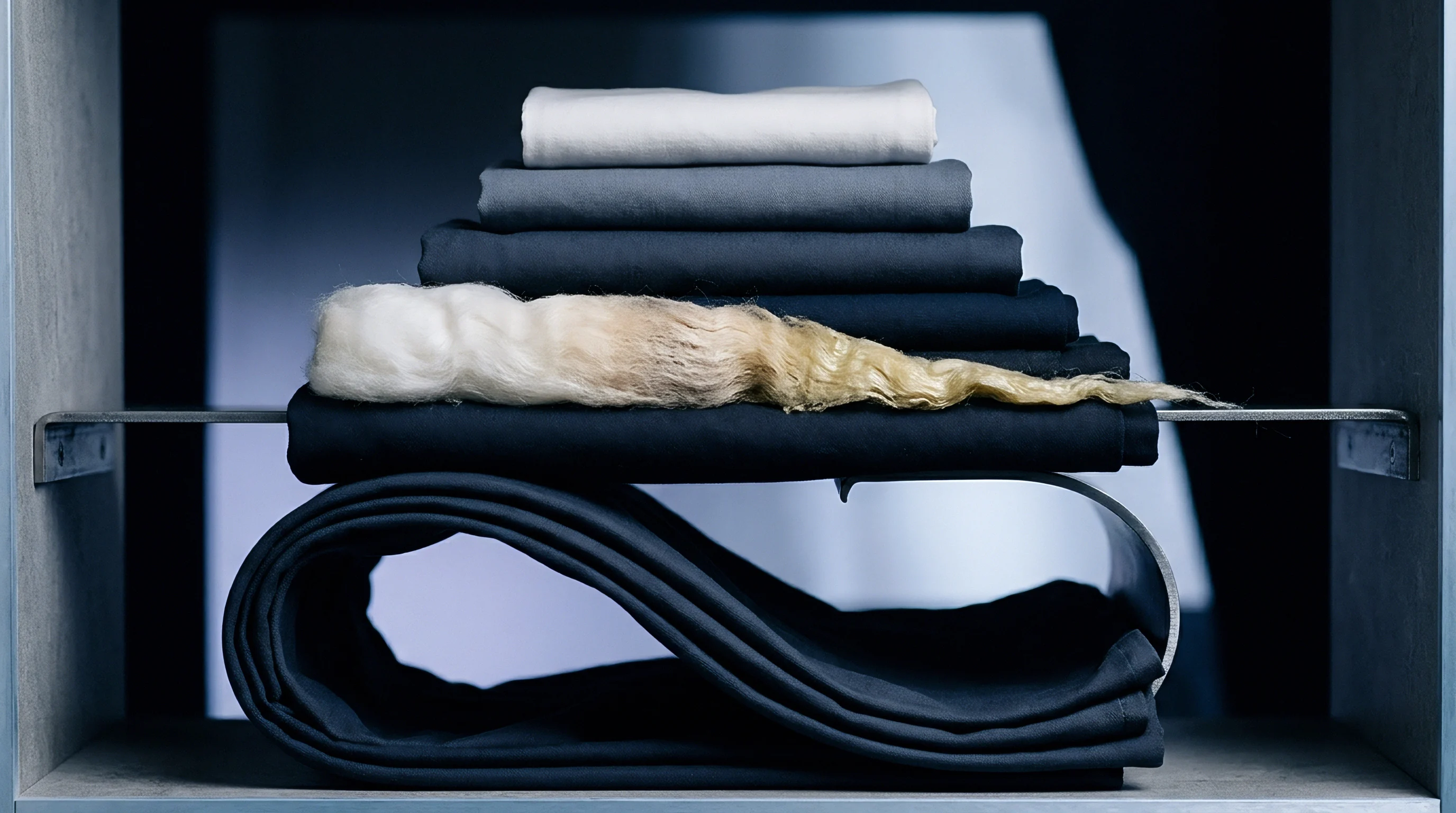

Sorption
Raw textile fibres continuously exchange water vapor with the surrounding atmosphere until liquid absorption balances evaporation. The distinction between moisture content and moisture regain governs commercial trade valuation. Moisture content measures water weight as a fraction of total moist mass, whereas regain compares water weight to dry fiber mass.
For example, a 10,000 kilograms lot of raw cotton at 8.0 percent regain contains 740.7 kilograms of water alongside 9,259.3 kilograms of bone-dry cellulose. Measured under a moisture content framework, that same lot registers at 7.41 percent. Water absorption alters not only physical weight, but fiber pliability, tensile performance, and downstream spinning efficiency.

Thermodynamic Equilibrium and Hysteresis Loop
Hydrophilic polymers rely on accessible hydroxyl and carboxyl groups to draw environmental water into their network via hydrogen bonds. Hydrophobic synthetics, by contrast, feature non-polar molecular chains that limit water uptake to slight surface adsorption. Equilibrium moisture depends heavily on history: fibers reaching equilibrium from a wet state hold more water than identical dry fibers exposed to the same ambient air.
This separation between desorption and absorption pathways creates sorption hysteresis. In an atmosphere held at 65 percent relative humidity and 20 degrees Celsius, desorbing raw cotton stabilizes near 8.5 percent regain, while initially bone-dry cotton exposed to the identical room levels off at 7.2 percent.
Natural protein and regenerated cellulose fibers display broad hysteresis loops because their extensive amorphous regions trap moisture behind crystalline fibrils. Synthetic staple such as polyester shows minimal hysteresis, reflecting negligible overall moisture uptake. Consequently, the atmospheric conditions a shipment encounters during ocean transit directly influence its net regain at arrival, regardless of static readings taken in the receiving warehouse.
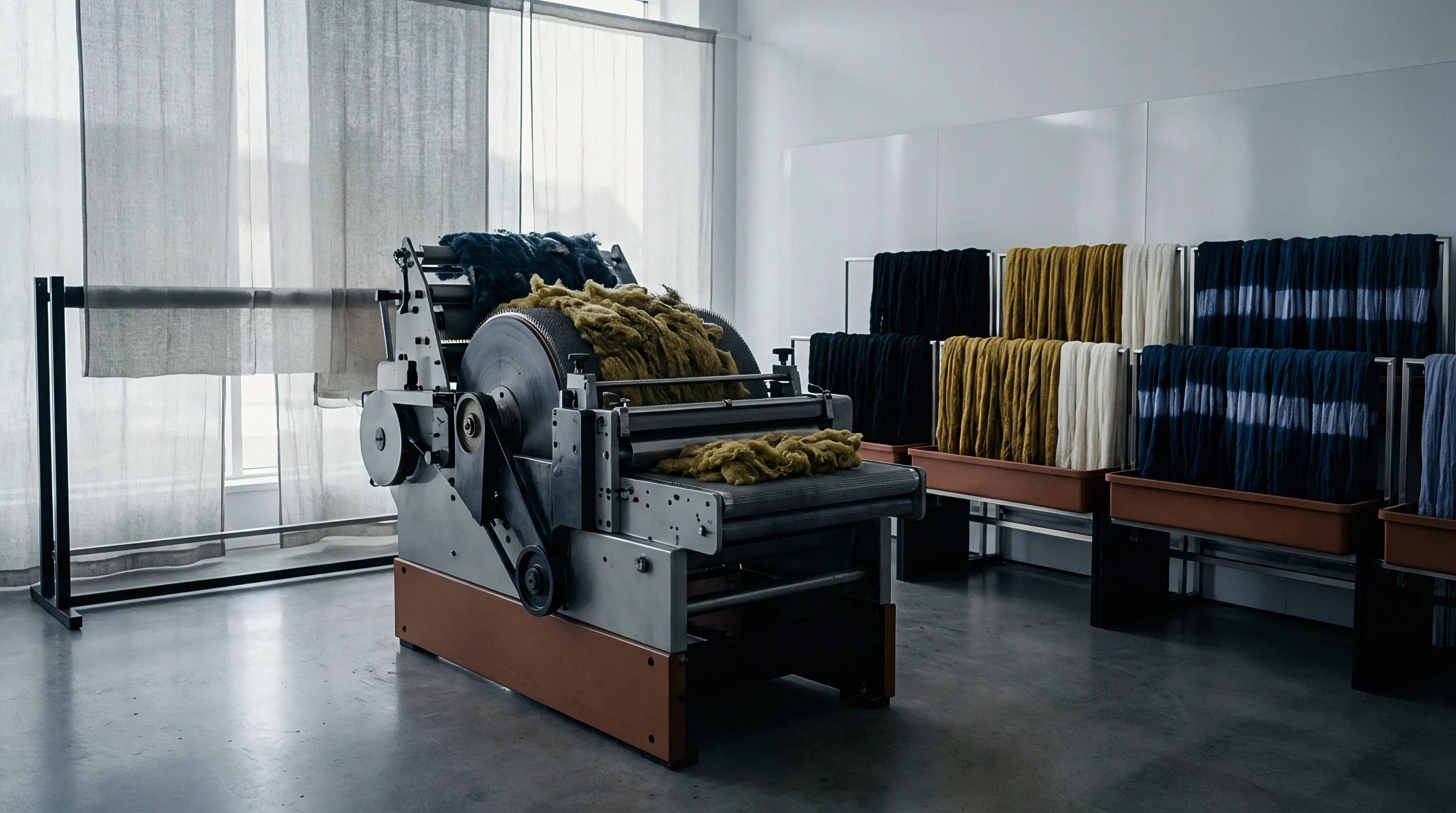
Cellular Moisture Binding Mechanisms
Water exists within textile substrates across three distinct physical states. Primary bound water attaches directly to polar polymer sites through high-energy hydrogen bonds. Secondary bound water forms successive molecular layers over those initial sites through weaker dipole interactions.
Free water collects in capillary voids between individual fibers and within cell lumens. Driving off primary bound water requires significant thermal energy to sever chemical attractions, whereas capillary water clears readily under gentle surface airflow.
Viscose rayon absorbs roughly twice as much water as raw cotton despite sharing an identical cellulose chemistry. Its regenerated structure contains a much higher fraction of open amorphous regions, giving moisture unrestricted pathways into the polymer matrix. Wool proteins carry amine and carboxyl sites that draw water deep into the cortex, expanding fiber diameter by up to 15 percent at complete saturation.
Synthetic filaments lack internal hydration cavities, confining moisture interaction to surface films.
Whether regional atmospheric variation across cross-border transit routes can permanently alter internal amorphous binding capacity before processing mills open raw bales remains a critical open consideration for international trade bodies.


Core
Bale break-out regularly exposes steep moisture gradients between external wraps and dense interior packing. Outer layers absorb or release humidity quickly in response to container conditions, while inner fiber cores can remain isolated for months. Reliable appraisal therefore requires mechanical rotary coring tubes driven deep through compressed layers to pull representative fiber from the center of the package.
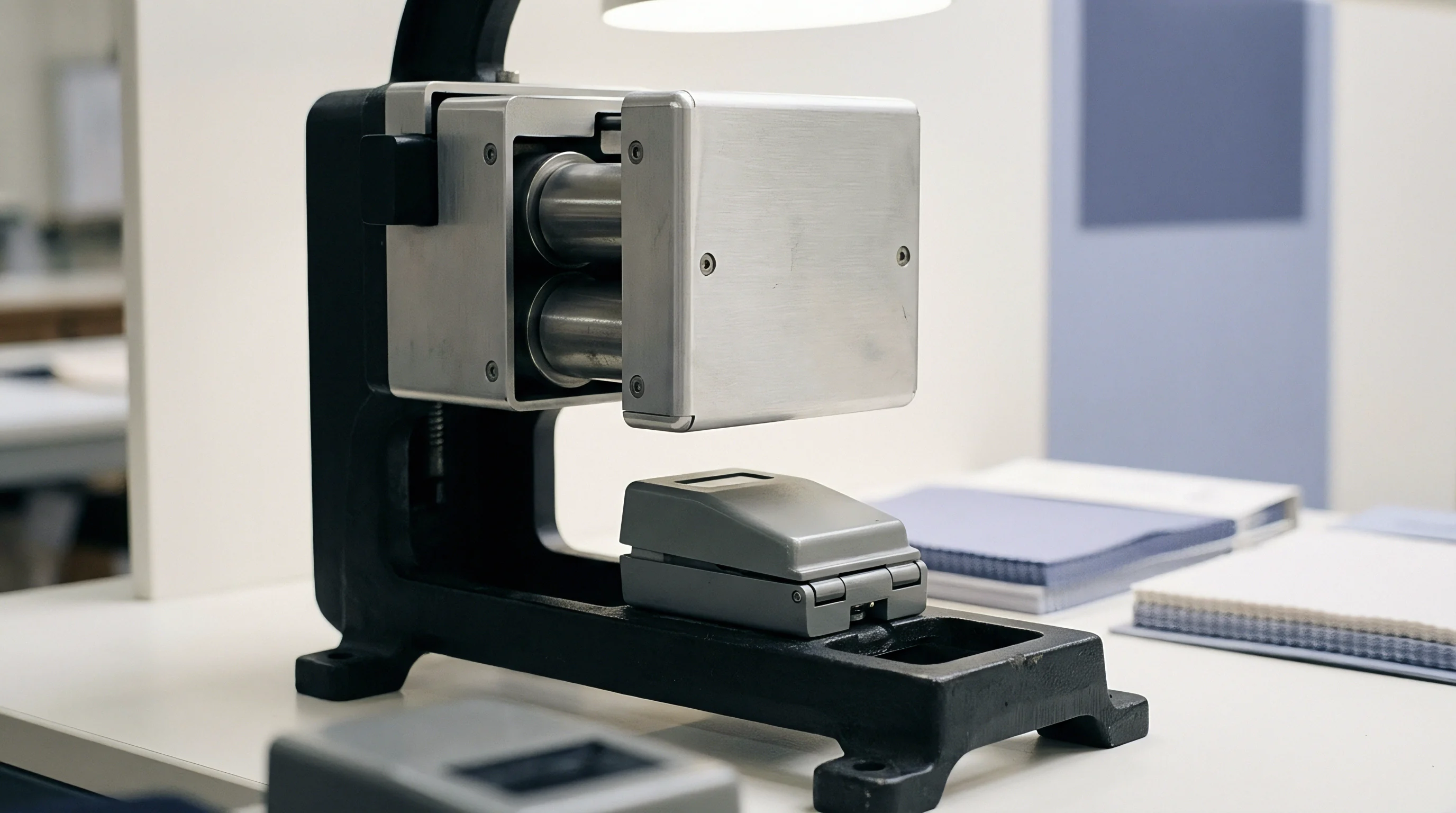
Why Should Core Sampling Depth Vary across Bales?
High-density hydraulic pressing creates uneven internal compression that slows vapor migration through raw fiber lots. Shorter perimeter cores reflect recent transit weather rather than true consignment averages. Driving cutters past 400 millimeters reaches the dense interior core where moisture levels from initial baling remain undisturbed.
Sound sampling protocols require coring across mid-bale geometries at predetermined spatial intervals.
Programs mandate systematic penetration patterns across a defined percentage of bales to neutralize internal stratification. Individual cores drawn from across the container are transferred immediately into airtight glass jars to prevent moisture loss before laboratory weighing.
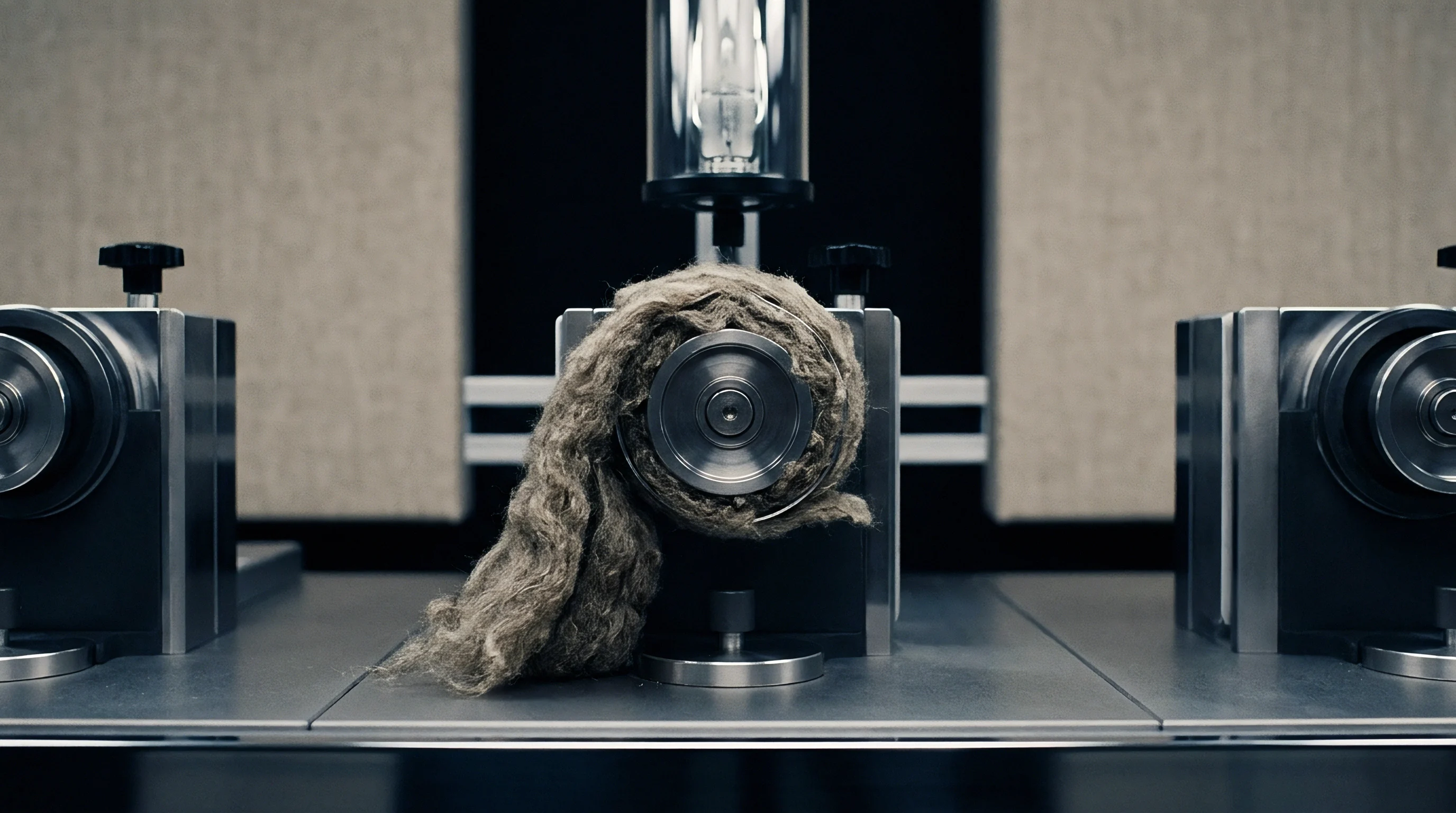
Representative Core Extraction Protocols
Sampling raw staple shipments requires structured physical steps to isolate authentic moisture averages across entire shipping lots.
- Isolate ten percent of raw bales randomly across front, middle, and rear container packing locations.
- Clean outer bale wrapping material around specified drill entry sites to prevent contaminant introduction into samples.
- Drive a stainless steel core tube with a minimum internal diameter of 18 millimeters through the bale side wall to a depth exceeding 450 millimeters.
- Eject drawn fiber cores directly into an airtight stainless steel or glass collection vessel without touching raw material with bare hands.
- Record container seal numbers, sample mass, and ambient room temperature on the container transfer log before dispatching vessels to the test facility.
Bales held in humid staging docks accumulate substantial surface weight while core densities remain unchanged. Limiting sampling to surface cuts overstates total fiber mass, leading buyers to pay commercial fiber rates for ocean transit humidity.
Core samples combined into sealed glass vessels must undergo mass analysis within two hours of extraction to avoid internal container wall condensation errors.

Gravimetry
Direct thermal mass measurement represents the definitive benchmark for determining true fiber moisture regain. Samples undergo prolonged heating inside forced-draft ovens until successive weighings confirm absolute zero residual fluid content. Subtracting final oven-dry mass from initial moist sample mass isolates absolute volatile moisture weight.
Oven Drying Methodologies and Atmospheric Conditioning
Standard testing environments demand strict atmospheric controls at 20 degrees Celsius and 65 percent relative humidity. Forced-draft drying ovens maintain internal air circulation between 105 and 110 degrees Celsius, forcing bound moisture out of raw fiber matrices without decomposing organic chemical structures. Drying cycles continue until continuous mass measurements taken 15 minutes apart show less than 0.05 percent total weight change.
Weighing hot samples directly inside oven chambers prevents rapid atmospheric moisture absorption during measurement phases.
| Fiber Category | Test Method | Drying Temperature (°C) | Standard Regain (%) | Uncertainty Band (%) |
|---|---|---|---|---|
| Raw Cotton | ISO 6741-1 / ASTM D2495 | 105 – 110 | 8.50 | ±0.35 |
| Scoured Wool | IWTO-19 / ISO 1136 | 105 – 110 | 16.00 | ±0.50 |
| Viscose Staple | ISO 6741-2 | 105 – 110 | 13.00 | ±0.40 |
| Polyester Staple | ISO 6741-3 | 105 – 110 | 0.40 | ±0.05 |
| Test methods specify continuous forced-draft air exchange at standard barometric pressures. | ||||
Prolonged exposure past 110 degrees Celsius degrades delicate animal proteins and boils off low-temperature spinning finishes, producing an artificially elevated regain reading. Karl Fischer chemical titration provides an alternative by isolating water mass through volumetric reagent reaction, side-stepping thermal breakdown entirely when testing oiled synthetic tops.
Forced-draft thermal drying at 105 degrees Celsius until mass variation falls below 0.05 percent remains the sole universally accepted referee method for international raw fiber commercial valuation disputes.

Secondary High Frequency Measurement Calibration
Handheld moisture meters convert electrical conductivity or dielectric permittivity across fiber masses into rapid regain estimates. Direct continuous current meters pass electrical charges between twin needle probes inserted deep into bale core channels. Water presence increases electrical conductivity exponentially through cellulose matrices.
Calibration curves must adjust dynamically for density variations, fiber temperatures, and residual chemical salt levels inside unwashed raw stocks.
High-frequency capacitance meters evaluate dielectric shifts across high-frequency fields generated around bale surfaces. While non-destructive and operational within seconds, indirect electronic meters fail as legally binding referee instruments during customs disputes. Direct gravimetric oven drying overrides high-frequency meter estimates during financial commercial adjustments.
Relying on uncalibrated capacitance meters for bulk contract settlements leads directly to accepting wet fiber shipments that suffer extensive mildew rot during long-term warehouse storage.

Schedules
International standard authorities establish fixed commercial regain allowances to normalize weight calculations across global raw fiber transactions. Standard regain values reflect average equilibrium moisture levels expected under standard testing atmospheres. Invoicing raw material transactions relying on actual gross container weights introduces commercial volatility, whereas calculating invoice mass based on official commercial schedules standardizes global commodity pricing.
Official Commercial Moisture Regain Allowances
Different textile fibers exhibit vastly different water attraction schedules under international consensus standards like ISO 6741, IWTO, and USDA rules. Pure polyester staple maintains a minimal official regain allowance of 0.40 percent, reflecting its synthetic molecular inertia. Raw cotton carries an official commercial allowance of 8.50 percent across international commercial contracts, while scoured carded wool features a 16.00 percent allowance due to its high protein porosity.
| Fibre Type | ISO Allowance (%) | USDA Allowance (%) | IWTO Allowance (%) | BISFA Allowance (%) |
|---|---|---|---|---|
| Raw Cotton | 8.50 | 8.50 | — | — |
| Scoured Wool Class 1 | 16.00 | 13.00 | 16.00 | — |
| Viscose Staple | 13.00 | — | — | 13.00 |
| Polyester Staple | 0.40 | 0.40 | — | 0.40 |
| Nylon 6,6 Staple | 4.50 | 4.50 | — | 4.50 |
Uniform schedules strip regional weather biases out of final settlement figures. A consignment loaded under tropical humidity settles against the same bone-dry cellulose base as fiber dispatched from an arid plateau, shielding buyers from paying commodity rates for atmospheric water.
International trade standards establish fixed regain schedules to decouple raw fiber billing weight from fluctuating freight transit weather conditions.
Multi Fibre Blend Regain Calculation Framework
Calculating commercial regain allowances for multi-component raw fiber blends demands proportional mathematical weighting. Fiber blend ratios established through chemical quantitative analysis according to ISO 1833 dictate the exact weighted contribution of each component’s commercial regain allowance.
Incorrect application of regain schedules routinely compromises cross-border financial settlements.
- Single-fiber regain default application misclassifies intimate polyester-cotton staple blends by omitting the synthetic component’s low moisture absorption baseline.
- Commercial mass calculation omission occurs when billing departments apply standard regain percentages directly to gross container weights instead of bone-dry masses.
- Hysteresis direction disregard ignores whether raw fiber lots entered test facilities from wet ocean transit environments or dry storage depots.
- Standard schedule mismatching happens when buyers apply IWTO wool schedules to raw cotton consignments governed by USDA trading rules.
Weight settlement disputes routinely contrast assertions of harmless ambient moisture uptake during transit with invoice frameworks anchored strictly to dry-fiber yield.
Ledger
Converting raw scale weights into billable commercial mass requires clear mathematical correction protocols. The commercial invoice mass reflects the theoretical weight of a lot if its moisture content matched official standard regain allowances exactly. Financial invoices draw directly from calculated commercial mass rather than physical scale figures recorded at customs arrival ports.
Commercial Mass and Invoice Correction Arithmetic
Calculating commercial invoice mass involves establishing the exact oven-dry mass of the raw fiber consignment through representative core gravimetric testing, then adding official commercial regain allowances alongside approved processing finish allowances.
The standard equation for commercial mass relies on precise mathematical ratios:
Commercial Mass = Net Delivered Mass × (100 + Standard Regain Allowance) / (100 + Actual Measured Regain)
Applying this formula converts variable physical shipping weights into standardized billable financial quantities.
Worked Example for Containerized Raw Fibre Invoice Adjustment
Consider a commercial import consignment of raw cotton staple carrying a contract baseline price of 2.20 USD per kilogram. The physical net weight recorded on port scale scales shows 22,000 kilograms. Laboratory core testing via ISO 6741 forced-draft oven drying establishes an actual average regain of 11.20 percent across extracted core samples.
Official USDA standard regain allowance for raw cotton stands at 8.50 percent.
Calculating true bone-dry mass yields:
Bone Dry Mass = 22,000 × (100 / (100 + 11.20)) = 19,784.17 kilograms
Applying the standard commercial regain allowance of 8.50 percent establishes the official billable commercial mass:
Billable Commercial Mass = 19,784.17 × (100 + 8.50 / 100) = 21,465.82 kilograms
Comparing physical delivered scale mass against billable commercial mass reveals an excess moisture weight of 534.18 kilograms. At the agreed contract rate of 2.20 USD per kilogram, applying commercial mass arithmetic adjusts the gross invoice total downwards from 48,400.00 USD to 47,224.80 USD, saving the importing mill exactly 1,175.20 USD on water weight.
Calculating raw fiber financial adjustments against bone-dry mass values prevents importers from paying commodity prices for excess shipping water.
Auditing raw fiber claims requires verified documentary evidence matching laboratory reports to original container seals.
- Certified core sampling certificate documenting extraction locations, tube diameters, sample quantities, and seal numbers.
- ISO accredited laboratory test report detailing forced-draft oven drying temperatures, initial sample masses, and final dry masses.
- Official port weighbridge slip confirming gross container weight, tare weight, and clean net physical weight at entry.
- Commercial contract schedule annex stipulating agreed baseline regain allowances, testing standards, and settlement pathways.
Standard sales contracts specify that where measured moisture regain exceeds agreed tolerances by more than 1.5 percent, the seller absorbs all re-testing fees and lab core extraction expenses.

Transit
Ocean freight routes expose containerized raw fiber to extreme microclimate variations. Solar radiation heats sealed steel container tops, vaporizing internal fiber moisture. Rising warm air carries water vapor upward toward container roofs where condensation forms as temperatures drop during transit nights.
This internal cycle creates container rain, soaking top-tier bales while leaving lower layers dry.
Container Microclimates and Intermodal Ocean Freight
Raw natural fibers inside sea containers actively trade vapor with trapped air volumes throughout intermodal ocean voyages. Vent configurations, desiccants, and container orientation alter condensation patterns across long transit legs.
| Container Option | Vent Status | Desiccant Load | Top Bale Regain Shift (%) | Bottom Bale Regain Shift (%) |
|---|---|---|---|---|
| Standard Dry Van | Unsealed Vents | None | +3.20 (Wet Cap) | -1.10 (Drying Base) |
| Standard Dry Van | Sealed Vents | 2.0 kg Silica Gel | +0.80 | -0.20 |
| High Cube Insulated | N/A | None | +0.30 | +0.10 |
Localized moisture migration distorts physical core readings pulled directly upon breaking container seals. Bales stuffed under high humidity surrender vapor on hot voyages, while dry bales take on runoff from ceiling condensation.
Unvented container roof condensation creates severe localized surface hydration pockets that distort non-standardized port moisture testing.

Port Entry Discrepancy Protocol
Tariffs levied on raw fiber cargoes track landed physical weight. Customs officers often contest commercial mass adjustments when scale tickets outstrip declared invoice weights because of water picked up at sea. Registering baseline moisture at the loading terminal gives buyers documented protection against inflated duty charges at entry.
When physical arrival mass deviates from origin transport manifests by more than two percent, port inspectors pull immediate official referee core samples before releasing containers to inland processing sites. Raw lots showing localized fungal growth or salt water contamination require immediate joint survey inspections to separate atmospheric transit moisture gain from physical container damage claims under marine cargo insurance policies.
Containerized raw fiber consignments resting inside transit port yards during peak summer heat suffer continuous internal moisture migration, concentrating water vapor into top bale layers and permanently shifting localized core density profiles.