Calculating Weighted Commercial Regain Allowances for Multi Component Yarn Shipments
Weighted commercial regain calculations turn dry mass fractions and standard allowance rates into contractually enforceable net billable yarn shipment weights.


Lot
A shipping container sitting on the damp quay at Bremerhaven holds forty thousand spools of worsted yarn, packed in poly-lined wooden crates. The invoice lists the total weight as 18,500 kilograms, billed at 22.50 Euros per kilo. The spinning mill in Zhejiang weighed those pallets immediately after winding in a room held at 65 percent relative humidity and 20 degrees Celsius.
Ocean transit took thirty-two days. During the voyage, sea air breached two container door seals, raising the moisture in the outer packing cartons. When the buyer’s receiving dock weighs the shipment, the gross scale reads 18,920 kilograms.
Without testing the clean oven-dry mass of the yarn and applying weighted commercial regain allowances, the buyer pays an additional 9,450 Euros for absorbed seawater vapor. Alternatively, if the yarn dried out in a hot container top-tier during a desert transit, the buyer pays for weight that vanished into thin air, receiving fewer physical meters of yarn than specified for their knitting machinery.
Cross-border yarn contracts turn on the distinction between actual weight and billable commercial weight. Natural and synthetic fibers take on water vapor directly into their chemical structure, changing mass continuously as ambient humidity rises and falls. Cotton gains up to eight percent of its dry weight under standard laboratory air, worsted wool absorbs over eighteen percent, while polyester picks up less than one-half of one percent.
When these fibers are blended into a single yarn, calculating invoice weight requires a weighted commercial regain calculation. The calculation isolates the exact mass of dry fiber substance in the shipment, strips out variable atmospheric water, and adds back the standard moisture allowance agreed under international trade law.
Every commercial shipment of composite yarn carries two weights: physical scale mass and commercial mass derived from clean oven-dry testing. Skipping this step leaves buyers exposed to atmospheric shifts and mill habits. Spinning mills that pack yarn straight off the frame without conditioning ship spools holding residual heat and low moisture.
Mills that run finished cones through conditioning steamers sometimes over-saturate packages, selling water at the price of high-grade wool or silk. In volume sourcing, calculating the weighted regain allowance is the only reliable way to ensure a kilo of invoiced yarn contains the fiber length and substance required for fabric production.
The mill sales director maintained that natural ambient pickup during ocean transit lies within standard commercial tolerance, refusing any invoice credit without a certified laboratory dry-down report.
Weighted regain comes down to fiber chemistry. Hydrophilic fibers like wool, viscose, and cotton carry polar chemical groups ~ primarily hydroxyl and amide linkages ~ that form hydrogen bonds with atmospheric water. Hydrophobic fibers like polyester, polypropylene, and acrylic lack these sites and act as inert mass during moisture exchange.
When a yarn combines sixty percent combed wool with forty percent polyester, moisture absorption does not average out linearly; the blend behaves like two separate sponges. The wool fraction gains and loses weight rapidly with dockside humidity, while the polyester fraction sits unchanged. Weighing the total parcel without isolating the dry mass of each component creates legal and financial ambiguity that scale re-weighing alone cannot resolve.
We tested four container loads of worsted tri-blend packages arriving from Ningbo to establish our baseline audit procedure. Scale weights at the port varied by up to four hundred kilograms per container depending on the season and ocean routing. When core samples were subjected to quantitative chemical separation and oven-drying under ISO 6741 standards, true dry fiber mass remained consistent within a fraction of one percent.
The apparent weight gains came entirely from ambient humidity absorbed through breached pallet wrapping at sea. Scale weight on raw yarn shipments is always a moving target; commercial mass, calculated through weighted regain allowances, gives an immutable monetary benchmark.
Skipping regain adjustments causes downstream failures. When a mill knits yarn delivered with excess moisture, the yarn runs heavy, shifting fabric weight per square meter. Then, as garments dry on the finishing line, the fabric shrinks, throwing off garment sizing and triggering rejections during retail audits.
Moisture shifts financial margins at every point in the supply chain. Establishing clean dry fiber weight and applying standardized regain allowances protects buyer margins long before yarn ever touches a creel.
The mill sales director maintained that natural ambient pickup during ocean transit lies within standard commercial tolerance, refusing any invoice credit without a certified laboratory dry-down report.


Norm
International trade standards govern the baseline moisture percentages assigned to clean, dry fibers. Bodies like the International Organization for Standardization (ISO), the American Society for Testing and Materials (ASTM), and the International Bureau for the Standardization of Man-Made Fibres (BISFA) have codified these rates over decades of trade. Commercial regain is the specified percentage of water vapor added to the oven-dry mass of fiber ~ clean of non-fibrous extractables ~ to calculate billable mass.
Moisture content, by contrast, measures water as a percentage of total wet fiber weight. Conflating the two introduces immediate errors into yarn invoicing.
Standard commercial regain values vary widely by fiber type because of differences in molecular structure and trade history. Worsted wool top carries an international commercial regain of 18.25 percent under ISO 6741-1, whereas woollen spun yarn carries 17.00 percent. Combed cotton yarn gets an 8.50 percent commercial regain under international trade custom, though ASTM D1909 lists 7.00 percent for moisture content calculations.
Viscose rayon carries a regain allowance of 13.00 percent, modal sits at 13.00 percent, lyocell at 11.50 percent, and nylon 6,6 at 6.25 percent. Polyester has an official commercial regain of just 1.50 percent under ISO rules, while BISFA assigns polyester staple fiber 0.40 percent clean of finish. With discrepancies like these, specifying the governing standard in the purchase contract is essential.

Standard Moisture Regain Baseline Values
Commercial trade in spun yarns relies on standardized regain values from international governing bodies to calculate billable mass from dry fiber weight. The table below shows standard commercial regain values and typical non-fibrous finish allowances for major commercial fibers across key standardization systems.
| Fiber Type | ISO 6741-1 Regain (%) | ASTM D1909 Regain (%) | BISFA Standard Regain (%) | Standard Finish Allowance (%) |
|---|---|---|---|---|
| Wool (Worsted Spun) | 18.25 | 13.60 | 18.25 | 1.50 |
| Wool (Woollen Spun) | 17.00 | 13.60 | 17.00 | 1.25 |
| Cotton (Combed) | 8.50 | 7.00 | 8.50 | 0.50 |
| Viscose (Rayon) | 13.00 | 11.00 | 13.00 | 1.00 |
| Lyocell | 11.50 | 11.00 | 11.50 | 0.75 |
| Polyamide (Nylon 6,6) | 6.25 | 4.50 | 5.75 | 1.00 |
| Polyester (Staple) | 1.50 | 0.40 | 0.40 | 0.50 |
| Acrylic (Standard) | 2.00 | 1.50 | 2.00 | 0.50 |
| Silk (Mulberry) | 11.00 | 11.00 | 11.00 | 1.00 |
| Flax (Linen Yarn) | 12.00 | 12.00 | 12.00 | 1.50 |

Distinguishing Moisture Regain from Moisture Content
Technical specifications often confuse the ratio of absorbed water to dry fiber mass with the ratio of water to total wet mass. Moisture regain (R) measures water relative to clean oven-dry mass; moisture content (C) measures water relative to total initial moist mass. The formula converting content to regain is R equals C divided by (1 – C).
A cotton lot with 7.80 percent moisture content has a moisture regain of 8.46 percent. Plugging moisture content directly into a regain equation understates the parcel’s commercial mass. The lab sample never lies.
In multi-component shipments, failing to separate extractable surface finishes before oven drying distorts commercial figures. Cones of spun yarn carry lubricants, coning oils, paraffin wax, and antistatic agents applied during spinning and winding for low friction in knitting or weaving. These organic compounds decompose or evaporate at oven temperatures between 105 and 110 degrees Celsius, or remain on the fiber and get weighed as fiber mass.
Testing standards mandate solvent extraction with dichloromethane or cyclohexane to remove extractables before weighing oven-dry mass. Regain calculations then add a fixed non-fibrous allowance (typically 0.50 percent to 1.50 percent) back to the clean dry weight along with the regain percentage.
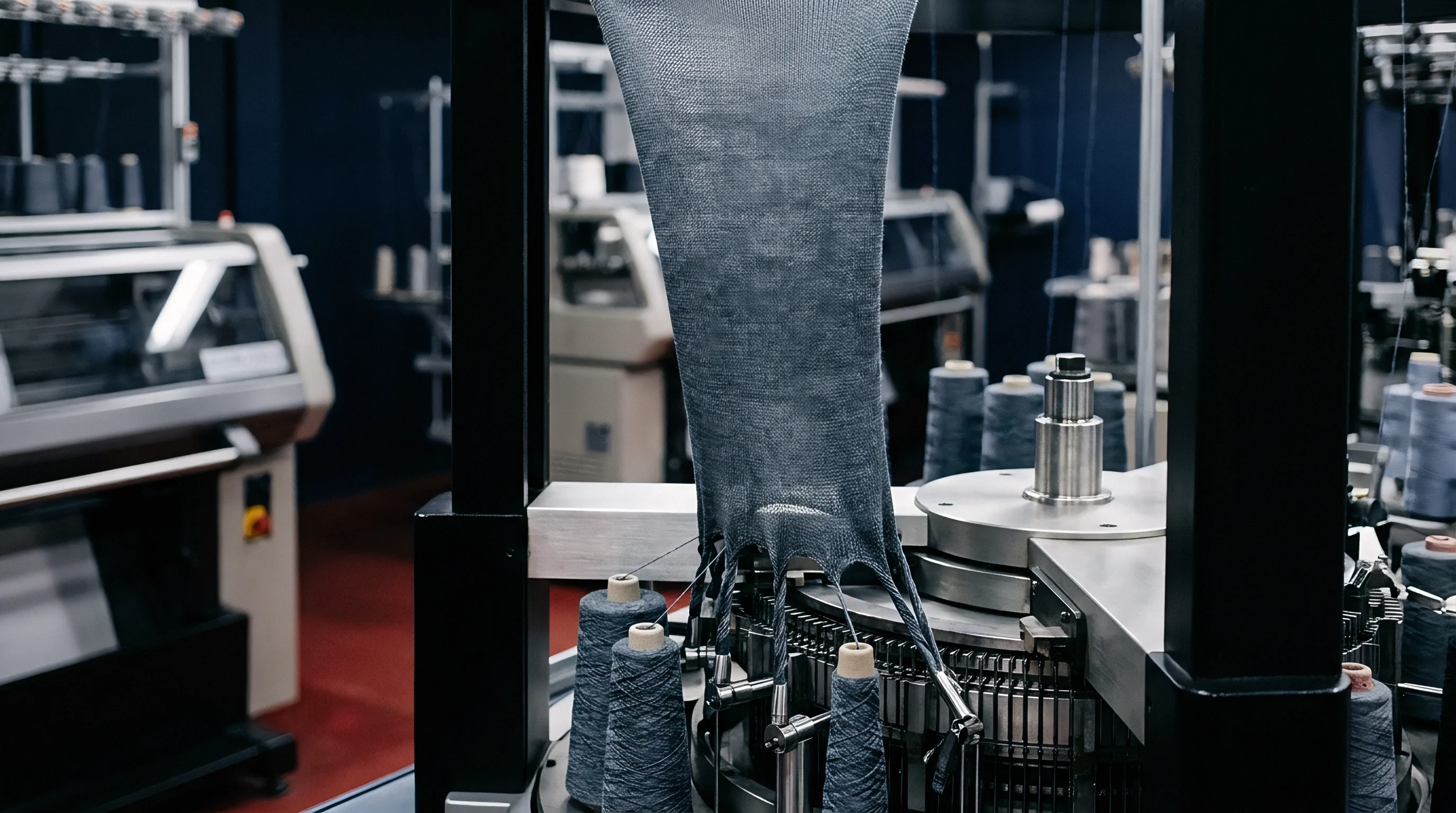
Non Fibrous Extractable Allowances in Calculations
Raw fiber processing relies on lubricants, spinning oils, and antistatic finishes that add mass beyond pure fiber. Commercial contracts specify whether the price per kilo includes or excludes non-fibrous additions. Under ISO 6741-1, commercial mass covers official moisture regain plus standard processing allowances.
If a worsted wool yarn carries 2.20 percent spin oil by weight but the contract allows only 1.50 percent finish allowance, the excess 0.70 percent oil mass is deducted from invoice weight. Skipping solvent extraction effectively bills excess chemical finish at fiber prices.
- Spin finish omission occurs when technicians skip solvent extraction before oven drying, so volatile lubricants register as lost moisture and non-volatile oils weigh as dry fiber mass.
- Blend ratio drift happens when mills change component proportions during spinning without updating regain calculation factors on delivery paperwork.
- Standard mismatch arises when purchase orders reference ISO 6741 values while mill certificates use legacy national standards with different regain rates.
- Conditioning room saturation happens when mills steam yarn packages right before weighing to inflate gross delivery mass without adjusting line-item invoice mass.
A worsted wool and viscose shipment tested under ISO 6741-1 at 20 degrees Celsius and 65 percent relative humidity returned a verified clean dry fiber content of 84.20 percent relative to gross parcel weight.
Contracts should explicitly state which international standard governs dispute resolution. Referencing ISO 6741-1 mandates full solvent extraction and component separation before applying regains, whereas vague orders referencing general commercial weight let suppliers select whichever national standard suits them best. Standard values vary by region.
Section 4.2 of the standard international yarn purchase agreement dictates that all delivered weights shall be calculated based on clean oven-dry mass plus official commercial regain under ISO 6741, superseding physical dock scale figures.


Math
Calculating billable weight on a multi-component shipment means finding clean dry component fractions before applying regain figures. In a yarn with multiple fibers, each component has its own dry mass percentage and regain allowance. The math has to account for whether blend proportions are stated on a clean dry mass basis or a commercial mass basis.
Converting between the two prevents accounting errors on large shipments.
When fiber blend proportions are given on a clean oven-dry mass basis, calculating weighted regain is direct. Let P sub i represent the proportion by clean dry mass of component i, and R sub i represent its standard regain percentage. The weighted regain percentage for the yarn, R sub w, equals the sum of P sub i times R sub i, divided by 100.
Total commercial mass, M sub c, is then calculated by multiplying the clean dry mass of the parcel, M sub d, by one plus R sub w divided by 100, plus any allowed finish percentage.
Mathematical Foundations of Weighted Commercial Regain
Standard calculations determine total commercial mass by weighting individual fiber regains according to their proportion of oven-dry clean fiber weight. The fundamental equation governing composite yarn commercial mass is:
Rw = (P1 × R1 + P2 × R2 +. + Pn × Rn) / 100
Where Rw is the composite weighted regain percentage, Pi is the clean dry mass percentage of fiber component i, and Ri is the standard commercial regain percentage for fiber component i. Once Rw is calculated, the total invoice commercial mass Mc is derived from the verified clean dry mass Md using:
Mc = Md ×
Where Fa is the contractually specified commercial allowance for non-fibrous extractable finishes. If the fiber composition is declared on a commercial mass basis rather than a clean dry mass basis, the clean dry proportions must first be back-calculated. Let C sub i represent the percentage of component i expressed on a commercial mass basis.
The dry mass proportion P sub i is calculated using the following equation:
Pi = / Σ × 100
Failing to perform this inverse calculation when ratios are given on a commercial mass basis distorts the weighted regain factor, over-weighting high-regain fibers.
Mass Base Conversions between Dry and Commercial States
Determining clean fiber proportions requires distinguishing between oven-dry mass fractions and commercial mass fractions. The conversion alters the apparent percentage of each fiber. A yarn declared as 50 percent Worsted Wool and 50 percent Polyester on a commercial mass basis does not contain equal physical dry weights of wool and polyester.
Because wool carries an 18.25 percent commercial regain allowance while polyester carries only 1.50 percent, 100 kilograms of commercial yarn holds 42.28 kilograms of dry wool and 49.26 kilograms of dry polyester, with the rest made up of standard moisture allowances. Dry mass dictates final cost.
- Draw representative core packages under sealed sampling protocols to prevent moisture exchange during transit to the laboratory.
- Extract non-fibrous oils, waxes, and finishes with dichloromethane solvent in a Soxhlet apparatus for two hours to establish clean fiber mass.
- Perform quantitative chemical separation under ISO 1833 standards to isolate individual fiber species and determine dry mass proportions.
- Dry separated fiber fractions in a ventilated oven at 105 degrees Celsius until mass equilibrium is reached, recording the final clean dry mass of each component.
- Calculate the weighted regain rate using clean dry mass fractions and apply standard finish allowances to establish total billable commercial mass.
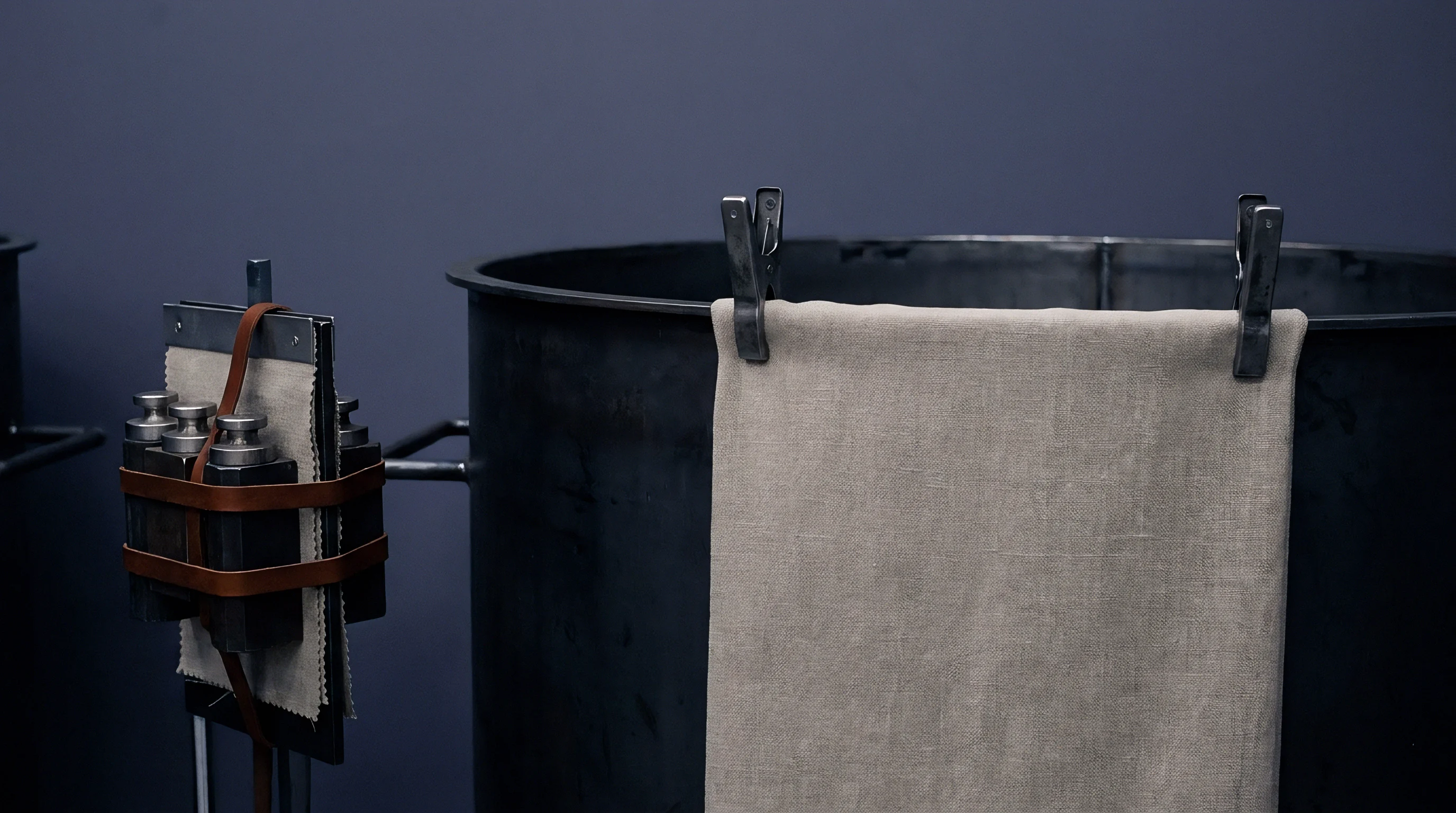
Multi Component Worked Commercial Reconciliation
A container shipment of composite yarn containing worsted wool, viscose rayon, and polyamide six-six illustrates the financial adjustment process. Consider a shipment with a gross scale weight of 22,000 kilograms invoiced at 16.50 Euros per kilogram. The bill of lading declares 45 percent worsted wool, 45 percent viscose rayon, and 10 percent nylon 6,6 on a clean dry mass basis.
The contract specifies ISO 6741-1 regains: Worsted Wool at 18.25 percent, Viscose at 13.00 percent, and Nylon 6,6 at 6.25 percent, with an agreed finish allowance of 1.00 percent.
Laboratory testing of representative samples yields a clean dry fiber content of 83.50 percent of the gross parcel scale weight. The total clean dry mass M sub d of the 22,000 kilogram shipment is calculated as 22,000 multiplied by 0.835, resulting in 18,370 kilograms of clean dry fiber substance.
Next, we calculate the weighted composite regain percentage R sub w:
Rw = (45 × 18.25 + 45 × 13.00 + 10 × 6.25) / 100
Rw = (821.25 + 585.00 + 62.50) / 100 = 14.6875%
Adding the contractually permitted 1.00 percent finish allowance F sub a gives a total composite addition factor of 15.6875 percent. The correct billable commercial mass M sub c of the shipment is calculated as:
Mc = 18,370 × (1 + 0.156875) = 21,251.79 kg
The original invoice billed the gross scale weight of 22,000 kilograms for 363,000 Euros. True commercial weight is 21,251.79 kilograms, totaling 350,654.54 Euros. The buyer was over-billed by 748.21 kilograms of ambient water weight ~ an overpayment of 12,345.46 Euros on a single shipment.
| Ambient RH at Scale Weight (%) | Measured Scale Weight (kg) | Clean Dry Mass Yield (%) | Calculated Commercial Mass (kg) | Financial Discrepancy (EUR) |
|---|---|---|---|---|
| 45 (Dry Warehouse) | 21,400 | 85.84 | 21,251.79 | -2,445.46 |
| 55 (Standard Factory) | 21,750 | 84.46 | 21,251.79 | -8,220.46 |
| 65 (Standard ISO Lab) | 22,000 | 83.50 | 21,251.79 | -12,345.46 |
| 75 (Port Dockside) | 22,350 | 82.19 | 21,251.79 | -18,120.46 |
| 85 (High Ocean Transit) | 22,700 | 80.93 | 21,251.79 | -23,895.46 |
Calculating commercial regain without solvent pre-scrubbing misclassifies residual spinning oil as billable fiber mass, inflating shipment weight.
The financial sensitivity matrix shows scale weight shifting with storage humidity while true commercial weight stays locked to clean dry fiber mass. When ambient humidity reaches 85 percent, scale weight inflates to 22,700 kilograms, but clean dry yield drops proportionally to 80.93 percent, keeping commercial mass stable at 21,251.79 kilograms. The math protects the buyer.
We calculated an unearned moisture surcharge of $14,200 on a single 20-ton shipment of wool-viscose yarn because the contract relied on gross scale weight. That financial absorption taught our practice to embed clean dry mass formulas into every commercial purchase order signed by our desk.

Chamber
Gravimetric testing relies on controlled atmospheric conditions and oven drying protocols. Finding the clean dry weight of a shipment requires drawing samples across multiple pallets and packages. Moisture inside a bobbin is never uniform.
Outer layers on a cone exchange moisture quickly with ambient air, while inner layers wrapped near the plastic core tube hold the moisture level present during winding. Sampling only outer layers introduces systematic error into dry-down tests.
Testing protocols under ISO 6741-2 require core cuts or unwinding specific yarn lengths from selected packages. Selection rules dictate sampling at least 12 cones from lots up to 2,000 kilograms, with additional cones drawn for larger shipments. Specimens must go into airtight containers immediately upon extraction so moisture does not shift during transfer to laboratory balances.
Static charges distort dry balances.

Package Core Sampling and Moisture Stratification
Accurate moisture measurement depends on sampling across outer, middle, and core package layers. Ambient humidity creates steep moisture gradients across large packages. A 1.8-kilogram cone of worsted yarn stored in a humid dock warehouse for ten days shows high regain on its outer layers while the core stays dry.
Freshly steamed packages show the opposite: high core moisture that migrates outward over time. Standard protocols require taking cross-sectional skeins unwound from top, middle, and bottom package regions to build a homogenized test specimen.
Gravimetric Oven Drying Protocols and Temperature Bounds
Laboratory dry fiber isolation uses ventilated ovens run at specific temperature bounds. Standard drying under ISO 6741-2 is conducted at 105 degrees Celsius plus or minus 3 degrees. For heat-sensitive synthetics or yarns containing elastane, temperatures drop to 50 or 70 degrees Celsius under reduced pressure to avoid thermal degradation or plasticizer volatilization.
Ovens must continuously circulate fresh dry air to sweep out water vapor. Weighing takes place inside the chamber with airflow paused, or specimens transfer to a desiccator over active silica gel or phosphorus pentoxide before weighing on an analytical balance reading to 0.001 grams.
Why Do Core Moisture Gradient Variations Occur?
Outer yarn layers exchange water vapor rapidly with ambient air during transit, while inner layers retain their spinning room equilibrium. Water diffuses slowly through densely wound packages. Moisture rates depend on twist density, package winding tension, and polymer permeability.
A high-twist worsted yarn wound tightly onto a dye tube takes weeks to reach equilibrium with ambient air, whereas loose knitting yarn reaches equilibrium in days. Sampling only outer layers captures transit moisture rather than average parcel moisture. Bale cores hold hidden water.
- Package core extraction requires taking samples across outer, middle, and inner cone layers for representative moisture readings.
- Sealed container transfer requires placing drawn specimens into airtight glass or stainless steel vessels immediately upon sampling on the warehouse floor.
- Solvent degreasing preconditioning washes test specimens in pure dichloromethane to remove volatile lubricants prior to baseline dry weighing.
- Oven thermal stabilization maintains chamber temperatures strictly at 105 degrees Celsius to evaporate water without pyrolyzing organic fiber coatings.
- Mass equilibrium verification specifies successive weighings at fifteen-minute intervals until mass change drops below 0.05 percent.
Oven drying without continuous dry airflow allows moisture vapor to re-condense onto fiber surfaces as the chamber air reaches saturation.
Drying continues until weighings fifteen minutes apart show less than 0.05 percent variation, signaling complete oven-dry clean fiber mass. If non-fibrous finishes are not extracted beforehand, volatile oils lost during heating falsely inflate calculated regain, while heavy non-volatile finishes stay behind to inflate dry mass. Standard protocol requires solvent extraction before final drying.
What specific impact does residual solvent retention in modified cellulosic fibers exert on post-drying mass measurements when testing facilities use alternative halogenated extraction agents?


Adjustment
Yarn contracts set strict procedures for handling weight discrepancies found during lab verification. Most international trade agreements use standard tolerance thresholds. If verified commercial mass falls within plus or minus 0.50 percent of invoiced weight, the invoice stands.
If weight deviates beyond that band, the seller issues a credit note or the buyer pays a debit note based on the exact commercial weight difference across the full parcel.
Drafting contract language to enforce regain allowances takes precision. Contracts must name the governing standard, commercial regain rates per fiber, allowed finish percentages, and the designated testing lab. Without explicit terms, suppliers often claim scale weight at dispatch constitutes final settlement, leaving buyers with no remedy for water weight.
Clear terms prevent expensive arbitration.
Contractual Tolerance Bands and Claim Thresholds
Purchasing agreements allow minor variations between invoice weights and lab-verified mass before adjustments apply. In worsted and synthetic yarn trading, the standard commercial tolerance is 0.50 percent, accounting for variance between industrial dock scales and lab balances. If a 10,000 kilogram shipment tests at 9,960 kilograms commercial mass, the 0.40 percent variance sits inside tolerance and no adjustment occurs.
If it tests at 9,880 kilograms, the 1.20 percent variance exceeds tolerance, triggering a credit note for the full 120 kilogram difference. Water costs as much as yarn.

Invoice Reconciliation Mechanics for Overweight Moisture
Financial corrections for excess moisture require re-billing against certified dry fiber mass plus allowed regain. When lab reports show an overweight shipment due to excess moisture, the buyer files a formal notice of discrepancy within the contractual claim window ~ typically 14 business days from port delivery. The recalculation substitutes certified commercial mass for gross weight.
The seller then reissues the invoice reflecting verified weight, or issues a credit memo covering the price difference along with lab testing fees.
Laboratory Retest Protocols in Commercial Disputes
When buyers and sellers produce conflicting regain findings, dispute resolution calls for joint re-testing at an agreed independent facility. If the supplier disputes the buyer’s lab results, sealed reserve samples drawn during initial sampling go to a certified independent lab. ISO 17025 accredited facilities follow ISO 6741 protocol steps.
The referee findings bind both parties, with lab fees paid by whichever party deviated furthest from the neutral result.
- Certified oven dry test report issued by an ISO 17025 accredited laboratory detailing specimen weights, extraction losses, and drying curves.
- Sampling chain of custody record documenting package identification, sampling dates, sealed container numbers, and warehouse storage conditions.
- Bale weight discrepancy log recording gross, tare, and net scale weighings performed on arrival at the receiving facility.
- Standard regain convention declaration confirming contractually agreed commercial regain percentages and standard finish allowances for each fiber component.
Standard yarn supply contracts state that weight claims exceeding 0.50 percent of parcel mass require notification within fourteen business days of port arrival.
We write explicit ISO 6741 drying directives directly into purchase orders to bind suppliers to clean dry mass verification. That single clause stops disputes before cargo leaves the factory.
Weight claims resolve cleanly when purchase orders define exact regain factors; unstated conventions leave both sides arguing over humidity shifts on the dock.

Entry
Relying on invoice scale weight for border declarations can expose importers to tariff misclassification penalties. Customs authorities evaluate composite yarn shipments on two factors: total declared physical or commercial weight, and component fiber proportion by chief weight. The Harmonized System (HS) assigns textile products to tariff lines based on the fiber that predominates by weight.
In multi-component yarns near a 50/50 blend split, regain variations can flip chief weight determination, shifting a shipment into an entirely different duty line.
Take a yarn containing 52 percent combed cotton and 48 percent polyester on a dry mass basis. Customs rules place this yarn under HS Heading 5205 as cotton yarn, carrying a specific import duty. Cotton carries an 8.50 percent commercial regain under ISO rules, while polyester gets only 1.50 percent.
If customs officials weigh the yarn without adjusting for regain, high ambient humidity inflates cotton mass faster than polyester mass, shifting the weight ratio. Conversely, calculating blend ratios without accounting for regain differences can cause an importer to declare chief weight from wet scale fractions, leaving the entry vulnerable to audit rejections.

Chief Weight Tariff Classification Dynamics
Harmonized System rules place multi-fiber yarns into customs codes based on the fiber that predominates by weight. Section XI Note 2(A) of the Harmonized Tariff Schedule specifies that goods classifiable in Chapters 50 to 55 containing two or more textile materials are classified as if consisting wholly of the single textile material that predominates by weight. Regain distorts chief weight calculations if dry mass isn’t isolated first.
For instance, a yarn with equal dry masses of wool (18.25 percent regain) and acrylic (2.00 percent regain) yields a commercial mass that is 54 percent wool and 46 percent acrylic. Duty follows net commercial weight.

Landed Cost Exposure under Moisture Distortion
Calculating duty on water weight rather than dry fiber weight inflates landed costs on high-volume imports. Importers paying ad valorem duties on unadjusted scale weights end up paying tariff on absorbed ambient water. On a 100,000 Euro shipment subject to an 8 percent customs duty, an unadjusted 4 percent water inflation adds 320 Euros in duty, on top of the underlying 4,000 Euro yarn overpayment.
Over an annual sourcing program, paying tariffs on moisture creates a steady financial drain.

Customs Audit Trail Requirements for Regain Adjustments
Customs authorities scrutinize commercial weight adjustments made after entry to verify duty calculations match cargo mass. When an importer files for a duty refund based on a post-entry regain credit from a supplier, customs agencies require full documentation: original invoices, independent ISO 17025 lab dry-down certificates, solvent extraction logs, and reconciliation sheets matching sample IDs to entry summary line items. An auditable paper trail connecting scale weights, clean dry mass test reports, and weighted regain calculations protects importers during post-clearance audits.
The mathematical procedure for customs duty reconciliation follows a strict sequence:
- Determine clean oven-dry mass for each component fiber via quantitative chemical analysis under ISO 1833.
- Multiply the clean dry mass of each component by its commercial regain rate under ISO 6741.
- Aggregate calculated commercial component weights to establish raw commercial mass.
- Add contractually permitted finish allowances to yield final declared commercial invoice weight.
- File customs entry matching final commercial invoice mass, attaching the lab test dossier.
We frequently see mill invoices that apply standard regain to un-scoured raw fiber mass, introducing systematic errors into customs declarations. Establishing clean dry mass procedures ensures compliance and protects landed margins across global supply chains.
Filing border declarations based on clean oven-dry testing and weighted regain allowances ensures compliance during customs audits. Importers who align purchase specifications, laboratory testing, commercial invoicing, and tariff entries under ISO 6741 regain rules protect their landed margins against moisture shifts and regulatory penalties.