Determining Standard Moisture Regain Values in Raw Textile Fibre Imports
Commercial mass calculations adjust raw import dock weights to certified oven-dry mass plus standard moisture regain values for exact invoice settlement.


Dock
Bale weights recorded at destination ports rarely match the numbers on the origin bill of lading. Relative humidity inside shipping containers shifts constantly during ocean transit, causing natural and regenerated fibers to absorb or desorb atmospheric moisture along the route. Cargo loaded in tropical ports often arrives carrying extra water mass, meaning mills pay raw-material prices for water if invoices are not adjusted before spinning operations begin.
Daily temperature swings inside ocean containers turn sealed holds into microclimates, cycling water through evaporation and condensation against walls and ceilings. Outer bale layers absorb this condensation while the compressed core remains near its original baling state. Gross scale readings at port facilities capture all of this extra environmental water weight.
To determine real commercial value, buyers must distinguish structural dry fiber from transient surface moisture before bales enter factory inventory.

Arrival Condition and Container Microclimates
Shipping through tropical corridors creates steep humidity gradients inside standard dry containers. Daylight heat on container roofs can push interior air temperatures past fifty degrees Celsius, driving moisture out of outer bale layers. When temperatures drop at night, walls cool below the dew point and drip condensation onto the top bales.
Because high-density compressed cotton or wool resists rapid moisture movement, a sharp gradient develops between the outer surface and the inner core center.
Gross scale weights are misleading, and surface moisture probes inserted right after opening container doors give inflated readings that do not reflect core conditions. Core sampling through bale strapping using hydraulic tube samplers represents the only reliable method for obtaining accurate average moisture content across entire container loads. Taking cores from multiple positions across at least ten percent of incoming bales isolates core moisture levels from superficial surface condensation.
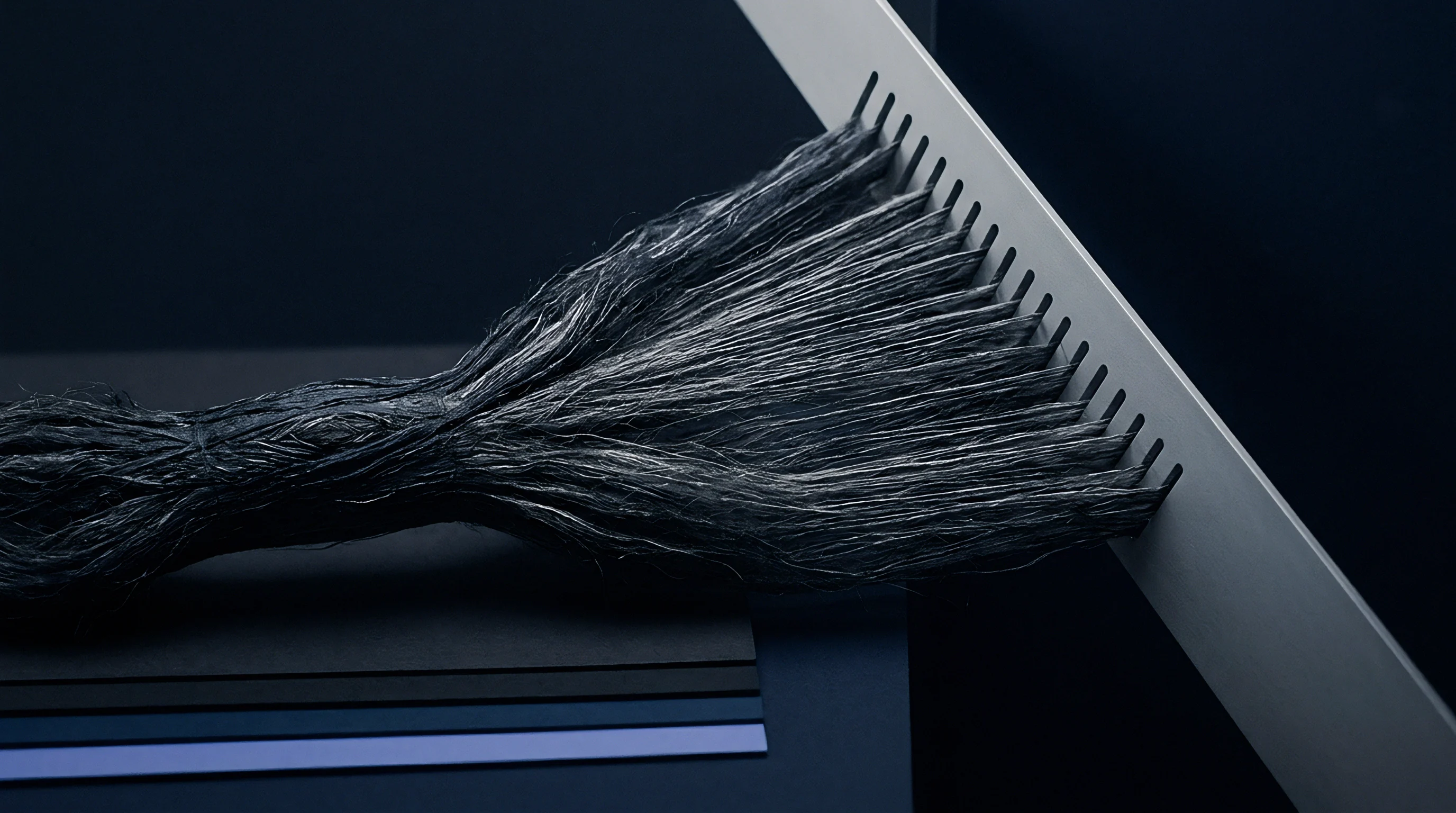
Core Sampling Protocols at Port Boundaries
Sampling must happen immediately after breaking container seals to prevent post-discharge ambient air from altering the test specimens. Technicians drive serrated stainless steel rotary drills at least forty centimeters into bale interiors, transferring extracted cores directly into airtight aluminum or heavy-gauge polyethylene containers so moisture cannot evaporate on the way to analytical testing facilities.
Standard commercial regain calculations yield accurate settlement weights only when core sampling occurs before raw bales enter uncontrolled inland storage.
Standardized sampling protocols require extracting equal core volumes from upper, middle, and lower bale tiers across selected containers. Combining individual core draws into sealed lot composite containers creates a single representative sample reflecting the true average moisture state of the entire shipment. Shallow sampling or delays in transferring extracted core samples into sealed containers introduce atmospheric exposure errors that invalidate subsequent laboratory oven-dry determinations.
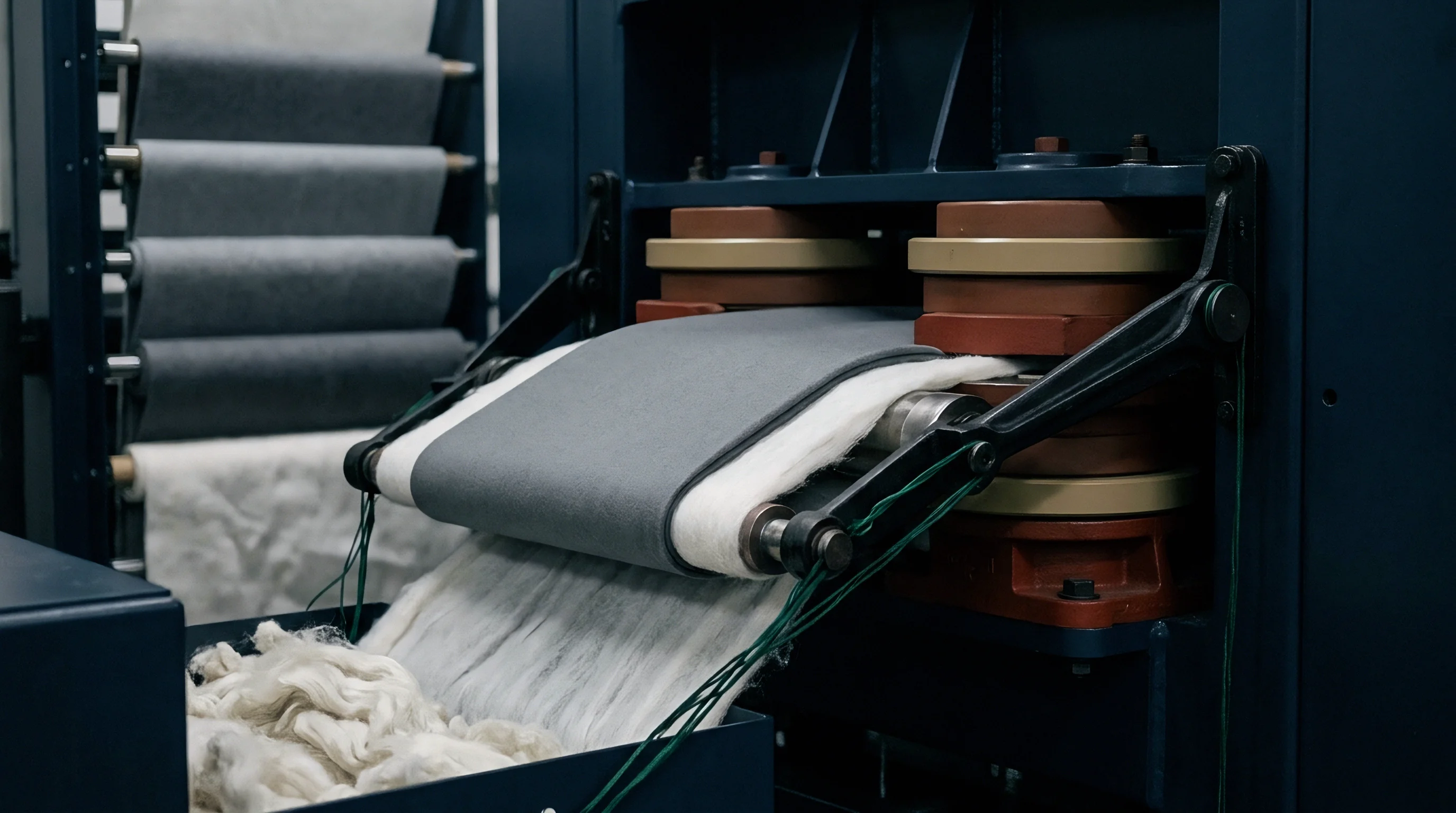
Dielectric Screening against Oven Verification
Portable capacitance and resistance moisture meters provide rapid screening during container discharge, identifying highly damp bales requiring isolation. Electrical probe meters measure dielectric property shifts or electrical resistance variations between probe pins inserted into raw fiber masses. While these instruments yield instant field readings, local variation in fiber density, trash content, and residual salt distribution limits electrical probe measurement accuracy to rough screening utility.
| Shipping Route | Origin Humidity Range | Transit Days | Mean Moisture Shift | Dielectric Variation |
|---|---|---|---|---|
| US Gulf to Southeast Asia | 60% to 85% RH | 28 Days | +1.8% Mass Gain | ±2.4% Meter Deviation |
| West Africa to East Asia | 70% to 90% RH | 35 Days | +2.3% Mass Gain | ±3.1% Meter Deviation |
| Australia to China Coast | 50% to 75% RH | 18 Days | +0.9% Mass Gain | ±1.2% Meter Deviation |
| India to Mediterranean | 65% to 80% RH | 22 Days | +1.4% Mass Gain | ±1.8% Meter Deviation |
Field screening data cannot replace laboratory oven-drying methods for contract price adjustments or customs commercial weight determinations. Dielectric meters calibrate against specific standardized fiber densities; however, commercial raw bales exhibit local density spikes caused by high-pressure hydraulic baling equipment. Laboratory forced-draft oven desiccations establish the absolute dry fiber base needed to resolve trade disputes and correct raw import invoices.
Transit moisture shifts are often treated as natural environmental equilibration beyond commercial control.
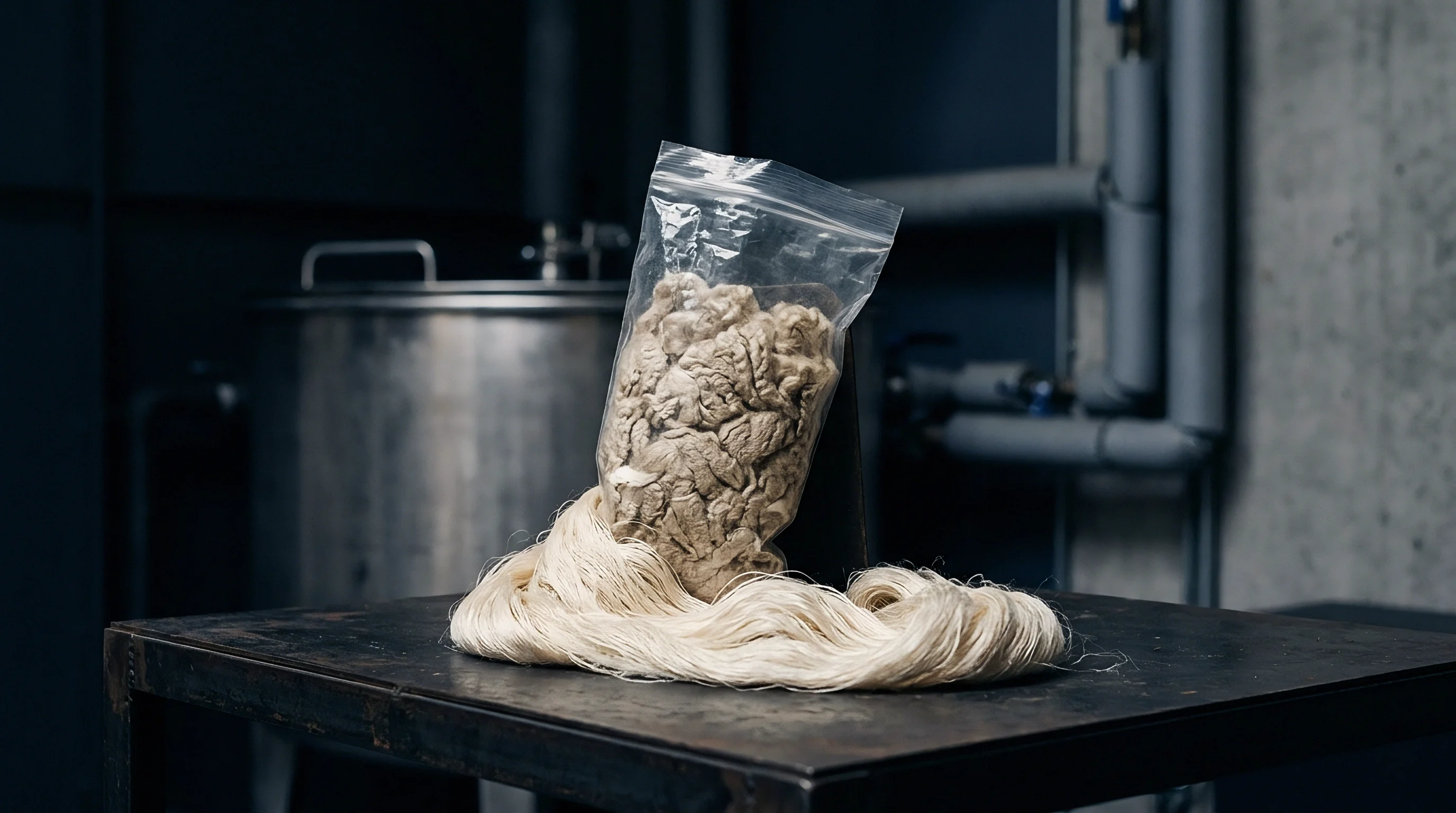
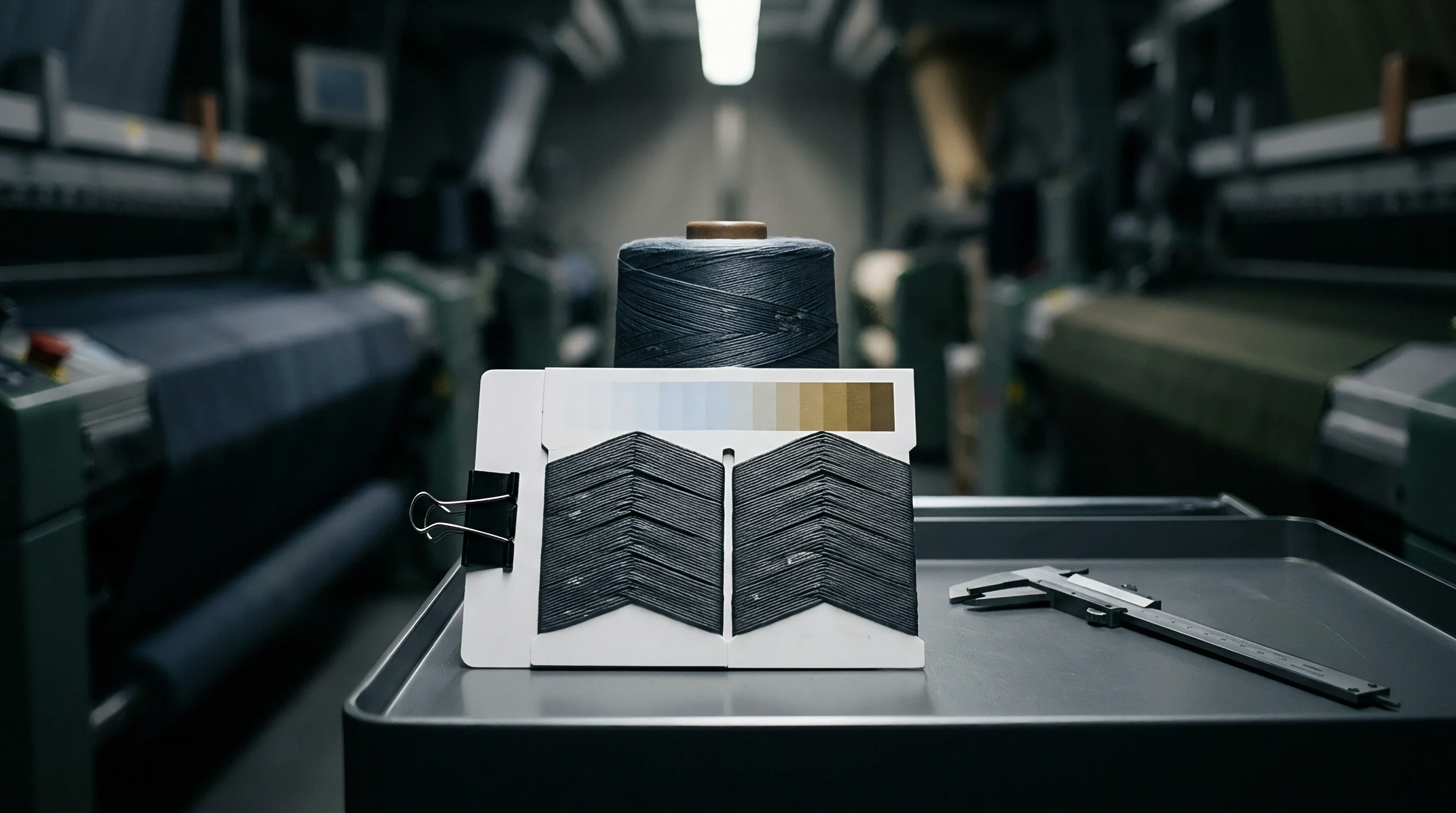
Desiccation
Laboratory thermal drying processes establish the bone-dry mass parameter required for commercial weight calculations. Subjecting raw fiber test specimens to controlled high-temperature forced-draft air streams evaporates volatile water content while preserving core organic polymer structures. Standard laboratory procedure demands heating test specimens until consecutive weighings show absolute mass equilibrium, isolating dry polymeric fiber substance from structural or absorbed water molecules.
Standard testing specifications under ISO 6741 and ASTM D2495 define oven-drying parameters, setting target temperatures at one hundred five degrees Celsius plus or minus two degrees for cellulosic and synthetic fibers. Scoured wool requires identical drying temperatures, though precise temperature control is vital to prevent thermal oxidation or degradation of residual wool grease components during prolonged exposure.

Thermal Extraction Dynamics in Forced Draft Ovens
Forced air movement within drying chambers drives rapid water evaporation from extracted raw fiber samples. Air velocity across specimen baskets must maintain sufficient linear speed to sweep boundary layer water vapor away from fiber surfaces without dislodging loose short fibers through exhaust vents. Weighing specimens inside the drying chamber while hot air circulates prevents rapid moisture regain that occurs the instant bone-dry fiber meets ambient laboratory air.
To record mass accurately during desiccation, analytical balances mounted directly above oven chambers weigh internal specimen baskets using heat-insulated suspension wires. Specimen mass decreases rapidly during initial drying phases, reaching asymptotic mass stability once all unbound and weakly bound capillary water evaporates completely. Reaching stable dry mass typically takes two to four hours depending on specimen density and initial water content.
Contracts governed by ISO 6741 mandate immediate airtight container sealing at the sampling site to prevent moisture exchange before laboratory weighing.
Extending drying times beyond standard equilibrium points risks thermal degradation of organic fiber polymers, triggering breakdown that artificially reduces measured dry mass. Cellulosic fibers exposed to excessive thermal drying undergo micro-charring, releasing volatile degradation products that simulate water mass loss. Adhering strictly to standard equilibrium criteria prevents thermal breakdown errors during desiccation testing.

Non-Water Volatile Allowance and Solvent Extraction
Raw fibers contain surface finishes and non-water volatile elements that evaporate alongside water during high-temperature oven drying. Raw cotton carries natural fats, waxes, and plant residues; synthetic fibers contain processing oils, lubricants, and antistatic spin finishes; scoured wool retains residual lanolin grease and suint salts. Standard commercial regain formulas incorporate explicit commercial allowances to account for these non-water constituents during final commercial weight calculations.
- Weigh the sealed sample container immediately upon arrival to establish the gross received mass.
- Extract representative test portions of precisely fifty grams across three stratified core depths.
- Place specimens in the forced-draft drying oven maintained at one hundred five degrees Celsius plus or minus two degrees.
- Continue thermal drying until consecutive weighings at fifteen-minute intervals demonstrate mass stability within zero point zero five percent.
- Transfer specimens directly to desiccator chambers containing fresh active desiccant to cool for twenty minutes prior to balance weighing.
Determining pure dry fiber content in raw greasy or scoured wool requires performing secondary solvent extraction procedures using dichloromethane or petroleum ether prior to final oven drying. Solvent extraction removes residual wax and processing oils, preventing non-water volatile loss from skewing structural dry fiber determinations. Combining solvent extraction values with thermal desiccation data yields absolute structural fiber purity figures suitable for high-value trade settlements.

Standardized Conditioning Protocols and Tolerances
Standard commercial moisture regain values represent agreed consensus percentages established by international trade organizations and standard bodies to simplify raw fiber trading. These values do not represent ambient moisture levels found in raw fields or open warehouses; rather, they reflect equilibrium moisture content achieved when bone-dry fiber equilibrates within standard atmosphere conditions of twenty degrees Celsius and sixty-five percent relative humidity.
| Raw Fiber Type | Standard Regain % | ISO Reference Standard | Commercial Allowance % | Acceptable Lab Tolerance |
|---|---|---|---|---|
| Raw Cotton Staple | 8.50% | ISO 6741-1 | 0.80% (Extractables) | ±0.35% |
| Clean Scoured Wool | 16.00% | ISO 6741-2 | 1.50% (Grease/Residuals) | ±0.50% |
| Viscose Rayon Staple | 13.00% | ISO 6741-3 | 0.50% (Finish) | ±0.40% |
| Nylon 6,6 Staple | 4.50% | ISO 6741-4 | 0.30% (Finish) | ±0.20% |
| Polyester Staple | 0.40% | ISO 6741-4 | 0.20% (Finish) | ±0.05% |
Discrepancies between testing facilities often stem from subtle differences in oven airflow dynamics or scale calibration drift. Inter-laboratory testing protocols require maintaining analytical balances calibrated against verified standard weights, with oven temperatures mapped quarterly across all shelf quadrants using multi-channel thermocouple arrays. Discrepancies exceeding specified laboratory tolerance limits demand immediate retesting using secondary backup core samples retained during initial port discharge.
Incorporating standard commercial weight clause ASTM D2495 into purchasing contracts obligates suppliers to settle final invoices exclusively on oven-dry mass plus official regain allowances.
Hysteresis
Sorption behavior in textile fibers exhibits structural hysteresis, creating permanent divergence between moisture absorption and desorption equilibrium curves. A lot of raw fiber reaching moisture equilibrium by absorbing water from an over-dried state holds less moisture than identical fiber reaching equilibrium by desorbing water from a saturated state. Accounting for sorption hysteresis thermodynamics is crucial when evaluating raw fiber imports shipped across fluctuating ambient humidity zones.
Water retention depends fundamentally on fiber chemistry. Water molecules bind to specific hydrophilic sites within amorphous polymer regions through hydrogen bonding. Amorphous cellulose zones in cotton and viscose, alongside polar peptide chains in wool proteins, provide primary binding sites for atmospheric water vapor.
As relative humidity increases, water molecules progress from single-layer molecular surface binding to multi-layer condensation within intermolecular fiber capillaries.

Polymeric Sorption Sites and Molecular Binding Energy
Primary sorption occurs at high-energy binding sites where water molecules bond directly to accessible hydroxyl or amino groups within amorphous polymer matrices. Crystalline polymer zones remain impervious to water penetration due to dense molecular packing and tight intermolecular forces. Highly crystalline synthetic fibers like polyester possess minimal accessible sorption sites, resulting in low standard moisture regain values below one percent.
Cellulosic and regenerated fibers take up moisture readily. Viscose rayon, manufactured via regenerated cellulose processing, possesses a lower crystallinity fraction than natural cotton fiber, exposing vastly more amorphous hydroxyl groups to atmospheric moisture. Consequently, viscose rayon exhibits a standard commercial moisture regain of thirteen percent, compared to eight point five percent for raw cotton staple.
Synthetic polyesters lack abundant polar hydroxyl groups, restricting water uptake to surface capillary absorption.

Sorption Loop Divergence in Cellulosic and Protein Fibres
Structural rearrangement of polymer chains during drying creates sorption hysteresis loops. When wet fibers undergo desiccation, collapsing inter-molecular capillaries draw adjacent hydroxyl groups together, forming internal cross-links that persist when the dry fiber re-enters moist air. Fewer open binding sites remain available during re-absorption, keeping total water uptake lower along the absorption path than along the original desorption curve at identical ambient humidity levels.
Cotton fibers equilibrated at sixty-five percent relative humidity from a wet state retain nearly one full percentage point more water than identical samples approaching equilibrium from a dry state.
Wool fibers show pronounced sorption hysteresis loops due to complex keratin protein structures and internal cross-linked disulfide bonds. Scoured wool equilibrated from a wet condition at standard conditions holds roughly eighteen percent moisture, whereas wool equilibrated from a bone-dry state holds approximately sixteen percent. This two-percent hysteresis spread represents significant financial weight variation during commercial raw wool lot reconciliation.

Is Ambient Humidity Exposure Grounds for Rejection?
Extreme environmental conditioning during container shipping forces raw imported lots along desorption or absorption pathways unpredictable by simple static regain tables. Bales shipped from hot, dry origin gin houses absorb moisture during ocean transit, moving along the lower absorption curve. Bales loaded under humid tropical monsoon conditions dry out partially during transit, following the higher desorption curve toward port discharge equilibrium.
Laboratory testing conducted without prior pre-conditioning introduces hysteresis errors into certified regain results. Standard test methods require pre-conditioning moist fiber samples in warm, dry air between ten and twenty-five percent relative humidity before final equilibration inside standard test atmospheres. Pre-conditioning forces all test specimens to approach standard equilibrium exclusively along the absorption path, eliminating hysteresis variance between buyer and seller testing facilities.
Whether commercial trade bodies will eventually adjust static regain standards to account for climate-driven humidity swings along maritime transport corridors remains an open question for international shipping markets.

Correction
Commercial mass calculations convert raw dock scale weights into contractually enforceable settlement figures. Raw textile trade transactions rely on calculated commercial weight rather than direct scale weight, ensuring buyers pay strictly for structural dry fiber substance plus agreed standard moisture regain percentages. Applying commercial mass recalculations protects buyers from paying water tariffs and protects sellers from mass loss during post-packaging dry transit storage.
The fundamental mathematical equation governing commercial mass recalculation establishes the relationship between received wet weight, actual moisture content determined by laboratory drying, and standard commercial regain parameters. Calculating invoice reconciliations requires isolating certified oven-dry mass before applying standard regain percentages and non-fibrous commercial allowances.
Mathematical Formulation of Commercial Mass Recalculation
Calculating commercial mass requires applying standard international formulas defined in ISO 6741 protocols. The mathematical statement determines commercial weight based on certified laboratory dry mass:
Commercial Mass Formula ~ W_c = W_d ((100 + R_s + A) / 100)
In this equation, W_c represents calculated commercial mass in kilograms, W_d represents total certified oven-dry mass of the consignment in kilograms, R_s represents official standard commercial moisture regain percentage, and A represents official commercial allowance percentage for extractable matter and spin finishes. When non-fibrous extractables are not calculated separately, allowance parameter A equals zero.
When laboratory testing provides actual moisture content percentage rather than absolute dry mass, commercial weight recalculation uses received gross scale weight directly:
Direct Weight Recalculation Formula ~ W_c = W_a ((100 + R_s + A) / (100 + M_a))
Here, W_a represents actual landed scale weight recorded at port receiving facilities, and M_a represents actual measured moisture content percentage obtained via core sample oven desiccation. Direct weight formulas yield identical commercial mass outcomes, establishing financial transparency for commercial invoice settlements.

Worked Conversion Example for Raw Cotton Lot
Evaluating a practical commercial shipment illustrates the financial magnitude of moisture recalculations. A raw cotton consignment arrives at destination port facilities with gross receiving scale documentation showing fifty thousand kilograms total landed weight. Core sampling and forced-draft oven desiccation according to ASTM D2495 establish an actual moisture content of ten point five zero percent across the received bale lot.
Contract terms stipulate standard cotton regain of eight point five zero percent with zero additional commercial extractable allowance.
Applying values to the direct recalculation equation establishes true settlement weight:
W_a = 50,000 kg (Actual landed scale mass)
M_a = 10.50% (Measured laboratory moisture content)
R_s = 8.50% (Contractual standard moisture regain)
W_c = 50,000 ((100 + 8.50) / (100 + 10.50))
W_c = 50,000 (108.50 / 110.50)
W_c = 50,000 0.98190045
W_c = 49,095.02 kg (Final commercial settlement mass)
Because payment is based on pure dry fiber plus regain, recalculation reveals that nine hundred four point nine eight kilograms of landed dock weight consisted of excess absorbed water beyond contractual standard limits. At a benchmark price of two United States dollars and twenty-five cents per kilogram, adjusting the invoice to reflect certified commercial mass saves the importing mill two thousand thirty-six dollars and twenty-one cents on this single container shipment.
| Actual Moisture % | Oven Dry Mass (kg) | Commercial Mass (kg) | Invoice Weight Shift (kg) | Financial Settlement (USD) |
|---|---|---|---|---|
| 6.50% (Over-dried) | 46,948.36 | 50,938.97 | +938.97 kg Credit | +$2,112.68 Payable |
| 7.50% (Dry Transit) | 46,511.63 | 50,465.12 | +465.12 kg Credit | +$1,046.52 Payable |
| 8.50% (Standard) | 46,082.95 | 50,000.00 | 0.00 kg Baseline | $0.00 Par Settlement |
| 9.50% (Elevated) | 45,662.10 | 49,543.38 | -456.62 kg Deduction | -$1,027.40 Credit Note |
| 10.50% (High Water) | 45,248.87 | 49,095.02 | -904.98 kg Deduction | -$2,036.21 Credit Note |
| 11.50% (Saturated) | 44,843.05 | 48,654.71 | -1,345.29 kg Deduction | -$3,026.90 Credit Note |
Worked Conversion Example for Intimate Viscose Wool Blend
Multi-fiber intimate blend imports require proportional regain weighting based on verified dry fiber blend components. Consider a twenty thousand kilogram shipment of intimate blended staple fiber composed of sixty percent viscose rayon and forty percent clean scoured wool by dry mass. Laboratory core testing reveals an actual receiving moisture content of twelve point zero zero percent for the composite lot.
Contract regain rates specify thirteen point zero zero percent for viscose and sixteen point zero zero percent for scoured wool, with a one point five zero percent commercial allowance applied exclusively to the wool portion.
Calculating the weighted combined standard commercial regain rate (R_comb) proceeds as follows:
R_comb = (F_viscose R_viscose) + (F_wool (R_wool + A_wool))
F_viscose = 0.60 (Viscose dry mass fraction)
R_viscose = 13.00% (Viscose standard regain)
F_wool = 0.40 (Wool dry mass fraction)
R_wool = 16.00% (Wool standard regain)
A_wool = 1.50% (Wool grease/volatile allowance)
R_comb = (0.60 13.00) + (0.40 (16.00 + 1.50))
R_comb = 7.80 + (0.40 17.50)
R_comb = 7.80 + 7.00 = 14.80% (Combined standard regain rate)
Applying the combined regain rate to the received blend mass determines commercial settlement weight:
W_c = 20,000 ((100 + 14.80) / (100 + 12.00))
W_c = 20,000 (114.80 / 112.00)
W_c = 20,000 1.0250
W_c = 20,500.00 kg (Final commercial settlement mass)
Failing to adjust for these variations distorts raw material costs across the entire supply chain.
- Verify certified dry mass from an accredited independent testing laboratory before issuing invoice settlement.
- Confirm active commercial regain rates specified in the trade contract match regional destination standards.
- Calculate total non-fibrous additions including lubricants and spin finishes to isolate pure structural fiber mass.
- Apply joint blend weighting formulas proportionally when processing intimate multi-fiber raw imports.
Ignoring actual moisture content when settling raw bale shipments results in systematically overpaying for water mass and inflating true landed fiber costs across the manufacturing cycle.


Tariff
Customs authorities assess import duties, border taxes, and trade tariffs based on declared landed commodity weights and customs valuation amounts. Entering raw fiber consignments using raw dock scale weights without commercial moisture regain adjustments leads directly to overpaying tariff duties on excess water mass. Conversely, miscalculating commercial mass or misdeclaring base dry weights can trigger severe customs penalties, shipment seizures, and formal misclassification audits.
Unadjusted dock weights distort customs entries. Harmonized System tariff codes dictate duty rates based on fiber composition and linear mass metrics. Customs valuation rules require importers to declare true transaction value, which corresponds directly to adjusted commercial weight calculated under standard trade rules rather than raw wet scale figures.

Customs Valuation Baseline and Commercial Weight Entry
Customs declarations filed under Chapter 51 for raw wool or Chapter 52 for raw cotton specify mass in net kilograms. Declaring unadjusted dock weights carrying excess transit water inflates reported import mass, directly increasing total ad valorem or specific duty assessments payable at customs clearance. Establishing custom valuation entries on certified commercial mass calculated via ISO 6741 aligns landed duty payments with true contract value.
When actual received moisture falls below standard commercial regain figures, entering higher calculated commercial mass requires presenting accredited testing certificates to justify mass increases over gross scale readings. Customs officials scrutinize entry documentation where declared tariff weight exceeds landed scale weight, demanding full laboratory desiccation records to verify structural fiber mass calculations.
Discrepancy Resolution with Border Customs Authorities
Discrepancies between carrier bill of lading mass, customs entry declarations, and mill receiving scale records trigger administrative clearance holds. Maintaining independent sampling dossiers containing port core extraction logs, laboratory oven-drying reports, and calculated commercial mass worksheets provides defensible evidence during customs valuation audits. Documenting moisture content using recognized international standard methods prevents tariff disputes from delaying manufacturing production schedules.
Customs regulations in major importing jurisdictions recognize standard trade commercial regain values provided commercial purchase contracts explicitly mandate weight adjustments based on certified testing. Integrating official testing certificates directly into import documentation packages ensures customs compliance, securing accurate customs valuation while eliminating duty overpayments on ocean transit water.
Customs declarations grounded in certified oven-dry mass consistently survive regulatory audits while entry filings based on unadjusted dock weights invite customs disputes.