
Mass Spectrometry Biomarker Quantification in Processed Cashmere Yarns
LC-MS/MS proteomic quantification isolates species-specific tryptic peptides to measure cashmere content in processed yarns within two percent accuracy.
LC-MS/MS proteomic quantification isolates species-specific tryptic peptides to measure cashmere content in processed yarns within two percent accuracy.

Eliminate border gravimetric variance by specifying ISO 1833-11 dissolution and contractually binding buyers and mills to ASTM D1909 commercial regains.

Standard chemical separation of cotton polyester yarns uses 75% sulfuric acid dissolution with gravimetric recovery corrected for commercial moisture regain.

Quantify commercial blend mass through oven desiccation and statutory regain allowances to eliminate hysteresis and condensation errors in customs audits.

Determine commercial moisture regain standards through representative bale core sampling and forced-draft oven drying to convert net shipping mass into billable commercial weight.

Accurate solvent dissolution pairs Soxhlet pre-treatment with calibrated mass correction factors to settle legal customs declarations on binary fibre mixtures.

Non-linear fiber loss in dual nozzle spinning causes composition drift that alters yarn mass, pilling resistance, and customs classification thresholds.

Air jet spinning waste ranges from three to nine percent, driven by short fiber index and nozzle pressure, directly shifting yarn yield and blend ratios.

Converting laboratory dry chemical reports to standard commercial regain mass prevents tariff misclassification and aligns invoice billing with landed net weight.

Seasonal raw cotton purity shifts alter chemical extraction mass ratios, triggering customs tariff reclassifications across chief weight thresholds.
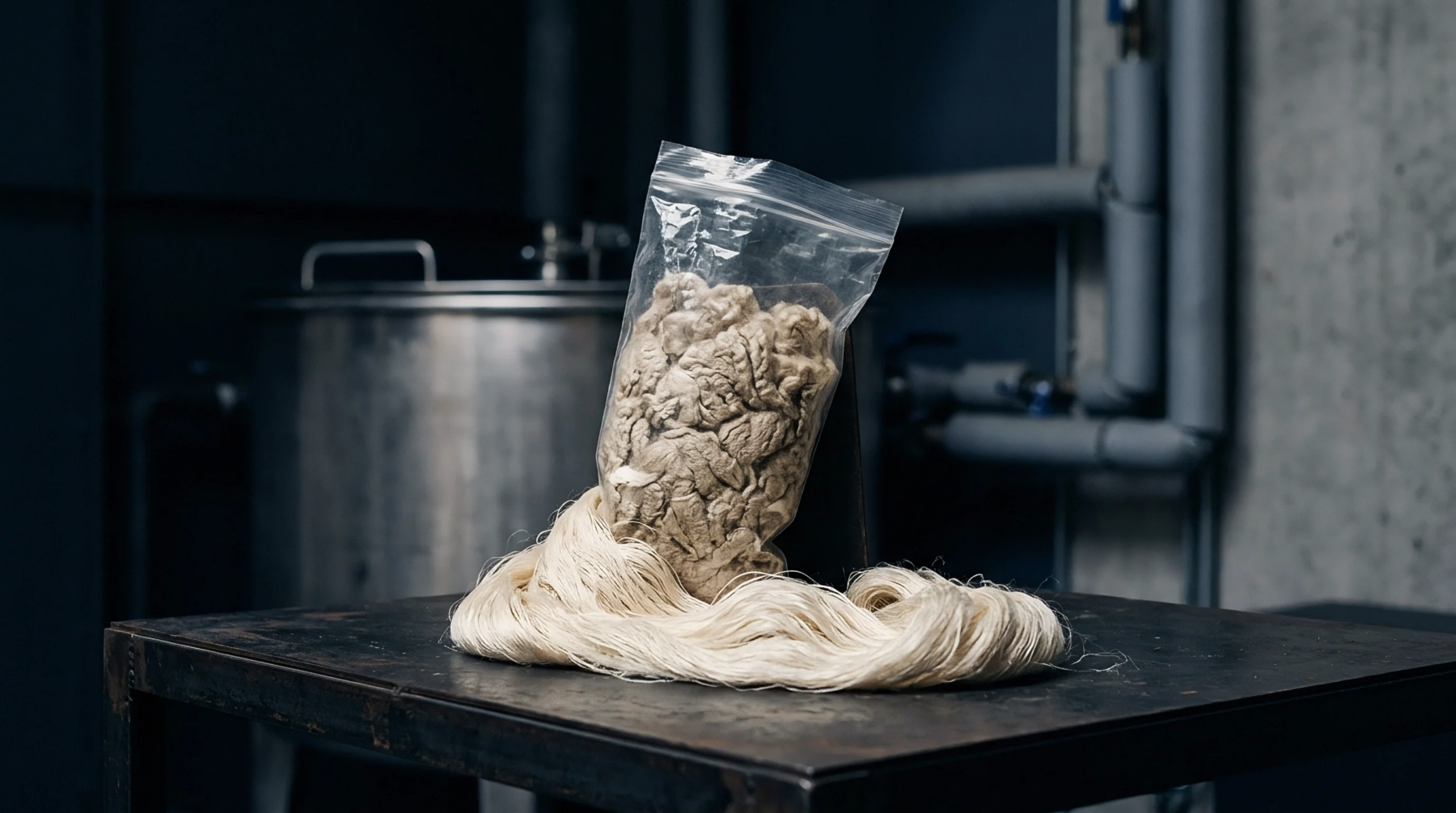
Quantitative fibre blend analysis uses selective chemical dissolution, gravimetric desiccation, and microscopic counting to verify trade declarations.

Determining cotton viscose yarn blend composition requires solvent extraction pretreatment, precise reagent temperature control, and empirical d-factor corrections.

Gravimetric oven drying determines accurate polymeric fibre regain by measuring dry mass after removing volatile moisture at specified temperatures.

Commercial mass determination reconciles clean dry polymer mass with official regain allowances to secure precise customs compliance and financial settlement.

Scatter correction algorithms combined with nitrogen-purged Infragold cavity arrays eliminate high-speed refractive index artifacts for precise inline fiber blend verification.

Verifying declared synthetic fiber ratios requires standardized chemical dissolution, precise moisture regain adjustments, and statistical sampling to avoid customs reclassification.

Determining dry mass ratios requires desiccation at 105 °C, selective chemical dissolution under ISO 1833, d-factor correction, and commercial regain adjustments.

Statutory customs petroleum ether pretreatments fail to extract polar ethoxylated spin finishes, distorting dry fiber mass and shifting tariff lines.

Reconciling quantitative chemical dissolution variances requires adjusting raw dry laboratory residues using standardized solvent d-factors and statutory commercial regain allowances under ISO 6741.

Adjusting dry test mass using official moisture regain values shifts binary fiber ratios, changing chief weight tariffs and altering landed customs duties.

Viscose wool composition drift stems from differing standard moisture regain allowances, requiring dry-mass conversion formulas to protect tariff lines and invoices.

Weighted commercial regain calculations turn dry mass fractions and standard allowance rates into contractually enforceable net billable yarn shipment weights.
Solvent extraction adjustments correct non-fibrous loss and moisture regain to convert raw dry residual weights into accurate commercial mass for tariff settlement.
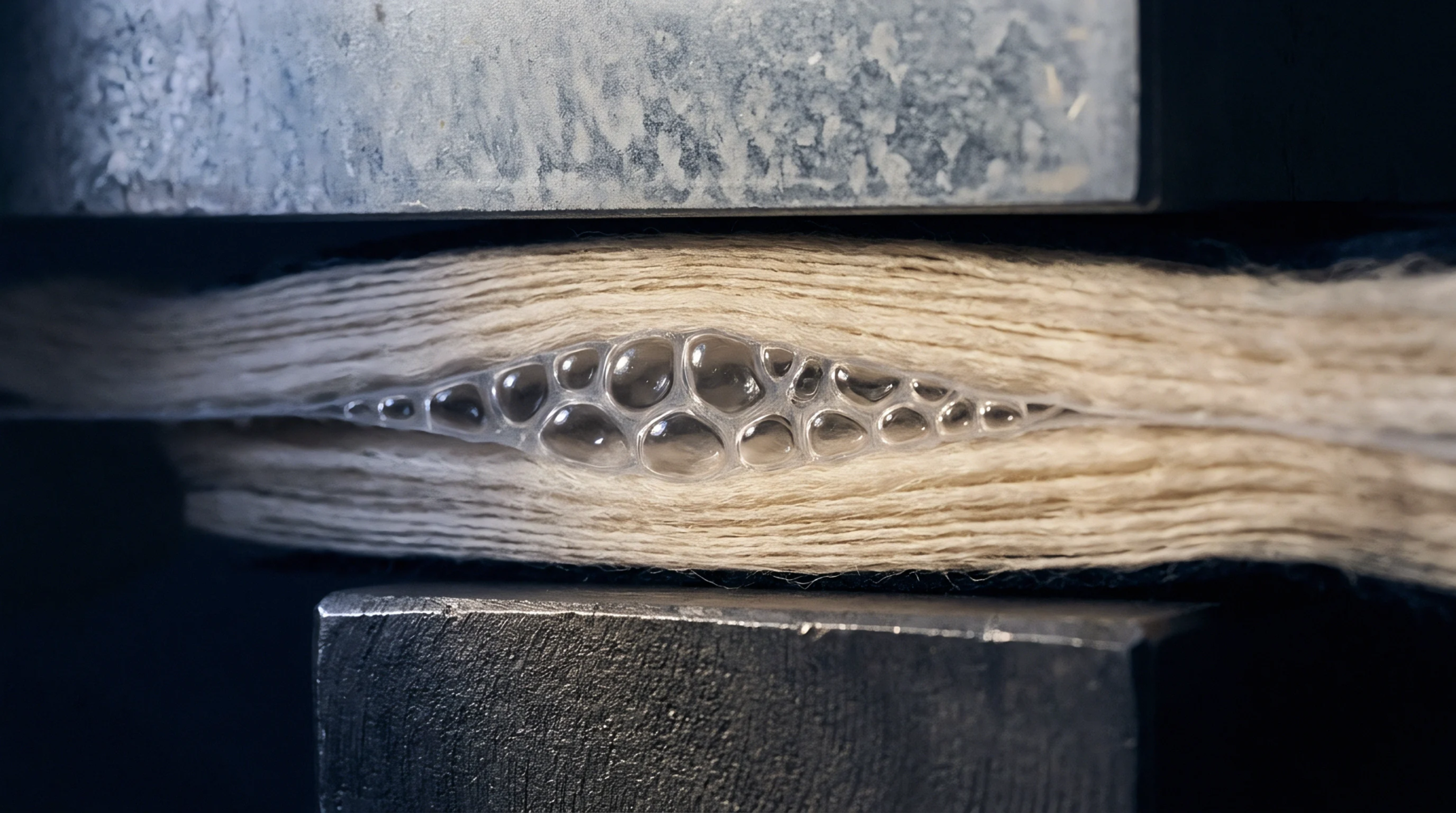
Reconciling moisture regain discrepancies requires calculating net dry mass via gravimetric oven drying and applying standard commercial allowances to correct invoice weights.
Commercial mass equals oven-dry mass multiplied by standard regain allowances, establishing an immutable billable weight independent of transit moisture shifts.

Declared composition tolerances bridge laboratory test method noise and commercial target blend ratios through standardized moisture regain corrections.

Fibre composition dictates physical durability, moisture regain, dye chemistry, and customs classification before spinning machinery turns.
Expertise is a utility, not a secret. sentiention™ publishes its working knowledge as open reference: intelligence layer covering the materials it sources, the markets it enters, and the reference that serves both.