Warp Crimp Drift Impact on Raw Material Procurement and Customs Weight Tariff Allowances
Warp crimp drift alters finished areal mass, exhausting raw yarn procurement budgets and triggering customs reclassification across statutory duty thresholds.
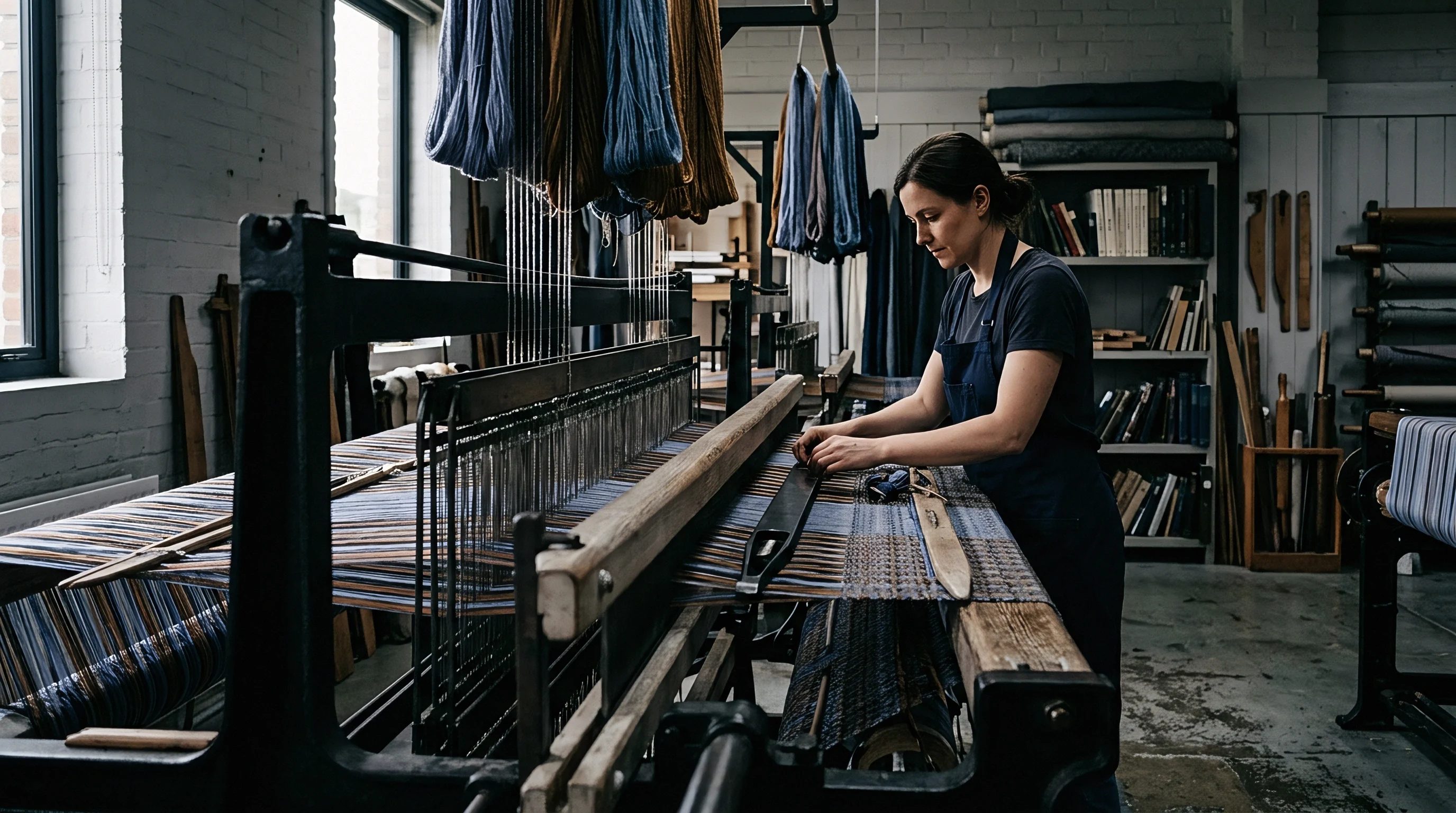
Contraction
A certified laboratory report for a 3/1 twill military uniform cloth specifies a nominal warp take-up of 7.2 percent under standard atmospheric conditions. When physical testing per ISO 7211-3 reveals an actual yarn take-up of 10.8 percent across finished bolts, the differential represents more than unbudgeted yarn mass inside the greige roll. Every percentage point of uncalculated take-up alters the linear yield per kilogram of spooled yarn, changes the finished weight per square metre, and shifts the duty base at maritime borders.
Yarn contracts along the interlacing path as weft picks force warp ends to bend around them. The ratio between the straightened yarn length and the cut length of the piece goods defines the crimp percentage. When tension profiles drift during sizing or picking, that ratio slips outside commercial tolerances.
Spinning mills deliver warp lots based on nominal yarn count, measured in lea or tex, with an expected elongation and moisture regain certified at packing. If the interlacing structure pulls additional millimetres of yarn into every linear metre of cloth, the production run exhausts raw material allocations before fulfilling the meterage on the sales contract. The purchasing office then faces unexpected spot-market yarn orders, yarn lot color variations, and off-shade piece lots.
Tension settles into the yarn.
An unchecked three percent shift in warp yarn take-up increases total yarn procurement volume by thirty-two kilograms per one thousand finished linear metres on dense bottom-weight twills.
The structural geometry of interlaced yarns dictates how stress distributes between warp and weft systems. In unbalanced structures such as poplins or heavy twills where warp cover factors exceed weft cover factors, warp yarns take the dominant crimp path. Weft yarns remain relatively straight, compelling the warp ends to travel an undulating route over and under successive picks.
If the shedding motion tightens or weft insertion tension drops, the warp deflection increases instantly. The resulting displacement shortens the piece goods while raising the areal density. The calculation collapses immediately.

Mechanical Drivers of Yarn Displacement
Variations in yarn hairiness, coefficient of friction, and sizing pick-up directly alter the way ends slide across adjacent picks during beat-up. Sizing formulas with irregular wax content change the frictional resistance between sliding filaments in the shed. When ends meet higher friction, beat-up force pushes greater deflection into the warp sheet rather than allowing picks to bed uniformly.
Rotor-spun yarns, carrying outer wrapper fibres, demonstrate higher crimp stability than ring-spun yarns of equivalent count, resisting post-loom relaxation. Ring-spun yarns spun with low twist multipliers flatten under beat-up pressure, reducing crimp amplitude, whereas high-twist yarns maintain a round cross-section that demands higher take-up pathing.
Finishing houses compound or partially reverse these physical shifts during desizing, scouring, and sanforizing. Aqueous baths relieve latent mechanical strain built into the warp sheet during high-speed insertion, causing significant wet relaxation contraction. If the stenter frame does not impose calculated overfeed settings, warp crimp expands dramatically during drying.
Compressive shrinkage machines deliberately induce mechanical warp crimp to guarantee dimensional stability for the garment maker. If the rubber belt compression operates without continuous monitoring of thread counts, finished areal mass diverges from the product specification. Unchecked mechanical contraction across wet processing lines produces finished textiles that fail buyer areal weight targets, inflating cost per linear metre while destroying planned gross margins on cut garments.
Loom
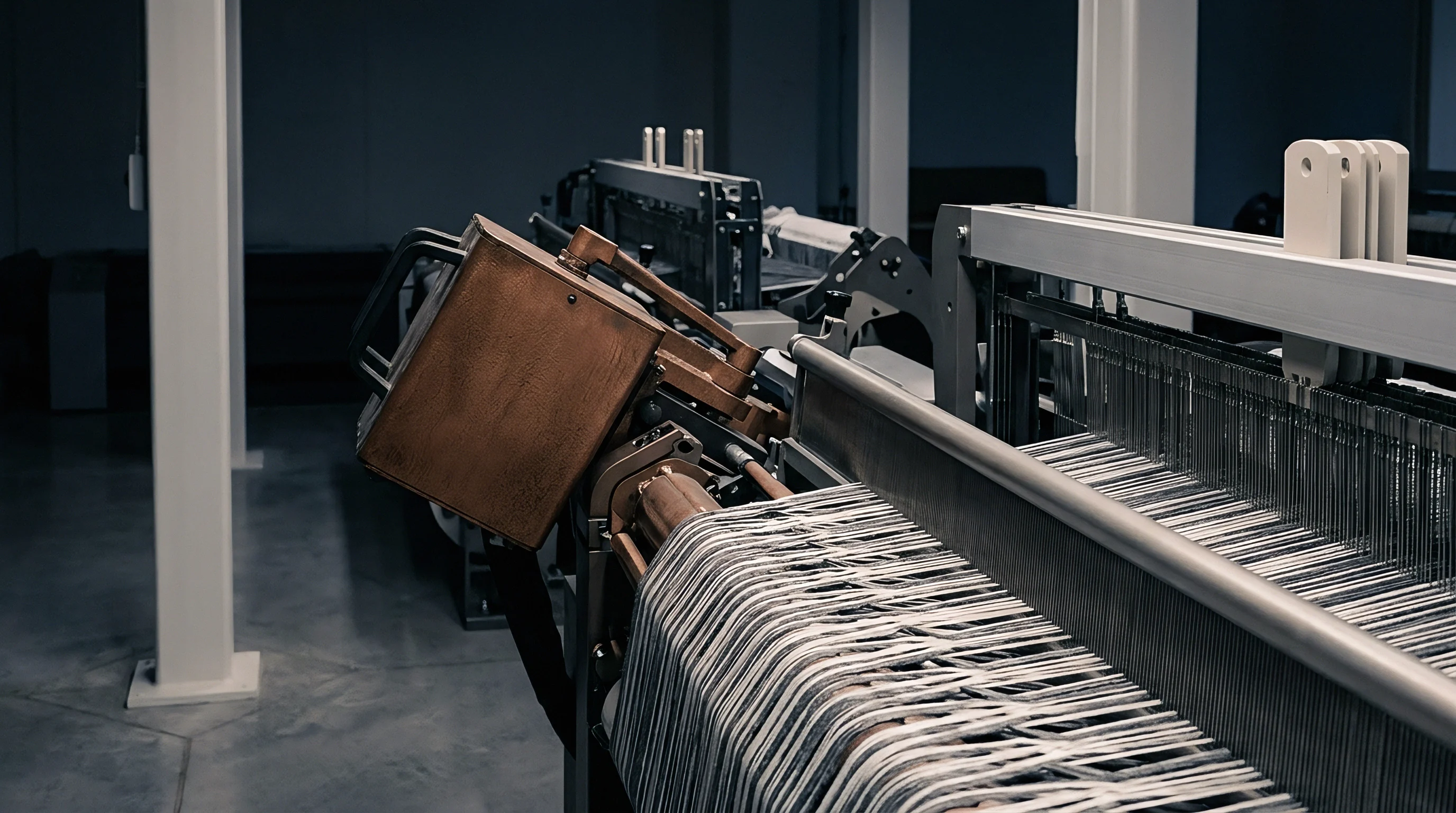
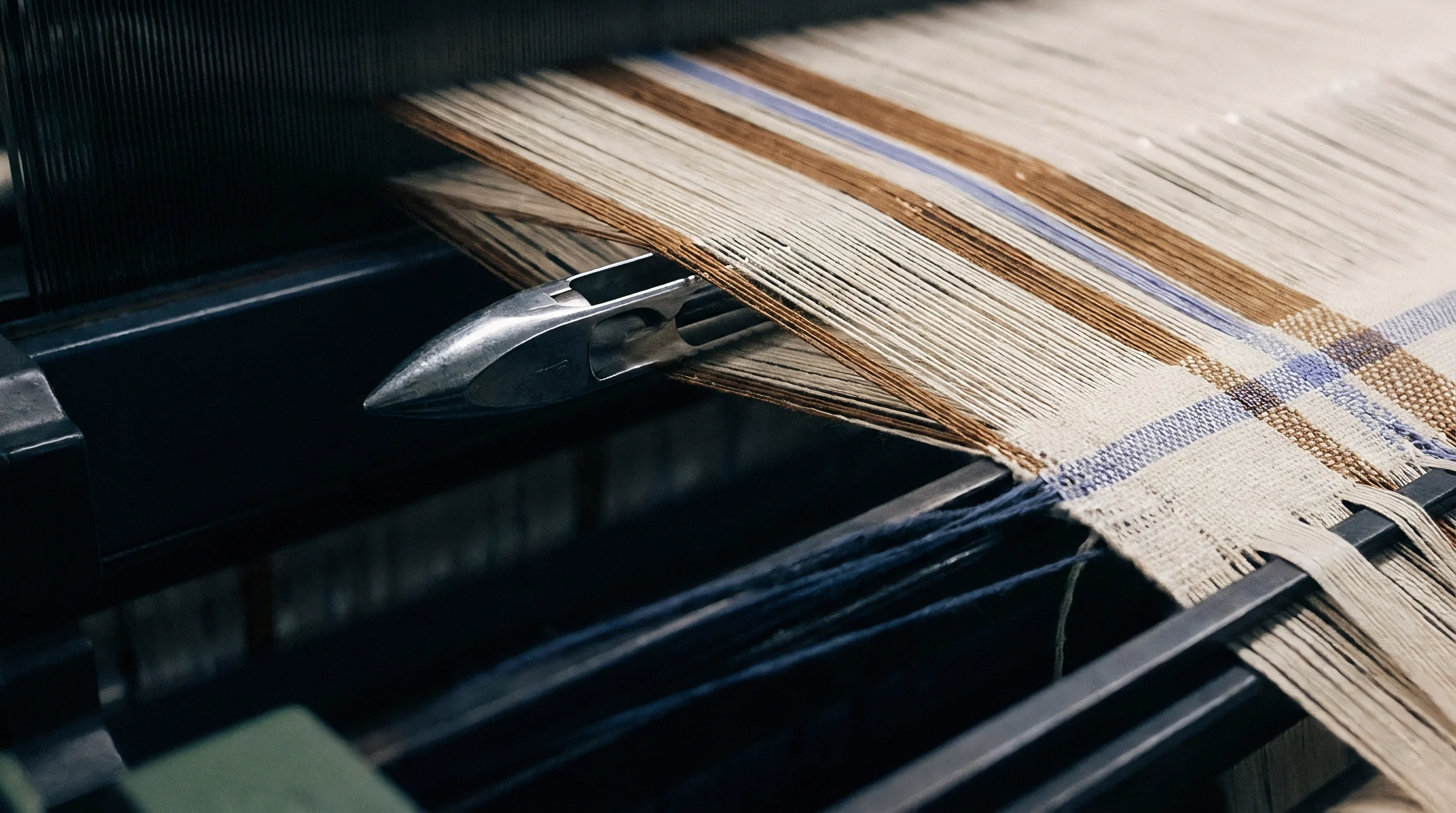
Primary beat-up mechanisms, back-rest roller oscillation, and shedding geometry dictate the precise baseline of yarn take-up during cloth formation. As the reed strikes the cloth fell, warp tension reaches its maximum cyclic peak. When the electronic let-off motion fails to feed the warp sheet at a rate strictly synchronized with the take-up motion, the fell drifts forward or backward relative to the reed stroke.
Fell drift alters the displacement path of the interlacing ends, yielding immediate variations in warp crimp across consecutive production shifts. The reeds scrub the ends.
Shed timing establishes whether picks lock into place under open-shed or crossed-shed conditions. Early shedding, where the shed crosses before the reed touches the fell, traps the inserted pick tightly, forcing warp ends to take higher crimp. Late shedding allows the pick to rebound slightly, lowering warp take-up while transferring crimp into the weft direction.
Air-jet machines operating at nine hundred picks per minute generate substantial thermal buildup in shedding cam boxes, shifting shed clearance heights and inducing progressive crimp drift from the start to the end of a single beam. Shed geometry dictates the amplitude.
A loose back-rest roller configuration shifts crimp from the warp system into the weft system without changing total piece weight.
Beam preparation defects create systematic lateral variations in crimp across the cloth width. Sectional warping with unequal band tension creates tight bands that register low crimp, bordered by slack bands that absorb excessive crimp during shedding. When these goods travel through subsequent processing, uneven crimp produces tight selvages, baggy centres, and continuous width instability.
Structural Factors across Common Constructions
Different textile constructions respond with unequal sensitivity to machine tension fluctuations. High-density constructions force warp yarns through tortuous paths, magnifying small variations in mechanical pull.
- Plain weaves exhibit the highest baseline warp take-up due to frequent interlacing points that force ends to alternate over and under every successive pick without structural float clearance.
- Twill constructions permit longer float lengths that reduce yarn deflection, though three-harness and four-harness balances transfer crimp rapidly when weft insertion tension rises.
- Satin weaves display minimal warp take-up because isolated interlacing points leave ends largely parallel, rendering them vulnerable to sudden crimp surges if back-rest rollers vibrate.
- Heavy corduroys concentrate substantial warp take-up in structural ground ends while pile ends absorb mechanical slack, creating complex dual-crimp dynamics across the cut roll.
The operational balance between machine mechanics and physical yarn displacement requires strict monitoring at the cloth fell. Setting identical machine parameters across two different machine frames frequently produces diverging take-up values due to subtle differences in back-rest spring constants, drop-wire friction, and take-up roller grip coatings. Technicians frequently state that the loom settings matched the approved product dossier while ignoring variations in beam let-off brake calibration.

Creel
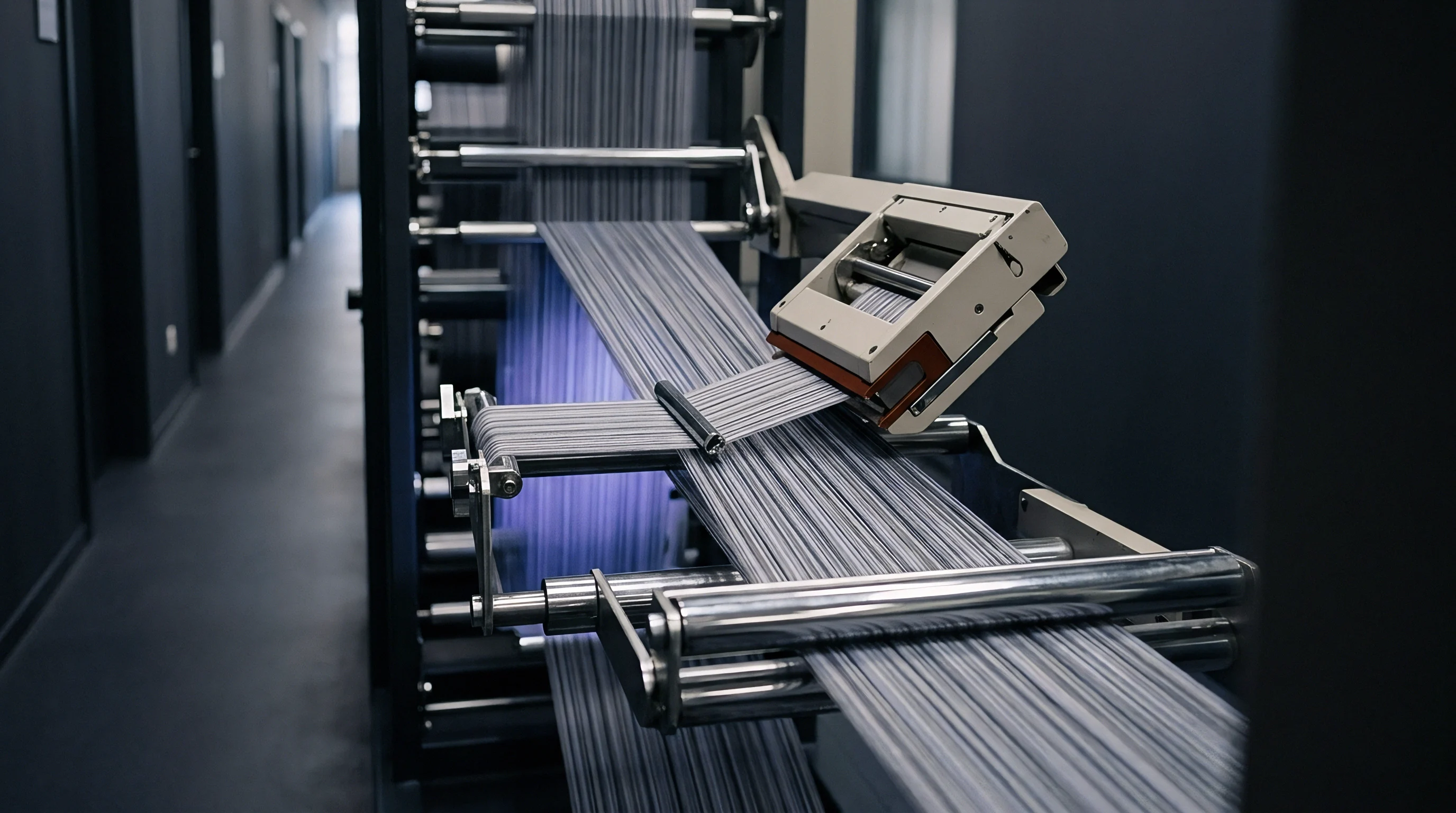
Direct package unwinding introduces mechanical resistance that translates directly into beam build quality during warping. As supply bobbins deplete from full package to bare tube, yarn pull-off tension rises progressively due to changing ballooning angles against package shoulders. If disk or electronic tensioners do not compensate dynamically for changing bobbin diameters, tension rises steadily across the length of the warp beam.
A warp beam wound with escalating tension yields lower crimp at the outer circumference and higher crimp near the beam core. Creel tension registers instant drag.
Moisture regain compounds this error. Hydrophilic fibres like combed cotton and viscose absorb ambient moisture quickly, shifting their modulus and frictional properties. A relative humidity drop from seventy percent to fifty percent on the warping floor stiffens cellulose fibres, reducing their elongation under tension.
These dry ends resist interlacing deflection on the machine frame, lowering warp take-up temporarily. When the resulting greige goods enter a conditioned dyeing house, the yarn re-absorbs moisture, relaxes, and contracts, triggering unexpected warp crimp expansion. The invoice arrives uncorrected.

Does Unmonitored Beam Tension Distort Yarn Mass Calculations?
Yarn allocation models depend entirely on an accurate assessment of take-up percentage to establish the total linear metres of single yarn needed per linear metre of woven product. The mass of warp yarn required per metre of finished cloth follows a strict mathematical derivation. Take a production run of 50,000 metres of 100 percent cotton twill using 20 tex ring-spun yarn in the warp, with 36 ends per centimetre, a finished reed width of 160 centimetres, and a nominal warp take-up of 8.0 percent.
The total number of warp ends across the width equals 5,760.
Under nominal conditions of 8.0 percent take-up, each metre of cloth requires 1.08 metres of warp yarn. The linear yarn consumption equals 6,220.8 metres of yarn per metre of cloth. At 20 tex, this corresponds to 124.42 grams of warp yarn per linear metre of cloth.
For the 50,000-metre run, nominal warp yarn mass equals 6,221 kilograms, excluding hard waste. Now stress the take-up parameter: suppose unmonitored warping creel tension and sizing line stretch induce an actual take-up of 11.5 percent in finished cloth. The calculation adjusts as follows:
- Verify the revised yarn length factor by adding the measured crimp fraction to unity, establishing a demand of 1.115 metres of yarn per metre of finished cloth.
- Compute the revised yarn mass consumption per linear metre, yielding 128.45 grams per metre under the new 11.5 percent take-up.
- Determine total warp yarn mass required across the 50,000-metre contract, which reaches 6,422.5 kilograms.
- Calculate the procurement deficit, exposing a raw material shortfall of 201.5 kilograms of combed 20 tex yarn.
- Evaluate the cost impact when spinning lots cannot supply identical dye-lot cones to cover the balance.
This deficit of 201.5 kilograms forces either an incomplete shipment or the introduction of a new yarn spinning lot with distinct dyestuff absorption characteristics, creating finished shading rejects. Beam density governs yield consistency.


Levy
Customs schedules around the globe divide woven textiles into distinct tariff lines based on specific weight thresholds per square metre. Harmonized System Chapter 52 splits cotton textiles cleanly at the 200 grams per square metre mark. Under heading 5208, cotton piece goods measuring not more than 200 g/m² face tariff lines that often attract specific duty rates or lower ad valorem charges.
Under heading 5209, identical interlacing structures measuring more than 200 g/m² attract alternative duty rates, anti-dumping actions, or distinct quota categorizations. A parallel tariff divide exists in Chapter 55 for synthetic staple textiles, where the dividing line sits at 170 grams per square metre. Tariff lines split cleanly.
When warp crimp drifts upward during production, the finished areal density climbs in direct proportion to the added yarn mass packed into each linear centimetre. A cloth engineered to land at 194 g/m² under a nominal 7.0 percent warp take-up crosses the 200 g/m² line if warp take-up drifts to 10.5 percent during sizing and finishing. An importer declaring under 5208 based on initial pre-production specifications risks customs penalties, shipment seizures, and retroactive duty assessments when border authorities pull verification swatches.
The inspector draws ten swatches.
Customs laboratories determine tariff classification from conditioned test swatches rather than commercial invoice descriptions.
Government testing facilities condition samples under ISO 139 or ASTM D1776 at 20 degrees Celsius and 65 percent relative humidity before conducting areal mass tests via ISO 3801 or ASTM D3776. They strip chemical finishes where rules require commercial mass verification, removing starch or synthetic resins to assess clean yarn mass. If the physical warp crimp holds the clean yarn ends tightly compacted, the areal mass exceeds the statutory weight cut-off regardless of mill certificates.
| Textile Specification | Nominal Crimp (%) | Actual Crimp (%) | Nominal Mass (g/m²) | Landed Mass (g/m²) | Tariff Shift Risk |
|---|---|---|---|---|---|
| Cotton Sheeting (Ne 30/1 x 30/1) | 6.0 | 9.2 | 128.5 | 132.8 | Stable within HS 5208 line |
| Cotton Bottom-Weight Twill (Ne 16/1 x 12/1) | 7.5 | 11.8 | 194.2 | 203.6 | Breaches HS 5208 into HS 5209 |
| Polyester/Viscose Suiting (Nm 50/2 x 50/2) | 5.5 | 8.8 | 165.0 | 172.4 | Breaches HS 5513 into HS 5514 |
| High-Tenacity Filament Web (150D x 150D) | 3.0 | 5.2 | 142.0 | 145.5 | Stable within HS 5407 line |
Are Declared Square Metre Masses Reversible at Borders?
Importers facing border weight challenges must recognize that customs rulings turn exclusively on physical testing protocols conducted on imported bolts. Border officials do not accept yarn invoices or mill production logs as primary evidence to override a certified laboratory finding. An importer disputing a border weight classification must establish that the regulatory laboratory failed to condition the sample properly or neglected moisture regain corrections specified in national customs tariff schedules.
Commercial compliance files require complete technical dossiers that track yarn density from raw roving through loom beams to finished yardage.
- Yarn sizing reports recording desizing solubility loss percentages demonstrate whether excessive chemical sizing inflated landed cloth weight beyond theoretical greige calculations.
- Continuous crimp audit charts documenting ASTM D3883 or ISO 7211-3 test results from roll heads and tails establish whether weight variations represent isolated machine defects or systematic drift.
- Conditioned moisture logs confirming standard moisture content at the time of container stuffing prevent border laboratories from treating container condensation as permanent areal mass.
- Finishing stenter records detailing overfeed percentages and heat-setting temperatures verify whether mechanical contraction was controlled to product specifications.
When border officers discover that actual weight exceeds tariff allowances, they apply the higher duty rate across the entire commercial invoice. They also initiate retrospective audits across prior import entries covering the statutory lookback window, typically spanning three to five calendar years. The central legal dispute then centres on whether the importer exercised reasonable care in validating the conversion between theoretical yarn take-up and physical landed weight, leaving open the question of how many historical entries will face duty reassessment.

Remedy
Commercial protection against yarn take-up drift begins at the stage of purchasing contract formulation. Standard sales confirmations frequently omit precise crimp tolerances, specifying only yarn count and nominal thread density per centimetre. Sourcing agreements must explicitly tie warp crimp percentages to standardized test protocols, assigning financial liability for raw material overages and customs reclassification fines directly to the manufacturing partner.
Tolerances expire at the dock.
Incoming inspection schedules require greige mills to execute warp crimp assessments per ISO 7211-3 at the loom fell on every completed piece. When take-up slips beyond a plus-or-minus 0.75 percent envelope around the approved pre-production sample, machine technicians must adjust beam let-off tension and shed timing immediately. If a finishing mill applies excessive warp overfeed during stenter passes to hit artificial softness targets, the resulting areal mass drift must trigger automatic commercial debit notes for resultant tariff penalties.
Mill managers contest the penalty.
Arbitration clauses govern this gap.
| Operating Stage | Verification Parameter | Standard Method | Tolerance Threshold | Contractual Recourse |
|---|---|---|---|---|
| Warping Preparation | Creel tension uniformity | Continuous tensiometry | ± 1.0 cN per end | Lot stop and re-creeling |
| Loom Formation | Warp take-up percentage | ISO 7211-3 Method A | ± 0.75% absolute crimp | Loom halt and fell recalibration |
| Finishing Stenter | Warp elongation / overfeed | Continuous wheel pickup | ± 1.0% linear dimension | Re-stentering under tension |
| Landed Inspection | Areal mass per unit area | ISO 3801 / ASTM D3776 | ± 2.5% g/m² from spec | Full indemnity for tariff shifts |
| Testing executed at 20°C ± 2°C and 65% ± 4% relative humidity following 24-hour pre-conditioning per ISO 139. | ||||
The financial ledger records the loss. Integrating technical tolerance limits directly into commercial purchase contracts eliminates ambiguity when border weights drift across statutory classification thresholds. Incorporating the standard International Textile Manufacturers Federation arbitration clause for physical specifications ensures that laboratory measurements taken under international standards supersede verbal factory assurances, shifting the cost of tariff differentials directly onto the party responsible for mechanical fell drift.