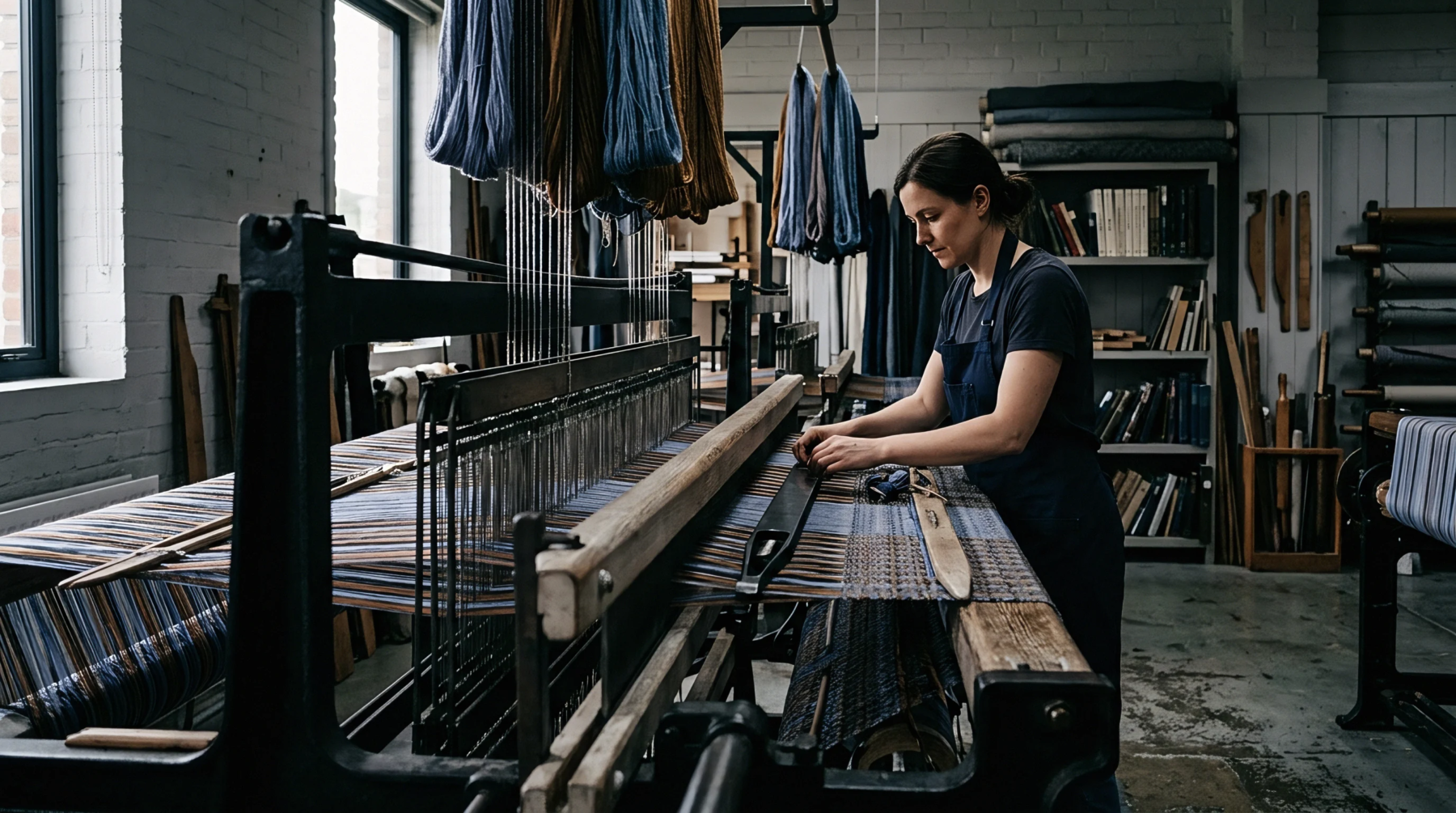
Quantifying Greige Warp Crimp Exchange and Jamming Limits in Heavy Woven Fabric Construction
Quantifying greige crimp exchange and jamming limits prevents beat-up fabric defects, off-loom width loss, and incorrect finished weight calculations.
Quantifying greige crimp exchange and jamming limits prevents beat-up fabric defects, off-loom width loss, and incorrect finished weight calculations.

Warp and weft crimp exchange in high-density weaving shifts structural waviness across processing, dictating finished sett, shrinkage, and air permeability.
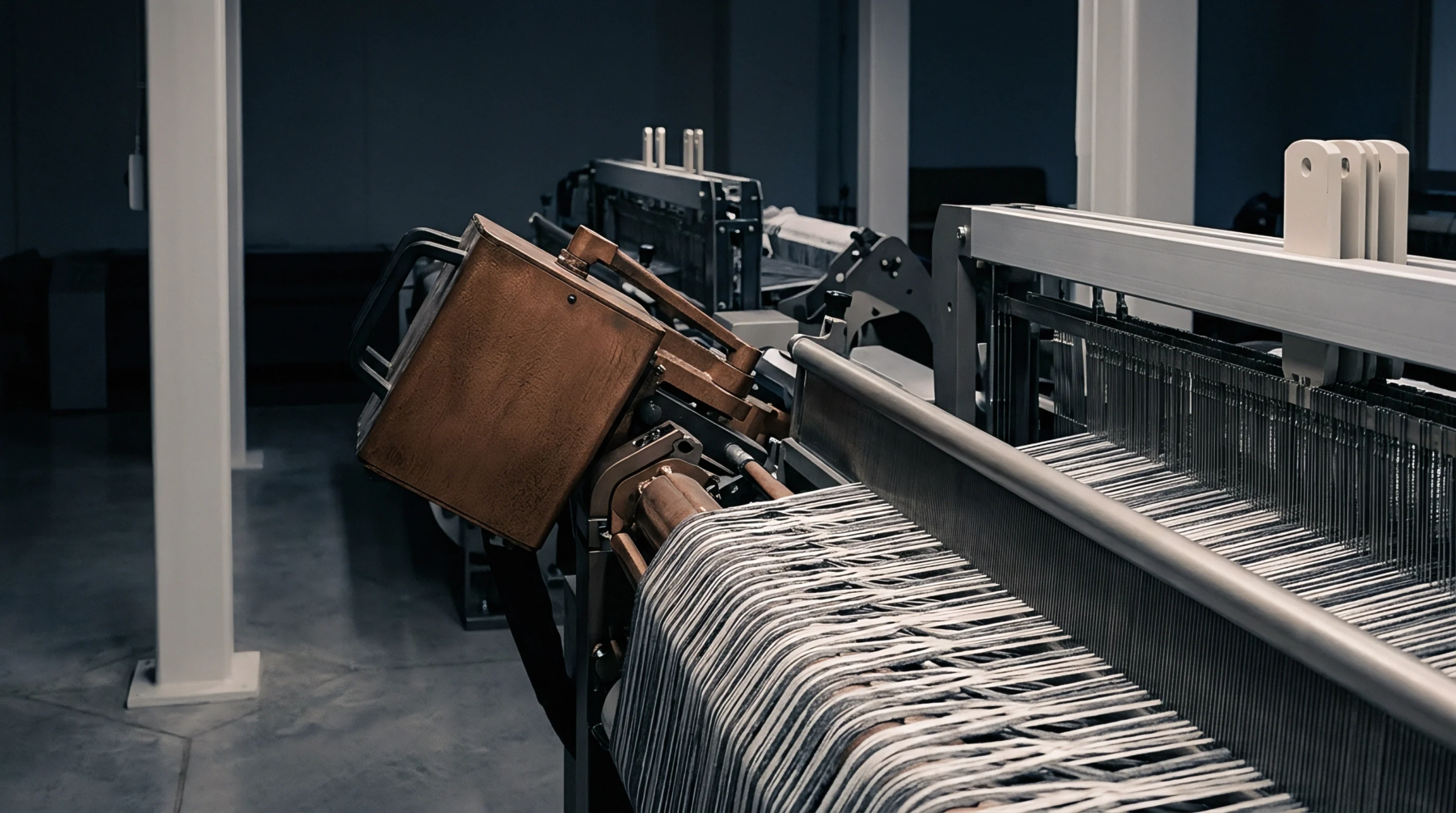
Woven yarn crimp mechanics derive from interlace curvature, where loom tension and yarn bending stiffness govern structural equilibrium and finished fabric width.

Determining recovered yarn linear density involves unraveling measured lengths, removing crimp under standardized tension, and correcting dry mass for size.

Predicting non-linear weft contraction requires dynamic nozzle pressure regulation aligned with loom acceleration profiles to maintain stable fabric off-loom widths.
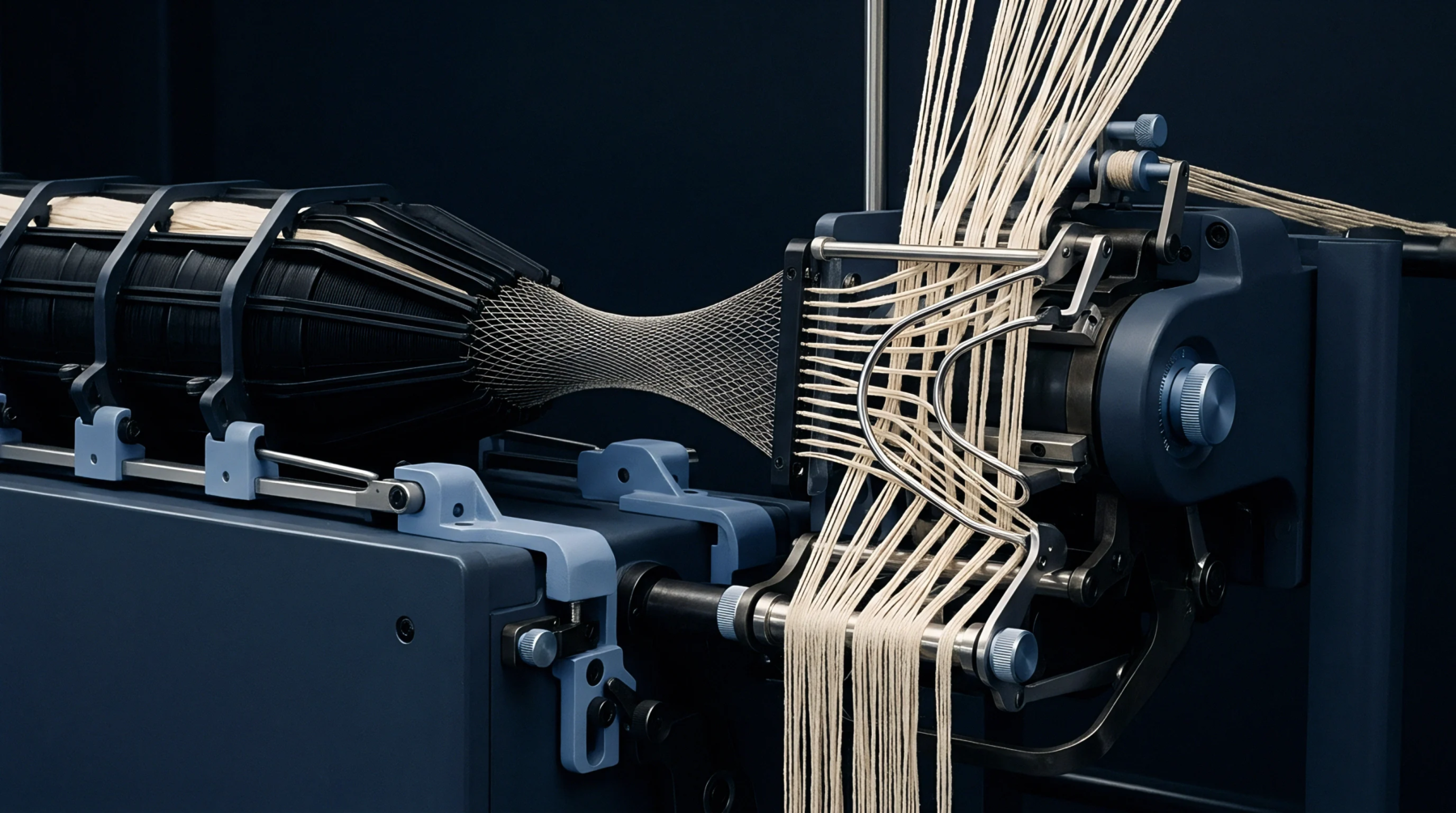
Integrating sizing stretch with greige warp crimp prevents yarn over-ordering and aligns creel lengths to loom beam targets without inventory waste.

Fabric structural crimp converts raw yarn length into finished fabric areal weight, driving yarn consumption ratios and landed linear metre costs.

Warp and weft crimp exchange during wet finishing balances longitudinal overfeed and lateral rail draft to set fabric weight and arrest post-wash shrinkage.
Determining required loom reed width requires converting unraveled weft yarn takeoff data into take-up fractions and adding wet processing shrinkage allowances.

Engineering accurate finished width requires combining yarn crimp contraction with wet processing contraction factors during reed selection on the loom.

Mathematical overfeed modeling balances longitudinal compressive force against thermal viscoelastic relaxation to lock target crimp geometry and control finished GSM.
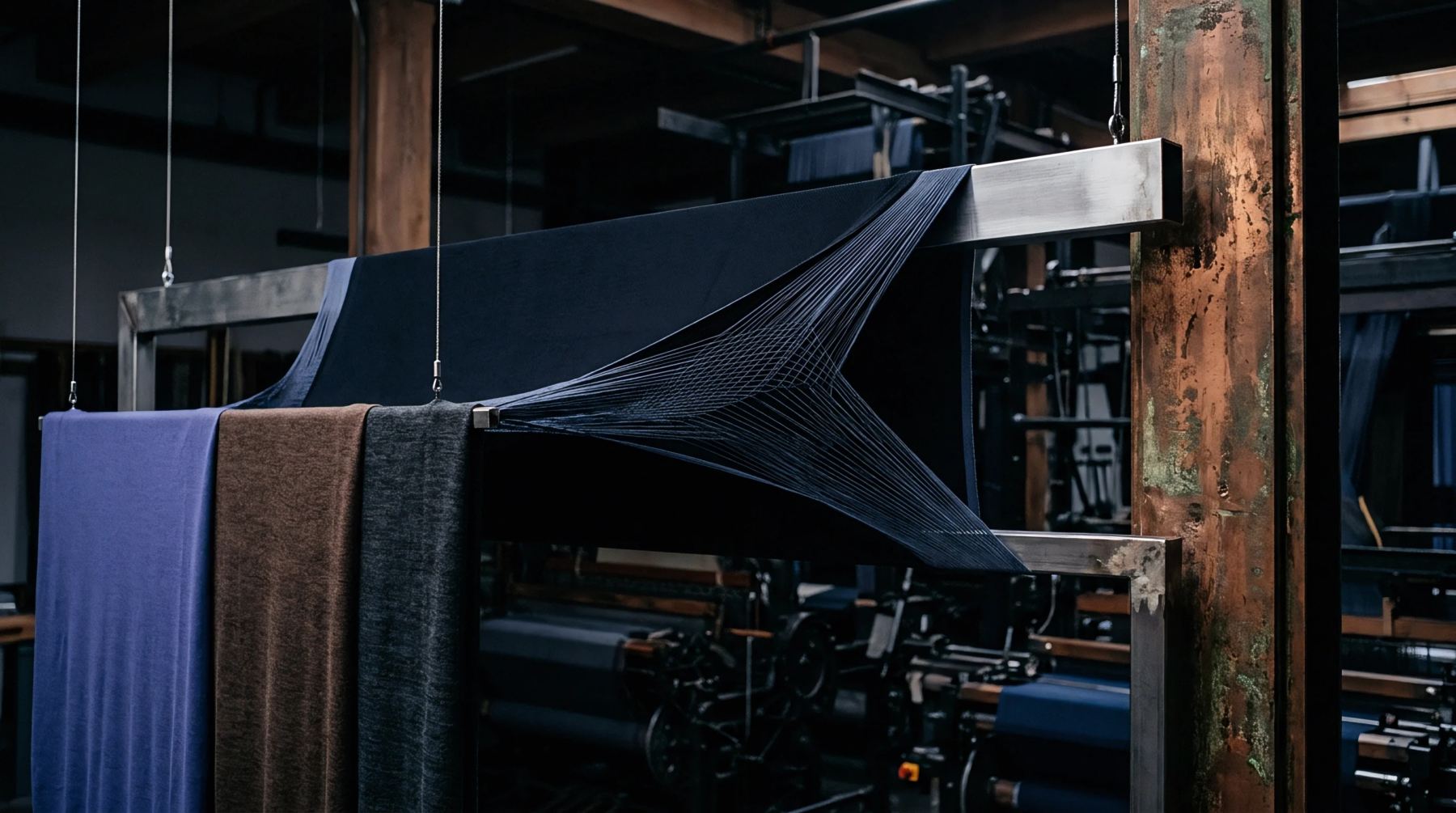
Calculating correct loom reed width requires combining off-loom grey contraction, finished warp sett, and weft crimp percentage into one unified formula.
Accurate woven mass calculation requires modeling yarn counts, crimp percentages, sizing removal, and moisture regain across every step from loom shed to final invoice.

Greige warp beaming economics requires minimum 5000 metre set lengths to absorb fixed slasher setup losses, sizing waste, and creel remnant expenses.

Fabric mass per unit area is calculated by combining yarn linear density, thread count, and crimp factors across conditioned warp and weft system dimensions.
Expertise is a utility, not a secret. sentiention™ publishes its working knowledge as open reference: intelligence layer covering the materials it sources, the markets it enters, and the reference that serves both.