Integrating Greige Warp Crimp and Sizing Stretch in Production Calculations
Integrating sizing stretch with greige warp crimp prevents yarn over-ordering and aligns creel lengths to loom beam targets without inventory waste.

Draft
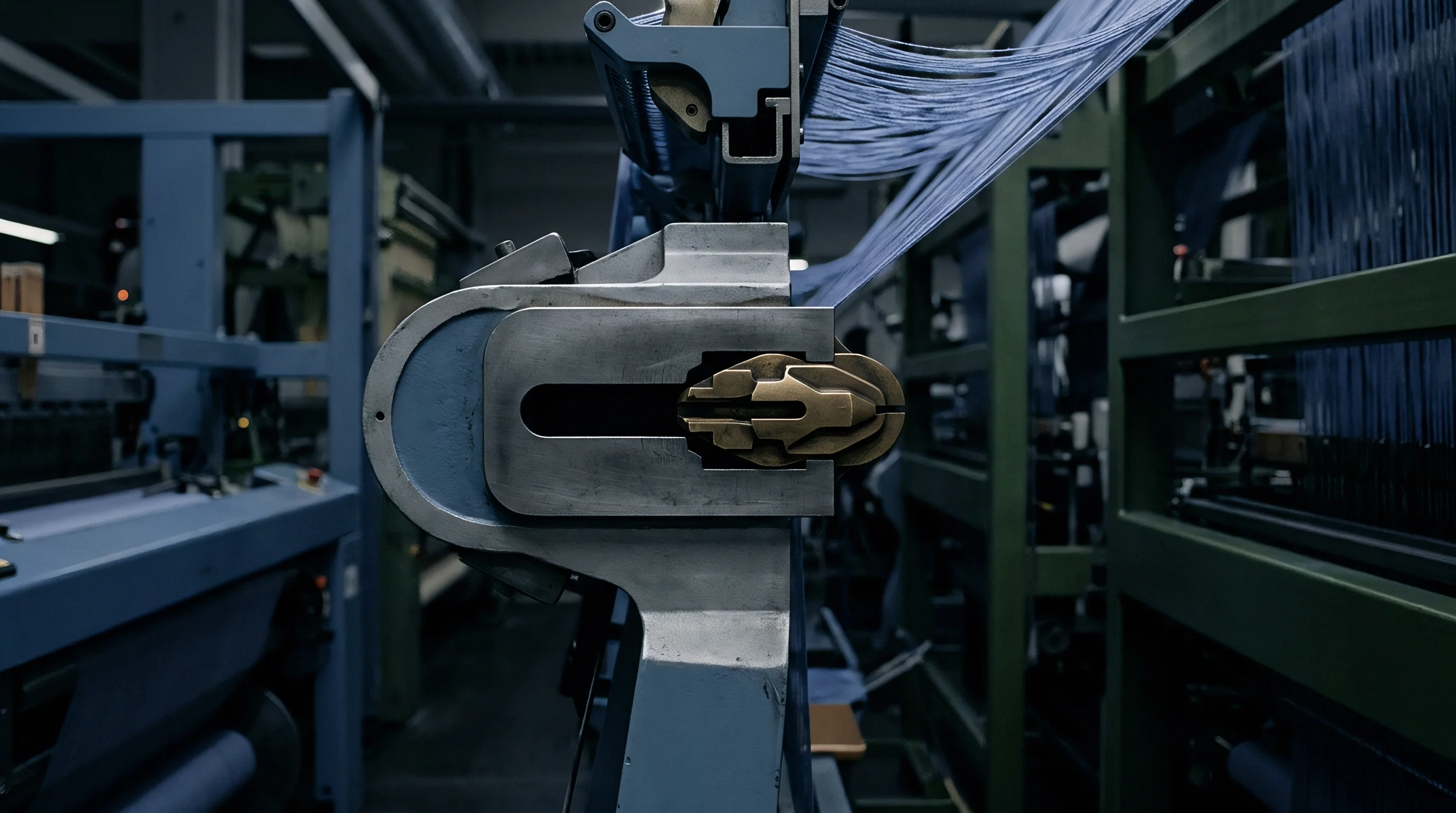
Passage of spun warp yarns through the slasher subjects threadlines to controlled mechanical elongation during liquid sizing and cylinder drying. Sizing stretch during slashing elongates spun or filament yarn, typically between 1.0 percent and 3.5 percent, directly altering the raw yarn length required to produce a targeted greige cut length after loom crimp take-up. Production planners who calculate yarn purchasing metrics solely on fabric cut length and woven crimp neglect this elongation step.
The result is a systematic overestimation of required raw yarn mass on the warping creel. Wet sizing changes yarn length. Creel tension alters sizing draft.
During the slashing process, warp ends pull off warping beams mounted in the creel, submerge in an aqueous size mixture inside the size box, pass through squeeze nips, and dry across heated teflon-coated cylinders before winding onto the loom beam at the headstock. Mechanical tension across each of these zones creates permanent or semi-permanent longitudinal strain in the yarn. The total elongation sustained across the machine constitutes the sizing stretch percentage.
When a sizing machine draws 1,000 metres of unsized warp yarn from the creel and winds 1,020 metres of sized warp onto the loom beam, the process imposes a 2.0 percent stretch. Slasher speed affects sizing pickup. Yarns under tension elongate, increasing linear length while reducing effective cross-sectional mass per unit length.
Slashed warp elongation between 1.2 percent and 2.5 percent reduces unsized yarn length requirements by up to 24 metres per 1000 metres of loom beam length.
Calculating raw yarn mass without accounting for this stretch creates an uncalibrated surplus in yarn procurement. The raw yarn linear density in tex or English cotton count (Ne) changes between creel unwind and beam winding. A 20 tex yarn subjected to 2.0 percent sizing stretch thins down to approximately 19.61 tex prior to size solids deposition.
Dry cans set yarn stretch. While size solids addition increases overall yarn weight on the beam by 8.0 percent to 14.0 percent, the structural core of the yarn remains permanently extended. Production equations must isolate the structural elongation of the base fiber assembly from the additive weight of starch or synthetic binder chemistry.
Controlling elongation across specific machine zones determines the physical work capacity remaining in the yarn for weaving. Excessive stretch during slashing exhausts the ultimate elongation of spun cotton or blended yarns, increasing end breaks under high loom beat-up forces. Creel unwind draw stretches raw yarns before immersion.
Wet zone draw stretches swollen yarns inside the squeeze box where fiber-to-fiber friction drops. Intermediate zone draw controls length changes between wet squeeze rolls and the first drying cylinder. Headstock draw maintains winding package density onto the loom beam.
- Wet zone draw stretches swollen yarn structures inside the size box where liquid lubrication lowers fiber friction.
- Dry cylinder tension maintains threadline separation across drying cans to prevent sticky size bridge formation.
- Lease section pull aligns individual warp ends during split rod separation to ensure uniform sheet alignment.
- Headstock winding draft establishes tight, uniform beam density required for high-speed shedding on air-jet looms.
Higher sizing box tension permanently reduces yarn elasticity before weaving ever begins.
Reed
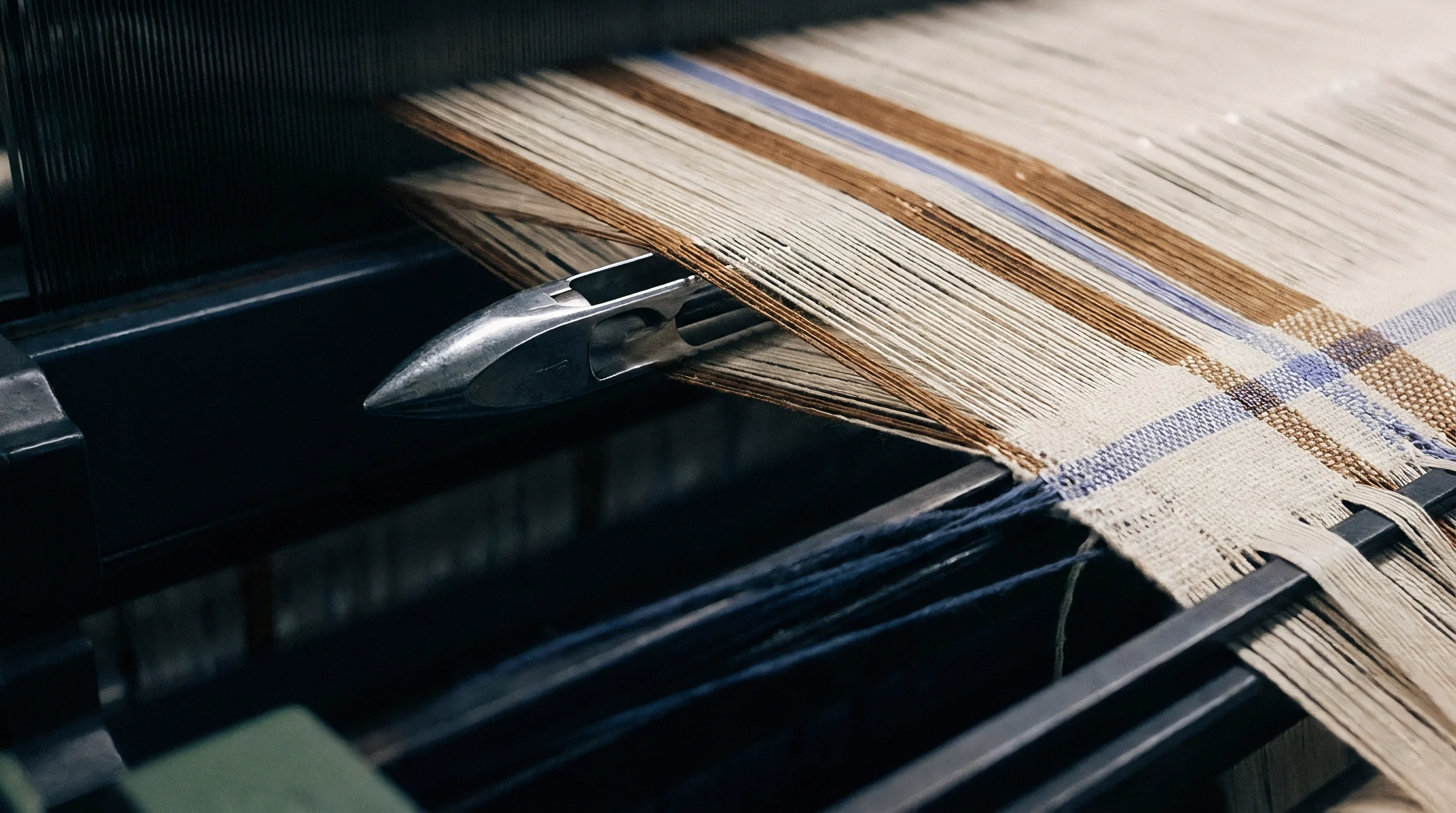
Interlacing warp and weft threads under loom beat-up tension forces warp yarns into wavelike crimp paths inside the woven structure. Crimp measures the ratio of unraveled, straightened warp length to the length of the woven cloth it inhabits. Standardized testing under ISO 7211-3 requires extracting warp threads from a conditioned fabric sample, removing the structural wave under specified tension, and measuring extended length.
Plain weaves demand maximum crimp. Heavy sizing stifles yarn yield. Depending on weave structure, pick density, yarn linear density, and loom warp sheet tension, greige warp crimp ranges from 4.0 percent in light filament satins to 14.0 percent in heavy cotton twills or poplins.
Loom take-up reduces cloth length. As the reed pushes each pick into the fell of the cloth, the warp ends bend around the weft picks while the weft picks simultaneously bend around the warp ends. The proportion of bending between warp and weft depends on relative yarn linear densities and warp sheet tension settings.
High warp tension forces the weft yarn to take on more crimp, flattening the warp profile and reducing warp crimp percentage. Conversely, lower warp sheet tension allows the warp ends to bend sharply around straight weft threads, increasing warp crimp and demanding greater slashed yarn length per metre of finished fabric.
Testing warp crimp according to ISO 7211-3 requires removing crimp under standardized tension before establishing actual greige fabric yarn consumption.
Sizing stretch directly influences how warp yarns behave under reed beat-up. Sized warp yarns with high binder content exhibit increased flexural rigidity. Rigid warp yarns resist sharp bending around weft picks, altering the natural crimp balance between warp and weft directions.
When sizing stretch removes elastic reserve from ring-spun cotton yarns, beat-up forces force the weft yarn to crimp more severely, altering the targeted greige width and picks per inch. Sizing elongation and weaving crimp act in opposite longitudinal directions on the warp sheet: sizing stretches the yarn sheet out while weaving crimp pulls it in.
| Fabric Construction | Weave Pattern | Picks Per Cm | Greige Warp Crimp % | Sizing Stretch % | Net Length Factor |
|---|---|---|---|---|---|
| 30s Cotton Poplin | 1/1 Plain | 28 | 8.5 | 2.2 | 1.0616 |
| 20s Cotton Twill | 2/1 Twill | 22 | 6.2 | 1.8 | 1.0432 |
| 40s Poly-Cotton Sheeting | 1/1 Plain | 32 | 9.8 | 2.5 | 1.0712 |
| 50s Combed Lawn | 1/1 Plain | 36 | 11.2 | 1.5 | 1.0956 |
| 16s Heavy Drill | 3/1 Twill | 18 | 5.0 | 1.2 | 1.0375 |
Failing to account for crimp changes during reed density adjustments results in short loom beams and unexpected yarn shortages at the headstock.
Beam
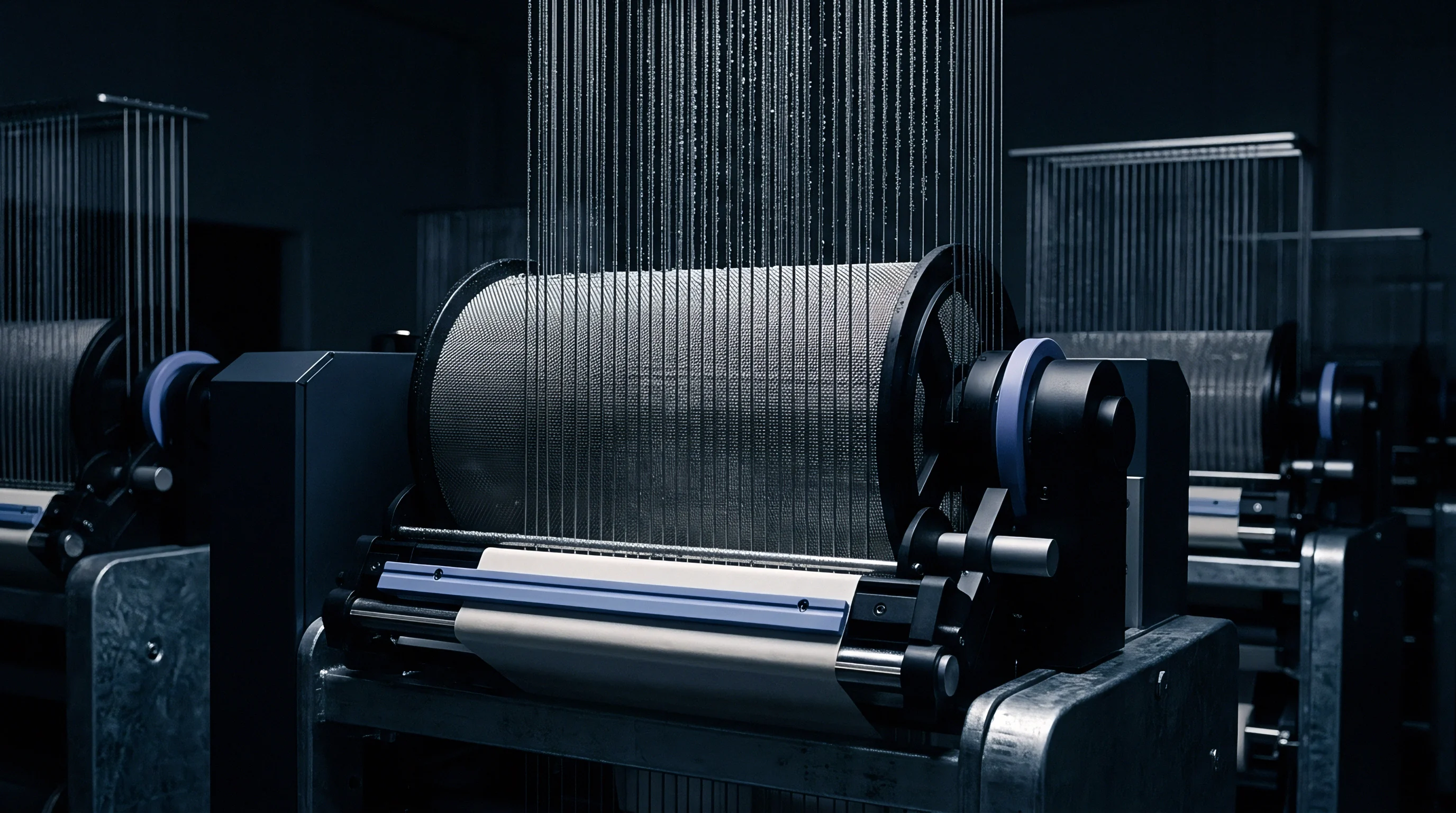
Connecting yarn unwind from creel bobbins through sizing stretch to loom take-up demands a single unified material balance equation. Traditional production formulas calculate required warp yarn length by multiplying greige fabric target length by a crimp factor. That simple calculation ignores the length added during sizing.
To establish true unsized yarn requirements from spinning, production engineering uses a two-stage longitudinal balance. Slashed loom beam length (Ls) derives from greige fabric target length (Lf) and warp crimp fraction (Cw), where Ls = Lf × (1 + Cw). Unsized creel yarn length (Lu) then accounts for sizing stretch fraction (Ss), expressed through the relationship Lu = Ls / (1 + Ss).
Combining these stages yields the core integration equation for unsized warp yarn length:
Lu = Lf × frac1 + Cw1 + Ss
In this relationship, greige warp crimp (Cw) increases the required warp yarn length, whereas sizing stretch (Ss) decreases the raw yarn length drawn from creel bobbins. Calculating warp yarn mass demands incorporating raw yarn linear density in tex (Texraw) and total warp ends (Nwarp). Sizing stretch thins the raw yarn prior to weaving, but creel yarn procurement bases its mass on the un-stretched raw yarn state.
Process waste allowance (Wa), encompassing slasher remnant waste, loom ties, and creel remnants, enters the equation as a multiplier. Excess yarn ties up capital. Yarn count shifts during stretch.
The integrated formula for raw warp yarn procurement mass (Mu, in kilograms) stands as:
Mu = fracNwarp × Lf × (1 + Cw) × Texraw1,000,000 × (1 + Ss) × (1 + Wa)

What Happens When Sizing Stretch Masks Warp Crimp during Weaving?
When sizing elongation is omitted from production math, the calculated yarn mass relies on unadjusted crimp assumptions. In a mill run targeting 10,000 metres of greige poplin with a 9.0 percent warp crimp (Cw = 0.090), unadjusted calculation yields a slashed length requirement of 10,900 metres per end. If the slasher operates at 2.5 percent stretch (Ss = 0.025), the actual unsized yarn length required from the warping creel is only 10,634.15 metres per end.
Unadjusted math over-orders raw yarn by 265.85 metres per end. Across a warp density of 6,000 ends using 20 tex yarn, this omission causes a raw yarn procurement error of 31.9 kilograms per 10,000-metre cut, inflating raw material inventory costs across large production orders.
Sizing stretch increases delivered warp yarn length while lowering effective yarn linear density prior to loom beat-up.
Operational execution of this integrated calculation follows a standardized sequential flow across slasher loading and loom setup:
- Determine net fabric target length (Lf) based on finished cut demands and wet processing shrinkage allowances.
- Calculate slashed warp length (Ls) by multiplying target fabric length by the greige warp crimp factor (1 + Cw).
- Divide slashed warp length by the sizing stretch factor (1 + Ss) to establish exact unsized warp length (Lu) required from creel bobbins.
- Convert unsized warp length into raw yarn procurement mass (Mu) using base yarn tex, warp end count, and slasher waste margins.
Converters frequently attribute warp beam run-out discrepancies to unpredictable creel tension fluctuations rather than flawed stretch equations.

Calculus
Quantifying yarn consumption across varying fibre blends reveals the structural error of evaluating loom take-up without slashing elongation. Fiber blend, yarn spinning method, and size formulation determine the maximum stretch a warp sheet tolerates without compromising weaving efficiency. Ring-spun 100 percent cotton yarns permit typical sizing stretch between 1.5 percent and 2.2 percent before fiber slippage weakens thread integrity.
Polyester and cotton spun blends withstand sizing stretch values up to 2.8 percent due to the high elastic recovery of polyester staple fibers. Filament warp yarns exhibit lower crimp. Filament yarns display sizing stretch figures below 1.0 percent because lack of staple fiber inter-lock limits permanent elongation.
Tension spikes break delicate ends. High sizing stretch values reduce the residual strain capacity of the yarn, accelerating warp end breakage rates on high-speed air-jet looms running at over 800 picks per minute. Every warp break generates loom stop downtime, fabric defect marks, and labor expense.
Balancing sizing stretch against warp crimp requires establishing operational boundary conditions for specific loom types and yarn counts.
| Parameter | 100% Cotton Ring Spun | 65/35 Poly-Cotton Blend | 100% Filament Polyester |
|---|---|---|---|
| Yarn Linear Density | 19.6 tex (30s Ne) | 14.8 tex (40s Ne) | 16.7 tex (150d) |
| Total Warp Ends | 6,400 | 7,200 | 8,100 |
| Greige Warp Crimp (Cw) | 8.8% | 9.2% | 4.5% |
| Sizing Stretch (Ss) | 2.0% | 2.6% | 0.6% |
| Unadjusted Yarn Mass Needed | 682.75 kg | 581.33 kg | 601.27 kg |
| Stretch-Integrated Mass Needed | 669.36 kg | 566.60 kg | 597.68 kg |
| Procurement Over-Ordering Error | 13.39 kg | 14.73 kg | 3.59 kg |
Waste factors during slashing and loom setup alter actual yarn consumption. Slasher tail waste, section beam remnants, and headstock sizing run-in consume between 1.0 percent and 2.0 percent of total creel length. Loom waste, including knotting tails, fringe waste on shuttleless looms, and leno selvedge cut-offs, consumes an additional 1.5 percent to 3.0 percent of slashed warp length.
Shuttleless weaving systems lose warp length to catch-cord fringes on both sides of the reed. Integrating these distinct waste categories into production math prevents creel shortfalls during slashing.
Whether dynamic sizing tension adjustments during high-speed slashing alter yarn crimp recovery uniformly across full beam diameters remains open for empirical trial.
Settlement
Auditing commercial yarn invoices against delivered greige fabric meterage exposes systematic discrepancies caused by unadjusted stretch allowances. Mill accounts routinely reveal discrepancies between purchased yarn mass, invoiced size add-on weight, and final fabric yield. Sizing mills charge buyers based on incoming unsized yarn weight plus size chemical add-on costs.
When a mill reports high fabric yields per kilogram of purchased yarn, sizing stretch often hides inside the numbers. Slasher operators can intentionally increase sizing machine draft to extend yarn length, hiding yarn losses or meeting fabric meterage quotas with less raw yarn input. Excessive stretch degrades fabric tear strength and abrasion resistance in finished goods.
Verifying fabric yield requires testing conditioned greige samples according to ISO 3801 for mass per unit area and ISO 7211-3 for warp crimp. Comparing oven-dry yarn weights stripped of size material against raw yarn laboratory specs isolates the physical elongation applied on the slasher floor. Commercial purchase contracts must stipulate clear parameters for maximum allowable sizing stretch, baseline raw yarn tex, and standardized warp crimp tolerances.
Fabric specs that quote unadjusted greige crimp leave mill buyers holding excess yarn inventory after bulk weaving completes.
Standard commercial supply agreements control these variables through precise audit points:
- Commercial moisture regain establishes standard atmospheric conditions for weighing yarn shipments under ISO 2060.
- Size percentage add-on requires subtraction of desized dry weight from greige dry weight to isolate pure yarn mass.
- Linear count variation tracks tex shifts between raw creel yarn and desized warp ends extracted from woven fabric.
- Loom remnant allowance defines acceptable waste boundaries for creel ends and loom beam ties in commercial invoicing.
Incorporating standard ISO 7211-3 crimp verification clauses alongside raw tex measurement allowances in purchase agreements limits buyer liability for unearned yarn weight overcharges.