Physical Elongation
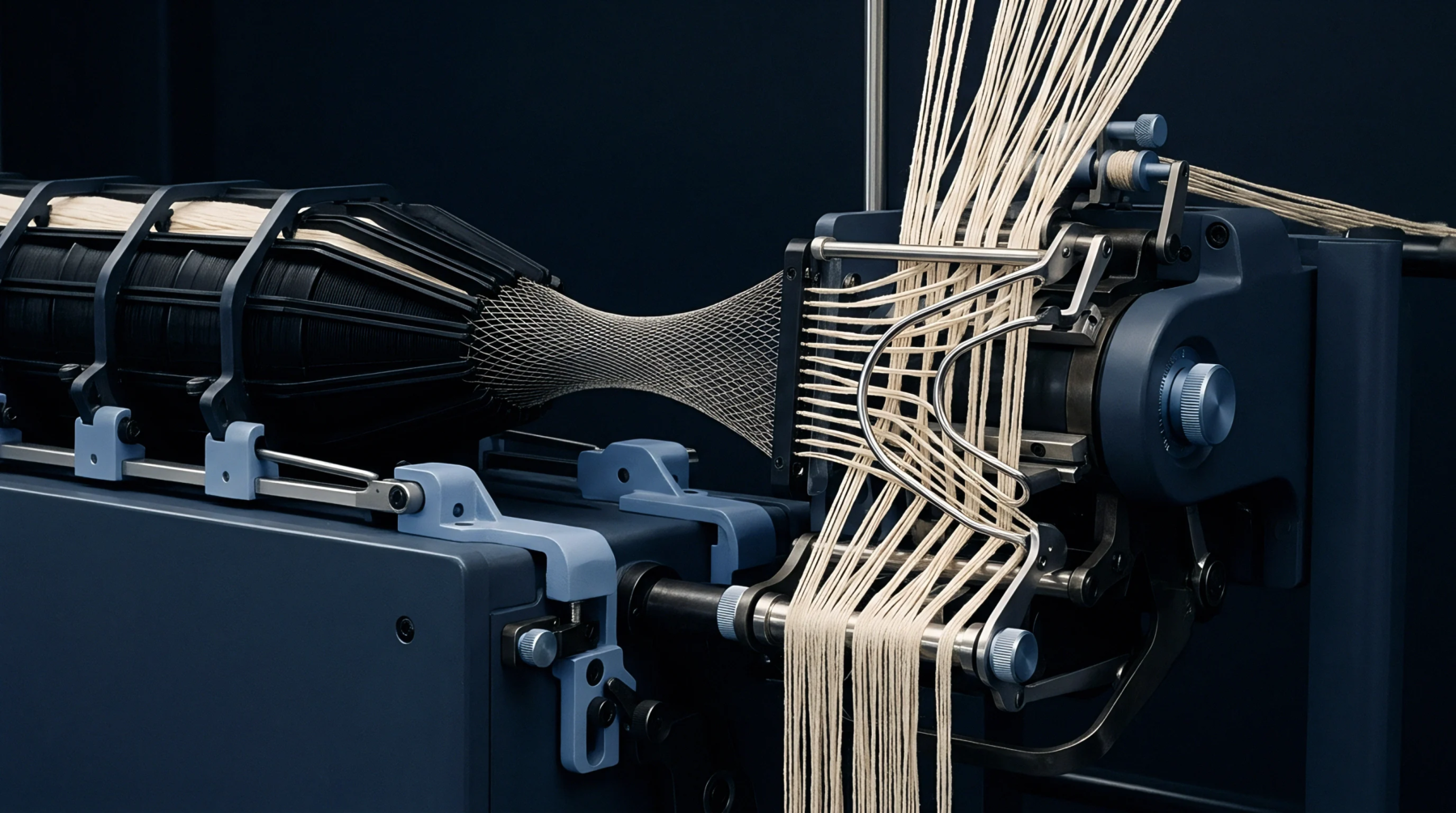
Viscous starch or polyvinyl alcohol films applied to warp yarns during preparatory stages undergo a mechanical dimension gain known as sizing stretch. Mechanical tension applied by multi-cylinder drying cans and headstock winders forces the polymer coating beyond its natural relaxation point before the final loom beam is wound. Tension levels exceeding fifteen grams per end generate molecular orientation within the dried polymeric film.
Excessive force reduces the residual elasticity required during subsequent heald frame clearance cycles.
Tension Gradient
Winding geometry across the creel requires precise differential speed control to prevent localized fiber breakage. Roller surface speeds must accommodate the drying rate shrinkage of natural cotton substrates without introducing parasitic elongation forces. Operators measure displacement rates between the wet separation zone and the dry delivery nip using stroboscopic tachometers.
Uncontrolled acceleration profiles cause permanent deformation of the adhesive sheath before weaving operations begin.
Elastic Recovery
Residual recovery capacity dictates whether the treated warp strand survives high-speed shedding impacts without adhesive shedding. Polymer formulations containing carboxylated starches demonstrate lower immediate elasticity compared to synthetic polyacrylate binders. Laboratory tensile testers pull conditioned yarn samples at standard atmospheric conditions to quantify permanent set values after cyclic loading.
Low recovery performance leads to sizing film brittle fracture under repetitive harness motion.
Breakage Threshold
Ultimate tensile strength limits are established when accumulated strain exceeds the composite yield point of the fiber and size combination. Warp stop motions register increased downtime whenever sizing stretch pushes residual breaking load margins beneath baseline loom tensions. Fabric manufacturers monitor off-loom grab tensile strength to confirm that preparatory elongation did not compromise final tear resistance parameters.
Controlled tension protocols ensure that residual elasticity remains within acceptable limits for subsequent wet processing stages.