Optimizing Warp Sizing Polymer Add-on Levels for Air-Jet Weaving Efficiency
Optimizing sizing polymer add-on levels balances yarn hairiness reduction against shed dusting to maximize air-jet loom efficiency and lower desizing costs.
Cohesion
Whether a warp sheet survives high-speed air-jet weaving comes down to how well the size formulation adheres to spun filaments. At main-shaft speeds between 800 and 1200 revolutions per minute, warp yarns endure rapid shed opening, constant heddle eye friction, and repeated strikes from the reed blade. If the binder fails to penetrate and build a solid surface film, loose fibers pull free from the yarn core, creating hairiness that tangles adjacent ends and clogs the profile reed’s pneumatic channel.
Sizing anchors surface fibers back into the yarn body while supplying the tensile strength and abrasion resistance needed for cyclic stretching. Striking that balance requires chemical compatibility between polymer and substrate. 100 percent ring-spun cotton yarns respond best to modified starches paired with fully hydrolyzed polyvinyl alcohol, as their hydroxyl groups form strong hydrogen bonds with cellulose.
Polyester and cotton blends need water-soluble polyacrylates or polyester resins ~ low-surface-tension synthetics that can wet out hydrophobic polyester fibers that repel purely starch-based liquors.
Polyvinyl alcohol formulations applied at 12 percent dry add-on increase ring-spun cotton yarn tensile strength by 22 percent under ISO 2062 test conditions.
Chemical affinity is only the baseline requirement. While high squeeze forces lower overall pick-up, squeeze roll pressures between 15 kN and 30 kN drive liquor deep into the yarn bundle, locking inner fiber lumens together mechanically. If bath viscosity runs too high, the polymer merely coats the outer shell without reaching the core.
That outer crust shatters under cyclic elongation in the loom shed, causing premature flaking, dusting, and warp breaks.
Interfacial Adhesion Mechanics in Warp Preparation
Polymer molecules must migrate into the yarn’s outer boundary before the film dries or cross-links. Penetration depth depends on liquor temperature, yarn twist factor, and dwell time in the nip zone. For ring-spun yarns with moderate twist multiples between 3.8 and 4.2, deep penetration locks inner fibers together and increases single-yarn breaking force.
Rotor and air-jet spun yarns behave differently: rotor yarns have tight wrapper fibers around a parallel core that resist absorption, requiring lower liquor viscosity and higher squeeze pressure to push binder chemistry beneath those surface wrappers.
Fiber migration directly controls surface hairiness, tracked via the Zweigle s3 index (fibers extending 3 millimeters or more per 100 meters) and the Uster Hairiness Index H. Air-jet weaving demands a Zweigle s3 count below 30 protruding fibers per 100 meters. When adjacent warp ends cross during shed opening, loose fibers tangle and trigger cling stops ~ halting the loom because the detector senses resistance, even if no yarn has broken. Target polymer add-on levels cut the s3 hairiness count by 85 to 92 percent compared to unsized yarn, preserving clear shed openings for weft insertion.
Polymer Selection across Fiber Blends and Spinning Systems
A sizing recipe balances primary film formers, secondary binders, and protective lubricants. Modified starches ~ like thin-boiling hydroxyethylated or carboxymethylated starches ~ serve as economical primary film formers for cellulosic fibers. Polyvinyl alcohol supplies high tensile strength and elasticity, whereas polyacrylates boost adhesion to synthetic fibers and soften the film.
Lubricants, usually hydrogenated tallow or microcrystalline waxes added at 3 to 5 percent of total dry solids, reduce friction where warp ends touch loom components.
- Brittle Film Cracking occurs when size recipes lack plasticizer or moisture, causing the outer polymer shell to shatter into abrasive dust during shed opening.
- Insufficient Penetration Depth leaves the inner core unbonded, so core fibers slide past each other under cyclic loads and cause mid-shed breaks.
- Excessive Surface Encapsulation glues adjacent warp ends together on drying cylinders, creating harsh split marks at lease rods that strip away the protective coating.
- Interfacial Dewetting happens when hydrophobic synthetic fibers reject hydrophilic starch liquors, leaving gaps in film coverage and localized patches of hairiness.
Raising lubricant concentration above 5 percent of total dry solids weakens adhesion at the fiber surface. During drying, lubricant molecules migrate to the polymer-fiber interface, forming a weak boundary layer that peels under abrasive shear. Target dry add-on varies with yarn count, blend, and loom speed: fine carded cotton (Ne 50/1) needs 14 to 16 percent dry add-on to hold together, while coarse rotor-spun cotton (Ne 16/1) runs efficiently at 8 to 10 percent.
Dropping below minimum add-on leaves surface hairiness exposed, driving up warp stops, clogging relay nozzles, and causing downtime that quickly erodes mill operating margins.

Film
How warp yarns handle dynamic stress during weaving depends largely on the tensile behavior and elasticity of the dried size matrix. The polymer coating must stretch alongside the fiber without cracking, peeling, or deforming permanently. If the film lacks elongation, cyclic shed opening on an air-jet loom quickly fractures it, leaving exposed fibers to rub against drop wires, heddles, and reed blades.
Polyvinyl alcohol polymers come in various hydrolysis grades, from partially hydrolyzed at 87 to 89 percent to fully hydrolyzed at 98 to 99 percent. Fully hydrolyzed PVA yields tough, chemically resistant films through extensive hydrogen bonding. Yet these films have lower elongation at break and require wash water above 90 degrees Celsius for desizing.
Partially hydrolyzed PVA films are more flexible and dissolve in cooler water, but they pick up moisture in humid weaving sheds, softening the film and making yarn sticky.
| Polymer Type | Tensile Strength (MPa) | Elongation at Break (%) | Elastic Modulus (MPa) | Glass Transition Temp (°C) | Dissolution Temp (°C) |
|---|---|---|---|---|---|
| Fully Hydrolyzed PVA (17-99) | 65.0 – 75.0 | 8.0 – 12.0 | 1200 – 1500 | 75 – 85 | 90 – 95 |
| Partially Hydrolyzed PVA (17-88) | 45.0 – 55.0 | 15.0 – 22.0 | 800 – 1000 | 55 – 65 | 60 – 70 |
| Hydroxyethyl Starch | 20.0 – 30.0 | 3.0 – 5.0 | 1800 – 2200 | 90 – 110 | 80 – 90 |
| Water-Soluble Polyacrylate | 15.0 – 25.0 | 150.0 – 250.0 | 150 – 300 | 10 – 25 | 40 – 50 |
| Carboxymethyl Cellulose (CMC) | 35.0 – 45.0 | 5.0 – 8.0 | 1000 – 1300 | 80 – 100 | 70 – 80 |
Viscoelastic Properties of Sizing Polymers
Mechanical stress on an air-jet loom comes in high-frequency pulses lasting only milliseconds per pick. At these strain rates, a film’s viscoelastic properties dictate whether it absorbs energy elastically or fractures. Hydroxyethylated starches form rigid, high-modulus films that hold up under static load but snap under impact.
Blending hydroxyethylated starch with partially hydrolyzed PVA at a 70:30 ratio balances the stiffness of starch with the flexibility and impact resistance of synthetic polymers.
Plasticizers like glycerol, urea, or polyglycols adjust the glass transition temperature of starch and PVA films. Keeping this transition temperature below weave room ambient conditions stops the coating from turning glassy and brittle, maintaining enough flexibility to prevent micro-cracking under tension. If plasticizer concentration passes 8 percent of dry solids, film tensile strength drops sharply and heddles easily scrape the yarn surface.
- Sample size liquor directly from the box using a pre-heated insulated vessel to avoid thermal shock and premature gelling.
- Measure refractive index with a temperature-compensated digital refractometer calibrated against distilled water at 80 degrees Celsius.
- Verify total dry solids by drying a 10-gram liquor sample in a forced-air oven at 105 degrees Celsius to constant mass.
- Check size box temperature gauges against a calibrated immersion thermometer to confirm liquid stays within plus or minus 2 degrees Celsius of setpoint.
- Inspect squeeze roll hardness across full nip width with a Shore A durometer to confirm uniform pressure distribution across the warp sheet.

Environmental Relative Humidity and Tensile Flexibility
Relative humidity inside the weaving shed directly controls moisture regain in both the film and the fiber. Cotton requires 65 to 75 percent ambient humidity to maintain its strength and flexibility. But sizing films also absorb atmospheric moisture, which alters their mechanical modulus.
PVA films are especially sensitive, absorbing up to 12 percent moisture by weight at 75 percent relative humidity ~ a shift that plasticizes the polymer network, boosting elasticity while tensile strength plummets.
When weave room humidity rises above 78 percent, over-hydrated films turn tacky. This increases friction between adjacent ends, prevents clean shed separation, and causes fill stops. If humidity drops below 55 percent, films lose bound water, turn brittle, and shed fine polymer dust across the reed bed.
Outside controlled relative humidity ranges, shedding defects climb rapidly whether caused by mechanical settings, yarn variability, or film breakdown.

Abrasion
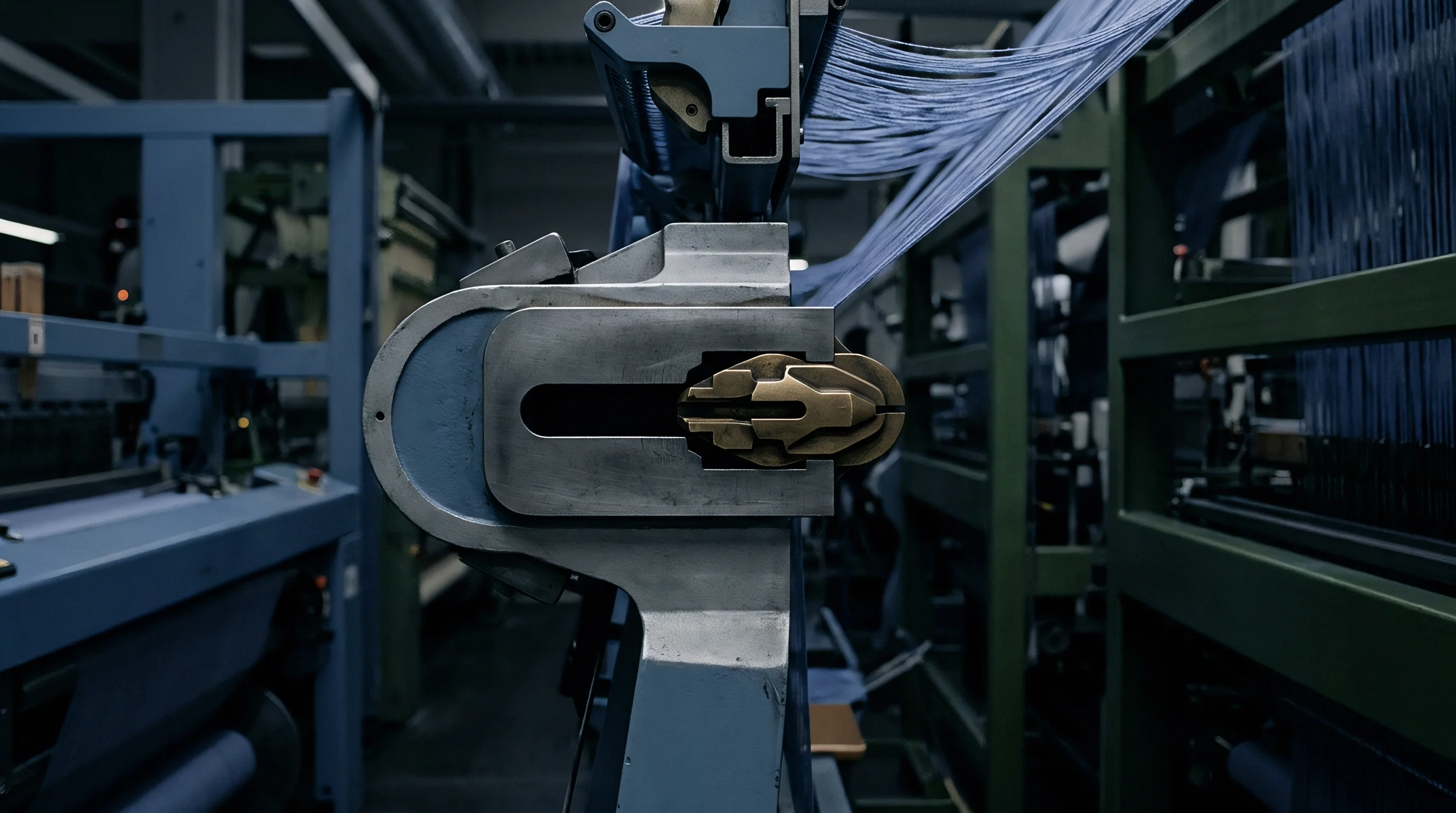
High-speed air-jet weaving quickly exposes weak yarn segments and poorly sized spots through sheer mechanical wear. At main-shaft speeds above 1000 revolutions per minute, warp yarns undergo constant direction changes, moving from closed shed to full height and back during every cycle. Drop wires, steel heddle eyes, and profile reed dents rub continuously against the yarn, creating intense local friction and shear stress.
The size film acts as a sacrificial barrier, taking the friction from loom components so the underlying fiber bundle stays intact. Wear rates depend heavily on the dynamic coefficient of friction between sized yarn and polished steel. Unsized cotton against smooth steel has a friction coefficient around 0.35 to 0.40.
Applying a well-formulated size with microcrystalline lubricant drops that coefficient to 0.20 to 0.25, significantly reducing shear forces at the heddle eye.
Standard purchasing contracts for greige woven fabrics require a minimum sized-yarn abrasion resistance of 1500 cycles on the Zweigle G566 tester prior to loom loading.
Cyclic Stress and High-Speed Shed Geometry Dynamics
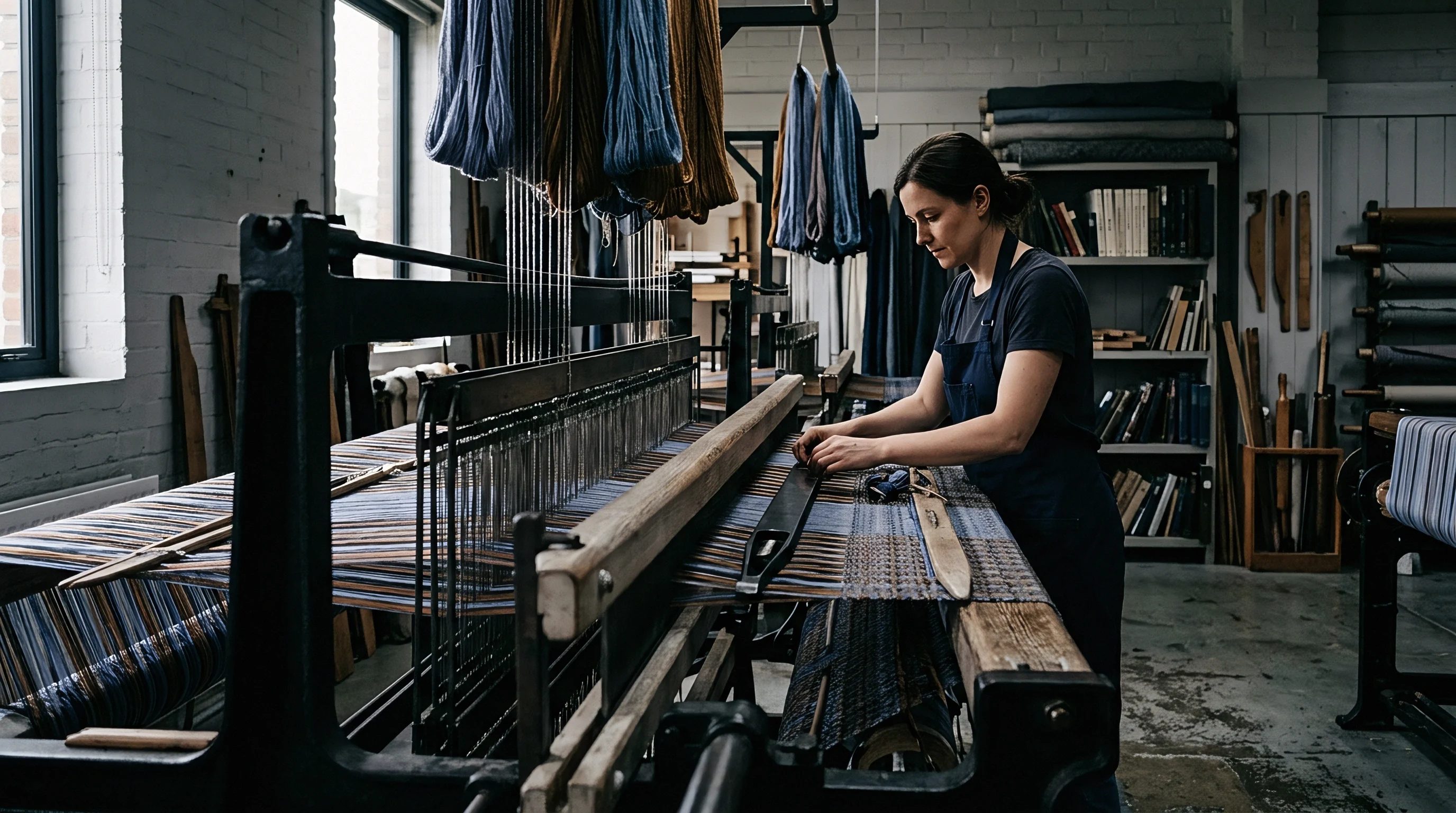
Air-jet looms run with the smallest possible shed opening height to limit peak tension and cut air consumption at the relay nozzles. But a tight shed angle increases contact against the heddle eyes, escalating surface abrasion. Total mechanical work on the yarn scales with shaft speed, reed end density, and peak tension.
Fine continuous filament and high-count spun yarns suffer fatigue if the size film fails to distribute these tensile loads across every filament.
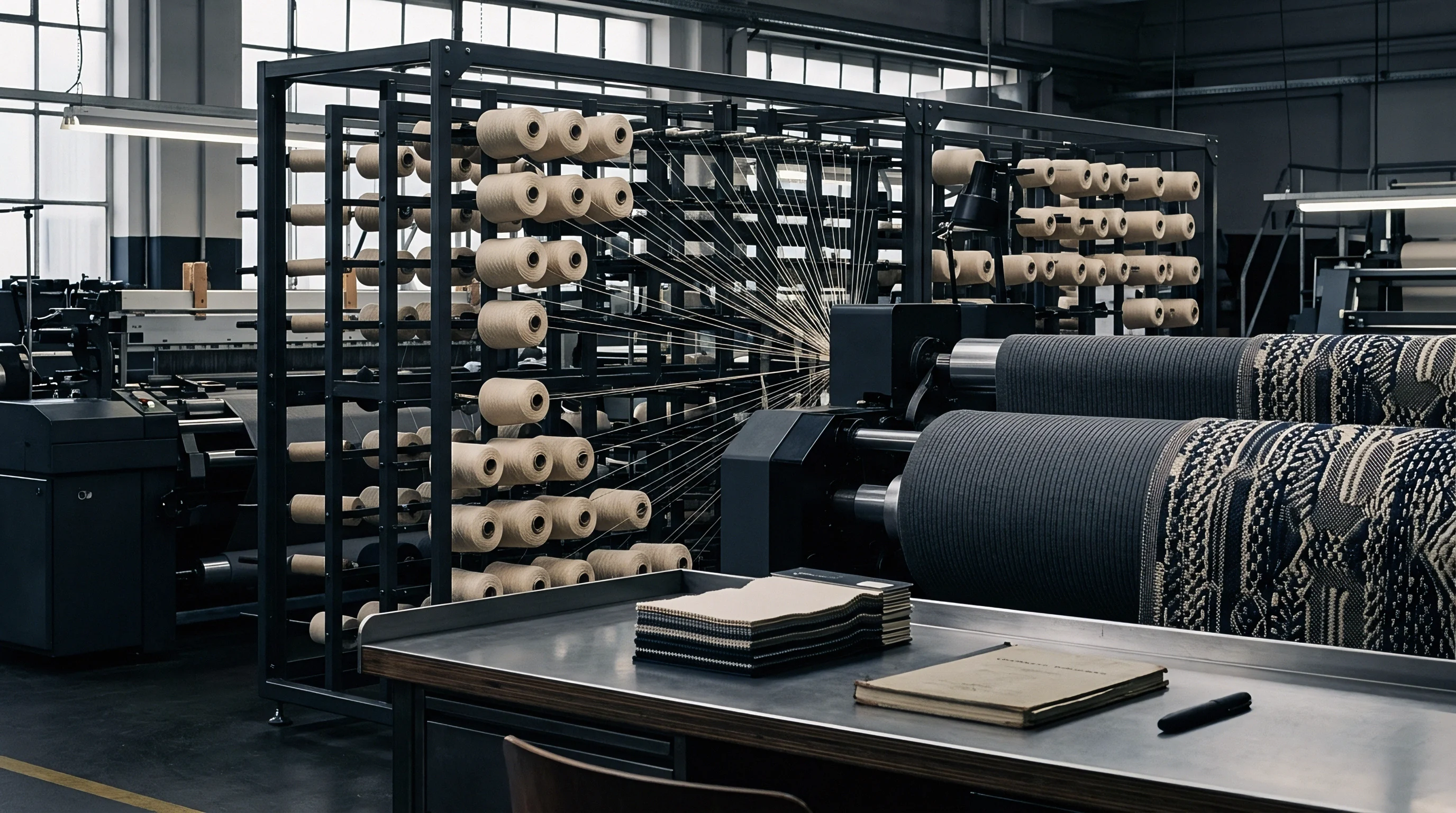
Laboratory testing simulates this loom friction under controlled tension. The Zweigle G566 abrasion tester rubs a sheet of twenty parallel warp ends against a textured steel roller under constant dead-weight load, recording the average cycles before each end breaks. Unsized Ne 40/1 combed cotton yarn typically fails in 200 to 300 cycles.
Adding 11 percent dry PVA/starch size lifts abrasion resistance to 1800 to 2200 cycles. Pushing add-on to 16 percent gives diminishing returns, capping resistance at 2300 cycles while stiffening the yarn and raising costs.
Laboratory Simulation Protocols for Warp Fatigue Resistance
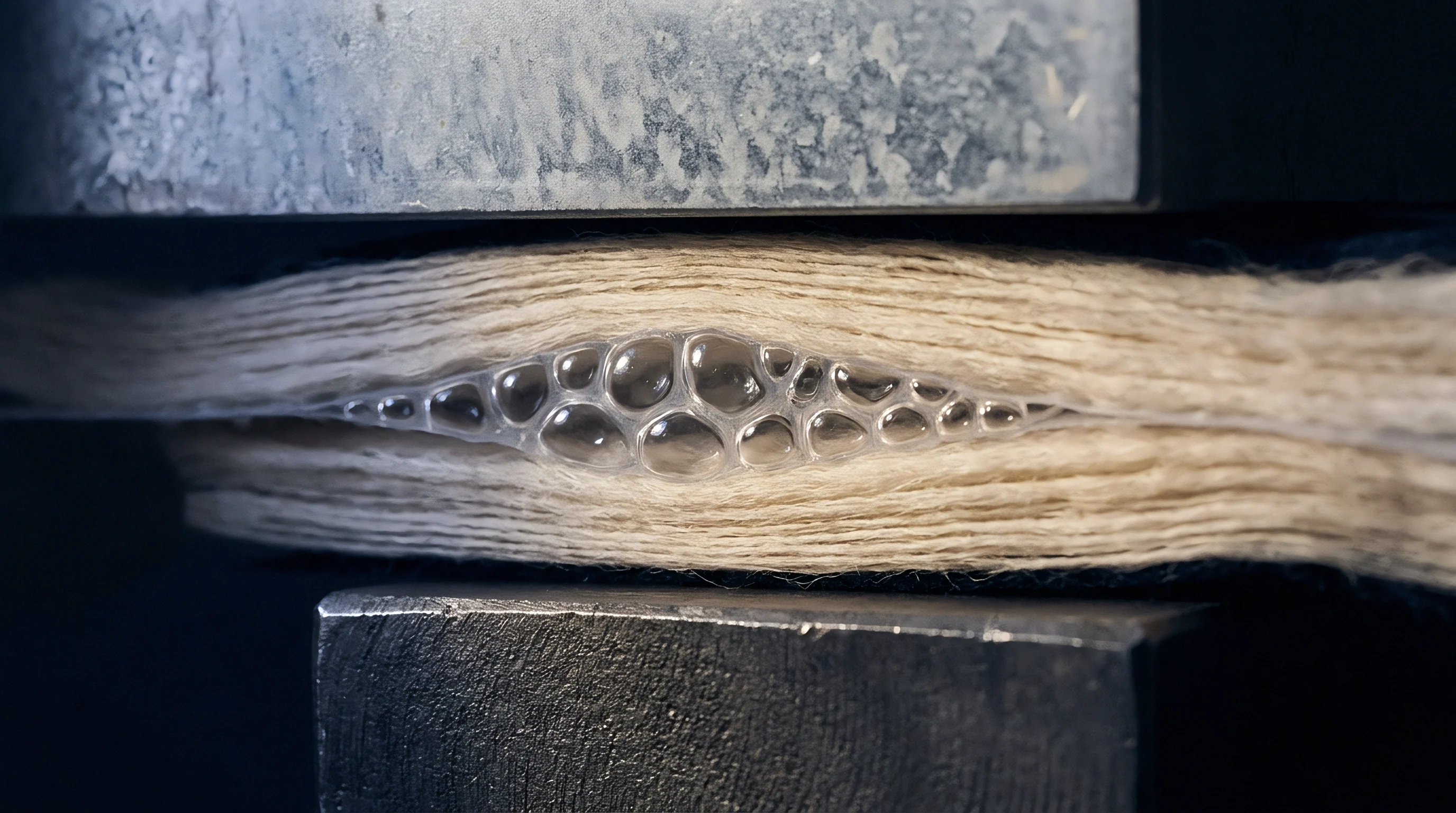
Fatigue testing must combine cyclic extension with surface rubbing to mirror air-jet weaving. Instruments like the Roaches Size Tester and Uster Tester 5 track hairiness generation during simulated weaving rather than relying on break tests alone. By running sized yarn through dummy heddles and drop wires under tension, technicians track how quickly fibers break free from the matrix.
A good size recipe keeps hairiness low throughout a 20-minute test, proving the binder withstands continuous fatigue.
Evaluating size performance requires multi-sample averaging to account for natural variations in yarn cross-section and raw fiber quality. A size formulation with high average abrasion survival can still cause frequent loom stops if its standard deviation is wide, because an air-jet warp always fails at its weakest link.
Nozzle
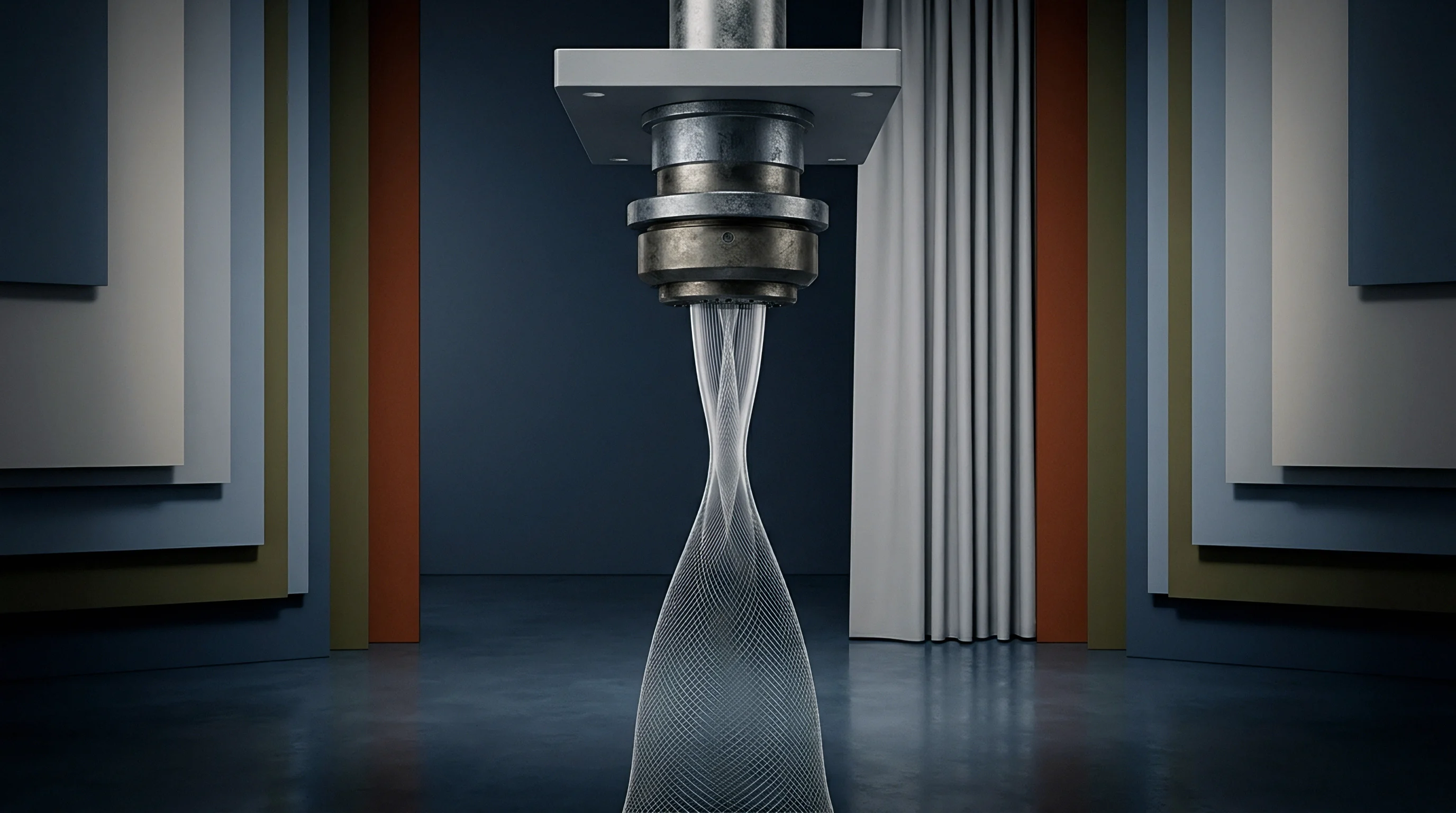
Air-jet weft insertion relies on controlled compressed air flowing through a main nozzle and a sequence of relay sub-nozzles along the profile reed. A concave channel on the reed face guides the air stream and trailing weft across the shed. Because channel space is limited, any obstruction disrupts airflow, causing turbulence that folds back, buckles, or snags the weft tip on adjacent warp ends.
Warp hairiness and size dust impair this airflow channel. Insufficient polymer add-on lets surface fibers project into the open shed, dragging against the passing weft. Meanwhile, dust from brittle size coatings gets swept into the high-velocity air stream and settles inside relay sub-nozzle orifices.
Clogged sub-nozzles drop air discharge velocity, forcing operators to run higher compressor pressures to maintain insertion speed ~ which drives up power consumption across the mill.
| Dry Add-on Level (%) | Warp Stops (per 10^5 picks) | Weft Stops (per 10^5 picks) | Shed Dusting Rate (g/m²) | Relay Air Pressure (bar) | Loom Efficiency (%) |
|---|---|---|---|---|---|
| 6.5 % (Sub-optimal) | 4.82 | 3.15 | 0.85 | 4.8 | 84.2 % |
| 9.0 % (Moderate) | 2.10 | 1.45 | 0.42 | 4.5 | 91.5 % |
| 12.0 % (Optimal) | 0.55 | 0.38 | 0.18 | 4.2 | 96.8 % |
| 14.5 % (High) | 0.48 | 0.72 | 0.65 | 4.4 | 94.6 % |
| 17.0 % (Excessive) | 0.75 | 1.88 | 1.42 | 4.7 | 90.2 % |
| Test Conditions: Ne 40/1 Combed Cotton Warp, 190 cm Reed Width, 950 rpm Loom Speed, 65% RH, 21°C. Profile Reed Channel. Data averaged over 120 loom-operating hours per regime. | |||||
Pneumatic Weft Transport and Warp Shed Interaction
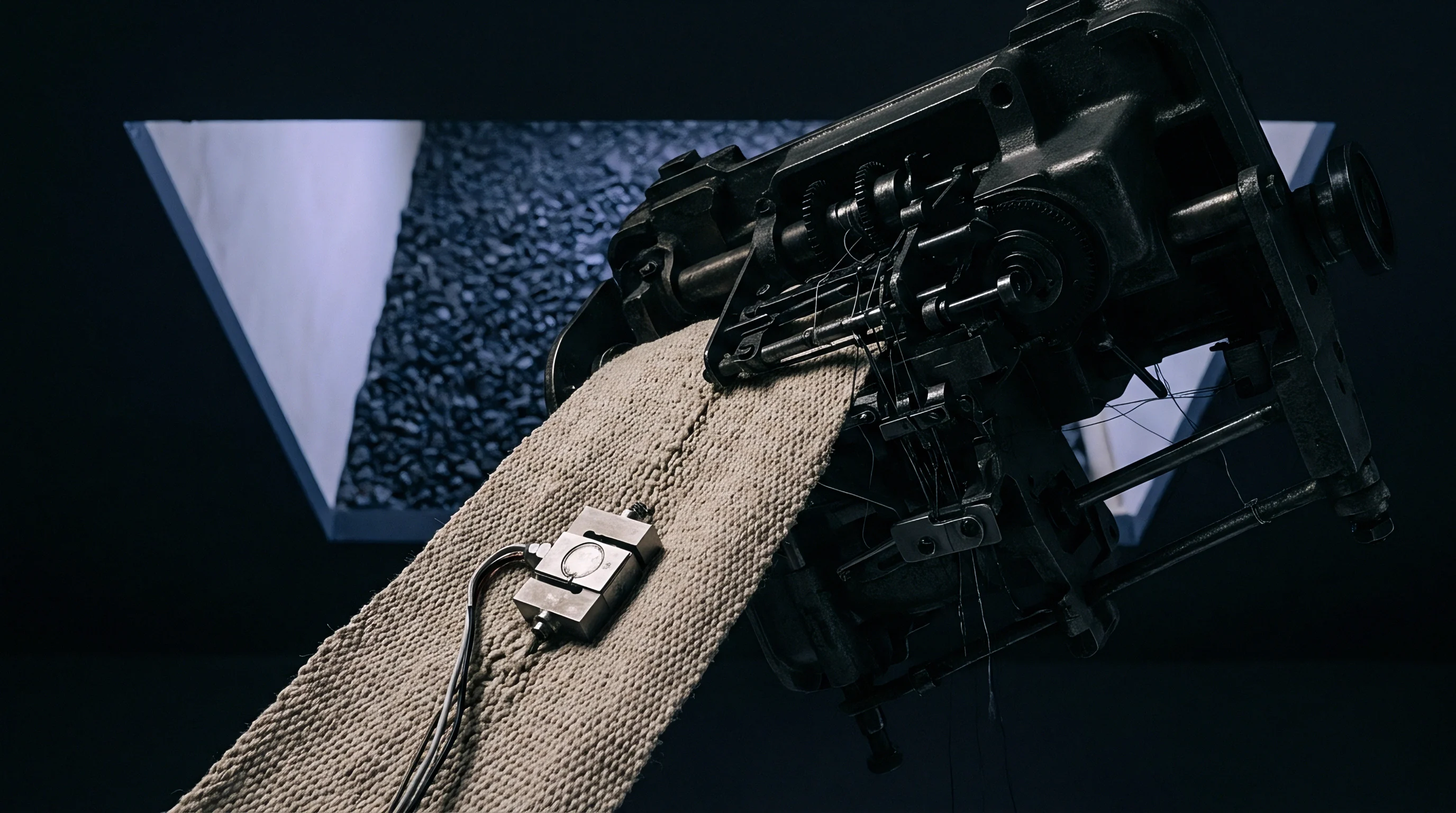
Compressed air accounts for up to 65 percent of the electricity used in an air-jet plant, making high-pressure sub-nozzle operation an expensive workaround for channel obstruction. Main nozzle pressure drives yarn into the shed entrance, while synchronized sub-nozzle clusters keep it moving across the reed width. If protruding warp fibers breach the channel, the air jet loses focus, causing filling stops near the far selvage.
Across twenty air-jet looms running Ne 40/1 cotton at 1000 rpm, warp stops fell from 2.8 to 0.9 per loom hour when size add-on increased from 9 percent to 13 percent. But raising add-on past 14.5 percent increased weft stops from 0.38 to 0.72 per hour because excess size dusted off into the profile channel. Dusting happens when stiff, over-sized yarns hit drop wires and reed dents, shearing off polymer flakes that coat the reed grooves and ruin pneumatic efficiency.
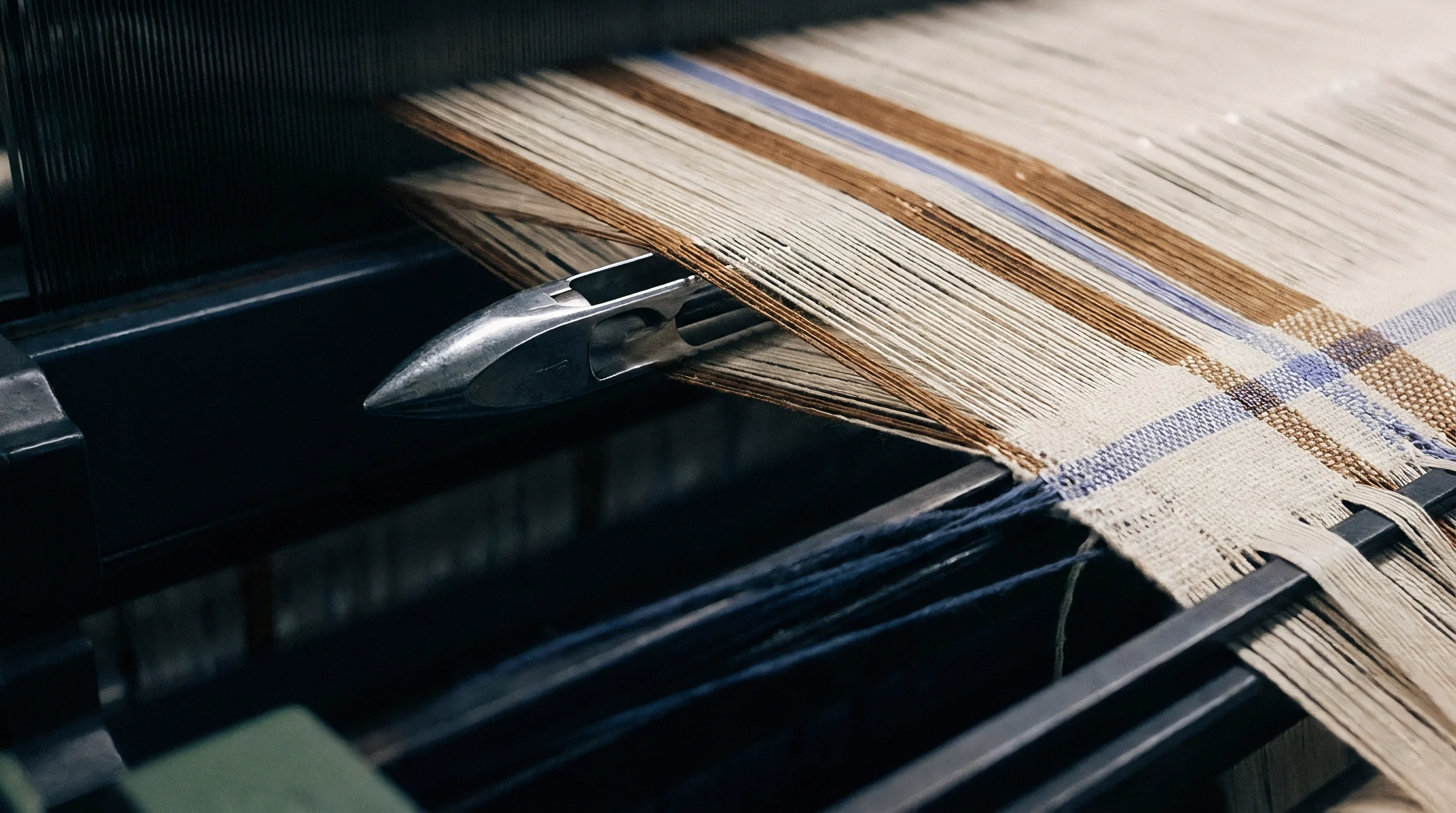
Where Does High Add-on Impair Weft Insertion?
Excessive size solids stiffen warp yarns and increase their diameter, preventing the warp sheet from opening cleanly. When harness frames separate, rigid warp ends float in the shed pathway rather than forming a flat shed line. These stray ends block the traveling weft tip, causing short picks or broken picks before the yarn reaches the far-side detector.
- Establish Target Refractometer Brix Bands for every yarn count and blend processed on the sizing line.
- Audit Squeeze Pressure Distribution weekly across size boxes with nip-impression paper to eliminate side-to-center add-on variation.
- Monitor Weave Room Shed Dusting by weighing particulate trays under drop wires and harness frames across 24-hour shifts.
- Calibrate Relay Nozzle Solenoid Timings to align air pulses with the weft tip as it passes down the profile reed.
- Implement Automatic Viscosity Control on size cookers to prevent thermal degradation of starch-PVA blends.
Excess add-on stiffens yarns and makes films brittle, generating dust that fouls sub-nozzle orifices. Finding the right sizing target requires balancing full hairiness suppression against the threshold where size starts flaking into the profile channel.
The exact mechanical threshold where profile reed friction shifts from smooth boundary sliding into abrasive turbulent drag across different size chemistries remains an active focus in industrial weaving.
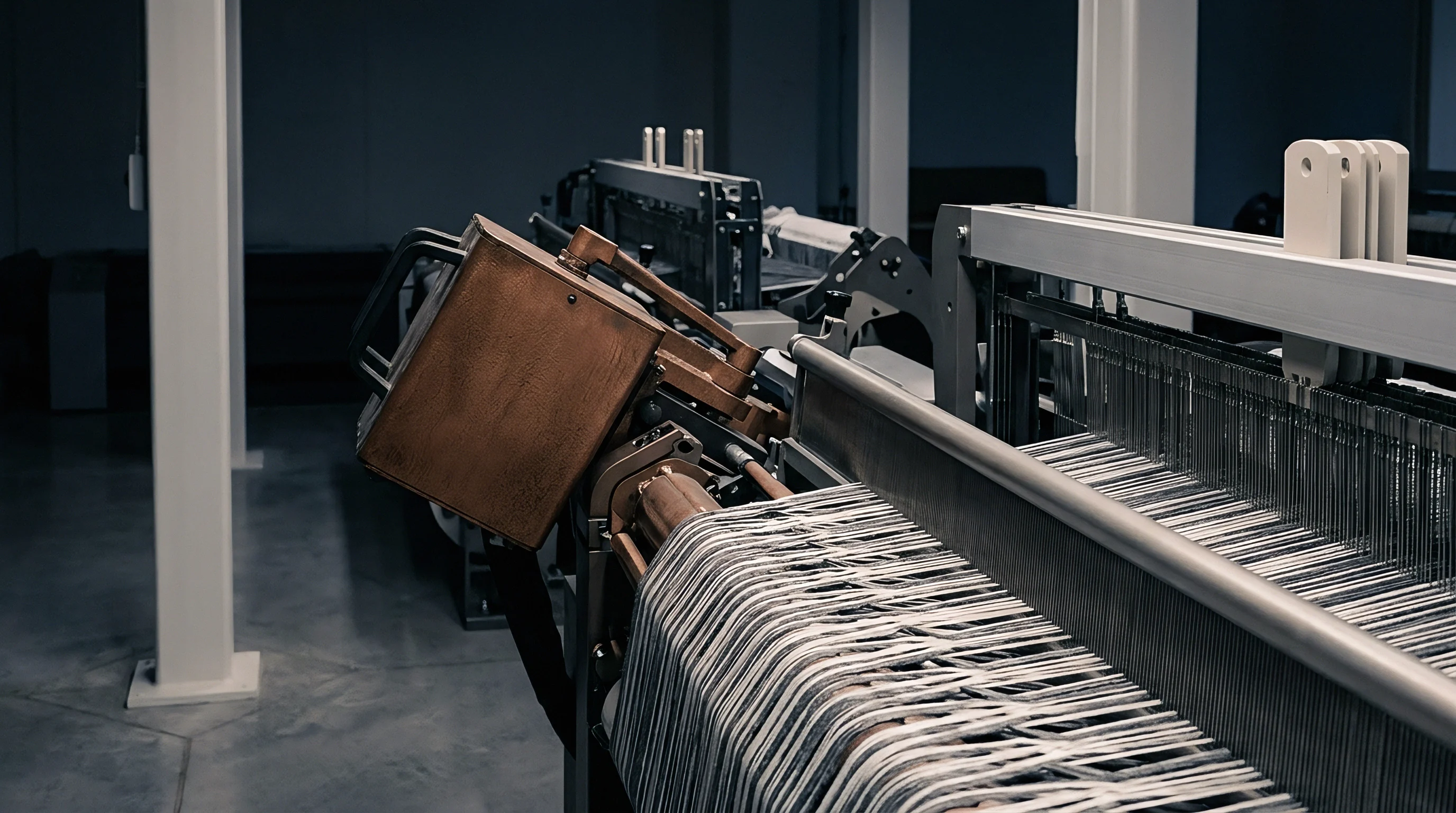

Scour
Thoroughly removing size polymers during wet processing is critical for uniform dye uptake, level shades, and consistent finishing. Greige fabric arrives at the finishing plant carrying 8 to 16 percent polymer solids by weight. If left behind before bleaching and dyeing, these sizes form hydrophobic barriers that block dye from reaching the fiber core, causing streaking, poor absorbency, and low rub fastness.
Desizing chemistry depends on the polymers used during sizing. Starch sizes need enzymatic hydrolysis with alpha-amylase, which breaks amylose and amylopectin chains into soluble dextrins that rinse away in hot water. Synthetic polymers like PVA, polyacrylates, and CMC do not break down enzymatically; they require thermal solubilization and alkaline swelling.
PVA specifically needs wash water above 85 degrees Celsius and heavy agitation to hydrate and dissolve.
Purchasing contracts for greige cloth specify a maximum allowable residual size content of 0.5 percent by weight as determined by ISO 9865 solvent extraction and enzymatic desize testing.
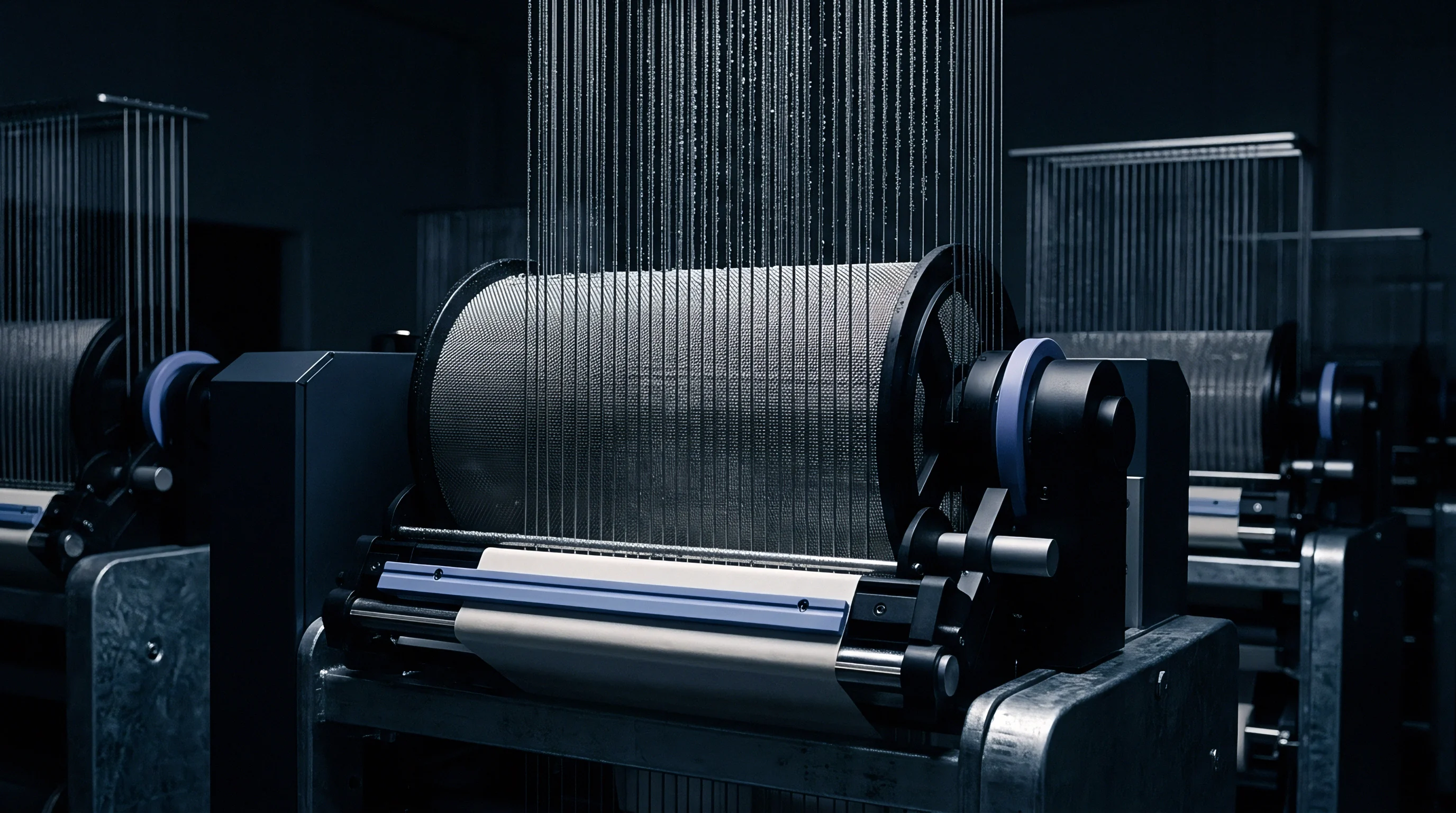
Solubilization Kinetics and Hydrolytic Desizing Routes
Thermal history during drying and storage changes PVA film solubility. If drying cylinders run above 130 degrees Celsius, local overheating crystallizes the PVA matrix and lowers its solubility, requiring boiling water and longer dwell times during desizing. Cold water will not dissolve PVA, and incomplete washing leaves residue that cross-links during singeing or thermofixation, creating permanent spots that reject dye.
Blends of starch, PVA, and acrylic resins require continuous multi-stage desizing. Fabric is padded with an aqueous bath of alpha-amylase enzymes, wetting agents, and mild alkali at 60 to 70 degrees Celsius, then steamed for 15 to 30 minutes to hydrolyze the starch. Next, the cloth moves through high-efficiency wash boxes at 95 degrees Celsius to dissolve the PVA and acrylics.
Skipping these hot wash stages leaves film residue that ruins dye levelness in pad-thermofix or jet dyeing.
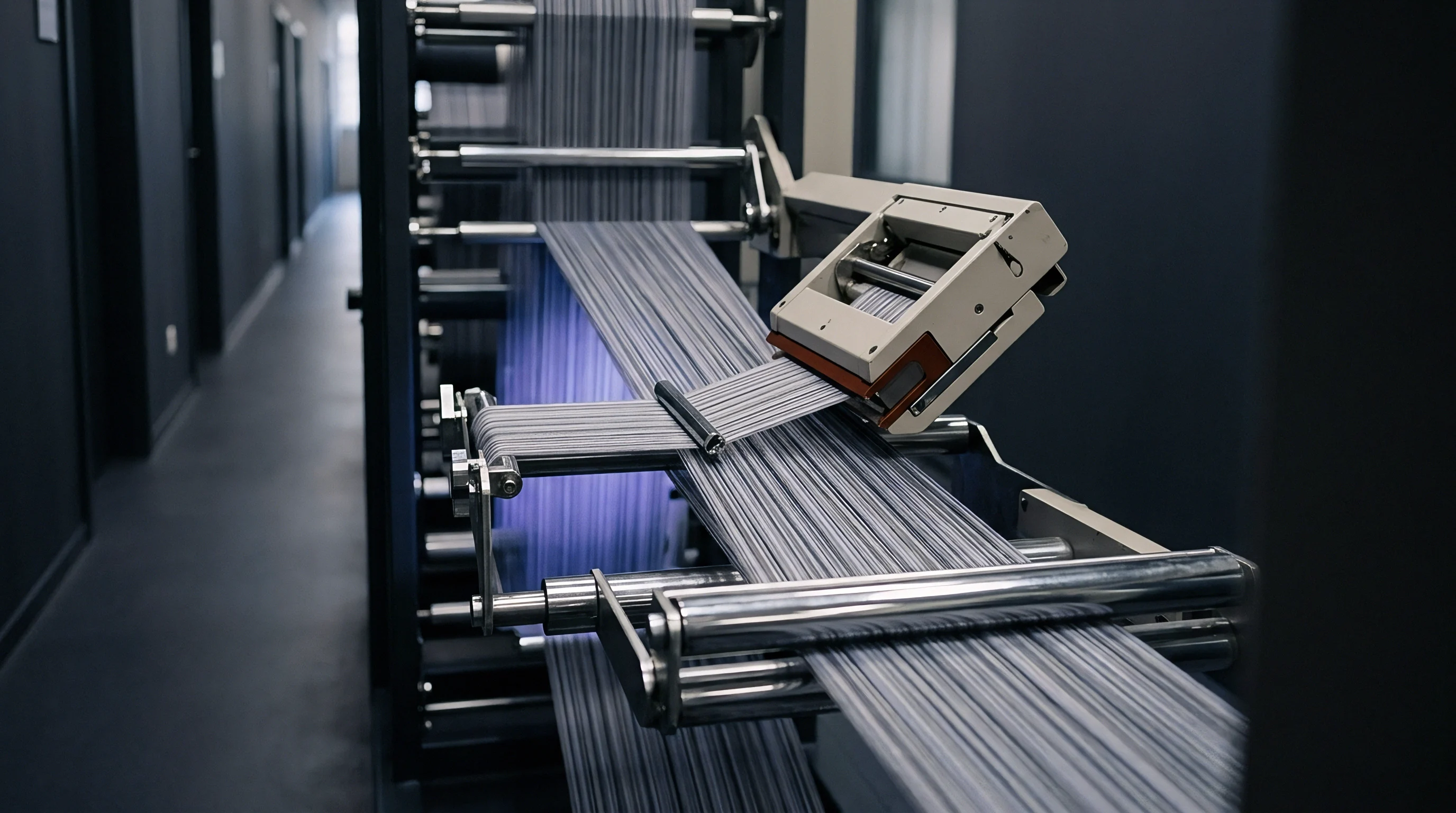
Effluent Environmental Burden and Size Polymer Recovery
Desizing wash water is the largest single source of Chemical Oxygen Demand (COD) and Biological Oxygen Demand (BOD) in finishing plant wastewater. Starch desizing creates high BOD loads because dextrins biodegrade easily. Synthetics like PVA yield lower BOD but high COD because their carbon backbones resist microbial breakdown, forcing plants to run aerobic and anaerobic digestion systems to meet local discharge rules.
Water-soluble synthetic sizes can be recovered and recycled using ultrafiltration. In integrated mills, PVA desize wash water is collected, filtered, and pushed through polyethersulfone ultrafiltration membranes that hold back high-molecular-weight PVA while letting water and salts pass. The concentrated PVA stream, recovered at 8 to 12 percent solids, goes back to the sizing department for reuse ~ cutting wastewater COD loads by up to 75 percent while lowering chemical costs.
Fabric contracts strictly govern residual size limits, with delivery terms calling for penalties or lot rejections whenever residual levels exceed specified tolerances.
Audit
Verifying dry size add-on and chemical content on incoming greige fabric protects buyers from costly quality failures. Relying strictly on mill certificates carries commercial risk because sizing parameters drift over long production runs ~ squeeze pressure shifts, liquor concentrations fluctuate, and drying speeds vary, causing add-on to swing between rolls from the same beam set.
Laboratory verification uses desize weight-loss testing per ISO 9865 or ASTM D2257. Swatches cut across the full roll width ~ left, center, and right ~ are conditioned, weighed, thoroughly desized, dried, and re-weighed. Dry add-on percentage is calculated from mass loss against the desized dry weight, with compliant fabric holding within plus or minus 0.8 percentage points of target across the entire width.
| Sizing Formula Blend | Dry Add-on (%) | Size Cost ($/m) | Loom Efficiency (%) | Weave Rate (m/hr) | Landed Cost ($/m) |
|---|---|---|---|---|---|
| 100% Native Starch | 14.0 % | $0.042 | 82.5 % | 22.5 | $1.485 |
| 80/20 Modified Starch / PVA | 11.5 % | $0.068 | 92.0 % | 25.1 | $1.392 |
| 60/40 Hydroxyethyl Starch / PVA | 11.0 % | $0.095 | 96.5 % | 26.3 | $1.345 |
| 50/50 PVA / Water-Soluble Acrylic | 10.5 % | $0.145 | 97.2 % | 26.5 | $1.388 |
| 100% Synthetic PVA Blend | 10.0 % | $0.185 | 97.5 % | 26.6 | $1.425 |

Refractometric Process Control and Dry Add-on Determination
Monitoring size liquor concentration during sizing relies on optical refractometry, with technicians logging Brix hydrometer or refractometer readings every thirty minutes. Refractive index correlates linearly with dissolved dry solids for a given polymer blend. If readings drop below target, steam condensate may be leaking into the size box through damaged heating coils or water evaporation balance has failed.
Because desizing directly impacts dye uptake, refractometer readings must be calibrated against gravimetric oven drying for each polymer mix. Starch, PVA, and acrylic polymers have different refractive index response curves: a 10 percent solution of pure PVA gives a different Brix reading than a 10 percent solution of carboxymethylated starch. Operators must use recipe-specific conversion charts rather than generic sugar Brix tables to track actual solids and maintain pick-up control.
Landed Cost Modeling and Chemical Add-on Economics
Optimizing sizing economics means balancing chemical costs against loom efficiency and finishing expenses. Native starch is cheap per dry kilogram compared to synthetic PVA or acrylics, but it requires higher add-on, sheds heavily, and lowers weaving efficiency ~ inflating fixed overhead per meter of cloth and quickly erasing initial chemical savings.
Writing dry add-on tolerances directly into greige fabric contracts protects total landed cost. The lowest cost per finished meter comes from high-performance modified starch and PVA blends running at 10.5 to 11.5 percent add-on. This middle range keeps air-jet loom efficiency above 96 percent without the high raw chemical cost of pure synthetic formulations or the heavy effluent surcharges from desizing.
Establishing clear technical standards for size auditing, add-on testing, and desize limits helps buyers maintain high weaving productivity while protecting downstream dyeing and finishing quality across supply chains.