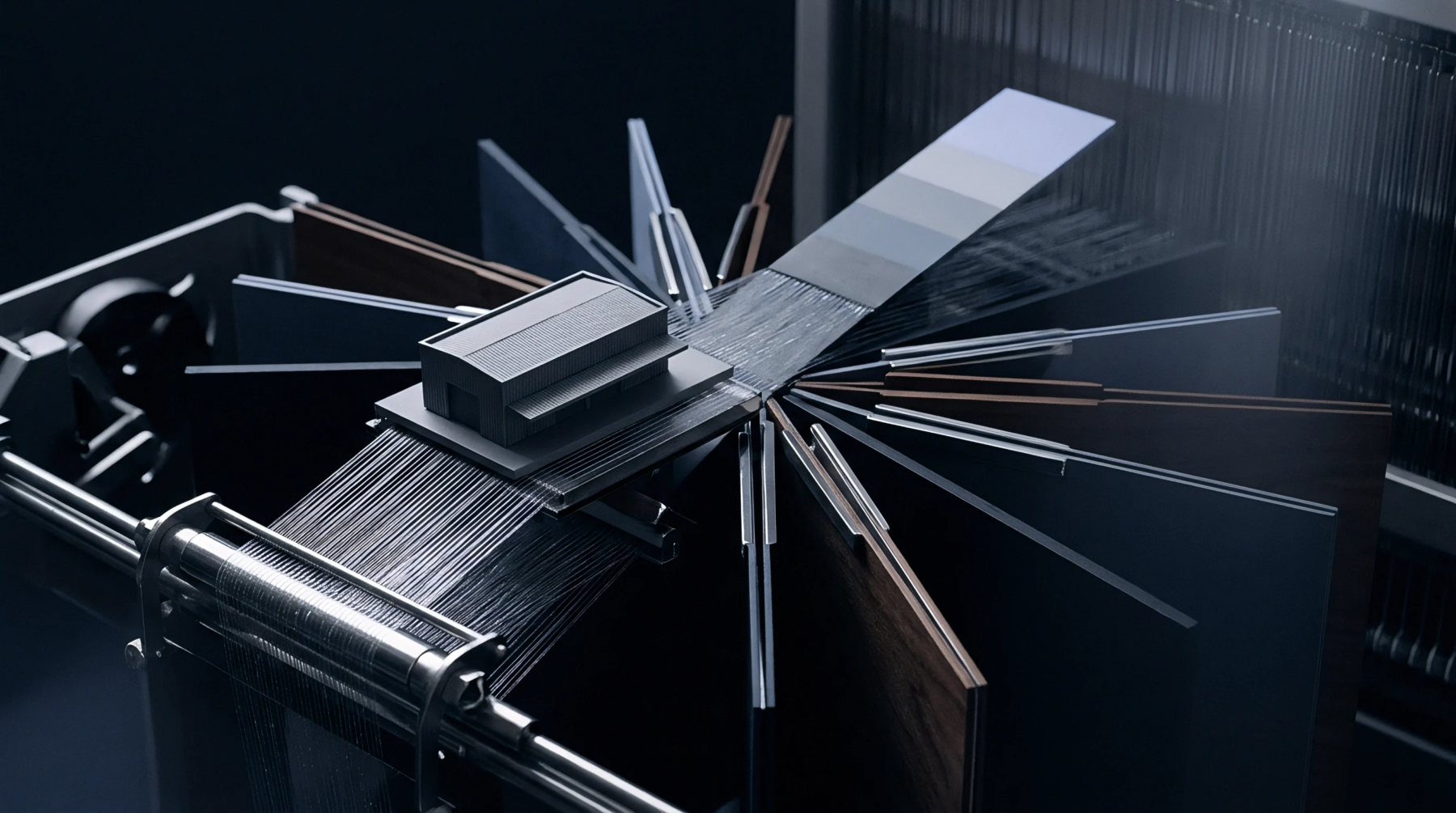
Propulsion Mechanism
High speed textile machinery relies upon a focused stream of compressed air to propel a weft yarn across the shed at velocities exceeding two thousand meters per minute. An air-jet loom utilizes this gaseous force to replace mechanical grippers or shuttles, which allows for increased productivity during the construction of light to medium weight fabrics. The nozzle configuration directs a precise burst of energy to carry the pick through the warp channels.
Multiple auxiliary nozzles positioned along the reed maintain the velocity of the yarn to ensure straight delivery to the opposite side. Air pressure levels require adjustment based on the yarn diameter and the friction coefficients of the specific fibre content. Efficient operation depends on the dryness and purity of the supplied air stream to prevent moisture defects within the fabric roll.
Flow Control
Precise timing governs the delivery of compressed gas pulses through the main and relay nozzles during every cycle of the machine. The internal computer synchronizes the opening of electromagnetic valves with the movement of the shed to maintain tension on the inserted yarn. Excessive air consumption increases the operational cost of the mill because the power requirement scales with the volume of pressurized gas delivered.
Proper maintenance of the filtering system prevents particulate matter from clogging the narrow orifices of the nozzles and causing pick failures. Each setting varies depending on the width of the fabric being produced by the unit. Consistency in the pneumatic pressure ensures uniform density across the total output of the production run.
Material Constraint
Natural fibres with high hairiness or irregular surface geometry create resistance that limits the potential speed of the pneumatic insertion process. Synthetic yarns exhibit smoother surfaces, which allows for the high velocities found in mass production of apparel textiles. Operators inspect the final goods for warp streaks that occur if the air stream causes excessive oscillation of the yarn during insertion.
Cotton yarns require specific sizing to reduce surface friction so the air flow carries the weight without breakage. The physical architecture of the reed limits the width of the material being processed because the kinetic energy of the air dissipates over longer distances.
Production Outcome
Mill managers prioritize the selection of these machines when the primary goal involves rapid turnover of commodity style goods. Standardized settings allow for the automated manufacture of polyester blends and cotton poplins with minimal intervention from human staff. High throughput speeds compensate for the increased energy requirements associated with running heavy compressors around the clock.
Rapid pneumatic insertion results in a finished product with consistent pick spacing as long as the yarn quality remains stable throughout the batch. Factory output confirms that these systems outperform traditional insertion methods when the specific fabric construction permits the use of air as a propellant.