Angular Distortion
Structural fabric distortion occurs when crosswise filling yarns extend across the woven web at an acute angle rather than ninety degrees relative to warp selvages. Linear angular slant shifts filling threads systematically across the full cloth width, creating a slanted weave pattern. Determining weft skew requires laying fabric flat without tension and measuring the linear distance along one selvage between a filling yarn’s starting point and a perpendicular line drawn from its opposite end.
Physical percentage calculation divides this linear offset by overall fabric width.
Production Cause
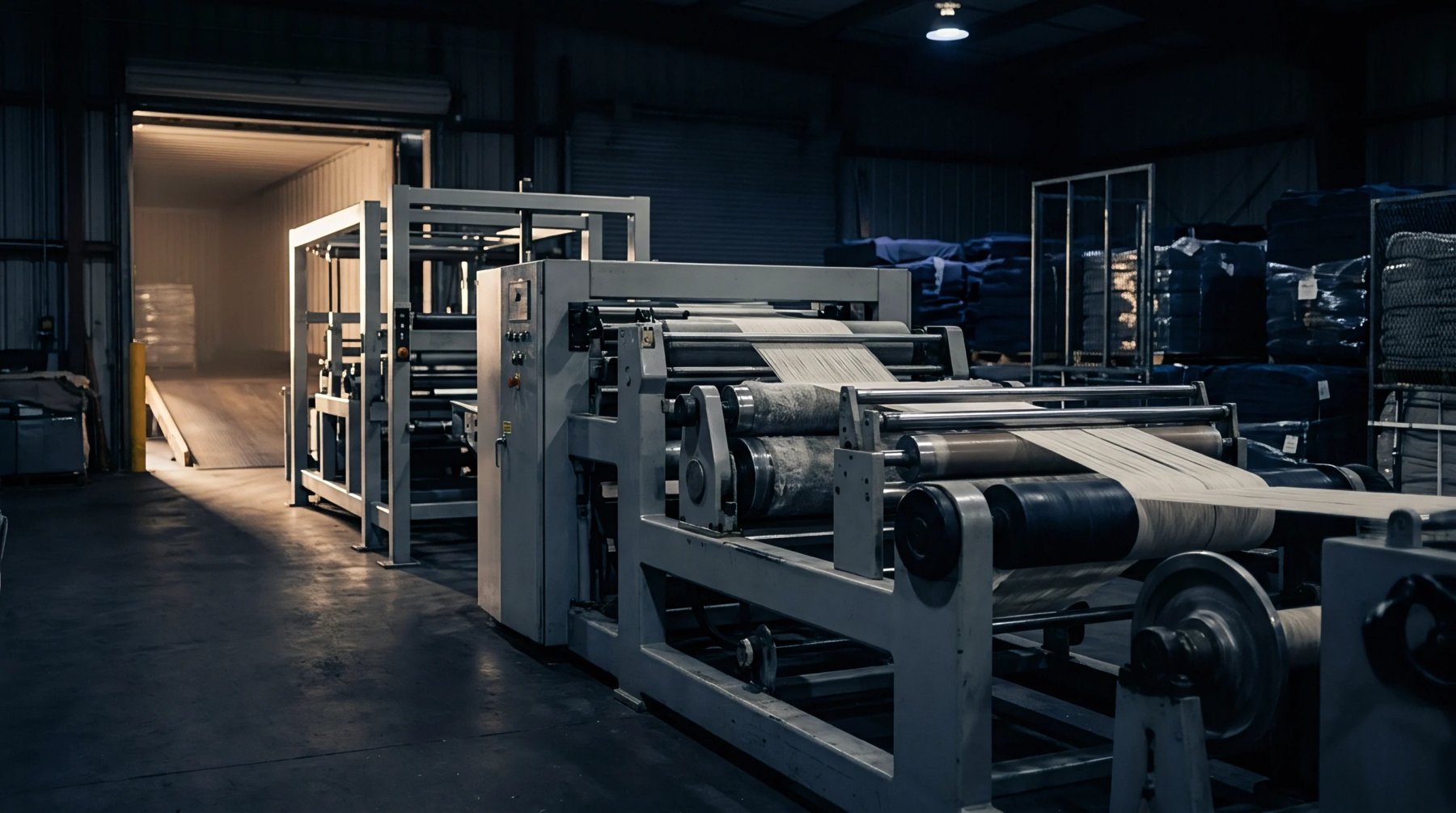
Asymmetric tension on stenter chains or misaligned guide rolls during continuous web processing pulls one selvage ahead of the other. Differential tension drives one edge faster through drying enclosures, dragging filling threads into a persistent diagonal angle. Correcting weft skew requires differential speed adjustment on stenter chain drives or mechanical skew straightener rollers.
Differential roller controls realign trailing selvages before heat setting fixes fabric structure.
Apparel Effect
Cutting rooms experience severe pattern matching failure when processing skewed fabric rolls into garment panels. Diagonal filling threads force sewn pant legs to twist around wearer legs and cause garment seams to rotate after laundering. Uncorrected weft skew leads to rejected garment lots and misaligned plaid patterns during automated marker layout.
Garment manufacturers inspect incoming fabric rolls on illuminated inspection tables before spreading.
Measurement Limit
Quality standards specify maximum permissible angular displacement as a percentage of total fabric width. Standard acceptance thresholds limit skew to under three percent for solid colors and under one point five percent for critical plaids. Standard evaluation of weft skew measures linear angular shift across full width, excluding parabolic arc bow distortions.