Greige Inspection Metrics for Continuous Open Width Preparation
Greige inspection for continuous open-width preparation requires quantifying size add-on, loom defects, and oil content to prevent wet line tear.

Web
Continuous open-width preparation subjects unfinished woven cloth to mechanical forces that differ fundamentally from those encountered in garment cutting or batch jig processing. High-speed preparation ranges run at speeds between eighty and one hundred fifty meters per minute, pulling the continuous sheet through singeing burn chambers, chemical saturators, steamers, and washing units under linear tensions ranging from one hundred fifty to four hundred Newtons per meter of fabric width. When an uninspected roll containing discrete weaving structural anomalies enters this processing sequence, localized tension concentrations convert minor structural variations into severe processing disruptions.
Slubs snag rollers. Knots snap blades. Warp floats create asymmetrical drag, causing the running fabric sheet to drift off center and fold over inside wet saturator nips.
A single uncontrolled roll wrap in a continuous steamer forces an emergency line stop, dumping hundreds of liters of hot alkaline liquor and generating thermal yellowing across several hundred meters of idle cloth.
The primary function of incoming greige verification for open-width preparation lies in quantifying physical defect density and mapping structural anomalies against line operational limits. Unfinished fabric fresh from the loom carries structural artifacts including broken ends, double picks, reed marks, coarse slubs, oil spots, and selvage fringe defects. While a garment manufacturer evaluates these features based on panel cutting yields, a contract finishing plant evaluates them as physical stress points.
Dirt limits speed. Tension tears joints. A double pick creates a transverse ridge that increases hydraulic squeeze pressure in continuous padder nips, driving uneven chemical expression across the roll width.
The resulting variation in desize or bleach liquor pickup produces band shade differences during subsequent dyeing.
Greige Physical Defects and Line Speed Limits
Fabric structural integrity under dynamic wet tension dictates the maximum allowable line speed of continuous preparation ranges. When warp yarns suffer from insufficient sizing or excessive abrasion during weaving, individual filaments rupture and form small balls of fiber known as fuzz buttons. Under dry unwinding, these fuzz buttons generate static charge and fly lint; inside hot alkaline scouring saturators, they entangle with adjacent warp threads and create continuous warp bands that split under tension.
The table below classifies primary loom anomalies and their mechanical impact on open-width wet processing ranges.
| Defect Type | Physical Characteristics | Continuous Processing Mechanism | Operational Risk Level |
|---|---|---|---|
| Floating Warp End | Unwoven warp yarn spanning four or more weft picks | Catches on expander rolls, causing longitudinal tears | High speed line stop |
| Coarse Slub | Localized yarn diameter increase exceeding 200 percent | Increases nip gap, causing localized under-expression | Shade banding in dyeing |
| Tight Selvage | Selvage ends woven under higher tension than ground cloth | Causes edge tearing on stenter clips and expander bars | Selvage rupture and pin loss |
| Oil Stained Yarn | Loom lubricant contamination on warp or weft yarns | Repels aqueous chemical liquor during short dwell saturation | Hydrophobic resist spots |
| Broken Pick | Missing weft yarn across partial or full fabric width | Reduces transverse strength, inducing edge curl | Creasing inside guide rolls |
Machine productivity relies on absolute continuity across multi-thousand-meter batch rolls formed by joining individual loom rolls. Butt-sewing loom rolls together using flat chain-stitch machinery creates a transverse seam that must endure passage through multiple high-pressure nip rollers. If the incoming greige cloth exhibits wide variations in pick density or edge thickness near the roll ends, the joining seam skews during stitching.
A skewed seam entering a high-pressure washing nip generates immediate diagonal creasing, which sets permanently into the fiber structure during continuous heat treatment or mercerization.
A single floating warp end spanning six picks elevates line tear risk by forty percent at speeds above one hundred meters per minute.
Loom Fault Mapping for Continuous Tension
Automated optical inspection systems mounted on greige batching frames record the exact coordinates of every structural defect along the roll length. Modern high-speed inspection frames deploy line-scan camera arrays capable of detecting defect features down to zero point two millimeters at inspection speeds up to three hundred meters per minute. The system compiles a digital roll map indicating defect locations, clustering severity, and cumulative fault counts.
Finishing engineers consult this digital roll map to set line tension profiles and determine whether individual rolls require pre-shearing or seam realigning prior to continuous chemical application.
Weavers frequently claim that minor drop stitches or missing end knots lie within commercial tolerances for greige cloth, ignoring that continuous open-width singeing frames turn single floating yarns into open transverse rips across two hundred meters of running fabric.
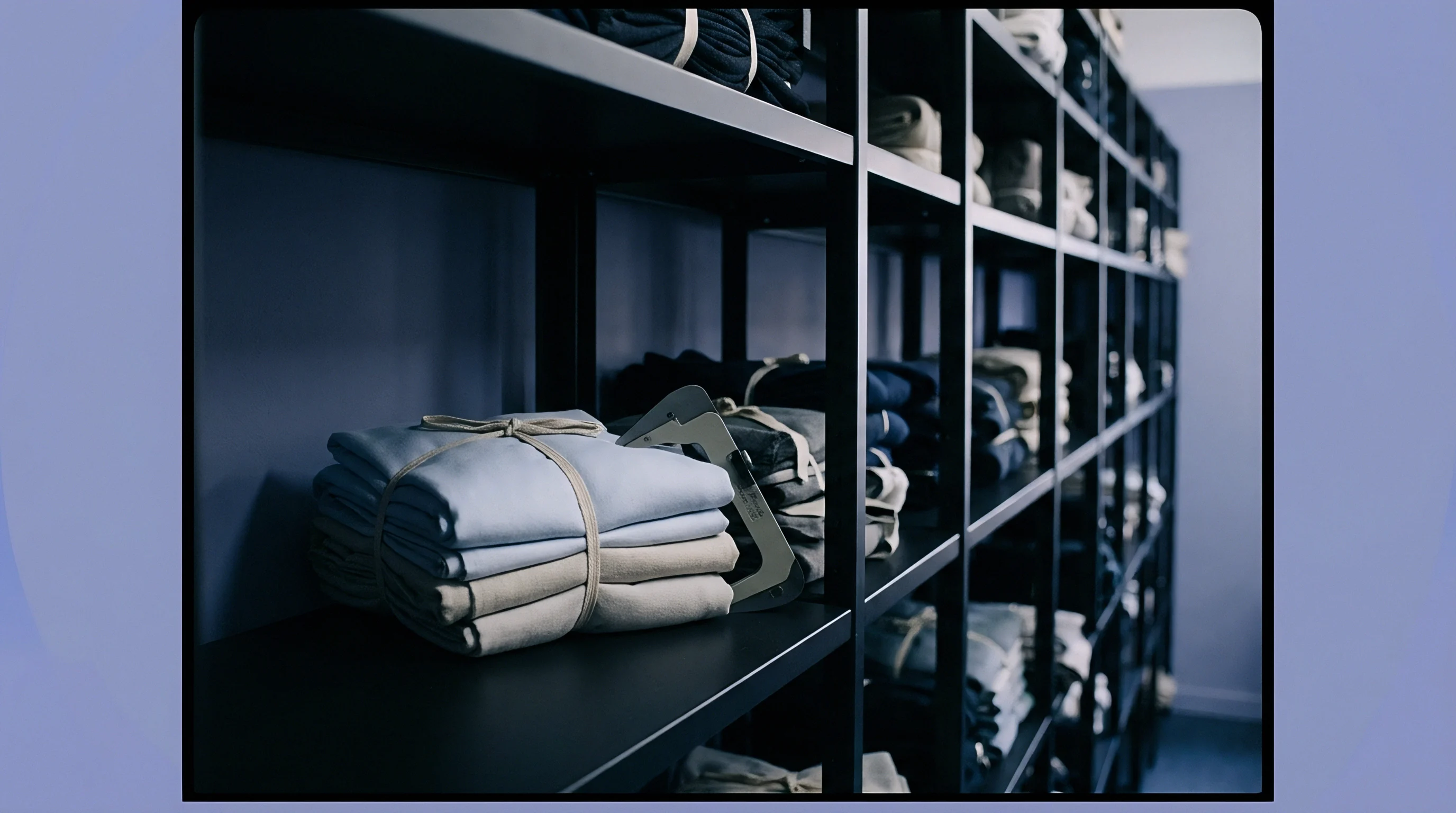
Tally
Quantifying physical quality in greige rolls requires standardized penalty point frameworks tailored to continuous open-width operations. The traditional ASTM D5430 four-point inspection method assigns numeric values to visual faults based on defect length. Under this system, defects up to three inches receive one point, defects between three and six inches receive two points, defects between six and nine inches receive three points, and defects exceeding nine inches receive four points.
A maximum of four penalty points can be assessed on any single linear yard of fabric. While this calculation serves general apparel fabric grading, continuous open-width processing demands additional criteria that evaluate defect frequency and defect orientation relative to machine tension vectors.
Calculating the total defect point score per one hundred square meters establishes the primary commercial baseline for incoming lot acceptance. The mathematical formula calculates total penalty points multiplied by one hundred, divided by the product of audited roll length in meters and cuttable fabric width in meters. A greige lot exhibiting a cumulative score below twenty points per one hundred square meters qualifies as top-tier material suitable for high-speed continuous bleaching and mercerizing lines.
Scores between twenty and thirty-five points require speed reductions on the preparation range to prevent mechanical breakdown. Lots scoring above thirty-five points per one hundred square meters present unacceptable risks of line rupture and require batch processing on jigs or jet units.
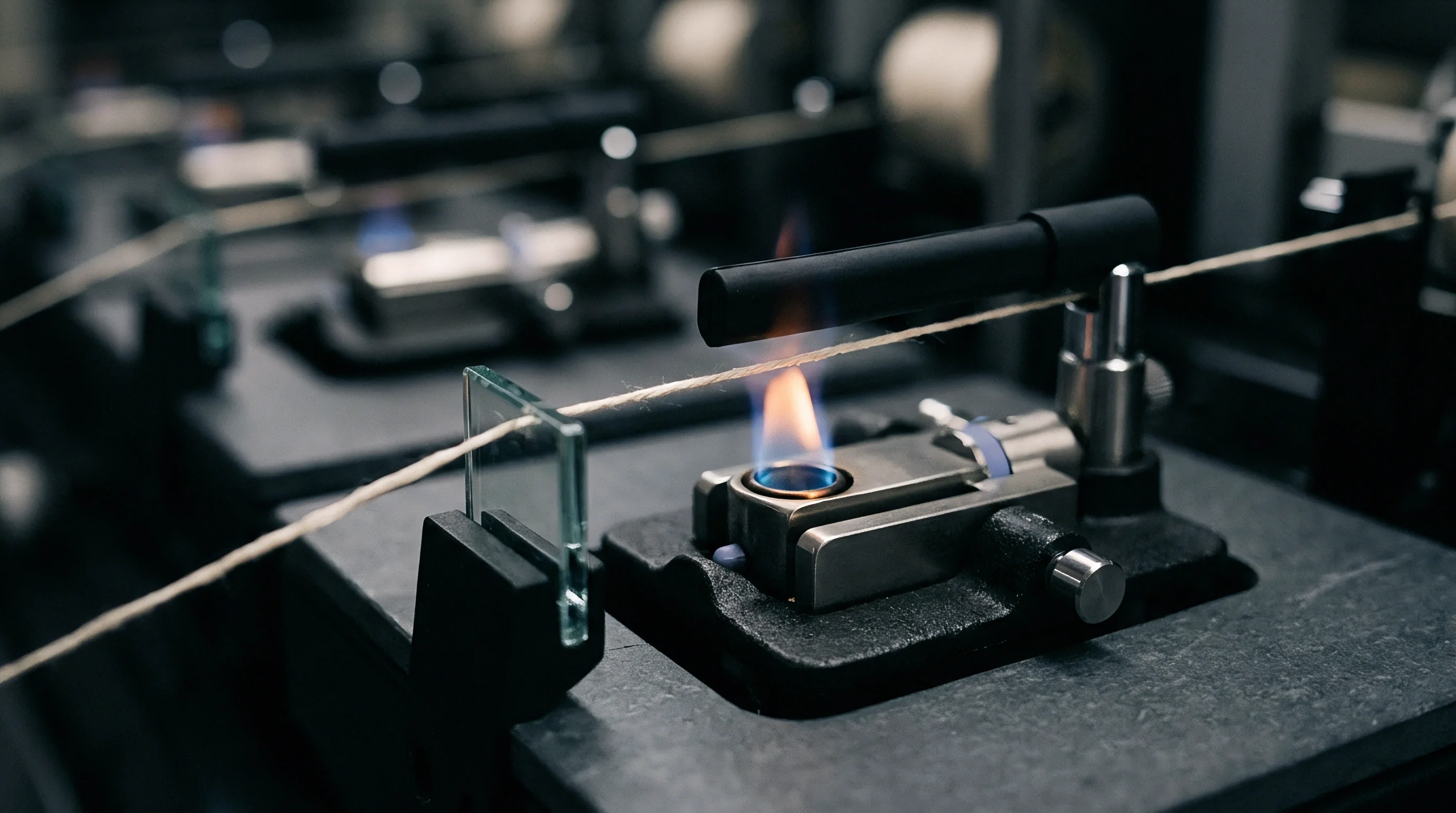
Adapting Four Point Scoring to Wet Processing
Continuous wet ranges respond aggressively to longitudinal defects that run parallel to the warp direction. A continuous warp streak or slack warp band, which receives a four-point penalty per yard under standard ASTM D5430 rules, causes persistent uneven tension across every guide roll in a ten-box washing range. This uneven tension leads to tracking errors, where the fabric sheet shifts laterally toward the drive side, crushing fabric edges against frame supports.
Inspectors modifying four-point criteria for continuous open-width preparation flag repeating warp-wise defects with a special operational indicator regardless of individual point totals.
Physical flaws present in greige fabric disrupt wet preparation efficiency through distinct mechanical failure modes:
- Transverse Slub Clusters trigger mechanical nip separation on high-pressure liquor extraction padders, causing localized moisture variations across the running sheet.
- Continuous Reed Marks create open channels in the weave structure that alter chemical liquor flow dynamics during continuous vacuum extraction.
- Knotted Warp Repair Ends catch on optical edge-guiding sensors, causing false tracking corrections and rapid side-to-side oscillation of the fabric web.
- Selvage Pin Holes left by weaving temple clips tear out under transverse expander bar tension, sending loose threads into chemical recirculating pumps.
- Heavy Loom Grease Drips carbonize inside gas singeing chambers, creating hard hydrophobic crusts that resist desize enzyme penetration.

Linear Defect Concentration Thresholds
Average point scores across a full ten-thousand-meter order frequently hide dangerous local defect concentrations. A fabric roll may display an acceptable overall score of fifteen points per one hundred square meters, yet contain a twenty-meter section where loom mechanical failure created twenty-eight penalty points in that isolated area. Continuous preparation lines operating at high speed cannot adjust chemical feed rates or tension dampers quickly enough to handle localized fault clusters.
When this high-density fault zone hits the main padder nip, localized stress exceeds yarn breaking strength, resulting in catastrophic web rupture.
ASTM D5430 specifies penalty points based on defect length without accounting for tensile forces in continuous saturators.
Linear defect concentration metrics establish strict threshold caps for defect density within any running ten-meter window. The maximum allowable point total within any single ten-meter segment is capped at eight points for lightweight fabrics below one hundred fifty grams per square meter, and twelve points for heavy constructions above two hundred fifty grams per square meter. Exceeding these localized thresholds triggers an mandatory pre-cutting protocol, where the defective zone is cut out on the batching frame and the sound fabric ends are rejoined with a verified flat seam before the batch reaches the dyehouse floor.
Roll scoring that spreads minor flaws evenly across the lot allows line speed to remain stable, while concentrated cluster defects on a single beam require dropping the continuous processing rate regardless of the average point count.
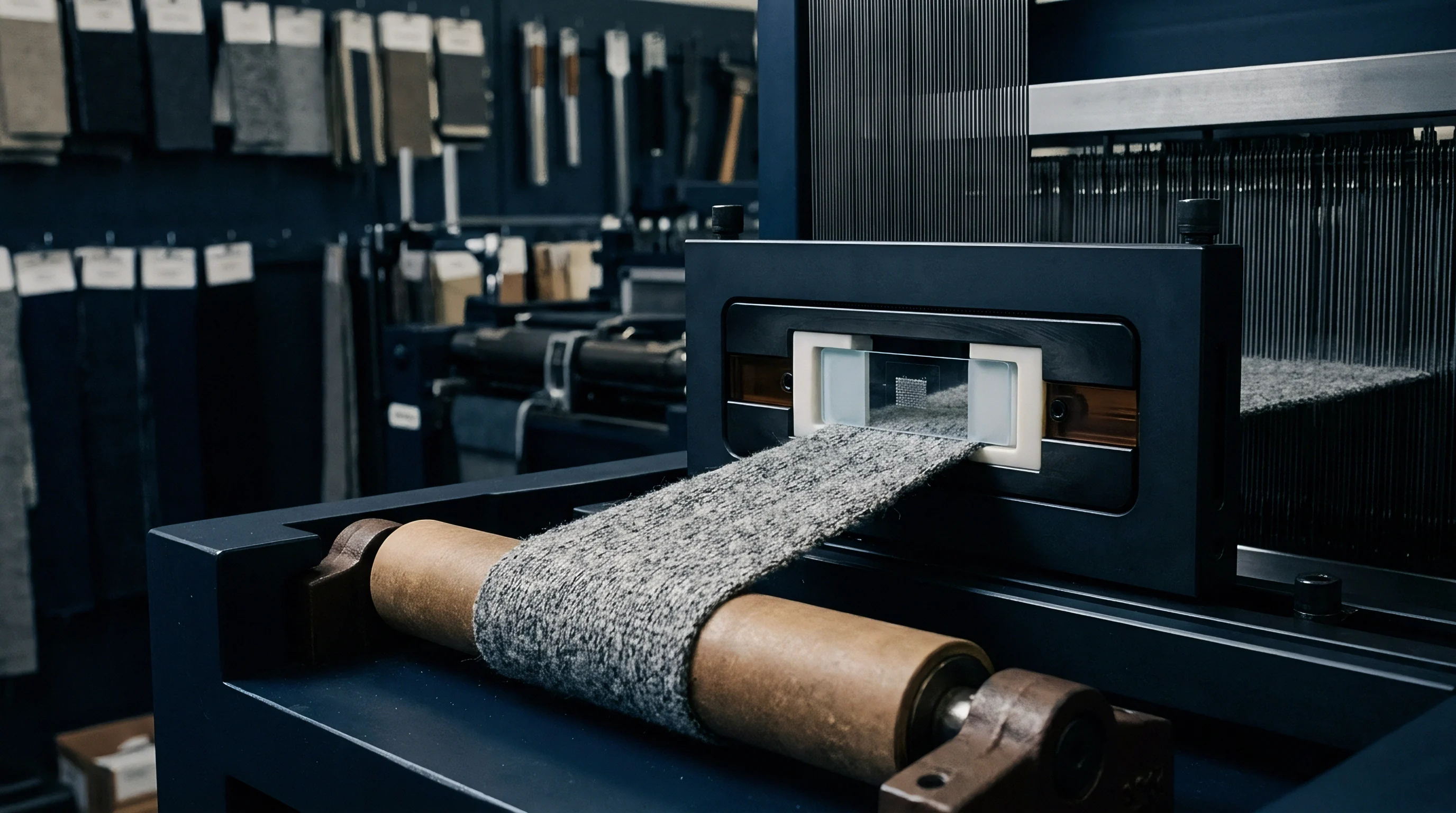
Mass
Determining fabric mass per unit area forms the cornerstone of chemical dosing calculations in continuous open-width wet preparation. Standard test methods ISO 3801 and ASTM D3776 define protocols for measuring mass per unit area using cut specimens or full-roll weighing procedures. In greige cotton and blend fabrics, measured raw mass consists of three distinct components: clean dry fiber mass, natural moisture content, and non-fibrous size add-on material applied during warp preparation.
Sizing binds fibers. Moisture alters weight. Failing to separate applied chemical size weight from actual fiber mass causes substantial errors when formulating continuous saturator liquor concentrations.
Warp yarn sizing typically adds between six and twelve percent dry non-fibrous material to the woven greige fabric mass. When calculating chemical liquor add-on percentage, wet pick-up is defined as the wet weight of liquor absorbed by the fabric divided by the dry mass of clean fabric, expressed as a percentage. If a continuous desize padder targets an eighty percent wet pick-up on a nominal two hundred gram per square meter fabric, but ten percent of that incoming mass consists of starch and wax, the actual fiber weight being treated is only one hundred eighty grams per square meter.
Dosing desize enzymes or oxidizing agents based on total incoming greige mass results in significant over-dosing, driving unnecessary chemical expenditures and risking cellulytic fiber degradation.

Mass per Unit Area and Size Add on Arithmetic
Accurate size content determination requires quantitative laboratory extraction before approving greige fabric lots for continuous processing. Test method ISO 1833-1 and AATCC Test Method 97 detail standardized extraction protocols where greige samples undergo sequential boiling water extraction, enzymatic digestion, and solvent extraction in a Soxhlet apparatus. Subtracting the dry weight of extracted non-fibrous material from the initial dry specimen weight yields the exact size add-on percentage.
Warp crimp and weft crimp measurements, conducted according to ISO 7211-3, complement mass analysis by revealing structural yarn take-up differences that influence chemical liquor absorption rates during short-dwell impregnation.
Unwashed size materials artificially inflate incoming fabric weight and disguise true thread count metrics.

Worked Example on Liquor Pickup Sensitivity
Consider a continuous open-width desizing order processing a batch of fifty thousand linear meters of 100% cotton woven 3/1 twill fabric. The fabric specification calls for a cuttable width of 1.60 meters and a target loom fabric mass of 240 grams per square meter under standard conditioning environment at 65 percent relative humidity and 20 degrees Celsius. Moisture regain for cotton under these standard conditions is established at 8.5 percent.
Laboratory testing of incoming greige swatches from ten representative rolls yields the following average values:
- Measured Greige Mass equals 242.5 grams per square meter at 7.0 percent actual moisture content.
- Extracted Size Add On equals 9.2 percent dry size on the weight of dry raw fiber.
- Extractable Wax and Oils equal 0.8 percent on the weight of dry raw fiber.
- Target Wet Pickup on the continuous desize padder is set to 85 percent.
- Continuous Line Speed operates at 110 meters per minute.
The total surface area of fabric passing through the desize saturator per minute is calculated as 110 meters per minute multiplied by 1.60 meters width, yielding 176 square meters per minute. Total gross fabric mass entering the saturator per minute equals 176 square meters per minute multiplied by 0.2425 kilograms per square meter, resulting in 42.68 kilograms of gross greige cloth per minute.
To establish true clean dry fiber mass throughput, the non-fibrous content and moisture fractions must be subtracted. The gross mass of 42.68 kilograms per minute contains 7.0 percent moisture, leaving total dry solids mass at 42.68 multiplied by (1 – 0.070), which equals 39.69 kilograms per minute. This dry solids mass comprises clean dry fiber plus 10.0 percent combined dry size and wax (9.2 percent size + 0.8 percent wax).
Clean dry fiber mass throughput per minute is calculated as 39.69 divided by (1 + 0.100), yielding 36.08 kilograms of clean dry fiber per minute.
The desize chemical formulation requires an alpha-amylase enzyme concentration calculated at 8.0 grams per kilogram of clean dry fiber, along with a non-ionic wetting agent at 3.0 grams per kilogram of clean dry fiber. Based on true clean dry fiber mass (36.08 kg/min), enzyme consumption equals 36.08 multiplied by 8.0 grams, which equals 288.64 grams of enzyme per minute. Wetting agent consumption equals 36.08 multiplied by 3.0 grams, yielding 108.24 grams per minute.
If the dyehouse technician incorrectly calculated chemical feed rates using total gross greige mass (42.68 kg/min) instead of true clean dry fiber mass, enzyme dosing would be set to 42.68 multiplied by 8.0 grams, resulting in 341.44 grams per minute. Over a ten-hour continuous production run processing 66,000 meters of fabric, this calculation error consumes 204.86 kilograms of enzyme formulation compared to the required 173.18 kilograms. The erroneous calculation wastes 31.68 kilograms of concentrated enzyme chemical in a single shift and elevates effluent chemical oxygen demand (COD) levels in the wastewater stream.
Furthermore, liquor pickup volume calculations change significantly. At 85 percent target wet pickup relative to incoming gross mass, liquor add-on rate equals 42.68 kg/min multiplied by 0.85, which demands 36.28 liters of desize bath solution per minute. Relative to clean dry fiber mass, true chemical liquor application density achieves 36.28 liters divided by 36.08 kilograms, or 100.5 percent liquor pickup on dry fiber weight.
This increased effective pickup ratio speeds up size solubilization inside the desize steamer, providing superior size removal efficiency provided chemical concentrations are correctly matched to true fiber mass.
Standard commercial procurement contracts that incorporate ISO 3801 Method 5 require fabric mass calculations to be reported on an oven-dry, size-free fiber basis, eliminating size weight variations from the delivered cloth weight calculations.
Scale
Chemical impurities present in greige cloth determine the success or failure of continuous bleaching and preparation chemistry. Native raw cotton fibers contain four to eight percent non-cellulosic natural impurities including waxes, pectins, proteins, organic acids, and mineral salts. In addition to natural impurities, synthetic warp sizing compounds, loom anti-static lubricants, and knife-gate machine oils contaminate the greige sheet.
Starch resists water. Wax blocks liquor. Oil creates spots.
Iron degrades peroxide. When greige fabric enters continuous open-width bleaching ranges, these chemical contaminants interact directly with alkaline hydrogen peroxide formulations, causing chemical instability or physical resists.
Quantifying total non-fibrous content establishes clear chemical acceptance boundaries prior to continuous processing. AATCC Test Method 97 outlines procedures for solvent extraction using petroleum ether or hexane to isolate extractable fats, oils, and waxes, followed by enzyme or acid digestion to quantify water-soluble starch and binder compounds. Greige cotton containing extractable oil levels above zero point six percent on fiber weight presents severe risk of resist spots during continuous pad-steam dyeing, as residual loom lubricants resist emulsification during short-dwell continuous scouring.

Chemical Contaminant Thresholds for Continuous Bleaching
Inorganic chemical impurities, particularly transit iron, copper, and manganese ions, pose critical operational risks during continuous peroxide bleaching. Trace transition metal ions catalyze the hyper-rapid thermal decomposition of hydrogen peroxide inside steaming chambers operating at one hundred2 degrees Celsius. This catalytic breakdown creates localized hydroxyl free-radical concentrations that aggressively attack cellulose polymer chains, causing dramatic drops in fabric tensile strength and creating micro-pinholes in the finished cloth.
The table below details chemical contaminant metrics, standard laboratory detection methods, critical operating limits, and failure modes on continuous ranges.
| Contaminant Class | Test Method Standard | Maximum Threshold | Wet Processing Failure Mode |
|---|---|---|---|
| Extractable Oils & Waxes | AATCC 97 / ISO 1833-1 | 0.50% weight of dry fiber | Hydrophobic resist spots and uneven dye absorption |
| Starch Size Residual | ISO 20605 / Iodine Scale | 1.0 to 1.5 Tegewa Scale | Incomplete desizing leading to stiff fabric hand |
| Polyvinyl Alcohol (PVOH) | AATCC 115 / Boric Acid Test | 0.10% weight of dry fiber | Gelling in hot washing boxes, forming sticky roll deposits |
| Heavy Metal Ions (Iron/Fe) | ISO 17072-1 / ICP-OES | 5.0 parts per million (ppm) | Catalytic peroxide degradation and localized fiber pinholing |
| Heavy Metal Ions (Copper/Cu) | ISO 17072-1 / ICP-OES | 1.0 part per million (ppm) | Severe loss of degree of polymerization and fiber tenderizing |
| Free Alkali / Acid Residual | ISO 3071 (pH of Extract) | pH range 6.0 to 8.0 | Uncontrolled pH drift in continuous saturator baths |
Why Does Hydrophobic Size Residual Ruin Continuous Bleaching?
Water-repellent sizing components and loom paraffin waxes prevent chemical liquor from penetrating into the interior of cotton fiber bundles during the brief dwell time inside continuous saturator boxes. High-speed open-width impregnators submerge fabric for only one to three seconds before passing the web through high-pressure nip rollers. If the greige yarn surface carries hydrophobic wax residues, the contact angle of the aqueous chemical liquor exceeds ninety degrees, causing the solution to bead up on the fabric surface rather than wick into the yarn core.
Hydrophobic size residual blocks chemical contact, leaving interior fibers un-scoured and un-bleached, which generates severe core metamerism and poor absorbency in downstream wet processing.
Evaluating chemical purity demands a strict analytical sequence to extract and classify non-fibrous additives prior to continuous preparation:
- Cut representative greige swatches from five randomly selected rolls per five-thousand-meter lot to ensure statistical sampling validity.
- Condition test swatches at twenty degrees Celsius and sixty-five percent relative humidity for four hours to record standard baseline greige mass.
- Perform a two-hour Soxhlet extraction using analytical-grade n-hexane to isolate loom lubricants, mineral oils, and paraffin waxes.
- Evaporate the solvent phase in a rotary vacuum evaporator and weigh the remaining lipid residue to calculate exact oil content percentage.
- Subject the solvent-extracted specimen to aqueous alpha-amylase enzyme digestion at seventy degrees Celsius for forty-five minutes to hydrolyze starch compounds.
- Rinse the digested specimen thoroughly in boiling deionized water, dry in a forced-air oven at one hundred five degrees Celsius to constant mass, and calculate total dry size loss.
- Analyze residual aqueous extract using Inductively Coupled Plasma Optical Emission Spectrometry to quantify heavy metal ion concentrations in parts per million.
Excess trace iron exceeding five parts per million in greige cotton triggers localized catalytic decomposition of hydrogen peroxide during continuous open-width bleaching, causing micro-pinholes across entire production runs and requiring complete fabric scrap.

Seam
Physical geometry and edge conditions govern fabric movement through continuous open-width preparation machinery. Width uniformity across thousands of meters dictates whether side-to-center chemical concentration gradients occur under continuous pad application. Standard test method ISO 3932 defines procedures for measuring woven fabric width across running rolls.
Greige fabric exhibiting edge-to-center width variations greater than one percent creates uneven transverse tension when pulled across expander rolls and scroll rollers. High-tension zones strip chemical liquor from the cloth edges, while slack center zones retain excess liquor, yielding a pronounced center-to-selvage shade differential after continuous dyeing.
Bowing and skewing present severe geometric challenges to open-width wet processing ranges. Bowing occurs when weft yarns form an arc across the fabric width, while skewing occurs when weft yarns meet warp yarns at an angle other than ninety degrees. ISO 13015 and ASTM D3882 detail standard optical and manual methods for measuring bow and skew percentages.
Bow skews pattern. Skew causes torque. When a skewed greige web passes through high-pressure padder nips, diagonal shear forces twist the fabric sheet, creating severe continuous longitudinal creases that lock permanently into synthetic fibers or cause selvage tracking failure on stenter chains.
Dimensional Geometry and Skew Limits
Continuous mercerizing ranges, which apply strong sodium hydroxide solutions (twenty-eight to thirty degrees Baumé) under high tension to swell cotton fibers, are exceptionally sensitive to incoming weave skew. Skew levels exceeding two percent of fabric width cause asymmetric transverse swelling forces inside the mercerizer chain. As the fabric enters the tenter clip section under high lateral tension, skewed weft yarns attempt to right themselves, generating immense mechanical forces that pop fabric edges out of the clips or tear selvage threads.
Maintaining strict skew limits below one point five percent on incoming greige inspection prevents costly line downtime and edge damage.
Bowing exceeding two percent of total width creates severe localized tension bands during wet calender passing.
Selvage Integrity and Seam Construction
Selvages act as the structural spine of fabric traveling through continuous open-width processing machinery. Slack edges curl. Tattered selvages tear.
Tight selvages snap under transverse expander bar pressure. A defective selvage containing cut warp ends or loose weave fringes snags on expander threads, wrapping around rotating guide shafts and ripping the web longitudinally. Incoming quality control protocols inspect selvage construction, thread density, and fringe length, rejecting rolls where selvage weave height varies by more than two millimeters over a ten-meter length.
Before launching a continuous open-width preparation run, technicians verify physical roll metrics against mandatory processing thresholds:
- Roll Width Consistency must remain within plus or minus fifteen millimeters of nominal cuttable width across the entire batch length.
- Weft Skew Angle must stay below one point five percent of total fabric width to prevent tracking distortion in padder nips.
- Maximum Weft Bow must not exceed two point zero percent of total fabric width to prevent edge-to-center tension differentials.
- Selvage Fringe Length must be trimmed below five millimeters on shuttleless loom roll goods to prevent mechanical roller wrapping.
- Joining Seam Strength must withstand minimum tensile load of three hundred Newtons per five centimeters band width without seam slippage.
Industry trials have not yet resolved whether high-speed optical skew sensors can dynamically compensate for asymmetric bow variations exceeding three percent without generating localized edge wear on stainless steel expander rollers.


Audit
Establishing commercial compliance and formal dossier documentation protects finishing mills and fabric buyers from unrecoverable quality disputes. When a contract finishing plant receives a fifty-thousand-meter shipment of greige fabric, incoming quality control technicians perform acceptance sampling according to ISO 2859-1 or ANSI/ASQ Z1.4. This statistical framework defines single and double sampling plans based on Acceptable Quality Limit (AQL) standards.
For continuous open-width preparation, standard commercial contracts set an AQL of one point five for major structural defects and four point zero for minor visual defects.
The incoming quality dossier compiles test results covering both physical and chemical metrics before authorizing batch mounting on continuous ranges. The completed dossier contains certified laboratory reports detailing mass per unit area, non-fibrous size content percentage, oil and wax solvent extractables, trace iron and copper ion concentration in parts per million, bow and skew measurements, and four-point defect tally scores per roll. If any audited metric violates agreed specification thresholds, the lot enters formal quarantine status, blocking chemical processing before value-added wet processing fees accrue.
Acceptance Quality Limits and Dossier Structure
AQL sampling plans dictate the exact number of rolls selected for destructive laboratory testing and visual four-point frame inspection based on total lot size. For a lot size of fifty batch rolls (approximately fifty thousand meters), General Inspection Level II specifies a Sample Size Code Letter K, requiring full inspection of twelve individual rolls. If the total defect point count or chemical contaminant level across these twelve sample rolls exceeds the designated acceptance threshold, the entire lot faces commercial rejection or chargeback renegotiation.

Commercial Liability Boundaries in Contract Finishing
Liability allocation between greige fabric weavers, converters, and finishing mills hinges on pre-processing dossier verification. Once a continuous preparation range launches and chemical liquor impregnates the greige cloth, legal responsibility for pre-existing structural and chemical faults shifts significantly. If a finishing mill mounts un-inspected greige fabric containing eight parts per million iron content and processes it through a continuous peroxide bleach range, resulting in widespread catalytic pin-holing, the weaver frequently successfully defends against damage claims by asserting the finisher failed to perform standard incoming chemical screening.
Establishing verifiable greige audit records creates a clear legal paper trail that places financial liability for poor yarn preparation or heavy loom contamination squarely on the weaving mill.
Contractual agreements in commission wet processing enforce strict financial remedies when incoming fabric defects force line stops or chemical reformulations. Finishing mills charge standard idle-line penalty rates ranging from three hundred to six hundred dollars per hour when unannounced fabric defects, such as coarse slub clusters or improperly joined seams, cause web rupture inside continuous steamers or washing ranges. Furthermore, chemical surcharge clauses allow commission finishers to re-bill fabric buyers for extra enzyme or solvent additions required to desize greige fabric whose size content exceeds contractual limits by more than two percentage points.
Clear, audited metrics bridge the gap between greige construction specifications and continuous finishing performance, securing production schedules and protecting capital investment across global supply chains.