Optimizing Hydrolyzed Dye Removal in Cotton Jet Processing
Remove hydrolyzed reactive dye from cotton knits by dropping salt below 2 g/L, neutralizing to pH 6.5, and soaping at 95°C with polyacrylate dispersants.

Liquor
Dyehouse laboratories frequently sign off on lab dips while bulk production lines drop fabric into wet-processing vessels that fail primary wash-off. The gap between an agitation flask and a 400-kilogram capacity aerodynamic or hydraulic jet machine appears in the wash-off stage of reactive colouration. A laboratory bench operates at high liquor ratios with near-infinite water exchange per gram of cotton.
Jet machines operate at tight liquor ratios between 1:4 and 1:8 to conserve thermal energy and utility volume. When deep reactive shades such as navy, black, or trichromatic red enter the rinse sequence, unfixed colour hydrolyzes in the alkaline liquor, lingering inside the yarn bundle instead of draining away. Removing hydrolyzed reactive dye from cellulose demands precise hydrodynamic flow, controlled bath dilution, and specific thermal energy.
Cotton fibres take up reactive dyes through exhaustion, followed by covalent bonding triggered by alkali additions of sodium carbonate or sodium hydroxide. The colour reacts with hydroxyl anions in the cellulosic chain. Water molecules in the bath compete for these binding sites, converting a portion of the vinyl sulfone or chlorotriazine dyestuff into an unreactive hydrolyzed species.
Hydrolyzed dye molecules possess substantive affinity toward the cotton substrate without forming a chemical bond. They sit trapped in the amorphous regions of the fibre core and in the tight void spaces between twisted staple yarns. Unless completely removed, these unfixed fractions bleed in end-use laundering, dropping ISO 105-C06 wash fastness ratings down to 2 or 3 on adjacent multi-fibre staining scales.
Wet crocking values under ISO 105-X12 stall below Grade 3.
A low liquor ratio saves steam during dyeing while concentrating hydrolyzed dye fractions during washing, demanding systematic bath dilution.
Washing efficiency inside a jet machine depends directly on mass transfer dynamics across the boundary layer of the moving rope. Fabric moves through the venturi nozzle driven by pressurized liquor or high-velocity air streams. Mechanical deflection occurs at the lifter reel and inside the fabric transport tube.
Liquor interchanges through the porous cotton structure during every machine cycle. Standard cycle times range from 60 to 120 seconds per rope revolution. Incomplete bath exchange during a short drain cycle leaves residual hydrolyzed dye suspended in capillary moisture.
The wet fabric retains between 150 and 250 percent of its dry weight in liquor when draining begins. That interstitial water carries high concentrations of dissolved dye and residual electrolytes, which redeposit onto the fibre surface when fresh rinse water enters.
Capillary Liquor Retention across Common Cotton Knit Constructions
Fabric construction sets the volume of liquor mechanically trapped within the rope structure during drain cycles. Tightly knit structures hold higher capillary volumes, resisting dye desorption through simple dilution rinses. Ring-spun yarns exhibit denser cross-sections than open-end yarns, requiring longer soak phases during wash-off to allow dye diffusion from the core.
| Fabric Construction | Yarn Count (Ne) | Finished Weight (g/m²) | Capillary Retention (%) | Rope Cycle Target (s) |
|---|---|---|---|---|
| Single Jersey | 30/1 Combed | 145 to 155 | 160 to 180 | 70 to 80 |
| Interlock | 40/1 Combed | 210 to 230 | 210 to 240 | 90 to 105 |
| 1×1 Rib | 30/1 Combed | 180 to 195 | 175 to 195 | 75 to 85 |
| French Terry | 20/1 + 30/1 + 10/1 | 280 to 320 | 240 to 275 | 100 to 120 |
| Pique | 26/1 Carded | 190 to 210 | 190 to 215 | 80 to 90 |
Dense constructions demand continuous liquor turnover to avoid redeposition. A French Terry loop structure holds spent liquor within its unbrushed backing yarn, slowing down dye desorption. Interlock fabrics exhibit high surface contact between interlocking loops, which restricts convective bath transfer across the fabric plane.
If the mechanical cycle runs too slowly, bath equilibrium shifts, allowing desorbed dye to migrate back into the cellulose matrix. Fabric speed, nozzle pressure, and cycle time must balance carefully to break the boundary layer of stagnant liquid enveloping every yarn strand.
When the wash-off program fails, the subsequent finishing stenter bakes surface-borne dye directly into the finishing chemistry. The dyehouse discovers the defect only after garment assembly, where customer returns trigger debits against the mill ledger.
Cleave
Alkaline fixation leaves two chemically distinct reactive dye fractions on cellulose. Covalently bound dye anchors to the cellobiose hydroxyl groups through ether or ester linkages. Hydrolyzed dye contains a non-reactive hydroxyl group in place of its leaving group, rendering it incapable of chemical bonding.
Heterobifunctional dye systems feature two distinct reactive anchors, such as a monochlorotriazine group coupled with a sulfatoethylsulfone group. These chemistries yield high exhaustion and fixation figures, often exceeding 80 percent under factory conditions. The remaining 15 to 20 percent of hydrolyzed molecules present substantive properties identical to the fixed dye, lacking only the anchor.
Electrolyte concentrations inside the jet vessel dictate the affinity of this hydrolyzed fraction. Reactive dyeing requires salt concentrations between 30 and 90 grams per litre, using sodium sulfate or sodium chloride to overcome the negative zeta potential of cotton fibres. This high ionic strength forces both reactive and hydrolyzed dye out of solution and onto the substrate.
Once fixation ends, residual salt maintains this substantive attraction between cellulose and hydrolyzed dye. Effective washing requires an initial cold rinse to flush free electrolyte out of the vessel. Lowering the bath salt concentration below 2 grams per litre reverses this affinity, allowing the hydrolyzed fraction to desorb back into the water.
Rinsing bath salt concentrations down below two grams per litre reverses the substantive affinity of hydrolyzed dye for raw cotton.
Thermal cleaving of the dye-fibre substantivity takes place through structured temperature manipulation. Pure water rinses below 60 degrees Celsius remove residual salt and surface alkali, but lack the kinetic energy to dislodge hydrolyzed dye molecules lodged inside the yarn core. Hydrolyzed dye removal requires bath temperatures between 90 and 95 degrees Celsius.
Heat expands the cellulose amorphous zones, increasing the diffusion rate of trapped dye molecules into the outer liquor. Raising the temperature while high salt concentrations remain causes unfixed dye to bind via secondary forces, creating insoluble dye aggregates that resist extraction.
Acid neutralization sequences influence this clearing process. Acetic acid or citric acid neutralizes alkaline fabric to a core pH between 6.0 and 7.0. Neutralization prevents continued hydrolysis of fixed dye linkages, which remain vulnerable to boiling alkaline baths.
If fabric enters a boiling soaping bath while the interior pH exceeds 9.0, covalent bonds between cotton and fixed dye cleave, generating newly hydrolyzed dye during the wash cycle. Controlled neutralization must precede high-temperature extraction.
A supplier often claims that increasing soaping agent concentrations compensates for an incomplete preliminary salt rinse. Commercial reality refutes this assertion, as polymeric dispersants cannot overcome the thermodynamic driving force of high ionic strength baths.
Flock
Unfixed colour fractions inside a jet machine coalesce into loose agglomerations when bath stability drops. Mechanical action from the jet nozzle forces spent dye liquor into violent agitation. Hydrolyzed reactive dye molecules contain planar aromatic rings that engage in pi-pi stacking interactions, forming colloidal aggregates in solution.
If the wash bath lacks adequate dispersion capacity, these aggregates form particulate flocks. They redeposit into the valleys of knitted structures or coat the exterior of staple yarns. This creates two-sided shading, wash-down effects, or streaky rub-fastness failures across bulk rolls.
Polymeric washing-off agents prevent this aggregation by encapsulating hydrolyzed dye molecules in solution. Standard formulations rely on polyacrylic acid derivatives, maleic acid copolymers, or modified polyvinylpyrrolidone chemistry. These polymers create an electrosteric barrier around suspended dye particles.
The negatively charged carboxylate groups on polyacrylate chains repel the negative surface charges of the cotton fibre, keeping encapsulated dye dispersed in the aqueous phase. The polymer must maintain suspension stability at boiling temperatures without foaming under the shearing forces of jet transport tubes.
Dispersing Polymer Chemistries in Jet Wash-Off Systems
- Sodium Polyacrylate Copolymers impart strong negative surface charge to suspended dye aggregates, preventing particulate agglomeration in high-shear transport chambers.
- Polyvinylpyrrolidone Formulations complex directly with aromatic rings of hydrolyzed reactive dye through dipolar attraction, shielding dye molecules from cellulosic surfaces.
- Maleic Anhydride Terpolymers sequester free divalent calcium and magnesium ions while maintaining dye dispersion under boiling conditions.
- Non-Ionic Ethoxylated Surfactants reduce liquid surface tension at the fiber-water boundary, improving liquor penetration into tightly twisted yarn interiors.
Hardness ions in process water disrupt polymer mechanics. Calcium and magnesium cations bind carboxylate groups on polyacrylate washing agents, causing polymer precipitation and loss of dispersion efficiency. Divalent ions cross-link hydrolyzed dye molecules with the negatively charged cotton substrate, anchoring loose colour to the fabric.
Process water for reactive washing must hold total hardness below 50 parts per million calculated as calcium carbonate. Higher hardness levels demand polycarboxylic acid sequestering agents that do not pull core metallic ions out of phthalocyanine or metal-complex reactive dye structures.
Water quality shifts between wet-processing seasons, altering soaping agent consumption. Surface water sources often carry elevated suspended organic matter during monsoon months, reducing the chemical capacity of polymeric dispersants. Dyehouse managers track raw water conductivity, adjusting chelating components dynamically before approving production runs.
Failure to adjust washing chemistry to incoming water quality results in shade dulling and poor dry crocking fastness.
The standard trade line asserts that increasing polymeric soaping concentrations eliminates tinting on whites in subsequent laundering cycles. Chemical suppliers rely on this explanation to sell higher auxiliary volumes when simple mechanical rinsing discipline would solve the defect.

Draft
Machine mechanics govern mass transfer during jet wet processing. Fabric draft refers to the velocity differential between the driven lifter reel and the liquid venturi nozzle, controlling fabric travel speed through the machine. Rope velocity must sync with bath circulation rates.
A typical 200-kilogram cotton single jersey batch running at 300 metres per minute completes a single vessel cycle in 80 seconds. The circulation pump must turn the entire bath volume over at least 1.5 times per fabric cycle to guarantee that every meter of fabric encounters fresh liquor inside the venturi nozzle.
Nozzle geometry dictates shear energy across the fabric surface. Standard hydraulic machines utilize round venturi nozzles with diameters from 90 to 140 millimeters, calibrated against fabric aerial weight and rope bulk. Jet nozzle pressure ranges from 0.8 to 2.2 bar.
This hydraulic pressure forces liquor through the interstices of the moving cotton rope, stripping the stagnant boundary layer of spent water. Excessive pressure abrades short-staple cotton yarns, causing surface hairiness, pilling, and wash marks. Inadequate pressure lets the fabric drag, leading to uneven dye desorption across the rope length.
Targeting three hundred metres per minute rope speed inside the transport chamber maintains constant boundary layer disruption without causing mechanical pilling.
Modern aerodynamic jet machines alter this dynamic by replacing the liquid transport bath with an air-steam stream. The machine atomizes wash liquor into mist injected directly into the high-velocity gas flow. Water droplets penetrate the open structure of the moving rope under pneumatic force.
Aerodynamic systems operate at liquor ratios down to 1:3.5 for 100 percent cotton knit goods. Mass transfer during wash-off relies on continuous extraction rather than dilution bathing. Spent liquor is continuously separated from the fabric inside the collection chamber and driven straight to drainage without long standing contact.
Operating Parameters for Jet Wash-Off Programs
Machine variables must balance fabric safety against extraction efficiency. Running outside these operating windows creates batch variability, uneven fastness, or mechanical fabric degradation.
| Jet Machine Type | Nozzle Diameter (mm) | Nozzle Pressure (bar) | Fabric Speed (m/min) | Bath Turnover (cycles/min) |
|---|---|---|---|---|
| Standard Hydraulic Jet | 110 to 130 | 1.4 to 1.8 | 250 to 320 | 1.6 to 2.0 |
| Soft-Flow Atmospheric | 120 to 140 | 0.6 to 1.0 | 200 to 280 | 1.2 to 1.5 |
| High-Temperature Overflow | 100 to 120 | 1.0 to 1.4 | 280 to 350 | 1.8 to 2.2 |
| Aerodynamic Jet System | 80 to 100 | Gas Velocity: 25 to 35 m/s | 350 to 450 | Atomized Injection |
Proper rope draft eliminates fabric tangling, which causes hot spots and uneven dye desorption. When a rope knots or tangles inside the storage basket, circulation ceases while the vessel temperature remains at 95 degrees Celsius. The stuck segment receives excessive thermal exposure while the rest of the batch cools down.
Modern jet systems incorporate electronic cycle-time monitors that alert operators if a rope fails to pass the reel within designated intervals. Consistent mechanical drafting maintains uniform thermal and chemical exchange across the whole production lot.
The standard manufacturing contract places liability for rope abrasions and pilling on the dyehouse. The buyer retains rejection rights whenever mechanical draft adjustments sacrifice fabric handle to hit fastness targets.

Sweep
Draining and refilling the vessel consumes substantial process water and cycle time. The wash-off profile dictates final fastness performance and effluent processing costs. Traditional wash-off protocols follow an alternating sequence: fill, heat, run, drain, and repeat.
This batch approach drains entire liquor volumes between steps, cycling through cold rinses, hot neutralizations, boiling soaping steps, and warm clearings. Total water consumption under this regime frequently hits 40 to 60 litres per kilogram of dyed cotton fabric.
Continuous counter-current rinsing and dynamic draining cut water use while speeding extraction. Instead of dropping the bath completely, overflow washing introduces fresh water while continuously removing spent, dye-laden liquor from the top surface. However, surface overflow washing proves inefficient at low liquor ratios because hydrolyzed dye concentrates at the bottom of the vessel basket.
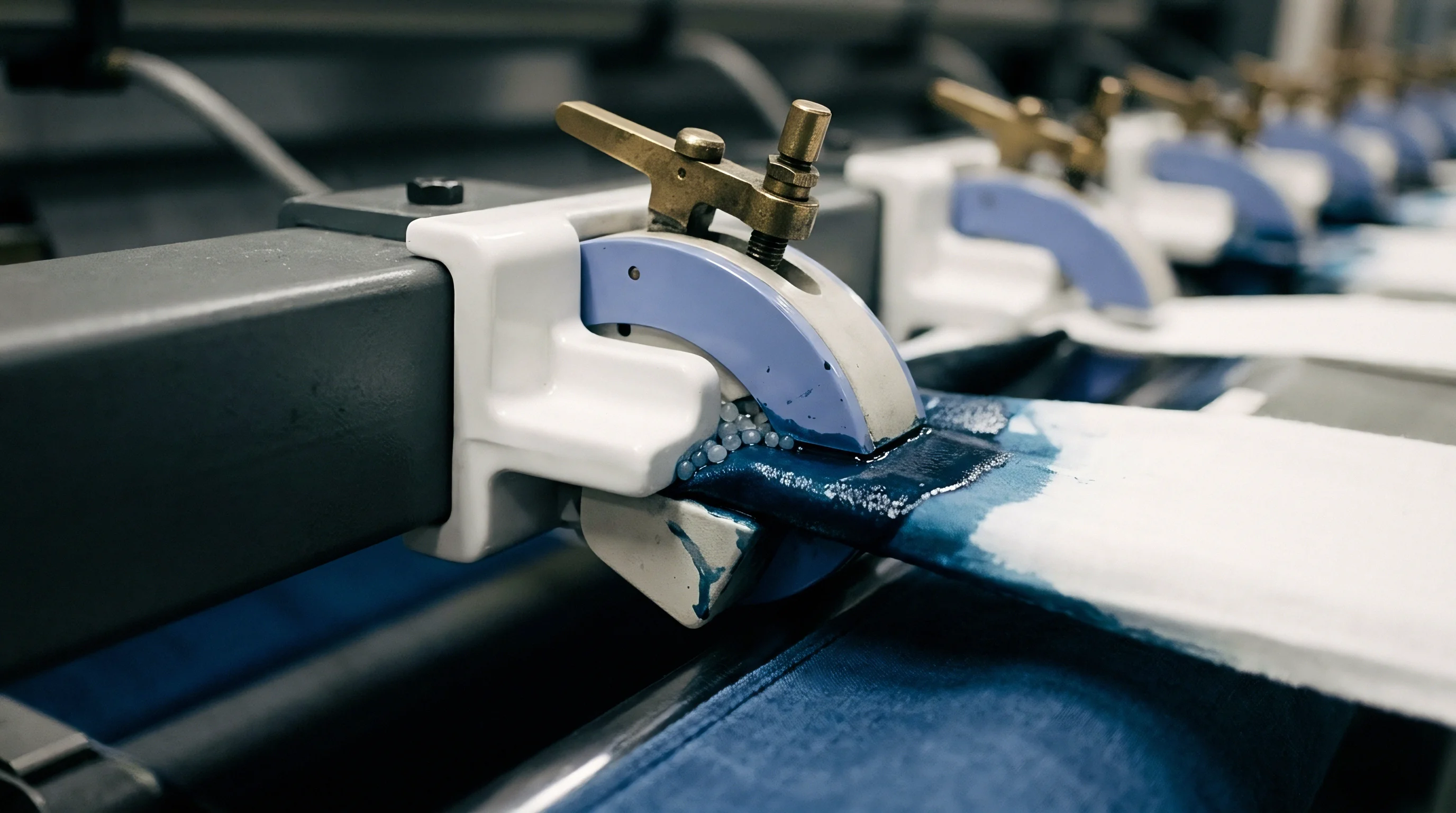
Dynamic bottom-drain rinsing sweeps concentrated dye liquor out under pressure before fresh rinse water enters, preventing suspended dye from filtering back through the fabric mass.

Standard Seven-Step Low-Ratio Wash-Off Cycle Protocol
- Cold rinse executed at 40 degrees Celsius for 10 minutes to drain unfixed surface salt.
- Acid neutralization run at 50 degrees Celsius with 1.0 gram per litre acetic acid to achieve core pH 6.5.
- Intermediate warm wash at 70 degrees Celsius to initiate thermal fiber swelling and dye release.
- First boiling extraction at 95 degrees Celsius with 1.5 grams per litre polymeric dispersing agent for 15 minutes.
- Second boiling extraction at 95 degrees Celsius for 15 minutes in fresh liquor to sweep out desorbed dye fragments.
- Warm clearing wash at 60 degrees Celsius to remove residual washing-off auxiliaries and suspended matter.
- Final conditioning rinse at 40 degrees Celsius adjusted to fabric pH 5.5 to 6.5 using core acidifying agents.
Skimping on this sequence risks quality failure. Dyehouse operators often combine the neutralization and soaping steps to shave 40 minutes off cycle times. Doing so exposes un-neutralized alkaline cotton directly to boiling soaping conditions, cleaving stable covalent bonds and generating new hydrolyzed dye.
Omitting the intermediate 70-degree warm wash forces cold fabric into a boiling bath, shocking the fibers and locking unfixed dye inside collapsing yarn channels.
Every additional bath drain and refill adds 15 to 25 minutes of machine time. With machine hourly rates ranging from 45 to 85 dollars, production managers face constant pressure to compress rinse protocols. That operational pressure directly causes colour fastness failures on incoming garments.
Technical compliance documents require suppliers to log bath temperatures, step durations, and water consumption volumes per dye lot. These logs confirm whether the mill executed the full wash profile or took shortcuts to clear machine capacity.
Audit
Verifying hydrolyzed dye removal demands stringent laboratory testing on conditioned finished yardage. A visual match in a light box under D65, Illuminant A, and TL84 verifies colour coordinates, but proves nothing about wash fastness. Finished goods must undergo destructive wash-fastness testing according to international standards before release to cutting rooms.
Test methods ISO 105-C06 (Condition A2S or C2S) and AATCC TM61 (Method 2A) stress the fabric using elevated temperatures, sodium perborate, and mechanical steel balls to simulate commercial laundering.
Fastness testing must occur after finished drying and stenter stabilization. Heat-setting stenters operate between 150 and 180 degrees Celsius, forcing residual, unwashed hydrolyzed dye out of the fiber core onto the surface. A fabric showing Grade 4-5 staining off the jet machine can drop to Grade 3 staining after stenter passage.
Crocking tests must evaluate both dry and wet conditions using ISO 105-X12. Wet crocking is unforgiving of residual surface dye. Values below Grade 3 indicate incomplete hydrolyzed dye extraction, excessive softener application, or dye migration during drying.

Worked Cost Model for Optimized Washing versus Fastness Failure
Consider a 5,000-kilogram production order of 100 percent combed cotton single jersey (30/1 Ne, 150 g/m²) dyed to a deep Reactive Black B shade. The analysis compares an optimized wash-off route with an abridged low-cost cycle.
- Optimized Wash Route Assumptions ~ Execution of full 7-step wash cycle at 1:6 liquor ratio, consuming 45 litres of water per kilogram, requiring 3.2 hours of machine wash-off time at 60 dollars per machine hour.
- Abridged Cycle Assumptions ~ Execution of compressed 4-step cycle at 1:6 liquor ratio, consuming 28 litres of water per kilogram, requiring 1.8 hours of machine wash-off time at 60 dollars per machine hour.
- Process Cost Differential ~ The abridged cycle saves 1,120 dollars in machine run-time and 255 dollars in water and effluent treatment costs across the 5,000-kilogram lot, lowering processing cost by approximately 0.275 dollars per kilogram.
- Failure Event Arithmetic ~ The abridged cycle yields ISO 105-C06 staining of Grade 2-3 against cotton and nylon, failing buyer retail specifications (minimum Grade 4 required). Re-entering the lot into jet vessels for chemical clearing stripping, re-soaping, and re-softening costs 3,850 dollars in machine time and chemicals, while degrading burst strength by 12 percent.
The cost savings from compressing wash cycles vanish the moment a single dye lot fails fastness testing. If the failure escapes the internal mill laboratory and reaches the cutting floor, garment reject claims include landed fabric costs, cut-and-sew labor, and logistics charges. Mills must enforce strict internal acceptance sampling on every dyed lot before slitting and drying.
Every commercial fabric purchase specification should define fastness minimums: ISO 105-C06 C2S staining at Grade 4 on cotton multi-fiber, ISO 105-X12 wet crocking at Grade 3-4, and water fastness under ISO 105-E01 at Grade 4-5. The buyer must enforce these standards through third-party pre-shipment lab tests.