Optimizing Polyvinyl Alcohol and Starch Blend Ratios in Warp Sizing
Balance PVA-starch ratios between 30:70 and 50:50 to secure film elongation above 7 percent, limiting loom stops while controlling desize COD load and size costs.
Liquor

Adhesive Film Cohesion across Binary Formulations
Sizing liquor formulation dictates warp yarn survival on modern high-speed air-jet looms running above 800 picks per minute. Ring-spun cotton warps sized with raw native corn or tapioca starch experience severe shedding, brittle film cracking, and warp stops exceeding two stops per hundred thousand picks. Polyvinyl alcohol (PVA) deposits a ductile, tough polymeric film with high elongation at break and adhesion to cellulosic substrates.
PVA dry resin trades at three to four times the metric ton price of modified starch, while presenting biological oxygen demand (BOD) and chemical oxygen demand (COD) treatment loads that escalate wastewater compliance surcharges during desizing. Sizing managers adjust binary ratios of partially or fully hydrolyzed polyvinyl alcohol and modified starches to hit an envelope where film tensile strength balances yarn elasticity, clinging hairiness stays bound to the yarn core, and effluent costs remain viable.
Binary compatibility hinges on the degree of polymerization of the polyvinyl alcohol and the chemical modification of the starch carrier. Unmodified native starches possess excessive molecular weight and high amylose retrogradation tendencies, causing phase separation in hot sizing boxes maintained at 85 to 90 degrees Celsius. Acid-thinned, oxidized, or hydroxyethylated starches exhibit stabilized paste viscosities that blend with fully hydrolyzed PVA grades such as PVA 117 or PVA 217.
In an aqueous sizing solution containing 8 to 12 percent total solids, the starch phase forms an adhesive matrix that penetrates the yarn interstices, while the PVA fraction migrates toward the outer perimeter during drying, forming an elastic protective skin against reed friction and drop-wire abrasion.
| Polymer Composition Ratio (PVA to Starch) | Tensile Strength (MPa) | Elongation at Break (Percent) | Moisture Regain at 65% RH (Percent) | Abrasion Cycles to Rupture (Custom Roller Method) | Solubility Time in Water at 80°C (Seconds) |
|---|---|---|---|---|---|
| 100:0 (Pure Fully Hydrolyzed PVA) | 58.4 | 14.8 | 4.2 | 1420 | 42 |
| 70:30 (PVA Dominant Blend) | 46.2 | 10.5 | 6.8 | 1180 | 68 |
| 50:50 (Equal Ratio Blend) | 38.1 | 7.2 | 8.9 | 860 | 115 |
| 30:70 (Modified Starch Dominant) | 27.5 | 4.3 | 10.6 | 540 | 170 |
| 0:100 (100% Hydroxyethyl Starch) | 18.2 | 2.1 | 12.8 | 290 | 260 |
Increasing the starch proportion beyond 50 percent causes an immediate decline in dry elongation. Sizing films below 5 percent elongation crack under cyclic tension peaks generated by the loom shed opening. Sizing liquor viscosity drops as the proportion of low-viscosity oxidized starch increases, allowing deeper core penetration at the expense of outer film thickness.
Maintaining sizing box temperatures at 85 degrees Celsius prevents retrogradation and viscosity drift. Sizing technicians verify solids concentration using refractometer readings corrected for specific temperature coefficients of the blend components.
A size film losing elongation below 5 percent causes yarn brittle rupture under cyclic shed opening tension.
Surfactants and lubricating softeners alter the physical interaction between the two polymers. Hydrogen bonding between hydroxyl groups of polyvinyl alcohol and amylose chains produces a co-continuous network under rapid drying conditions on steam-heated sizing cylinders. Excessive tallow or synthetic wax fractions above 5 percent on weight of size weaken this cohesive network, causing flaking inside the drop wires and heddle eyes.
Formulators maintain sizing box solids stability by controlling shear rates within the circulation pump loops.
Viscosity instability causes inconsistent wet pick-up across the size box nip rollers. Sizing formulation sheets specify Brookfield viscosity tolerances within plus or minus 15 centipoise at process temperature. Sizing chemists observe that oxidized starch pastes degrade rapidly when subjected to sustained boiling, whereas PVA preserves molecular chain length under continuous thermal exposure.
High starch proportions show increased viscosity drift during weekend shut-downs, precipitating pump blockages and uneven yarn sizing coats when operations resume without complete tank drainage.
The operational compromise rests on matching yarn mechanical stress profiles to the cheapest binary blend delivering necessary loom stops per hour targets. Coarser carded yarns accommodate starch-heavy formulations because core packing density limits inter-fiber movement under moderate loom insertion speeds. High-density combed constructions and air-jet projectile insertions demand higher PVA fractions to survive shedding friction.
Sizing managers evaluate trial blends by running pilot sizing beams across automated inspection test frames before committing forty metric tons of sizing liquor to production floor operations.
An unresolved question concerns whether phase separation of the binary components in the drying cylinder zone causes localized microscopic zones of zero elongation along the yarn axis.

Penetration
Rheological Partition between Inter-Fiber Core and Yarn Periphery
Adhesion mechanics within a staple yarn depend on size encapsulation versus internal fiber binding. Complete encapsulation without penetration leaves inner fibers loose, causing yarn rupture when core strands slip under axial load. Excessive penetration without perimeter coating fails to lay protruding surface hairs, provoking adjacent warp yarn entanglement during shedding on high-density weaves.
Starch modifications characterized by low hot-paste viscosity travel rapidly into the center of the yarn bundle through capillary action, coating interior cotton fiber interfaces.
PVA polymers exhibit distinct rheological behavior under hydrodynamic squeeze pressure. High molecular weight chains create viscoelastic normal forces during nip compression, resisting deep entry into tight fiber capillaries. This resistance concentrates the polyvinyl alcohol fraction in the outer twenty to thirty percent of the yarn radius, precisely where mechanical rubbing against drop wires, harness frames, and reed wires takes place.
Size penetration percentages between twenty and thirty percent of the yarn cross-sectional area deliver optimum split-yarn strength without inducing yarn core embrittlement.
Viscosity controls this penetration depth more than nip pneumatic pressure. Doubling the squeeze pressure from twenty kilonewtons to forty kilonewtons reduces size pick-up by a small margin, but lowering size box viscosity from sixty to thirty centipoise doubles core penetration depth. Sizing technicians manage concentration and temperature gradients to lock the required viscosity envelope.
Squeezing roll hardness, typically calibrated to 65 to 70 Shore A durometer, governs nip contact area and residence time under peak mechanical compression.
Cross-sectional microscopic analysis reveals size film boundaries using selective staining techniques. Iodine solutions selectively stain starch components blue-violet, while boric acid-iodine combinations yield green-blue complexes with polyvinyl alcohol. Thin sections cut from sized yarns reveal whether the components separated into discrete layers or dried as an interpenetrating polymer network.
High squeeze pressures combined with high-viscosity sizing liquors generate peripheral coats that strip off as dry dust when warp yarns pass through splitting bars at the front of the sizing machine.
High yarn hairiness indexes measured by Zweigle hairiness testers before sizing mandate specific adjustments to size rheology. Hairs extending beyond three millimeters require adhesive capture into the main yarn body to prevent loom stop clusters. PVA provides adhesive tack that flattens these long hairs during passage through the sizing box nip.
Modified starch lacks the cohesive elasticity to pin down long hairs permanently once the yarn dries, leading to increased fuzz ball formation at the loom reed.
A yarn whose size penetrates entirely to its mechanical center loses flexural endurance and breaks prematurely under repetitive cyclic bending.
Consumption
Size Add-On Calculation and Cost per Linear Metre Dynamics
Calculating target dry size add-on requires accurate determination of yarn linear density, warp thread count, total sizing liquor solids, and wet pick-up percentages across the squeeze rolls. Sizing departments monitor dry size add-on percentages to balance weaving room efficiency against chemical raw material expenditure. The mathematical relationship governing dry size add-on follows standard textile engineering expressions:
Dry Size Add-On (Percent) = Wet Pick-Up (Percent) x Size Box Solids Concentration (Percent) / 100
Wet pick-up fluctuates with sizing machine speed, squeeze roller hardness, immersion roller depth, and liquor viscosity. A line running at 100 metres per minute achieves lower wet pick-up than the same line crawling at 15 metres per minute during beam changes, unless automated pneumatic nip pressure compensation systems adjust the squeeze loading proportionally. Inconsistent wet pick-up translates directly into variable dry size add-on, creating structural density differentials across the finished warp beam length.
| Yarn Count (Ne) and Type | Fabric Construction (Warp x Weft ends/inch) | PVA to Starch Blend Ratio | Total Solids (Percent) | Target Dry Size Add-On (Percent) | Loom Weft Insertion Rate (picks/min) |
|---|---|---|---|---|---|
| 16/1 Carded Ring Spun | 64 x 56 (Heavy Twill / Sheeting) | 20:80 | 8.5 | 9.0 – 10.5 | 650 – 750 |
| 30/1 Combed Ring Spun | 130 x 70 (Poplin / Shirting) | 40:60 | 10.0 | 11.0 – 12.5 | 750 – 850 |
| 40/1 Combed Ring Spun | 133 x 72 (High Density Percale) | 50:50 | 11.5 | 12.5 – 13.5 | 850 – 950 |
| 50/1 Combed Compact | 144 x 80 (Fine Sateen) | 60:40 | 12.0 | 13.0 – 14.0 | 900 – 1050 |
| 60/1 Combed Ring Spun | 170 x 120 (High Sett Lawn) | 70:30 | 13.5 | 14.0 – 15.5 | 800 – 900 |
Commercial sizing calculations weigh chemistry costs against loom stop downtime penalties. Consider a worked sizing scenario for a weaving run of 50,000 metres of 40/1 combed cotton percale fabric, carrying 6,650 warp ends across a 160-centimetre reed width. Assumptions include: 40/1 Ne cotton yarn has a linear density of 14.76 tex; dry warp yarn weight equals 98.15 grams per linear metre of fabric; target dry size add-on is 13.0 percent; sizing operational waste factor is 3.0 percent.
The total warp yarn weight required is 4,907.5 kilograms, which requires 638.0 kilograms of dry size solids. Adding the 3.0 percent waste factor fixes the dry chemical requirement at 657.1 kilograms.
Evaluating this requirement across three alternative formulation options demonstrates financial variances:
- Formulation Option A (70:30 PVA to Starch) uses 460.0 kilograms of PVA at 2.80 dollars per kilogram and 197.1 kilograms of modified starch at 0.75 dollars per kilogram, establishing a raw size chemical cost of 1,435.83 dollars, which equals 0.0287 dollars per woven fabric metre.
- Formulation Option B (50:50 PVA to Starch) consumes 328.6 kilograms of PVA at 2.80 dollars per kilogram and 328.6 kilograms of modified starch at 0.75 dollars per kilogram, yielding a chemical cost of 1,166.77 dollars, which calculates to 0.0233 dollars per woven fabric metre.
- Formulation Option C (30:70 PVA to Starch) requires 197.1 kilograms of PVA at 2.80 dollars per kilogram and 460.0 kilograms of modified starch at 0.75 dollars per kilogram, delivering a chemical cost of 896.96 dollars, generating an expenditure of 0.0179 dollars per woven fabric metre.
Moving from a 70:30 blend to a 30:70 blend reduces raw size chemical spending by 538.87 dollars across the 50,000-metre production lot, saving roughly 0.0108 dollars per linear metre. This raw chemical saving evaporates if weaving stops increase by more than 0.3 stops per loom hour, because fixed loom overhead and labor losses on air-jet equipment run between 18.00 and 24.00 dollars per lost operating hour.
The standard supply contract line defines dry size add-on within a tolerance of plus or minus 1.0 percent of target value, triggering price renegotiation or beam rejection whenever three consecutive beam samples breach specified thresholds.

Shedding
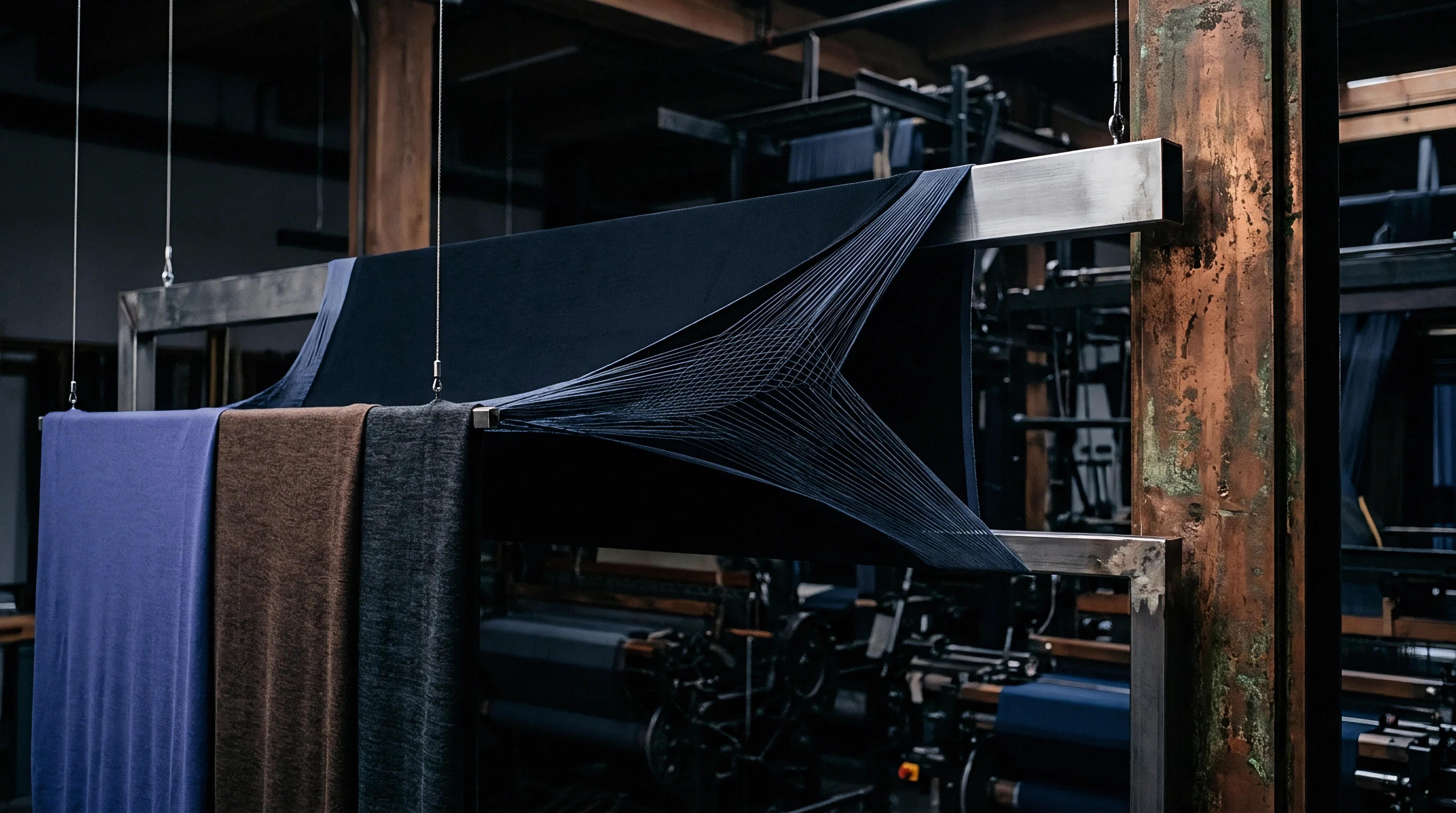
Abrasion Dynamics and Weaving Efficiency Limits
Weft insertion on high-speed air-jet looms exposes warp yarns to severe cyclical mechanical stresses. A loom running at 900 picks per minute subjects every warp end to 15 shed openings per second, cycling tensions from 15 centinewtons during rest to 45 centinewtons at peak shed elevation. The drop wires, heddle eyes, and reed dent edges exert intense abrasive rubbing along the warp axis.
Inadequately sized warps shed dry size particles and short cotton fibers into the weaving machine mechanisms, causing dropped warp stops and optical sensor misfires.
Starch-dominant sizing coats lack the flexural fatigue resistance demanded by tight shed geometries. Formulations carrying less than 30 percent PVA yield high shedding rates exceeding 0.8 percent size loss on warp weight during weaving. This debris settles in the guide teeth of air-jet profiling nozzles, disturbing the airflow trajectory of the insertion air stream.
The resulting pressure drops trigger weft insertion failures, stalled picks, and machine cut-offs. Polyvinyl alcohol introduces an elastic, coherent film network that reduces structural dusting at the heddle frame interfaces.
A size formulation shedding more than 0.5 percent dry weight fouls air-jet profiling nozzles and causes repeated weft stalling.
Warp yarn abrasion resistance is quantified using laboratory testing instruments such as the Zweigle G551 or Web-Tester. These testers pass sized yarn bundles through oscillating abrasive elements under static tension until breakage occurs, recording the mean abrasion cycles to rupture. Sized yarn tensile strength must increase by at least 15 to 25 percent relative to unsized yarn, accompanied by a reduction in yarn elongation not exceeding 30 percent of original greige values.
Sizing blends containing at least 40 percent PVA maintain this mechanical retention balance.
Excessive size add-on causes yarn embrittlement and sizing split-clinging. When yarns emerge from the drying cylinders, the adhesive coat bridges adjacent ends, forming glued sheets. The mechanical splitting rods at the front head of the sizing frame bust these bridges apart.
High starch concentrations form brittle cross-bridges that shatter cleanly, whereas excessive PVA yields tough, rubbery bridges that rip fibers out of adjacent yarn walls during splitting, generating surface defects and roughness before beams ever reach the weaving shed.
Loom stop logs confirm that shedding rate correlates directly with relative humidity in the weave shed. PVA is a hygroscopic polymer whose glass transition temperature drops in environments above 70 percent relative humidity, becoming tacky and clinging to drop wires. Modified starches become overly brittle when shed relative humidity falls below 55 percent, shattering under heddle eye friction.
Weave shed environmental control systems must maintain steady conditions within 62 to 68 percent relative humidity at 22 to 26 degrees Celsius to keep binary PVA-starch films within their operational performance window.
When the binary blend ratio fails on the high-speed air-jet floor, the consequence is an unrecoverable surge in warp stops per hour, elevating cloth grading defect points and lowering overall weaving shed asset utilization.


Wash
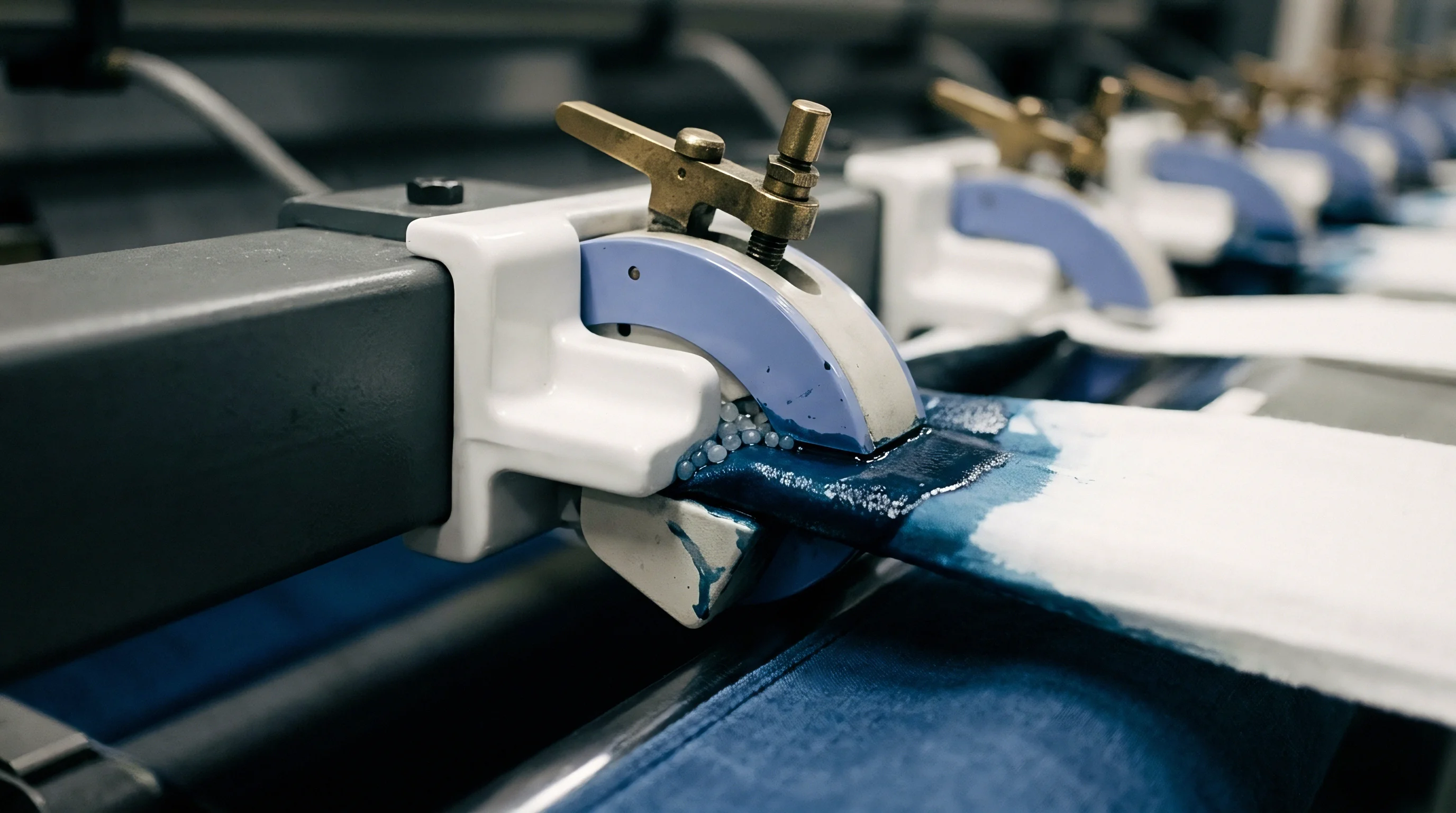
Desizing Kinetics and Effluent Treatment Burdens

Can Low Polyvinyl Alcohol Formulations Prevent Desizing Defects?
Desizing removes applied sizing agents before scouring, bleaching, and dyeing operations commence. Residual size left on fabric creates resist marks, uneven dye absorption, patchy shade streaks, and cloudy dyeing defects in continuous pad-steam and exhaust dyeing ranges. Polyvinyl alcohol dissolves readily in hot water above 80 degrees Celsius without requiring chemical breakdown, whereas starches demand enzymatic degradation or oxidative splitting to convert insoluble macromolecules into soluble glucose and maltose chains.
Binary PVA-starch blends require coordinated desizing protocols. Passing fabrics sized with binary blends through standard hot water washers dissolves only the PVA fraction, leaving unmodified or oxidized starches lodged in the fiber matrix. Conversely, subjecting PVA to hot alkaline scouring baths without prior neutral washing causes PVA retrogradation and coagulation, precipitating stubborn film deposits back onto the cotton fabric surface.
Effective desizing requires an initial hot water pre-wash at 85 to 90 degrees Celsius to extract the water-soluble PVA, followed by an enzymatic desizing stage using alpha-amylase at 60 to 70 degrees Celsius and neutral pH to digest the starch components.
| Size Formulation (PVA to Starch Ratio) | Chemical Oxygen Demand COD (mg/g size) | 5-Day Biological Oxygen Demand BOD5 (mg/g size) | BOD5 to COD Ratio | Biological Treatability Time (Days in Activated Sludge) | Wastewater Surcharge Index (Relative Scale 1 to 5) |
|---|---|---|---|---|---|
| 100:0 (Pure PVA) | 1700 – 1850 | 30 – 80 | 0.02 – 0.04 | 18 – 25 | 4.8 |
| 70:30 (PVA Dominant) | 1500 – 1650 | 220 – 300 | 0.14 – 0.18 | 12 – 16 | 3.9 |
| 50:50 (Balanced Blend) | 1350 – 1500 | 380 – 480 | 0.28 – 0.32 | 8 – 11 | 2.8 |
| 30:70 (Starch Dominant) | 1200 – 1350 | 520 – 640 | 0.43 – 0.47 | 4 – 7 | 2.1 |
| 0:100 (Modified Starch) | 1000 – 1150 | 600 – 750 | 0.60 – 0.65 | 2 – 4 | 1.4 |
Wastewater treatment plants face extreme operational challenges when processing desizing effluent containing high PVA ratios. The ratio of 5-day biological oxygen demand to chemical oxygen demand reflects biochemical degradability. A BOD5 to COD ratio exceeding 0.40 indicates readily biodegradable effluent that breaks down rapidly in municipal or industrial biological treatment lagoons.
Pure PVA yields an extremely low BOD5 to COD ratio between 0.02 and 0.04, reflecting strong resistance to biological degradation by standard unacclimated activated sludge microbes.
Degrading polyvinyl alcohol requires specialized adapted bacterial strains, such as Pseudomonas and Sphingopyxis species, along with retention times exceeding 18 days in aerated biological reactors. Failure to degrade PVA leads to bio-solid bulking, foaming in aeration basins, and high discharge COD values exceeding statutory limits. Starch, on the other hand, exhibits rapid biodegradation, but places an enormous short-term oxygen demand on aeration systems due to its high BOD5 value.
Balanced blends mitigate both hazards by providing digestible carbon to feed the biomass while keeping total COD within discharge permits.
Mills processing high PVA volumes install ultrafiltration recovery units to capture PVA from concentrated desizing wash waters. Ultrafiltration systems pass desize effluent at 80 degrees Celsius across ceramic or polysulfone membrane arrays under transmembrane pressures between 4 and 8 bar, concentrating the PVA stream back to 8 to 10 percent solids for sizing reuse. Economic recovery requires clean desize separation streams without significant starch contamination.
High starch proportions foul ultrafiltration membranes through irreversible pore plugging, destroying flux rates and making size recovery financially unfeasible.
Residual size checks on desized grey goods use quantitative chemical extraction and the Tegewa rating scale. The Tegewa scale measures starch desizing efficiency by applying an aqueous iodine-potassium iodide solution directly onto desized fabric swatches, rating residual starch from 1 (heavy black-purple size residue) to 9 (clean violet-free cotton). Sizing formulations carrying higher modified starch ratios demand tighter controls over desizing bath immersion times, temperatures, and enzyme concentrations to achieve a minimum Tegewa rating of 6 to 7 prior to dyeing.
- Enzyme Activity Verification is checked by monitoring the bath pH between 6.0 and 7.0 and maintaining tank temperature within the active operating band of 65 to 75 degrees Celsius.
- Washer Squeeze Extraction is evaluated at the desize wash line exit by measuring fabric wet pick-up percentages below 70 percent to prevent residual size carryover.
- Tegewa Spot Testing involves dropping iodine reagent across warp strips at the left, center, and right portions of desized rolls to identify side-to-center desizing variations.
- Effluent Stream Segregation is operated by routing high-concentration desizing wash water away from general bleaching and scouring wastewater lines to manage peak organic shock loads.
The dyehouse manager rejects fabric lots failing size clearance thresholds because residual sizing polymers block dye migration, guaranteeing streakiness that cannot be corrected by chemical re-leveling in the dyeing vessel.
Chemical suppliers frequently assert that modern cold-water-soluble synthetic starches eliminate all desizing issues, yet processing plants repeatedly observe residual coating shadows under dark reactive dye shades when line speeds outrun washing contact times.
Yield
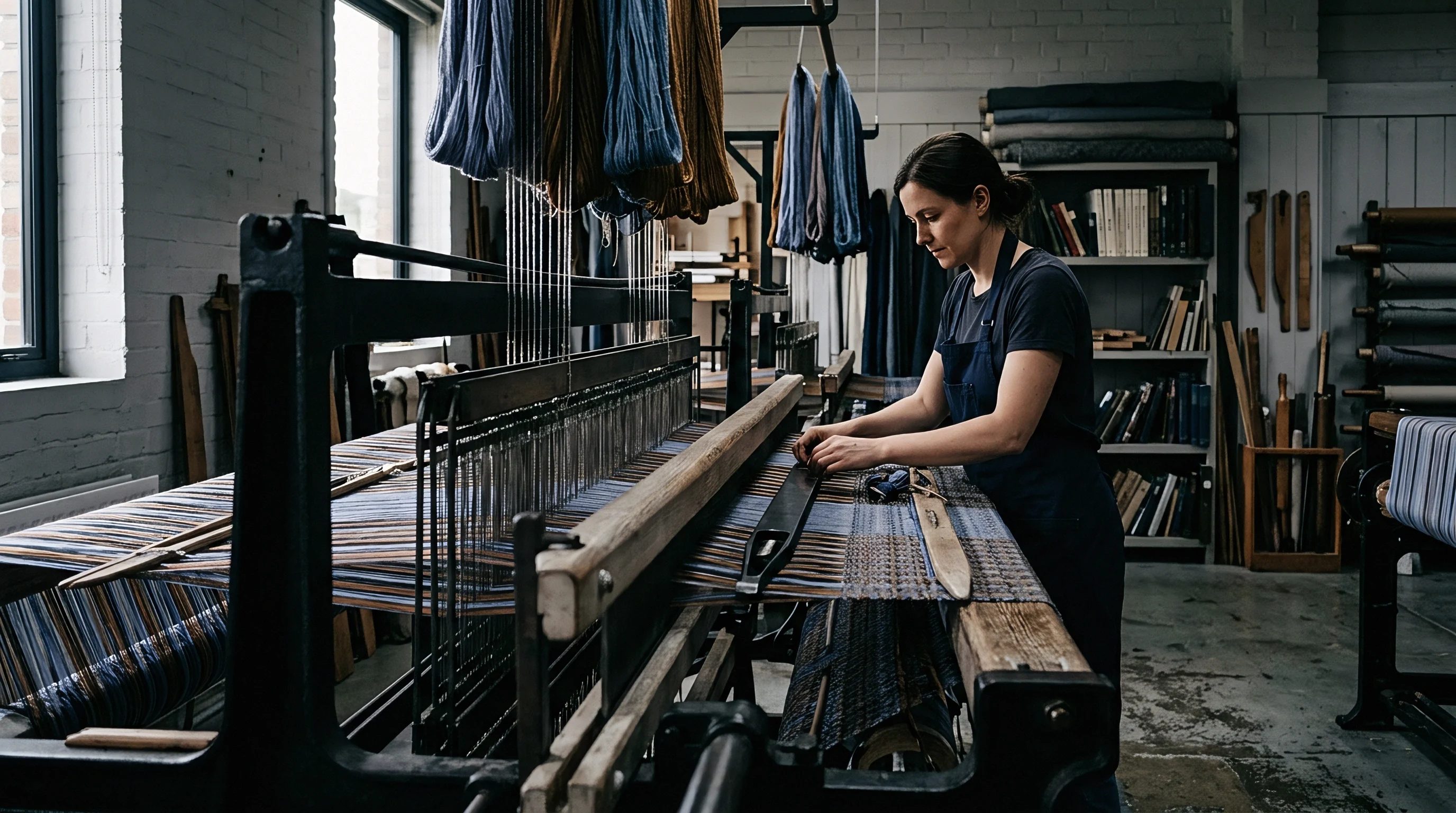
Landed Fabric Cost and Sizing Optimization Architecture
Determining the optimum polyvinyl alcohol and starch blend ratio is ultimately settled by production economics. Greige mills evaluate fabric yield, loom asset utilization, chemical input costs, and wet processing chemical auxiliary usage to establish the lowest landed cost per first-quality woven metre. Selecting a 60:40 or a 30:70 blend ratio alters not only sizing chemical expenditures, but weaving efficiency, weaver labor productivity, and subsequent dyehouse re-dye rates.
Weaving stops introduce fabric defects that downgrade finished goods from first-quality to seconds. Every stop on an air-jet loom risks a starting mark, uneven pick density line, or pick crack that cannot be fully repaired during finishing. High-density combed cotton poplin fabrics running at weaving mills carrying a retail brand specification face severe financial deductions for second-quality goods, which frequently sell at a 20 to 30 percent discount against contracted first-quality prices.
Spending an additional 0.015 dollars per metre on a PVA-rich sizing formulation generates substantial net financial returns if it lowers overall fabric defect points below commercial penalty limits.
Sizing optimization protocols establish empirical trials where binary blend ratios step downward systematically while tracking loom performance data. The sizing trials run in sequential phases across production looms:
- The baseline phase establishes reference data using the standard mill formulation, tracking warp stops per 100,000 picks, weft stops, shed waste accumulation, and desize Tegewa ratings across ten production warps.
- The trial formulation phase introduces a 10 percent reduction in PVA content, compensated by an equivalent increase in modified thin-boiling or hydroxyethylated starch, while holding total dry add-on constant by adjusting size box solids.
- The inspection frame analysis phase inspects the woven yardage under four-point fabric inspection protocols, recording point deductions specifically attributable to warp fuzz, loose ends, broken filaments, and start marks.
- The desizing and coloration clearance phase tracks the woven trial rolls through wet processing, measuring desize effluent COD, sizing removal percentage, and shade consistency across lot dyeings.
Sizing optimization succeeds only when all parameters align across the greige manufacturing and wet finishing facilities. Mill operational silos frequently hinder this balance: greige weaving operations operate on budgets incentivizing the lowest possible sizing chemical cost per kilogram, while dyehouse operations operate under separate budgets penalizing wastewater discharge surcharges and fabric shade rejections. Sourcing executives and operations leaders break down these departmental barriers by evaluating the complete production route, establishing sizing formulations based on total landed cost per finished metre rather than localized yarn sizing chemical expense.
When greige plants over-economize on sizing formulations by stripping PVA content below structural thresholds, the financial fallout manifests weeks later at the desizing range and the inspection table, proving that the true cost of warp sizing is measured on the finished fabric, not in the size preparation kitchen.