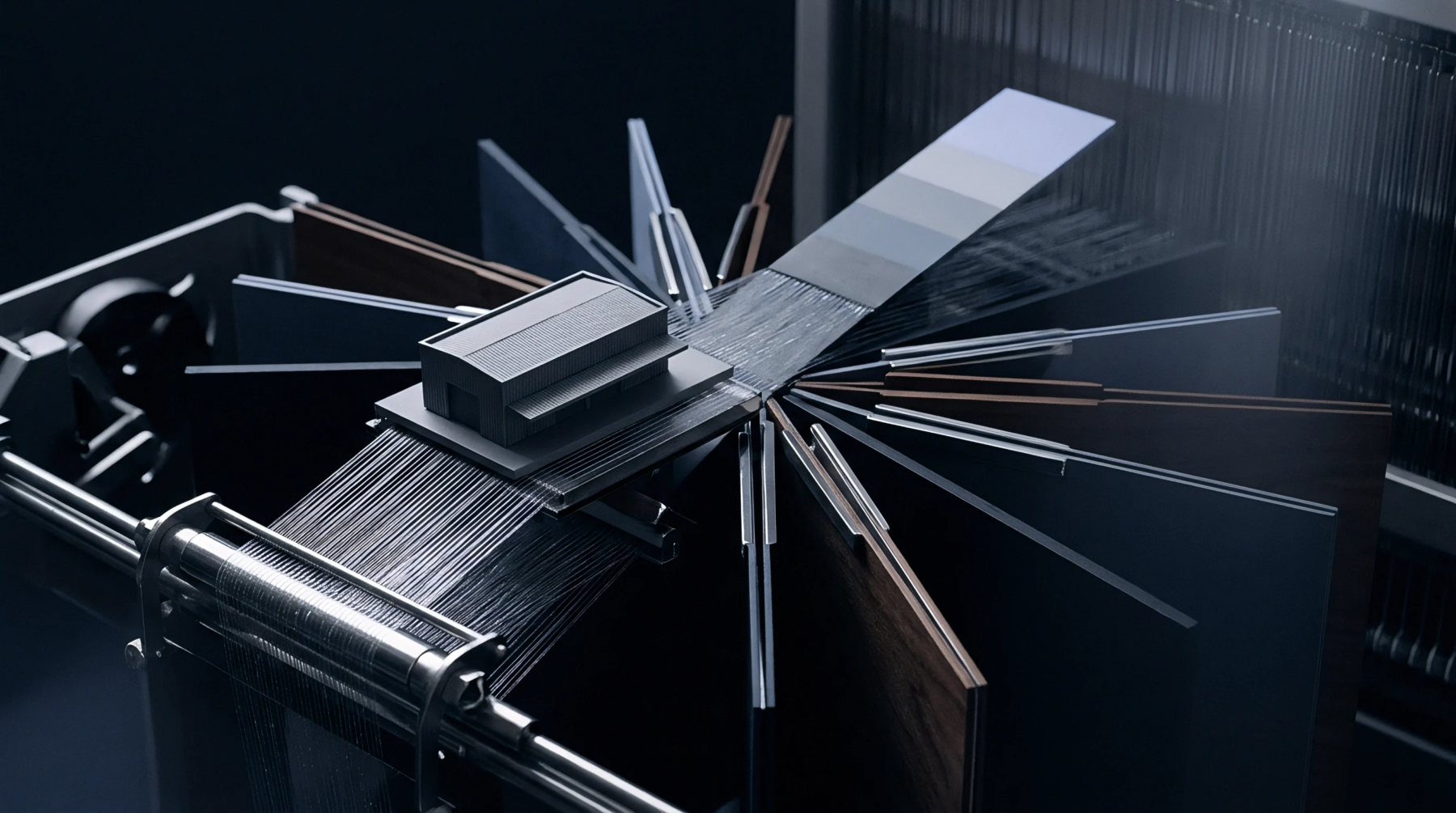
Chemical Dispersion
Aqueous mixtures of polymers and lubricants provide a protective coating for warp yarns to prevent abrasion during the mechanical stress of high speed weaving. Sizing formulations occupy the primary position in textile preparation as they determine the friction coefficients and adhesion strength necessary for processing stable fabrics. These substances adhere to the surface of individual filaments and bind protruding fibers into a unified bundle to reduce breakage rates.
Laboratory analysis of these compounds focuses on film forming properties and viscosity stability under constant tension. Variations in the concentration of starch derivatives or synthetic copolymers alter the shed production and the overall durability of the warp sheet.
Viscosity Profile
Measured resistance to flow determines how evenly the substance distributes across the yarn surface during the application process. A low viscosity liquid penetrates the core of the yarn bundle whereas a high viscosity liquid remains on the exterior for surface protection. Operators monitor the temperature of the mix to maintain the necessary flow characteristics for consistent pick up.
If the mix thickens during production it compromises the uniformity of the protective film. Correct settings prevent the adhesion of adjacent warp threads.
Adhesion Dynamics
Surface energy of the fibre determines how well a specific chemical mixture bonds to the substrate. Polyester filaments require specialized polymers to ensure the sizing formulations stay attached throughout the repeated oscillation of the harness motion. Proper application allows the coating to withstand the tension cycles of the loom without flaking or cracking.
Any weakness in this bond results in dust accumulation on the machine and defects in the gray goods. Reliable chemical selection minimizes the downtime caused by warp breaks.
Removal Efficiency
Desizing involves the dissolution of the dried film after the weaving stage is finished to prepare the fabric for dyeing or finishing. Hot water or enzymatic solutions break down the chemical structure of the additives to ensure no residues remain trapped in the fabric matrix. Incomplete removal interferes with the uptake of dyestuffs and causes uneven shade distribution.
Clean fabric requires total displacement of the starch or synthetic agents before further wet processing occurs. Quality control verifies that the total residual size content drops below a defined threshold to ensure successful downstream coloration.