Optimizing Polyelectrolyte Viscosity for Intermediate Infrared Pre-Drying in Fabric Dyeing
Controlled polyelectrolyte viscosity arrests capillary dye movement during intermediate infrared drying, preventing shade variation and two-sidedness in bulk runs.

Liquor
Padders and Intermediate Dewatering
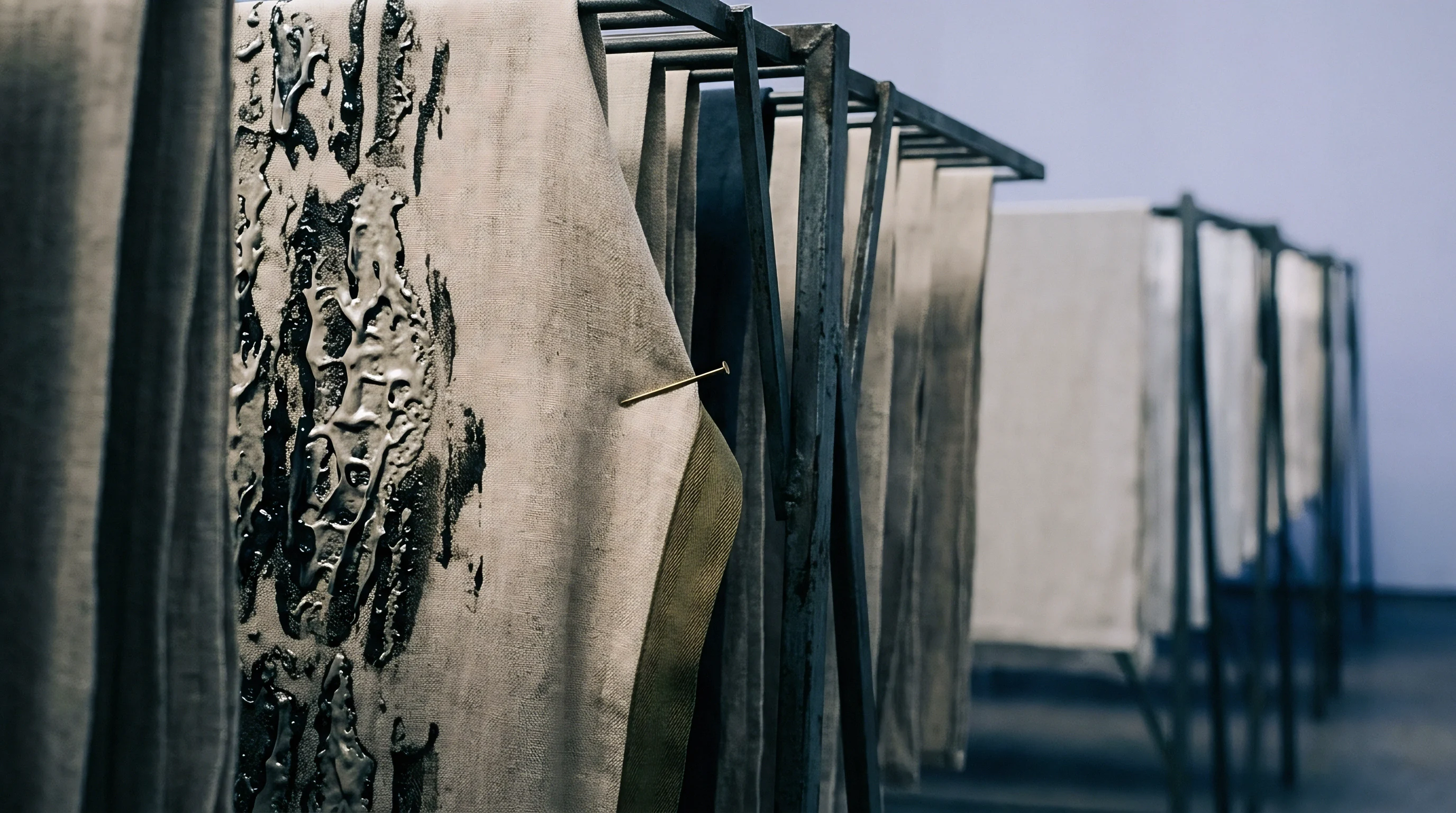
Continuous dyeing ranges run on tight margins of water management. A foulard saturates the running web with dissolved dye, wetting agents, and polymeric auxiliaries before squeezing the substrate to a wet pickup between 55% and 70% on standard woven cotton. The liquor retained in the inter-yarn voids carries dissolved reactive or disperse dyestuff that migrates along water channels toward heated surfaces during evaporation.
Uncontrolled water transport produces two-sidedness, shade variation across the width, and railroading along the selvedges.
Dyehouse auditors evaluate anti-migration performance using polyelectrolyte polymers added directly to the pad trough. Polyacrylic acid salts and sodium carboxymethyl cellulose dominate this role. These ionic polymers generate electrostatic repulsion along their charged backbones, expanding the hydrodynamic volume of the polymer coils in dilute aqueous solutions.
This expansion traps free water molecules, transforming the liquor between fibres into a pseudoplastic gel network under low shear conditions. The resulting structural viscosity arrests capillary dye movement during the critical transition between squeezing and thermal fixation.
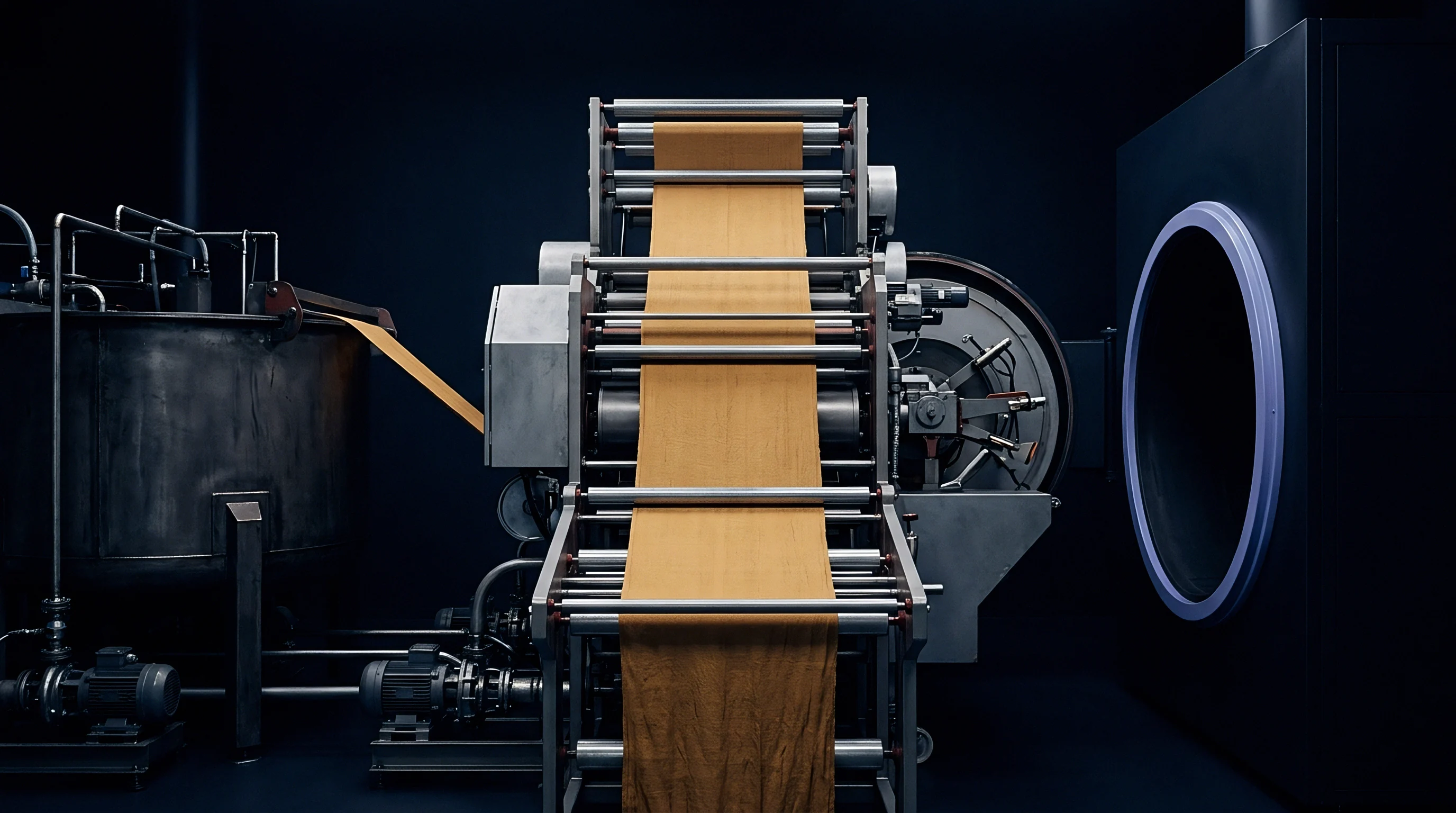
Intermediate infrared pre-dryers operate between the padder and the hot-flue dryer. Radiant heat panels emit electromagnetic energy in the medium-wave band from 2.0 to 3.5 microns, matching the primary absorption band of water molecules at 2.9 microns. This rapid volumetric heating brings the wet fabric to 60 to 70 degrees Celsius within three to five seconds without physical contact or mechanical air currents that blow droplets across the face.
Infrared drying strips moisture from the surface while the internal liquor remains fluid, establishing a steep thermal and moisture gradient from the core to the surface.
Pad liquor containing 12 grams per litre of sodium polyacrylate retains uniform dye distribution across 65% wet pickup under medium-wave radiant exposure.
Anti-migration efficiency drops when bath electrolytes collapse the polymer chains. High ionic strength from reactive dye salts like sodium sulphate or sodium chloride shields the negative carboxylate groups along the polyacrylate spine. The macromolecule curls into a compact coil, driving a sharp loss of shear-thinning viscosity.
Technicians maintain balance in the bath by selecting polyelectrolytes with high molecular weights between 800,000 and 1,500,000 Daltons to preserve physical chain entanglement even when salt concentrations approach 40 grams per litre.
A supplier will claim that any standard anionic thickener prevents shade separation on continuous lines regardless of radiant flux density.
Radiation
Electromagnetic Flux and Water Evaporation
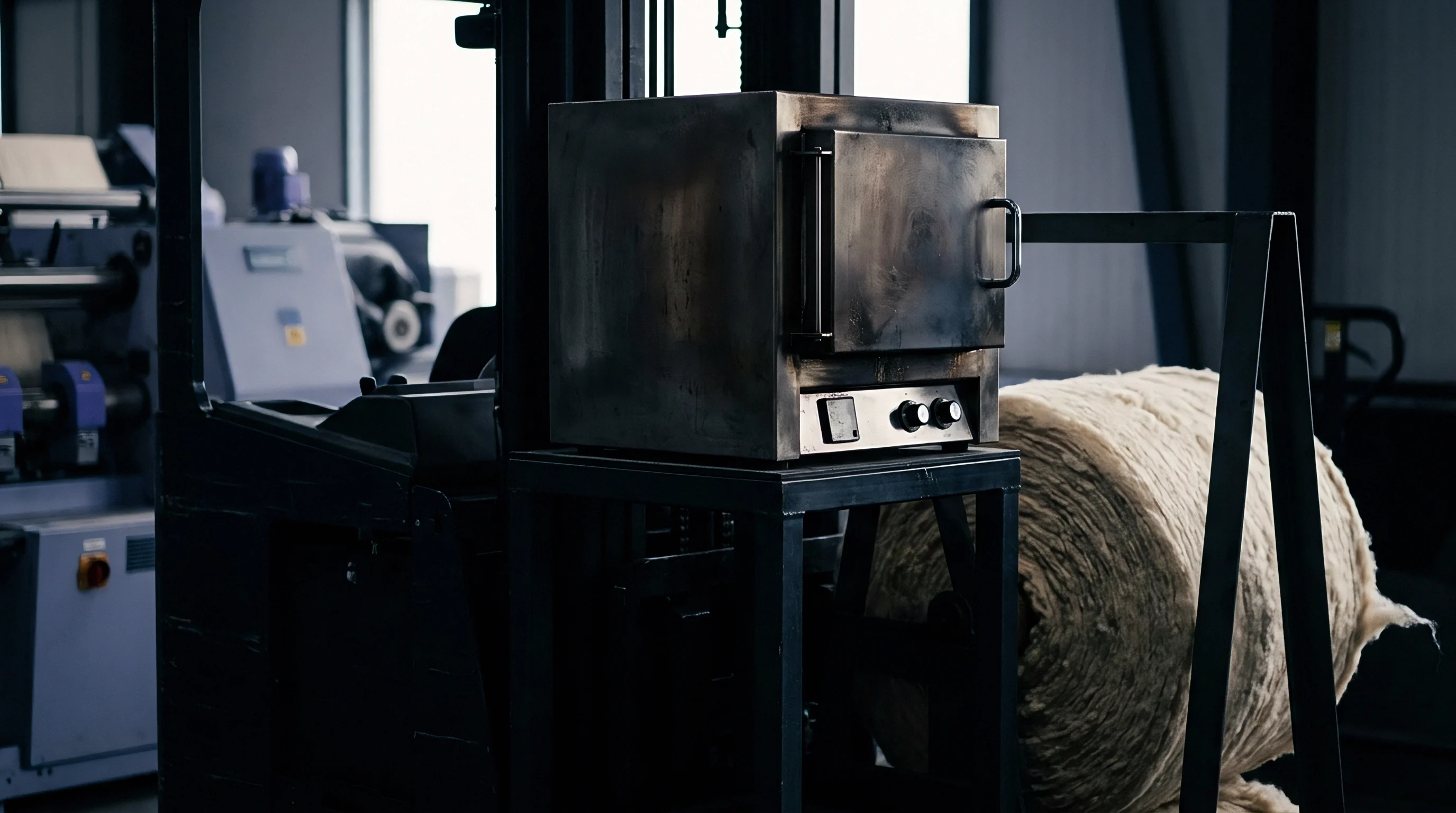
Infrared pre-drying transfers energy through radiation rather than convection. Gas-fired ceramic emitters and electrically powered tungsten-quartz tubes project heat directly into the wet textile structure. Water absorbs infrared energy according to the Beer-Lambert relation, dissipating photon energy into vibrational-rotational modes that drive moisture vaporization.
Medium-wave radiation penetrates the outer boundary layer, warming the core yarns simultaneously with the surface fibres. Short-wave emitters below 1.5 microns penetrate excessively, heating the air behind the web, whereas long-wave emitters above 4.0 microns heat only the outermost surface film, promoting intense moisture migration toward the exterior.
The rate of energy absorption dictates how fast the internal liquor moves toward the surface. When evaporation rates exceed 15 kilograms of water per square metre per hour, capillary action draws water from the wet yarn interior toward the surface evaporative front. Dissolved dye molecules travel with this convection stream.
If the liquor lacks sufficient viscosity at elevated temperatures, dye particles deposit on the outermost cotton fibre tips, leaving the yarn core uncoloured. Ring dyeing results, destroying wash fastness and causing white frosting when the fabric abrades in domestic laundry.
Capillary transport ceases when liquor viscosity suppresses convective liquid flow below the rate of radiant surface evaporation.
Medium-wave emitters deliver an optimal power density of 35 to 45 kilowatts per square metre of fabric web. Gas-fired ceramic panels run at 850 to 950 degrees Celsius, emitting peak wavelengths around 2.4 to 2.8 microns. Electric quartz systems reach operating temperature within two seconds, shutting off instantly during line stoppages to prevent scorching.
Ceramic panels retain heat for up to sixty seconds after gas cutoff, requiring pneumatic swing-away frames that pivot the heating banks 90 degrees away from the stationary cloth during unexpected stops.
Line speed coordinates strictly with radiant emitter output to keep the exit moisture content within a specific processing window. Continuous ranges pass goods through the pre-dryer at 40 to 90 metres per minute. Fabric exits the infrared zone with residual moisture measured between 25% and 35%.
Complete drying inside the infrared unit leads to uneven dye crystallization and burns the fabric. Leaving moisture above 40% causes migration inside the subsequent convection hot-flue, where turbulent nozzle air blows damp dyestuff across the weave.
Failure to balance infrared output against moisture content leaves visible shading faults across the production roll, rendering whole lots unmerchantable under standard retail colour specifications.
Rheology
Viscoelastic Boundaries under Thermal Shear
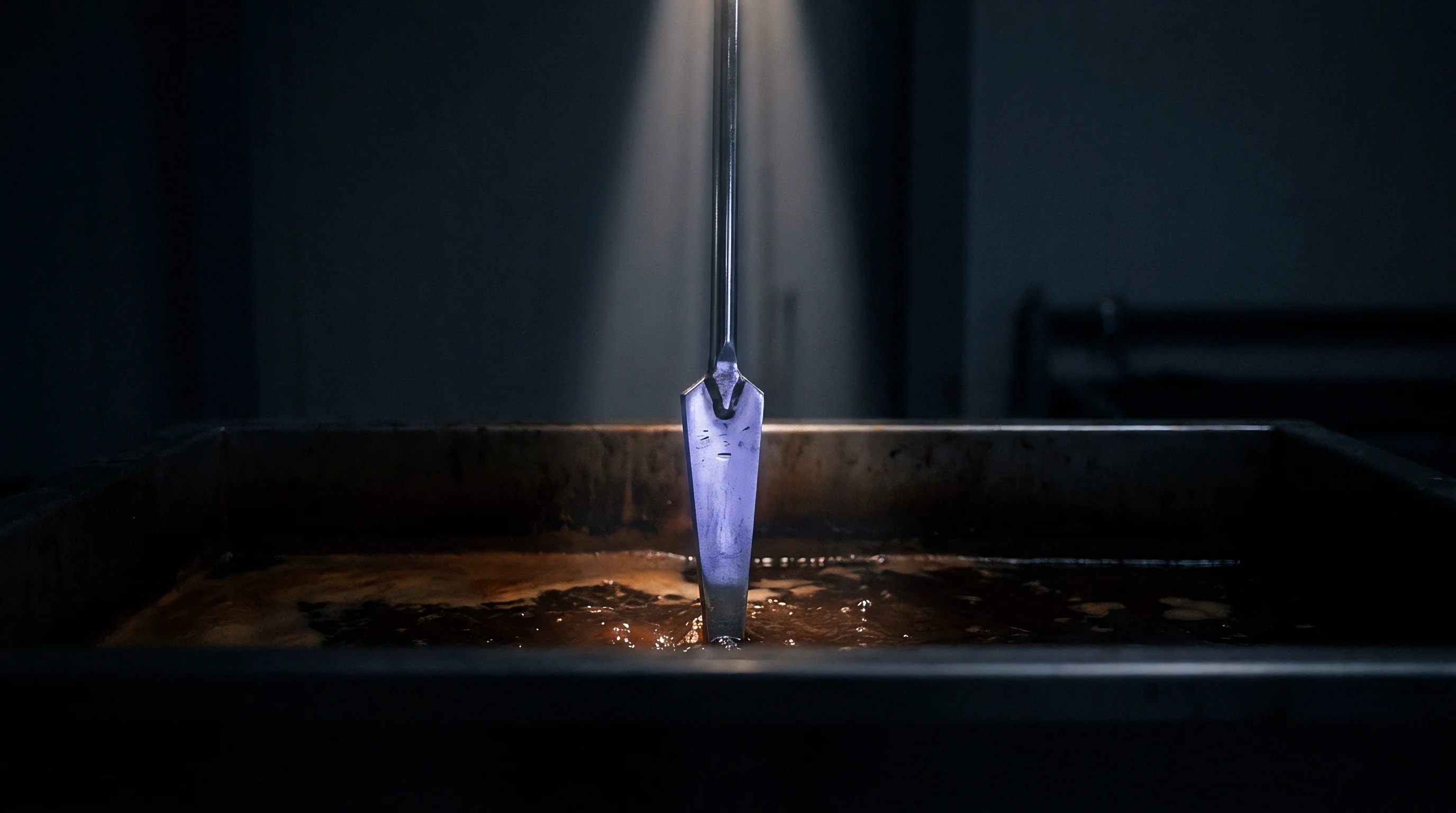
Polyelectrolyte efficiency depends on the non-Newtonian flow profile of the bath. In the padder nip, shear rates spike beyond 10,000 reciprocal seconds, demanding low viscosity to enable liquor penetration into the yarn core. Inside the radiant pre-dryer, external mechanical shear falls to zero, leaving the liquor subject only to micro-capillary forces operating at shear rates between 0.01 and 0.1 reciprocal seconds.
Under these resting conditions, the polyelectrolyte must develop a yield point that halts fluid motion entirely.
| Polymer Chemistry | Concentration (g/L) | Viscosity at 0.1 s⁻¹ (mPa·s) | Viscosity at 1000 s⁻¹ (mPa·s) | Yield Stress (Pa) |
|---|---|---|---|---|
| Sodium Polyacrylate (Linear) | 10.0 | 1,450 | 42 | 0.85 |
| Sodium Polyacrylate (Crosslinked) | 8.0 | 3,800 | 58 | 2.10 |
| Carboxymethyl Cellulose (High MW) | 15.0 | 820 | 65 | 0.32 |
| Alginate Modified Hybrid | 12.0 | 1,100 | 50 | 0.55 |
Temperature changes inside the infrared chamber alter this rheological resistance. As the wet web warms from 25 to 65 degrees Celsius within the radiant field, thermal agitation breaks hydrogen bonds, lowering the bulk solution viscosity according to an Arrhenius relationship. Crosslinked polyelectrolyte networks resist this thermal thinning better than linear cellulose derivatives.
The crosslinked structures maintain their steric cage around dye particles, preventing particulate aggregation and dye movement even as thermal energy accelerates molecular diffusion.
Excessive polyelectrolyte viscosity creates severe production defects. Liquor viscosities exceeding 80 millipascal-seconds at pad nip shear rates cause liquor buildup on the doctor blades and roller faces. The dye solution fails to enter the core of tightly twisted warp yarns in heavy twill fabrics.
Squeezing leaves the fabric surface heavily coated while the core stays dry, producing skitteriness and poor rub fastness. Low viscosity below 20 millipascal-seconds at low shear fails to stop migration entirely, allowing capillary suction to move dye toward the radiant face.
Laboratory evaluation uses rotational rheometers with cone-and-plate geometry to measure shear sweeps from 0.01 to 1,000 reciprocal seconds across the working temperature range. Yield stress calculations fit the Herschel-Bulkley model to quantify the exact force required to initiate flow. Quality control teams verify that pad baths deliver an anti-migration index of at least 85% on standard cotton poplin before approving commercial production runs.
Is thermal breakdown reversible when liquor cools downstream?
Cooling downstream rarely recovers anti-migration stability because thermal exposure inside the radiant chamber triggers irreversible dehydration of hydrophilic polymer groups, leaving permanent shade variation if drying was non-uniform.

Weave

Substrate Density and Moisture Capillarity
Woven architecture dictates how liquor travels under radiant heating. Tightly constructed poplins and twills with high cover factors generate powerful capillary pressures within the fine pores between filament or staple fibres. The Washburn equation governs this fluid motion, showing that capillary flow velocity scales inversely with pore radius and directly with surface tension and liquor viscosity.
Fine yarn interstices pull moisture aggressively toward the hottest drying surface, necessitating higher anti-migration dosages than open, loosely woven substrates.
| Construction Class | Yarn Count (Ne) | Sett (Ends x Picks / inch) | Weight (g/m²) | Recommended Viscosity at 0.1 s⁻¹ (mPa·s) |
|---|---|---|---|---|
| Plain Poplin | 40/1 x 40/1 | 133 x 72 | 120 | 2,200 |
| Heavy 3/1 Twill (Drill) | 20/1 x 16/1 | 108 x 56 | 245 | 3,500 |
| Satin / Sateen | 60/1 x 60/1 | 173 x 120 | 135 | 1,800 |
| Plain Sheeting | 30/1 x 30/1 | 68 x 68 | 140 | 1,400 |
Heavy twills present internal density variations that complicate intermediate drying. In a 3/1 twill weave, warp yarns float across three picks, creating asymmetric exposure on the face compared to the back. When radiant heat strikes both sides of the vertical cloth pass, the face absorbs energy differently than the reverse due to the angled yarn geometry.
The high volume of liquor trapped in the thick warp floats moves toward the surface if the polyelectrolyte network collapses under radiant flux. Dye collects on the warp crowns, producing dark ridges along the diagonal twill line.
Polyester and cotton blends introduce split migration mechanics. In a 65/35 polyester-cotton blend, the synthetic fibre absorbs almost zero water internally, forcing all pad liquor into the interstitial spaces between filaments and the lumen of the cotton fibres. During intermediate infrared drying, water evaporates rapidly from the smooth, hydrophobic polyester surfaces.
Disperse dye particles suspended in the liquor slide along the water films and deposit preferentially on the hydrophilic cotton, disturbing the disperse-reactive dye ratio across the blend and causing significant tone-in-tone shade deviations.
Preparation chemistry directly impacts capillary suction. Uneven scouring leaves residual pectins and waxes, creating patchy drop absorbency across the width. Goods showing AATCC 79 water absorbency values greater than three seconds pull liquor irregularly across the infrared panel face, overwhelming the stabilizing action of polyelectrolyte thickeners.
Mills ensure thorough, uniform scouring and bleaching to achieve instant drop absorption under one second, eliminating localized capillarity spikes that outpace chemical migration inhibitors.
An unresolved question remains whether hydrophobic synthetic yarn geometries require chemical viscosity builders or if mechanical tension during infrared exposure sufficiently alters capillary pore volumes to suppress water transport without polymers.
Control

Dosing Systems and Bath Stability Metrics
Automated dosing systems maintain precise polyelectrolyte concentrations across continuous pad runs. Viscosity-controlled dispensing units tap directly into the fresh liquor feed line, monitoring flow via Coriolis mass flow meters. Pad liquor levels stay low, typically under 15 litres, to guarantee rapid chemical turnover every five to eight minutes.
Stagnant pad liquor allows dissolved dyestuffs and electrolytes to alter polymer chain conformations over extended production shifts, resulting in drift between the beginning and the end of a 10,000-metre dye run.
Online monitoring of intermediate moisture relies on non-contact measurement arrays situated immediately after the infrared tunnel. Microwave resonators and infrared backscatter sensors scan the fabric web from selvedge to selvedge. The sensors generate continuous moisture profiles that feed directly into the central line control loop, modulating the power supplied to individual radiant emitter modules.
- Optical moisture scanning tracks surface water reflection across the left, centre, and right fabric lanes to identify uneven edge drying.
- Coriolis mass measurement governs polymer feed rates against real-time fabric throughput to prevent viscosity dilution during automated freshwater top-offs.
- Pneumatic emitter retraction swings radiant banks clear of the web within 1.5 seconds of a range stop, preventing local cloth degradation.
- Inline rotational viscometry samples the live pad box every three minutes to detect ionic degradation before shade variation prints onto the fabric.
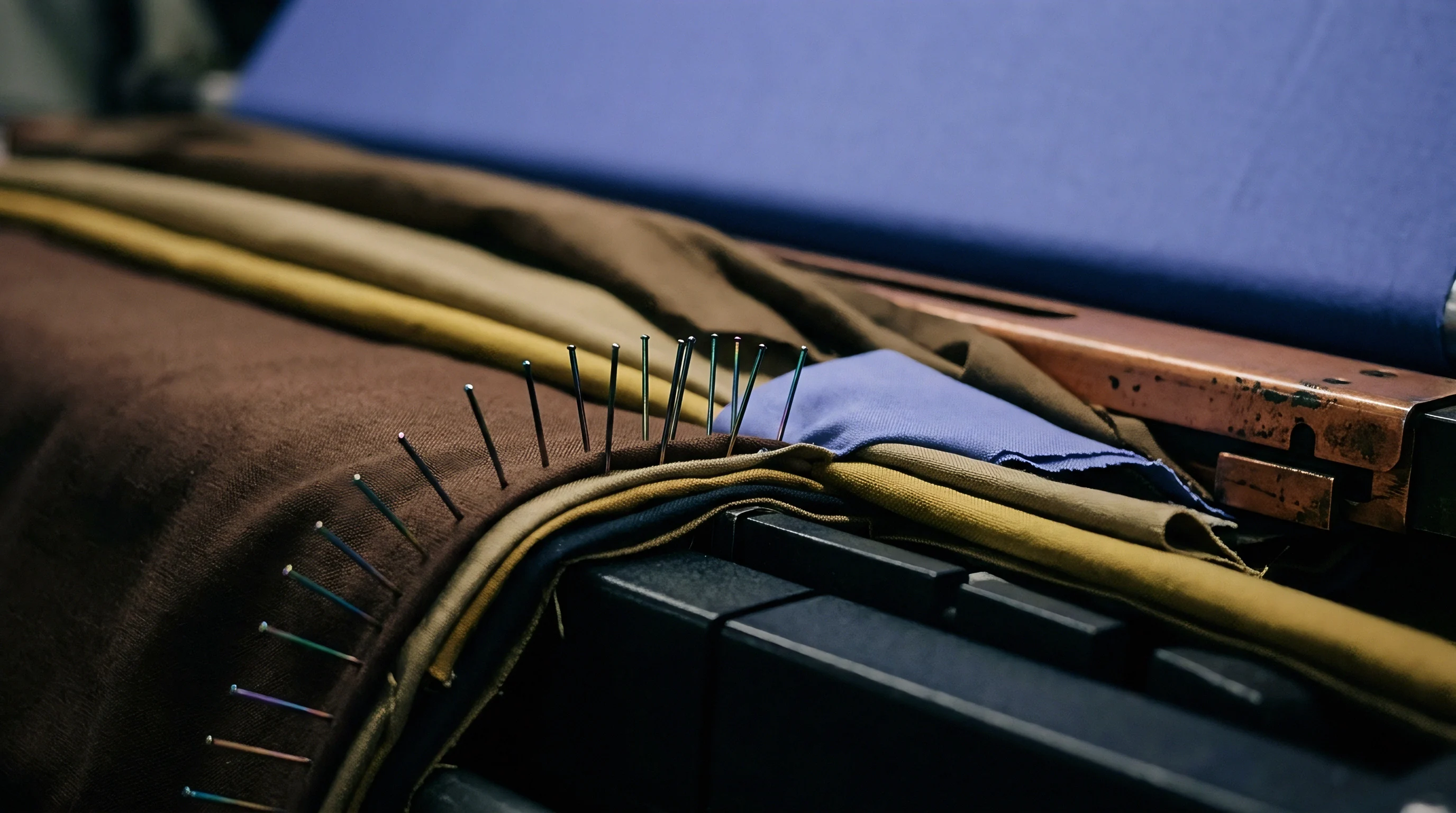
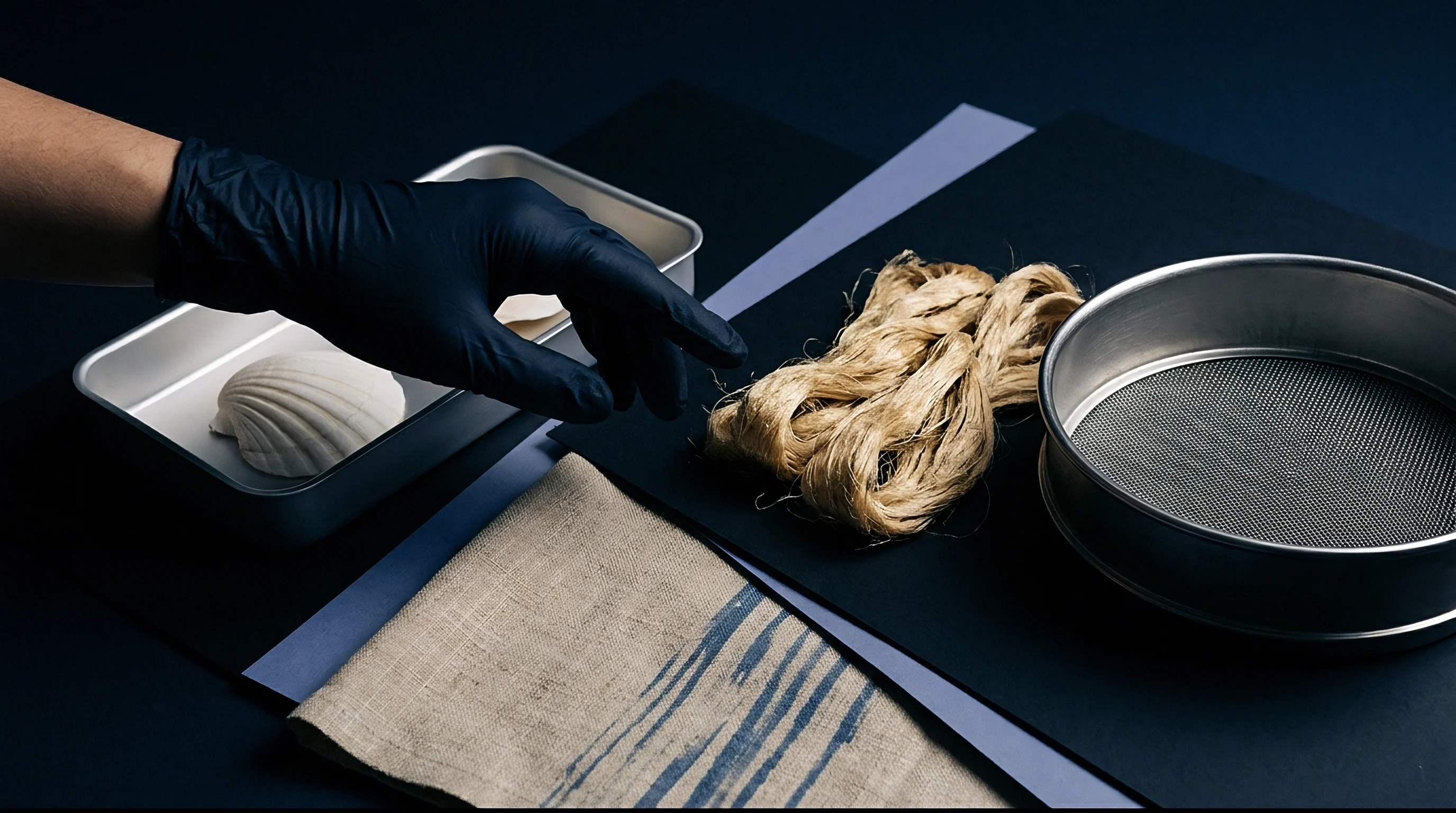
Standard laboratory testing measures the anti-migration property through AATCC Test Method 140. Technicians pad an 80-gram square sample with dye liquor containing the chosen polyelectrolyte, pin the swatch to a metal frame, cover half the sample with an opaque watch glass, and dry the entire assembly in an infrared pre-dryer. After complete drying, spectrophotometers measure the colour difference between the covered and uncovered sections.
An acceptable commercial recipe yields a delta E value below 1.5 under standard D65 illuminant, proving the dye remained fixed within the textile capillary matrix despite unilateral evaporation.
Standard purchase contracts enforce full lot rejection when Delta E edge-to-centre values exceed 0.8 under illuminants D65 and TL84.
Viscosity drift during long production runs often stems from recycled vacuum extractor water returned to the pad trough. This recovered liquor contains lint and diluted auxiliary chemicals that alter the ionic strength and baseline viscosity of the formulation. Closed-loop recovery systems filter all returned liquor through 50-micron continuous screen filters, routing the recovered volume to automated concentration adjustment tanks rather than discharging directly back to the active padder bowl.
Commercial contracts specify that any batch exhibiting two-sidedness or shade divergence beyond contract tolerances requires immediate stripping and re-dyeing solely at the finishing mill expense.
Margin
Operating Cost and Chemical Consumption Trade-Offs
Polymer selection directly impacts the cost per linear metre of dyed cloth. Synthetic polyacrylate polymers carry higher purchase costs per kilogram than crude carboxymethyl cellulose or modified sodium alginates, but they operate at significantly lower add-on levels. A standard recipe requires 8 to 12 grams per litre of concentrated crosslinked polyacrylate, compared to 25 to 35 grams per litre of technical-grade carboxymethyl cellulose to achieve equivalent anti-migration performance under identical infrared flux densities.
Energy balances determine the financial viability of intermediate pre-drying lines. Infrared pre-dryers consume large amounts of electrical or gas energy, running between 120 and 240 kilowatts per hour of active operation. Maximizing the moisture removal within the infrared zone reduces the thermal load on the subsequent steam-heated hot-flue dryer, lowering overall line steam consumption.
However, attempting to evaporate more than 35% of total water inside the infrared zone dramatically accelerates migration, forcing the use of higher polyelectrolyte concentrations that inflate auxiliary chemical budgets.
- The dyehouse technical manager calculates the dry pickup and radiant absorption limits of the base substrate to determine minimum required migration inhibition.
- Lab technicians conduct multi-point shear viscosity sweeps on trial pad formulations across temperatures from 25 to 65 degrees Celsius.
- The line supervisor sets emitter bank power output to remove between 25% and 30% fabric weight in moisture, preventing both premature surface crusting and downstream hot-flue blow-off.
- Finishing auditors verify bulk yardage under three separate industrial light sources to validate shade consistency from selvedge to selvedge before authorizing roll release to the packing floor.
A cost comparison must evaluate the risk of rejected yardage against chemical input savings. Skimping on anti-migration thickener saves fractions of a cent per metre on raw material costs, but a single shade-rejection lot wipes out the operating margin of several hundred thousand metres of dyed goods. Modern continuous finishing plants balance chemical dosing and radiant power to maintain continuous operating speeds without sacrificing colour yield or fastness properties.
When in doubt, choose the heavier crosslinked polymer over natural gums.