Analytical Limits of Skip Lot Restricted Substance Auditing in Complex Dyeing Protocols
Skip-lot RSL testing creates high consumer risk in complex dyeings because non-random chemical spikes and matrix suppression bypass statistical audit models.


Screen
Laboratories quantify regulated arylamines at concentrations down to five milligrams per kilogram using gas chromatography mass spectrometry following reductive cleavage under DIN EN ISO 14362-1. When an audit routine drops testing frequency from every dyeing lot to one in five or one in ten, the analytical baseline shifts from deterministic control to statistical probability. The invoice names three colours.
Each dyestuff formulation interacts with fiber substrates through differing affinity mechanisms, leaving uneven residues across multi-component yarn systems. A test report issued for a virgin cotton poplin substrate provides zero analytical coverage for a polyester and elastane blend dyed in the same vessel under disperse and reactive systems.
Target thresholds under European Union REACH Regulation Annex XVII entry 43 penalize twenty-two specific aromatic amines derived from azo dyes at thirty milligrams per kilogram. Brand restricted substance lists frequently lower that action boundary to twenty milligrams per kilogram, and sensitive juvenile specifications drive actionable thresholds to five milligrams per kilogram. The sample cleared the screen.
Gas chromatography detection limits easily reach one milligram per kilogram under clean solvent standards. Real dyehouse liquor introduces spinning finishes, sizing residues, leveling surfactants, and reduction clearing auxiliaries that induce significant chromatographic noise.
A quantitation limit of twenty milligrams per kilogram on a pure cellulosic substrate rises to thirty-five milligrams per kilogram when high-boiling carrier solvents distort chromatographic baselines.

Matrix Suppression in Polyamide Blends
Chemical ionization signals encounter heavy baseline drift whenever elastomeric yarns release polyurethane-derived oligomers during solvent extraction. Dichloromethane and tetrahydrofuran extract both the target banned substances and the uncrosslinked elastane fractions. Extraction solvents dissolve both.
The co-extracted matrix saturates column phases, masking target peaks for substances such as 4,4′-methylenedianiline or 2,4-toluenediamine. An instrument calibrated on clean standards yields false-negative determinations because baseline noise obscures analytes residing between five and twenty-five milligrams per kilogram.
Laboratories counter this suppression by introducing secondary solid-phase clean-up cartridges, yet clean-up recovery rates fluctuate between forty and eighty-five percent depending on operator execution. When an auditor views a passing certificate derived from a skip-lot schedule, the paper records a clean analytical value without disclosing the extraction recovery percentage. A batch carrying twenty-eight milligrams per kilogram of an extractable amine registers as non-detectable under thirty percent recovery.
The port authority laboratory extracts the identical garment using high-efficiency automated solvent extraction, identifies the target substance at thirty-one milligrams per kilogram, and rejects the entry.
| Analyte Class | Test Standard | Target Action Limit (mg/kg) | Method LOD (mg/kg) | Blend Matrix Recovery (%) |
|---|---|---|---|---|
| Cleavable Arylamines | DIN EN ISO 14362-1 | 20.0 | 5.0 | 48 to 72 |
| Alkylphenol Ethoxylates | DIN EN ISO 18254-1 | 100.0 | 10.0 | 62 to 88 |
| Chlorinated Carriers | DIN EN 17137 | 1.0 | 0.1 | 54 to 79 |
| Extractable Heavy Metals | DIN EN 16711-2 | 1.0 | 0.1 | 81 to 96 |
| Disperse Allergenic Dyes | DIN 54231 | 50.0 | 15.0 | 41 to 65 |
Chromatography separates the target isomers. The presence of non-ionic surfactants such as nonylphenol ethoxylates compounds the analytical interference by forming stable emulsions during aqueous reduction stages. Phase separation becomes incomplete, leaving cleaved amines trapped within the organic emulsion layer rather than migrating into the t-butyl methyl ether extractant.
A skip-lot auditing plan treats analytical results as binary pass or fail indicators without evaluating the quantitative recovery factor of the specific dye-substrate pairing.

Vat
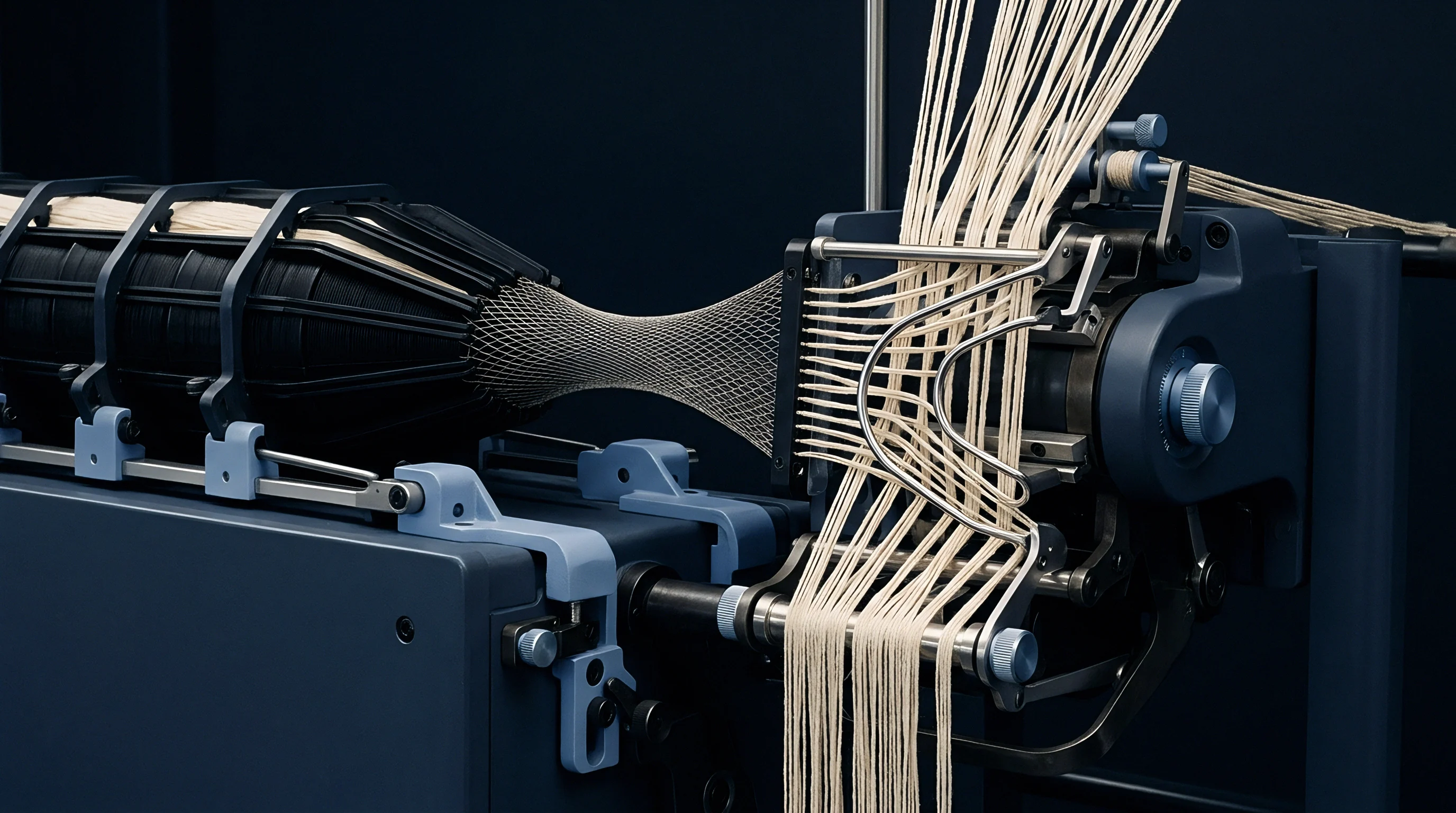
Exhaust dyeing of polyester and wool or polyamide blends operates through disjointed physical environments across differing pH, temperature, and salt regimes. Disperse dyes enter polyester at one hundred thirty degrees Celsius under pressure, whereas acid dyes fix to wool or polyamide at eighty-five to ninety-eight degrees Celsius. The dyehouse runs twenty jigs.
Auxiliary formulations applied during these sequential thermal cycles contain leveling agents, lubricating oils, carriers, and reduction clearing chemicals that accumulate inside machine pipework.

Does Fiber Partitioning Distort RSL Extraction?
Unequal chemical migration leaves restricted substances concentrated inside one fiber species while leaving adjacent fibers clean. Chlorinated benzenes and chlorotoluenes utilized as dyeing accelerators migrate into the hydrophobic polyester phase, resisting aqueous wash-off. The reduction clear failed.
When auditing occurs on a skip-lot schedule, technicians draw composite yardage samples across an entire production week. The testing laboratory blends the whole substrate during cryogenic milling, which dilutes the localized carrier concentration by forty to seventy percent.
Liquid chromatography mass spectrometry applied to the blended specimen indicates compliance with commercial thresholds. Solvent choice alters recovery. Wearers experience contact sensitization because the synthetic fiber surface maintains topical carrier levels three times higher than the milled average.
The same dynamic governs heavy metal complex acid dyes applied to wool components, where chromium VI traces concentrate in surface fiber scales while core synthetics register zero extractable metals.
- Thermal Decomposition Products release aromatic amine isomers during high-temperature stenter drying cycles when unreacted diazonium salts break down under heat.
- Machine Redeposition Artifacts migrate from contaminated stainless steel liquor paths into pale colourways dyed subsequent to heavy shade production runs.
- Hydrophobic Partitioning Discrepancies concentrate residual surfactants and ethoxylates inside elastomeric yarns, preventing uniform chemical dispersion during post-dye scouring.
- Reducing Agent Inefficiencies leave uncleaved azo fragments across synthetic microfibers when sodium dithionite concentrations drop inside continuous wash ranges.
The salt concentration shifted. Auxiliary chemical suppliers modify raw material bases without notifying dyehouse procurement teams, substituting branching structures in specialty ethoxylates to lower production costs. Mill operators view the incoming drum as an identical commodity chemistry.
The test report for lot two reflects a clean substrate, lot three receives the revised auxiliary batch, and the skip-lot protocol schedules the next physical laboratory audit for lot ten.
Persistent chemical contamination concentrates inside equipment dead-legs and transfers onto compliant cloth through successive production cycles.
A supplier explains the discrepancy by asserting that machine washing cycles run between colourways purge residual dyestuffs and chemical auxiliaries from the system.

Lot
Acceptance sampling schemes established under ISO 2859-1 operate on the mathematical premise that defect occurrences distribute randomly across production runs. Restricted substance contamination behaves deterministically rather than randomly. Contamination originates in specific chemical barrels, equipment maintenance errors, or uncalibrated dispensary scales.
A lot represents ten thousand meters of continuous yardage dyed within an eight-hour window under singular thermodynamic conditions.

Will Reduced Inspection Detect Periodic Chemical Surges?
Discontinuous auxiliary batches inject contaminants in clusters that bypass periodic screening rhythms. Mathematical probability curves demonstrate that a process running a five percent defect rate across fifty discrete batches maintains a thirty-six percent probability of passing undetected through a one-in-five skip-lot verification plan. The calculation assumes stable dispersion.
When contamination occurs as a concentrated burst across three consecutive lots, the likelihood of detection drops further unless the sampling schedule lands precisely upon those production dates.
Operating characteristic curves quantify the exact balance between consumer risk and producer risk in chemical auditing. Consumer risk measures the statistical probability of accepting yardage containing restricted substances above regulatory thresholds. In textile compliance, consumer risk transfers directly to the brand importer of record.
Lowering audit frequency from full lot verification to reduced frequency increases consumer risk while reducing direct laboratory overhead.
| True Contamination Rate (%) | Full Inspection Detection Rate (%) | Skip-Lot 1 in 4 Detection Rate (%) | Skip-Lot 1 in 8 Detection Rate (%) | Consumer Border Risk (%) |
|---|---|---|---|---|
| 1.0 | 99.0 | 24.8 | 12.4 | 87.6 |
| 2.0 | 99.9 | 49.2 | 24.6 | 75.4 |
| 5.0 | 100.0 | 81.4 | 40.7 | 59.3 |
| 10.0 | 100.0 | 96.5 | 65.1 | 34.9 |
| 20.0 | 100.0 | 99.9 | 89.3 | 10.7 |
| Values reflect binomial distribution probabilities across an inspection sequence of twenty discrete dye lots under ISO 2859-3 transition rules. | ||||
- The qualification stage verifies ten consecutive batches with zero restricted substance non-conformances under comprehensive gas chromatography and spectrometry panels.
- The transition decision shifts the auditing cadence from continuous verification to a reduced inspection frequency of one test per four finished production lots.
- The monitoring cycle evaluates ongoing chemical inventory declarations, water treatment plant discharge screenings, and supplier safety data sheet updates.
- The disqualification threshold triggers immediate reversion to full testing whenever an auxiliary formulation changes or an analytical result exceeds half the target limit.
Statistical sampling models fail when the underlying chemical defect originates from intermittent mechanical dosing rather than homogeneous process variation.
The standard sets zero tolerance. Importers using skip-lot testing accept blind exposure to clustered chemical failures while holding laboratory certificates that attest to statistical compliance. What mathematical threshold justifies accepting an uninspected batch when regulatory customs authorities apply deterministic single-garment testing at the port of entry?


Audit
Internal factory testing relies heavily on indirect verification tools, including screening spectrometers and chemical inventory ledgers. X-ray fluorescence spectroscopy screens for total elemental content such as lead, cadmium, and arsenic rapidly without requiring wet chemical acid digestion. A screening result shows total chromium below actionable limits.
It cannot determine the oxidation state to confirm whether the detected metal exists as non-restricted trivalent chromium or regulated hexavalent chromium under EN ISO 17075-1.

Laboratory Extraction Discrepancies across Solvent Systems
Accredited commercial laboratories apply differing extraction temperatures and durations that alter analytical yields. Tetrahydrofuran extracts plasticizers and phthalates from coatings by swelling the polyurethane matrix completely. In contrast, hexane or methanol extractions dissolve only surface-bound compounds.
The choice of solvent shifts recovery numbers by three hundred percent on identical coated fabrics.
When an auditor relies on a factory-supplied report, the analytical document rarely states the swelling efficiency of the extraction matrix. Polyvinyl chloride and polyurethane transfer films contain ortho-phthalates restricted under Annex XVII entry 51 at one thousand milligrams per kilogram combined. A quick ultrasonic extraction in methanol yields four hundred milligrams per kilogram, appearing compliant.
The port enforcement laboratory performs Soxhlet extraction in dichloromethane for sixteen hours, liberating twelve hundred milligrams per kilogram and triggering import rejection.
| Polymer Matrix | Target Analyte | Solvent System | Extraction Duration (h) | Reported Yield (mg/kg) |
|---|---|---|---|---|
| Polyester / Elastane | Dimethylformamide | Methanol Ultrasonic | 1.0 | 140.0 |
| Polyester / Elastane | Dimethylformamide | Tetrahydrofuran Soxhlet | 6.0 | 620.0 |
| Polyurethane Coating | Bis(2-ethylhexyl) Phthalate | Hexane Shaking | 2.0 | 310.0 |
| Polyurethane Coating | Bis(2-ethylhexyl) Phthalate | Dichloromethane Soxhlet | 8.0 | 1450.0 |
| Wool / Acrylic | Extractable Nickel | Acid Sweat Solution | 4.0 | 0.8 |
| Wool / Acrylic | Total Nickel Content | Nitric Acid Microwave | 2.0 | 14.2 |
Analytical discrepancies arise also from pH-dependent desorption mechanics during sweat extraction tests under DIN EN ISO 105-E04. Heavy metals bind tightly to keratin fibers in acidic sweat formulations at pH 5.5, remaining undetected. Alkaline sweat formulations at pH 8.0 break the coordination bonds, releasing cobalt, copper, and nickel into solution above regulated thresholds.
- Solvent Swelling Capacity dictates whether restricted processing solvents such as N-methyl-2-pyrrolidone escape from dense elastomeric fibers during laboratory testing.
- Hydrolytic Cleavage Kinetics transform conjugated azo structures into free aromatic amines under elevated extraction temperatures during non-standardized test steps.
- Co-Eluting Interferences produce false positive signals on low-resolution quadrupole detectors unless confirmation occurs through triple quadrupole tandem mass spectrometry.
- Calibration Curve Truncation obscures non-linear instrument responses when sample concentrations exceed the upper linear dynamic range of the detector.
Standard purchase order contract terms stipulate that all testing must conform strictly to the latest published international standard revision, which automatically invalidates factory certificates generated under superseded test methods.


Exposure
Customs authorities operate targeted risk algorithms that flag shipments based on origin, tariff classification, fiber composition, and historical compliance data. The container remains detained. Importers clearing textiles into the European Union or the United States bear legal responsibility for regulatory compliance under strict liability doctrines.
An unevidenced skip-lot certificate provides no legal defense against penalties administered under REACH, the Consumer Product Safety Improvement Act, or California Proposition 65.

Landed Costs and Detention Penalties
Border authorities hold containers at container freight stations while drawing enforcement swatches for sovereign laboratory testing. The buyer pays the demurrage. Demurrage charges accumulate at rates between one hundred fifty and four hundred dollars per day per container.
Commercial laboratory re-testing under priority rush turnaround commands three times standard list pricing, adding thousands of dollars to the clearance file.
If government testing detects thirty-four milligrams per kilogram of 4-aminobiphenyl against the thirty milligram limit, the entire consignment faces destruction or mandatory re-exportation under customs bond. The mill absorbs the loss. Factory indemnification clauses become uncollectible across international borders when offshore suppliers reject third-party re-test results or enter insolvency.
The brand writes off the landed inventory cost and loses retail shelf placement for the seasonal product line.
A certificate issued without direct batch correlation shifts full customs liability directly onto the balance sheet of the importing entity.
Supply agreements that lack explicit batch-level testing mandates leave the buyer carrying the complete cost of cargo seizure, product recalls, inventory write-downs, and regulatory fines.