Resolving Microscopic Chemical Residue Attribution Limits in High Velocity Continuous Commission Dyeing
Resolving chemical trace limits requires split greige sampling and mass balance washing audits before attributing parts-per-million residues to continuous dyers.

Baseline
Commission houses processing cotton, polyester, and polyamide blends at speeds exceeding eighty metres per minute face strict chemical compliance audits under brand Restricted Substance Lists and zero-discharge frameworks. Testing laboratories regularly detect trace residues between 0.05 and 10 parts per million for alkylphenol ethoxylates, perfluorinated substances, polycyclic aromatic hydrocarbons, and chlorophenols. These microscopic chemical traces trigger shipment holds and commercial rejections.
The primary technical dispute centres on where these chemicals entered the substrate. Greige yarn preparations, knitting oils, synthetic sizes, wet-processing auxiliary carryover, and mechanical cross-contamination all deposit measurable traces on the finished yardage.
Greige Contaminant Backgrounds and Incoming Sizing
Incoming woven or knitted yardage arrives with chemical loads deposited during spinning, coning, sizing, and weaving. Weaving mills apply modified starches, polyvinyl alcohol, and polyacrylate binders to warp yarns at concentrations between five and twelve percent on weight of yarn to endure loom abrasion. Spinning mills coat fibers with emulsified coning oils, iso-paraffins, and synthetic fatty acid esters to manage static electricity and fiber-to-metal friction during ring spinning and rotor operations.
Knitting facilities lubricate circular knitting needles with formulated mineral oils or polyalkylene glycols that contain ethoxylated surfactant stabilizers to facilitate subsequent water washing.
Speed compounds chemical risk.
Greige mills buy cheap lubricants. Low-cost needle lubricants and fiber spinning finishes often incorporate technical-grade nonylphenol ethoxylates as emulsifiers. When continuous prep ranges scour the substrate at ninety metres per minute, the dwell time inside chemical saturators drops to under fifteen seconds.
The washing boxes have insufficient contact time to solubilize and remove high molecular weight surfactants embedded deep inside the yarn core. Hydrophobic wax matrices and oxidized synthetic oils trap trace surfactants against the fiber surface. Incomplete desizing and scouring leave measurable nonylphenol ethoxylate residues between one and fifteen parts per million on the uncolored material before it ever reaches the dyehouse pad trough.
Analytical Detection Limits versus Brand Action Thresholds
Laboratories employ gas chromatography-mass spectrometry, liquid chromatography-tandem mass spectrometry, and inductively coupled plasma mass spectrometry to identify chemical contamination. These instruments achieve limits of detection below 0.01 parts per million and limits of quantification around 0.05 parts per million. Major apparel brands establish actionable safety limits for finished fabric that hover near these analytical noise floors.
A brand specification targeting zero alkylphenol ethoxylates typically sets its commercial rejection limit at five or ten parts per million, which sits within striking distance of the baseline residue already present on incoming greige goods.
| Chemical Compound Class | Primary Contamination Origin | Analytical Method | Limit Of Quantification | Standard Brand Action Limit |
|---|---|---|---|---|
| Nonylphenol Ethoxylates (NPEO) | Spinning finishes, knitting oil emulsifiers, scouring agents | LC-MS/MS (EN ISO 18254-1) | 0.05 mg/kg | 10.0 mg/kg |
| Per- and Polyfluoroalkyl Substances (PFAS) | Dye-range fluoropolymer seals, water repellents, intake water | LC-MS/MS, GC-MS | 0.02 mg/kg | 0.10 mg/kg |
| Chlorinated Benzenes and Toluenes | Polyester carrier residues, synthetic size preservatives | GC-MS (DIN 54231) | 0.05 mg/kg | 1.0 mg/kg |
| Organotin Compounds | Polyurethane sizing crosslinkers, biocide treatments | GC-MS (ISO 17353) | 0.02 mg/kg | 0.50 mg/kg |
| Free and Hydrolyzed Formaldehyde | Resin finishers, pigment printing binders, fixatives | UV-Vis / HPLC (ISO 14184-1) | 5.0 mg/kg | 16.0 mg/kg |
When buyers test finished goods without documenting incoming greige purity, downstream dispute resolution stalls. A commercial dyeing order of forty thousand metres of 180 gsm cotton interlock represents twenty thousand dollars in conversion value but over one hundred thousand dollars in substrate liability. Failure to document the background chemical burden shifts total financial liability onto the commission dyer, triggering inventory write-offs and cargo abandonment at the discharge port.
Bath
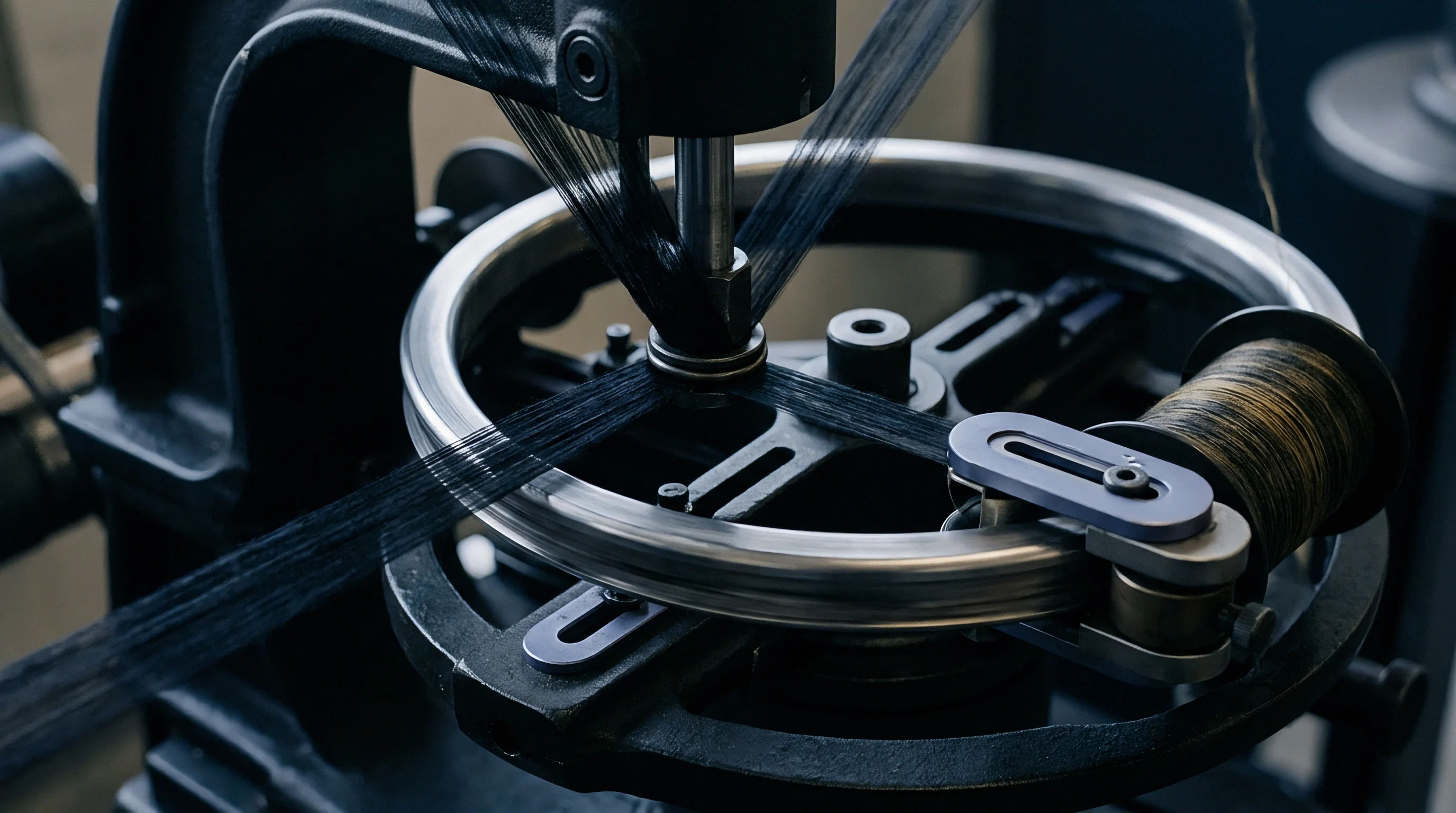
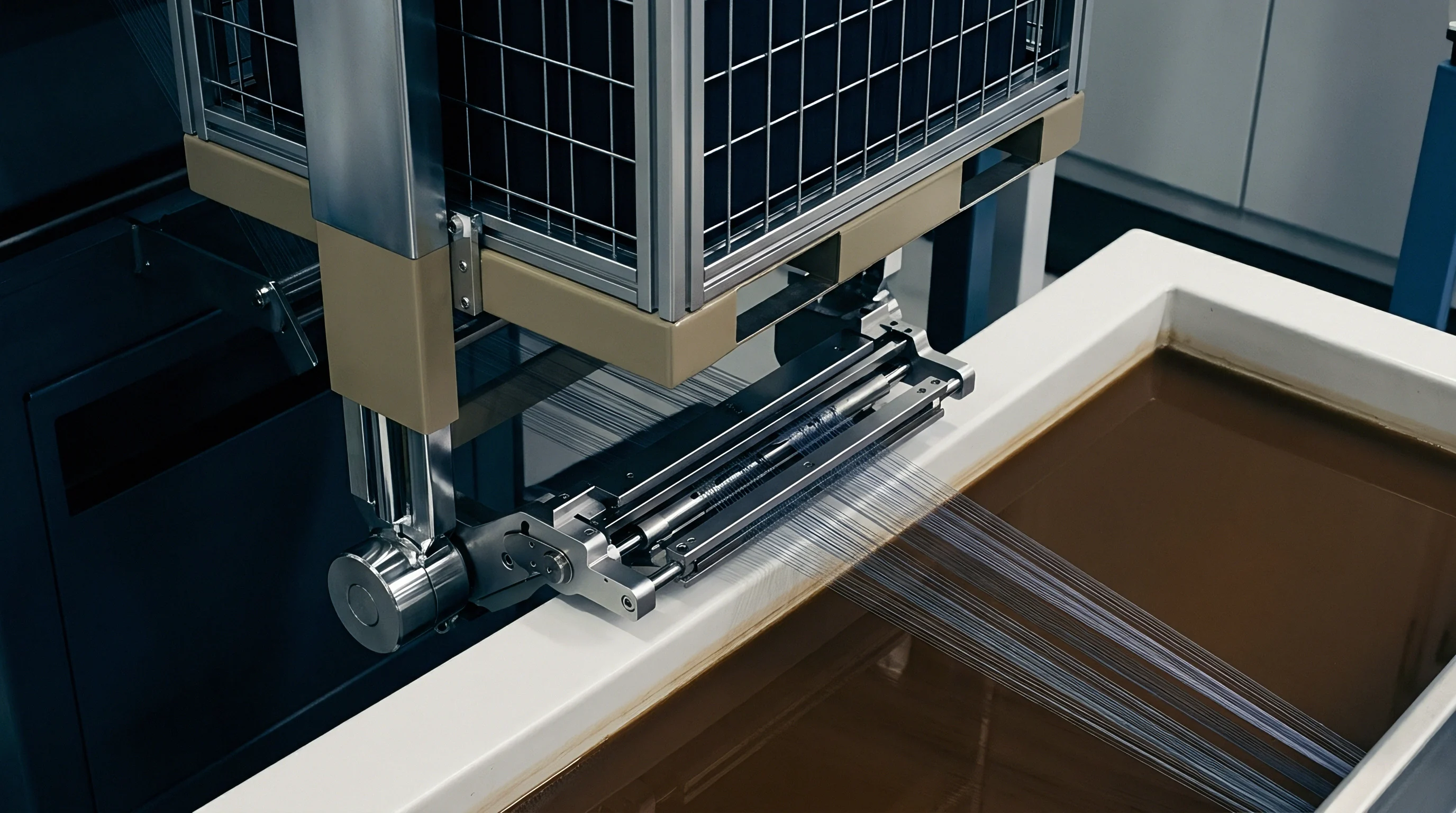
Continuous dye ranges depend on rapid chemical equilibrium inside the padder trough to deposit level color across thousands of linear metres. Fabric moving through a continuous pad mangle at eighty to one hundred metres per minute displaces its own volume of air into the trough while drawing chemical liquor forward into the squeeze nip. The bath volume in a modern continuous trough measures between fifteen and thirty-five litres to minimize drain-down losses.
At high running speeds, this low trough capacity creates extremely rapid liquor turn rates, refreshing the entire fluid volume every ninety to one hundred and twenty seconds.
Pad Mangle Liquor Exchange at High Velocities
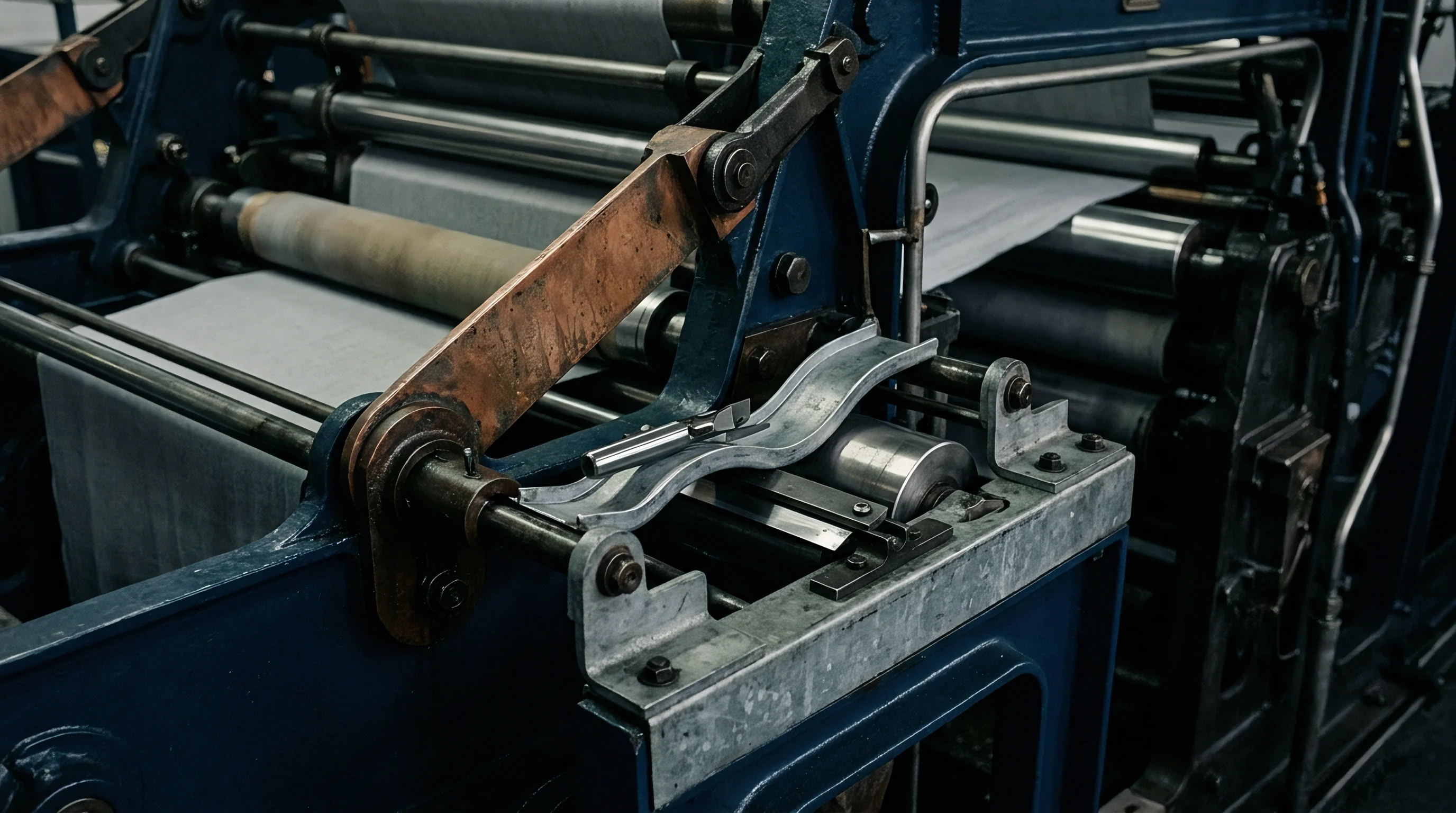
Impregnation dynamics alter when fabric traverses the chemical bath in under one second. At ninety metres per minute, cloth spends approximately 0.6 seconds submerged in a one-metre dip path. Fluid boundary layers surrounding moving yarns resist penetration, forcing chemical exchange into the squeeze nip under pneumatic or hydraulic roll pressures of three to six bars.
The wet pick-up ranges from sixty to sixty-five percent on woven cotton and seventy to seventy-five percent on open-width circular knits.
Pad liquor exchange happens rapidly.
Tension spikes displace wet pick-up.
If incoming cloth brings residual surface oils, non-ionic emulsifiers, or silicone lubricants from upstream spinning, these contaminants strip out under nip pressure and accumulate inside the dye trough. The padder acts as a continuous liquid-liquid extraction unit. The hydrophobic contaminants build up in the dye bath until reaching equilibrium with the incoming cloth, redistributing across subsequent yardage in micro-droplets.
This mechanical accumulation concentrates greige-borne residues directly onto the fiber surface alongside dyestuffs and wetting agents.
Under continuous pad-steam operations running at eighty-five metres per minute, bath turnover cycles occur every one hundred and ten seconds.
Continuous Countercurrent Washer Dilution Failure Points
Post-dyeing wash lines consist of six to ten wash boxes arranged in countercurrent cascade to minimize freshwater consumption. Fresh water enters the final wash box at sixty to eighty degrees Celsius and cascades backward toward the first box, flowing counter to fabric movement. Standard operational flows target five to eight litres of fresh water per kilogram of processed cloth.
At high web velocities, dynamic boundary-layer drag pulls significant volumes of contaminated wash liquor forward from box to box, disrupting the countercurrent gradient.
Clean wash water costs real money.
When washing ranges operate above eighty metres per minute, mechanical carryover between roll nips degrades washing efficiency by twenty to thirty percent compared to static calculations. Squeegee rolls between boxes wear out, allowing high-concentration liquor from the soaping chambers to migrate toward the discharge end. If the wash range experiences water recycling from an on-site treatment system, dissolved trace organic residues re-enter the rinsing sequence.
The commission dyer routinely claims that factory intake water contains trace surfactants beyond their internal filtration threshold.


Carryover
Chemical contamination frequently occurs downstream of wet processing during thermal drying, heat-setting, and curing. Stenter frames running continuously at eighty to one hundred and twenty metres per minute pass dry fabric through multiple heated zones maintained between one hundred and forty and two hundred and ten degrees Celsius. High-velocity air nozzles direct hot process air against both fabric faces to maximize moisture evaporation and fiber relaxation.
These drying chambers accumulate vaporized chemistry from every production lot processed through the machinery.
Thermal Volatilization and Condensation inside Stenter Housings
Hot circulating air volatilizes volatile organic compounds, fatty acid esters, silicone oils, and leveling agents from running goods. When processing elastane blends, the stenter pulls off polydimethylsiloxanes and mineral oils added to elastane fibers to prevent thread-bonding. These airborne vapors circulate through exhaust ducts, heat-recovery heat exchangers, and internal ceiling panels.
As circulating air contacts uninsulated machine sections, cold lint collection screens, or exhaust baffles, the vapors condense into viscous oily sludges.
Volatiles collect in cold ductwork.
Dripping condensate ruins entire dye lots.
These condensed residues do not remain inert within the machine exhaust system. High air circulation velocities dislodge condensate droplets from upper blower housings, allowing them to fall back onto passing yardage. Cross-contamination between consecutive lots occurs through this atmospheric recycling.
A commission dyer may run an uncertified polyester lot containing brominated flame retardants or fluorinated soil-release agents, followed immediately by a light-weight organic cotton poplin intended to meet the highest international infant wear certifications. The cotton fabric collects aerosolized volatile residues off the stenter air stream without a single droplet of liquid contamination touching the padder.
Contamination vectors within the drying and heat-setting chamber include specific machine components:
- Stenter Exhaust Heat Exchangers trap condensed plasticizers, cyclic siloxanes, and carrier residues on cooling fins that dislodge during rapid airflow shifts.
- Blower Fan Impellers accumulate baked spin finishes and heavy metal residues, ejecting micro-flakes into process air streams at elevated operating temperatures.
- Tenter Pin And Clip Chains transfer synthetic high-temperature lubricants containing organophosphate anti-wear additives directly onto fabric selvedges during lateral tensioning.
- Internal Roof Baffles condense airborne paraffin waxes and volatilized surfactant fragments, dripping contaminated liquor drops directly into the open fabric path.
Worked Mass Balance across High Speed Wash Boxes
Calculating the accumulation of non-ionic surfactants inside continuous wash systems reveals how rapidly background concentrations cross brand compliance boundaries. Take a high-speed continuous dye range processing 180 gsm woven twill at ninety metres per minute. The fabric mass throughput equals 14.58 kilograms per minute.
Assume the incoming greige cloth carries an unreacted nonylphenol ethoxylate residue of forty milligrams per kilogram (parts per million) due to poorly scoured knitting oil. The scouring and dye-pad ranges remove fifty percent of this load, delivering fabric to the continuous wash boxes with twenty milligrams per kilogram of residual NPEO.
The post-wash sequence employs six wash boxes in countercurrent cascade with a fresh water inlet rate of six litres per kilogram of fabric, producing an absolute water feed of 87.48 litres per minute into Box 6. Mechanical liquor carryover between intermediate box nips is measured at thirty percent of fabric weight, representing 4.37 litres per minute of liquor drawn forward against the countercurrent flow. Box 1 receives the highest contaminant load from incoming goods, while subsequent boxes dilute the remainder.
The mathematical mass balance across the steady-state system yields distinct concentrations inside each washing cell.
| Washer Stage | Operating Temperature | Liquor Volume | NPEO Extraction Rate | Steady-State Bath Concentration | Substrate Residual Load |
|---|---|---|---|---|---|
| Box 1 (Entry) | 50 °C | 1200 L | 40% | 14.80 mg/L | 12.00 mg/kg |
| Box 2 | 70 °C | 1200 L | 25% | 5.92 mg/L | 9.00 mg/kg |
| Box 3 (Soaping) | 95 °C | 1200 L | 15% | 2.45 mg/L | 7.65 mg/kg |
| Box 4 (Soaping) | 95 °C | 1200 L | 10% | 1.02 mg/L | 6.88 mg/kg |
| Box 5 (Rinsing) | 70 °C | 1200 L | 5% | 0.41 mg/L | 6.54 mg/kg |
| Box 6 (Final Exit) | 40 °C | 1200 L | 2% | 0.14 mg/L | 6.41 mg/kg |
The calculation reveals that even with a high fresh water feed rate of six litres per kilogram, the fabric exits Box 6 retaining 6.41 milligrams per kilogram of nonylphenol ethoxylates. If the brand buyer enforces a finished fabric limit of five parts per million, this production run fails commercial compliance. The contamination originated on the raw yarn, survived pre-scouring, and remained on the cloth because high line speed limited washing kinetics.
Continuous processing ranges operating with dynamic carryover above twenty-five percent deposit measurable chemical gradients across single production shifts.
Physical dynamics between boundary layer fluid mechanics and airborne thermal transfer leave unanswered whether chemical residues present at 0.1 parts per million can ever be partitioned cleanly between yarn spinners, chemical suppliers, and wet processing mills without continuous digital mass spectrometry monitoring.
Fault
Determining liability for microscopic chemical residues requires defensive testing structures established before bulk processing commences. When finished yardage fails an analytical test at an overseas port, commission dyers routinely blame greige yarn supplies, while greige weavers insist their sizing recipes wash out completely in neutral water. Converters and buyers caught between these claims bear immediate financial loss unless an unbroken chain of physical custody proves exactly where the target chemical attached to the fabric matrix.
Partitioning Responsibility through Retained Greige Swatches
Defensive quality verification demands an explicit physical swatch retention protocol executed at fabric delivery. As greige rolls enter the commission warehouse, receiving inspectors cut two-metre full-width swatches from ten percent of the incoming roll population. These swatches are labeled with greige lot numbers, weaver identity, roll identifiers, and delivery dates.
Vacuum-sealing swatches inside clear, plasticizer-free polytetrafluoroethylene bags prevents ambient laboratory contamination and cross-transfer of plasticizers like bis(2-ethylhexyl) phthalate.
Split swatches establish legal truth.
Solvent extraction strips fiber finish.
Spectrometry leaves no room for debate.
Establishing attribution requires an immutable four-step chain-of-custody testing procedure:
- Greige Receipt Sampling collects composite representative samples from outer, middle, and inner layers of ten percent of raw rolls upon warehouse arrival, storing samples in hermetically sealed inert bags.
- Chemical Intake Logging catalogs certificates of analysis, chemical abstracts service numbers, and commercial batch lots for all dyestuffs, leveling agents, and softeners introduced into the continuous padder.
- Scoured Substrate Extraction cuts swatches immediately following the pre-treatment washing range prior to dye immersion to verify the efficiency of background chemical removal.
- Split-Sample Laboratory Archiving partitions failed finished goods swatches into three sealed portions for dyer analysis, buyer validation, and independent referee arbitration testing.
ISO 17025 accredited laboratories establish definitive chemical attribution when analytical specimens retain complete chronological chain of custody documentation.

Laboratory Extraction Methods and False Positive Attribution
Analytical laboratories employ solvent extractions with methanol, tetrahydrofuran, or dichloromethane to pull chemical traces out of fabric samples. Ultrasonic bath agitation and accelerated solvent extraction strip not only surface finishes, but also the internal oligomers of synthetic fibers. These intense extraction methods occasionally create false positives by degrading legitimate processing aids into targeted restricted substances.
Polyamide matrices extracted with polar solvents at elevated temperatures break down to generate trace amine signals that masquerade as banned azo dye breakdown products under EN ISO 14362-1 testing.
PFAS analysis presents identical risks of false attribution. Modern testing laboratories utilize equipment containing fluoropolymer seals, polytetrafluoroethylene tubing, and perfluoroalkoxy alkanes inside liquid chromatography hardware. An aggressive baseline blank calibration procedure is necessary to eliminate background machine noise.
If a testing laboratory operates without procedural blanks run before every sample series, internal instrument contamination can generate false perfluorooctanoic acid readings between 0.05 and 0.20 parts per billion. The resulting laboratory report will wrongly declare the dyed goods non-compliant, triggering unwarranted commercial claims against the commission dyer.
The party holding sealed physical specimens taken at each machine station controls the commercial negotiation.


Settlement
Commercial resolution of chemical residue disputes hinges on contract language written into commission processing agreements long before fabric enters the pad mangle. Standard mill terms usually cap dyer liability at the net commission dyeing charge, disclaiming all responsibility for substrate value, cutting charges, shipping freight, and commercial retail cancellations. A dyer processing two dollars per metre of conversion work will not voluntarily accept liability for a twelve-dollar-per-metre greige substrate or a forty-dollar finished garment based on microscopic residue readings.
Commercial Apportionment Models and Chargeback Mechanics
When buyers face regulatory border seizures or retail product recalls due to chemical non-compliance, chargeback claims flow backward up the supply chain. If chemical testing identifies alkylphenol ethoxylates at eight parts per million on finished cloth, and the brand contract specifies a maximum threshold of five parts per million, the buyer’s billing department issues debit notes covering full production costs. Converters absorb unproven laboratory charges.
Commercial contracts demand unambiguous limits.
Margin erosion follows every unallocated claim.
Apportioning these costs requires an agreed schedule dividing liability according to proven chemical origin. If archived greige swatches prove that incoming material carried ninety percent of the measured residue load, financial liability falls on the greige weaver. If incoming greige swatches show zero contamination while finished goods display heavy residues, the commission dyer absorbs the loss.
Where cross-contamination inside continuous machinery is shared, financial chargebacks follow proportional fault allocation matrices defined in commercial agreements.
| Chemical Contaminant Group | Threshold Exceedance Range | Primary Liable Supply Partner | Financial Settlement Mechanism | Maximum Exposure Limit |
|---|---|---|---|---|
| Yarn Spin Finishes (APEO/NPEO) | > 5.0 mg/kg above baseline | Greige Weaver / Yarn Spinner | Raw material chargeback plus air freight reimbursement | 100% of greige fabric purchase value |
| Continuous Padder Cross-Contamination | > 10.0 mg/kg detected | Commission Dyehouse | Full invoice cancellation plus substrate replacement value | 200% of commission dyeing charge |
| Stenter Condensation Residues | Localized spots > 1.0 mg/kg | Commission Dyehouse | Yardage allowance deduction or strip-and-redye cost | Value of affected linear yardage |
| PFAS Water / Machine Contamination | > 0.10 mg/kg total organic fluorine | Joint Dyer and Converter Fault | Arbitration settlement splitting disposal cost | Net shared landed cost of dyed lot |
| Formaldehyde Resin Over-Application | > 16.0 mg/kg (Infant wear) | Commission Dyehouse Finishing Unit | Re-washing charge absorption or complete lot write-off | Total cost of finished goods FOB port |
Commercial liability caps default to zero substrate value unless explicit physical testing protocols are written into signed commission contracts.
Drafting Enforceable Commission Dyehouse Indemnity Provisions
Protecting capital in high velocity commission operations requires replacing generic quality warranties with precise technical covenants. Standard force majeure and commercial tolerance clauses fail to address microscopic parts-per-million chemical trace disputes. Sourcing desks and apparel brands must establish clear contractual definitions specifying analytical methods, testing laboratories, sample retention procedures, and financial caps.
Without these explicit clauses, commission dyers successfully avoid liability by attributing contamination to undetectable environmental backgrounds or upstream yarn chemistry.
A legally sound processing agreement incorporates a dedicated chemical compliance and verification clause that dictates precise financial and technical boundaries:
Commission Dyer warrants that all processing chemicals, auxiliaries, dyestuffs, and water inputs comply with ZDHC MRSL Version 3.1 standards, and agrees that chemical residues exceeding brand specifications that are absent from verified, sealed greige reference swatches extracted under Section 4 protocols establish direct dyer liability capped at three times the net processing fee plus documented substrate replacement cost.