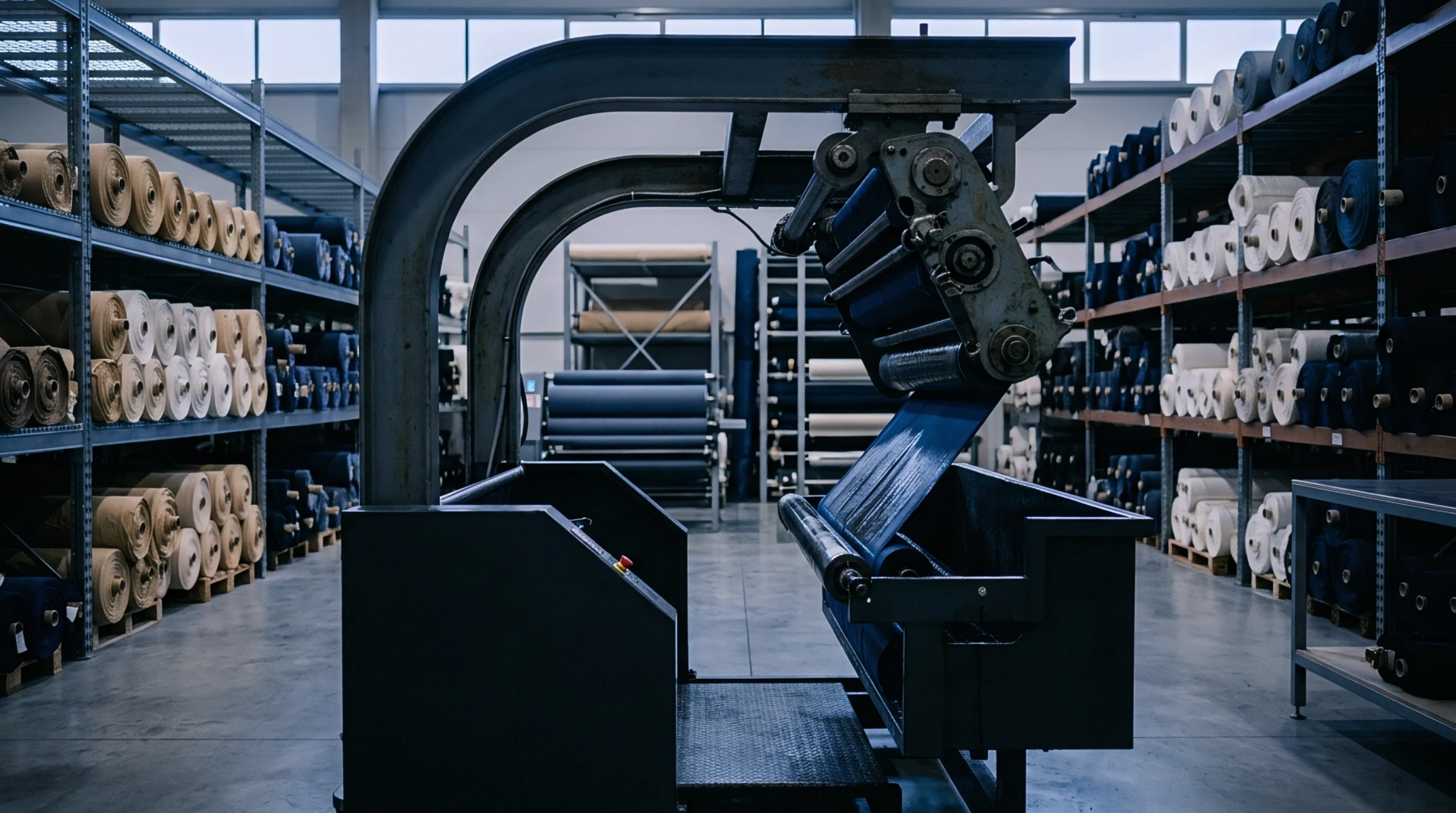
Thermal Treatment
Intermediate heating process uses infrared energy to reduce the moisture content of wet-treated fabrics before they enter a hot-air stenter or dry cans. Radiant pre-drying immobilizes the dyestuff on the fabric by rapidly removing a portion of the water. This step is critical in continuous dyeing lines to prevent dye migration during the subsequent contact drying.
Drying Sequence
Fabric passes directly through a bank of infrared heaters immediately after exiting the dye padder. Radiant pre-drying reduces the moisture of the textile material from eighty percent wet pickup down to a critical limit of about thirty percent. At this moisture level, the viscosity of the dye liquor is high enough to stop the pigment from moving.
The fabric then enters the main drying section to complete the process.
Quality Control
This step is essential for eliminating shading defects across the width of the fabric. Without the initial infrared exposure, the liquid dye would migrate toward the hotter areas of the fabric during contact drying, resulting in uneven color. The process also increases the overall line speed by sharing the thermal load with the main dryers.
It allows the mill to process more fabric per hour without expanding the physical footprint of the line.
Industrial Limit
Temperature adjustment must be made dynamically according to the line speed and fabric weight to prevent over-drying. If the fabric stops moving, the infrared source must be shielded or turned off immediately. This precaution is necessary to avoid scorching the material or causing a fire in the dryer chamber.