Woven Greige Loom Minimums and Dyehouse Vessel Capacities
Aligning woven greige warp minimums with dyehouse vessel capacities requires calculating dry mass yields and vessel fill limits to prevent shade variation.
Beam
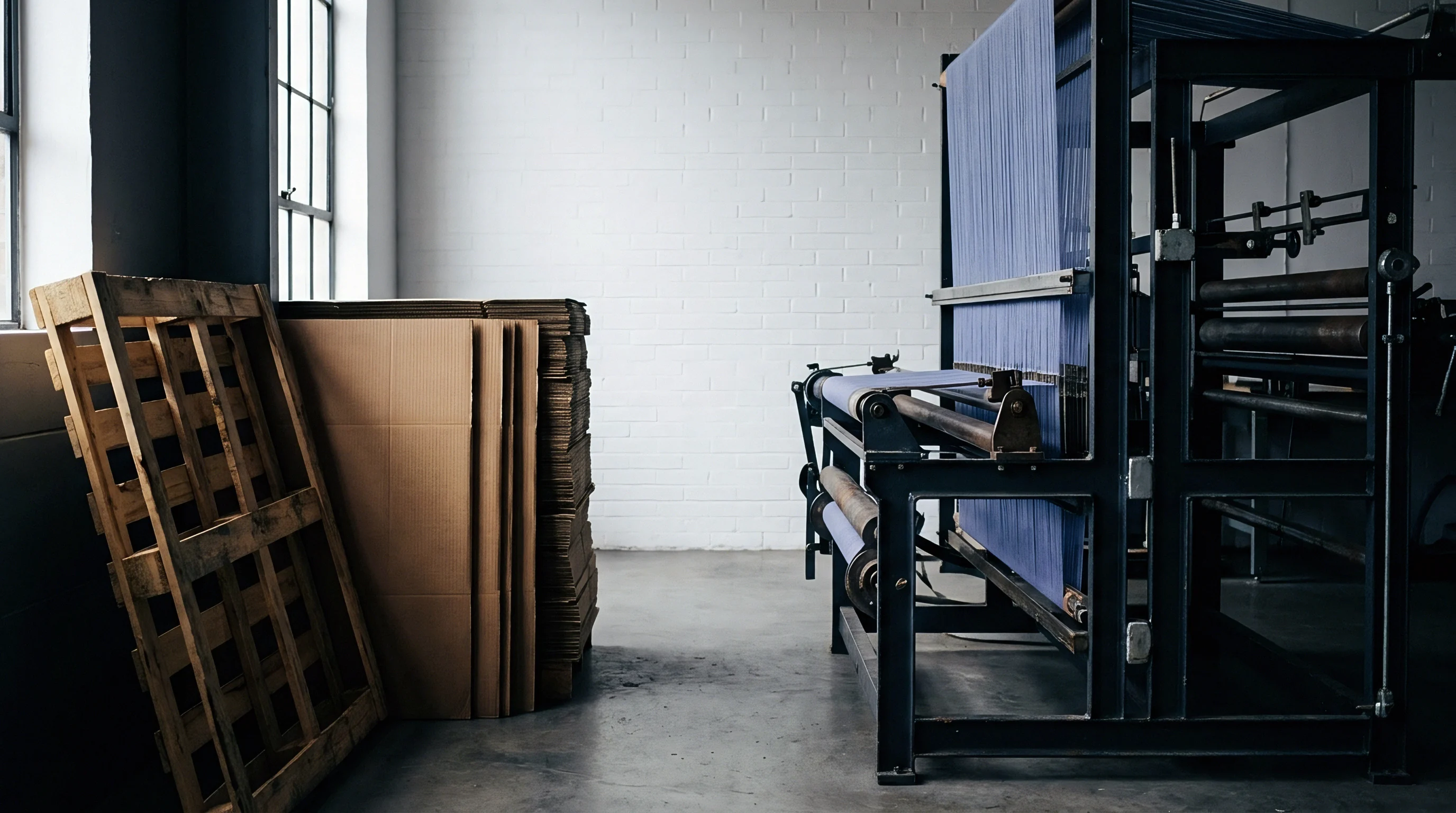
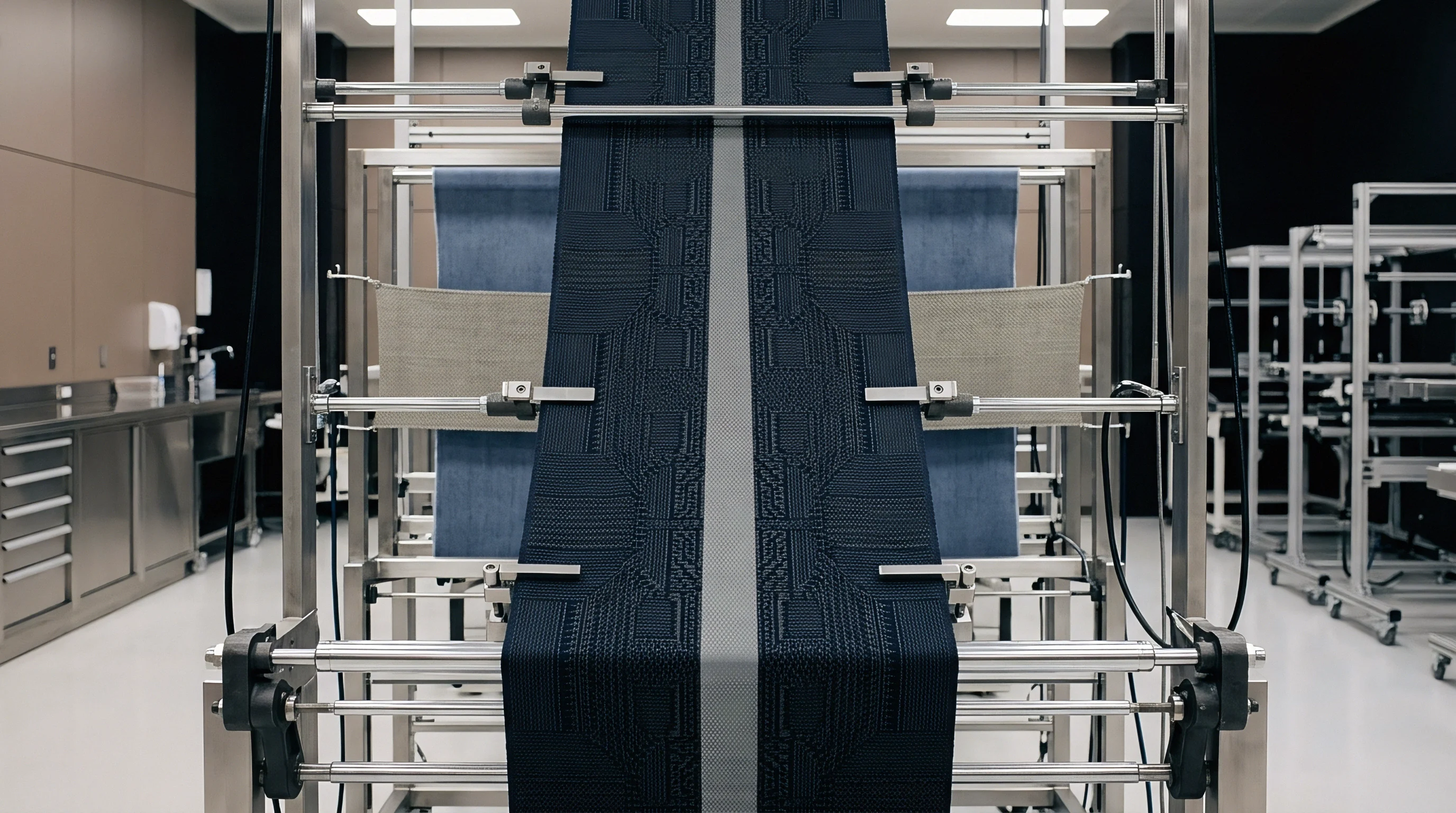
Long before a shuttle moves or a jet nozzle fires, warp preparation sets the baseline economics of a woven fabric. Modern air-jet and rapier looms run at shaft speeds between 600 and 1,200 picks per minute, putting warp yarns under constant cyclic tension and friction. Feeding these looms requires moving yarn packages from spinning or texturizing facilities onto a creel, where hundreds of individual ends unwind together onto a warp beam.
Direct beaming loads up to 1,000 ends per section right onto a master cylinder, building a dense, long-run warp for high-volume greige production. Sectional warping, by contrast, winds narrower yarn bands onto a conical drum before transferring the full warp to the loom beam. That makes it easier to handle complex color patterns or smaller runs, but setup takes longer and total yardage yield is lower.
Production volume hits its first physical wall at the creel. A standard V-creel or parallel creel holds between 540 and 800 active packages. If a fabric specification demands high warp density ~ like a 220 end-per-inch down-proof nylon taffeta at a 190-centimetre reed width ~ the total warp count tops 16,400 individual threads.
Direct-warping a job like that takes multiple beaming runs combined during sizing, creating a master set that feeds 5 to 10 weaver beams carrying 3,000 to 6,000 metres of yarn each. Shortening the beam run raises yarn waste percentages and spreads fixed setup time over fewer finished metres. Setup costs are what set minimum warp lengths.
Warp Creel Limits and Direct Beaming Dynamics
Direct warping requires equal tension across every package on the creel to avoid slack ends in sizing and weaving. With fine micro-filament yarns like 20D/72f nylon 6,6, package tension becomes tricky, reacting quickly to shifts in humidity or creel alignment. Stopping a direct warper for a single broken end leaves a slub or tension mark that shows up later in the dye bath.
Mill efficiency collapses if warp runs fall short of full creel and beaming capacity. Creel loading time takes 4 to 8 labor hours per set, whether the beam holds 1,000 metres or 10,000 metres of yarn. Tying-in machinery knots new warp ends to the tails of a finished beam on the loom in 2 to 3 hours, assuming the weave structure and end count stay the same.
Full loom drawing-in ~ required whenever changing weave patterns, reed widths, or warp densities ~ takes 6 to 14 technician hours to complete manual or automated harness and drop-wire re-threading.
Setup economics create distinct volume tiers between the two warping methods. Sectional warping works for runs down to 800 metres because the creel only holds enough packages for one pattern band, which the drum accumulates band by band before beaming off. But that flexibility comes with a heavy speed penalty: sectional warping runs at 200 to 400 metres per minute, while direct warping moves at 800 to 1,200 metres per minute.
Sizing differs too. Direct warps run from multiple beams through a slasher sizing trough in one continuous sheet, coating every filament in polyvinyl alcohol or acrylic binder. Sectional warps are often sized on the package or run bare if the yarn holds together well enough, which raises the risk of warp breaks at high weaving speeds.
Loom Setup Scrap and Warp Beam Length Economics
Loom setup consumes a fixed yardage during thread-in, sizing alignment, and reed centering. The first 30 to 50 metres off a newly tied beam go toward equalizing tension across harness frames, setting pick density, and adjusting temple roll grips. Irregular weft spacing, reed marks, and weight swings make this initial length unusable for prime fabric.
On a short 1,000-metre beam, a 50-metre setup loss means a 5 percent material scrap rate right at the start. On a standard 6,000-metre direct-beamed run, that same loss drops to 0.83 percent of total output.
Direct warping creel setups for high-density synthetic constructions achieve economic break-even only when master warp lengths exceed 5,000 metres per beam set under standard slasher sizing conditions.
Upstream yarn minimums tighten these constraints further. Spinners and texturizers sell yarn in minimum melt-charge or dye-lot batches. A throwster making custom air-jet textured polyester, for example, might set a minimum spinning batch of 1,500 kilograms per color or modification.
For a 150 gram per square metre plain weave with a 50/50 warp-to-weft split, 1,500 kilograms yields exactly 10,000 linear metres of greige fabric at 150-centimetre width. Ordering less forces the converter to hold partial yarn packages on bobbins or absorb spinner surcharges that raise raw yarn costs by 25 to 40 percent.
To work around this, converter sales desks often quote greige loom minimums down to 3,000 metres by pooling orders from buyers using identical yarn and warp specs. The mill weaves one continuous 15,000-metre warp set and cuts rolls to order off the take-up roll. This hides the structural warp minimum from smaller buyers, but it locks everyone into the weaver’s master yarn spec, thread density, and greige width.
Any request to alter warp density or pick count breaks the pool, instantly exposing the mill’s true primary warp minimum.
A weaving mill representative framed it bluntly during a dispute over short-run fees: small warp commitments force us to run high-speed rapier heads at partial capacity while absorbing full creel changeover costs on every beam.
Tank
Wet processing works under mechanical and hydraulic constraints that have nothing to do with warp preparation. A dyehouse turns greige rolls into finished colorways using either batch vessels or continuous ranges. Jet dyeing machines, atmospheric jigs, high-temperature beam vessels, and continuous pad-batch lines all enforce strict high and low volume limits.
Running a vessel outside its target fill range ruins liquor circulation, shade uniformity, and surface quality, turning usable greige into scrap.
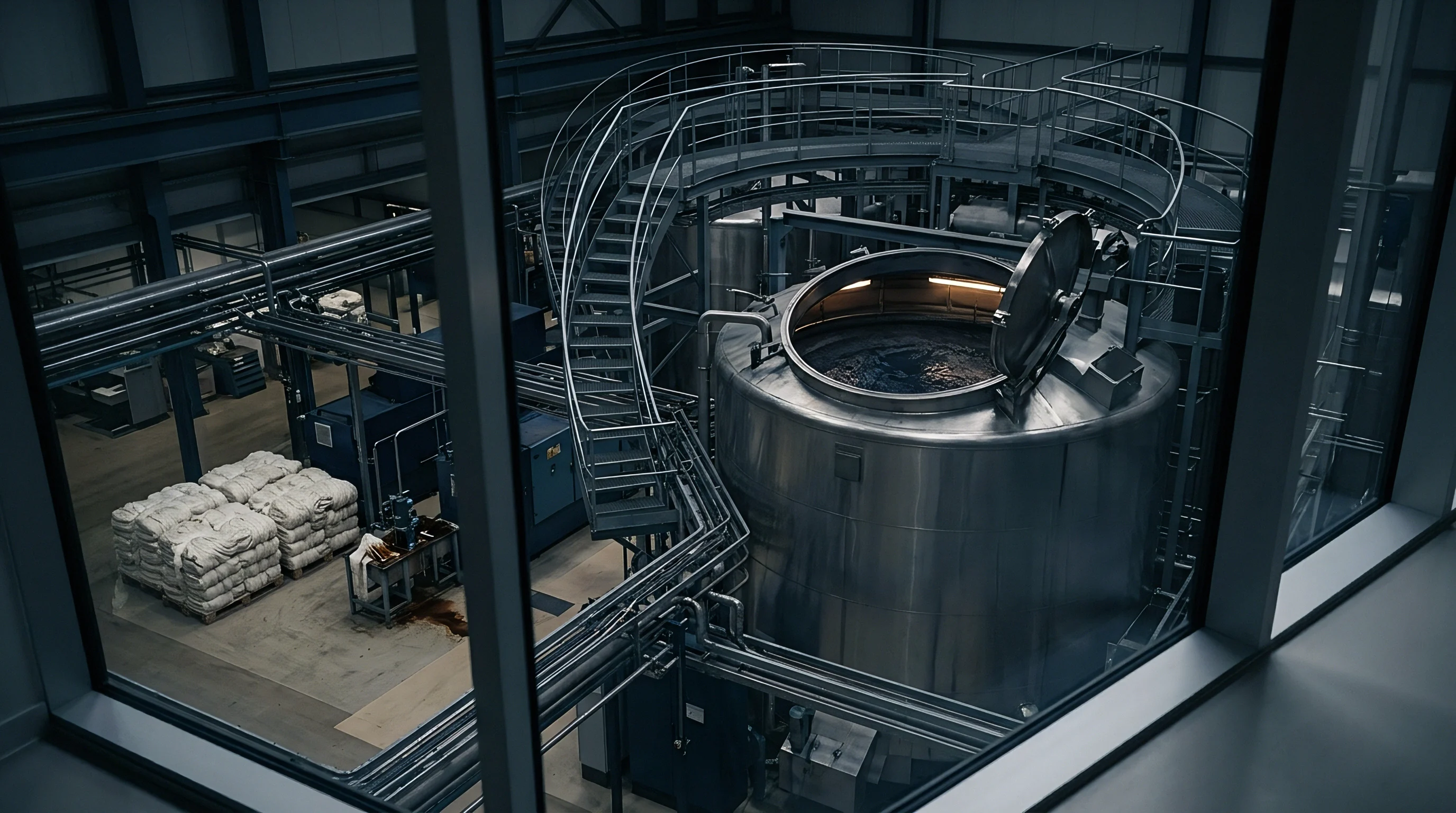
Jet dyeing vessels use a continuous liquid loop: a centrifugal pump lifts the fabric rope through a venturi nozzle and pushes it through a toroidal transport tube. The fabric moves through the tube, piles into the main chamber, and loops back to the nozzle. Proper dyeing requires balancing rope weight, fabric volume, and liquor volume.
Overloading a 300-kilogram jet tube packs the fabric too tightly into the storage chamber, slowing circulation and generating friction spots. If the rope stalls, you get dark heat marks, chafing, and heavy shade streaking along crease lines. Liquid ratios control shade uniformity.
Overflow Jet Hydraulics and Vessel Loading Limits
Underloading a jet vessel causes just as many problems. Put 120 kilograms of fabric into a 300-kilogram tube to fill a small custom color order, and the liquor ratio spikes. A vessel built to run at an optimal 1:8 ratio (1 kilogram of dry fabric to 8 liters of dye solution) dilutes to 1:20.
That extra bath volume lowers dye concentration, changes exhaustion rates, and creates excessive turbulence in the transport tube. The fabric rope twists into tight knots, leaving permanent rope marks across delicate synthetic faces. Jet nozzles shear delicate filament surfaces.
Loading calculations rely on dry fabric weight, yield in metres per kilogram, and volumetric bulk rather than simple roll length. A light 50 gram per square metre nylon ripstop takes up far more space per kilogram than a dense 350 gram per square metre cotton canvas. Dyehouse managers set charge limits by checking both physical bulk and dry mass constraints.
Loading thresholds dictate the allowable envelope for shade lot sizing across different vessel designs.
| Vessel Type | Nominal Load Capacity (kg) | Minimum Fill Threshold (%) | Optimal Fill Envelope (%) | Maximum Fill Limit (%) | Liquor Ratio Range | Target Fabric Weight Class |
|---|---|---|---|---|---|---|
| Single-Tube Soft Jet | 150 | 65 | 80 – 95 | 105 | 1:6 – 1:10 | Light-to-Medium Synthetics (70 – 180 gsm) |
| Multi-Tube High-Temp Jet | 600 (3 x 200) | 70 | 85 – 100 | 110 | 1:5 – 1:8 | Medium-to-Heavy Wovens (150 – 350 gsm) |
| Atmospheric Jig Vessel | 400 | 40 | 60 – 90 | 100 | 1:3 – 1:5 | Heavy Cellulosic Wovens (200 – 500 gsm) |
| High-Pressure Beam Dye | 250 | 50 | 75 – 95 | 100 | 1:8 – 1:12 | Sheer Filaments & Elastic Wovens (30 – 120 gsm) |
| Pad-Batch Continuous Trough | 2,000 (per run) | 80 | 90 – 100 | 120 | 1:1 – 1:2 (Padders) | Uniform Standard Wovens (100 – 300 gsm) |
Jig and Pad Batch Capacity Constraints
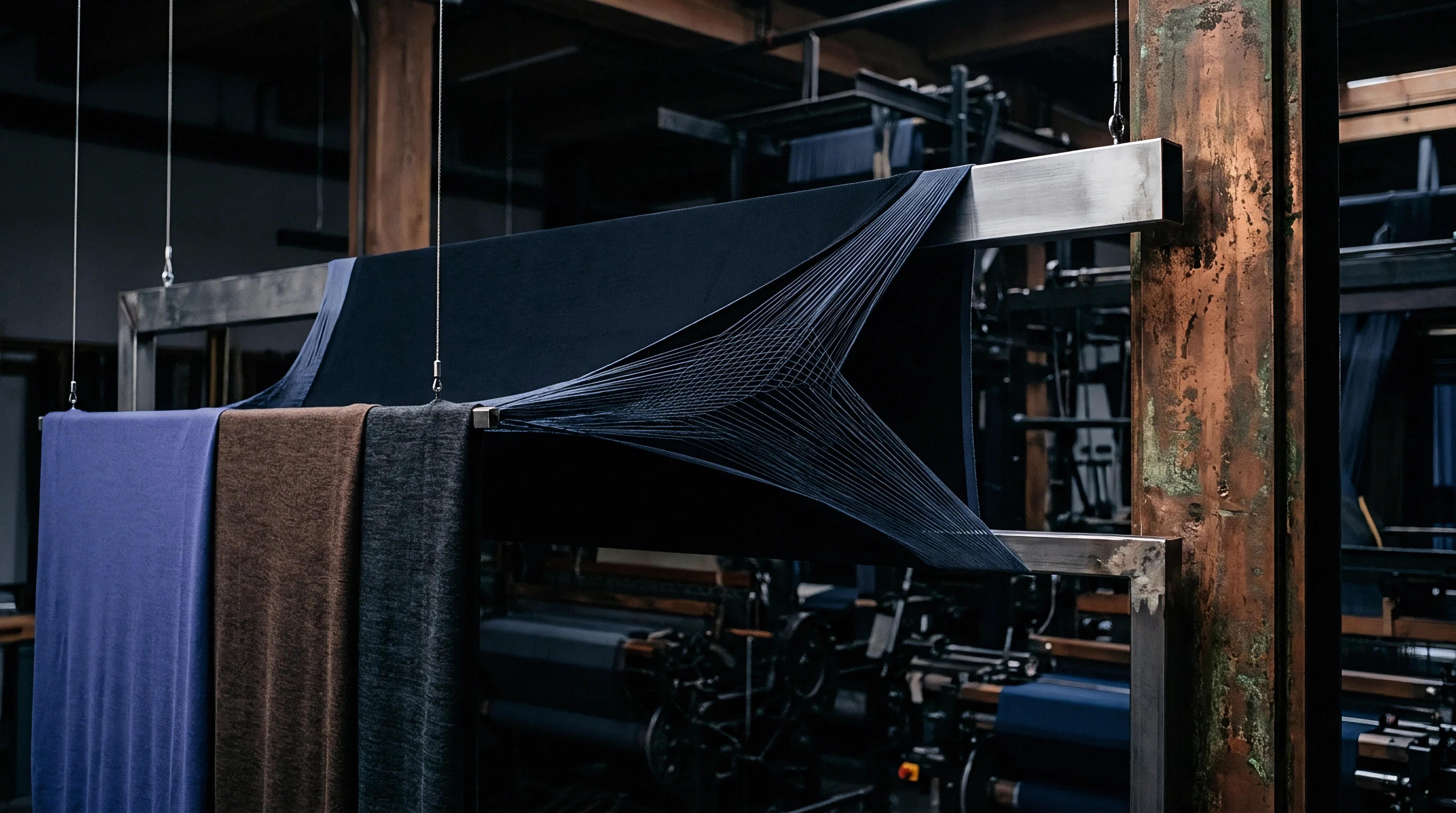
Jig dyeing provides a tension-controlled option for open-width fabrics that crease or mark in rope form, like heavy cotton twills, poplins, and dense micro-polyesters. The machine runs fabric back and forth between two main rollers through a shallow dye trough. Capacity here depends on roll diameter rather than weight.
The batch builds up on the driven roller to a maximum limit, usually 1,200 to 1,500 millimetres. Exceeding that diameter makes fabric rub against the internal housing, while running a roll that is too small keeps the core from retaining heat, causing listing defects where selvedges dye lighter or darker than the center.
High-pressure beam vessels wind open-width fabric onto a perforated steel pipe. Dye liquor pumps under pressure from inside the beam outward through the fabric layers, then reverses direction. Minimum batch sizes depend on maintaining uniform pressure across the roll.
If a small order leaves too thin a fabric layer on the tube, dye liquor channels through paths of least resistance, producing blotchy, uneven shades. The roll needs a minimum radial thickness of 150 millimetres to build the hydraulic back-pressure required for even dyeing.
Vessel underloading below 60 percent of nominal dry mass capacity destabilizes jet hydraulics, shifting the effective liquor ratio and increasing batch shade rejection rates above acceptable commercial thresholds under ISO 105-J03 color measurement standards.
Continuous pad-batch and pad-steam ranges operate under entirely different economics than batch vessels. A continuous padder pulls open-width fabric through a trough of concentrated dye, squeezes out excess liquor between heavy rubber nip rolls, and feeds it directly into a fixation chamber or batching frame. Running a continuous line efficiently means filling long chemical troughs, stabilizing nip pressure, and balancing temperatures across heating zones.
Chemical tailing at the start consumes 150 to 300 metres of fabric before color reaches equilibrium. Because of startup chemical losses and clean-down labor, continuous lines require minimum runs of 5,000 to 10,000 metres per shade.
Keeping wet processing machinery within target fill windows protects shade repeatability and fabric structure. Asking a dyehouse to run a 300-metre shade lot inside a 600-kilogram multi-tube jet forces a compromise: run inflated liquor ratios with high chemical consumption, or move the order to undersized sample vats that lack production-grade temperature and flow controls. Either path increases unit costs and makes consistent shade matching across bulk runs much harder.
A vessel loading envelope functions as a strict physical boundary: fabric weight and volume must match the fluid dynamics of the machine or the finish fails.
Variance
Friction builds across the supply chain whenever loom warp minimums clash with dyehouse vessel limits. A mill might need a 6,000-metre warp run to hit target greige costs, while the buyer wants four 1,500-metre colorways for seasonal retail orders. Splitting a single master greige warp across separate dye lots introduces shade variation, physical scrap, and storage risks that take active management to control.
Storing greige introduces hidden chemical risks. Fresh off the loom, fabric carries up to 10 percent dry weight in sizing agents, spinning oils, waxes, and anti-static additives. If greige sits in an unconditioned warehouse waiting for dye allocations, those sizing compounds degrade.
Polyvinyl alcohol sizes polymerize further under ambient heat, forming tough, insoluble films that resist normal scouring enzymes. Starch sizes absorb humidity, breeding mold and leaving yellow oxidation spots. Scouring removes yarn sizing agents.
Width Loss and Weight Alteration across Scour Lines
Scouring and bleaching alter fabric dimensions and weight permanently. Synthetics contract in width and length during hot aqueous scouring and tensionless relaxation, tightening yarn crimp and increasing weight per unit area. A greige nylon woven at 170 centimetres reed width can shrink to 152 centimetres coming off the scour line, raising unit weight from 110 to 125 grams per square metre.
Cotton and linen lose up to 8 percent of dry mass as natural waxes, pectins, and sizing wash out in continuous alkali baths. Buyers who order greige based on raw loom specs miss their finished yield numbers if they ignore dimensional contraction and scouring loss.
Splitting production across vessel batches inevitably introduces shade variation. Divide a 6,000-metre greige lot into three 2,000-metre dye runs on consecutive jet cycles, and small chemical and thermal shifts creep in. Fluctuations in steam line pressure, dye weighing tolerances, water hardness, or vessel wall temperatures create slight shade steps between lots.
Checked in a light box under standard illuminants (D65, TL84, Incandescent A), those steps can show metameric shifts ~ lots that match under store lights look different in daylight.
Can Stored Greige Degrade before Wet Processing?
Long storage changes how yarn surfaces absorb dye. When greige rolls sit on racks past 180 days, moisture migrates unevenly through the roll. Outer layers dry out in warehouse air while the core holds moisture and traps spinning oils.
Run that aged roll through a jet vessel and you get shade streaking between the outer layers and the center because dye penetrates uneven moisture gradients at different rates. Fixing aged greige takes extra pre-scouring runs, adding process time and energy costs to the invoice.
Technical failure modes multiply when buyers try to combine mismatched loom minimums and vessel capacities without clear procedures. Disconnects between weaving schedules and dyehouse lots trigger several predictable issues:
- Greige Sizing Polymerization occurs when sizing agents harden during extended warehouse storage, blocking uniform dyestuff penetration during jet processing and creating chalk-line shade streaks.
- Unlevel Vessel Loading develops when splitting a greige lot produces a partial vessel load, altering the target liquor ratio and causing shade depth variation between bulk lots.
- Continuous Tailing Scrap accumulates during continuous pad-dyeing when short shade runs exhaust dye liquor troughs prematurely, creating color drift along the length of the roll.
- Selvedge Trim Loss expands when heat-setting uneven greige rolls on the stenter frame, requiring wider edge trims to remove pin-hole distortions and width variances.
- Batch Metamerism arises when different dye vessel loads use adjusted dye combination formulas to match an approved lab dip across variable liquor volumes.
We experienced the financial impact of greige-to-vessel mismatches firsthand when a client split a 9,000-metre direct-beamed nylon greige warp into six 1,500-metre dye lots across small 200-kilogram jet vessels. Uneven vessel loading forced the dyehouse to adjust dispersion formulas twice during the run, driving a Delta E shade divergence of 1.4 CMC (2:1) between the first and last lots. We ended up paying for the scrap balance when shade splitting left 450 metres of undyed greige stranded below the mill’s minimum vessel surcharge threshold.
Calculation
Reconciling warp minimums with dyehouse limits takes a clear conversion model. Sourcing errors usually happen when buyers assume linear loom metres equal finished, saleable cloth metres. Getting an accurate landed cost requires tracking material losses through beaming, weaving crimp, wet processing shrinkage, lot splitting, and final inspection cuts.
Take a typical worked case: sourcing a 3/1 twill woven from 70D/48f nylon 6,6 warp yarns and 150D/144f air-jet textured polyester weft yarns. The finished spec calls for a weight of 165 grams per square metre, a usable cuttable width of 147 centimetres (58 inches), and a total finished order of 12,000 linear metres split across three seasonal shades: Colorway A at 6,000 metres, Colorway B at 4,000 metres, and Colorway C at 2,000 metres. Warp tension governs finished width.
Worked Sourcing Model for Nylon Twill Bulk Orders
The calculation sequence moves backward from finished buyer requirements to raw yarn purchase parameters. The baseline engineering parameters include:
- Finished Fabric Width measures 1.47 metres usable (1.50 metres total including selvedges).
- Finished Fabric Weight equals 0.165 kilograms per linear metre (at 1.47-metre width, calculation: 1.47 m × 0.165 kg/sq.m = 0.24255 kg/linear metre).
- Wet Processing Length Shrinkage measures 5.5 percent (ISO 5077 after 60°C scour and stenter heat-setting).
- Loom Take-Up Crimp Loss measures 4.0 percent (warp yarn length consumed per linear metre of woven greige).
- Mill Processing Waste Allowance equals 2.5 percent (seam join scraps, stenter pin-trimming, inspection end cuts).
To deliver 12,000 finished linear metres, the conversion model calculates total required greige length and yarn mass:
- Calculate Net Greige Length Required: Finished Length ÷ (1 – Shrinkage Rate) = 12,000 m ÷ (1 – 0.055) = 12,698.4 linear metres of scoured/dyed greige.
- Add Mill Waste Allowance: Net Greige Length ÷ (1 – Waste Allowance) = 12,698.4 m ÷ (1 – 0.025) = 13,024 linear metres of loom-state greige cloth.
- Calculate Warp Yarn Beam Length: Greige Length × (1 + Warp Crimp) = 13,024 m × (1 + 0.040) = 13,545 linear metres of warp yarn on beam.
- Calculate Greige Yarn Mass: Greige Length × Greige Weight per Metre (0.230 kg/m pre-finish) = 13,024 m × 0.230 kg/m = 2,995.5 kilograms of total raw yarn (approx. 1,284 kg 70D nylon warp yarn and 1,711 kg 150D polyester weft yarn).
Shorter warps increase cost per metre.
Volume Reconciliation across Dye Lots and Loom Warps
The weaving shed sets a primary direct beaming minimum of 14,000 metres of warp yarn per set (yielding roughly 13,460 linear metres of greige fabric). The 13,024-metre requirement fits neatly into a single standard direct-beamed run, leaving 436 metres of extra warp capacity. The converter can use that buffer to absorb loom defects or offer it to the buyer under a standard +/- 5 percent PO variance clause.
The next conversion step maps the 13,024 metres of greige fabric into the dyehouse vessel matrix. Converting linear greige metres into dry fabric mass per shade lot establishes vessel allocation requirements:
- Colorway A (6,000 finished metres target) requires 6,512 metres of loom-state greige. Total mass: 6,512 m × 0.230 kg/m = 1,497.76 kilograms dry fabric mass.
- Colorway B (4,000 finished metres target) requires 4,341 metres of loom-state greige. Total mass: 4,341 m × 0.230 kg/m = 998.43 kilograms dry fabric mass.
- Colorway C (2,000 finished metres target) requires 2,171 metres of loom-state greige. Total mass: 2,171 m × 0.230 kg/m = 499.33 kilograms dry fabric mass.
The dyehouse operates double-tube high-temperature jet vessels with a nominal rating of 300 kilograms per tube (600 kilograms total per double-tube unit) and single-tube jet vessels rated at 250 kilograms. The dyehouse manager reconciles fabric mass per shade against vessel loading rules.
| Colorway ID | Target Finished Volume (m) | Required Greige Volume (m) | Total Dry Mass (kg) | Vessel Allocation Plan | Vessel Fill Factor (%) | Capacity Efficiency Status |
|---|---|---|---|---|---|---|
| Colorway A | 6,000 | 6,512 | 1,497.8 | 2 x 600kg Double-Jet + 1 x 300kg Single-Jet | 96.6% avg | Optimal Load Envelope |
| Colorway B | 4,000 | 4,341 | 998.4 | 1 x 600kg Double-Jet + 1 x 400kg Single-Jet | 99.8% avg | Optimal Load Envelope |
| Colorway C | 2,000 | 2,171 | 499.3 | 2 x 250kg Single-Jet Vessels | 99.8% avg | Optimal Load Envelope |
Small dye lots incur heavy surcharges.
Colorway C illustrates a common operational edge case. If the buyer drops Colorway C from 2,000 metres down to 1,000 metres (249.6 kilograms dry mass), the volume falls below efficient loading for two 250-kilogram vessel runs. The dyehouse has to either push the 249.6 kilograms through a single 250-kilogram vessel running at 99.8 percent capacity ~ risking shade differences if a second batch becomes necessary ~ or run a 300-kilogram vessel underloaded at 83 percent.
Running the 300-kilogram vessel light increases dye, water, and chemical use per kilogram, triggering a small-batch surcharge of $0.45 per finished metre.
Financial impact across the chain traces directly back to these physical steps. Setup amortization, sizing changeovers, and vessel loading rules explain why unit prices jump so sharply as order volumes shrink. A 12,000-metre PO split into three optimized colorways hits a landed cost of $3.20 per linear metre.
Cutting that same PO to 3,000 metres split into three 1,000-metre shades pushes landed cost to $4.45 per metre ~ a 39 percent penalty caused by poor creel utilization, high beam setup overhead, and light dye vessel charges.

Contract
Managing loom minimums alongside dyehouse vessel limits takes clear contract terms. Standard PO templates built for off-the-shelf finished goods ignore inventory holding liabilities, warp balances, shade lot splitting rules, and scrap allowances. Sound sourcing practice protects capital by incorporating technical thresholds directly into purchasing agreements and mill RFQs.
Excess greige sits on mill balances.
Greige holding terms establish ownership timelines for fabric woven to meet warp minimums. If a buyer commits to a 10,000-metre warp run but only dyes 6,000 metres for immediate seasonal colors, 4,000 metres remain on the mill floor. Contracts should set a maximum holding window ~ usually 90 to 180 days ~ along with storage conditions (15°C to 25°C, relative humidity under 65 percent to stop size breakdown).
Once that window closes, the buyer either releases the greige for dyeing or pays a monthly storage fee (typically 1.5 percent of greige asset value) and assumes liability for pre-scour size degradation.
Inventory Liability and Greige Holding Provisions
Contracts must clearly separate Minimum Order Quantity (MOQ) from Minimum Color Quantity (MCQ). MOQ defines the total linear yardage the mill will weave on a dedicated warp set (such as 6,000 metres). MCQ defines the volume the dyehouse will run in a single vessel without charging small-batch fees (such as 1,500 metres per shade).
Structuring terms so multiple MCQ splits add up to the master MOQ keeps buyers from paying loom setup penalties while preserving color assortment flexibility.
Procurement documents should codify acceptable physical tolerance thresholds across finished goods deliveries. Woven fabric specifications must state explicit numerical allowances for dimensional stability, shade variation, and usable cuttable width:
- Delivery Volume Tolerance allows a +/- 5 percent variance on total contract yardage to account for beam length variations and inspection scrap roll cuts.
- Shade Matching Tolerances establish an absolute ceiling of Delta E CMC (2:1) ≤ 0.8 against the approved physical lab dip under primary D65 illuminant, with no individual roll-to-roll shade step exceeding Delta E ≤ 0.5 under secondary TL84 illuminant.
- Usable Cuttable Width guarantees a minimum usable width between selvedge pin-marks (e.g. 147 centimetres + 2 centimetres, – 0 centimetres), passing full width loss liability to the converter if scoured contraction drops usable width below specification.
- Four-Point Inspection Quality Thresholds mandate a maximum defect score of 20 penalty points per 100 square metres (under ASTM D5430 standards), with individual rolls containing over 30 points per 100 square metres subject to immediate return or replacement at mill expense.
Procurement contracts specifying greige warp commitments must include an explicit clause transferring financial liability for size degradation and width contraction to the converter whenever dyehouse vessel allocations are delayed beyond 90 days from the loom off-date.
Standard purchase terms eliminate confusion over remnant greige rolls, partial yarn bobbins, and selvage trims. Writing technical constraints directly into commercial contracts keeps weaving mills and dyehouses working to the same operational limits, aligning financial terms with physical reality across the supply chain.
The standard procurement schedule incorporates this protective clause: Greige inventory woven against buyer master warp commitments remaining undyed after 120 calendar days shall be billed at greige contract value, with the mill waiving subsequent shade matching guarantees if size degradation occurs due to extended warehouse holding.