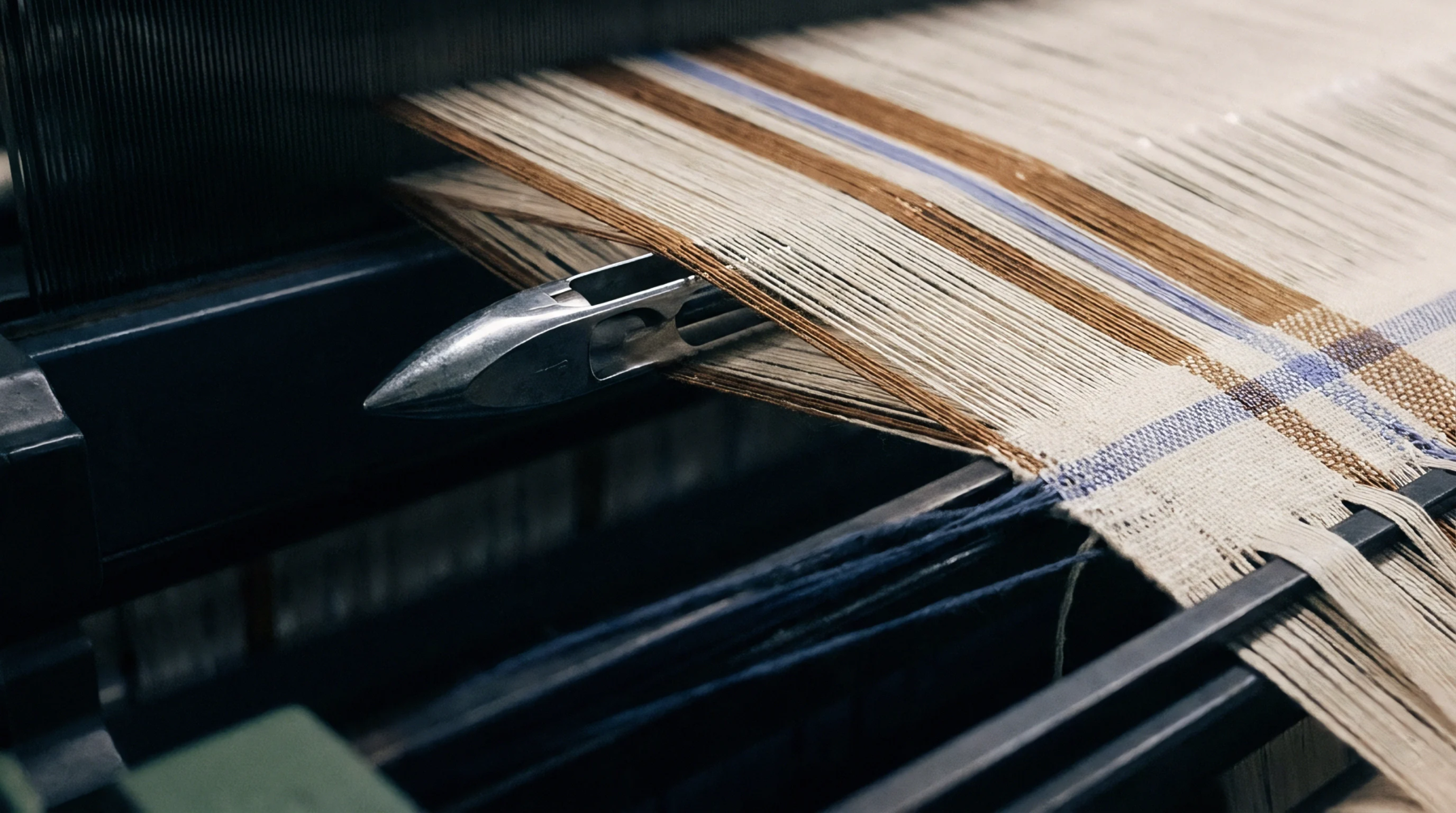
Drive Architecture
Weaving machinery equipped with inverter-driven main motors permits real-time speed adjustments throughout individual pick cycles or across entire warp runs. Operating a variable speed loom allows mills to match insertion velocity to specific yarn strength constraints. Controlled deceleration minimizes peak mechanical stress during critical insertion phases.
Speed Modulation
Frequency drives alter motor rotation speed based on pre-programmed profiles mapped to warp beam position or jacquard pattern commands. A variable speed loom slows down automatically during delicate fancy yarn insertion, returning to maximum velocity for standard picks. Speed transitions occur within milliseconds without stopping machine movement.
Dynamic velocity adjustments reduce yarn break rates on complex, multi-yarn fabrics.
Control Calibration
Weaving technicians program speed curves into loom microprocessors, balancing output speed against acceptable yarn breakage thresholds. Monitoring a variable speed loom involves evaluating power consumption curves alongside stoppage logs during style development trials. Lowering drive velocity during outer selvedge formation prevents edge thread breakage on dense weaves.
Motor controllers store speed profiles for fast style changeovers.
Operational Flexibility
Industrial weaving plants utilize variable speed technology to process difficult, low-twist, or slub yarns that fail on constant-speed machines. Flexible speed control extends component life by eliminating hard mechanical shocks during loom start-up cycles. Lower running speeds during start-up prevent restart marks on high-density fabric constructions.
Advanced speed control maximizes production output while maintaining strict fabric quality specifications across diverse textile orders.