Calculating Residual Yarn Crimp Variance across Variable Speed Loom Operations
Dynamic loom velocity cycling induces systematic yarn crimp variance that destabilizes finished fabric dimensions unless bound by strict contract tolerances.
Shed
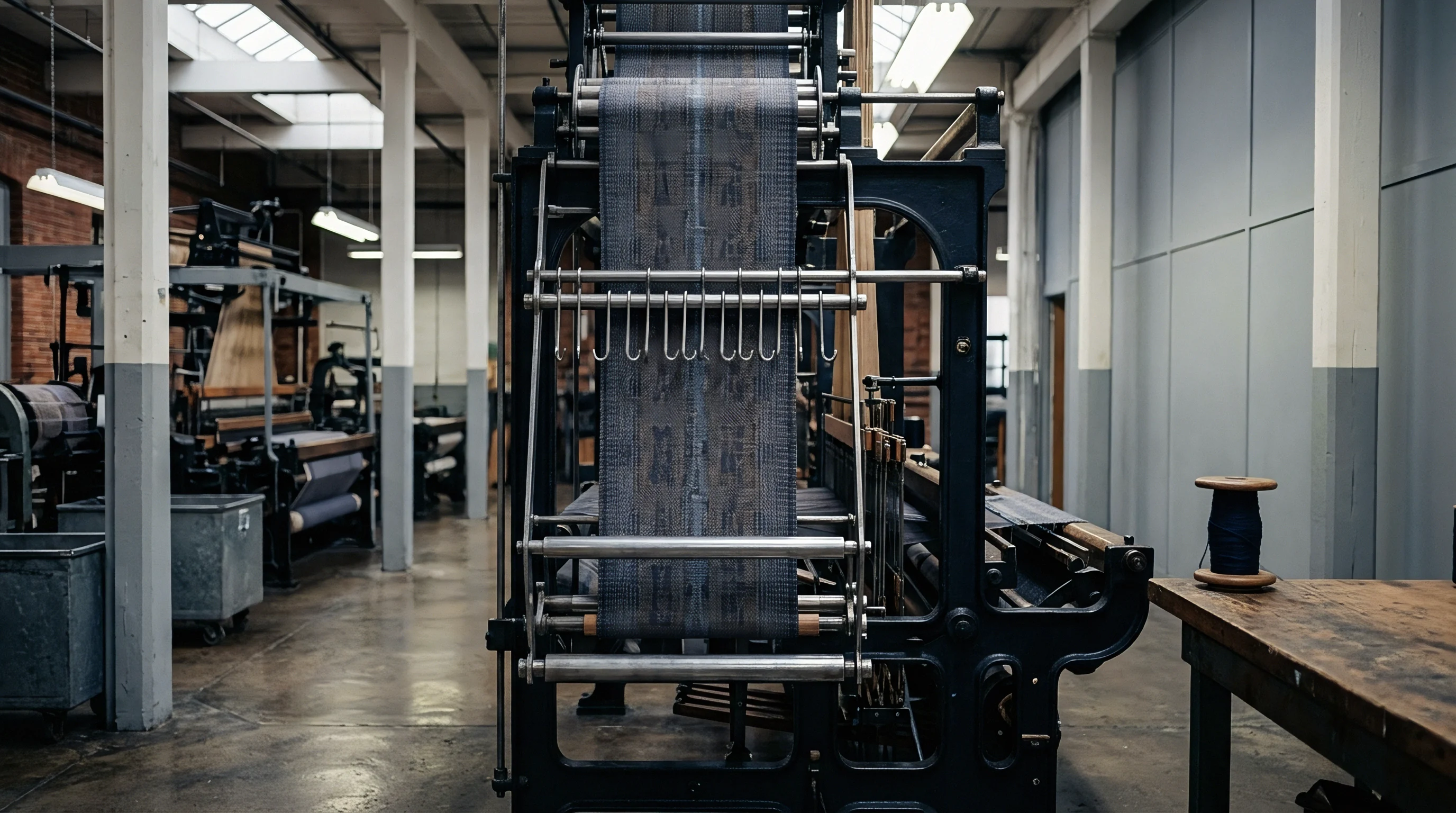
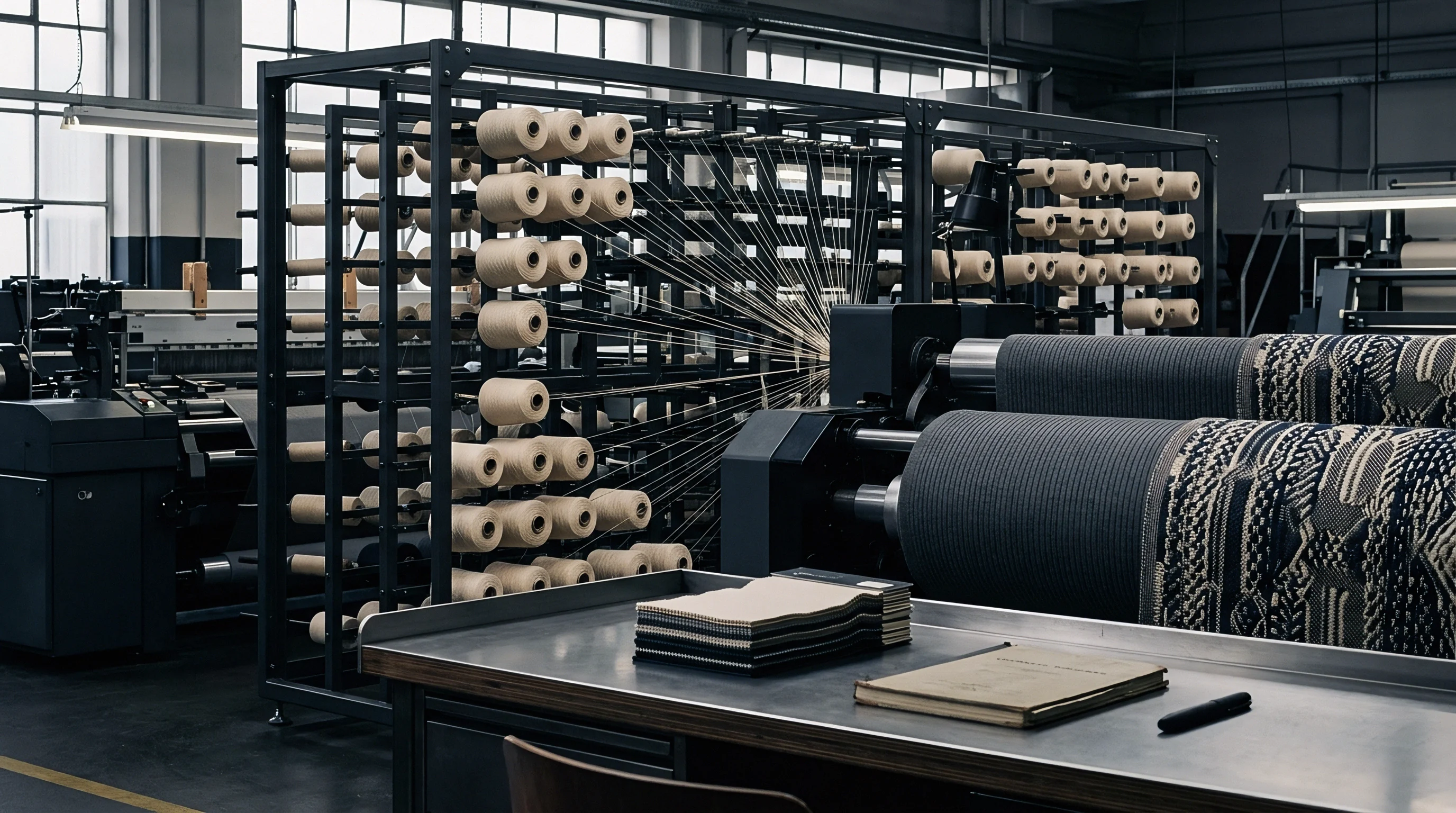
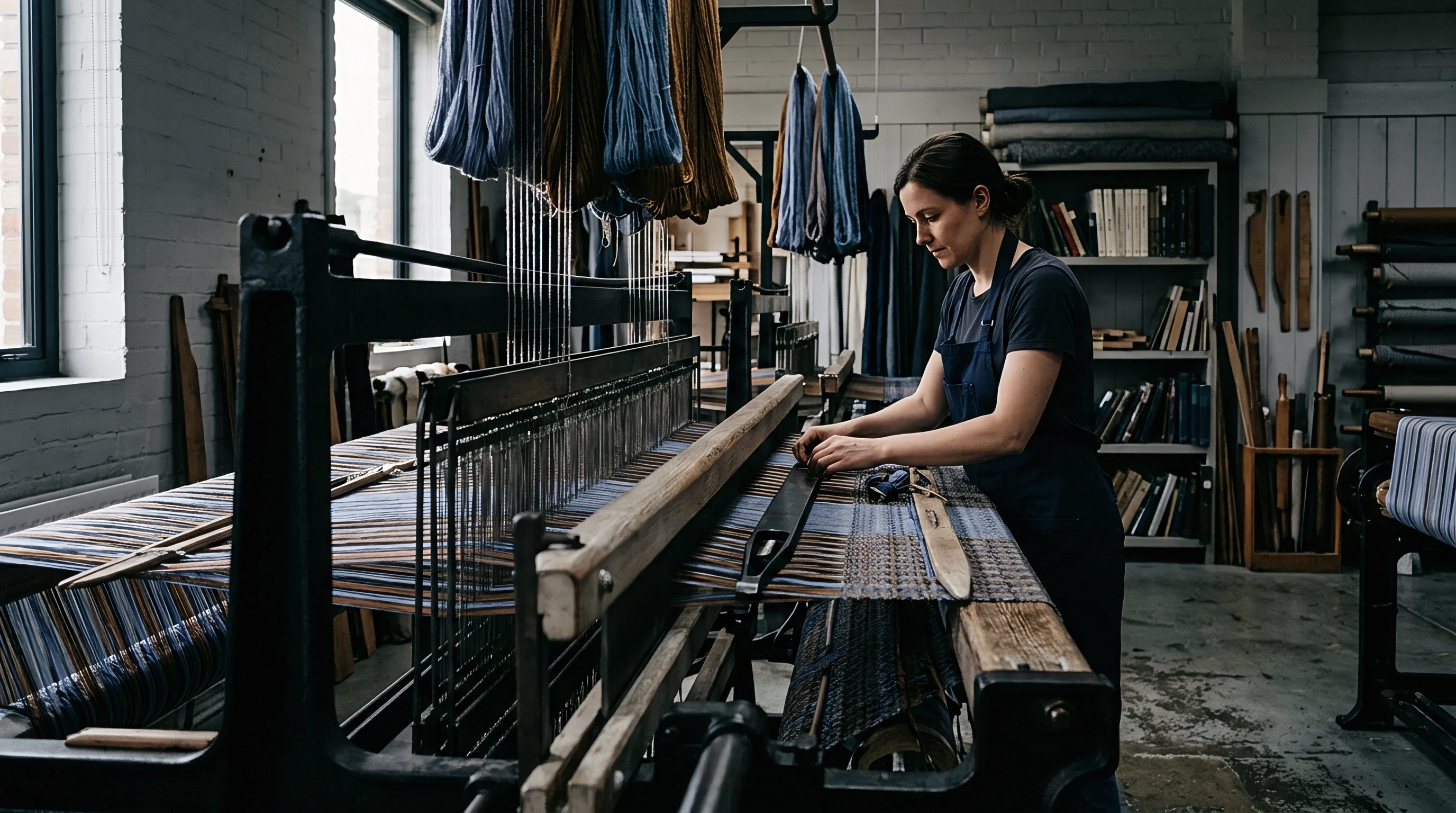
Looms operating with variable speed drive cycles alter yarn crimp levels across every linear metre of cloth. Rapid acceleration from 450 picks per minute during dense pattern execution to 850 picks per minute on open ground sections shifts the dynamic pick spacing. The loom beat-up force scales with machine velocity squared because reed momentum directly influences yarn deflection at the cloth fell.
When velocity climbs, peak beat-up force pushes the newly inserted weft yarn deeper into the warp sheet, displacing warp ends into a higher amplitude wave. The warp yarn crimp percentage rises while weft crimp drops under the increased lateral constraint.
Modern air-jet and rapier machines modulate main motor frequency to avoid peak insertion failures on delicate filling yarns. A jacquard pattern switching between an eight-shaft satin and a plain ground forces the motor controller to profile loom rotations per minute in real time. The resulting crimp delta across adjacent panels produces streakiness, differential dye uptake, and variable tear strength across warp and weft directions.
Mill technicians routinely disguise these mechanical variations as sizing inconsistencies or batch lot differences.
Crimp measures the percentage increase in yarn length when straightened out of the woven sheet, calculated according to ISO 7211-3. Unbalanced crimp distribution alters the finished aerial weight, measured in grams per square metre under ISO 3801. A five percent shift in greige warp crimp translates to an uncontrollable width contraction during desizing and scouring.
When the cloth fell moves forward or backward during speed ramping, tension differentials freeze into the interlacing geometry.
A three percent shift in loom speed produces measurable crimp banding under twenty newtons of off-loom tension.
Velocity changes disrupt the geometric equilibrium described by Pierce models. High-speed rapier movement decreases the dwell time of the yarn inside the open shed, reducing yarn relaxation before the beat-up stroke lands. Slower insertion cycles give the polyester or cotton bundle time to flatten against adjacent ends under sustained dead-weight tension.
Machine speed profiling changes cross-sectional yarn ellipticity before the grey goods ever meet a chemical finishing bath.
Converters purchasing grey goods without speed profile records take on unquantified structural volatility. The weaver saved seven percent on electrical utility costs by programming variable speed cycles across complex draft repeats. The dyehouse later inherits variable yield across identical roll lengths.

Tension
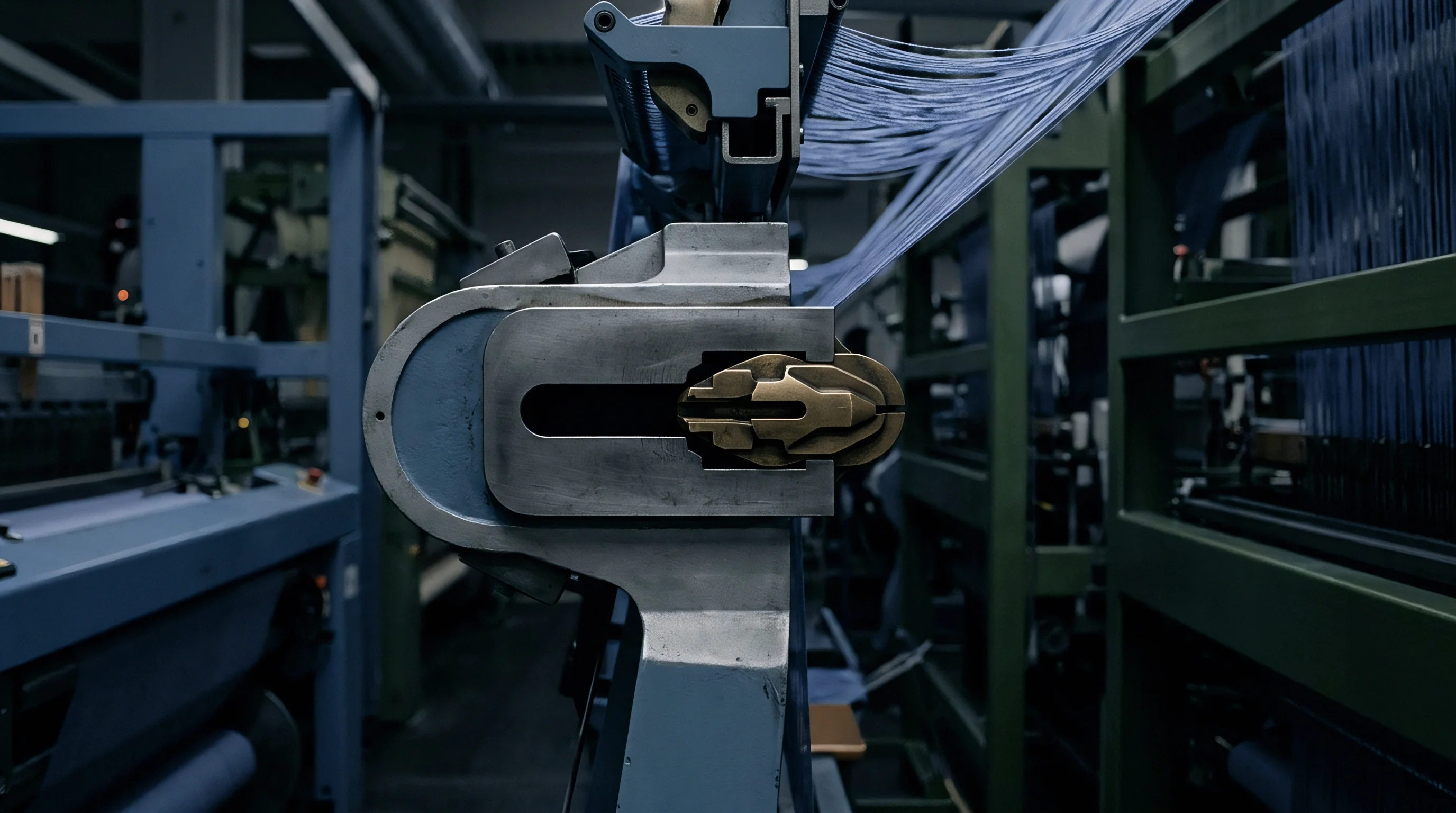
Electronic let-off and take-up systems govern the mechanical response of the running yarn sheet during velocity swings. While servomotors react to load cell signals within twenty milliseconds, the physical inertia of a full warp beam weighing eight hundred kilograms lags behind sudden speed increases. When the loom accelerates from crawl speed to production velocity, warp sheet tension surges past setpoint limits before settling into closed-loop equilibrium.
This mechanical delay creates a continuous gradient of yarn elongation.
The filling yarn experiences a parallel disturbance. Main nozzle blowing pressure on an air-jet loom must adapt across varying machine cycles. Solenoid valves modulating insertion air fail to mirror millisecond-level motor ramp rates, causing the inserted pick to experience erratic flight times.
A pick arriving late at the receiving side encounters a closing shed at higher operational tension, locking surplus crimp into the right-hand selvedge.
Can Insertion Velocity Offsets Stabilize Beat Displacement?
Mechanical tuners attempt to suppress displacement errors by offsetting backrest roll positions and shed timing. Advancing shed closure relative to reed arrival increases warp tension during the beat-up cycle, which prevents the filling pick from springing backward. Higher warp tension suppresses weft crimp while forcing warp yarns to bend over the rigid filling line.
If the loom speed drops abruptly on a pattern change, this mechanical setting overdrives the cloth fell backward, generating a starting mark with depressed crimp values.
Dynamic tension fluctuations during variable speed cycles originate from distinct mechanical sources across the machine frame:
- Warp beam mass inertia retards let-off compensator response times during millisecond motor speed changes.
- Pneumatic solenoid response hysteresis alters filling insertion velocity profiles across changing pick rates.
- Whip roll dampening resistance dissipates energy unevenly when cyclical shedding frequencies shift.
- Cloth roll friction slip introduces incremental linear take-up errors across high acceleration phases.
The magnitude of residual crimp variance depends directly on the viscoelastic properties of the processed fiber. Continuous filament polyester yarns with high initial modulus retain tension spikes as elastic strain. Ring-spun cotton yarns absorb tension variations through inter-fiber slippage, converting mechanical surges into permanent crimp displacement.
Viscose blends show extreme sensitivity to speed fluctuations, exhibiting permanent deformation under minor tension surges.
| Operating Loom Speed | Mean Warp Tension | Measured Warp Crimp | Measured Weft Crimp | Fell Displacement |
|---|---|---|---|---|
| 500 picks per minute | 0.18 cN per dtex | 7.2 percent | 9.8 percent | 0.00 mm baseline |
| 650 picks per minute | 0.22 cN per dtex | 8.1 percent | 8.6 percent | +0.35 mm forward |
| 800 picks per minute | 0.29 cN per dtex | 9.4 percent | 7.1 percent | +0.82 mm forward |
| 950 picks per minute | 0.37 cN per dtex | 11.2 percent | 5.8 percent | +1.45 mm forward |
Failure to calibrate electronic let-off settings against variable speed profiles produces lengthwise bands of distorted thread density. The finished cloth develops differential shrinkage rates across single garments, distorting side seams after domestic laundering.

Modulus
Calculating the residual yarn crimp variance across variable speed cycles requires an explicit mechanical derivation based on yarn rheology and loom kinematics. Yarn crimp percentage, denoted as C, is defined as the straightened yarn length minus the cloth length, divided by the cloth length. Under variable loom speed V(t), the dynamic warp tension T_w(t) and weft insertion tension T_f(t) change continuously.
The yarn behaves as a viscoelastic material modeled via a three-parameter standard linear solid, incorporating an instantaneous spring modulus E_1, a relaxation spring modulus E_2, and an internal viscous dashpot with viscosity eta.
The time-dependent yarn compliance J(t) determines how much strain the yarn retains at the cloth fell. We formulate the compliance equation:
J(t) = (1 / E_1) + (1 / E_2) (1 – exp(-t E_2 / eta))
In this equation, t represents the cycle duration for a single beat-up, inversely proportional to the variable loom speed V(t) expressed in picks per minute. The contact time tau during which the reed wire compresses the pick into the cloth fell is approximately twelve percent of the total cycle time. Therefore, tau = 0.12 (60 / V(t)) seconds.
At 900 picks per minute, tau equals 0.008 seconds. At 450 picks per minute, tau expands to 0.016 seconds. This twofold increase in dwell duration allows significant viscous deformation to develop.
The balance of beat-up force relates directly to the yarn crimp wave height. According to the balance equations of yarn bending geometry, the warp crimp C_w and filling crimp C_f satisfy the geometric height constraint where total crimp amplitude equals the sum of warp and weft thread diameters. Let h_w be warp crimp wave height and h_f be filling crimp wave height, with yarn diameters d_w and d_f:
h_w + h_f = d_w + d_f
The distribution of bending wave heights scales with the ratio of yarn tensions at the beat-up instant:
h_w / h_f = (T_f(t) B_f) / (T_w(t) B_w)
In this formulation, B_w and B_f represent the bending rigidities of warp and filling yarns, measured in micronewton-square metres per ASTM D1388. Dynamic warp tension scales with loom speed squared due to reed momentum: T_w(t) = T_0 + k_1 (V(t))^2, where T_0 is static let-off tension and k_1 is the machine-specific beat-up momentum constant. Dynamic filling tension scales linearly with machine speed due to insertion air drag or rapier acceleration: T_f(t) = T_f0 + k_2 V(t).
A contract omitting speed variance limits leaves crimp tolerances unprotected by ISO standard definitions.
To calculate the residual crimp variance across a production roll experiencing variable speed programming, the technical engineer computes the step-by-step differential:
- Record the instantaneous loom velocity profile as a function of woven length across the entire jacquard or dobby sequence.
- Extract dynamic warp and filling tensions at ten-millisecond intervals using stationary strain-gauge sensors mounted behind the drop wires.
- Compute the instant cycle contact duration to determine the relaxation modulus for the specified yarn polymer.
- Calculate the instant crimp amplitude ratio using the bending rigidities and dynamic tension values.
- Integrate the total crimp percentage variance across the speed range to establish the statistical spread across the roll.
Take a practical calculation on a 2/1 twill military workwear cloth. The target greige construction is 42 ends per centimetre by 24 picks per centimetre, using 24 tex combed cotton warp and 30 tex carded cotton weft. The static warp tension T_0 is 35 centinewtons per yarn.
The loom operates under an automated speed profile alternating between 550 picks per minute on plain sections and 820 picks per minute on twill ground. The momentum constant k_1 is established at 0.000035 cN/(ppm)^2 through piezoelectric load-cell verification.
At 550 picks per minute, dynamic warp tension reaches 35 + 0.000035 (550)^2 = 45.59 centinewtons per end. At 820 picks per minute, dynamic warp tension rises to 35 + 0.000035 (820)^2 = 58.53 centinewtons per end. This represents a 28.4 percent surge in dynamic warp line force.
Dynamic filling insertion tension moves from 18 centinewtons to 26 centinewtons across this speed jump.
Applying the bending balance equations with measured cotton rigidities B_w = 4.2 uN m^2 and B_f = 6.1 uN m^2, the ratio (T_f B_f) / (T_w B_w) changes from (18 6.1) / (45.59 4.2) = 0.574 at low speed to (26 6.1) / (58.53 4.2) = 0.645 at high speed. The warp crimp drops from 10.4 percent at 550 picks per minute down to 7.8 percent at 820 picks per minute. This yields an absolute crimp variance delta of 2.6 percent along the same piece.
Cloth buyers rarely spot this variance on greige inspection perches. It hides within yarn packing density. The calculation proves that variable speed drives generate systematic structural deviations inside the loom shed.
The open technical question centers on how fully downstream aqueous relaxation cycles can eliminate these internal stress histories without leaving dimensional irregularities.

Scour
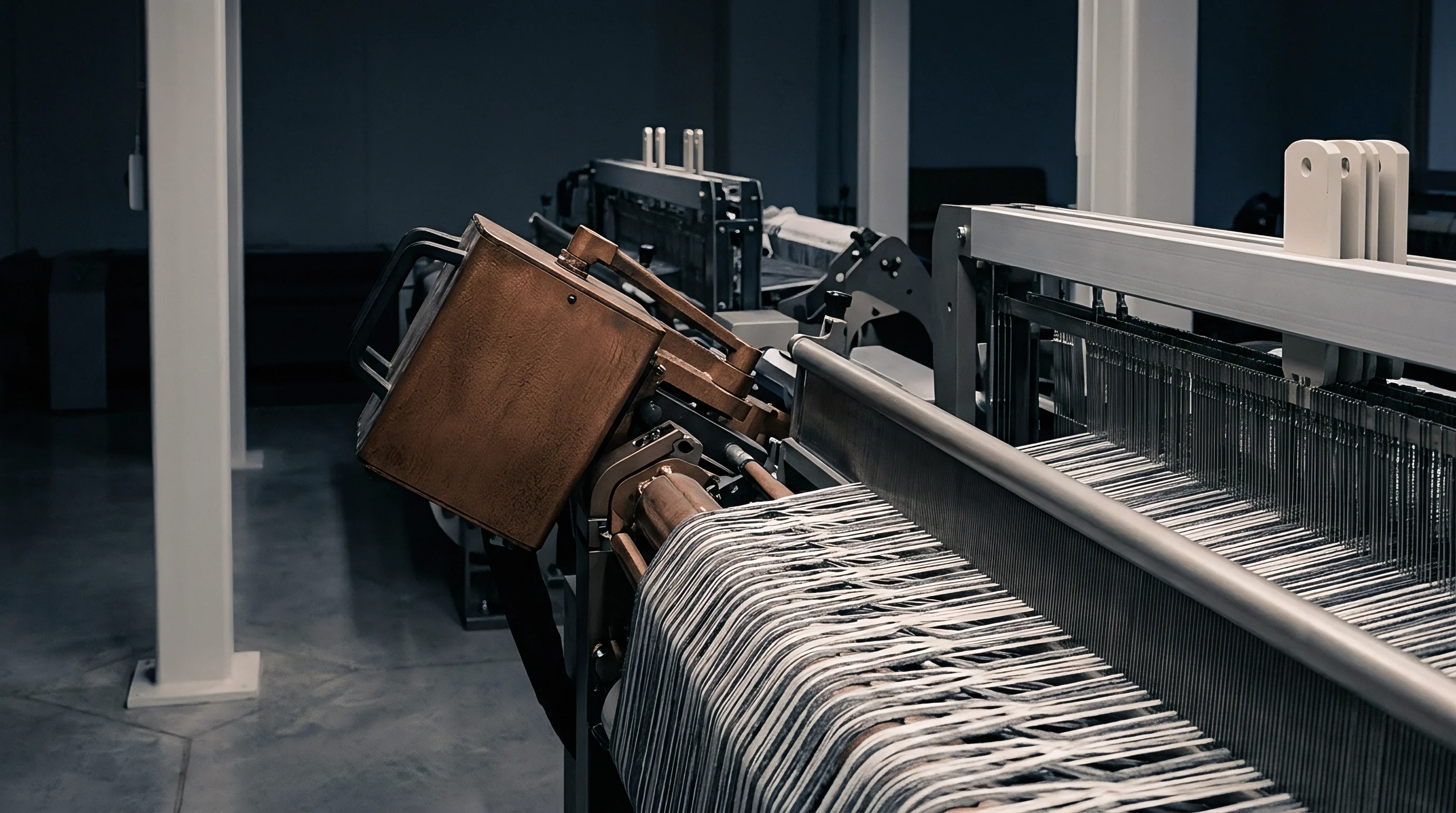
Aqueous processing exposes every latent mechanical strain locked into the greige cloth. When desizing and scouring chemistry wets out the cotton or synthetic polymer matrix, hydrogen bonds and molecular entanglements relax under bath heat. Yarns with higher residual crimp retract vigorously, while zones woven under high tension resist contraction.
The cloth reacts by puckering along lines where speed transitions occurred on the weaving machine.
Is Finishing Tension Sufficient to Flatten Crimp Spikes?
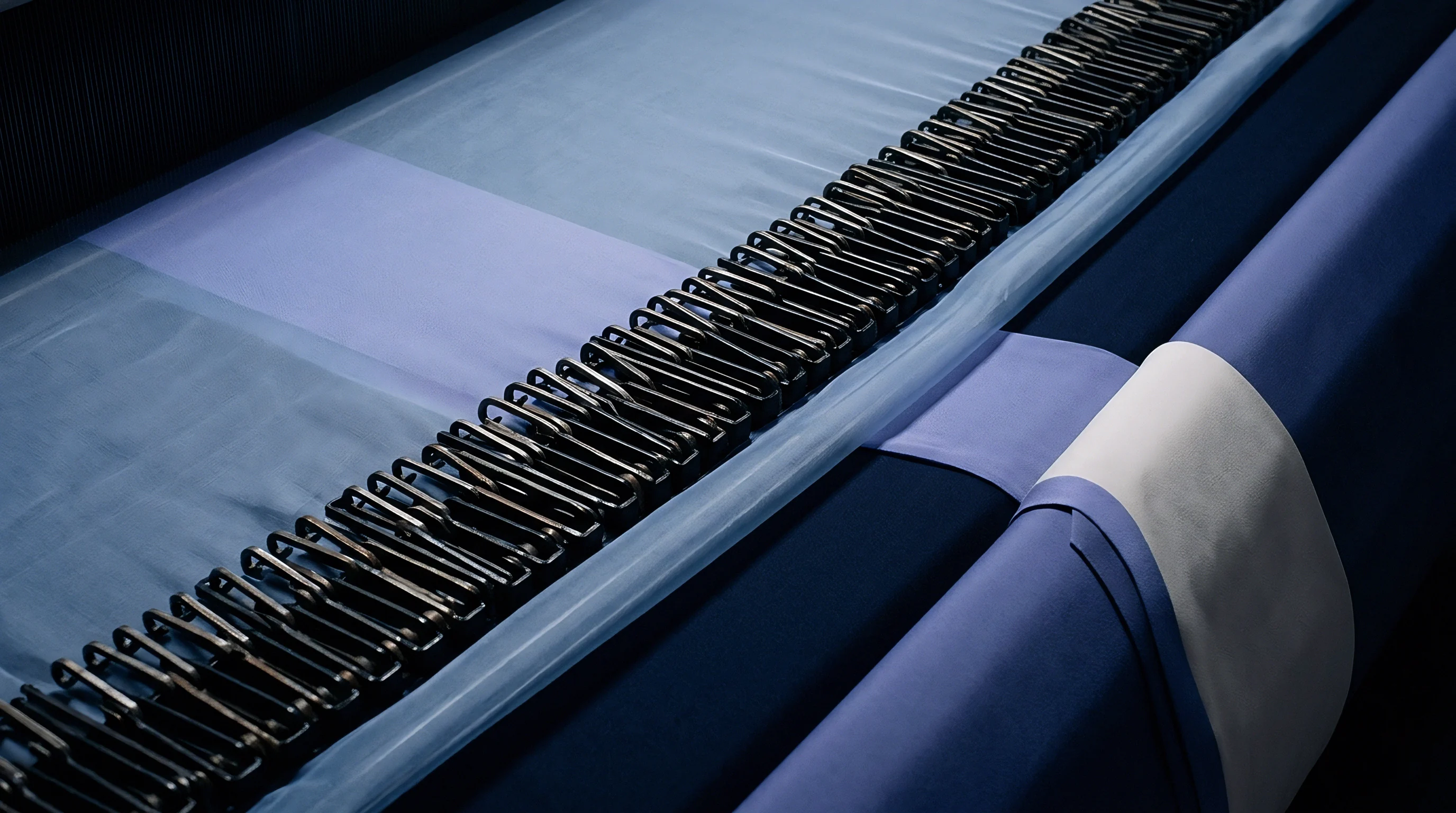
Stenter frames running open-width finishing apply lateral cross-directional stretch and longitudinal overfeed to set finished width and mass. Pin chains pull the selvedges to target dimensions, but mechanical overfeed cannot target localized crimp bands. If the stenter operator overfeeds the cloth by four percent to meet a finished weight target of 210 grams per square metre, low-crimp zones over-relax while high-crimp zones pull taut.
The finished piece develops continuous bow and skew distortions across the roll length.
Piece dyeing amplifies the visual severity of residual crimp variance. In a jet dyeing machine, liquor circulation velocity interacts with yarn surface area. Yarns compressed into low crimp configurations exhibit tighter internal packing, decreasing the accessible surface area for dye molecule diffusion.
High-crimp zones present an open, arched surface geometry that absorbs dyestuff rapidly during initial exhaustion. The resulting shade variance registers as delta-E values above 1.2 under standard D65 illumination in a color assessment cabinet.
Wet relaxation unmasks the mechanical stress that cold looms wind into the roll.
To control residual crimp variance during wet processing, finishing houses execute precise preparation controls:
- Scour bath temperature ramp rates must remain below two degrees Celsius per minute to prevent violent contraction shocks.
- Continuous tensionless wash ranges allow natural structural recovery before the cloth encounters drying cylinders.
- Stenter overfeed settings must match the measured greige crimp maximum rather than the nominal specification mean.
- Sanforizing belt compression levels require continuous adjustment against verified pick density checks.
The following tolerance bounds govern finishing behavior across varying loom velocity zones:
| Loom Speed Zone | Greige Warp Crimp | Finished Warp Crimp | Warp Shrinkage | Weft Shrinkage |
|---|---|---|---|---|
| Steady 500 ppm | 7.2 percent (+-0.3) | 8.5 percent (+-0.2) | -1.8 percent | -1.2 percent |
| Variable 500 to 750 ppm | 8.4 percent (+-0.9) | 9.1 percent (+-0.6) | -3.1 percent | -1.9 percent |
| Variable 600 to 950 ppm | 10.1 percent (+-1.4) | 10.8 percent (+-1.1) | -4.6 percent | -2.8 percent |
| Steady 950 ppm | 11.2 percent (+-0.4) | 11.5 percent (+-0.3) | -2.2 percent | -1.4 percent |
Steady speeds produce uniform shrinkage. Variable speed operations generate wide standard deviations that defy uniform chemical stabilization. Finished cloth showing wide crimp distributions forces downstream garment cutters to expand pattern markers to accommodate directional instability.
Exposure
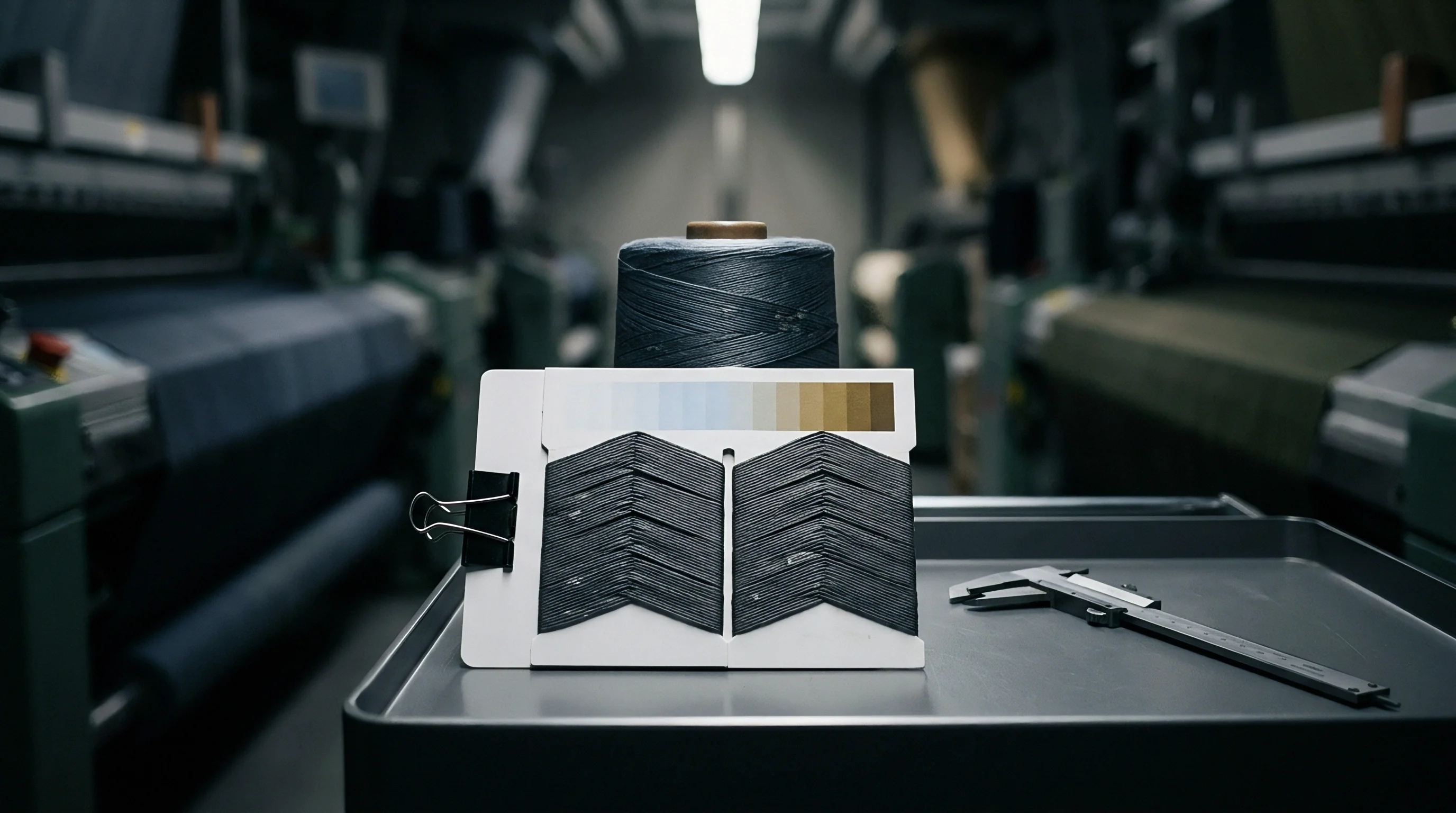
Commercial contracts rarely address loom speed variance directly. Technical data sheets specify ends, picks, yarn counts, and finished weight under ASTM D3776 or ISO 3801, but omit machine operational velocity. Weaving mills exploit this omission by cycling loom speeds to maximize shed output while passing the structural risk to converters.
When finished rolls fail dimensional stability checks under ISO 5077, the dispute stalls in mutual recrimination between weaver and finisher.
The financial liability lands heavily on the brand or sourcing office holding finished inventory. A container of garment pieces exhibiting two percent residual crimp variance yields finished shirts with twisted seams, differential pocket placement, and puckered front plackets. Retail audit rejections trigger full chargebacks, air freight re-orders, and discounted liquidation of off-spec units.
Sourcing managers must close this contractual gap during the initial request for quotation.
Supply agreements require explicit clauses binding the weaving mill to operational machine limits. Purchase orders must mandate that grey goods produced on variable speed cycles maintain warp and weft crimp within an absolute tolerance band of plus or minus 0.6 percent across the entire piece, verified by destructive test sampling every five hundred linear metres under ISO 7211-3. The clause invalidates invoices where variable speed profiling creates off-loom crimp deviations exceeding this threshold.