Structural Movement
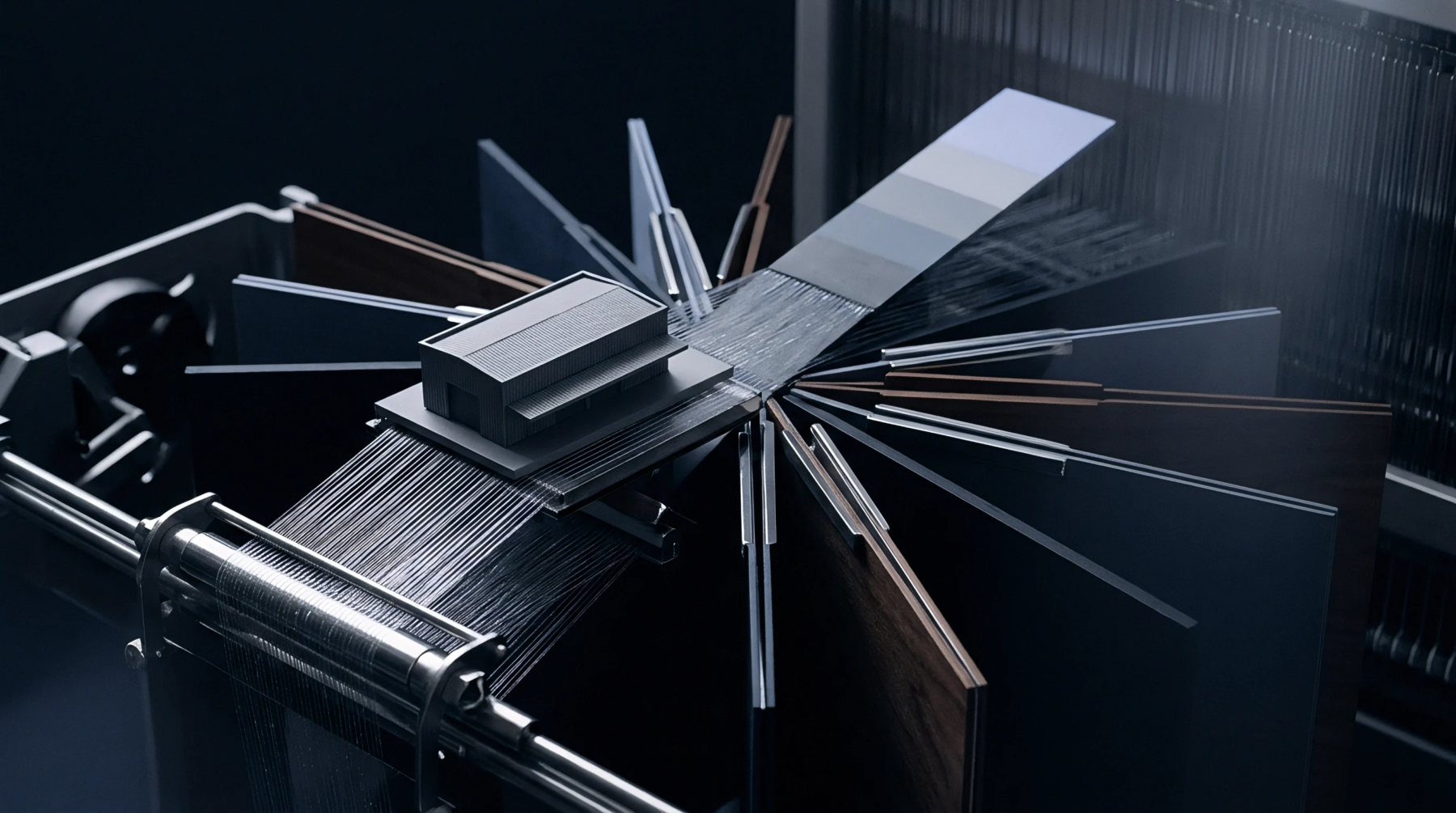
The woven boundary where the pick meets the fabric shifts forward or backward from its nominal position during loom stops and restarts. Such movement of the boundary, known as cloth fell displacement, creates dense or sparse picks that appear as bars in the finished roll. Automatic tensioning systems are installed on modern looms to correct this line before restart.
Mechanical Dynamic
Tension imbalances between the warp beam and the take-up roller occur when the loom rests without active control. In commercial weaving, cloth fell displacement results from these unequal tensions which pull the fabric boundary away from the sweep of the reed. When the machine restarts, the first beat-up either over-packs or under-packs the yarn.
Unbalanced forces create visible starting marks on the fabric.
Quality Assessment
Inspection tables reveal starting marks as thin or thick bands across the width of the fabric. Correcting cloth fell displacement requires automated pick-finding cycles that position the warp and weft accurately prior to restart. Standard quality audits reject rolls with multiple starting marks because they cannot be cut into high-end garments.
Mills monitor these errors closely.
Process Limit
Highly elastic warp yarns increase the severity of the shift because they respond dynamically to any change in tension during loom stoppages. Managing cloth fell displacement becomes almost impossible when using low-quality yarn with inconsistent elastic recovery. The limit of control is reached when the warp elasticity varies by more than ten percent across the beam width.
Under these conditions, the machine cannot adjust tension uniformly, leaving the weaver with no choice but to accept minor defects or slow down production. Modern electronics struggle with extreme fiber elasticity.