Mechanical Compression
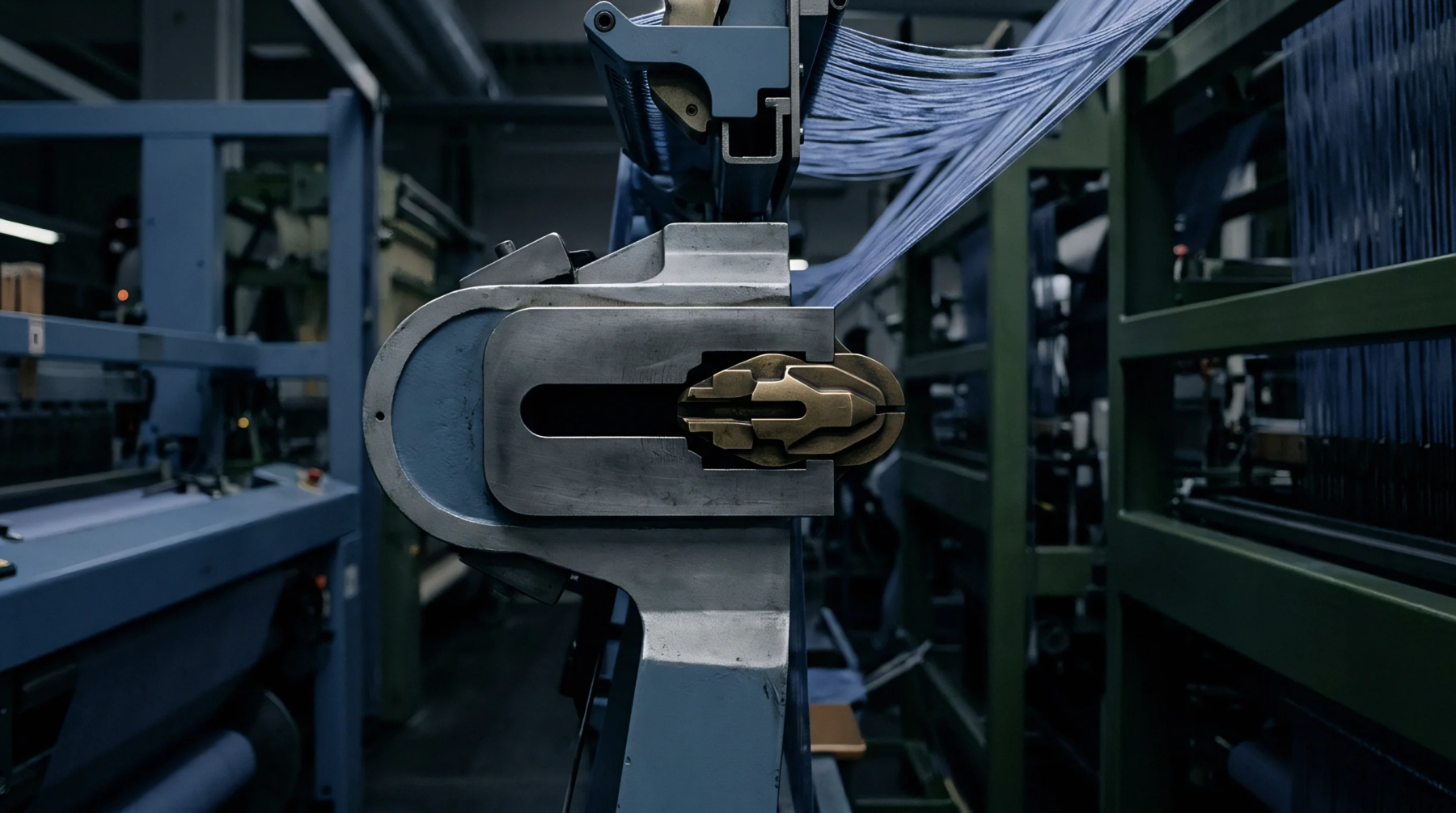
Controlled shrinkage involves a continuous industrial process designed to stabilize cotton fabrics against future dimensional loss through washing. Within the trade, sanforizing utilizes physical force to push fibres closer together while the textile passes between a rubber belt and a heated drying cylinder. Tensionless conditions throughout this interaction allow the material to contract until it reaches a state of equilibrium.
This sequence eliminates the relaxation shrinkage that otherwise occurs when finished garments encounter water or heat during home maintenance. The method applies strictly to cellulosic materials like cotton, linen and rayon because synthetic polymers possess different structural memory. Mills verify the results by testing swatches through standardized laundry cycles to confirm the residual shrinkage falls within the allowed commercial tolerance.
Operational Sequence
A feed roll introduces the damp textile into the equipment where a thick rubber blanket travels against a heated roller. The rubber belt stretches as it enters the nip and contracts upon release, forcing the fabric against the metallic surface. Friction holds the material in place while the fabric grains compress in both the width and length directions.
Sanforizing relies upon the temperature of the drying cylinder and the precise pressure exerted by the feed rollers to dictate the extent of the final stabilization. Careful regulation of the blanket tension prevents overstretching, which would cause the fabric to regain lost dimensions during subsequent processing stages. Technicians adjust these variables to match the specific weave density of the cloth moving through the machine.
Consistent moisture content ensures the fibres remain pliable enough to respond to the mechanical force without sustaining damage or surface deformation.
Textile Verification
Quality departments identify successful outcomes by measuring the change in length after dry heat or aqueous exposure. Standard laboratory testing protocols involve pinning a precise grid onto the fabric before subjecting the sample to a controlled laundry cycle. If the cloth retracts by a margin exceeding one percent, the sanforizing procedure requires recalibration of the nip pressure or the drying temperature.
This evaluation happens after the final finishing stage but prior to the shipment of rolls to garment factories. Mills provide documented test results to confirm that the goods meet the expected stability levels for consumer use. Because fibre properties vary based on origin and spin, each batch requires individual inspection to ensure the finishing equipment compensates for inherent differences in the raw yarn.
Data logs from the equipment provide proof that processing parameters remain within defined limits throughout production.
Structural Impact
Permanent stabilization remains the primary objective of this finishing treatment in modern textile supply chains. Fabrics subjected to this process demonstrate consistent fit characteristics for finished items throughout the entire lifespan of the garment. Mechanical stability removes the reliance upon oversized cutting patterns that previously accounted for the natural relaxation of cotton fibres after construction.
Manufacturers benefit from the predictability of these processed materials during automated garment assembly and sewing. Precise dimensional control allows for tighter nesting of pattern pieces on the fabric surface to improve total yield per yard. This reduction in wastage drives production efficiency across high volume manufacturing plants.
The physical state of the cloth following this mechanical intervention represents the final baseline for all subsequent garment construction steps.