Type Approval against Lot Conformity on a Repeat Order
Type approval certificates prove mill capability, while targeted lot indicator testing on repeat orders verifies shipment conformity before vessel loading.


Protocol
A type approval certificate demonstrates that an initial reference sample submitted by a fabric mill complied with defined performance and chemical safety benchmarks under controlled laboratory conditions. That document establishes capability rather than continuous delivery. When an importer places a repeat order six months later for the same fabric specification, relying solely on the original type approval creates commercial risk.
Dye formulations change between production cycles, raw yarn lots shift in intrinsic viscosity and fiber length distribution, and auxiliary chemical suppliers reformulate wetting agents or water repellents without mill notification. Lot conformity verification establishes whether the specific batch sitting in the packing hall matches the chemical profile, structural parameters, and physical performance of the previously approved type sample.
The core vulnerability on repeat orders stems from confusing capability certification with lot acceptance. ISO 17067 defines type testing as systemic assessment of a design or sample against a standard, whereas batch inspection verifies that a discrete volume of manufactured material conforms to specification tolerances. In textile supply chains, a type approval under OEKO-TEX Standard 100 Class I or GOTS Version 7.0 covers a product family based on representative worst-case samples evaluated at a single point in time.
It does not guarantee that batch four hundred and twelve, dyed during a summer heatwave with altered municipal water pH, remains within the strict limits for extractable heavy metals or pH value.
The original type approval certificate proves the mill once possessed the chemical and mechanical capability to meet a standard, whereas lot verification confirms the shipment inside the container maintains that compliance.
Brand compliance teams often discover this distinction during border surveillance testing or consumer safety audits. A container of finished cotton-polyester twill workwear garments arrives at a European port accompanied by a valid OEKO-TEX Standard 100 certificate issued eleven months prior. Customs authorities pull three garments for testing under EU REACH Annex XVII entry 43 concerning azo colorants.
The laboratory detects 34 milligrams per kilogram of 4,4-diaminodiphenylmethane released from an azo dye used on the repeat order. The mill had substituted a reactive black dye component during the second production run to cut costs, invalidating the chemical safety assumptions of the original type approval while relying on the unexpired document to clear shipping papers.

Initial Qualification Architecture versus Batch Sampling
Type testing requires full characterization across all regulated substance lists and mechanical performance parameters. Laboratory suites for initial type approval cover hundreds of individual chemical analytes, including arylamines, organotin compounds, chlorophenols, phthalates, perfluoroalkyl substances, and heavy metals. The testing suite for a complex dyed and finished technical outer fabric often costs between two thousand and four thousand US dollars per colorway.
Executing this comprehensive testing matrix on every repeat order batch is commercially unviable and operationally unnecessary.
Effective lot conformity protocols rely on targeted indicator testing matched to known process variance points. Instead of re-running the complete chemical screening panel, the verification desk selects high-risk indicators based on the substrate, dye class, and finishing chemistry. For dyed synthetic fibers, disperse dye screening and carrier residue analysis form the critical batch controls.
For wet-processed cellulosic fabrics, pH, formaldehyde, residual alkalis, and colorfastness under wet crocking serve as immediate batch conformity flags. If indicator parameters drift beyond established tolerance bands, the full type approval screening panel triggers automatically before vessel loading.
While ninety-six percent of repeat fabric lots maintain compliance with major physical strength specifications, fourteen percent exceed action limits for residual chemical auxiliaries or colorfastness tolerances. The most frequent failure mode involves pH drift in dyed woven fabrics, where inadequate washing after reactive dyeing leaves residual alkali that alters fabric surface chemistry and reduces skin-compatibility ratings.
The contract structure must define the precise boundary where a type approval expires or requires full re-qualification. Minor adjustments to yarn spin parameters or fabric warp density do not automatically void a type approval if the chemical processing remains identical. Altering the dyehouse, changing the chemical auxiliary supplier, or shifting the wet-processing line requires mandatory re-testing regardless of the remaining validity period printed on the type approval certificate.


Clamp
Physical sampling of repeat fabric orders determines whether laboratory test results accurately reflect the physical shipment. Sampling procedures governed by ISO 2859-1 or ASTM D2905 set statistical thresholds for drawing swatches from packed rolls. Drawing swatches exclusively from outer roll heads or accessible cartons creates sampling bias that fails to detect batch inhomogeneity.
Chemical residues and physical defects concentrate in specific sections of dye lots due to thermal gradients in dyeing vessels or liquor ratio exhaustion variations during long runs.
An effective lot sampling clamp requires systematic selection across the production span. Technicians must mark and pull swatches from the outer wraps, middle sections, and core ends of randomly selected rolls representing the beginning, middle, and end of the finishing sequence. For chemical testing, swatches taken from multiple rolls within the same dye batch must be tested individually rather than blended into a composite sample unless composite rules explicitly comply with ISO 17025 accredited laboratory guidelines.
| Lot Size in Meters | Sample Size in Rolls | Acceptance Threshold (AQL 1.5) | Rejection Threshold (AQL 1.5) | Indicator Test Panel Scope |
|---|---|---|---|---|
| 1,000 to 3,200 | 8 rolls | 0 failing rolls | 1 failing roll | pH, crocking, dimensional stability |
| 3,2010 to 10,000 | 13 rolls | 0 failing rolls | 1 failing roll | pH, crocking, formaldehyde, tear strength |
| 10,001 to 35,000 | 20 rolls | 1 failing roll | 2 failing rolls | Full indicator panel plus disperse dyes |
| 35,001 to 150,000 | 32 rolls | 1 failing roll | 2 failing rolls | Full indicator panel plus heavy metals |
| Sampling plans based on ISO 2859-1 Single Sampling Plans for Normal Inspection, General Inspection Level II. | ||||
Composite sampling presents significant hidden risks in restricted substance compliance. When a laboratory mixes swatches from five distinct fabric rolls into a single test solution, dilution occurs. If one roll contains 100 milligrams per kilogram of an alkylphenol ethoxylate surfactant while the other four contain zero, the composite sample yields a reading of 20 milligrams per kilogram.
If the regulatory action limit sits at 50 milligrams per kilogram, the composite sample passes, allowing a contaminated roll to clear quality assurance. Verification protocols for high-risk chemical analytes must enforce individual roll testing or apply adjusted action thresholds scaled inversely to the number of composite sub-samples.
Composite sampling dilutes localized chemical contamination across swatches, allowing individual non-compliant fabric rolls to clear testing thresholds undetected.
Laboratory specimen preparation must reflect real-world mechanical and thermal conditions. Fabric swatches clamped into testing jigs undergo tensile strain, thermal exposure, and solvent extraction during standardized test protocols. Variations in sample cutting orientation relative to warp and weft threads alter mechanical test outcomes, particularly in tearing strength under ISO 13937-2 and seam slippage under ISO 13936-2.
Mill technicians sometimes select swatches from low-tension zones near roll selvedges to present superior test metrics, distorting the lot conformity baseline.

Mill-Floor Sampling Protocol
- Roll Identification verify that shipping marks, dye lot numbers, and loom state identifiers on selected rolls match the mill packing list exactly.
- Swatch Extraction cut full-width fabric swatches measuring at least one meter in length from points minimum three meters inside the roll head to avoid end-of-roll handling contamination.
- Environmental Isolation place extracted swatches immediately into sealed polyethylene bags to prevent volatile organic compound loss or ambient humidity absorption prior to conditioning.
- Chain of Custody sign and affix tamper-evident barcodes across bag closures, recording roll number, loom position, and time of extraction in the digital tracking ledger.
Uncontrolled environmental exposure prior to laboratory testing introduces measurable distortion in physical and chemical testing. Cotton fabrics held in high-humidity ambient environments absorb moisture that alters tensile recovery metrics, mass per unit area, and colorimetric readings. Conditioning swatches for twenty-four hours at twenty degrees Celsius and sixty-five percent relative humidity under ISO 139 rules forms an absolute prerequisite before clamping specimens into testing apparatus.
When physical verification reveals marginal results near tolerance boundaries, re-sampling must follow strict operational rules. Testing a second set of swatches without doubling the sample size leads to false pass outcomes through statistical noise. Standard compliance protocols enforce a double-sampling protocol: if a lot fails initial inspection by a single parameter marginal deviation, technicians pull double the original sample size from fresh rolls.
Any single failure in the second sample set triggers immediate rejection of the entire repeat shipment.

Drift
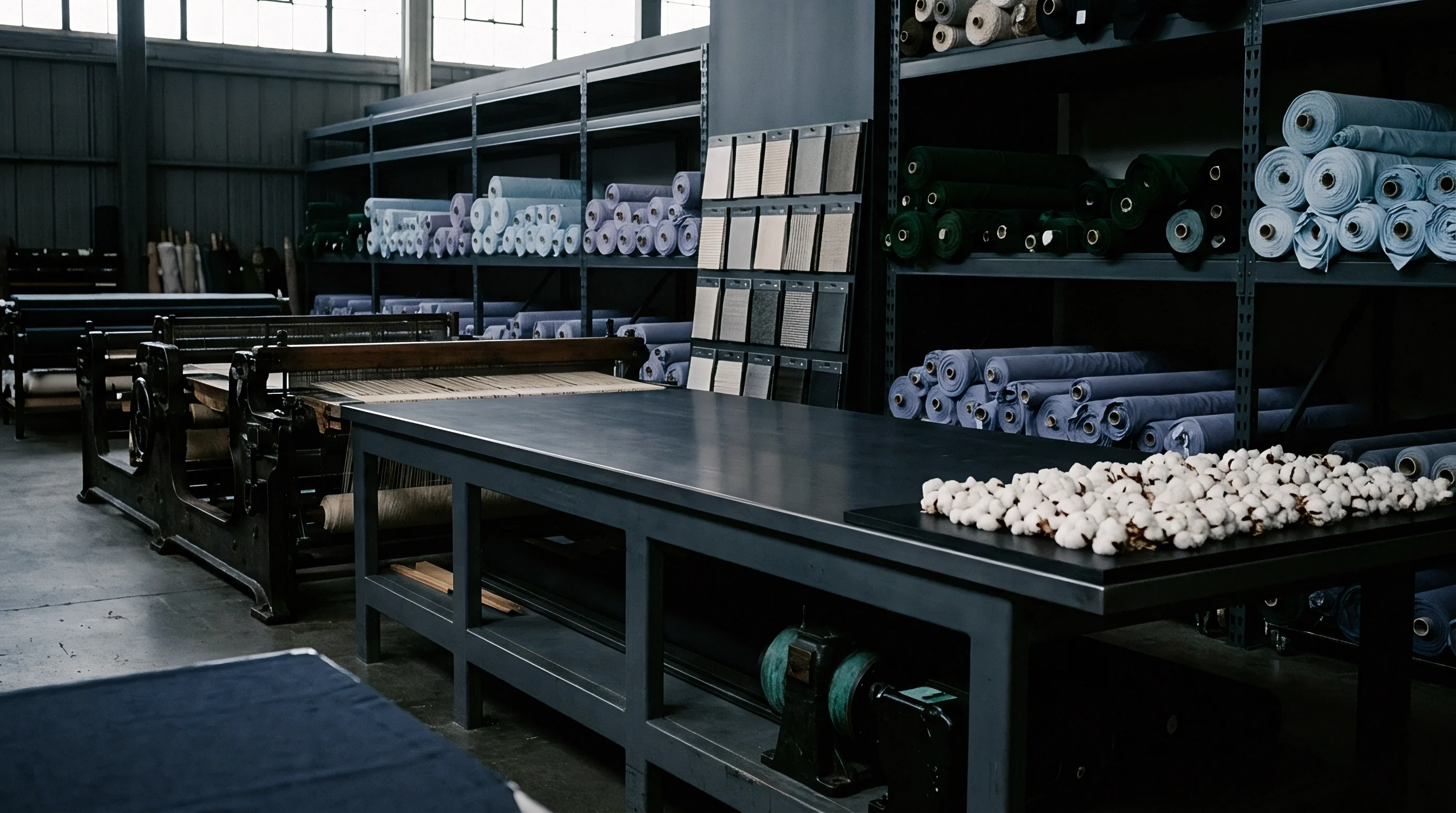
Process drift represents the structural divergence between the operating conditions during initial type approval production and those present during repeat lot manufacturing. In wet textile processing, small variations in raw water filtration, ambient factory temperature, steam pressure stability, and chemical batch consistency accumulate into significant physical and chemical deviations. Identifying process drift requires tracking key parameters across successive production runs rather than treating each repeat order as an isolated event.
Dye recipe adjustments rank among the most common causes of chemical non-conformity in repeat orders. When mills re-order dyestuffs from secondary chemical suppliers, the purity and active concentration of the dye molecules vary. To achieve the visual shade match required by the buyer’s approved lab dip, dyehouse managers adjust dye concentrations, bath temperatures, and fixation times.
These adjustments alter the concentration of unreacted dyes, residual hydrolysates, and hazardous chemical impurities within the finished matrix.
Consider a practical case involving reactive black dyeing on 100 percent combed cotton knit fabric across three production runs over nine months:
| Production Run | Fixation Temperature | Wash-Off Cycles | Fabric Surface pH | Formaldehyde Content | Conformity Status |
|---|---|---|---|---|---|
| Type Approval (Run 1) | 60°C | 6 rinses + 2 soaps | 6.2 | 12 mg/kg | Conformant (Class I) |
| Repeat Order (Run 2) | 58°C | 6 rinses + 2 soaps | 6.8 | 15 mg/kg | Conformant (Class I) |
| Repeat Order (Run 3) | 52°C | 4 rinses + 1 soap | 8.4 | 48 mg/kg | Non-Conformant (Class I) |
The operational data reveals how cost-reduction measures during Run 3 led directly to compliance failure. Lowering the fixation temperature reduced dye covalent bonding efficiency with the cellulose fibers. Reducing wash-off cycles saved water and energy but left excessive unreacted dye hydrolysates, residual alkali from soda ash bath additions, and fixative chemical residues on the cotton fibers.
While the fabric visually matched the shade sample, fabric surface pH rose to 8.4, violating OEKO-TEX Standard 100 Class I limit of 4.0 to 7.5 for infant apparel products.
Process drift routinely occurs when dyehouses reduce rinse cycles or wash temperatures to cut energy costs, resulting in residual chemical non-conformity on repeat orders.
Elastane-containing stretch fabrics exhibit severe physical performance drift across repeat orders if storage and processing tension parameters shift. Heat setting fixes the elastane network within synthetic and natural fiber blends. If the stenter frame speed increases by fifteen percent during a high-volume repeat order, core heat setting temperature drops within the fabric interior.
The resulting fabric exhibits elevated thermal shrinkage during garment wash, altered elastic recovery force, and increased susceptibility to elastane fiber breakage under mechanical strain.

Mechanical and Chemical Failure Modes in Repeat Batches
- Thermal Heat-Setting Variance incorrect stenter residence times alter fabric dimensional stability, skewing post-wash shrinkage metrics by up to six percent.
- Auxiliary Formulation Drift substituting low-cost softening agents increases extractable organic matter and causes fabric yellowing under heat pressing.
- Water Recirculation Saturation build-up of dissolved solids in recycled wash liquor elevates residual salt concentrations on fabric surfaces, impairing colorfastness to perspiration.
- Exhaustion Rate Fluctuations improper liquor ratio adjustments lead to uneven dye fixation, creating side-to-center shading defects across wider fabric widths.
- Curing Temperature Drops incomplete cross-linking of durable water repellent fluorocarbon or silicone finishes reduces spray ratings after home laundering cycles.
Monitoring physical parameter drift requires statistical process control charts tracking mean values and standard deviations across successive production lots. When dimensional stability after laundering moves from negative two percent toward negative four point five percent over three consecutive repeat lots, process drift is active even if individual lots remain technically within the maximum allowable limit of negative five percent. Proactive buyers intervene at the trend stage, requiring mill process auditing before lot drift causes outright commercial failure.

Analysis
Verification analysis converts physical fabric swatches into legal and commercial evidence. Testing laboratories must hold ISO/IEC 17025 accreditation with specific chemical and physical test methods explicitly detailed within their accredited scope schedule. A generic ISO 17025 accreditation certificate does not prove capability to execute specific complex analytical techniques, such as liquid chromatography-tandem mass spectrometry for per- and polyfluoroalkyl substances or gas chromatography-mass spectrometry for organotin compounds.
Choosing between complete chemical screening and targeted indicator testing governs both testing costs and verification turnaround times. The complete testing panel for comprehensive compliance certification involves over two hundred chemical analytes and requires five to seven working days. A targeted repeat order lot conformity panel focuses on high-probability risk items, delivering results within forty-eight hours at a fraction of the cost.
| Test Category | Type Approval Scope | Repeat Lot Conformity Scope | Standard Test Method | Action Limit |
|---|---|---|---|---|
| Azo Colorants | Full 24 aromatic amines | 8 high-risk amines based on dye class | EN ISO 14362-1 / 3 | 20 mg/kg per amine |
| Extractable Heavy Metals | 10 metals (Pb, Cd, As, Sb, etc.) | Key metals (Extractable Cr, Cu, Ni) | EN ISO 16711-2 | Varies by product class |
| Phthalates | 15 regulated plasticizers | Targeted screening on prints/coatings | EN ISO 14389 | 1000 mg/kg total sum |
| Fabric Surface pH | Mandatory all swatches | Mandatory all rolls sampled | ISO 3071 | 4.0 to 7.5 (Class I) |
| Dimensional Stability | 3 washing cycles + flat dry | 1 washing cycle + tumble dry | ISO 6330 / ISO 5077 | +/- 3.0 percent max |
Analytical results must account for measurement uncertainty inherent to complex chemical extraction methods. ISO/IEC 17025 requires laboratories to calculate and report measurement uncertainty upon request. For aromatic amine analysis under EN ISO 14362-1, typical expanded measurement uncertainty sits around fifteen to twenty percent at the twenty milligram per kilogram threshold.
If a test report on a repeat fabric batch yields twenty-two milligrams per kilogram of 3,3-dichlorobenzidine with an expanded uncertainty of plus or minus four milligrams per kilogram, the true concentration ranges between eighteen and twenty-six milligrams per kilogram.
Enforcing strict conformity action limits below regulatory thresholds absorbs measurement uncertainty and prevents border rejections caused by laboratory testing variance.
Commercial contracts must explicitly define how measurement uncertainty applies to pass or fail decisions. Under binary decision rules without guard bands, a result of twenty-one milligrams per kilogram constitutes a fail, triggering shipment rejection or re-processing obligations. Under guard-band decision rules according to ISO/IEC Guide 98-4, the acceptance threshold is lowered by the expanded measurement uncertainty value.
Setting an internal action limit at fifteen milligrams per kilogram for aromatic amines ensures that any batch cleared internally will reliably pass external regulatory testing regardless of testing laboratory variance.
Does targeted indicator testing provide sufficient legal protection against regulatory enforcement action on repeat shipments?
Targeted indicator testing combined with a valid, unexpired type approval certificate establishes a legally defensible due diligence framework under major global chemical regulations. In European market enforcement under the EU General Product Safety Regulation, enforcement authorities evaluate whether an importer implemented reasonable, risk-based verification controls. Showing a complete type approval certificate issued within twelve months, combined with batch-specific indicator test reports for pH, fastness, and critical chemical markers, demonstrates comprehensive operational control over manufacturing quality.
Discrepancies between mill-submitted internal test reports and independent third-party laboratory results present a constant challenge in repeat order management. Internal mill testing facilities frequently use simplified test apparatus or uncalibrated equipment. Common technical discrepancies occur in fabric pH measurement, where mills fail to use boiled-out distilled water, leading to artificially neutral readings that mask chemical processing contamination.
All repeat order lot conformity testing relied upon for shipment release must execute through independent, accredited third-party laboratories using fresh, unexpired reagents.

Settlement
Commercial resolution mechanisms dictate how financial losses and inventory liabilities are allocated when a repeat order fails lot conformity testing. Without explicit contract clauses governing repeat order verification, buyers carry the financial burden of re-testing fees, factory downtime, line stoppage costs, and air freight premiums necessary to keep retail launch schedules intact. The purchase order must link payment clearance directly to satisfactory lot conformity verification, converting compliance from an abstract policy into a binding financial condition.
Effective procurement agreements incorporate a structured conformity escalation framework triggered automatically upon laboratory failure. When an indicator test flags a non-conformity on a repeat lot, the mill receives formal notification along with the official test report. The mill retains the right to request testing of duplicate swatches extracted during the initial sampling protocol at an accredited secondary referee laboratory agreed upon by both commercial parties.
If the secondary laboratory confirms the non-conformity, the escalation framework enforces clear commercial remedies:
- Immediate Shipment Hold all packed containers and work-in-progress materials associated with the failed dye lot or finishing lot are locked in quarantined storage.
- Full Screening Execution the mill finances comprehensive chemical screening across all parameters included in the initial type approval specification.
- Corrective Action Processing non-conformities correctable through re-washing or re-finishing must undergo approved remediation, followed by complete re-sampling and re-testing.
- Total Lot Rejection if the chemical non-conformity involves restricted substances like banned azo dyes or heavy metals that cannot be removed, the mill destroys the fabric lot under independent supervision.
- Financial Indemnification the mill absorbs all re-testing fees, third-party auditing expenses, destroyed raw material costs, and late delivery penalties specified in the master purchase agreement.
For a technical outdoor apparel buyer sourcing one point two million meters of waterproof breathable nylon fabric annually across four primary supply mills, establishing strict repeat order verification clauses eliminated major shipment detentions. Prior to enforcing mandatory lot conformity testing, the buyer experienced an average of three major shipment detentions per year due to water repellent finish parameter drift and colorfastness failures, costing an estimated one hundred and eighty thousand US dollars in air freight surcharges and rework fees.
After establishing mandatory lot conformity testing on every repeat dyeing lot, failure detection shifted entirely to the mill floor before container loading. Over a two-year tracking window, forty-two repeat production batches underwent targeted lot conformity screening prior to vessel departure. Thirty-nine batches passed initial indicator testing without delay.
Three batches failed initial screening due to residual surface pH deviations and poor wet crocking fastness. The mills re-washed and re-finished the three non-conforming batches at their own expense prior to export clearance, resulting in zero border detentions and zero retail delivery delays over the entire two-year period.
Contractual verification clauses must define precise financial penalties for unannounced process changes made by the manufacturer. If a mill alters dyestuff suppliers, wet-processing facilities, or fabric construction without written authorization from the buyer, the contract must impose a mandatory penalty fee equal to the full value of the affected purchase order plus full reimbursement of all qualification testing expenses required to re-establish type approval.
The purchase order terms must mandate that final payment release remains contingent upon receipt of a clean third-party lot conformity certificate linked directly to the specific roll numbers and shipping marks on the bill of lading. Eliminating advance payment releases prior to chemical verification removes financial exposure and forces fabric manufacturers to maintain rigorous quality and chemical controls across every repeat order run.