Audit Scope Boundaries in Fabric Mill Qualification
Audit scopes must encompass spinning inputs through subcontract finishing lines to hold prime vendors liable for latent wet processing defects.
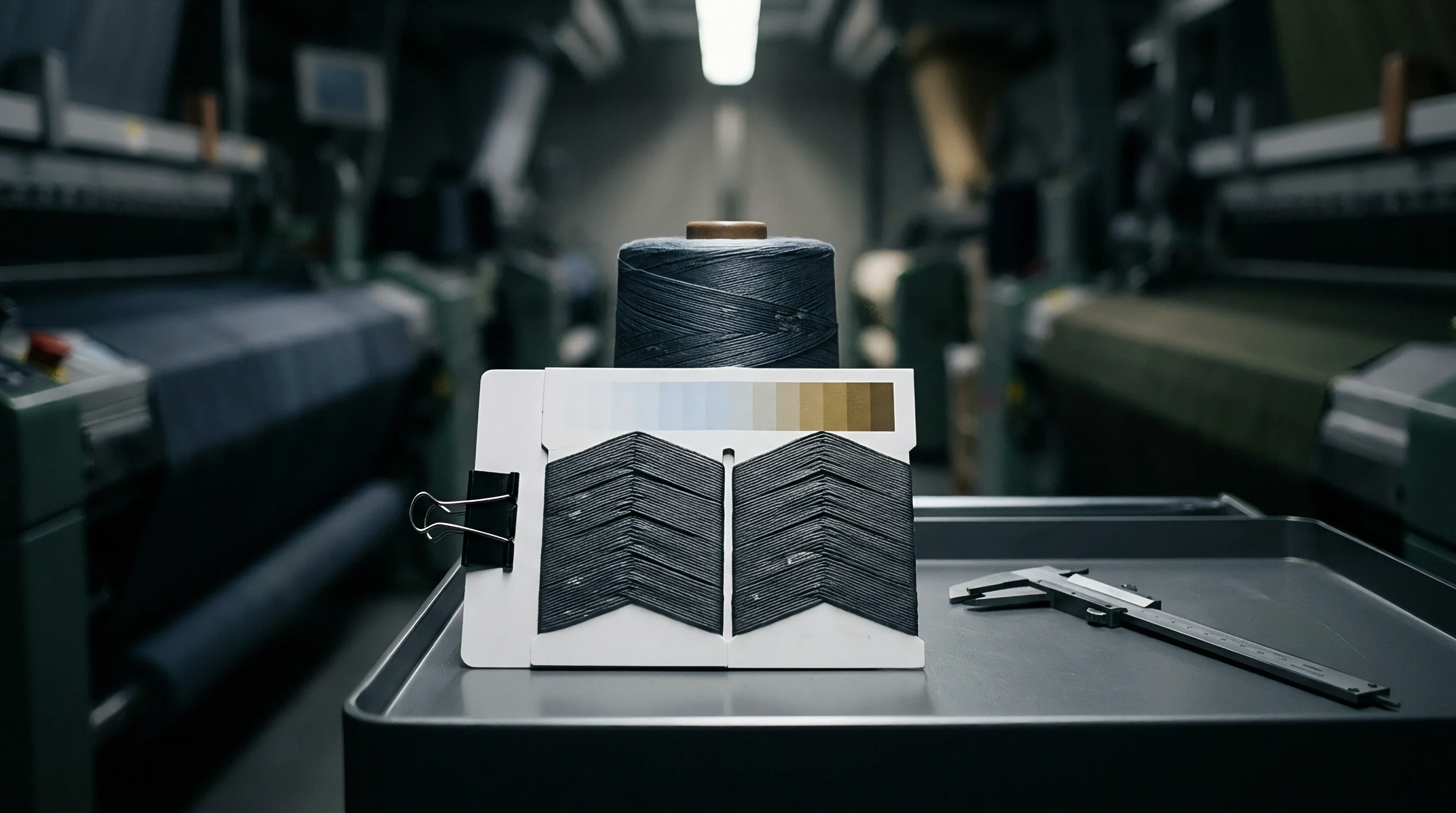

Perimeter
Technical qualification for bulk piece goods stalls when buying offices evaluate a corporate office rather than the mechanical line converting yarn into finished rolls. A vendor presentation routinely showcases vertical integration, yet production routing reveals unbonded third-party commission units handling sizing, scouring, piece dyeing, and stenter curing. Defining the boundary of evaluation requires tracing yarn mass through every physical transformation until goods reach the export container.
The qualification perimeter marks the precise line where buyer technical liability terminates and vendor operational accountability becomes absolute.
Mill audits collapse commercially when auditors inspect physical machinery while omitting legal and operational custody transfers. A spinning facility delivering ring-spun cotton yarn to an external beam-warping plant operates under separate quality controls from the downstream waterjet weave shed. If the qualification dossier approves the corporate entity but excludes the commission desizing yard, subsequent bulk lot variances in residual starch will corrupt reactive dye baths across ten thousand meters.
Establishing the operational perimeter prevents downstream defect disputes before raw material procurement commences.
A qualification perimeter terminating at company-owned gates leaves subcontracted pad-steam continuous ranges unmonitored.
Drawing this operating boundary demands isolating every facility that imparts thermal, chemical, or mechanical change to the substrate. Sourcing teams frequently confuse commercial invoicing with technical custody. A trading agency acting as principal vendor issues clean compliance certifications, while sub-tier dyehouses dump wastewater into municipal sumps and operate padder bowls with uncalibrated shore-durometer nips.
The qualification boundary contains three non-negotiable manufacturing tiers:
- Primary substrate formation controls yarn interlacing or loop stabilization on looms and knitting machines, fixing raw construction density and base mechanical traits.
- Preparatory wet chemistry strips natural oils, sizing agents, and pectin through desizing, scouring, and bleaching steps that dictate core capillary absorbency.
- Coloration and topical finishing applies dye molecules, functional polymers, and mechanical compaction on stenters or calenders to establish bulk hand and shrinkage values.
Greige defects survive wet processing. Skipping preparatory scouring audits permits uneven wax extraction, causing unlevel shade bands across wide-width continuous dyeing ranges. When an audit boundary fails to capture off-site yarn preparation and commission wet finishing, shade rejections at garment factories trigger severe retrospective airfreight penalties.

Shed
Loom performance and knitting head maintenance dictate physical construction limits before chemistry touches the greige substrate. Evaluating the weaving or knitting facility isolates warp tension control, reed cleanliness, stop-motion sensitivity, and climatic conditioning. Relative humidity held at 65 percent with temperatures near 22 degrees Celsius prevents static accumulation and yarn embrittlement during air-jet insertion.
A shed operating without automated hygrometric controls delivers variable pick spacing across diurnal shift changes.
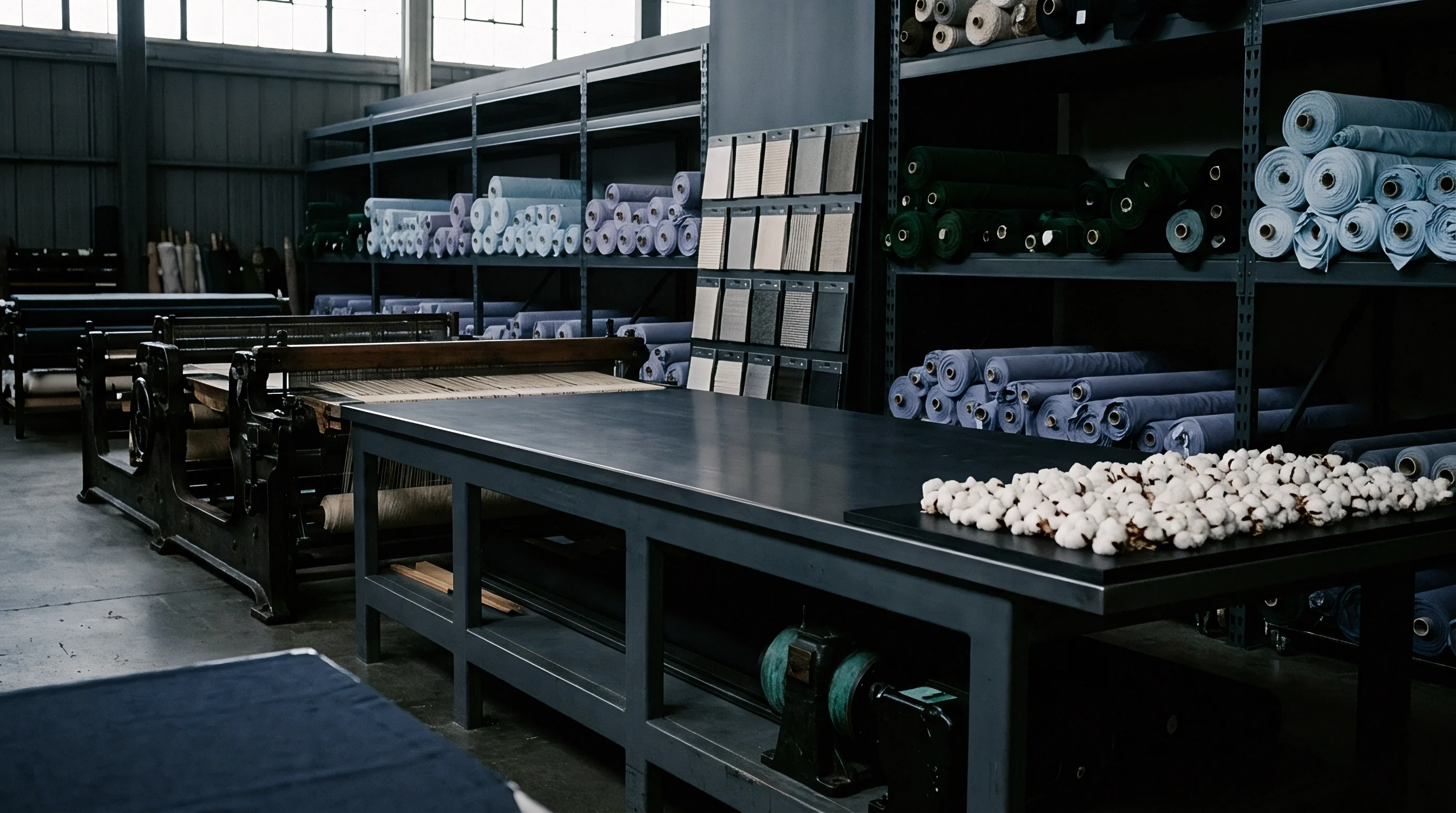
Should Greige Spinning Enter Mill Qualification Perimeter?
Yarn manufacturing sits one step upstream of interlacing, generating variance that mechanical settings cannot resolve. Lot-to-lot unevenness in cotton count, measured by Uster unevenness percentage, generates barré striping in circular knitting that appears only after piece dyeing. Sourcing specifications stipulate whether rotor or ring systems furnish warp yarn, because twist multiplier differences alter tear strength by twenty percent.
Sourcing teams must verify yarn purchase contracts, spinning lot blending allocations, and single-end tensile test logs within the primary mill dossier.
Spinning lots behave differently. Inspecting the spinning supply chain prevents structural spirality and yarn-twist liveliness from skewing single jersey builds. Woven constructions demand equal scrutiny of beam-warping records.
When creel tension arrays drop below uniform thresholds, section beams produce loose ends that generate continuous warp floats and slack selvedges across hundreds of meters.
| Processing Phase | Key Mechanical Parameter | Test Standard | Qualification Tolerance |
|---|---|---|---|
| Yarn Receiving | Count and Twist Level | ISO 2060 / ISO 17202 | ±2.5 percent of nominal count |
| Warp Sizing | Size Add-On Percentage | Desize Mass Loss Check | 8.0 to 11.0 percent dry pick-up |
| Weaving Shed | Warp and Weft Density | ISO 7211-2 | ±3 percent ends and picks |
| Circular Knitting | Course and Wale Count | ISO 14971 | ±4 percent loop density |
| Greige Inspection | Point Count Deductions | ASTM D5430 Four-Point | Maximum 28 points per 100 sq meters |
Sizing preparation introduces latent defects that evade gray-cloth visual sorting frames. Excess sizing starch produces yarn stiffness that snaps under heald frame friction, while insufficient starch invites filamentation in synthetic microfibers. Auditing the sizing kitchen verifies refractometer checks on bath concentration and temperature maintenance in the size box.
The engineer verifies that cylinder drying groups operate with graduated thermal profiles to prevent starch skinning and yarn sticking.
A supplier typically explains that greige barré defects reflect natural agricultural variations beyond the loom shed’s operational control.


Bath
Wet processing transforms rigid greige yardage into saleable substrate through aqueous chemical reactions, high-temperature thermal fixation, and continuous mechanical shearing. In-line qualification examines liquor ratio precision, automatic chemical dispensing pumps, and pH monitoring loops on jet dyeing vessels. Atmospheric overflow machines dyeing cotton jersey at liquor ratios of 1:8 consume significant thermal energy and water volumes, tempting unverified sub-tier operators to pack vessels past nominal capacity.
Overloaded dye tubes restrict rope circulation, creating permanent rope marks, surface chafing, and uneven dye distribution.

Where Terminus Lines Fall across Commission Finishing?
Converters frequently execute pad dyeing internally while dispatching rolls to third-party commission sheds for resin coating, sanforizing, or brushing. This division fractures technical accountability. If an audited continuous pad-steam range matches target spectrophotometric values, the mechanical stenter outside the direct boundary can destroy color integrity through uncontrolled heat-setting temperatures that trigger dye sublimation.
Commission coaters carry narrow margins. Subcontract finishers frequently run water-repellent fluorochemical emulsions alongside hydrophilic softeners without thoroughly flushing foulard troughs. Chemical cross-contamination degrades water-column performance below specified ISO 811 thresholds while leaving physical appearance untouched.
The qualification boundary must swallow every outsourced chemical application facility, binding each commission partner to the buyer’s approved formulation dossier.
A finish formulation alteration executed without written buyer sign-off voids physical performance guarantees across bulk roll deliveries.
Stenter operation controls dimensional stability, skew, and residual chemical migration. The auditor examines overfeed dials, temperature probes across individual drying zones, and moisture sensors at the delivery end. Overfeed settings between positive fifteen and thirty percent allow knitted goods to relax lengthwise, achieving residual shrinkage below five percent under ISO 6330 laundering protocols.
Insufficient overfeed stretches wet goods to artificially inflate yield, guaranteeing downstream garment shrinkage rejections upon consumer washing.
- Auditors verify automated chemical dosing lines against manual bucket additions to eliminate human weighing error during dyestuff mixing.
- Water quality testing confirms incoming filtration systems maintain iron levels below 0.1 parts per million to prevent catalytic damage during peroxide bleaching.
- Tenter temperature profiling confirms heat-setting chambers reach 190 degrees Celsius for polyester-elastane stabilization without dwell-time variance.
- Effluent treatment verification validates biological oxygen demand discharge levels against regional regulatory discharge limits.
Batch-to-batch color repeatability depends entirely on spectrophotometric discipline under standardized lighting. Colorists evaluate dye lots against approved standards inside viewing booths calibrated for illuminants D65, TL84, and Illuminant A. Metamerism arises when mills substitute dye recipes without recalculating spectral reflectance indices. Automated dispensing networks reduce human error, yet piping dead-legs harbor bacterial biofilm that drops liquor pH mid-cycle.
| Finishing Operation | Target Mechanism | Test Method | Pass Boundary Limit |
|---|---|---|---|
| Continuous Desizing | Enzymatic Starch Digestion | TEGEWA Iodine Scale | Grade 7 minimum clear rating |
| Caustic Mercerization | Cotton Fiber Swelling | Barium Activity Number | BAN 125 minimum absorption |
| Compacting / Sanforizing | Mechanical Warp Shrinkage | ISO 5077 / ISO 6330 | Under -3.0 percent length change |
| Hydrophobic Coating | Fluorocarbon Repellent Film | ISO 4920 Spray Rating | Spray rating 95 before washing |
| Stenter Thermofixation | Dimensional Heat-Setting | ISO 16322-2 Skewness | Maximum 2.5 percent torque skew |
Singed fabrics show uniform hairiness reduction under magnification. Stenter heat sets final width. Does an off-site commission compacting facility assume direct commercial liability when mechanical stretching exceeds approved warp shrinkage limits?

Dock
Final packaging inspection and warehouse quarantine zones represent the ultimate gate separating mill premises from export shipping vessels. Verification protocols in this operational sector center on illuminated inspection frames, four-point visual grading systems, roll packing integrity, and laboratory cross-testing. Standard roll inspection rates require opening at least ten percent of yardage from each dye lot, using lighting stations delivering a minimum of 1000 lux across the entire viewing plane.
Inspectors passing rolls at transit speeds exceeding twenty meters per minute miss fine warp slubs, oil droplets, and broken picks.
Four-point inspection records according to ASTM D5430 assign penalty values based on defect length. The qualification auditor inspects recent grading records to ensure operators do not deliberately downgrade point assignments to force high-defect rolls past acceptance gates. Quality parameters mandate maximum defect point totals per one hundred square meters:
- First-quality woven shirting tolerates up to 18 penalty points per 100 square meters before triggering roll rejection.
- Heavy bottom-weight twills allow up to 28 penalty points per 100 square meters given higher yarn mass and structural density.
- Circular knitted jersey accepts up to 22 penalty points per 100 square meters with severe limits on horizontal barré and dropped loops.
- Coated performance canvas rejects entire rolls exceeding 15 points per 100 square meters due to barrier membrane integrity losses.
Inspection speed influences defect detection. The auditor inspects packing benches to verify roll poly-wrapping protects against transit humidity. Desiccant pouch placement inside sea-freight packaging prevents mold generation across transoceanic container routes.
Rolls resting directly on wet concrete surfaces absorb moisture through capillary wicking, distorting weight measurements taken during destination intake testing.
A laboratory conditioning chamber lacking twenty-four-hour environmental logging invalidates on-site physical test results.
On-site testing laboratories require physical separation from vibration-heavy loom sheds and hot dyehouse steam lines. Equipment rosters must include tensile testers executing ISO 13934-1, Martindale abrasion heads running ISO 12947-2, and conditioning hoods sustaining 20 degrees Celsius and 65 percent relative humidity per ISO 139 parameters. Testing conditioned test specimens against dry specimens yields apparent tensile strength variances reaching fifteen percent in cellulose substrates.
A roll passed visually on a high-speed packing frame fails predictably on the garment cutting table.

Liability
Contract drafting crystallizes audit scope limits into enforceable commercial terms. Technical assessment findings remain useless until incorporated into Master Purchase Agreements as binding quality clauses. When third-party commission processors fall outside audit boundaries, purchase contracts assign entire joint liability to the prime commercial vendor.
Legal agreements state explicitly that prime vendors cannot cite subcontractor mechanical failures, chemical variations, or shipping disruptions to excuse defective roll shipments or delivery delays.
Chargeback protocols govern non-conforming yardage claims identified during garment factory cut-and-sew operations. Commercial agreements establish that destination rejections based on latent wet-processing faults trigger full landed-cost restitution, including ocean freight, customs tariffs, and cut-panel scrap expenses. Standard supplier sales terms cap exposure at raw fabric invoice value, excluding subsequent manufacturing investments.
Technical buyers override supplier clauses by requiring complete chain-of-custody disclosure across spinning, weaving, wet processing, and topical finishing partners before issuing purchase orders.
Standard quality agreements incorporate ISO 105 fastness schedules and ISO 6330 dimensional benchmarks as binding purchase conditions rather than non-enforceable reference guidelines. The Master Quality Agreement establishes that vendor subcontracting of wet processing steps without written buyer consent constitutes an incurable material breach of contract.