Woven Fabric Weight Tolerances and Linear Metre Yield Calculations
Reconcile woven fabric purchases by calculating linear yield from conditioned mass and usable cuttable width under ISO 3801 and ISO 139 parameters.


Mass
Fabric spec sheets establish a baseline square metre mass that dictates both mechanical performance and raw material cost. On the inspection floor, an accurate weight measurement requires bringing the sample into thermodynamic equilibrium with a standard test atmosphere. ISO 139 mandates ambient conditions of 20 degrees Celsius (±2°C) and 65 percent relative humidity (±4%), while ASTM D1776 specifies 21 degrees Celsius (±1°C) and 65 percent relative humidity (±2%).
Regain shifts nominal mass significantly: polyester holds under 0.4 percent moisture by dry weight, combed cotton absorbs 7.0 to 8.5 percent in standard air, and wool absorbs up to 18.0 percent before feeling damp. Weighing a roll straight off a stenter frame yields an artificially low mass because residual heat strips bound water out of hydrophilic fibers.
Unit mass also fluctuates across a production run. Punching swatches with a 100 square centimetre cutter gives an immediate estimate, but single cuts capture localized density variations rather than a lot average. ISO 3801 Method 5 governs cut specimens, requiring at least five swatches taken diagonally across the fabric width, each positioned at least 100 millimetres from either selvage.
Basing commercial mass on properly conditioned samples prevents trade disputes caused by high ambient humidity or post-finishing desiccation distorting the invoiced weight against delivered fiber content.

Standard Conditioning Protocols for Mass Measurement
Determining true unit mass requires eliminating previous moisture history. Textile fibers exhibit sorption hysteresis: cloth approaching standard equilibrium from a wet state retains more moisture than fabric conditioned from bone-dry. Standard testing requires pre-conditioning specimens in a dry atmosphere at 10 to 25 percent relative humidity and no more than 50 degrees Celsius for at least four hours prior to standard room conditioning.
Reaching equilibrium along the absorption curve guarantees reproducible weights across independent laboratories.
Square metre weight changes whenever chemical finishes are added or stripped. Greige cloth off the loom contains sizing agents ~ polyvinyl alcohol, modified starches, or carboxymethyl cellulose applied to protect warp yarns from friction ~ which add 4.0 to 10.0 percent to greige warp mass. Scouring, desizing, and bleaching wash out these compounds, lowering the base grams per square metre prior to dyeing.
Downstream wet finishing subsequently restores mass through dyestuffs, flame retardants, water-repellent fluorochemicals, or polyurethane back-coatings.
Standard testing under ISO 3801 Method 5 requires pre-conditioning woven samples at 10 to 25 percent relative humidity prior to final atmospheric equilibrium to eliminate absorption hysteresis.
Distinguishing Greige Loom-State Mass from Finished Unit Weight
Using off-loom figures to project finished garment yields leads to sizing errors. On air-jet and rapier looms, warp yarns sit under high tension while weft yarns remain relatively straight. Once the fabric enters jet dyeing or continuous wash ranges, that mechanical tension relaxes and crimp redistributes across both yarn systems.
Warp ends contract longitudinally while weft density rises, compacting the weave structure and raising finished square metre mass above the greige baseline.
Finishing mills frequently alter thread densities to hit nominal target weights. A construction woven at 28 ends per centimetre and 24 picks per centimetre across a 170-centimetre reed width will finish at 31 ends per centimetre and 26 picks per centimetre if the stenter overfeeds lengthwise and allows the fabric to narrow to 150 centimetres. This densification increases finished square metre mass by 12 to 18 percent over the loom-state measurement.
Sourcing evaluations must establish whether a quoted weight specification represents raw greige state or fully relaxed, finished fabric.
- Conditioned Mass Basis calculates fabric weight after specimen moisture equilibrium reaches stability in accordance with ISO 139 parameters.
- Loom-State Density measures greige fabric directly following weaving, retaining warp sizing agents and mechanical loom tension.
- Scoured Dry Weight establishes the pure fiber mass of the fabric after complete removal of sizing materials, oils, and transient finishes.
- Finished Unit Weight reflects final commercial mass per unit area after dyeing, mechanical compaction, stenter heat-setting, and chemical additions.
Greige fabric also carries residual spinning preparations. Spin finishes and coning oils on synthetic filament yarns account for up to 2.5 percent of total roll mass. Overlooking these oils, which volatilize during heat-setting, skews yarn yield calculations and creates weight variances on delivered goods.
Width
Converting square metres to linear metres depends on usable fabric width. The total edge-to-edge distance between outer warp threads rarely represents the width that can be cut in production. Stenter pin punctures, edge curl, un-dyed clamp zones, and fringed drop-selvages from shuttleless looms reduce the functional cutting area.
Usable width requires two continuous parallel lines inside the selvages where yarn count, construction, pattern repeat, colour, and chemical finish remain uniform throughout the entire roll length.
Selvage flaws create unrecoverable cutting room waste. ISO 22198 defines standard test procedures for total and usable widths in piece goods: total width spans outer edge to outer edge, whereas usable width excludes selvages and mechanically distorted or punctured margins. Automated marker-making software requires precise cuttable dimensions.
When a roll tagged at 150 centimetres nominal delivers only 144 centimetres of usable cloth due to wide pin margins, marker efficiency drops and pattern pieces fall off the layout.
Usable Cuttable Width versus Nominal Selvage Spacing
Selvage structures behave differently from the body of the fabric. Mills construct selvages with heavier ply yarns or distinct weaves like basket or leno to withstand transverse tension in finishing ranges. Rapier and air-jet looms also form catch-selvages or tucked edges that double the yarn mass at outer margins.
These dense borders shrink at different rates from the base weave during wet processing, causing tight or wavy edges that prevent the roll from lying flat on the cutting table.
Automatic spreading machines amplify edge distortion. Tight selvages drag along the table, pop under drive tension, or cause center-roll bagging that jams automated cutting heads. Slitting off non-conforming selvage borders is required before laying down markers.
Fabric procurement specifications must state minimum usable cuttable width rather than overall roll width to establish enforceable delivery limits.

Width Shrinkage Mechanics in Stenter Heat-Setting
Thermal processing governs final width and cross-directional weight distribution. In a stenter frame, pins or clips on continuous conveyor chains grip the fabric edges through heated chambers to evaporate moisture and set thermoplastic synthetic fibers. Adjusting the cross-rail spacing exerts lateral tension or allows relaxation, setting the finished cuttable width and controlling area mass.
Pulling fabric out excessively to hit a wider cuttable dimension drops the picks per centimetre and lowers unit mass, making the structure prone to laundering shrinkage.
Uneven chain tension distorts the grain. Stretching synthetic blends past their elastic recovery threshold creates high residual stress. When released from stenter pins, the fabric relaxes unevenly, producing bowed weft lines or skewed yarn angles.
ISO 13015 defines measurement procedures for bow and skew in woven goods; weft bowing above 1.5 percent of usable width skews garment panels and pulls finished seams off-grain.
| Fabric Construction Class | Nominal Greige Width (cm) | Target Finished Usable Width (cm) | Stenter Lateral Feed Allowance (%) | Selvage Deduction Total (cm) | Usable Area Efficiency (%) |
|---|---|---|---|---|---|
| Cotton Plain Weave Poplin (120 g/m²) | 168 | 148 | -11.9 | 4.0 | 97.3 |
| Polyester/Cotton 65/35 Twill (240 g/m²) | 172 | 150 | -12.8 | 3.5 | 97.7 |
| Wool Worsted Suiting (280 g/m²) | 162 | 144 | -11.1 | 5.0 | 96.5 |
| Nylon 6,6 Canvas (350 g/m²) | 165 | 152 | -7.9 | 3.0 | 98.0 |
Calendering flattens yarns mechanically. Passing woven cloth through heated metal bowls under hydraulic pressure compresses the yarn structure, reducing thickness while slightly spreading the total width. This flattening shifts light reflection and air permeability without adding fiber mass.
When a finishing plant attempts to meet cuttable width and square metre weight simultaneously, calendering provides a quick dimensional adjustment that washes out during steam pressing or laundering.
Attributing narrow usable width to unavoidable yarn lot variation often conceals improper chain rail settings on the stenter line.

Yield
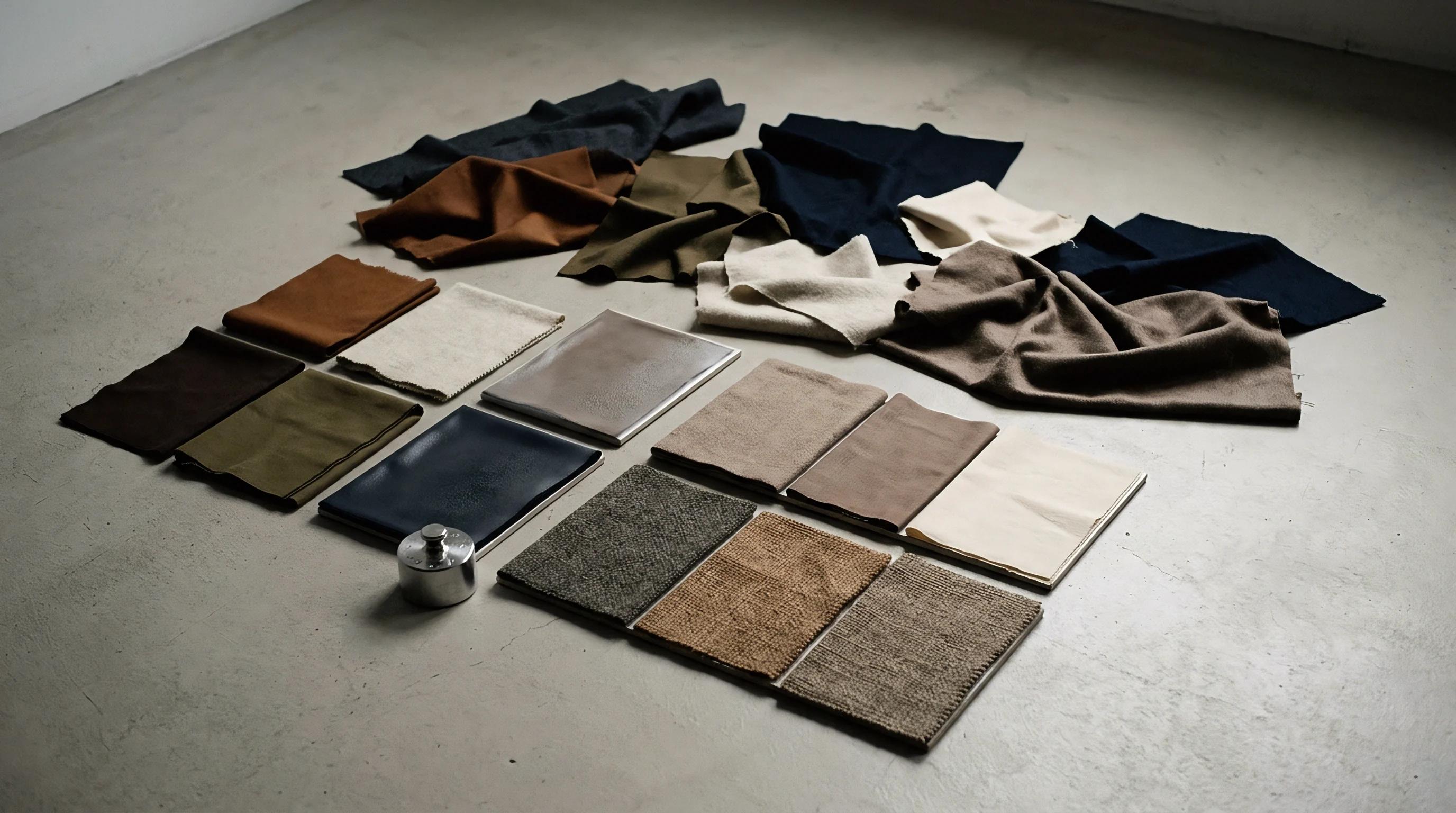
Converting square metre mass to linear metre yield requires linking cuttable width directly to fabric weight. Purchase orders for woven apparel fabrics specify linear metres, whereas yarn spinning and dyehouse recipes run on gross kilogram mass. Sourcing a 10,000-metre order requires calculating total mass from cuttable width and grams per square metre to determine container shipping weight, chemical costs, and raw fiber demand.
Linear yield specifies the running metres produced by one kilogram of fabric at a given usable width and unit mass. The relationship connects three variables: linear yield in metres per kilogram, area mass in grams per square metre, and usable cuttable width in metres. As area mass rises, linear yield drops proportionally: a 5 percent increase in fabric GSM reduces linear yield per kilogram by 5 percent, driving up raw material consumption per garment.
Direct Conversion Equations for Linear Metres and Square Metres
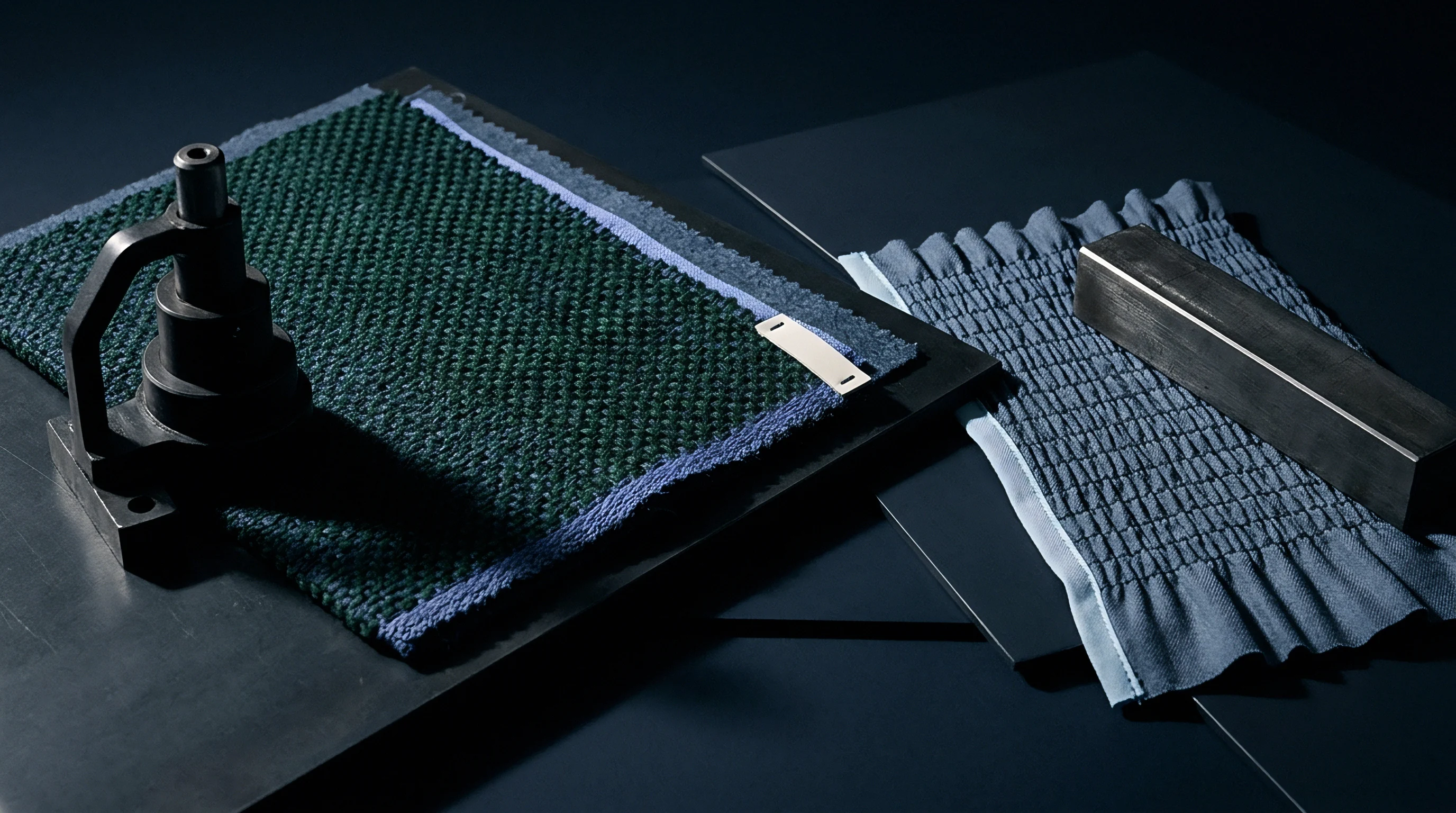
Standard metric formulas govern woven yield calculations. The weight of one linear metre equals area mass multiplied by usable width in metres. Inverting this value produces running metres per kilogram, the primary conversion metric in commercial sourcing.
The formula for mass per linear metre is:
Linear Metre Mass (g/m) = GSM (g/m²) × Usable Width (m)
To determine linear yield per kilogram of cloth:
Yield (m/kg) = 1000 / Linear Metre Mass (g/m)
To convert total delivered shipment weight in kilograms into expected linear metres at a specified width and mass:
Total Linear Metres = (Total Mass in kg × 1000) / Linear Metre Mass (g/m)
For example, a contract specifies a cotton-polyester twill at 220 g/m² conditioned mass with an agreed usable width of 1.50 metres. Applying the linear mass equation:
Linear Metre Mass = 220 × 1.50 = 330 grams per linear metre
Calculating the yield per kilogram:
Yield = 1000 / 330 = 3.0303 linear metres per kilogram
For a dye lot delivering 5,000 kilograms net fiber weight, the expected linear yield is:
Total Linear Metres = (5000 × 1000) / 330 = 15,151.5 linear metres
If finishing chemistry increases the fabric mass to 235 g/m² while holding the 1.50 metre width, the resulting yield shifts:
New Linear Metre Mass = 235 × 1.50 = 352.5 grams per linear metre
New Yield = 1000 / 352.5 = 2.8368 linear metres per kilogram
Total Linear Metres Delivered = (5000 × 1000) / 352.5 = 14,184.4 linear metres
This mass increase creates a shortfall of 967.1 linear metres of cuttable cloth. At a contract price of $4.50 per linear metre, the weight drift represents a $4,351.95 loss on one dye lot, even though the total invoiced kilogram mass was delivered in full.

Yarn Crimp and Moisture Regain Parameters in Weight Calculation
Calculating yield from raw yarn counts requires accounting for weave crimp and official moisture regain. Yarn crimp represents the percentage difference between the straightened yarn length and its path length in the woven structure. Warp crimp runs between 5.0 and 12.0 percent, while weft crimp typically ranges from 2.0 to 8.0 percent, determined by weave interlacing, yarn linear density, and loom warp tension.
Higher crimp increases fabric bulk and GSM while reducing longitudinal stretch resistance.
Official moisture regain standards govern commercial invoice weights. BISFA (International Bureau for the Standardisation of Man-Made Fibres) establishes standard moisture regain percentages for commercial transactions: 8.5 percent for combed cotton, 1.5 percent for acrylic, 0.4 percent for polyester, 4.5 percent for nylon 6,6, and 13.0 percent for viscose rayon. In yarn procurement calculations, raw yarn weights must be corrected to commercial moisture allowances to avoid overestimating finished linear yield.
Commercial contracts governing woven fabric transactions must stipulate that linear yield calculations reference conditioned unit weight under ISO 139 rather than hot loom-state or post-stenter desiccated weights.
Verifying yield accurately requires following a standardized procedure for every incoming production lot.
- Cut five representative swatches across the roll’s usable width, staying at least 100 millimetres clear of either selvage, using a calibrated 100 square centimetre circular sample cutter.
- Place test specimens inside a conditioning chamber operating at 20 degrees Celsius and 65 percent relative humidity for at least 24 hours until weight equilibrium is confirmed by consecutive weighings.
- Weigh each swatch on an analytical balance accurate to 0.001 grams, aggregate the figures, and multiply the mean value by 100 to establish baseline GSM.
- Measure total roll width and usable cuttable width across three points along the roll length using a calibrated steel measuring tape compliant with ISO 22198.
- Calculate actual linear metre yield per kilogram using the conditioned GSM and usable cuttable width values.
- Compare calculated linear yield against packing list invoices to identify weight-induced length shortfalls before releasing rolls to the cutting floor.
| Conditioned Mass (g/m²) | Yield at 1.40m Width (m) | Yield at 1.48m Width (m) | Yield at 1.52m Width (m) | Yield at 1.60m Width (m) |
|---|---|---|---|---|
| 150 | 476.2 | 450.5 | 438.6 | 416.7 |
| 180 | 396.8 | 375.4 | 365.5 | 347.2 |
| 210 | 340.1 | 321.8 | 313.3 | 297.6 |
| 240 | 297.6 | 281.5 | 274.1 | 260.4 |
| 280 | 255.1 | 241.3 | 235.0 | 223.2 |
| 320 | 223.2 | 211.1 | 205.6 | 195.3 |
Coarser yarn counts elevate finished square metre mass. When spinning mills supply yarn at the heavy end of count tolerances, the weaving shed inherits a mass offset that persists through finishing and reduces linear yardage across production lots.

Deviation
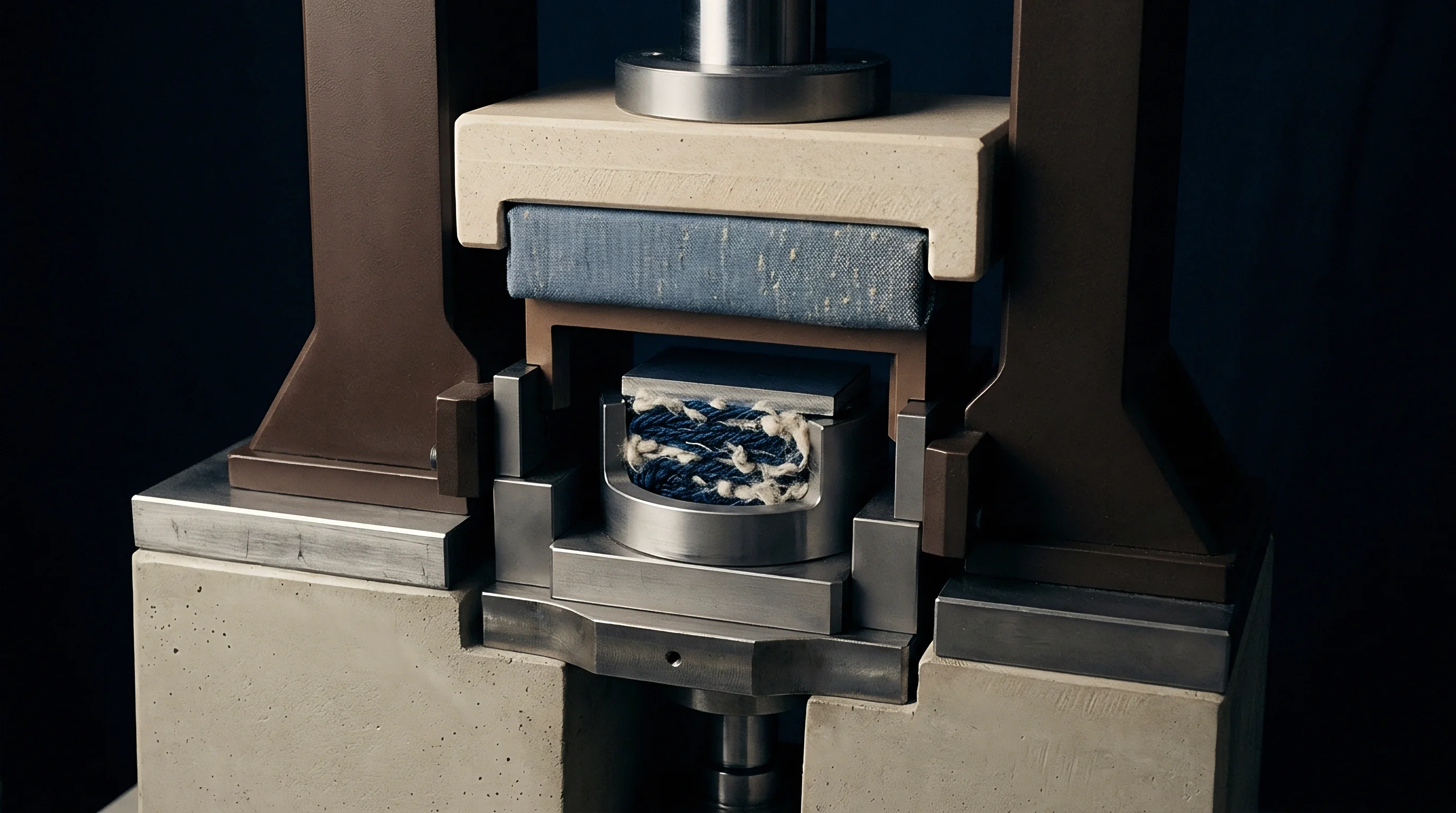
Commercial supply contracts specify mass tolerances to absorb yarn spinning variations, loom dynamics, and finishing pickup. Standard commercial contracts permit a mass tolerance of ±5 percent from specified nominal weight. Technical fabrics, military uniform textiles, and filtration media operate under narrower allowances of ±2.5 to ±3.0 percent.
Shipments that drift outside these boundaries lead to lot rejections, debit memos, or reprocessing.
Mass deviations originate at several stages in the manufacturing sequence: variations in spinning count, fluctuating pick insertion rates, uneven warp beam tension, erratic dye liquor pickup, and inconsistent compressive shrinkage during sanforizing. ISO 3801 and ASTM D3776 define the test frameworks for mass determination, but neither sets commercial pass/fail limits; contracts must explicitly define acceptable numerical bands alongside the test method.

Commercial Tolerance Bands in ISO 3801 and ASTM D3776
Assessing compliance across a shipment requires distinguishing individual roll variance from overall lot mean deviation. A single roll within a dye lot may deviate ±7 percent due to local finishing adjustments without disqualifying the shipment, provided the weighted mean GSM of the delivery falls within the contracted ±5 percent window. If over 10 percent of individual rolls exceed outer tolerance boundaries, the lot fails statistical quality acceptance under ANSI/ASQ Z1.4 sampling plans.
Delivering overweight fabric introduces operational penalties. Heavy cloth alters fabric drape, decreases air permeability, increases garment freight costs, and reduces linear meter yield per dye lot. Underweight fabric compromises physical strength, leading to failures in seam slippage, tensile strength under ISO 13934-1, and tear resistance under ISO 13937-2.

Will Finishing Pick up Mask Weave Weight Deficits?
Chemical finishing formulations can mask structural greige shortages. If a weaving mill reduces pick density by 4 percent to increase loom speed, the greige fabric falls below specified mass. Finishing mills often compensate by applying heavy bodying resins, starches, or softeners during stenter operations to bring the finished cloth back up to nominal GSM.
These chemical loadings degrade during commercial laundering. Once the wash cycle strips out transient resins, the fabric reverts to its true structural weight, causing seam slippage, accelerated Martindale abrasion under ISO 12947-2, and premature fabric failure. Conducting desized dry mass tests alongside finished GSM determinations reveals whether nominal weight is provided by structural yarns or topical chemical finishes.
- ISO 3801 Method 5 specifies mass per unit area determination using cut swatches taken across full fabric width.
- ASTM D3776 Option A evaluates full roll length and full width mass for ultimate commercial accuracy.
- BISFA Standard Rules establish weight tolerance frameworks based on dry fiber mass plus official moisture regain allowances.
- US Customs Commercial Entry Limits enforce strict classification thresholds where mass shifts alter import duty tariffs.
| Specification Class | Nominal Mass Range (g/m²) | Standard Tolerance (%) | Critical Rejection Boundary (g/m²) | Primary Failure Mode Outside Limit |
|---|---|---|---|---|
| Lightweight Shirting | 80 – 130 | ±5.0 | < 76.0 or > 136.5 | Seam slippage, drape degradation |
| Medium Workwear Twill | 180 – 260 | ±5.0 | < 171.0 or > 273.0 | Tensile drop, marker yield deficit |
| Heavy Outerwear Canvas | 300 – 450 | ±4.0 | < 288.0 or > 468.0 | Tear strength drop, stiff hand feel |
| Coated Industrial Webbing | 500 – 800 | ±2.5 | < 487.5 or > 820.0 | Coating delamination, thickness overflow |
Rule of thumb: chemical weight added on the stenter line never replaces the structural strength of missing warp or weft yarns.
Unresolved structural weight loss leaves a practical question for sourcing managers: can post-weaving resin application ever permanently compensate for low thread count without altering abrasion performance?


Verification
Receiving dock audit protocols must verify supplier packing lists against physical fabric measurements. Relying entirely on mill certificates of analysis exposes garment factories to unrecovered yield losses and marker shortfalls. Systematic verification requires structured sampling and controlled atmospheric conditioning.
Receiving inspectors must audit total roll gross mass and usable cuttable width before releasing material to cutting tables.
Discrepancies between roll tickets and dock measurements occur regularly. Mill packing tickets record mass and length directly after stenter exit or final inspection winding. During ocean transit and warehouse storage, rolls absorb or desorb moisture based on container humidity and wrapping integrity.
A roll in non-hermetic packaging can absorb 3.0 to 5.0 percent water weight on humid marine routes, showing a temporary mass increase while physical linear length remains unchanged.

Full Roll Weighing versus Circular Swatch Sampling
Full roll weighing and swatch sampling serve distinct audit functions. Circular swatch cutting provides quick GSM readings but damages fabric margins or requires cutting headers from roll ends. Swatch sampling also assumes mass remains uniform throughout the roll.
In practice, warp tension on weaving looms decreases as the beam runs down, causing weft density to drift between the outer roll tail and the core.
Full roll weighing on calibrated platform scales provides a non-destructive verification of total lot weight. ASTM D3776 Option A outlines the procedure: weighing the intact roll, measuring total cuttable width and linear length, and calculating average net mass per unit area. Subtracting the tare weights of the inner cardboard tube, poly wrap, and end plugs yields true net fabric mass.
Comparing whole-roll calculations against swatch cuts highlights localized density variances throughout the piece.

Calibrating Moisture Content at Incoming Roll Inspection
Accurate mass verification requires checking moisture levels at the receiving dock. Handheld dielectric moisture meters calibrated for specific fiber blends provide fast, non-destructive moisture readings across incoming shipments. If a cotton roll tests at 11.5 percent moisture content against a standard 8.5 percent regain, 3.0 percent of the billed weight is absorbed water.
Adjusting measured mass back to standard regain prevents paying for excess water weight. The formula for corrected commercial mass is:
Corrected Mass = Measured Mass × ( 100 + Standard Regain % ) / ( 100 + Measured Moisture % )
If an inspector weighs a 100-kilogram cotton roll at 11.5 percent moisture, the corrected mass at standard 8.5 percent regain equals 100 × (108.5 / 111.5) = 97.31 kilograms. Invoiced weights should be adjusted to this corrected baseline to ensure billing reflects real fiber substance.
- Cardboard Core Tare Variance occurs when internal roll cores vary in wall thickness and moisture content, skewing total net roll weight readings.
- Edge-to-Middle GSM Gradient describes structural density differences where fabric centers display higher pick density than un-constrained selvage zones.
- Length Winding Tension Error arises when inspection frames wind rolls under high tension, artificially inflating reported linear metre length while reducing GSM.
- Unconditioned Sample Bias occurs when swatches taken directly from containerized rolls are weighed before reaching standard atmospheric equilibrium.
Relying on circular swatch cuts taken only from roll headers leads to false lot approvals when warp tension drifts across bulk production runs.


Settlement
Reconciling bulk fabric invoices requires matching physical test results against purchase order terms. Garment factories purchase linear metres to fulfill production markers but are billed based on weight and nominal width. When fabric arrives under-width or overweight, cutting room efficiency declines, marker scrap increases, and total garment yield falls short of costed projections.
Sourcing teams apply structured settlement formulas to adjust invoice totals based on verified physical yield.
Marker efficiency penalties apply when cuttable width falls below purchase order specifications. In automated cutting rooms, markers are nested across a specific width. If a marker requires 1.48 metres of usable width and delivered rolls provide only 1.42 metres, pattern perimeters fall outside the cut zone.
Factories must re-nest patterns for narrower cutting widths, which increases linear meter consumption per garment and creates cut waste that must be debited back to the mill.

Marker Efficiency Penalties from Under-Width and Over-Weight Rolls
Under-width rolls disrupt automated cutting operations. When fabric falls short of marker dimensions, perimeter cut lines cross into the selvages, damaging garment parts. Re-nesting markers on narrower layouts increases total lay length and consumes additional linear yardage per garment.
Procurement contracts should include specific width shortfall clauses: any delivery falling below contracted usable width triggers a price debit covering lost marker efficiency and marker re-nesting labor.
Overweight cloth causes secondary financial losses. When fabric finishes at 250 g/m² instead of a specified 230 g/m², garment unit weights rise. Freight charges, regional logistics fees, and import customs duties calculated on weight increase proportionally.
If cloth is bought on weight with an expected linear yield, overweight fabric delivers fewer cuttable linear metres per kilogram, leaving assembly lines short of parts.

Reconciling Invoice Mass against Delivered Linear Metres
Settling commercial invoices requires quantifying the financial shortfall caused by GSM drift or width loss. Sourcing operations apply a standard audit equation to adjust invoices on non-conforming shipments.
The billing adjustment formula for weight and width non-conformance is:
Adjusted Linear Metres = Billed Linear Metres × ( Actual Usable Width / Contracted Width ) × ( Contracted GSM / Actual Conditioned GSM )
Consider an invoice for 20,000 linear metres contracted at 1.50 metres usable width and 200 g/m² mass. Receiving inspection establishes an actual delivered average of 1.46 metres usable width and 212 g/m² conditioned mass. Applying the reconciliation calculation:
Adjusted Linear Metres = 20,000 × ( 1.46 / 1.50 ) × ( 200 / 212 ) = 20,000 × 0.9733 × 0.9434 = 18,360.5 linear metres
The effective delivered yield equals 18,360.5 metres rather than the invoiced 20,000 metres, representing a shortfall of 1,639.5 linear metres. At a contract price of $5.00 per linear metre, the resulting debit memo to the supplier equals $8,197.50.
Contractual adjustment clauses establish financial accountability across textile supply chains. Standard master agreements mandate that debits for width and weight variances apply automatically once shipment averages exceed established tolerance boundaries. Defining conditioned mass testing, usable cuttable width limits, and linear yield formulas in the initial purchase contract protects manufacturing margins from loom to cutting room.
Financial recovery on bulk fabric claims depends entirely on maintaining rigorous receiving inspection protocols, documenting atmospheric conditioning parameters, and applying linear yield equations to every incoming dye lot before releasing rolls to production tables.