Warp Density
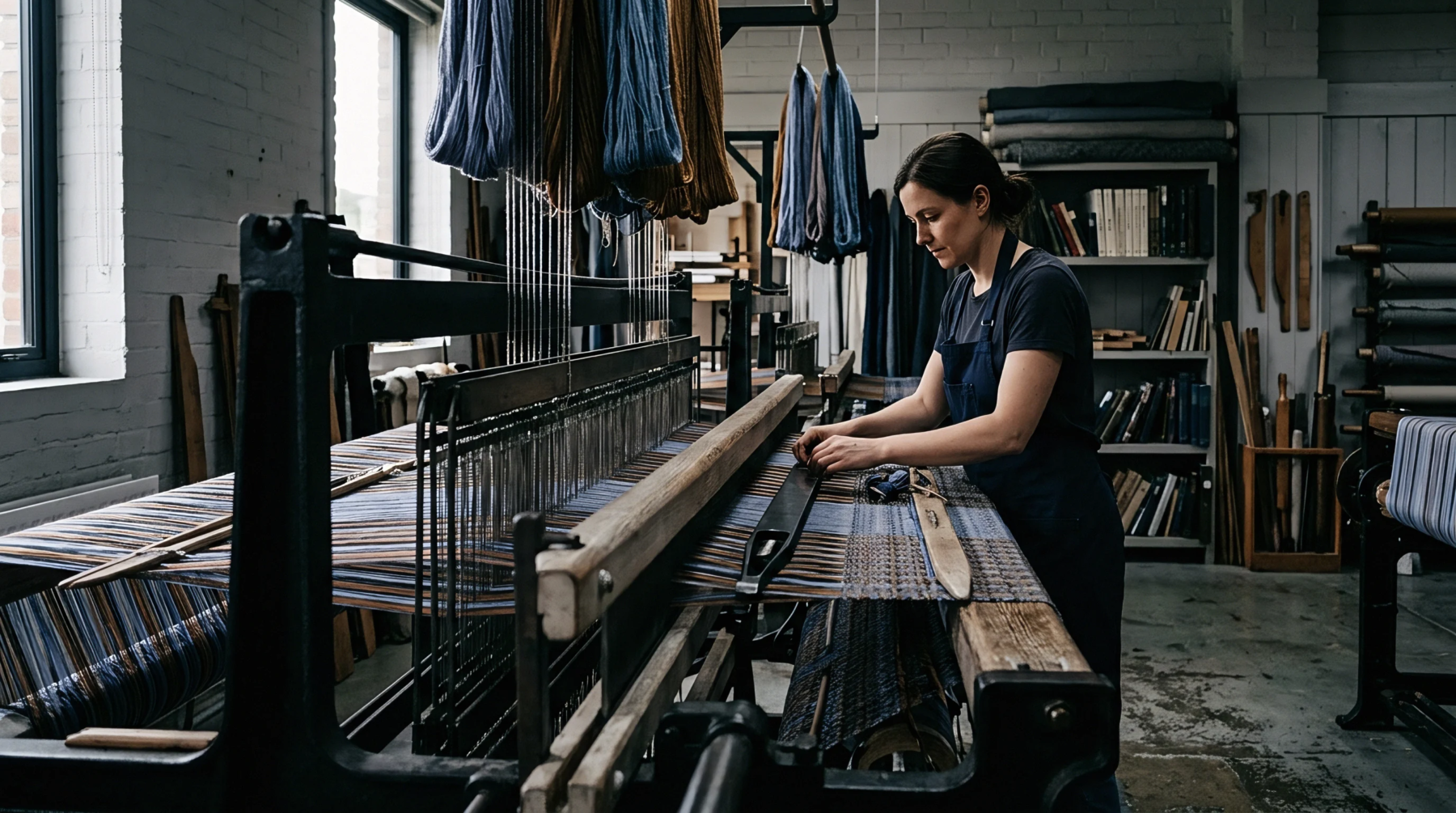
The quantitative count of individual longitudinal yarn units distributed across one hundred millimetres of fabric width determines the structural framework for finished textile consistency. Ends per centimetre functions as the primary metric for verifying that mechanical loom settings match the production specifications for broadloom output. Mills rely on this measurement to calculate total supply requirements for warp beams and to confirm that the physical breadth of a woven roll stays within tolerance.
If a factory produces fabric with an incorrect count, the physical properties regarding drape and tear strength will deviate from the intended quality standard. Measurement occurs directly after the cloth passes through the reed during the primary weaving stage. Operators use a counting glass or a digital optical scanner to verify the count across a representative sample area of the loom state fabric.
Proper calibration of the shedding motion ensures that each individual strand occupies the correct position to maintain the required consistency across the entire width of the piece. Consistent maintenance of this value prevents rippling or distortion in the finished apparel.
Loom Setting
Verification of this parameter dictates the operational efficiency of the weaving shed because it establishes the precise spatial distribution of yarns prior to the insertion of the weft. High densities require increased tension to keep individual yarns from colliding during the shed opening and closing phase. Technical specifications for performance fabrics often mandate tight controls on this density to achieve specific moisture wicking or opacity results.
Any drift in the count indicates mechanical wear in the harness frames or a failure in the tensioning system that delivers yarn to the beam. Precision here reduces waste by ensuring that every warp end maintains its path without crossing adjacent members.
Fabric Performance
Physical integrity depends upon the stability of the grid formed by these yarns during the finishing and dyeing cycles. When a fabric undergoes wet processing, the yarns expand and contract based on their specific raw material composition and the twist level applied during spinning. Measuring the count before and after these processes identifies the shrinkage rate and final weight per square metre.
Buyers demand high counts to provide opacity and durability for outer garments or industrial shielding products. Low counts result in porous materials that lack structural stability under mechanical stress. Tight control prevents the bias distortion that makes high volume garment construction difficult to manage.
Quality Protocol
Standardized auditing procedures rely on this value to classify goods according to their intended commercial application. Inspection teams extract samples from both the beginning and the end of a roll to verify uniformity across the entire production run. If the variance exceeds the established limit, the material fails the quality gate and undergoes inspection for potential reclassification as seconds.
Automated systems now perform these counts in real time, alerting operators before excessive yardage suffers from incorrect density. Accurate counts guarantee that the material weight meets the customer requirement for downstream manufacturing. Consistent observation of this variable remains the most reliable method for controlling final garment stability.