Positional Oscillation
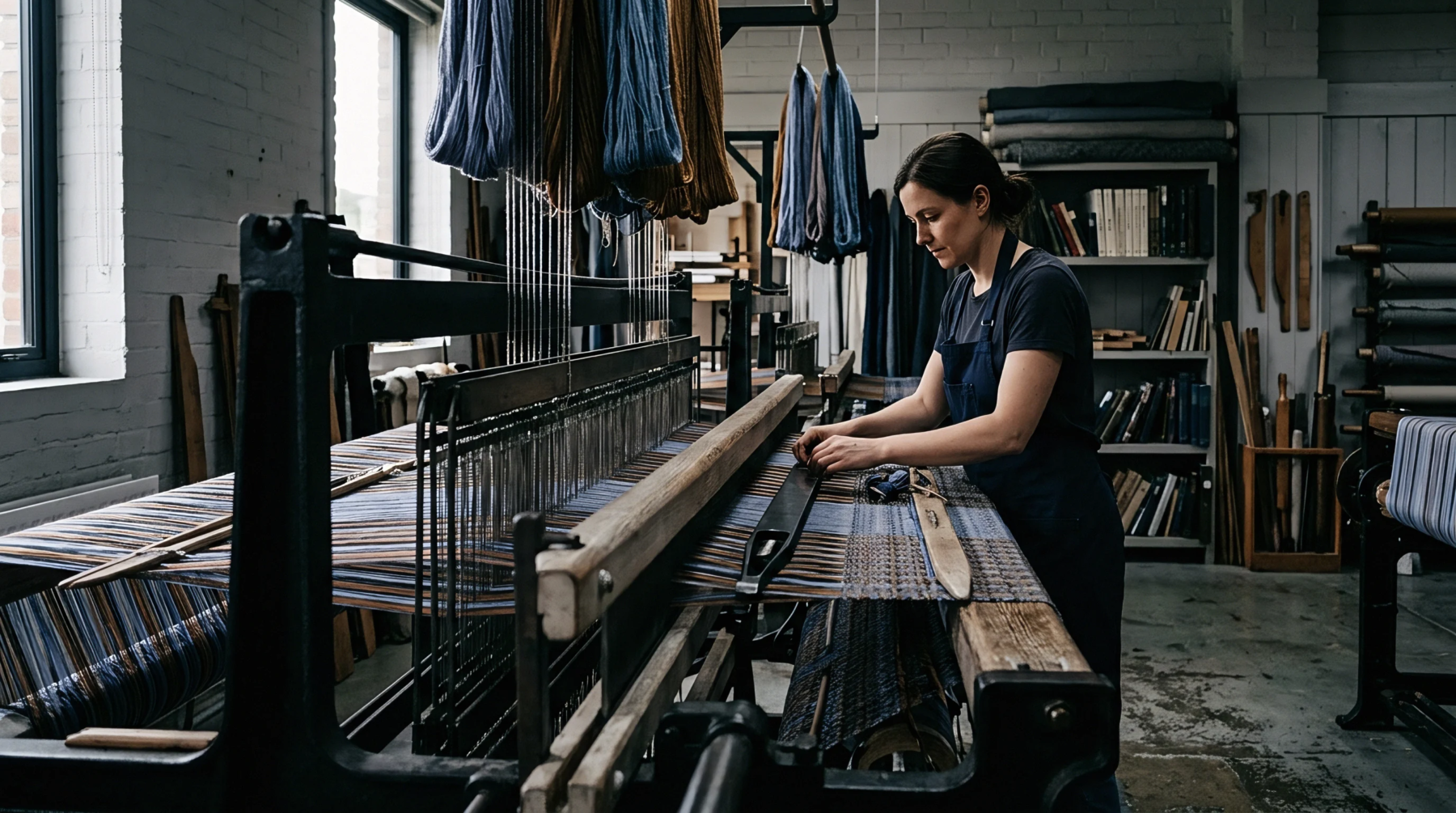
Uncontrolled longitudinal displacement of the cloth boundary during high-speed textile formation marks an operational failure in the take-up and let-off synchronization. Production monitoring identifies fell line instability when the frontier where the latest pick joins the formed fabric drifts forward or backward relative to the reed stroke. This displacement alters the effective beat-up point, causing variations in pick spacing and fabric density across the running piece.
The condition terminates when mechanical let-off rates match fabric take-up velocity under steady-state running tension.
Dynamic Migration
Warp yarn viscoelasticity combined with thermal expansion of machine frames drives the physical migration of the cloth edge over operational shifts. In high-speed air-jet and rapier operations, fell line instability occurs when the let-off system delivers warp yarn at an uneven rate relative to the sand roller take-up motion. If the cloth fell creeps forward toward the harnesses, the reed fails to pack the newly inserted filling yarn tightly, creating low-density bands and sparse pick regions.
Conversely, when the fell recedes toward the cloth roll, the reed strikes the consolidated fabric structure too hard, triggering end breaks, filing distortions, mechanical wear, and premature harness cord fatigue. Frictional heating of let-off brake bands during continuous loom shifts frequently alters the let-off torque, compounding the displacement. Microprocessor-controlled servomotors track the angular position of the main shaft and adjust the let-off angle dynamically to arrest this drift before defects become visible to the eye.
Structural Impact
Irregular boundary alignment alters the interlacing geometry across successive meters of fabric. Acute fell line instability produces visible start marks after machine stops and generates periodic pick density variations known as diamond bar marks. These optical defects lead to rejection during commercial fabric grading.
Control Intervention
Mechanical adjustments and digital sensor loops maintain the boundary position within strict operating tolerances. Technicians calibrate warp tension sensors and take-up clutch surfaces to eliminate fell line instability during machine restarts and speed accelerations. Automated stop-motion software introduces electronic let-off compensation pulses that shift the cloth fell slightly backward before the first beat-up stroke occurs.
Grey cloth inspection frames verify pick uniformity against mill specifications by measuring picks per centimeter across the full roll length.