Dimensional Settling
Mechanical compaction defines compressive shrinkage inside finishing ranges before knitted fabric leaves the factory floor. Finishing technicians apply mechanical pressure across rubber belts to force yarns closer together lengthwise. Dimensional settling prevents excessive garment distortion during home laundering by fixing residual stretch before cutting begins.
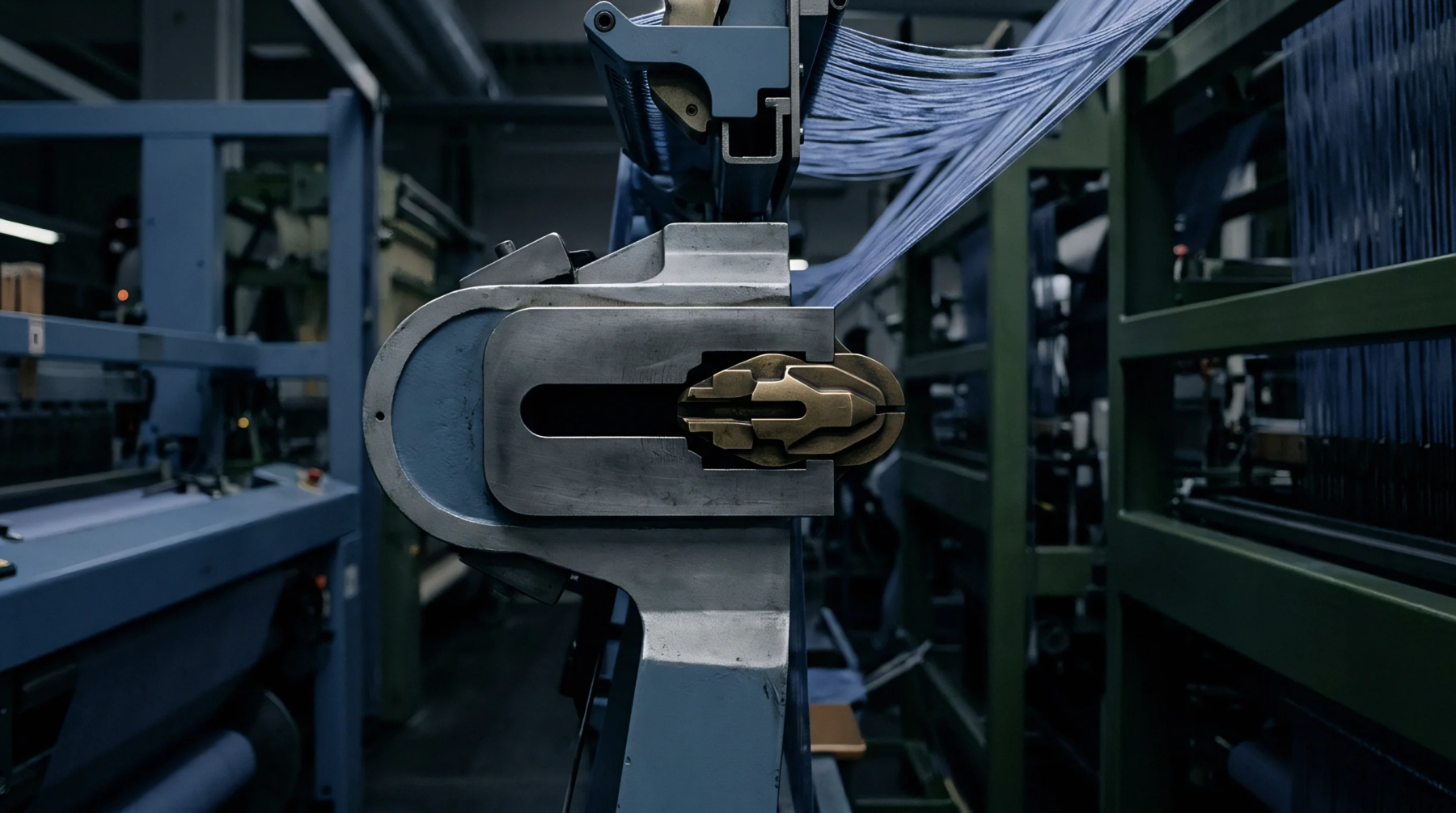
This mechanical phase occurs after wet processing dries the web to a predetermined moisture level. Mechanics drive the process through heated cylinders and rubber sleeves. Fabric enters between a feed roller and a high pressure shoe that forces the material against a curved steel drum.
When the rubber sleeve encounters the hot drum it expands longitudinally and contracts radially. This action drives loops inward to achieve pre-determined relaxation. The commercial checkpoint sits at the final inspection table where technicians measure shrinkage potential through standard home wash tests.
Relaxation Pressure
Mechanical forces applied during rubber belt compaction determine relaxation pressure within the cellulose matrix of cotton jersey. Operators adjust feed speeds to alter the degree of compaction applied to the running web. Excessive speed differential creates wavy edges while insufficient pressure leaves residual loop tension intact.
Production management sets these parameters based on laboratory wash shrinkage data collected from pilot runs. Calender rolls apply subsequent smoothing without altering the settled loop geometry established during belt compaction. Technicians monitor belt temperatures continuously because thermal variation alters rubber elasticity and distorts dimensional stability.
Mills verify this stability by subjecting marked fabric squares to standardized laundering cycles. Dimensional change results must fall within tight commercial tolerances agreed upon between garment manufacturers and textile mills before the batch passes final auditing.
Loop Geometry
Structural integrity depends upon loop geometry established during mechanical finishing. Yarns shift laterally as compaction forces push individual stitches into denser formations. This physical rearrangement restricts subsequent dimensional movement during consumer use.
Laboratory technicians evaluate these changes using standardized testing protocols that measure area shrinkage after repeated washing. Fabric weight increases per square metre as the stitch density rises during the compaction stage. Knit goods exhibit different dimensional responses compared with woven textiles because loop structures stretch more freely under tension.
Mills control this behavior by matching belt speed precisely to the natural elasticity of the specific yarn count. Finished goods retain flatness during garment assembly because the internal stresses are relieved prior to pattern cutting. Commercial acceptance requires zero distortion across seams after assembly.
Finished Stability
Finished stability represents the final quality threshold verified before fabric rolls ship to apparel assembly plants. Independent auditors review laboratory shrinkage reports to confirm compliance with brand specifications. Variations in yarn twist or initial greige width alter the final outcome of mechanical compaction.
Production floors adjust machine settings constantly to compensate for raw material inconsistencies originating in spinning mills. Fabric samples undergo rigorous laundering trials to simulate consumer treatment over multiple cleaning cycles. Results dictate whether a production lot receives certification for high end garment manufacturing.
Dimensional control prevents financial loss arising from garment rejection at the retail distribution center.