Cross Contamination Mechanics of Organosilicon Compounds in Technical Barrier Fabric Reconditioning Loops and Membranes
Organosilicon cross-contamination in reconditioning loops destroys membrane contact angles, forcing strict batch isolation and solvent-based decontamination.
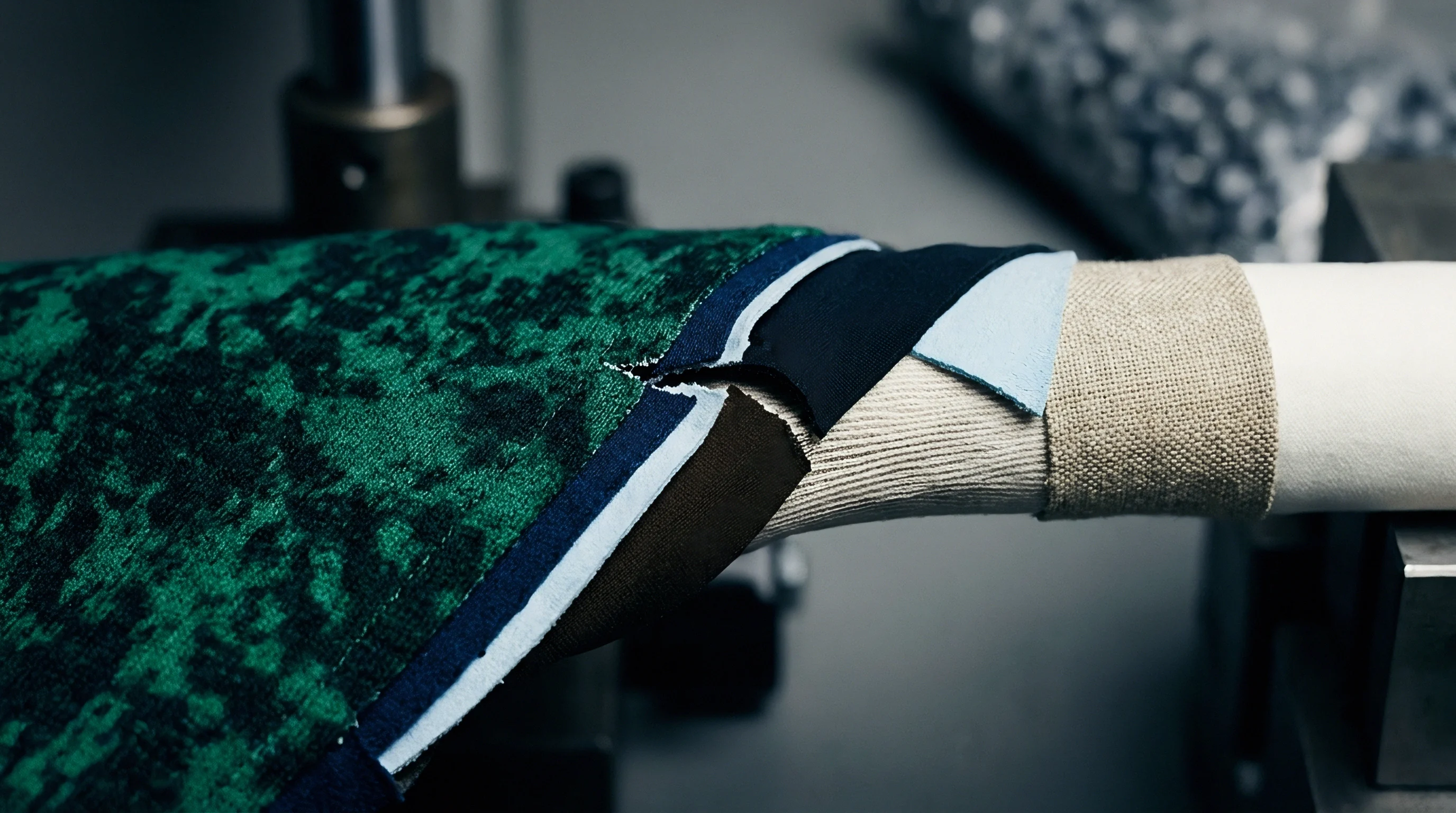

Sorption
Technical barrier fabrics engineered for firefighter turnout gear, chemical protective apparel, and medical barrier gowns rely on strict surface tension differentials to shed water, liquid chemicals, and blood-borne pathogens. Organosilicon compounds, particularly polydimethylsiloxanes and low-molecular-weight cyclic siloxanes such as octamethylcyclotetrasiloxane, decamethylcyclopentasiloxane, and dodecamethylcyclohexasiloxane, present an insidious cross-contamination threat in industrial reconditioning loops. These synthetic polymers possess exceptionally low surface energy, typically between 18 and 22 millinewtons per meter.
During commercial laundering, dry cleaning, or hydro-extractive reconditioning of technical textiles, silicone-based water repellents or softening agents applied to standard commercial garments strip away from donor fabrics and deposit onto high-performance barrier membranes.

Low Surface Energy Deposition Dynamics
Organosiloxane molecules contain a highly flexible inorganic backbone composed of alternating silicon and oxygen atoms flanked by hydrophobic methyl group side chains. The bond angle of the silicon-oxygen-silicon linkage permits rapid conformational rotation. This atomic flexibility enables siloxanes to spread rapidly across microporous expanded polytetrafluoroethylene, monolithic polyurethane, and bicomponent membrane structures.
When barrier garments enter a shared reconditioning bath, free siloxane monomers and low-viscosity polymers migrate from consumer softshell jackets or industrial aprons into the wash liquor. Solubilized organosilicones adsorb onto the hydrophobic membrane pores through dispersion forces and thermodynamic driving forces that favor phase separation out of aqueous media.
Chemical physical affinity drives organosilicons to migrate rapidly from the liquid phase toward solid polymer-water interfaces. Expanded polytetrafluoroethylene displays an intrinsic surface energy near 18 millinewtons per meter, matching the energetic state of fluid polydimethylsiloxanes. Once organosilicons reach the membrane surface, steric spreading occurs spontaneously.
Wetting angles drop immediately, coating the fine fibrillar microstructure of the membrane.
Failure to isolate silicone-treated textiles from microporous barrier garments during batch extraction invalidates the liquid-repellency ratings established under ISO 6530 compliance protocols.
Cross-contamination during mechanical reconditioning operates through distinct physical mechanisms depending on bath temperature, mechanical action, and chemical surfactant load:
- Aqueous emulsion stripping occurs when high pH wash liquors detach siloxane-based softeners from donor garments, creating metastable emulsions that redeposit onto exposed membrane interfaces during rinse phases.
- Direct contact transfer happens in drum extraction equipment where wet, heavily siloxane-loaded shell fabrics press firmly against membrane linings under centrifugal compression.
- Solvent-mediated extraction develops during perchloroethylene or hydrocarbon dry cleaning loops, dissolving silicone elastomers and depositing atomic layers across hydrophobic membrane pores.
- Thermal volatilization transfer takes place during elevated drying cycles where cyclic siloxanes vaporize from adjacent garments and condense onto cooler technical barrier surfaces inside the tumble drum.
Commercial reconditioning facilities frequently misdiagnose siloxane contamination as chemical surfactant retention or mechanical abrasion. Siloxanes resist aqueous rinsing. Standard laundry detergents fail to emulsify hydrophobic siloxane films once those films adsorb onto fluoropolymer structures.
Cleaners attempt repeated wash cycles to restore repellency, compounding siloxane loading across the batch.
Finishing suppliers often claim that trace silicone transfer provides beneficial lubricity and hand enhancement without damaging underlying membrane performance. Laboratory testing reveals that even sub-monolayer siloxane deposits destroy the contact angle required for certified liquid chemical barrier protection.


Vapor
Thermal processing steps within technical textile reconditioning loops transform volatile organosilicons into gas-phase contaminants. Cyclic siloxanes exhibit measurable vapor pressures at temperatures commonly utilized in commercial drying, hot-air curing, and steam pressing operations. When reconditioning loops process technical garments alongside conventional uniforms carrying siloxane water-repellent coatings, heat drives siloxane species directly into the recirculating air stream.

Gas Phase Transport and Condensation Mechanics
Drying chambers operating between 70 and 120 degrees Celsius induce rapid volatilization of cyclic monomers. Octamethylcyclotetrasiloxane boils at 175 degrees Celsius, yet displays sufficient vapor pressure at 80 degrees Celsius to fill sealed tumbler volumes with organosilicon vapor. Recirculating airflow systems transport these gas-phase molecules across the entire garment load.
As volatile siloxanes contact microporous membrane surfaces, localized thermal gradients trigger condensation. Cold spots within the membrane assembly, such as thick seams or multi-layer pocket flaps, act as thermal sinks that accelerate siloxane deposition.
Volatile siloxane transport extends into exhaust filtration units and heat recovery exchangers. Condensing siloxanes coat heat exchanger surfaces, reducing thermal transfer efficiency while creating a permanent reservoir of organosilicon vapor that contaminates subsequent reconditioning batches for weeks.
| Organosilicon Compound | Molecular Structure | Boiling Point (Celsius) | Vapor Pressure at 80C (kPa) | Hydrophobic Deposition Affinity |
|---|---|---|---|---|
| Octamethylcyclotetrasiloxane (D4) | Cyclic tetra-siloxane | 175.0 | 1.33 | Severe on microporous ePTFE |
| Decamethylcyclopentasiloxane (D5) | Cyclic penta-siloxane | 211.0 | 0.31 | High on monolithic polyurethane |
| Dodecamethylcyclohexasiloxane (D6) | Cyclic hexa-siloxane | 245.0 | 0.07 | Moderate on bicomponent membranes |
| Linear Polydimethylsiloxane (50 cSt) | Linear polymer chain | 300.0 | Extreme via direct contact transfer |
Volatilization dynamics depend on air displacement velocity and moisture content within the drying drum. Saturated steam atmosphere inside pressing units promotes hydrolytic degradation of functional siloxane crosslinkers, yielding reactive silanol compounds. These volatile silanols migrate onto adjacent barrier fabrics and condense, forming crosslinked siloxane networks directly within the textile matrix.
What transport mechanisms govern reconditioning loops when volatile siloxane concentrations reach critical saturation points in high-capacity drying tunnels?

Probe
Verification of organosilicon cross-contamination requires rigorous analytical protocols capable of distinguishing functional fluorochemical coatings from unwanted silicone foulants. Fourier-transform infrared spectroscopy equipped with attenuated total reflectance provides rapid initial screening. Siloxane contamination yields sharp, characteristic absorption bands at 1010 to 1090 reciprocal centimeters corresponding to silicon-oxygen-silicon backbone stretching, along with a distinct methyl-silicon deformation peak at 1260 reciprocal centimeters.
Surface Analytical and Extraction Protocols
Chromatographic quantification yields definitive evidence for regulatory dossiers and dispute resolution. Solvent extraction utilizing hexane or methyl ethyl ketone isolates unbound cyclic siloxanes and low-viscosity linear species from fabric swatches. Gas chromatography coupled with triple quadrupole mass spectrometry measures concentrations down to parts-per-billion levels.
Contact angle goniometry offers direct physical evidence of surface energy modification. Pure expanded polytetrafluoroethylene displays water contact angles exceeding 110 degrees and n-hexadecane contact angles above 60 degrees. Siloxane contamination selectively alters the oil contact angle while preserving apparent water repellency, masking the presence of the contaminant during crude water-droplet testing.
Contact angle measurements using n-hexadecane reveal surface energy drops long before hydrostatic head degradation manifests in standard laboratory testing.
Receiving facilities and testing laboratories implement standardized evaluation flows to document contamination event timelines and attribute batch source origin:
- Substrate extraction takes place in closed glass vessels using chromatographic-grade solvent under ultrasonic agitation for 45 minutes at 40 degrees Celsius.
- Gravimetric screening measures total extractable organic mass prior to chromatographic separation to rule out heavy paraffin wax contamination.
- Gas chromatography analysis quantifies volatile cyclic species against certified reference standards for octamethylcyclotetrasiloxane, decamethylcyclopentasiloxane, and dodecamethylcyclohexasiloxane.
- Surface spectroscopy verification confirms whether siloxane residues exist as surface foulants or chemically bound polymer coatings across the underlying membrane fibers.
Master purchase agreements incorporate compliance standard language mandating batch-level testing whenever reconditioning loops exceed predefined volume limits. Standard procurement contracts enforce strict zero-tolerance thresholds for untargeted siloxane residues, transferring all re-testing and batch replacement costs directly to the reconditioning contractor when extraction values exceed 50 milligrams per kilogram of fabric.

Pore
Membrane architectures function through precise physical dimensions. Microporous polytetrafluoroethylene contains billions of microscopic pores per square centimeter, with average node-and-fibril pore diameters ranging from 0.1 to 0.2 micrometers. Liquid water droplets, measuring approximately 100 micrometers in diameter, cannot penetrate these pores under normal hydrostatic pressures.
Water vapor molecules, measuring roughly 0.0003 micrometers, pass freely through the network, providing breathability and thermal comfort to the wearer.

Pore Clogging and Liquid Penetration Failure
Organosilicons disrupt this structural equilibrium. Low surface tension polydimethylsiloxanes flow into the microporous node-and-fibril structure through capillary action. Once inside, siloxane molecules coat the interior pore walls, progressively reducing effective pore diameter and altering the intrinsic surface chemistry from oleophobic to hydrophilic-like behavior when exposed to synthetic blood or organic solvents.

What Degree of Siloxane Loading Triggers Hydrostatic Failure?
Hydrostatic head pressure testing conducted according to EN 20811 illustrates the degradation pattern. Uncontaminated barrier membranes maintain water entry pressures exceeding 50 kilopascals. Siloxane cross-contamination reduces this threshold precipitously.
As siloxanes spread across pore surfaces, critical surface energy rises above the surface tension of water under pressure, allowing liquid water to bridge the pores at fractions of the rated pressure capacity.
| Siloxane Surface Density (mg/m2) | Hydrostatic Head (kPa, EN 20811) | Water Vapor Resistance (m2 Pa/W, ISO 11092) | Synthetic Blood Penetration (ASTM F1671 Pass Rate) |
|---|---|---|---|
| 0 (Baseline Clean) | 60.0 | 4.2 | 100 percent |
| 15 | 52.5 | 4.5 | 100 percent |
| 50 | 31.0 | 5.8 | 60 percent |
| 120 | 14.0 | 8.9 | 0 percent |
| 300 | 14.1 | 0 percent |
Breathability loss occurs concurrently with liquid barrier failure. Monolithic polyurethane membranes depend on molecular diffusion through hydrophilic soft segments. Siloxane films act as physical diffusion barriers, blocking moisture vapor absorption sites and raising total water vapor resistance.
Technical apparel worn in hazardous environments becomes unacceptably hot, increasing thermal stress risk for emergency responders.
Flammability characteristics suffer significantly when organosilicons contaminate outer shell materials or barrier membranes. Polydimethylsiloxanes combust into silicon dioxide and volatile organic fragments at elevated temperatures. Thermal protective performance testing reveals increased heat transfer rates and persistent thermal glow when contaminated garments encounter flash-fire conditions, risking severe thermal burns and structural breakdown of the protective enclosure.
Cross-contamination events that degrade liquid penetration resistance below certified class minimums force immediate retirement of active turnout gear fleets, triggering replacement liability calculations that quickly exceed original garment procurement budgets.

Rinse
Decontamination of siloxane-fouled reconditioning machinery requires targeted solvent extraction chemistry and mechanical flushing protocols. Conventional commercial laundry chemistry relies on alkaline builders and anionic surfactants designed to roll back particulate soil and saponify triglycerides. These water-soluble formulations pass over hydrophobic organosiloxane deposits without penetrating or solubilizing the silicone film.
Decontamination Chemistry and Loop Isolation
Restoration of contaminated reconditioning loops demands specialized non-ionic surfactants combined with aliphatic hydrocarbon micro-emulsions. Ethoxylated linear alcohols possessing hydrophilic-lipophilic balance values between 10 and 12 penetrate siloxane matrices, suspending organosilicon polymers in the wash liquor. System flushes run at elevated temperatures near 85 degrees Celsius, softening high-viscosity silicone elastomers and facilitating emulsification.
Equipment isolation procedures isolate technical barrier garment processing lines from standard commercial laundry channels. Shared fluid recirculating lines, common hydro-extractors, and integrated tumble drying banks represent major cross-contamination vectors that must be eliminated to guarantee batch conformity.
Processing plants utilize a structured six-step cleaning sequence to restore heavily fouled reconditioning drums and downstream filtration units:
- Mechanical scraping and solvent wipe-down of all internal drum surfaces using isopropyl alcohol removes visible silicone sealant and grease residues.
- System charging with a three percent micro-emulsion cleaning solution containing specialized glycol ether solvents and non-ionic ethoxylates.
- Thermal circulation for 90 minutes at 85 degrees Celsius under continuous high-shear agitation cleans internal pipework and pump impellers.
- High-volume aqueous displacement flushing at 60 degrees Celsius removes emulsified siloxane organics from dead-leg piping sections.
- System charge with high-grade synthetic alcohol wash liquor neutralizes residual surfactants and strips trace solvent residues.
- Analytical swab sampling of internal drum walls verified by infrared spectroscopy confirms complete elimination of organosilicon signals.
Dedicated reconditioning loops operating under isolated fluid circuits eliminate cross-contamination risk entirely, whereas shared machinery relying on periodic chemical flushes maintains a continuous baseline risk of siloxane transfer.
As a practical rule, technical apparel reconditioning loops operating on shared machinery require chemical system decontamination after every processing run containing silicone-treated garments.


Margin
Regulatory authorities and certification bodies continuously tighten chemical restriction limits governing organosilicon compounds in technical textiles. European Union REACH Regulation Annex XVII Entry 70 restricts octamethylcyclotetrasiloxane, decamethylcyclopentasiloxane, and dodecamethylcyclohexasiloxane in wash-off cosmetic products and technical textile processing aids to concentrations below 0.1 percent by weight. Market surveillance programs actively sample imported protective apparel, searching for unauthorized siloxane softeners and cross-contamination residues.
Regulatory Limits and Liability Allocations
Certification standards including OEKO-TEX Standard 100 Class 1 for infant textiles and Class 4 for technical materials enforce strict thresholds on extractable siloxane content. Environmental safety specifications updated in recent regulatory cycles categorize D4, D5, and D6 as Substances of Very High Concern due to persistent, bioaccumulative, and toxic profiles. Brand compliance teams face severe market withdrawal orders if certified technical garments fail post-market surveillance testing due to reconditioning cross-contamination.
| Regulation or Standard | Scope and Application | Restricted Organosilicon Species | Maximum Allowable Limit (ppm / w/w) | |
|---|---|---|---|---|
| EU REACH Annex XVII (Entry 70) | Wash-off apparel and industrial textile loops | D4, D5, D6 cyclic siloxanes | 1000 ppm (0.1 percent w/w) combined | |
| OEKO-TEX Standard 100 (Annex 6) | Class 1 through Class 4 textile products | D4, D5, D6 cyclic siloxanes | 500 ppm individual threshold | |
| California Proposition 65 List | Consumer and occupational protective gear | Octamethylcyclotetrasiloxane (D4) | Safe Harbor Limits / NSRL defined | |
| US EPA TSCA Section 6 Rules | Industrial chemical processing aids | Siloxane oligomers and monomers | Reporting mandatory above 0.1 percent |
Commercial reconditioning contracts allocate risk through explicit indemnification clauses. Converters, mills, and professional reconditioning operators assume direct financial exposure for batch rejections, border detentions, and testing expenses arising from untargeted siloxane contamination. When custom barrier garments fail functional audits due to silicone redeposition, total landed cost penalties encompass replacement material procurement, re-certification laboratory fees, and liquidated damages for delayed delivery schedules.
Technical compliance dossiers must maintain unbroken traceability files linking individual garment serial codes to reconditioning batch numbers, wash chemistry certificates of analysis, and post-cleansing analytical swab reports. Importers of record standing at regulated borders rely on these verified document chains to clear detained shipments without incurring demurrage fees or mandatory destruction orders.