Analytical Method Divergence in Cross-Border Restricted Substance Verification
Cross-border restricted substance clearance demands aligning solvent extraction parameters, instrument detection limits, and batch sampling protocols across jurisdictions.


Substrate
Chemical compliance in international textile supply chains hinges on how analytical reagents interact physically with the textile matrix. A certificate declaring the absence of restricted substances shows only what an instrument detected from a sample prepared under specific lab conditions. When raw fiber blends, dense elastomeric coatings, or cross-linked synthetic finishes enter testing, the physical substrate acts as an extraction barrier.
Test methods written for single-component cellulosic fabrics often underreport hazardous chemistry when used on multi-layered, hydrophobic, or heavily finished technical textiles. The gap between a passing certificate and a border rejection usually opens right at the bench where the fabric is cut, ground, or digested.
Sample preparation dictates how much surface area encounters the solvent. Standard test methods like ISO 14362-1 for azo dyes or EN 16711 for heavy metals specify cutting specimens into small pieces, but actual piece sizes vary across commercial labs. Cutting a high-density polyamide fabric into five-millimeter swatches yields fewer lipophilic chemicals than cryo-milling that same fabric down to sub-millimeter particles.
Matrix density changes extraction yield, but milling brings its own variable: friction heat. Excessive heat during dry grinding can volatilize low-molecular-weight phthalates or break down organotin catalysts, leaving artificially low numbers in the final test report.
Fiber blends introduce partitioning effects that complicate verification. In a cotton-polyester blend dyed with disperse and reactive dyes, restricted residues like alkylphenol ethoxylates or halogenated carriers divide unevenly between the natural and synthetic phases. Hydrophobic carrier molecules migrate deep into the crystalline regions of polyester during high-temperature pressure dyeing.
Standard aqueous or alcohol solvent extractions fail to reach into that polyester matrix at ambient or mild temperatures, leaving the carrier behind. When border enforcement re-tests the fabric using aggressive swelling solvents like tetrahydrofuran or dimethylformamide, the synthetic matrix swells, releasing bound carriers and uncovering an over-tolerance hit that standard lab extractions completely missed.

Physical Matrix Barriers in Fiber and Coating Combinations
Surface finishes, functional membranes, and elastomeric binders create effective analytical shielding. Fluorochemical repellents, polyurethane laminates, and silicone softeners form hydrophobic barriers that block solvent penetration during standard extractions. When testing a tri-layer softshell ~ polyester face, thermoplastic polyurethane membrane, fleece backing ~ thorough extraction requires separating the layers.
Commercial labs handling high volumes routinely test intact composite swatches to cut turnaround times and labor costs. Doing so leaves internal adhesive layers containing restricted solvent residues, like dimethylformamide or toluene, shielded from the extraction solvent.
Sample homogeneity dictates whether a test is valid. Uneven distribution of restricted substances across a fabric roll widens method divergence. Functional coatings, flame retardants, and water repellents are applied through pad-dry-cure systems or knife-over-roll coating heads, where local pressure variations cause subtle fluctuations in chemical pickup.
A swatch taken near the selvedge of a sixty-inch roll can carry far less chemical load than one cut from the center. Labs that receive cut swatches instead of full-width roll samples cannot judge statistical representation. A clean report from a selvedge piece offers no operational assurance about concentrations through the main body of the shipment.
| Substrate Class | Target Analytes | Standard Preparation | Interference Mechanism | Analytical Divergence Effect |
|---|---|---|---|---|
| Recycled Polyester / Cotton Blends | Polycyclic Aromatic Hydrocarbons, Heavy Metals | Manual cutting to 3mm swatches | Incomplete solvent penetration into crystalline PET matrix | Underreporting of total analyte concentrations by 30 to 50 percent |
| Polyurethane Laminated Fabrics | Residual DMF, Organotin Compounds | Intact multi-layer die cutting | Adhesive layer shielded by hydrophobic outer membrane | False negative reports for restricted residual solvents |
| Elastane-Containing Denims | Alkylphenol Ethoxylates, Phthalates | Cryogenic mechanical milling | Thermal softening during aggressive milling clogs sieve screens | Loss of volatile organic target compounds during sample prep |
| Water-Repellent Technical Nylon | Per- and Polyfluoroalkyl Substances | Solvent immersion at 40 degrees Celsius | Fluorinated surface treatment repels standard polar extraction solvents | Incomplete extraction yielding non-compliant pass certificates |
Cryogenic Milling against Manual Shear Preparation
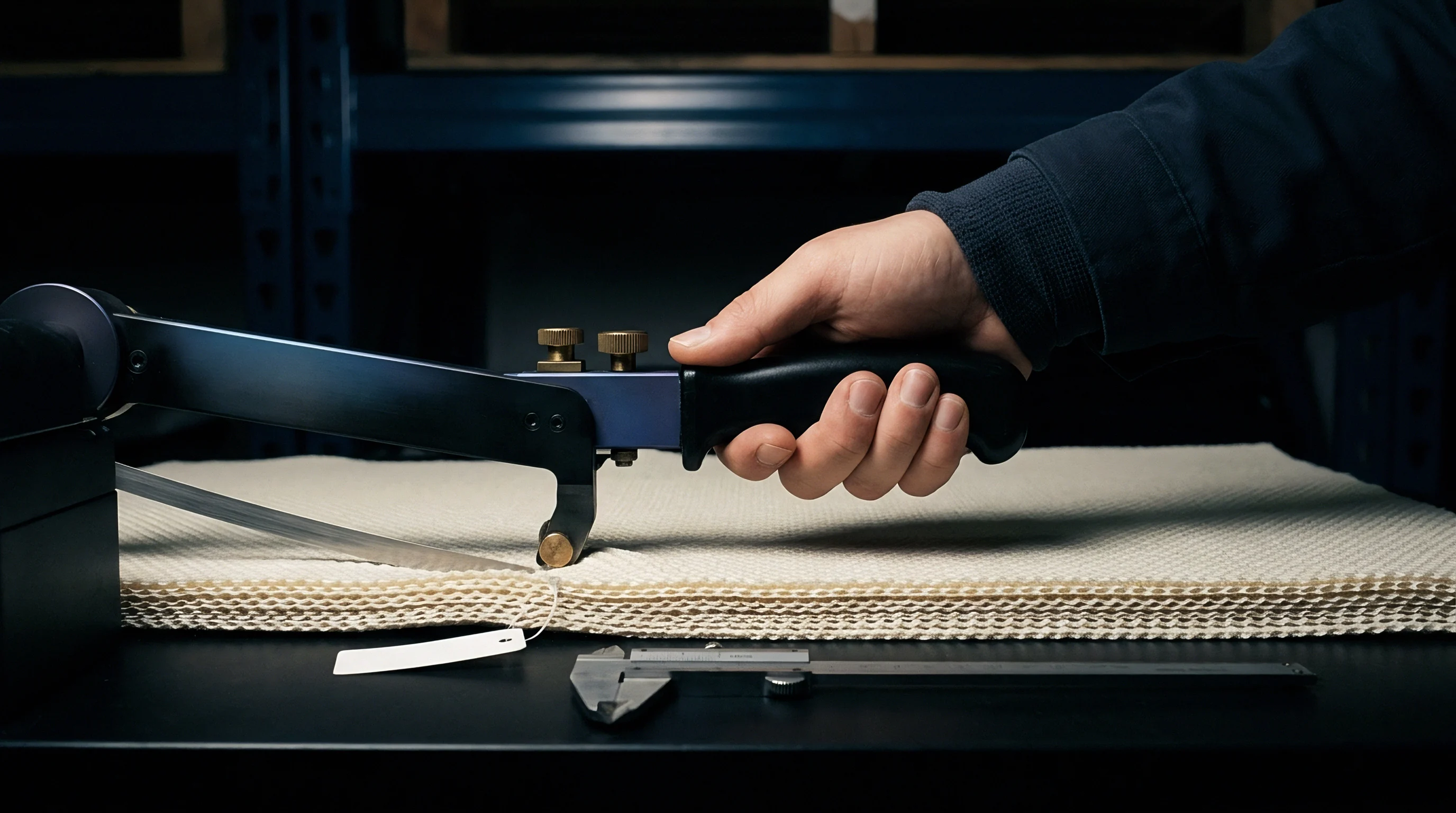
Mechanically breaking down substrate samples sets the ceiling for chemical verification. Cutting swatches by hand with standard lab shears creates irregular pieces with inconsistent edge-to-surface ratios. In the extraction vessel, chemical dissolution happens mostly along those fresh cut edges, leaving the core of dense synthetic yarns largely unexposed.
Cryogenic milling freezes the fabric in liquid nitrogen before high-impact pulverization, turning tough elastomeric and synthetic structures into fine, uniform powders. That physical breakdown removes diffusion limits so internal residues can dissolve fully.
Grinding equipment can easily introduce cross-contamination that skews baseline readings. Steel milling chambers with trace nickel or chromium leach heavy metals into the sample when grinding coarse technical fabrics aggressively. Standard checks for extractable lead, cadmium, or chromium under EN 16711-1 are easily corrupted when abrasive synthetic fibers scrape metal particles off the chamber walls.
Labs operating without titanium-lined or agate-lined grinding equipment risk reporting false positives for heavy metals that came entirely from wear on the milling vessel.
Moisture trapped inside the substrate distorts mass calculations and shifts final concentration results. Limits for restricted substances are calculated in milligrams per kilogram of dry fabric weight (mg/kg). Fabrics kept in humid ambient conditions absorb up to fifteen percent moisture by weight, depending on fiber regain properties.
Cellulosic fibers like cotton and viscose hold substantial regain moisture, while polyesters hold under one percent. A lab that skips conditioning samples to standard atmospheric equilibrium (twenty degrees Celsius and sixty-five percent relative humidity) or omits moisture correction on dry weight builds a systemic error right into the compliance record.
Preparation discrepancies explain why identical fabric rolls produce conflicting test results at different labs. A buyer holding a clean certificate from an origin lab that used manual swatch cutting faces real enforcement risk when a border authority re-tests the lot using cryogenic milling and swelling solvents. The synthetic binder layer shields the internal pigment from standard aqueous migration, rendering the positive amine detection an artifact of aggressive mechanical shredding rather than accessible chemistry.


Solvent
Solvent selection controls how restricted chemicals move from the textile matrix into liquid solution for chromatographic analysis. Textile processing uses thousands of commercial formulations ~ dyes, pigments, repellents, softeners, flame retardants. Pulling these targets out of synthetic or natural polymer matrices requires matching the extraction solvent’s polarity, solubility parameter, and temperature profile to both the analyte and the substrate.
Standardized test methods name default solvents, but minor procedural variations between international standards decide whether a bound residue stays trapped in the fiber or dissolves completely into the vial.
Azo dye testing demonstrates how strongly solvent parameters affect regulatory outcomes. Under EN ISO 14362-1 and GB/T 17592, textiles undergo reductive cleavage using sodium dithionite in a buffered aqueous medium at seventy degrees Celsius to split azo bonds (-N=N-) and release carcinogenic aromatic amines. The extraction step before reduction relies on solvents to pull insoluble pigments out of the fiber structure.
Xylene, chlorobenzene, and citrate buffer solutions yield very different extraction efficiencies depending on whether the dye is a soluble acid dye or an insoluble disperse pigment. Solvent selection determines bound cleavage.

Why Do Laboratory Digestion Solvents Yield Divergent Results?
Temperature control during extraction governs reaction kinetics and chemical stability. When running extractions under EN ISO 14362-3 for 4-aminoazobenzene ~ a compound that breaks down into aniline and 1,4-phenylenediamine under standard reductive cleavage ~ the lab must use a two-step solvent extraction with diethyl ether or tert-butyl methyl ether. Shifts in extraction temperature as small as five degrees Celsius significantly alter the partitioning coefficient of 4-aminoazobenzene, causing premature cleavage or incomplete transfer into the organic phase.
A lab running an uncalibrated water bath or using accelerated microwave extraction risks degrading heat-sensitive amines, producing false negatives for restricted colorants.
Ultrasonic bath extraction introduces localized sonochemical effects that mess with recovery rates. Many routine testing workflows replace Soxhlet thermal extraction with ultrasonic baths to cut run times from hours to minutes. High-intensity ultrasonic waves create cavitation bubbles that collapse with extreme local force and heat.
These micro-environments speed up solvent penetration through tight weaves, but they can also degrade labile target molecules. Perfluorinated alkyl acids and organotins undergo sonochemical changes during long ultrasonic runs, forming altered molecular structures that evade target-ion monitoring during mass spectrometry.
A reduction buffer maintained at pH 6.0 yields complete cleavage of azo bonds within thirty minutes at seventy degrees Celsius without destroying temperature-sensitive aromatic amines.
Phase transfer efficiency varies considerably between organic solvents. Phthalate plasticizer testing under EN 15777 and CPSC-CH-C1001-09.4 calls for dissolving PVC or polyurethane coatings in strong organic solvents before extracting the plasticizer. Tetrahydrofuran breaks down the vinyl matrix entirely, releasing internal plasticizers into solution before precipitation with hexane or methanol.
When labs take shortcuts by running direct Soxhlet extractions with diethyl ether without dissolving the polymer backbone, high-molecular-weight phthalates like di-isononyl phthalate remain trapped inside the matrix. The final report then reflects only the surface-migrated fraction rather than the total concentration regulated by law.
- Thermal Soxhlet Solvation maintains continuous reflux of fresh, hot solvent over the substrate matrix, ensuring complete extraction of non-volatile lipophilic residues over extended six-hour cycles.
- Ultrasonic Cavitation Extraction accelerates solvent migration into surface finishes but creates micro-thermal hot spots that degrade thermally sensitive organic target compounds.
- Pressurized Liquid Extraction uses elevated temperatures and pressures to keep solvents liquid above their atmospheric boiling points, forcing rapid solvent penetration into dense crystalline polymer matrices.
- Microwave Assisted Digestion rapidly heats polar solvent mixtures to destroy organic matrices for heavy metal analysis, but risks losing volatile elements like mercury and arsenic if pressure seals leak.

Ph Buffering and Chemical Cleavage Yields
Acid-base dynamics in the extraction solvent set the ionization state of target chemicals. Extractable heavy metal testing under EN 16711-2 uses synthetic acid perspiration buffered to pH 5.5. If the buffer drifts during extraction, metal solubility changes with it.
When perspiration solvent shifts toward neutral pH during the two-hour agitation cycle, trivalent chromium and lead ions precipitate out as insoluble hydroxides. That precipitation lowers the dissolved metal count in the extract, producing a passing report for a fabric that will still release toxic metal ions when exposed to acidic human sweat in actual use.
Solvent purity dictates baseline instrumental noise. Trace contaminants in technical-grade extraction solvents interfere with low-level quantification. Phthalates, bisphenols, and alkylphenols are common environmental contaminants found in plastic tubing, cap liners, and cheap reagent solvents.
Labs running textile extractions with industrial-grade dichloromethane or acetone introduce background contamination that inflates target readings. Reliable verification at parts-per-million or parts-per-billion levels requires HPLC-grade or pesticide-residue-grade solvents screened by batch-specific blank runs before sample prep.
Reagent age changes reaction yields during reductive extractions. Sodium dithionite, the primary reducing agent used to split azo dyes into aromatic amines, breaks down quickly when exposed to air and moisture. A lab working with stale sodium dithionite will not achieve full cleavage of restricted azo colorants within the specified time window.
Dyes with resistant structures, like mono-azo pigments with ortho-substituents, stay unreacted. The intact dye molecule passes right through the clean-up column without releasing free aromatic amine, yielding a clean certificate for a fabric containing banned colorants.
Cross-border assurance files require explicit documentation of sample extraction temperatures and solvent grade tracking numbers. Testing parameters must strictly mirror destination regulatory parameters rather than convenient laboratory shortcuts. A testing program relying on ambient solvent immersion on unground heavy synthetic fibers yields false negatives that vanish as soon as thermal extraction hits the laboratory standard.


Instrument
Instrumental detection is the final quantitative check in restricted substance verification. Modern analytical labs deploy high-resolution chromatography and spectroscopy to isolate, identify, and measure trace chemical species extracted from textiles. The choice of instrument, ionization interface, calibration method, and detector sensitivity determines whether a compound is detected at regulatory thresholds or buried in matrix noise.
Identical extractions can yield wildly different values when run across different analytical platforms.
Gas Chromatography paired with Mass Spectrometry (GC-MS) remains the workhorse platform for volatile and semi-volatile hydrophobic compounds ~ phthalates, organotins, chlorophenols, and aromatic amines. In standard electron ionization (EI) mode, electron impact fragments parent molecules into reproducible spectra. But when analyzing complex textile extracts containing mixed finishing agents, matrix components co-elute with target analytes off the column.
These co-eluting compounds split the available ionization current, suppressing target signals and underreporting actual concentrations.
Liquid Chromatography-Tandem Mass Spectrometry (LC-MS/MS) provides much higher sensitivity and selectivity for polar, non-volatile, and heat-sensitive chemicals, such as PFAS, alkylphenol ethoxylates, and water-soluble dye intermediates. In multiple reaction monitoring (MRM) mode, LC-MS/MS isolates a specific parent ion in the first quadrupole, fragments it in a collision cell, and monitors product ions in the third. This two-stage filtering strips out background noise, lowering detection limits by orders of magnitude compared to single-quad LC-MS or HPLC with Diode-Array Detection (HPLC-DAD).

Ion Suppression and Matrix Calibration Mechanics
Matrix-induced ion suppression causes more quantitative error in cross-border LC-MS/MS verification than almost anything else. Co-extracted auxiliaries, residual surfactants, and oligomeric fiber bits enter the electrospray ionization (ESI) source right alongside the target analytes. These unmonitored matrix components compete for charge on evaporating droplets, cutting down target ion formation.
When a lab quantifies PFAS or alkylphenol ethoxylates using solvent-based calibration curves (target chemicals in pure solvent) instead of matrix-matched curves (target chemicals spiked into blank textile extracts), suppression can suppress reported concentrations by up to sixty percent.
Derivatization requirements introduce another source of variation in gas chromatography workflows. Highly polar or heat-sensitive molecules, like pentachlorophenol or organotins, cannot pass through GC columns without chemical modification to boost volatility and thermal stability. Phenolic compounds are routinely acetylated with acetic anhydride, while organotins are alkylated using sodium tetraethylborate.
Incomplete derivatization ~ whether from matrix interference or degraded reagents ~ lowers reaction yields. The instrument measures only the derivatized portion, leading the lab to report a falsely compliant number.
| Target Chemical Class | Primary Instrument | Detection Limit (LOD) | Quantification Limit (LOQ) | Common Interferences |
|---|---|---|---|---|
| Aromatic Amines (Azo Dyes) | GC-MS (EI) / LC-MS/MS | 0.5 mg/kg | 5.0 mg/kg | Co-eluting isomer fragments, aniline artifacts |
| Per- and Polyfluoroalkyl Substances | LC-MS/MS (ESI negative) | 0.01 mg/kg | 0.025 mg/kg | Bile salt matrix noise, branched isomer splitting |
| Extractable Heavy Metals | ICP-MS / ICP-OES | 0.005 mg/kg | 0.1 mg/kg | Polyatomic argon interferences, total dissolved solids |
| Restricted Phthalate Esters | GC-MS (SIM mode) | 10.0 mg/kg | 50.0 mg/kg | Laboratory tubing leachates, plasticizer background noise |

Spectroscopic Determination of Extractable Heavy Metals
Heavy metal testing relies on atomic emission or mass spectrometry, requiring specific sample digestion and plasma excitation steps. Inductively Coupled Plasma Mass Spectrometry (ICP-MS) and Inductively Coupled Plasma Optical Emission Spectrometry (ICP-OES) are standard for measuring extractable antimony, arsenic, lead, cadmium, and chromium under EN 16711 and CPSC methods. ICP-MS reaches detection limits in the parts-per-trillion range, while ICP-OES operates in parts-per-million.
When verifying against tight statutory limits, like those for infant apparel, ICP-OES lacks the sensitivity needed to confirm non-detection at regulatory action levels.
Polyatomic interferences in ICP-MS skew heavy metal figures unless collision cell technology is active. Argon gas in the high-temperature plasma combines with matrix elements like chlorine or carbon, forming polyatomic ions with mass-to-charge ratios identical to target metals. Argon chloride (ArCl), for instance, shares mass number 75 with monoisotopic arsenic (As).
A lab analyzing a chlorinated synthetic fabric or solvent extract on an ICP-MS without helium kinetic energy discrimination (KED) will mistake the argon chloride signal for arsenic.
Quantification achieved through single-ion monitoring without mass spectral tandem confirmation risks mistaking matrix hydrocarbon noise for targeted hazardous additives.
Chromatographic peak integration leaves room for analyst subjectivity in automated software readings. When target peaks tail or co-elute with adjacent matrix noise, automated software algorithms draw baselines inconsistently. In perfluorinated alkyl substance (PFAS) testing, commercial technical mixtures contain both linear and branched isomers.
Regulatory frameworks like EU REACH and US state PFAS bans mandate reporting the sum of all linear and branched isomers. Setting integration parameters to capture only the main linear peak undercounts total PFAS by twenty to forty percent compared to integration that includes all branched cluster peaks.
Calibration linearity dictates accuracy at higher concentrations. When samples carry heavy chemical loading ~ such as flame-retardant synthetic back-coatings ~ target concentrations frequently overshoot the detector’s calibrated linear range. High concentrations saturate mass spec detectors or exceed the optical absorption limit.
Reporting values extrapolated beyond the upper calibration limit produces arbitrary, unreliable figures. Accurate verification requires diluting the primary extract back into the validated linear window and re-injecting.
Reviewing test reports requires checking instrument ionization modes before accepting non-detect declarations on high-risk technical fabrics. Gas chromatography combined with single-quadrupole mass detection cannot match the selectivity of tandem liquid chromatography when analyzing complex resin-treated substrates. Whether international regulatory consensus will accept tandem mass spectrometry ion ratios as definitive proof of compliance when legacy gas chromatography methods report non-detectable levels on identical extracts remains an open operational question.


Disparity
Cross-border chemical verification operates across conflicting international regulatory standards, enforcement thresholds, and official test methods. A textile product fully compliant in the European Union can be detained at the border in China or the United States over minor differences in restricted substance list (RSL) definitions, lower action limits, or mandatory local testing protocols. Sourcing globally requires reconciling these disparities at the purchase order stage to prevent multi-jurisdictional failures.
European Union REACH Regulation (EC 1907/2006) Annex XVII sets legally binding restrictions on specific chemical groups across all member states. Entry 43 restricts azo dyes that release any of twenty-two carcinogenic aromatic amines above thirty milligrams per kilogram (30 mg/kg) in textiles intended for direct and prolonged skin contact. The EU Persistent Organic Pollutants (POP) Regulation enforces near-zero thresholds for specific perfluorinated compounds, setting limits for perfluorooctane sulfonic acid (PFOS) at ten milligrams per kilogram (10 mg/kg) and perfluorooctanoic acid (PFOA) at twenty-five parts per billion (0.025 mg/kg).
These ultra-trace levels require high-resolution LC-MS/MS protocols that far outpace standard commercial screening.
China National Safety Technical Codes (GB 18401 and GB 31701) set mandatory requirements structured quite differently from Western frameworks. GB 18401 splits products into three safety classes: Class A for infant items (0 to 36 months), Class B for direct skin contact, and Class C for non-skin contact. Unlike REACH, which uses risk-based exposure models, GB standards enforce fixed limit values regardless of article weight or construction.
GB 18401 sets a twenty milligrams per kilogram (20 mg/kg) limit for formaldehyde in Class A goods, whereas European norms allow higher thresholds depending on brand RSLs. Chinese customs re-tests imports using local test methods (GB/T 17592, GB/T 23344) that specify different digestion times and solvent buffers than EN ISO standards.

Cross-Border Threshold Variance and Method Mapping
US regulatory compliance covers Federal requirements under the Consumer Product Safety Improvement Act (CPSIA) alongside individual State laws. CPSIA 16 CFR 1307 limits eight specific phthalate esters to under 0.1 percent (1,000 mg/kg) in children’s toys and childcare items. California Proposition 65 takes a broader approach, requiring warning labels for products containing chemicals linked to cancer or reproductive toxicity unless exposure stays below established No Significant Risk Levels (NSRLs) or Maximum Allowable Dose Levels (MADLs).
Prop 65 enforcement relies on private enforcement litigation rather than port sampling, driving settlement-based concentration targets that often drop well below Federal CPSIA statutory limits.
Method differences across ISO, EN, AATCC, and GB/T standard bodies yield conflicting numbers for the exact same chemical targets. A fabric tested for formaldehyde under ISO 14184-1 (water extraction) yields lower free formaldehyde values than under ISO 14184-2 (steam vapor absorption). GB 18401 cites GB/T 2912.1 (equivalent to ISO 14184-1) for free formaldehyde, but variations in local lab distillation equipment cause systemic discrepancies during market surveillance audits by Chinese regulation bureaus.
| Chemical Group | EU REACH / POP Limit | China GB Standard Limit | US Federal / State Limit | Method Divergence Factor |
|---|---|---|---|---|
| Aromatic Amines (Azo Dyes) | 30 mg/kg (22 amines) REACH Annex XVII | 20 mg/kg (24 amines) GB 18401 / GB 31701 | Varies by brand RSL / CPSIA guidance | GB standard tests 24 amines including 4-aminoazobenzene via distinct GB/T methods |
| Free Formaldehyde | 75 mg/kg (direct skin) REACH entry draft | 20 mg/kg (Class A infant) GB 18401 | 75 mg/kg (children’s wear state laws) | GB/T 2912.1 water extraction requires specific colorimetric calibration timings |
| Restricted Phthalates | 1000 mg/kg sum REACH Annex XVII | 1000 mg/kg sum (Class A) GB 31701 | 1000 mg/kg individual CPSIA 16 CFR 1307 | CPSC test methods mandate complete THF polymer dissolution; ISO permits extraction |
| Total / Extractable Lead | 500 mg/kg total lead REACH Annex XVII | Non-detectable / 90 mg/kg GB 31701 | 90 mg/kg total lead substrate CPSIA | CPSIA mandates acid digestion; EU permits extractable perspiration testing |

Reconciling Divergent Limits across International Supply Chains
Reconciling cross-border compliance requires establishing a workflow built around the strictest global threshold among destination markets. Trying to manage separate inventory pools for European, American, and Asian markets creates logistical friction and cross-contamination risk in warehouse distribution. Establishing a unified compliance baseline eliminates regulatory exposure across all destination ports.
- Review purchase order shipping destinations to map all applicable regulatory frameworks, identifying the lowest quantitative limit for each restricted chemical class.
- Select testing methods that utilize the most aggressive solvent extraction and highest sensitivity instrumental platforms required by any destination market authority.
- Issue explicit technical directives to origin dyehouses detailing forbidden chemical auxiliaries, target limit values, and required standard testing methods.
- Collect batch-specific laboratory test reports generated by ISO 17025 accredited facilities holding specific technical accreditation for the required test standards.
- Verify that the scope certificate and transaction documents cover the exact fiber blend, wet processing sequence, and colorway code of the shipped batch.
Voluntary certification schemes like OEKO-TEX STANDARD 100, Global Organic Textile Standard (GOTS), and bluesign system specifications attempt to harmonize cross-border requirements with brand-level criteria. While these private standards often set stricter limits than statutory minimums, holding a voluntary certification certificate offers no legal immunity at customs borders. A customs agency enforcing GB 18401 or US CPSIA tests according to official state-sanctioned standards.
A mill relying solely on a generic voluntary certification report faces port detention if the underlying test omitted local statutory testing parameters.
A transaction certificate covering grey fabric becomes void for finished goods compliance when wet processing adds restricted carrier chemicals during commission dyeing.
Method discrepancies leave commercial buyers exposed when goods move from origin ports to destination borders. Standard purchase order clause 14.2 addresses this by assigning regulatory variance risk to the primary vendor, defining compliance against the lowest quantitative threshold among all destination markets named in the shipping order.


Border
Customs authorities and market surveillance agencies execute border verification to keep non-compliant or restricted goods out of commercial channels. Port enforcement operates on tight operational timelines, rigid statutory protocols, and legal frameworks that favor detention over commercial convenience. When an import shipment is flagged for random or risk-based chemical audit, the destination customs lab evaluates the goods against national legal mandates, applying government testing methods that frequently conflict with origin certificates.
Customs sampling protocols prioritize physical sample security and chain-of-custody over manufacturing batch homogeneity. Officers sample directly from landed containers, pulling swatches from outer cartons or accessible roll ends without considering production lots. If the selected carton happens to come from a wet-processing batch with uneven chemical pickup, that single sample stands for the entire multi-container shipment.
Importers have no right to request re-sampling from alternative cartons once an official sample tests positive for a restricted substance.

Customs Sampling Procedures and Detention Mechanics
Laboratory accreditation scope dictates whether testing evidence is legally admissible in border disputes. ISO/EN 17025 accreditation confirms that a facility operates a competent quality management system and possesses valid technical capabilities. But accreditation is granted parameter-by-parameter and method-by-method.
A commercial lab holding ISO 17025 accreditation for physical textile testing does not automatically hold accredited scope for LC-MS/MS quantification of PFAS or GC-MS determination of aromatic amines under GB/T standards. Customs authorities reject compliance certificates issued by labs operating outside their accredited scope for the specific chemical and test method.
Detention follows rigid administrative timelines that impose heavy financial costs on the importer of record. Upon drawing a suspect sample, customs issues a formal notice of detention, holding the container under bond at the port terminal or an off-site bonded warehouse. Demurrage and storage charges accumulate daily while testing proceeds.
If the lab confirms an over-tolerance concentration, the authority issues a rejection notice, forcing either full re-export or destruction under official supervision at the importer’s expense.
- Accreditation Scope Failure occurs when an origin test report is issued by a laboratory lacking accredited ISO 17025 scope for the precise restricted substance test method enforced at the destination port.
- Chain of Custody Disconnect arises when the article description, style number, colorway code, or material composition listed on the analytical test report fails to match the commercial invoice and customs entry documentation.
- Method Incompatibility Rejection happens when origin compliance certificates rely on voluntary private standards rather than the specific statutory standard testing methods mandated by destination border authorities.
- Batch Inconsistency Exposure results from testing a single pristine sample at origin while shipping a commercial container containing mixed dye lots or subcontracted wet-processed rolls carrying unmonitored chemical residues.

Proactive Import Dossier Management
Mitigating border detention risk requires assembling a complete compliance dossier before the container arrives at port. A simple self-declaration from a garment manufacturer offers no protection against regulatory enforcement. The importer of record must hold a traceable, batch-linked document trail connecting physical goods directly to verified laboratory test data.
Across EU accredited facilities, interlaboratory proficiency data shows standard deviations routinely exceeding ten percent. The importer carries full legal responsibility for product compliance regardless of supplier assurances or intermediate agent claims.
Misinterpreting analytical method equivalency across customs jurisdictions results in container seizure, compulsory destruction of non-compliant inventory, and irreversible loss of import privileges at major commercial ports.


Rebuttal
When buyer verification testing contradicts origin supplier certificates, commercial relationships stall and legal liabilities escalate. Disputing an official non-compliant test report or resolving a commercial deadlock between conflicting buyer and seller laboratory results requires applying formal statistical metrics and standardized re-testing protocols. Unsupported claims of laboratory error or minor procedural deviations fail to overturn formal enforcement decisions or contractual rejection notices.
Effective rebuttal workflows rely on ISO precision metrics, round-robin proficiency data, and accredited arbitration testing.
ISO 5725 establishes the international framework for evaluating the accuracy, repeatability, and reproducibility of measurement methods. Repeatability (r) defines the quantitative variation expected when identical test material is analyzed in the same laboratory by the same operator using the same instrument within a short time interval. Reproducibility (R) defines the variation expected when identical material is tested in different laboratories by different operators using different instruments.
In trace chemical analysis of complex textile substrates, reproducibility limits routinely reach thirty to fifty percent of the target mean concentration.

Statistical Precision Metrics in Method Arbitration
Interlaboratory reproducibility limits explain why two fully accredited, highly competent laboratories can report divergent quantitative figures for the identical fabric sample without either laboratory committing an analytical error. When evaluating a target chemical present near the regulatory limit ~ such as an aromatic amine detected at twenty-eight milligrams per kilogram (28 mg/kg) by the seller’s lab and thirty-four milligrams per kilogram (34 mg/kg) by the buyer’s lab ~ the difference falls within the statistical reproducibility band (R) of EN ISO 14362-1. Recognizing statistical variance allows compliance managers to evaluate whether a non-compliant result represents a genuine chemical failure or an expected artifact of interlaboratory reproducibility.
Arbitration protocols require selecting an independent, mutually agreed-upon reference laboratory holding explicit ISO 17025 accreditation for the disputed test method. Re-testing must be conducted on archived, sealed retain swatches cut from the identical sample lot during initial sampling. If retain swatches were stored in non-conditioned plastic bags or exposed to ambient heat and light, volatile target analytes like chlorophenols or phthalates may have degraded or off-gassed during storage.
Invalid sample storage invalidates the arbitration test report before the sample enters the extraction flask.
Interlaboratory reproducibility limits frequently exceed the absolute margin between a passing test report and a regulatory violation.
When presenting a formal technical rebuttal to a brand audit committee or customs authority, the importer must present a comprehensive technical file detailing matrix effects, solvent recovery rates, instrument operating parameters, and baseline integration curves. Rebuttal filings that rely on general character references or unevidenced supplier declarations are summarily rejected by technical compliance boards.
Dispute resolution protocols must be formally written into purchase orders before production commences. The contract must designate the primary arbitration laboratory, define sample retention conditions, assign financial responsibility for re-testing fees based on final analytical outcomes, and establish acceptable statistical confidence intervals for borderline compliance determinations.


Indemnity
Managing chemical compliance risk across international supply chains requires translating analytical chemistry facts into clear commercial contracts and enforceable indemnity structures. While technical dossiers, laboratory reports, and accredited certifications establish batch facts, commercial contracts decide who carries the financial loss when an analytical method divergence results in container detention, product recall, or regulatory fines. A robust assurance framework bridges the gap between laboratory detection limits and purchase order liability clauses.
Restricted substance list (RSL) compliance clauses in standard sourcing agreements must define compliance through precise technical parameters rather than generic statements of legality. Vague contractual statements requiring a vendor to “comply with all applicable environmental and safety regulations” fail to protect the buyer during complex cross-border disputes. Effective compliance clauses specify the exact restricted chemical list version, target product safety class, mandatory analytical test methods, minimum laboratory accreditation credentials, and destination port jurisdiction standards.

Contractual Risk Allocation and Retest Mechanics
Indemnification provisions must explicitly assign financial liability for direct and indirect losses arising from restricted substance violations. Direct losses include shipment cancellation costs, laboratory testing fees, container storage and demurrage charges, freight charges, and customs destruction fees. Indirect losses encompass regulatory authority fines, legal defense fees, brand damage expenses, and commercial recall administration costs.
Suppliers operating under standard trade terms routinely attempt to cap liability at the FOB invoice value of the specific non-compliant fabric roll. In cross-border retail supply chains, the total financial damage of a regulatory enforcement action routinely exceeds the raw material invoice value by ten to twenty times.
Transaction certificates (TCs) and scope certificates (SCs) under voluntary sustainability standards require rigorous legal auditing prior to commercial reliance. A scope certificate confirms that a manufacturing facility possesses the technical systems required to process certified materials, but it provides zero legal guarantee that a specific production batch is free from restricted chemical additives. Transaction certificates track the volume movement of certified material between supply chain tiers.
A transaction certificate covering grey fabric becomes legally void regarding finished goods safety if a downstream commission dyehouse applies uncertified auxiliary chemicals during finishing operations. Buyer compliance protocols must demand batch-specific analytical test reports in addition to chain-of-custody transaction documentation.
Importer-of-record status carries non-transferable legal liability under destination market statutes. While a brand or buyer can enforce contractual indemnity clauses against an origin supplier in civil arbitration, destination customs agencies, market surveillance bureaus, and consumer safety commissions enforce administrative penalties exclusively against the domestic importer of record. Importers cannot shift statutory border enforcement responsibility to foreign mills located outside the legal jurisdiction of destination courts.
Structuring commercial risk mitigation requires integrating mandatory compliance gates into the supplier payment release schedule. Purchase orders should bind milestone payments to successful batch-level chemical verification executed by an independent accredited laboratory chosen by the buyer. Letters of credit and commercial payments must remain conditional upon receiving valid, verifiable laboratory test reports that pass strict technical audit against destination market parameters.
Payment release protocols operating without verified batch test data leave the buyer fully exposed to the catastrophic financial consequences of cross-border chemical method divergence.