
Standard Laboratory Reporting Limit Constraints in International Textile Sourcing
Commercial laboratory default reporting limits frequently sit above regulatory thresholds, requiring buyers to specify lower analytical cutoffs in sourcing contracts.
Commercial laboratory default reporting limits frequently sit above regulatory thresholds, requiring buyers to specify lower analytical cutoffs in sourcing contracts.
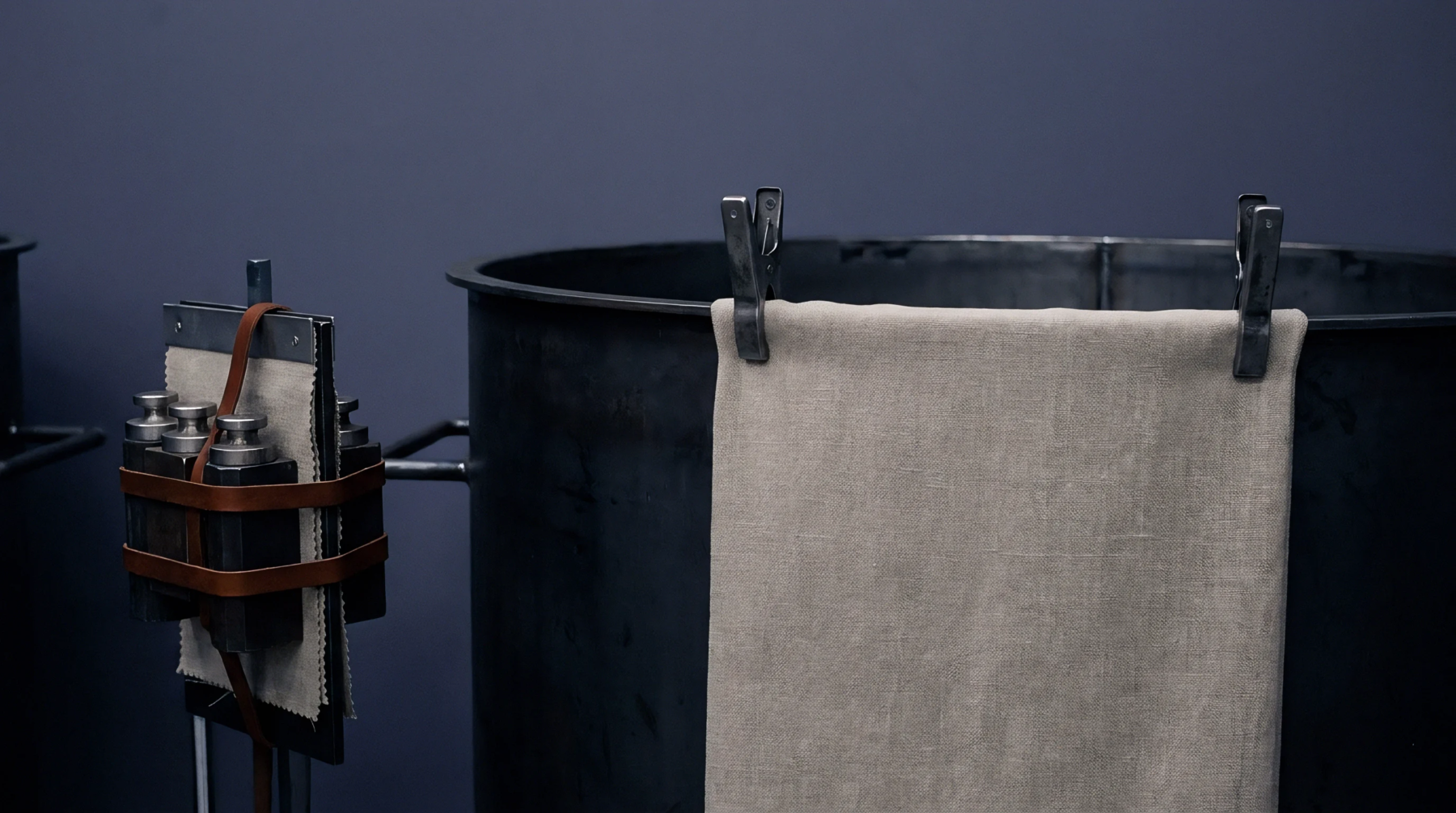
A test report guarantees compliance only when the laboratory accreditation schedule lists the specific test method, analyte family, and exact substrate matrix.

Enforceable conversion contracts bind wet processors to restricted substance lists through technical annexes, accredited batch testing, and quarantine holds.

Standardizing extraction temperature and specimen surface area resolves non-equilibrium desorption variances across dense polyurethane barrier membranes in audits.

An OEKO-TEX certificate scope covers only explicitly listed article descriptions, leaving chemically modified sister constructions uncertified without separate testing.

Flowing restricted substance lists to subcontracted dyehouses demands batch-level chemical tracking, verified bath controls, and explicit back-to-back testing indemnity.
Expertise is a utility, not a secret. sentiention™ publishes its working knowledge as open reference: intelligence layer covering the materials it sources, the markets it enters, and the reference that serves both.