OEKO-TEX Article Numbers Covering One Construction and Not Its Sister
An OEKO-TEX certificate scope covers only explicitly listed article descriptions, leaving chemically modified sister constructions uncertified without separate testing.


Catalog
Scope statements on OEKO-TEX STANDARD 100 certificates limit coverage to specific combinations of substrate composition, dyeing technique, and chemical finishing. When a mill certifies a base fabric construction, the certificate details parameters like fiber blend percentages, yarn structure, surface weight ranges, and approved colorant categories. Broad commercial marketing terms used by sales departments rarely match the narrow technical scope documented on certificates issued by testing institutes like Hohenstein, Shirley, or TESTEX.
Discrepancies happen when a converter or garment factory orders a sister construction from the same mill. A sister construction shares structural traits with the certified base fabric ~ like weave architecture, yarn count, and mass per unit area ~ but incorporates a specific variation in chemical processing or yarn sourcing. Common changes include switching from piece dyeing to yarn dyeing, adding an elastomeric filament to a rigid warp, replacing reactive dyes with pigment printing, or applying a topical finish.
Certificate scope entries treat each of these variations as a distinct product boundary.
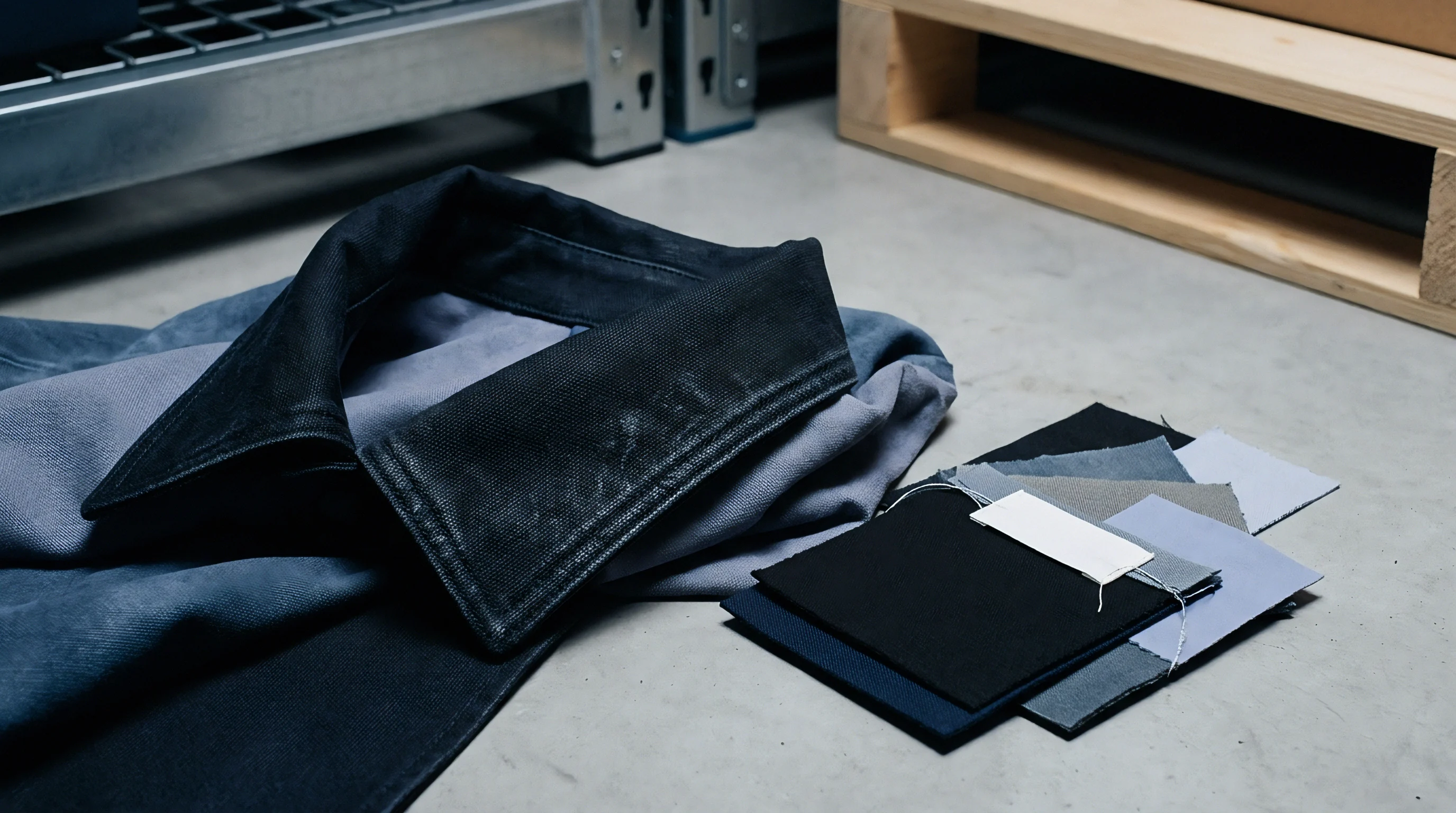
Scope Boundaries across Fabric Lineages
Certificates specify fabric weight limits, fiber blends, and processing stages under a declared scope model backed by laboratory testing of representative samples. Testing institutes evaluate only the specific chemical formulations and substrate inputs declared during the annual application process. An entry reading 100 percent cotton woven fabric, dyed with reactive dyes, max weight 250 g/m² defines an unambiguous ceiling.
That scope covers all colorways produced within that declared dye group and mass limit, but it excludes fabric run on the same loom if it incorporates a third-party antimicrobial finish, a fluorocarbon-free water repellent, or a flame-retardant organophosphorus coating.
During sourcing audits, suppliers frequently present a single certificate as proof of compliance for an entire product range, making line-by-line verification against purchase order specifications essential. If a mill produces a 240 g/m² 3/1 cotton twill certified under Annex 4 Class II, that certificate covers the standard dyed version. A sister construction made on the same loom with 3 percent elastane added for stretch falls outside that scope unless elastomeric components were declared in the initial application and analyzed for extractable organotin catalysts and residual solvents.
OEKO-TEX STANDARD 100 Class II testing for reactive-dyed cotton costs approximately 1800 EUR per certificate, whereas adding fluorocarbon-free water repellency increases initial laboratory testing fees by 650 EUR.
The table below details how common base fabric scope declarations on OEKO-TEX STANDARD 100 certificates apply to related sister constructions produced within the same facility.
| Declared Base Scope Descriptor | Sister Fabric Construction Variation | Scope Status | Exclusion Mechanism |
|---|---|---|---|
| 100% Cotton Woven, Reactive Dyed, 150-250 g/m², Class II | 100% Cotton Woven, Pigment Printed, 200 g/m², Class II | Uncovered | Pigment binders introduce acrylic monomers, crosslinkers, and heavy metal colorants omitted from reactive dye test panels. |
| 100% Cotton Woven, Reactive Dyed, 150-250 g/m², Class II | 100% Cotton Woven, Fluorocarbon-Free DWR, 240 g/m², Class II | Uncovered | Topical repellents add branched alkylphenols and hydrophobic polymer residues requiring specialized LC-MS testing. |
| 97% Cotton / 3% Elastane Woven, Piece Dyed, Class II | 97% Cotton / 3% Elastane Woven, Yarn Dyed, Class II | Uncovered | Yarn dyeing utilizes high-affinity lubricants, sizing agents, and spooling oils absent from piece-dyeing process flows. |
| 100% Polyester Knitted, Disperse Dyed, Class III | 100% Recycled Polyester Knitted, Disperse Dyed, Class III | Uncovered | Post-consumer recycled polymer flakes introduce post-industrial contaminants, phthalates, and heavy metal residue risks. |
| 100% Cotton Knitted, Bleached White, Class I | 100% Cotton Knitted, Optical Brightener Added, Class I | Uncovered | Stilbene-based optical brighteners trigger specific UV-absorbance testing and skin-sensitization criteria under Class I limits. |

Discrepancies between Commercial Invoices and Scope Statements
Shipping documentation often describes a fabric family using broad marketing terms while the certificate annex lists specific article codes. Customs clearing agents and brand compliance inspectors audit the exact text appearing on the certificate scope line. A commercial invoice listing Article C-240-WR Water Repellent Twill matched against a certificate scope reading Article C-240 Plain Dyed Twill triggers an immediate documentation failure.
Importers cannot bridge this gap by claiming structural identity; scope statements are restrictive legal definitions, not general guidelines.
Verification requires retrieving the full official certificate text from the certifier database or requesting the complete test report annex from the supplier. The master certificate details included raw materials, dye classes, finishes, and article references. Mills frequently present the cover page of a valid certificate while withholding the specific annex that enumerates excluded finishes and secondary article numbers, even though chemical finishes directly alter analytical results.
The list below outlines the mandatory verification steps for confirming whether a specified fabric lot falls within an existing certificate scope.
- Documentary Scope Comparison demands cross-referencing every chemical treatment listed on the finish specification against the explicit scope text on the certificate cover.
- Article Code Reconciliation aligns the supplier commercial invoice item number directly with the certified item references printed in the official test report annex.
- Mass Limit Verification ensures the measured surface weight of the shipped fabric roll falls strictly within the minimum and maximum grams per square meter range specified.
- Product Class Matching validates that the certificate product class meets or exceeds the end-use safety threshold required for the finished retail garment.
- Validity Clock Inspection confirms the certificate renewal date extends past the actual manufacturing and port clearance windows for the specific shipment batch.
Identical base yarns and shared dye baths do not automatically extend certification to secondary finishing runs without individual scope expansion.
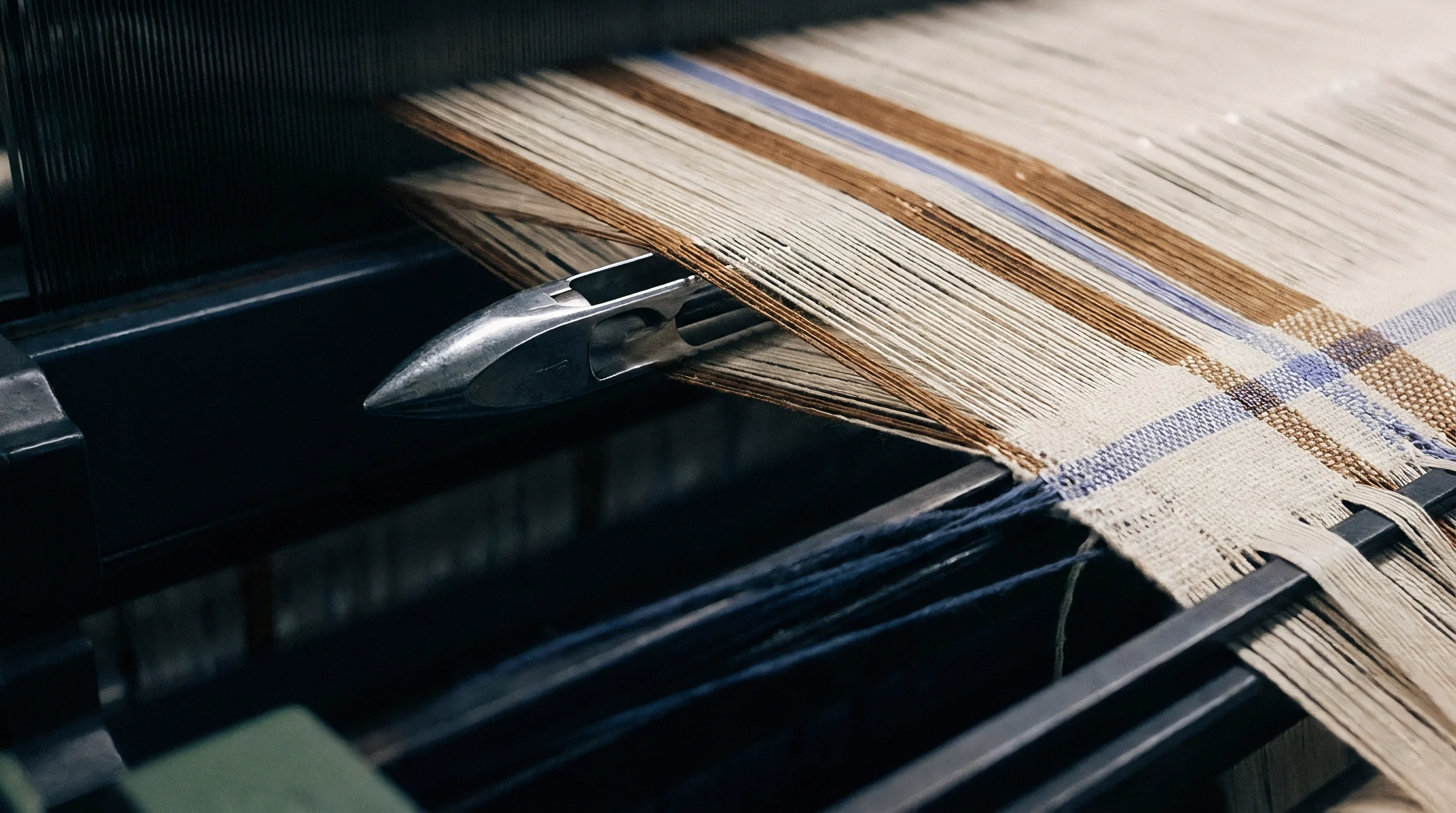

Weave
Structural modifications on the loom and secondary chemical applications create distinct analytical profiles between related textile articles. A mill weaving a standard 100 percent combed cotton poplin operates a controlled chemical route through desizing, scouring, bleaching, and reactive dyeing. When that same mill inserts synthetic filaments, elastomeric cores, or functional topcoats into that poplin weave to create high-performance sister lines, the chemical risk profile shifts completely, altering the safety metrics governed by European and North American regulations.
Spandex filaments require polyurethane polymer synthesis involving solvent residues such as dimethylformamide (DMFa) and organotin catalysts including dibutyltin (DBT) and dioctyltin (DOT). A certificate issued for a 100 percent rigid cotton poplin contains zero testing data for these compounds or solvent residues. Introducing 2 percent to 5 percent elastane into the warp or weft creates a sister construction that fails chemical verification if audited against the pure cotton certificate, compromising the entire batch.
Chemical Divergence Points in Sister Constructions
Dyeing techniques and mechanical finishing alter the chemical residue footprint across related fabric lots. Piece-dyed fabrics pass through aqueous wash steps that extract unbound dye molecules, residual surfactants, and processing salts. Pigment-printed sister constructions apply colorants topically using a liquid paste composed of acrylic binders, melamine-formaldehyde crosslinkers, thickeners, and synthetic pigments.
The resulting printed surface introduces formaldehyde emissions, phthalate plasticizers, and heavy metal impurities that do not exist on the piece-dyed base fabric.
Scope failures occur frequently when converters introduce water-repellent topcoats. A plain dyed nylon taffeta certified under OEKO-TEX STANDARD 100 Class II carries compliance clearance for disperse dyes and basic anti-static agents. Applying a durable water-repellent (DWR) finish to produce an outdoor jacket sister fabric introduces fluorinated chemistry or silicone-based emulsions.
Fluorocarbon-free systems frequently rely on wax, zirconium, or melamine formulations that carry alkylphenol ethoxylate (APEO) emulsifiers. These auxiliary chemicals require distinct analytical testing protocols under ISO 18254-1 and EN ISO 21633 that were never performed on the uncoated base taffeta.
A certificate scope specifying 100 percent cotton woven fabric does not cover a sister fabric containing 3 percent elastane due to distinct chemical catalyst residues in synthetic yarn extrusion.
Recycled fiber blends present another point of divergence. Converting a certified virgin cotton weave to a sister construction containing 30 percent post-industrial or post-consumer recycled cotton introduces random contaminant risks. Recycled cotton fibers come from mechanically shredded textile clips that carry unknown dye chemistries, legacy flame retardants, pentachlorophenol (PCP) sizing agents, and heavy metals.
Testing institutes mandate expanded screening panels under OEKO-TEX STANDARD 100 Annex 6 for recycled materials, meaning a certificate covering virgin cotton cannot cover a recycled sister fabric.

Do Sister Constructions Require Separate Certificate Entries?
A finished variant is excluded from an existing certificate whenever new functional additives or structural fibers enter manufacturing. Testing institutes evaluate product families based on worst-case representative sampling, so a mill can include sister constructions under a single master certificate only if all chemical variations, dye groups, and fiber components were submitted during the initial testing cycle. Adding a sister construction mid-year requires a scope extension procedure, which involves submitting sample swatches of the variant alongside chemical inventory declarations for any new auxiliaries.
The sequence below details the technical scope extension procedure required when introducing a new sister construction to an existing certificate family.
- Submit formal scope extension application to testing institute declaring chemical finish variations, structural changes, and intended product class usage.
- Provide complete safety data sheets (SDS) and global restricted substance declarations for all new dyestuffs, auxiliaries, binders, and topical finishes.
- Cut representative fabric swatches from full-width production rolls covering maximum dark shade concentrations and maximum finish application densities.
- Institute performs targeted laboratory testing covering only the newly introduced chemical parameters, such as LC-MS screening for PFAS or GC-MS for phthalates.
- Testing institute issues updated certificate annex explicitly listing the new sister article numbers alongside the original certified base constructions.
Treating every fabric variant with a distinct chemical treatment or fiber addition as an uncertified article prevents compliance exposure at destination ports.
Chemistry
Laboratory testing procedures target specific RSL compound classes based on the declared processing inputs of each individual article number. OEKO-TEX STANDARD 100 defines strict limit values across four distinct product classes, ranging from Class I for baby items to Class IV for interior decoration materials. Class I sets the most demanding chemical thresholds, requiring formaldehyde content below the limit of detection (16 mg/kg via ISO 14184-1).
Consequently, a base fabric tested and certified for Class III adult outerwear does not satisfy regulatory or brand compliance requirements if used in a Class II direct-to-skin shirt sister construction.
Analytical methods differ substantially between chemical residue types. Cleavable carcinogenic arylamines from azo dyes are analyzed using EN ISO 14362-1 and EN ISO 14362-3, targeting 24 specific aromatic amines with a detection limit of 20 mg/kg. Heavy metal screening splits into total content analysis via EN 16711-1 and extractable metal testing via EN 16711-2 using synthetic acid perspiration solutions.
When a sister construction introduces a new colorant or coating, the laboratory must run targeted testing suites to verify compliance against product class limits.

Analytical Parameters and Limit Values across Product Classes
OEKO-TEX STANDARD 100 Annex 4 and Annex 6 establish distinct threshold limits for restricted substances depending on intended product proximity to human skin. The table below compares key analytical parameter limits across product classes and highlights the extra testing modules triggered by common sister construction variations.
| Chemical Parameter | Test Method Standard | Class I Limit (Infant) | Class II Limit (Direct Skin) | Sister Variant Trigger |
|---|---|---|---|---|
| Free Formaldehyde | ISO 14184-1 | Under detection (<16 mg/kg) | 75 mg/kg max | Pigment print binders, easy-care resin finishes, melamine crosslinkers. |
| Extractable Lead (Pb) | EN 16711-2 | 0.2 mg/kg max | 1.0 mg/kg max | Heavy metal pigment complexes, metallic surface coatings, recycled fibers. |
| Perfluorooctanoic Acid (PFOA) | CEN/TS 15968 / LC-MS | 0.025 mg/kg max | 0.025 mg/kg max | Fluorocarbon-based durable water repellents (DWR), stain-resistant coatings. |
| Nonylphenol Ethoxylates (NPEO) | ISO 18254-1 | 100 mg/kg combined | 100 mg/kg combined | Scouring agents, emulsifiers in liquid dye preparations, wet-printing pastes. |
| Dibutyltin (DBT) | ISO 23161 / GC-MS | 0.1 mg/kg max | 1.0 mg/kg max | Elastomeric yarn extrusion catalysts, polyurethane coatings, softeners. |
| Phthalate Sum (15 compounds) | EN ISO 14389 | 0.1 percent weight max | 0.1 percent weight max | Plastisol prints, synthetic backing coats, polyvinyl chloride (PVC) finishes. |

Laboratory Testing Schedules for Finished Variants
Analytical testing suites expand significantly when functional treatments or synthetic yarn components enter the substrate. Testing a standard piece-dyed cotton fabric requires evaluating pH value (ISO 3071), color fastness to perspiration (ISO 105-E04), heavy metals, formaldehyde, chlorophenols (ISO 17070), and azo dyes. Testing costs for this base panel average 1800 EUR at accredited laboratories.
Adding a water-repellent finish to create a sister fabric triggers additional mandatory testing under Annex 4. The laboratory must run liquid chromatography-mass spectrometry (LC-MS/MS) panels to screen for total fluorine content, target PFAS compounds, and alkylphenol ethoxylates (APEOs), adding approximately 650 EUR to 900 EUR in analytical fees. If a mill applies a water-repellent finish without notifying the certifier, the underlying laboratory report panel remains incomplete for that sister article, leaving uncertified lots exposed to detention.
Border detention reports frequently show article descriptions that mismatch invoice lines. Testing an elastomeric blend sister fabric requires adding organotin extraction via ISO 23161 and solvent trace analysis for dimethylacetamide (DMAc) and dimethylformamide (DMFa) using gas chromatography-mass spectrometry (GC-MS). Base cotton certification testing rests on a single 100 g composite sample drawn per shade family, assuming chemical homogeneity across piece-dyed roll lots.
That assumption breaks down when evaluating functional sister fabrics, where chemical application rates vary across stenter frame width and run duration. A sample drawn from the roll header may pass APEO screening at 45 mg/kg, while mid-roll samples exceed the 100 mg/kg combined limit due to chemical bath concentration shifts during long finishing runs.
Matching the exact article description on the supplier invoice to the published scope text on the certifier portal prevents border delays and brand audit rejections.
For uncertified sister fabrics carrying functional topcoats, buyers face significant analytical uncertainty. Standard screening panels cost approximately 2500 EUR per sample lot, yet standard composite sampling models cannot guarantee batch-wide compliance across variable chemical finish applications. Given this uncertainty, brand compliance teams should require lot-specific testing certificates for every functional sister shipment rather than relying on annual supplier scope declarations.
The list below details the core chemical documentation parameters that must be verified within the laboratory test report annex before accepting a sister construction.
- Tested Parameter Inventories confirm that every auxiliary chemical present on the fabric specification was explicitly included in the analytical test panel.
- Method Detection Limits verify that laboratory instrumentation achieved reporting thresholds fine enough to detect restricted substances at specified product class limits.
- Composite Sample Mappings trace tested colorways and finish variations back to specific production lot numbers and fabric article codes.
- Annex Conformity Records validate that the test report numbers cited on the certificate cover page correspond to actual passing laboratory results.
Whether international standardization bodies will eventually establish standardized threshold tolerances for unintentional chemical migration between stored rolls of certified and uncertified sister fabrics remains an open debate.


Exposure
Importing textile goods under mismatched certificate scopes generates immediate legal and financial liabilities for the importer of record. Market surveillance authorities in the European Union, such as EU Safety Gate (formerly RAPEX), and US Customs and Border Protection actively enforce product safety regulations against imported apparel and home textiles. Customs authorities inspect physical shipments against laboratory report annexes rather than relying on high-level certificate summaries.
Customs officers and market surveillance auditors verify compliance by cross-referencing shipping documentation against public certification databases. OEKO-TEX operates an online Label Check tool that allows authorities and buyers to enter a certificate number and verify its active status, product class, and precise scope statement. When an auditor inputs a certificate number provided for Article TW-240-WR (Water Repellent Twill) and the database returns a scope restricted strictly to Article TW-240 (Plain Dyed Twill), the discrepancy flags immediately, stripping the shipment of its certified status on the spot.
Customs Detention and Regulatory Compliance Enforcement
Market surveillance authorities in the European Union and North America verify batch documentation against central certifier databases during border checks. Regulatory enforcement does not depend on proving actual toxicological harm; presenting an invalid, scope-mismatched, or expired certificate constitutes a regulatory failure under commercial labeling and market access laws. Authorities treat uncertified claims as misleading commercial practices and potential violations of national restricted substance regulations, such as REACH Annex XVII in the EU or CPSIA in the United States.
When border authorities flag a scope mismatch, they issue a formal detention notice. The importer must either produce valid batch-specific analytical test reports issued by an accredited ISO/IEC 17025 laboratory or accept re-testing at designated government facilities. Customs holds typically last between two and six weeks, during which demurrage and container storage charges accrue daily at the port of entry.
Customs authorities inspect physical shipments against laboratory report annexes rather than relying on high-level certificate summaries.
The financial impact of a scope mismatch escalates rapidly through direct fees, legal penalties, and supply chain disruptions. The table below models the financial exposure breakdown for a delayed commercial container shipment of 20000 meters of uncertified sister fabric held at a major container port.
| Cost Component | Basis of Calculation | Estimated Direct Expense (EUR) | Commercial Consequence |
|---|---|---|---|
| Port Container Demurrage | 21 days detention at 180 EUR per day | 3780 | Non-refundable daily port storage charges accrued during regulatory hold. |
| Emergency Laboratory Retesting | Accelerated ISO 17025 testing panel (3 samples) | 4500 | Mandatory full chemical screening required to prove market safety compliance. |
| Customs Brokerage & Legal Fees | Flat administrative fee plus legal representation | 3200 | Legal costs for drafting compliance petitions and handling customs disputes. |
| Retail Delivery Delay Penalties | 1.5 percent contract value penalty per week late | 6750 | Chargebacks assessed by brand buyers for missed seasonal retail delivery slots. |
| Mandatory Relabeling / Repackaging | 0.45 EUR per yard labor and material charge | 9000 | Physical removal of unverified OEKO-TEX hangtags prior to market release. |
| Total Financial Exposure | Cumulative direct risk per container lot | 27230 | Direct loss representing over 18 percent of total landed shipment value. |
Financial Consequences of Scope Mismatches
Uncertified shipments face customs holds, expensive re-testing charges, mandatory product relabeling, or total order destruction at the port of entry. Beyond direct customs fees, scope mismatches trigger severe contractual penalties under retail supply agreements. Major fashion brands and department stores maintain strict Vendor Code of Conduct agreements that incorporate compliance indemnification clauses.
If an uncertified sister fabric reaches the retail floor and gets flagged during routine market surveillance testing, the retailer initiates a mandatory product recall.
Recall costs include full purchase price refunds to consumers, reverse logistics shipping expenses, inventory write-offs, and administrative fines levied by regulatory bodies. Contractual indemnity clauses transfer these financial liabilities entirely onto the vendor or importer of record who submitted the unverified certificate. A single scope validation error on a 15000 EUR fabric purchase order can result in regulatory indemnity claims exceeding 150000 EUR.
Failing to validate article scope before shipment authorization leads to container seizures, complete retail line recalls, and unrecoverable chargebacks across the supply chain.


Clause
Purchase orders and supply contracts define legal compliance by embedding specific scope validation terms into binding commercial agreements. Importers and brand procurement teams must replace generic compliance claims with precise contractual language requiring explicit certificate scope coverage for every unique article number, finish variation, and fabric construction ordered. Relying on verbal assurances or generic mill certificates leaves the buyer fully exposed to regulatory detentions and testing expenses.
Contractual provisions must mandate that the seller supply an authentic, active OEKO-TEX STANDARD 100 certificate alongside the complete test report annex prior to production authorization. The agreement must explicitly declare that certificate scopes list the exact commercial article code, fiber composition, dyeing method, and topical finish specified in the purchase order.
Contractual Provisions for Scope Validation
Commercial agreements must specify precise documentation deliverables before production payments release to foreign mills. Master buying agreements should incorporate explicit scope attestation clauses. A robust compliance clause establishes that any shipment accompanied by an invalid, mismatched, or incomplete certificate constitutes a material breach of contract, entitling the buyer to reject the goods without penalty.
The clause must define the seller’s financial liability for all consequential damages arising from scope mismatches, including port demurrage, third-party laboratory re-testing fees, customs legal expenses, and chargebacks resulting from retail delivery delays. Furthermore, the contract should grant the buyer the right to withhold final invoice payments until certificate details pass verification on the official OEKO-TEX portal.

Verification Workflows for Purchase Orders
Quality control teams cross-reference invoice line items against the certifier’s online portal prior to issuing shipping release approvals. Standard operating procedures for procurement desks should require two-stage documentation clearance. Stage one occurs during purchase order placement, requiring the mill to submit the current certificate cover and test report annex for the exact article ordered.
Stage two occurs prior to container loading, requiring the mill to provide a lot-specific Transaction Certificate (TC) or formal Scope Certificate attestation linking the produced roll batch directly to the verified certificate number.
When purchasing sister constructions, procurement officers must verify that any new chemical finish or fiber component was explicitly added to the certificate annex through an official certifier scope extension. If the mill cannot produce an updated certificate annex covering the sister article, the purchase contract must require the mill to fund independent ISO/IEC 17025 laboratory testing for the full RSL panel corresponding to the intended product class before goods leave the factory floor.
Inserting a mandatory certificate scope attestation line into master purchase agreements shifts all regulatory detention costs and laboratory re-testing fees directly onto the seller.