Harmonizing Physical Laboratory Test Standards for Multi-Market Garment Clearance
Harmonize multi-market physical fabric testing by implementing worst-case envelope protocols and validating ISO 17025 laboratory accreditation scopes.


Tension
Multi-Market Physical Friction and Regulatory Divergence
Sourcing teams frequently assume that passing a major international standard guarantees structural acceptance globally. In practice, customs agencies in the United States, the European Union, China, and Japan run physical compliance testing on incompatible equipment with differing sample sizes and strain rates. A fabric that meets North American ASTM minimum tensile strength can fail mandatory Chinese GB testing purely on account of jaw velocity and sample width, leaving shipments stranded at port, triggering re-tests, and missing delivery windows.
Physical testing protocols evaluate breaking force, tearing strength, seam slippage, bursting resistance, dimensional stability, pilling, and flammability, but regional oversight bodies evaluate these metrics under separate rules. The US Consumer Product Safety Commission mandates clothing flammability under 16 CFR Part 1610, leaving mechanical strength primarily to commercial buyer specifications. The European Union relies on EN ISO standards to prove compliance with general safety directives.
China enforces strict physical safety thresholds under GB 18401 for apparel and GB 31701 for childrenswear, supported by mandatory GB/T performance protocols, while Japan uses JIS L standards tied to specific equipment setups. Roll ends are inspected at accredited mills to confirm woven constructions match the submitted clearance dossier.
When a single production run of woven trousers lands simultaneously in Long Beach, Rotterdam, Shanghai, and Yokohama, each import authority applies distinct criteria. Tensile testing at US ports uses ASTM D5034 grab methods; European customs apply ISO 13934-1 strip methods, and Chinese authorities run GB/T 3923.1 strip tests. Because clamp mechanics and sample geometries vary, measured breaking forces shift between protocols.
Certifying fabric solely against ASTM criteria leaves European and Chinese shipments exposed to immediate border detention.
Structural Variations in International Fabric Performance Testing
Mismatches in test design appear clearly in tensile testing specifications. ASTM D5034 secures a 100-millimeter by 150-millimeter sample using 25-millimeter clamp jaws, recording breaking force across that isolated central band. ISO 13934-1 requires a 50-millimeter strip clamped across its full width over a 200-millimeter gauge length.
GB/T 3923.1 adopts the same strip layout but adjusts crosshead speed and pre-tension load according to fabric weight.
A clearance file built on standard equivalence holds only when the mill cuts specimens under identical atmosphere controls.
Seam slippage testing reveals similar methodological splits. ASTM D434 and ASTM D1683 measure seam opening under fixed loads or apply target forces using grab clamps. ISO 13936-1 records the force required to create a two or three millimeter seam opening in strip specimens.
GB/T 13774 introduces additional variables, mandating specific stitch types, thread counts, and needle gauges. Garments engineered for ASTM seam requirements routinely fail GB/T 21294 evaluations at Chinese ports because the required reference seam differs from Western specs.
Post-laundering dimensional stability tests diverge sharply across regions. Washing procedures detailed in AATCC 135, ISO 6330, and GB/T 8629 vary in mechanical action, extraction speeds, liquor ratios, reference detergents, and drying methods. A cotton blend processed under AATCC 135 Option 1 (Normal cycle, 41 degrees Celsius) yields different dimensional change figures than the same material washed per ISO 6330 Procedure 4N (40 degrees Celsius, front-loading horizontal drum).
Skipping destination-specific laundering protocols exposes shipments to dimensional compliance failures during customs verification.
A different clamp face used at the China customs lab caused the seam to pull out early.
Gauge
Apparatus Geometry and Strain Rate Discrepancies
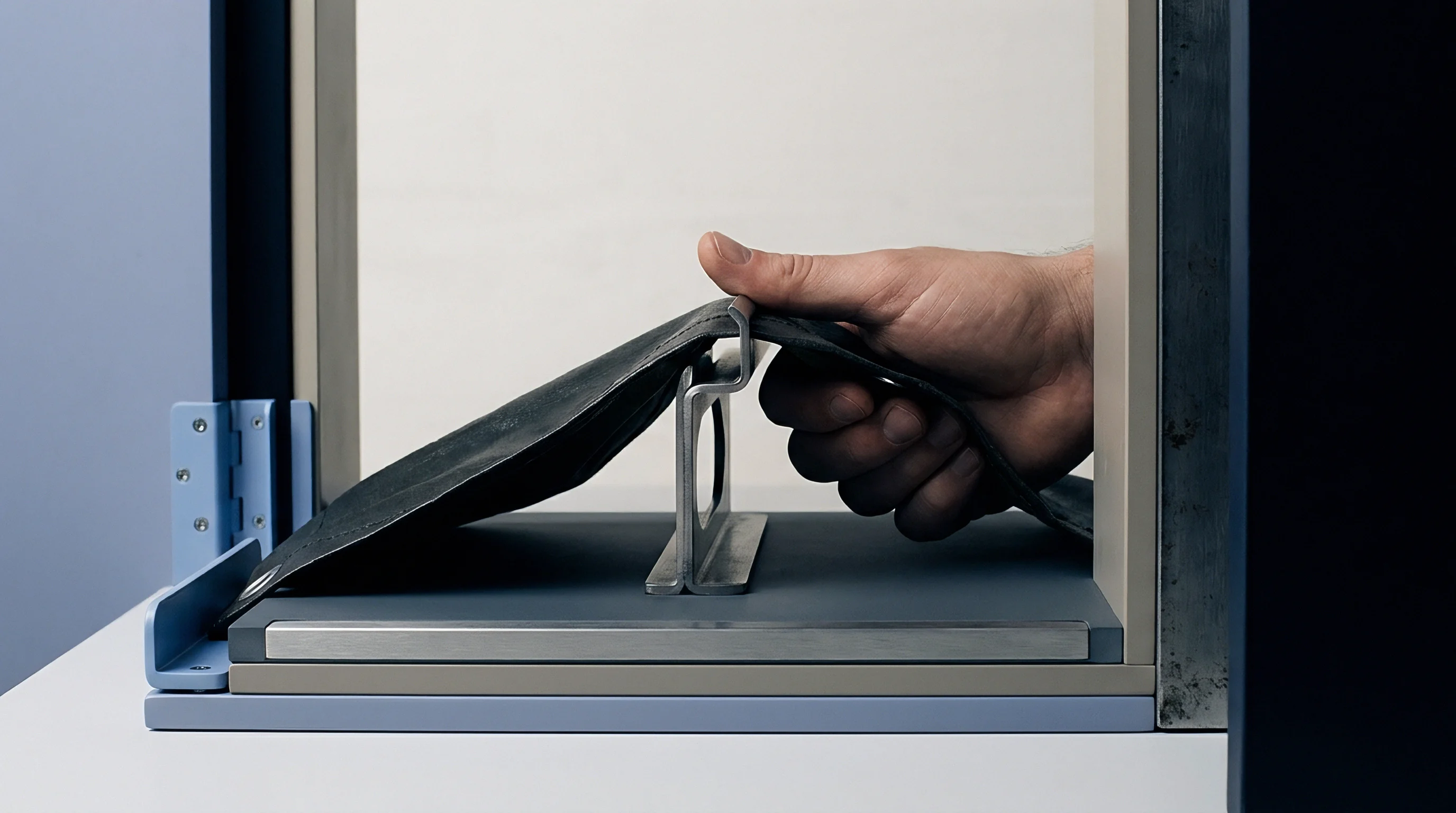
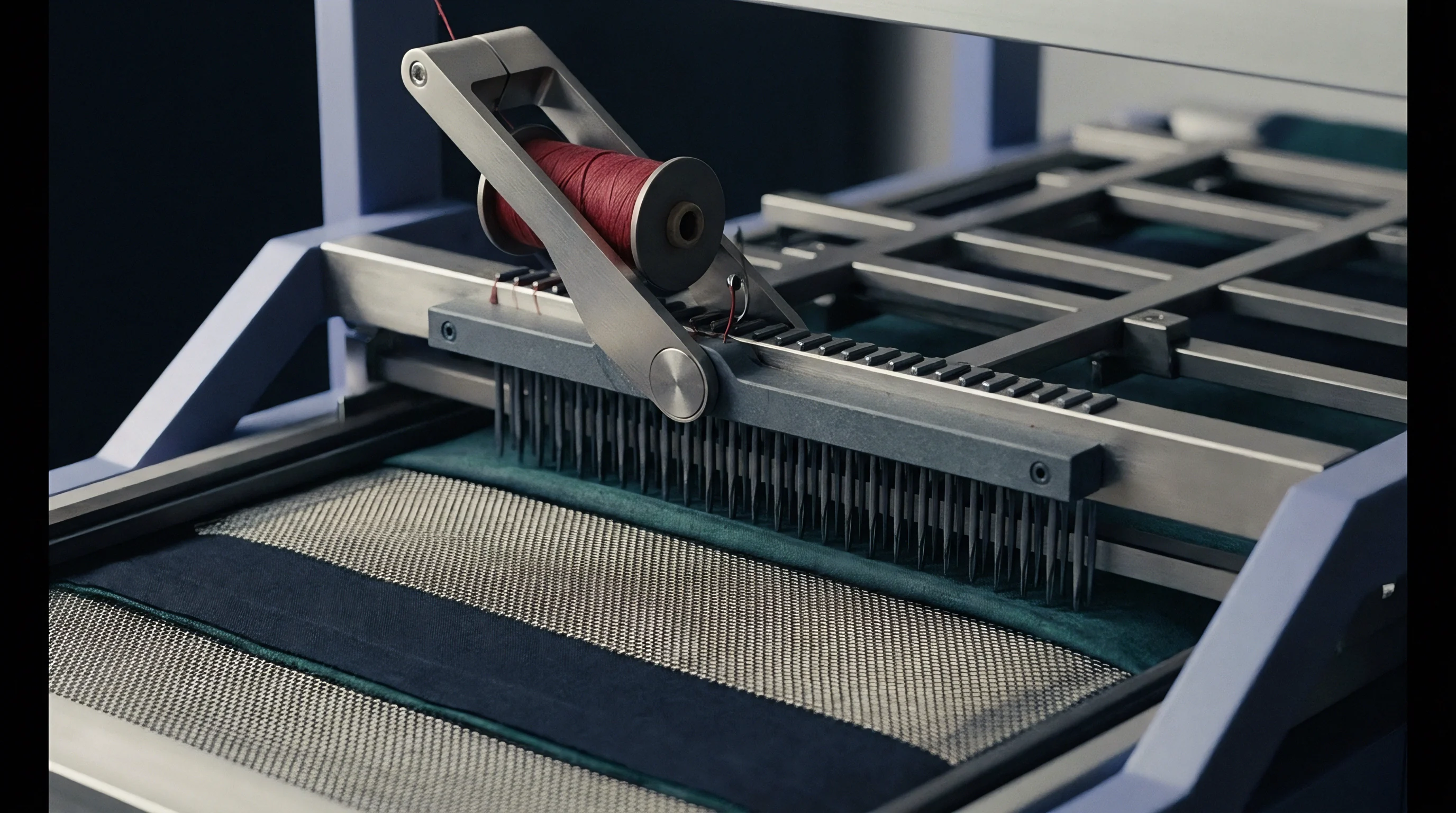
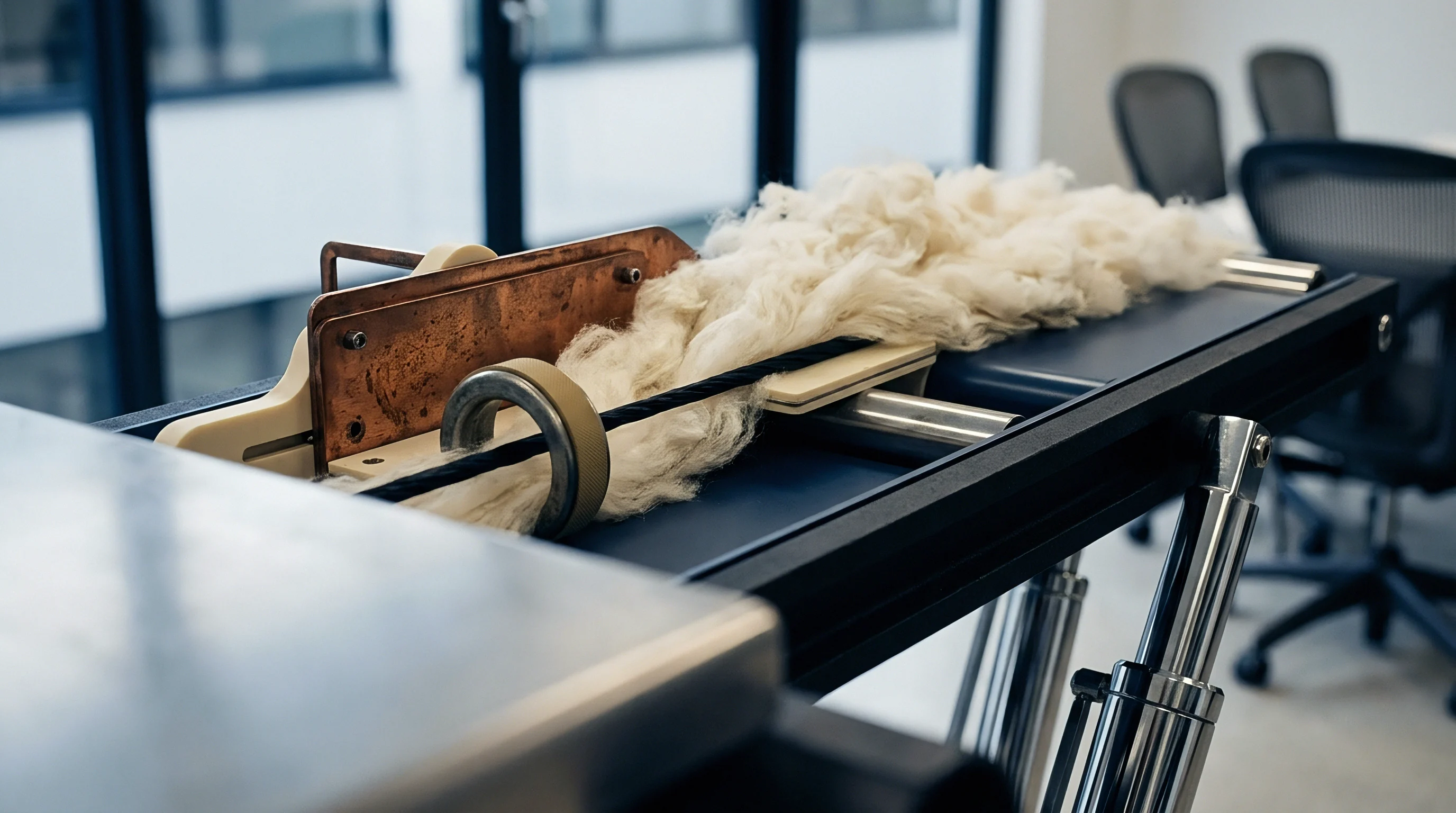
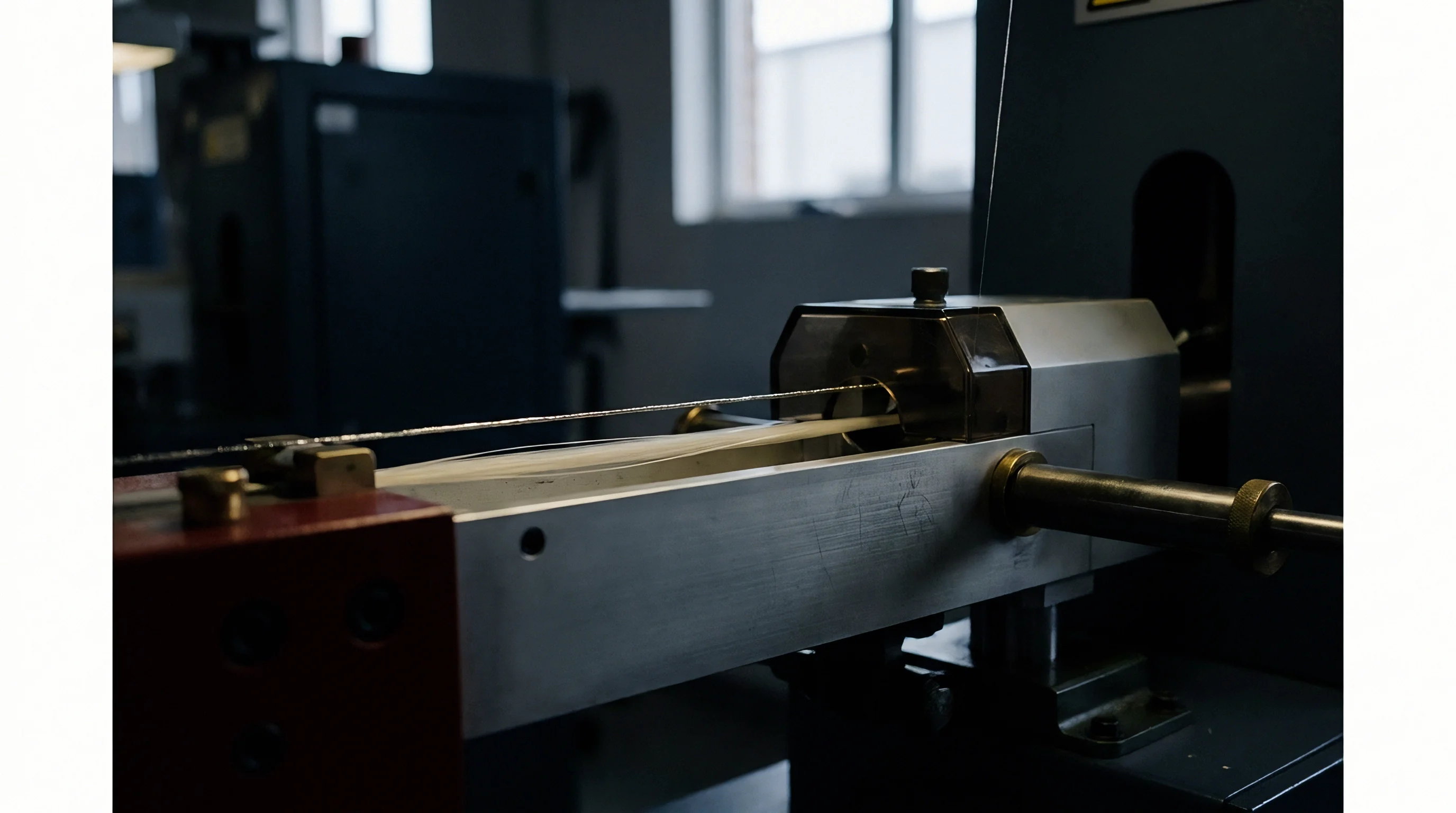
Physical test results depend heavily on the mechanical geometry and drive systems of the testing apparatus. Tensile frames operate on Constant Rate of Extension (CRE), Constant Rate of Traverse (CRT), or Constant Rate of Loading (CRL) principles. While modern international standards specify CRE units, older regulations still permit CRT or CRL devices.
ASTM D5034 accepts both CRE and CRT testers with a preference for CRE, whereas ISO 13934-1 mandates CRE exclusively. Running a specimen on a CRT pendulum frame yields breaking values that diverge from CRE load cell measurements due to inertia in the pendulum arm.
Jaw surface texture and clamping force directly alter stress distribution across the test area. Smooth steel faces allow material slippage at high tensile loads, artificially increasing recorded stretch while understating breaking strength. Rubber-lined jaws prevent slippage but pinch fibers along the clamp line, causing premature jaw breaks.
ASTM D5034 specifies grab faces measuring 25 millimeters by 25 millimeters opposite a 25 millimeter by 50 millimeter plate. ISO 13934-1 calls for smooth, flat parallel plates at least 60 millimeters wide.
Separation speed, or strain rate, affects molecular orientation in synthetic filaments and yarn-on-yarn friction in natural fibers. Testing at 300 millimeters per minute under ASTM D5034 loads the structure rapidly, yielding higher ultimate breaking figures. Testing the same fabric at 100 millimeters per minute under ISO 13934-1 gives yarns time to align and stretch before failure, producing lower breaking values.
Ambient humidity variations inside conditioning cabinets are measured before approving swatch preparation schedules.
Atmospheric Conditioning and Specimen Preparation Controls
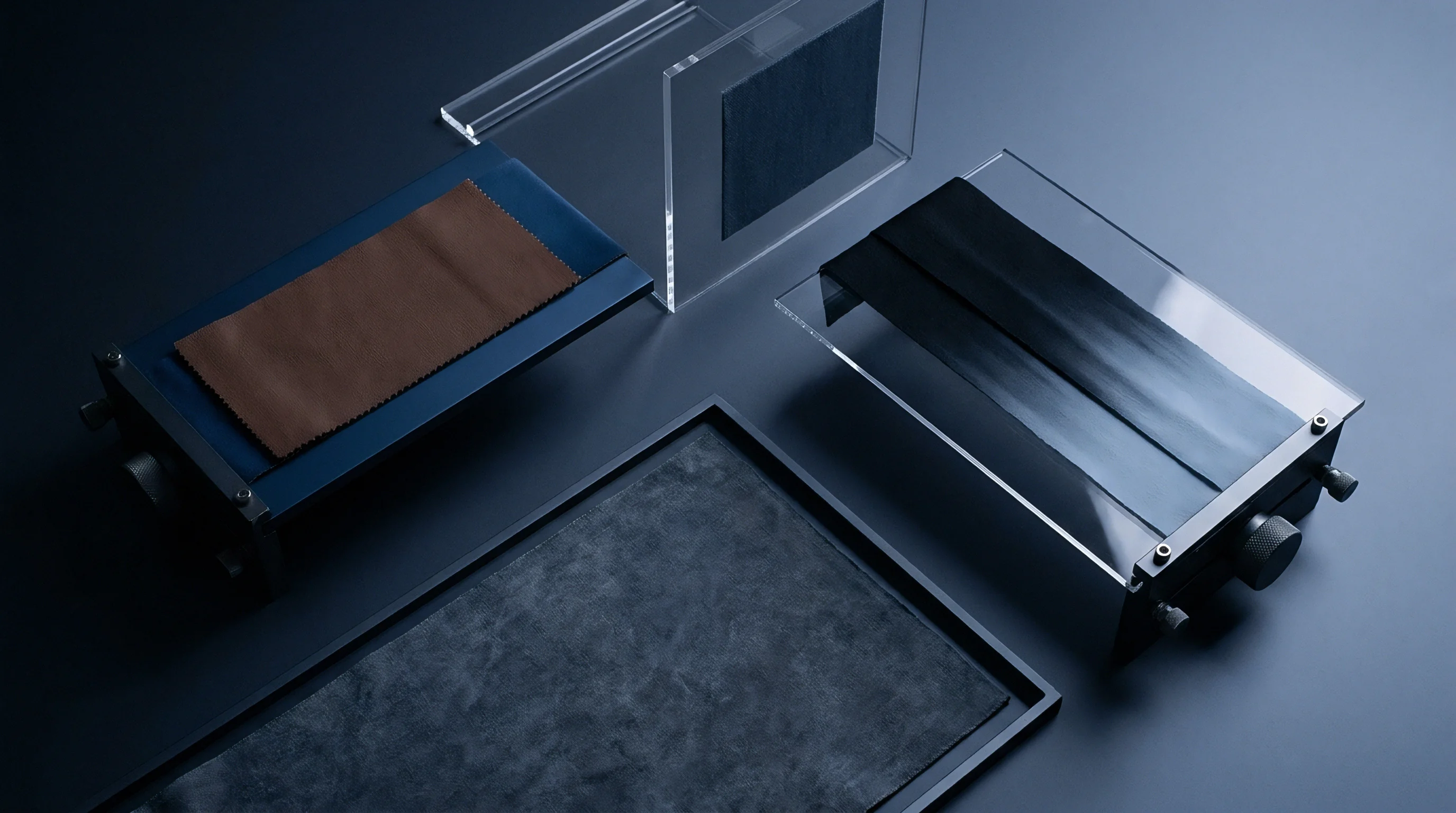
Ambient moisture absorption alters fiber mass, cross-sectional diameter, and mechanical strength. Cellulosic fibers like cotton and linen gain tensile strength as moisture regain rises, whereas polyamides soften when wet, losing tensile resistance while gaining elongation. Wool loses tensile strength in humid environments.
Consequently, physical test methods require standardized climate conditioning before cutting or mounting specimens.
Specimen conditioning at relative humidity below sixty percent artificially inflates cotton tensile strength measurements by eight percent.
Atmospheric conditioning parameters vary slightly between regional standards bodies. ISO 139 specifies 20 degrees Celsius (plus or minus 2 degrees) and 65 percent relative humidity (plus or minus 4 percent). ASTM D1776 sets target conditions at 21 degrees Celsius (plus or minus 1 degree) and 65 percent relative humidity (plus or minus 2 percent).
GB/T 6529 aligns with the 20 degrees Celsius and 65 percent relative humidity baseline, but allows an alternative tropical atmosphere of 27 degrees Celsius and 65 percent relative humidity for facilities in southern China. These minor environmental variations change physical performance during testing.
| Physical Test Category | ASTM / AATCC Standard | ISO / EN Standard | GB / GB/T Standard | Apparatus / Parameter Divergence |
|---|---|---|---|---|
| Fabric Breaking Strength | ASTM D5034 (Grab Test) | ISO 13934-1 (Strip Method) | GB/T 3923.1 (Strip Method) | ASTM uses 25x25mm grab jaws at 300 mm/min; ISO/GB use 50mm strip at 100 mm/min. |
| Tearing Resistance | ASTM D1424 (Elmendorf) | ISO 13937-1 (Elmendorf) | GB/T 3917.1 (Elmendorf) | Pendulum mass calibration and slit length tolerances differ between ASTM and ISO/GB specifications. |
| Seam Slippage | ASTM D434 / D1683 | ISO 13936-1 | GB/T 13774 | ASTM evaluates opening at fixed load; ISO/GB evaluate force at 2mm or 3mm fixed opening. |
| Dimensional Change | AATCC 135 | ISO 6330 | GB/T 8629 | Washing machine action, ballast weight (100% polyester vs cotton blend), and detergent chemistry vary. |
| Bursting Strength | ASTM D3786 (Diaphragm) | ISO 13938-1 (Hydraulic) | GB/T 7742.1 (Hydraulic) | Diaphragm thickness corrections and test area geometry (7.3 cm² vs 10 cm² vs 50 cm²) alter pressure readings. |
| Pilling Resistance | ASTM D4970 (Martindale) | ISO 12945-2 (Martindale) | GB/T 4802.2 (Martindale) | Lissajous movement cycles, abradant fabric batch specification, and loading weight (415g vs 595g) diverge. |
Preparation rules governing cut orientation and edge unravelling affect validity. ISO 13934-1 requires cutting swatches parallel to grain, then pulling side threads until the active strip measures exactly 50 millimeters wide. Off-grain cutting concentrates stress on partial yarns, triggering sequential yarn breaks rather than a uniform failure across the structure.
ASTM D5034 grab testing leaves edges raw, relying on surrounding fabric to distribute load. Consequently, dense, high-count constructions produce higher breaking values in grab tests than in strip tests, while open mesh structures distort around grab jaw corners and register reduced values.
Swatches require twenty-four hours of conditioning in a standard atmosphere before test specimens are cut.
Load

Envelope Harmonization for Multi-Market Physical Compliance
Sourcing programs reduce testing expenses and clearance delays by implementing envelope harmonization. Rather than executing three distinct testing regimes ~ ASTM for North America, ISO for Europe, and GB for China ~ compliance teams establish a single master protocol combining the most demanding criteria from each destination. Testing to this unified baseline creates a single technical file capable of satisfying customs scrutiny across all target entry ports.
Constructing a functional envelope protocol requires mapping parameter overlaps across test methods. For example, bursting strength testing on a knit outerwear fabric under ASTM D3786 uses a diaphragm apparatus with a 7.3 square centimeter test area (1.2 inches diameter). ISO 13938-1 and GB/T 7742.1 mandate a hydraulic tester with a 50 square centimeter test area (79.8 millimeters diameter), while permitting an optional 10 square centimeter aperture.
Because smaller testing apertures require higher fluid pressures to rupture identical fabrics, an envelope protocol tests on the 50 square centimeter area while setting a pressure pass mark high enough to fulfill the structural demands of the smaller ASTM setup.

Can Single Test Suites Satisfy Global Regulatory Thresholds?
Consolidating physical testing across markets requires mapping regulatory equivalence. In general apparel, flammability presents significant compliance risk. The US enforces 16 CFR Part 1610, evaluating flame spread at a 45-degree incline following dry cleaning and laundering, while exempting plain-surface fabrics weighing 2.6 ounces per square yard (88.2 grams per square meter) or more under 16 CFR 1610.4(a)(1)(i).
China enforces GB 31701 for childrenswear using the GB/T 14644 45-degree method, but provides no automatic weight-based exemption for plain woven constructions. A 100-percent cotton shirt fabric weighing 120 grams per square meter is exempt from mandatory flammability reporting under US regulations, yet requires verified laboratory data to clear Chinese customs under GB 31701.
Worst-case envelope harmonization reduces multi-market laboratory expenditure by twenty-two percent.
| Market Jurisdiction | Mandatory Physical Safety Standard | Scope / Article Class | Critical Test Parameter | Exemptions / Risk Thresholds |
|---|---|---|---|---|
| United States | 16 CFR Part 1610 | All adult and children’s wearing apparel | 45-degree flame spread time (Class 1: >3.5s for plain; >7.0s for raised) | Exempts plain surface fabrics ≥88.2 g/m² and specific fibers (acrylic, modacrylic, nylon, olefin, polyester, wool). |
| China | GB 18401 / GB 31701 | Category A (Infant), Category B (Direct Contact), Category C (Non-contact) | GB/T 14644 (45-degree flame spread), cord/drawstring mechanical safety | No weight-based exemptions; mandatory testing for all Category A children’s wear. |
| European Union | EN 14878 / ISO 12952 | Nightwear, children’s sleepwear, general textiles under GPSR | Vertical flame spread rate (EN 1103 / ISO 6941) | Strict vertical burn rate limits for nightwear; national variations (e.g. UK Nightwear Safety Regulations). |
| Japan | JIS L 1091 | Sleepwear, protective apparel, public space garments | Method A (45-degree micro-burner), Method B (Meckel burner) | Categories based on char length and flame afterglow duration; strict child safety limits. |
Combining physical test requirements into a single protocol eliminates duplicate laboratory testing. For a 100-percent polyester woven fabric distributed globally, compliance managers structure a single protocol selecting the largest specimen dimensions, longest washing cycles, and highest strain rates across applicable North American, European, Chinese, and Japanese standards.
Flaked Swatches and Worst-Case Sampling Protocols
Selective sampling at the mill level frequently invalidates compliance files. Suppliers often submit hand-picked swatches woven on development looms, featuring optimized yarn twist, dense thread counts, and fresh chemical finishes designed specifically for testing. Commercial yardage produced on high-speed air-jet looms exhibits wider structural variance.
When port authorities draw samples from incoming ocean containers, bulk fabric fails, leading to administrative holds and compliance audits.
Sample location within a fabric roll is equally critical. Swatches taken exclusively from roll ends reflect edge distortions created by tension fluctuations during winding, batching, and stenter drying. Physical measurements taken from outer roll ends ~ including tensile strength, tear resistance, and seam slippage ~ differ from properties recorded fifty meters inside the roll.
Robust compliance programs require cutting internal roll samples across multiple dye lots.
A structured envelope harmonization procedure for physical laboratory testing follows a defined execution sequence:
- Parameter Mapping Map physical performance requirements across target markets to pinpoint conflicting test methods and minimum thresholds.
- Worst-Case Protocol Selection Select the strictest test parameters, including sample geometry, laundering cycles, strain rates, and conditioning rules.
- Representative Sampling Cut fabric swatches from the center of production rolls across multiple dye lots instead of using mill-provided samples.
- Accredited Dual Testing Run tests at an ISO 17025 accredited facility whose active scope covers both target destination standards and harmonized methods.
- Dossier Integration Compile test reports, raw instrument data, and swatch tracking codes into a unified clearance dossier.
Measurement variability remains significant. Cutting swatches from unconditioned production yardage can reduce recorded tear strength by up to fifteen percent compared to specimens conditioned under standard laboratory parameters. Enforcing sampling controls at the mill ensures tested fabric accurately reflects bulk production arriving at destination ports.
Submitting test reports that omit yarn distortion evaluation under GB/T 21294 leads directly to border quarantine in Chinese ports.
Purchase agreements should explicitly mandate that all fabric lots delivered under the order meet or exceed GB 18401 Category B physical thresholds when tested per GB/T 3923.1 and GB/T 13774, regardless of compliance under alternative domestic test methods.
Proof
ILAC Mutual Recognition and Laboratory Scope Boundaries
Customs authorities and market surveillance agencies validate laboratory documentation by verifying facility accreditation. ISO/IEC 17025 accreditation serves as the foundation for international acceptance of test reports. Under the International Laboratory Accreditation Cooperation (ILAC) Mutual Recognition Arrangement (MRA), signatory customs agencies recognize test reports issued by accredited laboratories in other member jurisdictions.
In principle, a test certificate from an accredited facility in Shanghai, Istanbul, or Ho Chi Minh City carries equal regulatory weight to one issued in Hamburg or Long Beach.
Regulatory validity breaks down when testing occurs outside a laboratory’s formal scope. An ISO/IEC 17025 certificate does not grant broad authorization across all textile test methods. Accreditation bodies issue specific scope schedules detailing approved test standards, methods, measurement ranges, and uncertainty parameters.
A facility accredited for ASTM D5034 breaking strength may lack coverage for ISO 13934-1 tensile testing or GB/T 21294 seam slippage. Submitting data generated outside an accredited scope schedule leads to immediate rejection by customs officials.
Customs authorities inspect test report scope dates faster than they review physical performance figures.
Verifying laboratory credentials requires checking four elements: the accreditation body mark (CNAS, UKAS, A2LA, or DAkkS), the certificate registration number, the full standard title including publication year, and the active scope validity window. Laboratories occasionally issue reports citing withdrawn standards or unaccredited internal procedures accompanied by qualification disclaimers. Customs auditors cross-reference testing dates against accreditation databases; any test executed during an accreditation gap renders the document invalid for customs entry.

Lot Release Testing versus Type Approval Dossiers
A recurring failure in supply chain management stems from confusing development type approvals with lot release batch testing. Type approval testing evaluates prototype swatches to confirm structural suitability during product development, and certain jurisdictions permit these reports to stand for extended periods. Lot release testing requires testing samples pulled directly from commercial production batches to verify that specific cargo conforms to standards.
Border audits focus entirely on lot release compliance. Chinese inspectors evaluating GB 18401 compliance will reject historical type approval reports generated during product development. Customs authorities demand batch-specific documentation connecting test certificates directly to bills of lading, container identifiers, fabric roll numbers, and purchase orders.
Inconsistencies between test documentation and shipping paperwork stall clearance.
- Out-of-Scope Test Reports Reports from labs whose ISO 17025 scope omits the exact national standard cited in the filing.
- Superseded Method References Dossiers citing obsolete standard revisions withdrawn by national standards bodies.
- Unlinked Batch Identification Lab reports with swatch descriptions that do not match shipping invoices or roll packing lists.
- Missing Conditioning Logs Reports omitting climate conditioning records, relative humidity logs, or specimen pre-treatment details.
- Selective Parameter Omission Dossiers showing tensile strength numbers while leaving out mandatory seam slippage or pilling data required by port regulations.
Dossier construction requires end-to-end traceability. Assembling a master technical file involves linking test results directly to production logs, dye lot records, fiber blend certifications, sample tracking logs, and accredited ISO 17025 certificates. Any variance between fabric weight (grams per square meter) declared on test documentation and customs entries prompts physical holds and sampling at import terminals.
Whether international customs authorities will accept unified digital verification tokens remains uncertain as port systems transition to paperless filings.

Exposure
Financial Consequences of Physical Test Failures at Customs
Physical test failures during customs sampling trigger immediate administrative and financial penalties. When border inspection reveals non-compliance with mandatory rules ~ such as 16 CFR 1610 flammability or GB 31701 drawstring safety ~ the shipment enters administrative detention. Daily container demurrage and storage fees accrue while disputes are resolved.
Customs detentions resolve through three mechanisms: mandatory re-testing at a certified domestic reference facility, compulsory re-exportation, or supervised destruction. Supervised destruction incurs disposal expenses alongside total inventory write-downs. Re-exportation requires absorbing return freight, terminal charges, and administrative fines.
In all scenarios, customs holds erode landed margins.
| Clearance Jurisdiction | Primary Failure Mode | Immediate Regulatory Action | Financial Exposure Elements | Resolution Lead Time |
|---|---|---|---|---|
| United States (CBP / CPSC) | 16 CFR 1610 Flammability burn rate failure | Immediate detention, redelivery demand for distributed stock | Demurrage, CPSC civil penalties, mandatory product destruction cost. | 30 to 90 Days |
| China (GACC / SAMR) | GB 18401 / GB 31701 Tensile, seam, or cord failure | Administrative quarantine, entry refusal, public blacklisting | Port storage fees, compulsory re-exportation charges, brand audit fines. | 45 to 120 Days |
| European Union (Customs / Market Surveillance) | EN 14878 Sleepwear flammability failure | Safety Gate alert, EU-wide sales ban, recall mandate | Reverse logistics costs, legal defense expenses, brand reputation destruction. | 60 to 180 Days |
| Financial exposure figures based on standard multi-container shipment detentions at major commercial import terminals. | ||||
Retesting significantly extends clearance timelines. Landed cost calculations should account for potential re-testing expenses incurred when border authorities challenge filings. Beyond direct port charges, physical non-compliance threatens retail delivery schedules.
Missing a seasonal window due to a sixty-day detention forces inventory markdowns or late-delivery penalties. Supply contracts must clearly allocate non-compliance liabilities across brands, sourcing intermediaries, converters, and textile mills.
Retest Mechanics and Sampling Dispute Protocol
Contesting border test failures requires accounting for inherent material variation and measurement uncertainty. Yarn density, twist, and chemical treatment levels vary within single rolls and across production lots. A port sample may record tear strength marginally below minimum thresholds due to localized yarn flaws, even when adjacent fabric meets specifications.
Importers can challenge initial test rejections through formal re-testing protocols.
Challenging initial findings requires rigid sampling procedures. Submitting single replacement swatches supplied directly by mills is invalid under major regulatory frameworks. Under Chinese GACC procedures, importers must file formal re-testing applications within a strict post-notification timeframe.
Re-inspection occurs at designated government referee laboratories using secondary samples drawn from detained shipments. If the referee laboratory confirms non-compliance, the rejection becomes final and non-appealable.
- Cut three representative swatches from separate rolls at the front, middle, and back of the container lot.
- Condition all swatches inside an accredited climate chamber for twenty-four hours at twenty degrees Celsius and sixty-five percent relative humidity.
- Seal each sample bundle in moisture-proof barrier foil with tamper-evident tape before shipping to the designated referee laboratory.
- Authorize dual testing under both local port standard parameters and standard equivalence protocols to isolate apparatus differences.
Colorfastness to wet rubbing and seam strength evaluations show noticeable test variance. Standard commercial purchase orders frequently fail to assign financial responsibility for re-testing, leaving brands exposed during customs detentions. Comprehensive purchase agreements include explicit indemnity clauses requiring suppliers to reimburse re-testing fees, port demurrage, and regulatory fines if cargo fails physical compliance under destination port standards.
A single seam slippage dispute resolved at a referee lab absorbed twelve thousand dollars in demurrage fees.

Reconciliation
Building the Master Physical Compliance Dossier
Harmonizing physical testing requirements across multi-market supply chains requires integrating compliance controls into initial sourcing workflows. Sourcing organizations must move beyond reactive, post-production testing toward unified workflows connecting mills, accredited laboratories, compliance managers, and customs brokers. A master compliance dossier functions as the core technical file for international shipments, establishing batch conformity prior to container dispatch.
A compliance file missing raw load-cell displacement graphs fails technical scrutiny during customs appeals.
Compiling a master compliance file requires structuring technical documentation in a systematic manner. Flammability classification protocols demand precise timing. Dossiers must contain bills of materials, fabric specifications, fiber blend analyses, chemical finish declarations, accredited ISO 17025 test reports, laboratory equipment calibration logs, and batch traceability documentation.
Incorporating primary laboratory output ~ such as load-extension curves or hydraulic pressure traces ~ provides essential technical evidence during administrative appeals.
Compliance management requires automated validation of laboratory test outputs. Upon report generation, compliance systems evaluate test values against destination-specific regulatory thresholds. Seam slippage requirements vary substantially by market: if yardage bound for Shanghai records 3.5 millimeters of seam displacement under GB/T 13774 ~ exceeding the 3.0 millimeter maximum for Category B apparel ~ the system halts container loading, allowing corrective action before shipment.

Contractual Safeguards for Supply Chain Harmonization
Contractual alignment translates technical laboratory parameters into enforceable commercial terms. Generic phrases like “first-quality fabric” or “standard commercial quality” offer zero legal protection during border detentions. Purchase orders must specify target test standards, test methods, specimen preparation requirements, and exact pass/fail criteria for each intended market.
Enforceable contracts establish parameter equivalence and designate reference laboratories. For multi-market fabric orders, purchase agreements should mandate worst-case envelope testing while assigning financial liability for re-testing and detention costs to the supplier. Under these conditions, fabric delivery is not legally complete until independent ISO 17025 reports confirm compliance with all destination standards.
Integrating physical test harmonization into global sourcing mitigates import risks, eliminates redundant testing expenses, and protects brand equity. Enforcing strict specimen conditioning, envelope protocols, laboratory scope verification, and contractual indemnity establishes a resilient framework for international apparel compliance.