Contractual Risk Allocation Mechanisms for Polymer Degradation in Multi-Tier Textile Storage Networks
Structure extended shelf-life warranties and telemetric environmental covenants to shift polymer degradation losses from buyers to negligent warehouse bailees.
Shelf
Inside regional storage facilities, polymer breakdown follows chemical pathways driven by atmospheric humidity, heat spikes, and leftover process chemistry. Synthetic fibers can undergo progressive chain scission well before rolls ever hit the cutting table. Under unconditioned storage, thermoplastic polyurethanes, the polyether-polyurethanes found in elastane, and aliphatic polyamides show measurable loss of tensile strength within four to twelve months.
Above 65 percent relative humidity and 30 degrees Celsius, ester-based polyurethanes break down quickly through hydrolysis, while polyamide 6 and 6,6 undergo oxidative decay accelerated by moisture, pulling yarn elongation at break below commercial limits.
Textile buyers making long-term forward commitments take on real commercial risk when rolls sit in unconditioned warehouses. Visual inspection upon receipt will not reveal lost elastic recovery in stretch wovens or membrane peeling in multi-layer laminates. Exposing that broken molecular backbone requires destructive mechanical testing.
Hydrolytic cleavage inside polyester-polyurethane coatings accelerates fourfold for every ten-degree rise above ambient cellar temperature when humidity exceeds seventy percent.
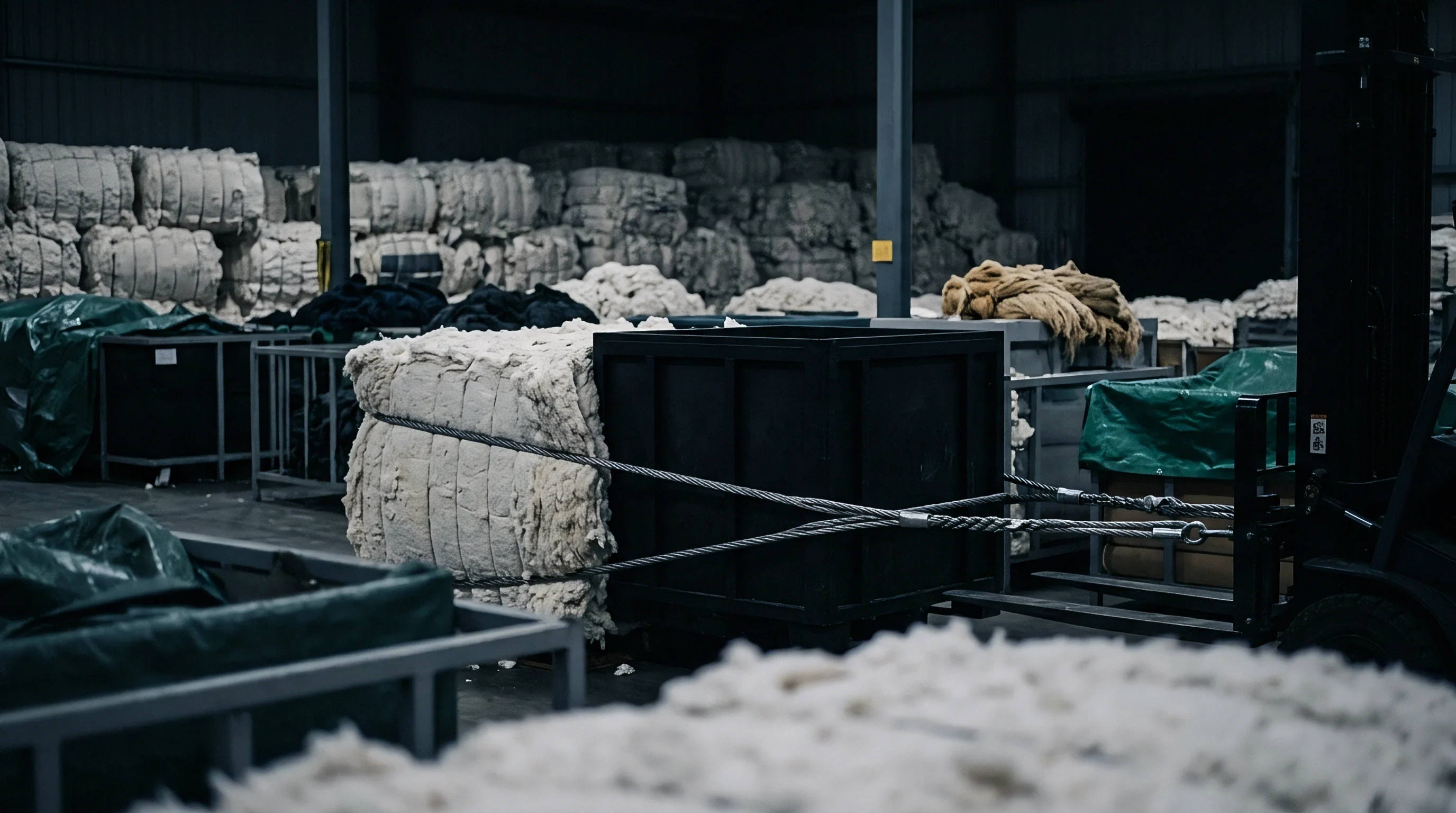
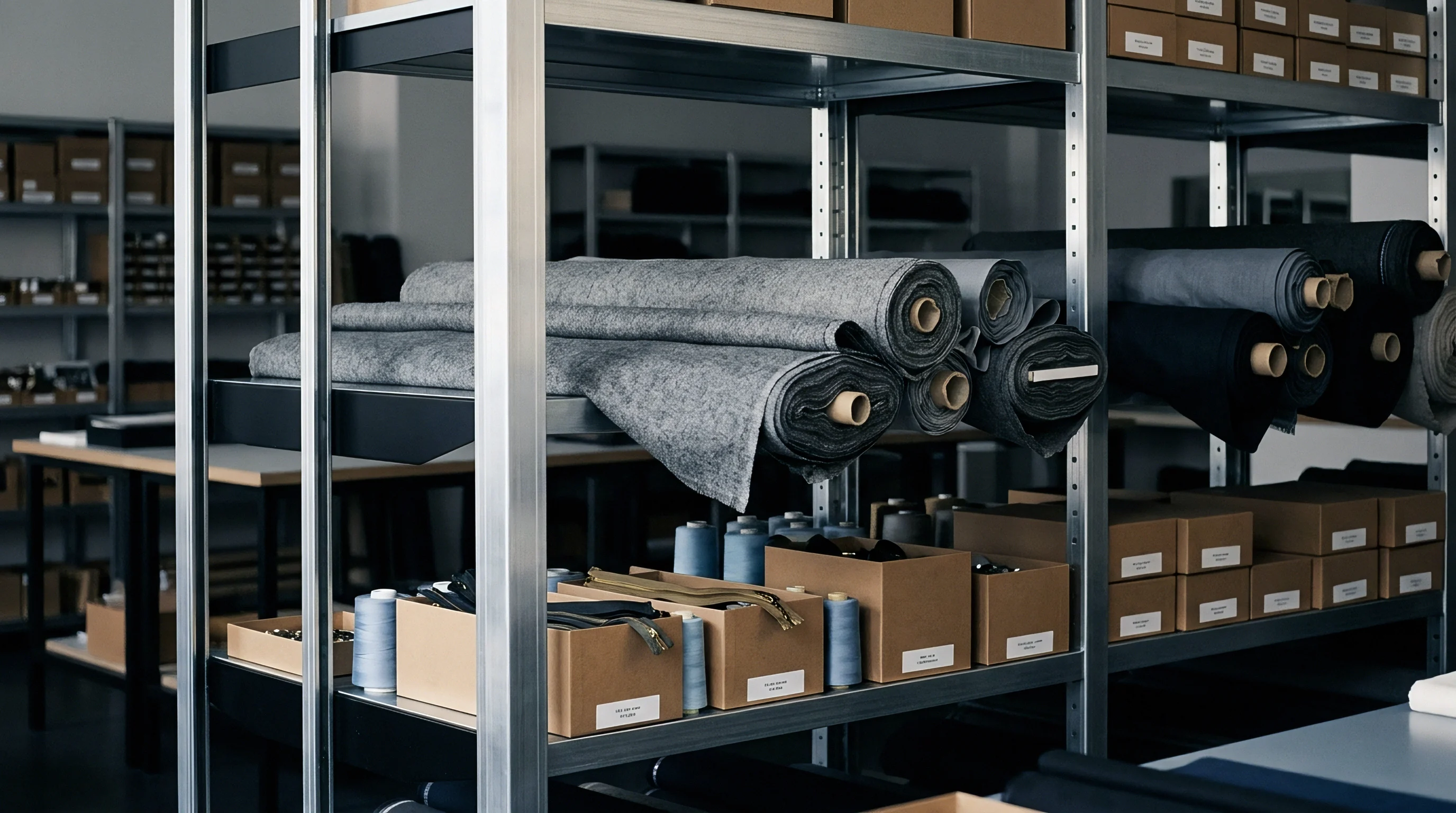
Few storage facilities run climate control across their high-bay racking. In corrugated steel warehouses, vertical temperature gradients regularly create microclimates where the top rack tiers run fifteen degrees hotter than the floor. Coated nylon taffeta stored up near the roof line degrades three times faster than identical rolls sitting on low pallets, so when a buyer cuts the stock nine months after production, seams delaminate and hydrostatic ratings fail on the spot.
| Polymer Class | Primary Mechanism | Critical Humidity | Thermal Trigger | Test Method Standard |
|---|---|---|---|---|
| Polyester-Polyurethane Coating | Hydrolysis | 65 percent RH | 32 degrees Celsius | ISO 811 Hydrostatic Head |
| Polyether-Polyurethane Elastane | Thermal Photo-Oxidation | 75 percent RH | 38 degrees Celsius | ASTM D2731 Elastic Recovery |
| Polyamide 6,6 Yarn | Atmospheric Acid Scission | 60 percent RH | 35 degrees Celsius | ISO 13934-1 Strip Tensile |
| Polyethylene Terephthalate | Alkaline Surface Hydrolysis | 80 percent RH | 45 degrees Celsius | ASTM D4603 Intrinsic Viscosity |
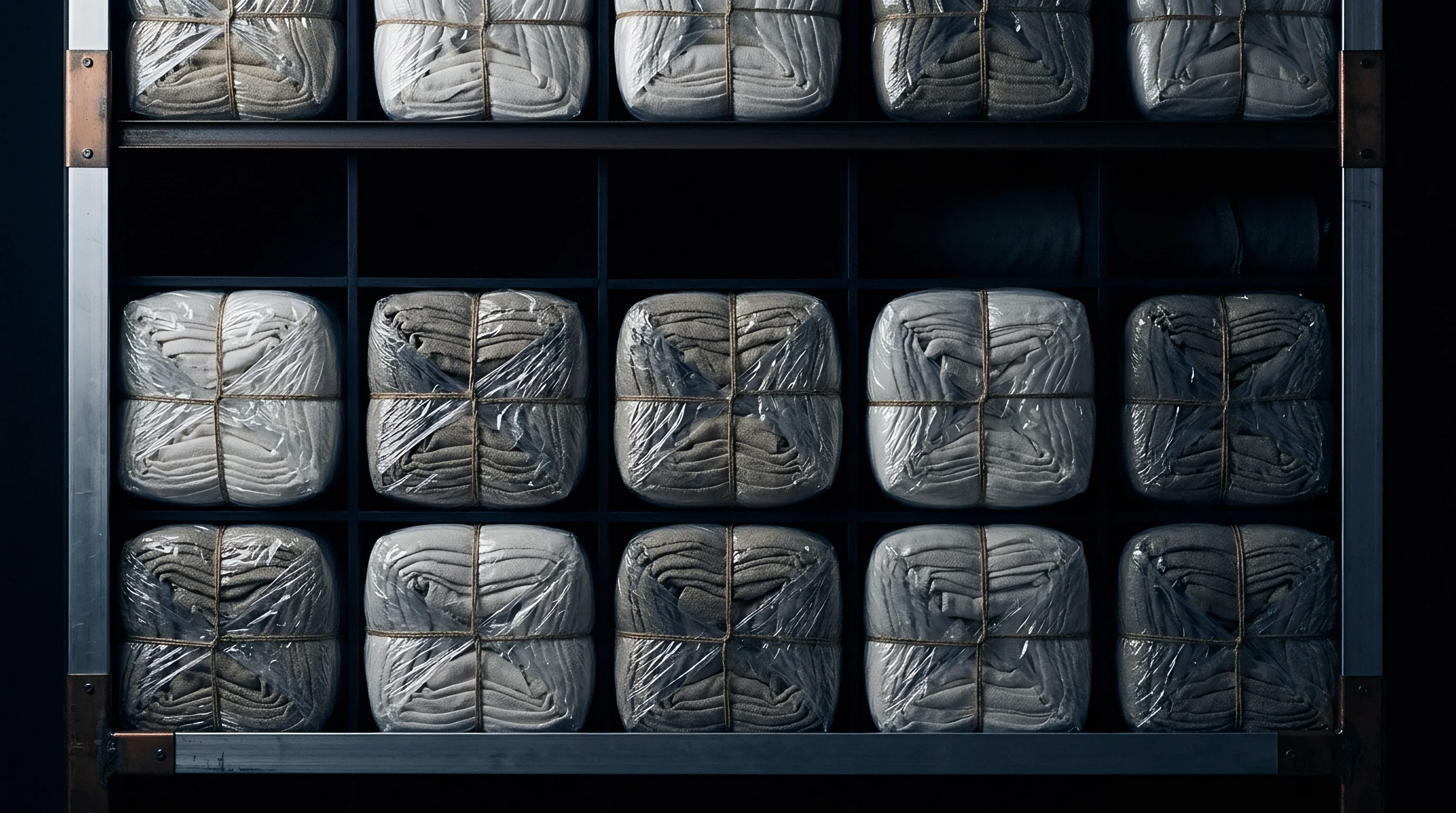
Spinning finishes and knitting oils left on yarn packages act as internal catalysts during long warehouse stays. In stagnant air, residual mineral oils, surfactants, and unsaturated fatty esters oxidize into acidic byproducts that attack synthetic chains right inside vacuum-sealed polybags. Any moisture trapped in roll packaging during humid monsoon packing runs has no way out, turning stacked rolls into sealed pressure cookers.
Degradation claims are frequently countered on the grounds that standard warehouse aging represents normal ambient weathering outside production liability.

Custody
Title transfer and passage of risk determine which balance sheet absorbs material degradation during long depot stays. Standard Incoterms pass risk at the ship’s rail or forwarder terminal, legally disconnecting downstream transport legs from the original manufacturing agreement. As inventory passes through bonded warehouses, 3PL hubs, and regional staging points, custody fragments across separate bailment contracts.

Which Atmospheric Triggers Nullify Standard Bailee Exclusions?
Warehouse operators usually rely on standard boilerplate that disclaims liability for atmospheric decay, natural shrinkage, or gradual polymer aging. Bypassing those broad exclusions means inserting explicit environmental thresholds directly into warehouse master service agreements, grounding protection in clear microclimate limits rather than vague common-law duties of care.
Logistics providers should be tied to continuous monitoring. Modern multi-tier agreements include data-logger integrity clauses, shifting the burden of proof to the facility operator whenever recorded telemetry strays outside contractual limits.
- Environmental Datalogger Deployment sets the required density for calibrated temperature and relative humidity sensors per cubic meter of rack space.
- Telemetric Reporting Cadence establishes automated data transmission intervals so localized heat spikes cannot be hidden or suppressed.
- Packaging Seal Inspection mandates routine physical checks on polythene wrapping to spot punctures, trapped condensation, or seal failure across stacked pallets.
- First-In First-Out Dispatch Enforceability binds facility management to strict stock rotation, preventing older inventory from sitting in dead-corner bays.
Standard bailee terms disclaim liability for internal chemical decay unless the contract establishes explicit temperature ceilings and continuous sensor monitoring duties.
Without explicit environmental limits written into logistics contracts, brand owners end up stuck with brittle, unsellable inventory and no recourse against intermediate handlers. Scrap losses on synthetic roll stock quickly multiply once unrecoverable import duties and missed retail delivery windows are factored in.

Remedy
Remedial clauses define specific financial recovery and rejection mechanics once polymer degradation passes agreed performance floors. Effective contracts stay away from vague phrases like merchantable quality or fair condition, setting hard numerical thresholds for post-storage tensile strength, tear resistance, elastic recovery, and water column retention.
Remedies for lost tensile strength kick in through staged liquidated damages or full lot rejection. If ISO 13934-1 testing shows a twenty percent drop in breaking force after six months of storage, the buyer debits either the mill or the warehouse keeper based on environmental sensor data.
| Supply Tier | Boundary Threshold | Physical Metric Floor | Remedial Action |
|---|---|---|---|
| Primary Mill Dispatch | Zero storage decay | 100 percent of specification | Full roll replacement at mill expense |
| Tier-1 Ocean Transit Depot | Max 30 days at 35C | 95 percent tensile retention | Carriage insurance indemnification claim |
| Tier-2 Regional Distribution Hub | Max 180 days at 25C | 90 percent elastic recovery | Direct bailee debit and scrap recovery |
| Tier-3 Local Staging Center | Max 60 days at 22C | 85 percent hydrostatic resistance | Liquidated damage offset on holding fees |
Enforcing these remedies comes down to preserving physical evidence. Suspect production lots must be quarantined as soon as embrittlement or delamination is spotted. Cutting swatches from both outer roll layers and core wraps reveals whether the damage stemmed from external atmosphere or internal chemical residues.
Unconditioned storage invariably burns through safety margins much faster than lab-based shelf-life projections suggest.


Clause
Drafting workable contract safeguards requires clear allocation of chemical warranties, shelf-life commitments, and evidentiary burdens across manufacturers, forwarders, and procurement teams. Traditional textile agreements cut off quality warranties thirty days after port arrival, which fails entirely for synthetic goods prone to slow hydrolytic decay across multi-stage fulfillment.

Why Do Fixed Moisture Caps Fail Synthetic Blends?
Setting a single moisture cap for fiber blends ignores how differently individual materials handle humidity. Polyester absorbs less than 0.5 percent moisture, whereas the cotton in poly-cotton twills can retain up to 8 percent under normal conditions. A blanket limit allows moisture-sensitive coatings to sit packed against damp cellulose fibers inside airtight wrapping, accelerating polyurethane breakdown.
Master agreements need extended shelf-life warranties that remain valid through intermediate storage, legally obligating upstream mills to use stabilizer chemistry built for long tropical dwell times.
- Antioxidant Package Certification verifies that hindered phenol and phosphite processing stabilizers are added during melt extrusion to resist oxidation in storage.
- Hydrolytic Inhibitor Addition confirms that carbodiimide compounds are applied during wet finishing to protect ester linkages against moisture breakdown.
- Acid-Neutralizing Scavenger Dosing ensures yarn packages contain basic inorganic scavengers that neutralize acidic byproducts from spinning lubricant residues.
Master agreements must stipulate that seller warranties for latent polymer breakdown remain actionable for eighteen months post-delivery provided warehouse environmental logs show compliance with agreed storage boundaries.
Under International Chamber of Commerce sales rules, incorporating clause 32.4 of the Model Commercial Contract classifies latent polymer degradation as a hidden defect, exempting it from short-term notice deadlines.

Covenant
Covenants covering multi-tier storage networks bind mills and logistics providers into a single quality agreement. Bilateral contracts between a brand and individual operators leave open gaps in liability; a tripartite structure connects mill, 3PL, and brand under shared audit and testing duties.
Joint inspection protocols need to cover the arrival and dispatch of synthetic piece goods at every transfer point. High-risk materials like microporous polyurethane laminates require baseline swatches cut at the origin mill, sealed in foil barrier bags, and kept under controlled lab conditions. If a dispute over brittle fabric arises eighteen months later in a regional depot, technicians compare active inventory against those sealed origin samples.
| Defect Parameter | Tolerated Variance | Referee Standard | Cost Allocation Principle |
|---|---|---|---|
| Coating Peel Adhesion | Minus 15 percent max | ISO 2411 Adhesion Test | Losing party covers full referee fees |
| Elastane Core Breakage | Minus 10 percent max | ASTM D3106 Elastic Recovery | Shared fee on borderline variance |
| Intrinsic Viscosity Loss | Delta 0.05 dl/g max | ASTM D4603 Solution Viscosity | Mill indemnifies when origin swatches fail |
Auditing multi-tier routes uncovers operational and geographic risks before inventory degrades. Field auditors check pallet spacing, roof insulation, solar loading on bay doors, and dehumidifier performance across contracted sites ~ diligence that protects gross margins from sudden inventory write-offs.
How quickly latent radical scavenger depletion leads to catastrophic yarn rupture under fluctuating tropical humidity remains a debated point in commercial arbitration.