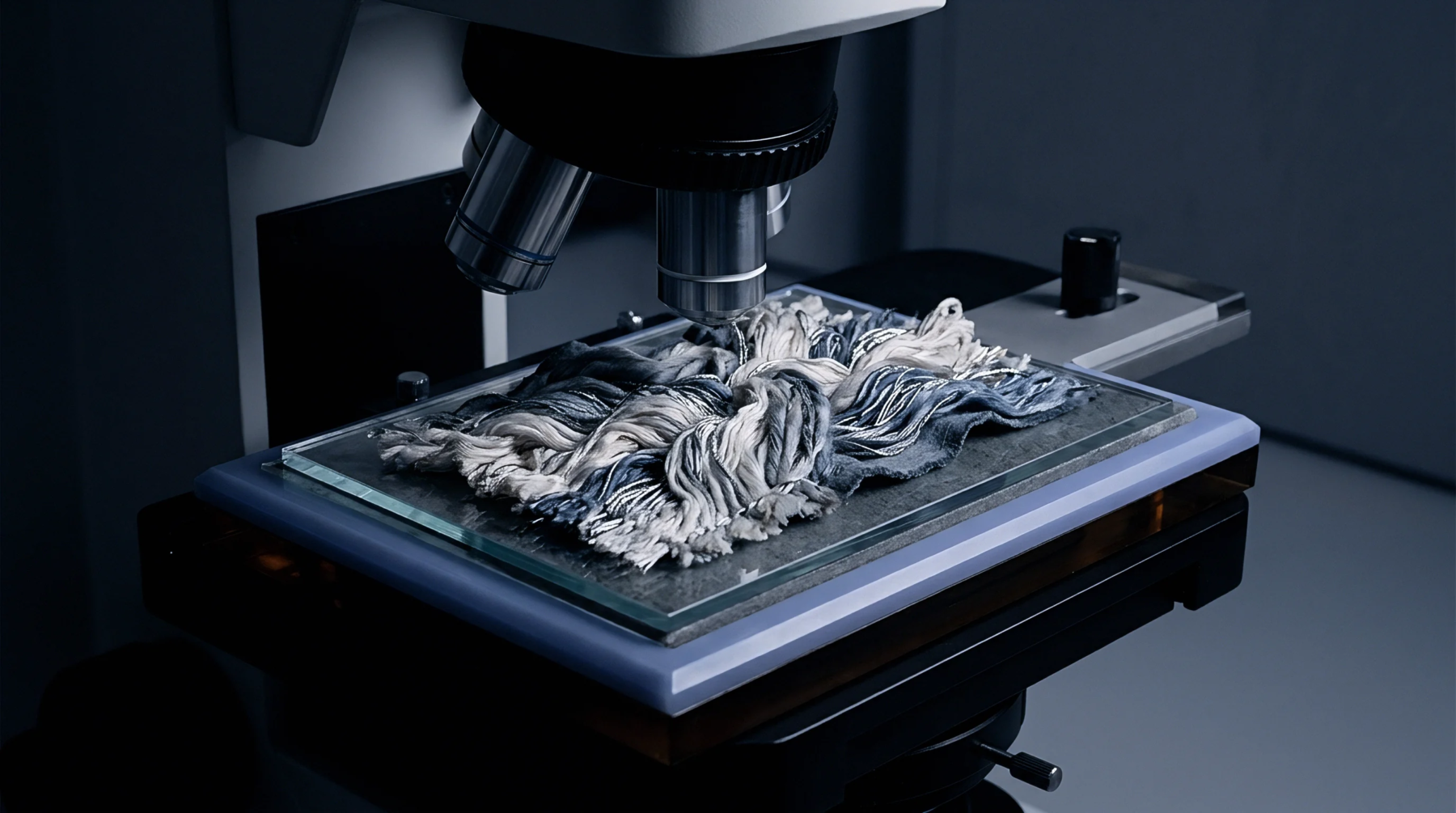
Extraction Protocol
The established procedure designated as EN ISO 14184-1 specifies the quantitative determination of free formaldehyde released from textile commodities through aqueous extraction at room temperature. Regulatory limits on residual chemical agents demand precise verification during the transition from wet processing to finished goods distribution, because unbound molecules migrate easily toward human skin during wear. Mill operations employ this analytical standard to evaluate cellulosic and synthetic substrates alike, separating acceptable factory output from rejected batches before garments cross international borders.
Testing laboratories execute the protocol by agitating small sample cuttings in water, allowing the target compound to transfer completely into the liquid phase before colorimetric detection occurs. Strict temperature controls prevent thermal degradation of bonded resins during agitation, ensuring that only freely accessible residues register on the spectrophotometer. Commercial supply contracts depend upon compliance with these numerical thresholds, establishing legal liability for chemical safety between yarn producers and retail buyers.
Aqueous Extraction
Analytical chemistry procedures rely upon precise solvent interaction to liberate trapped reactants from complex polymer matrices without altering molecular structures. Technicians submerge weighed textile specimens inside sealed vessels containing distilled water, maintaining a constant agitation speed for a defined duration. Hydrophilic finishes release their residual content rapidly into the surrounding fluid, whereas dense yarn twists require extended soaking intervals to achieve complete diffusion equilibrium.
Subsequent filtration removes suspended solid fibers, leaving a clear aqueous solution ready for derivatization reagents. Acetylacetone reacts specifically with the liberated aldehyde under controlled heating, producing a yellow diacetyldihydrolutidine compound whose light absorbance correlates directly with concentration. Calibration curves derived from standard formaldehyde solutions translate optical density readings into milligrams per kilogram of dry fabric mass.
Regulatory Compliance
Consumer protection legislation restricts formaldehyde content strictly across apparel categories intended for infants, children, and adult daily wear. Retail compliance officers demand certified test reports from accredited laboratories before accepting bulk shipments into distribution warehouses. Exceeding established concentration limits results in immediate cargo quarantine, forcing mills to execute expensive stripping washes or abandon the merchandise entirely.
Trade disputes often arise when factory self-declaration data contradicts independent arrival testing performed at the port of entry. Standardized protocols eliminate ambiguity by defining exact tolerances, sample conditioning environments, and analytical repeatability limits.
Substrate Variance
Natural cellulose fibers absorb reactive resins and cross-linking agents more readily than synthetic polyester filaments during durable press finishing. Cotton fabrics therefore present higher baseline risks for residual chemical release, necessitating tighter operational controls within dyeing houses. Synthetic blends complicate extraction dynamics through hydrophobic barriers that retard water penetration, requiring extended incubation phases to capture bound molecules accurately.
Testing personnel adjust preparation methods according to fiber composition, preventing false negatives caused by incomplete reactant liberation from tight weaves. Uncontrolled variability in mill washing routines directly influences final spectrophotometric outputs, proving that finished goods quality stems entirely from upstream processing discipline.