Subcontracted Wet Processing Compliance in Textile Conversion Contracts
Subcontracted wet processing requires binding batch-level chemical verification and milestone payments to prevent catastrophic border seizures of converted yardage.
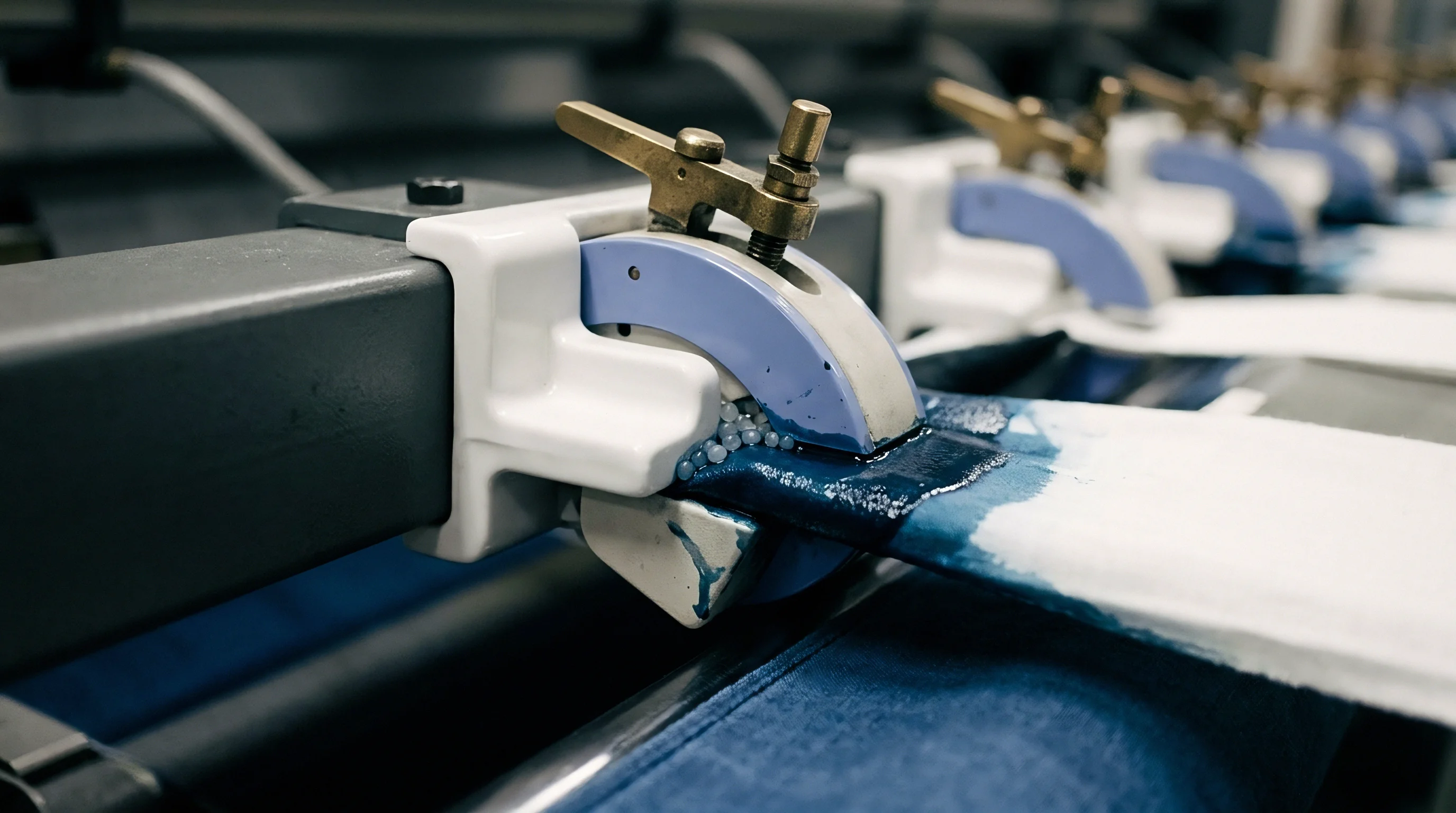

Greige
A conversion contract separates legal ownership of raw substrate from physical control over wet processing. The converter buys raw woven or knitted yardage from a primary weaver, routes it directly to a third-party commission dyehouse, and sells the finished cloth to an apparel importer. Title stays with the converter throughout, even though the chemical treatments determining market access happen in vats they do not operate.
When border inspectors test a shipment, they evaluate chemical residues on the physical fabric, not the corporate layer between the converter and the sub-tier processor.
Greige yarns arrive at the commission house with sizing embedded in their matrix ~ polyvinyl alcohol, modified starches, and polyacrylates applied during warp prep. If the subcontracted plant runs an incomplete desizing cycle, those residual sizing agents react with reactive dye auxiliaries and trap unreacted chemicals inside the finished textile. Converters rarely specify parameters for the desizing bath, leaving chemical selection and rinse times to the subcontractor.
The finished lot then ends up with chemical residues that contradict what was declared on customs entry filings.
A converter holding legal title to unprocessed cloth bears primary border liability for chemical additions made by an unlisted commission finisher.
Because the converter pays a fixed processing fee per kilogram, economic pressure leads commission finishers to trim wash cycles, recovery times, and chemical purity to protect margins. Lowering water use cuts energy expenditure and speeds throughput, but it leaves higher concentrations of surfactants, dispersing agents, and fixing chemicals behind on the fiber. In the end, the converter receives an invoice and a basic delivery slip without ever seeing the formulation sheets used on the dye floor.

Where Does Custody Fracture in Toll Processing?
Custody breaks down at the receiving dock. Converters rely on third-party forwarders to ship grey goods straight from weaving mills to commission dyehouses without intermediate inspection. Manifests record gross bale weights and piece counts, but rarely log lot-specific parameters like lubricant levels or moisture regain.
Without baseline data on the incoming substrate, tracing a later compliance failure back to weaver spin-finishes versus dyehouse chemistry stays contentious.
The sequence below defines the formal chain of custody handoff across conversion operations:
- The converter issues a mill allocation notice specifying lot numbers, construction details, and delivery timelines to the primary weaving facility.
- The weaving facility releases raw substrate accompanied by a bill of lading directly to the subcontracted wet processor without passing through converter hands.
- The subcontracted processor signs the arrival slip, accepting physical custody while disclaiming liability for pre-existing yarn coatings or spin finishes.
- The converter transmits technical finish targets and shade standards by electronic mail, detached from the physical substrate lot.
- The processor assigns incoming greige rolls to internal batch tickets, frequently pooling distinct weaving lots into a single preparation bath.
Splitting large orders across multiple facilities compounds verification errors. A converter taking fifty thousand meters of poplin might split the greige yardage between two regional dyehouses to hit delivery deadlines. Each plant uses its own chemical auxiliaries, water filtration standards, and drying temperatures.
A lab test run on a swatch from the first dyehouse won’t reflect the chemical profile of fabric finished at the second, producing a final shipment with matching visual shades but completely different chemical signatures.
Paragraph 14 of the standard commission finishing agreement explicitly shifts chemical conformity to the upstream supplier, stipulating that processor performance relies strictly on chemical formulations approved under national technical standards.
Formulation
Restricted substances in wet processing concentrate mostly in secondary finishing auxiliaries rather than primary dyes. A dyehouse buying commercial reactive, disperse, or vat colorants typically gets technical data sheets covering heavy metal content and aromatic amine profiles. Leveling agents, foam suppressors, wetting agents, and softening emulsions, however, often come from regional compounders outside international verification platforms.
These suppliers frequently use short-chain alkylphenol ethoxylates as cheap emulsifiers, introducing nonylphenol residues onto yarn during scouring and dyeing.
Alkylphenol ethoxylates scour poorly, degrading into nonylphenol and octylphenol that bind stubbornly to cellulosic and synthetic fibers. European Union REACH Annex XVII entry 46a sets a 100 milligrams per kilogram ceiling for nonylphenol and nonylphenol ethoxylates in water-washable textiles. When a finisher uses technical-grade scour chemistry containing unreacted ethoxylates, finished cotton goods often retain 250 to 800 milligrams per kilogram after drying.
Discovering these levels leaves importers facing safety authority notifications and store recall orders.
REACH Annex XVII Entry 46a imposes a 100 milligram per kilogram threshold on nonylphenol ethoxylates that triggers immediate product recalls across European Union borders.
Atmospheric polyester dyeing in older jet machines relies on carriers like trichlorobenzenes, orthophenylphenol, or methylnaphthalene to swell the polymer. Dyehouses without high-pressure equipment use these chemicals heavily to cut cycle times and power use. Stenter heat-setting volatilizes part of the carrier, but a significant fraction remains trapped deep in the fibers, slowly migrating outward to the surface of the cloth during warm ocean transit.
Which Processing Steps Trigger Secondary Chemical Liability?
Secondary chemical liability tends to emerge during post-dye finishing rather than the main dye bath. Fixing agents added to improve wash fastness on direct- and reactive-dyed cellulosics often contain dicyandiamide-formaldehyde precondensates. If the operator mismanages curing temperatures in the stenter, unreacted free formaldehyde off-gasses straight into roll goods as they wind onto cooling cylinders.
Later testing under ISO 14184-1 can turn up free and hydrolysed formaldehyde levels above 75 parts per million, failing safety standards for next-to-skin clothing.
| Processing Stage | Common Commercial Chemical Auxiliary | Target Restricted Chemical Analyte | Typical Measured Range | Regulatory Reference Limit |
|---|---|---|---|---|
| Yarn Scouring | Non-ionic surfactant emulsions | Nonylphenol ethoxylates (NPEO) | 120 to 650 mg/kg | 100 mg/kg (REACH Annex XVII) |
| Polyester Dyeing | Chlorinated aromatic carrier blends | 1,2,4-Trichlorobenzene | 5 to 45 mg/kg | 1 mg/kg (AFIRM RSL Level) |
| Cellulosic Fastness | Cationic formaldehyde fixing agents | Free and hydrolysed formaldehyde | 85 to 240 mg/kg | 75 mg/kg (OEKO-TEX Class II) |
| Water Repellent Pad | Fluorinated acrylic copolymers | Perfluorooctanoic acid (PFOA) | 35 to 180 ug/kg | 25 ug/kg (EU POPs Regulation) |
| Softening Rinse | Fatty acid amino-ester complexes | Short-chain chlorinated paraffins | 150 to 900 mg/kg | 100 mg/kg (EU POPs Regulation) |
Dyehouse floor formulation sheets rarely match the technical binders shown during pre-qualification audits. Management presents certified chemical inventories aligned with zero-discharge standards when brand inspectors visit. But once bulk production starts on a converter contract, floor supervisors often substitute cheaper local chemicals to shave twelve to eighteen percent off bath costs.
Those substitutes bring along unlisted organotin catalysts, residual solvents, and phthalate plasticizers that slip past standard documentation checks.
Certified chemical supply chains may be unavailable during the specific production window allocated for a converter contract.
Rinse
Clean water is a major cost center. In wet processing, rinse bath counts directly drive utility bills, effluent surcharges, and turnaround times. Moving from raw yarn to finished fabric across desizing, scouring, bleaching, neutralizing, dyeing, soaping, and softening requires substantial water.
While technical specs call for eighty to one hundred and twenty liters of fresh water per kilogram of processed cotton, dyehouses competing on tight margins routinely squeeze that down to forty or fifty liters per kilogram.
Cutting rinse stages leaves hydrolyzed dyes and auxiliaries sitting on the fibers. In reactive dyeing, thirty to forty percent of the dye fails to bond with the cellulose, remaining in the liquor as hydrolyzed pigment. Clearing it takes boiling washes at ninety-five degrees Celsius, followed by neutralizing warm rinses and ambient flushes.
Shortening soaping times or dropping bath temperatures below seventy degrees Celsius traps mobile, unfixed reactive molecules deep in the yarn channels.
Direct extraction testing on polyester lots demonstrates that lowering reduction-clearing liquor ratios from 1:10 to 1:4 elevates residual dimethylformamide concentrations by 310 milligrams per kilogram.
The failure patterns below illustrate the physical breakdowns caused by abbreviated rinsing protocols:
- Hydrolyzed Dye Retention occurs when insufficient soaping leaves unbound reactive dyes trapped in cotton fibers, triggering failures on ISO 105-C06 wash fastness tests.
- Surfactant Film Accumulation develops when cold rinses fail to emulsify scour auxiliaries, creating a hydrophobic layer that stops fixatives from anchoring properly.
- Carrier Salt Precipitation happens when electrolyte salts like sodium sulfate or sodium chloride drop below their solubility threshold during rapid dumps, embedding abrasive mineral crystals in the weave.
- Acid Neutralization Drift occurs when core yarn neutralization with acetic acid is cut short, pushing internal fabric pH above 8.5 and leading to skin irritation failures during export inspection.
False negatives frequently mask real liabilities when surface swatches cut from roll ends pass in-house fastness tests. Continuous open-width washing cleans off surface contaminants, but dense yarn cores in heavy twills, canvases, and fleece knits hold onto unwashed chemistry. When a customs lab runs ultrasonic solvent extraction under standard test methods, those internal chemical pockets leach into the solvent, uncovering major non-compliance on goods certified clean by surface swatches.
As a practical rule, any commission facility operating without automated water metering on washing ranges skips final clearing rinses on dark shades.
Screening
Quantifying restricted residues requires liquid and gas chromatography paired with mass spectrometry. Testing a finished lot against a full restricted substance list demands multiple extractions across different solvent systems. Most commission dyehouses lack these instruments, relying on paper self-declarations or supplier composition statements instead.
A converter cannot verify compliance through visual checks, hand-feel, or basic floor swatches.
When analyzing extracts for banned azo-derived aromatic amines under EN ISO 14362-1, gas chromatography with mass selective detection quantifies cleavage products like 4-aminobiphenyl, benzidine, and 4-chloro-o-toluidine down to five milligrams per kilogram, producing sharp chromatogram peaks. Subcontract plants frequently use uncontrolled salt stocks contaminated with secondary amine isomers. If primary aromatic amine levels exceed thirty milligrams per kilogram, customs authorities classify the consignment as hazardous consumer goods subject to immediate seizure.
| Chemical Compound Group | Standard Analytical Test Method | Extraction Solvent Matrix | Limit of Detection | Actionable Limit Ceiling |
|---|---|---|---|---|
| Banned Aromatic Amines | EN ISO 14362-1 / 14362-3 | Citrate buffer / diethyl ether | 5.0 mg/kg | 20.0 to 30.0 mg/kg |
| Extractable Heavy Metals | EN 16711-2 / ICP-MS | Artificial acid sweat solution | 0.01 to 0.1 mg/kg | 0.5 to 4.0 mg/kg (by metal) |
| Alkylphenol Ethoxylates | EN ISO 18254-1 | Methanol / ultrasonic bath | 10.0 mg/kg | 100.0 mg/kg (combined) |
| Free Hydrolysed Formaldehyde | EN ISO 14184-1 | Deionized water extraction | 16.0 mg/kg | 75.0 mg/kg (direct skin) |
| Total Organic Fluorine (PFAS) | Combustion Ion Chromatography | Oxygen bomb / water absorption | 10.0 mg/kg | 50.0 mg/kg (total F) |
| Total Heavy Metal Digestion | EN 16711-1 / Microwave ICP | Nitric acid / hydrogen peroxide | 5.0 mg/kg | 40.0 to 100.0 mg/kg |
Formaldehyde releases under steam heat, even though standard lab testing partitions hydrolysed formaldehyde into pure water at forty degrees Celsius over sixty minutes. Contracts specifying simple cold-water extractions obscure the presence of methylol-based crosslinking resins applied during resin finishing. Once garments cut from this fabric undergo commercial steam pressing, that crosslinking equilibrium shifts, releasing gaseous formaldehyde into factory air and triggering workplace exposure violations.
A rigorous converter verification dossier requires explicit analytical components:
- Accredited Test Reports must come directly from ISO/IEC 17025 accredited labs covering the exact target substance matrix, matching production roll serial tags.
- Batch Formula Sheets must document the actual quantities of colorants, auxiliaries, water volumes, and wash cycles used on the specific lot rather than generic mill averages.
- Traceability Bill of Lading must track unwashed greige from the identified weaving shed straight to the specific finishing plant executing the contract.
- Sub-tier Material Safety Disclosures must include unredacted chemical identity numbers for leveling agents, wetting compounds, and post-treatments used during the run.
Evaluating water-repellent performance shows how analytical methods settle compliance disputes, particularly when solvent extraction strips away surface wax. Subcontract coaters may state that fluorine-free water-repellent finishes meet restricted substance limits, yet combustion ion chromatography can uncover total organic fluorine levels exceeding fifty parts per million. Tracing the formulation back usually reveals that the dyehouse added a fluorinated anti-foaming agent to keep the pad trough stable during high-speed runs.
Can automated inline spectroscopy ever replace destructive laboratory wet testing when assessing subcontracted lot chemistry across complex fiber blends?
Settlement
When finished goods fail product safety testing at the buyer’s destination warehouse, the arrival of a debit note shifts focus to financial indemnification and inventory liquidation. Standard conversion contracts rarely account for the technical realities of chemical remediation. A converter facing total rejection from a brand usually holds a processing contract with a dyer whose assets are a fraction of the invoice exposure, forcing the converter to absorb the loss unless legal terms tie chemical compliance directly to progress payments.
Customs surveillance programs in destination markets run targeted import checks based on automated risk profiling. If a converter ships forty thousand cotton-polyester twill pants into a regulated market and customs labs extract three hundred milligrams per kilogram of short-chain chlorinated paraffins from the thread, the entire entry is detained. Storage fees build daily at the terminal alongside non-reimbursable lab verification costs and late-delivery penalties from retail distributors.
Standard commercial indemnification terms in commission processing fail to cover downstream border detention expenses and inventory disposal assessments.
Chemical stripping presents major technical and financial hurdles. When a lot fails compliance due to surface residues of nonylphenol ethoxylates or carriers, converters often attempt to re-wash the fabric rolls. The finisher charges extra for re-washing, scouring, and re-drying, while the extra processing degrades tensile strength, increases pilling, and shifts the color away from the approved master sample.
As a result, the salvage value of re-washed fabric drops far below the original contract price.
A typical commercial scenario demonstrates the financial breakdown in subcontracted conversion:
Consider a twenty-thousand-meter conversion lot of woven poplin valued at 3.50 dollars per finished meter, giving a gross order value of 70,000 dollars. Commission finishing fees run 0.65 dollars per meter, or 13,000 dollars paid to the dyehouse. Testing at destination reveals 180 parts per million of free formaldehyde, driving a full retail rejection.
Wet stripping costs another 0.40 dollars per meter, or 8,000 dollars, but alters the color by 1.8 Delta E, making the yardage unacceptable to the buyer. Selling the rejected lot off-price at 1.10 dollars per meter recovers 22,000 dollars, leaving the converter with a net loss of 56,000 dollars once freight and secondary lab fees are added in.
Environmental law prohibits liquidating non-compliant inventory in strictly monitored markets, often leading customs to seize shipments outright. When goods fail standards for persistent organic pollutants or hazardous azo dyes, directives mandate destruction via high-temperature incineration at authorized hazardous waste facilities. The importer of record bears all costs for bonded transport, storage, and incineration without any opportunity to claim duty drawbacks on destroyed stock.
Executing conversion agreements without milestone-contingent escrow leaves converters fully exposed to total inventory write-offs, brand de-listing penalties, and border seizures.